Future USN Frigate Design Speculation

This reminds me of the Anzac class frigates of the mid 90's.

"Fitted for but not with" was commonly used. The New Zealand ships were missing a few items compared to the Australian vessels. Over the years a few of the systems were added.
Some things were added but in the end the space reserved for 2nd 8 cell Mk-41 module wasnt used. No space reserved for ASM launchers but Oz managed to find a space anyway. NZ radar was less ambitious so didnt need to close in the quaterdeck.
No matter what ship gets the AAW flag, it needs space to hold 2 CICs (and all the crew to run them!). So that means you need a pretty good-sized ship, one big enough to have an extra ~hundred crew over a ship without the Flag spaces, plus put the two CICs far enough apart that one hit won't take out both of them.
The flag space isn't the CIC doing actual air defence, its for the commander, who probably wants to be near the main CIC. If the main CIC is destroyed, there could be a backup buried somewhere, kind of like battleships used to have an armoured conning tower. I think backup CIC means a 2nd island to keep it in the fight... AAW command would switch to another ship.
Further, a ship big enough for the BMD radars is conveniently big enough to trivially also include a second CIC.
The radar adds top weight, which iss partly compensated by wider beam. The VLS also adds top weight although not as high up. Adding more and more heavy stuff because its "already big" not only makes it even bigger but requires the hull designed to compensate for it. For example the BMD
Further, a ship big enough for the BMD radars is conveniently big enough to trivially also include a second CIC.
Nothing is trivial if it uses space that cant be used for anything else, and especially if it can't be repurposed. Thats why I suggested GVLS, because they say there could be quad Mk-41 inserts. Also the depth of VLS means it takes length in the hull, can't just be stuck in an empty corner and its not that related to radar. But then the flag CIC takes less top weight but needs volume, and therefore also adds size to the deckhouse. So the AAW commander needs to be a bigger ship than the dedicated BMD version, but the first few will do BMD anyway until enough of them get built.

There could be justification to have a flag CIC on the BMD ship more as a backup, not necessarily as comprehensive as the AAW cruiser or perhaps a backup option for the CSG commander.
 
Last edited:
The flag space isn't the CIC doing actual air defence, its for the commander, who probably wants to be near the main CIC. If the main CIC is destroyed, there could be a backup buried somewhere, kind of like battleships used to have an armoured conning tower. I think backup CIC means a 2nd island to keep it in the fight...
It's not a backup CIC. It's a Flag Information Center. Different role, possibly different consoles in the room.

Flag commander doesn't have to be in the main CIC. Classically, the flag commander had something closer to a navigation plotting room than the combat plot that became the CIC.

Today, an AAW Flag needs displays like in the CIC, but with the data from every ship not just the one ship the AAW flag happens to be sitting on. Plus, the Flag space will usually not need all the same crew stations that the fighting CIC does. Flag CIC needs all the coordinators, all the screen operators and maintainers, but none of the trigger pullers.

Note that the Asian Burkes have the separate Flag space built in, but not even the Burke IIIs were redesigned to have one.


AAW command would switch to another ship
That requires physically moving the Commodore and his staff, plus the coordinators for their flag CIC, then getting them re-established in a new ship. That's going to take half an hour.


The radar adds top weight, which iss partly compensated by wider beam. The VLS also adds top weight although not as high up. Adding more and more heavy stuff because its "already big" not only makes it even bigger but requires the hull designed to compensate for it. For example the BMD
The BMD stuff is radar and combat system. Plus tubes for SM3s, GPI, and SM6. None of those are any heavier than Tomahawks in the Mk41s.


Nothing is trivial if it uses space that cant be used for anything else, and especially if it can't be repurposed. Thats why I suggested GVLS, because they say there could be quad Mk-41 inserts. Also the depth of VLS means it takes length in the hull, can't just be stuck in an empty corner and its not that related to radar.
Correct, you can't just shove CPS into the corner of the hull. It needs ~4 decks of space, almost always in the center of the hull. It'd take an expanded Mk57 PVLS to stick CPS into the corner of the hull.

But APMs are not restricted to CPS. They still accept the 7-shot Tomahawk racks used in the Ohio SSGNs.


But then the flag CIC takes less top weight but needs volume, and therefore also adds size to the deckhouse. So the AAW commander needs to be a bigger ship than the dedicated BMD version, but the first few will do BMD anyway until enough of them get built.

There could be justification to have a flag CIC on the BMD ship more as a backup, not necessarily as comprehensive as the AAW cruiser or perhaps a backup option for the CSG commander.
The CSG boss lives on the carrier.
The AAW Flag lives on another ship in the group.
 
It's not a backup CIC. It's a Flag Information Center. Different role, possibly different consoles in the room.

Flag commander doesn't have to be in the main CIC. Classically, the flag commander had something closer to a navigation plotting room than the combat plot that became the CIC.

Today, an AAW Flag needs displays like in the CIC, but with the data from every ship not just the one ship the AAW flag happens to be sitting on.
Thats what I was trying to say. Even if there are identical consoles, they need to show different information. Potentially a different layout. For example, Zumwalt has a kind of semi flag bridge overlooking the main CIC. There maybe lots of requirements but likely to result in a different setup than the main CIC. Any backup location for the main CIC would be useless for the flag functions.
That requires physically moving the Commodore and his staff, plus the coordinators for their flag CIC, then getting them re-established in a new ship. That's going to take half an hour.
If the AAW commander loses his CIC, he may not be left in a state to command anything. Maybe that means another ship staffed with an assistant commander to takeover immediately.
The BMD stuff is radar and combat system. Plus tubes for SM3s, GPI, and SM6. None of those are any heavier than Tomahawks in the Mk41s.
I expect so. The extra radar size may create the most demanding parameters for the beam of whatever ship you design for it. Then if you need to stretch that hull to make it a cruiser, the hull already has the beam for whatever extra stuff goes on it.
But APMs are not restricted to CPS. They still accept the 7-shot Tomahawk racks used in the Ohio SSGNs.
But is your logistics going to involve Tomahawks being shipped in two different VLS formats? So unused APM tubes may become waste space in practice.
The CSG boss lives on the carrier.
The AAW Flag lives on another ship in the group.
But that assumes the carrier is invulnerable. In a Pacific fight, loss of the CSG commander would result in someone taking over command on a still functional ship, hopefully with space to host the function.
 
But is your logistics going to involve Tomahawks being shipped in two different VLS formats? So unused APM tubes may become waste space in practice.
The Tomahawk insert (and loads) are the same as used in the SSGNs and the Virginia Blk5s.

At least if we're still talking APM tubes and not the ... LockMart? VLS proposal.


But that assumes the carrier is invulnerable. In a Pacific fight, loss of the CSG commander would result in someone taking over command on a still functional ship, hopefully with space to host the function.
If the carrier catches a round, there's not likely to be much left of the rest of the group, either.
 
The USN cant build a single bloody frigate and you expect them to be pumping out ships like nothing?
Yes because it is a low end ship with mature, low risk, off the shelf systems.

The previous frigate failed because the Navy listened to suggestions similar to members on here.

It needs nore VLS cells.
It needs displacement.
It needs a bigger radar.
It needs BMD missiles.
It needs a second CIWS.
it needs Tomahawk missiles
it needs a towed sonar.

Now the ships too heavy. You've just tried to make a destroyer using a frigate hull.

The Navy will not make the same mistake.

Also has no one addressed the fact that ASW capabilities for these future CVBGs are almost nonexistent?
I already addressed this. The unmanned sensors will be used to detect the sub. Warships will fire anti-submarine missiles. The missile deploys a parachute and drops a small torpedo into the water to hit the submarine.

Japan has the brand new Type 07 vertical-launch anti-submarine rocket

Korea has the brand new K745A1 Red Shark anti sub missile

The US has the new version of the RUM-139 VL-ASROC anti sub missile.

Long range torpedos are too slow and short range. The missile gets to the subs exact location quickly and the torpedo doesn't have to travel very.

It's nearly a full time job trying to keep up with all these new systems. Many people are clearly confused with the plan.
 
Last edited:
A CBG doesn't need to be limited to a single battleship, an extra one can be added for high threat environments.
It does unless you managed to cancel enough CVNs to pay for them and free up some reactors.
Also has no one addressed the fact that ASW capabilities for these future CVBGs are almost nonexistent?
Sea Hunter is deploying for thw first time. Its not an ASW capability until it actually connects to other ASW assets, so lots of work and testing still to go. And I think you now need an ASW commander, probably on an FFG, who can aggregate all available sensors (including Burke sonars) to coordinate the said USVs, helos, and other capabilities.
Now the ships too heavy. You've just tried to make a destroyer using a frigate hull.

The Navy will not make the same mistake.
No you didn't, you made an FFG. You know perfectly well the Constellation rumours about being overweight were caused by multiple factors. Maybe you forgot.
The US has the new version of the RUM-139 VL-ASROC anti sub missile.
You mean it will have by the time a battleship finally gets built.
I already addressed this. The unmanned sensors will be used to detect the sub.
They will, along with every other ASW sensor available. You dont necessarily want capital ships to get close enough to launch missiles at a sub.
It doesn't have infinite transmission range so it's further reason to justify the battleship.
How does that make sense? A short range communication protocol means your UUV has to link with a USV or manned ship nearby before radio can be transmitted to a manned ASW asset. None of those are likely to be in the vicinity of the fleet flagship. Nothing ASW comes close to mitigating the disadvantages of your battleship.
 
The previous frigate failed because the Navy listened to suggestions similar to members on here.

It needs nore VLS cells.
It needs displacement.
It needs a bigger radar.
It needs BMD missiles.
It needs a second CIWS.
it needs Tomahawk missiles
it needs a towed sonar.
Beyond the fact this is totally irrelevant to the thread, what exactly does a frigate need then? According to you it doesn't need... "displacement"? Are you advocating for surface effect frigates or something?
Also some of this is just blatant misinformation:
The SM-2 equivalent missile count was actually less than prior frigates, 32 compared to 40 on FFG-7 so obviously the navy didn't go for "nore VLS cells".
The radar on Constellation was arguably less capable than Kronos DBR on FREMM Evo and had a lower footprint
The requirement for SM-6 has no greater impact than SM-2 seeing as they come out of the same cells and is also utilized as a key SuW weapon. It also can only complete terminal BMD
Constellation does not have a second CIWS
If memory serves Tomahawk missile was congressionally mandated although, again, it has no greater impact than SM-2 seeing as they come out of the same cells.
And the idea that an ASW focused frigate "needs a towed sonar" is pretty much the bare minimum in 2026? What do you propose instead, only a hull sonar?
Each carrier will most likely have two Arleigh-burkes Flight III with their huge 37 RMA radar and probably two older Arleigh-burkes with their 24 RMA radars.
Not really seeing as pumping out Flt IIIs for eternity will still result in less VLS cells going to the fleet than are retired as Flt I and II boats reach obsolescence. Recall the strategy was to fill fleet bulk with FFG(X), utilize DDG(X) as large multirole vessels, and utilize UxVs to bulk up fleet cell count (and extend sensor range)
The USN cant build a single bloody frigate and you expect them to be pumping out ships like nothing?
This is a kinda weird take given the logistics involved. I mean, off the top of my head there is ~100k tons of Burke and even more submarine tonnage than that (more submarine tonnage than at the peak of the Cold War iirc!) currently under production. In many ways they are pumping out ships hence the relevance of the FFG(X) to the production of nuclear large surface combatants is apples and oranges
because the current naval strategy of the USN puts them firmly at a severe disadvantage against the PLAN.
I do not understand how DMO puts the USN at a severe disadvantage against the PLAN. It allows the USN to hold at risk multiple complex Chinese offensive operations across the region simultaneously while making it easier to defend individual assets. Bear in mind that the Chinese undertaking relies on all or almost all of those complex offensive operations working out
 
Tomahawk (and SM3/6) need strike length cells, which is a bit of a design impact. Greater than just "SM2 and VL-ASROC," at least.
The navy wanted strike length cells for SM-6 anyway, and it was hardly an extravagance. It's well established the biggest issue with the program was bringing FREMM up to US standards, not the equipment they sought to fit
 
The navy wanted strike length cells for SM-6 anyway, and it was hardly an extravagance.
True enough. Tactical length cells are long enough that any mount is 3 decks deep whether it's Tactical or Strike length.


It's well established the biggest issue with the program was bringing FREMM up to US standards, not the equipment they sought to fit
Agreed.

But "Needs Tomahawks and SM-6" was a design weight over "needs VL-ASROC and ESSMs"
 
BBG(X) is an asymmetrical approach, UUVs and USVs are the symmetrical approach, the approach that can easily be accounted for and countered by far more numerous and arguably more advanced Chinese equivalent systems (friendly reminder that China is world leading with regards to the development and deployment of unmanned systems).
You do understand what assymetrical warfare means? Fighting a more powerful force using tactics and resources that are difficult to ccounterby simply using more forces. It allows a small force to fight a larger one, hence the asymmetry.
See the battle of the Atlantic: a vast amount of resources was needed to counter a small cheap, rapidly producible threat. For a more modern reference, see the Black Sea fleet.

That is the very definition of asymmetric. And it can be achieved in several years instead of decades.
Exactly!
The problem with defending against ballistic and hypersonic missiles is magazine size and interceptor inventory, not radar size envy.
Radar allows early detection and exo-atmospheric intercepts at greater range. Less important for SRBMs.
And regardless of the current state of the art, it takes far more effort to find small USVs and UUVs than it does for those platforms to find their targets.
And the trend seems to be for carrier USV to launch tiny UAVs. I wouldnt be suprised to see long range USVs launching small UUVs and torpedoes close to their targets.
An SSGN will have far more firepower while being far more survivable as it requires no ABM/AAW defenses, it can spam CPS at ranges far beyond the vast bulk of China's ASW capabilities
It might still need protection from surface assets in areas where the enemy has an ASW advantage or sensors.
Which is to say, the ships would just do distant blockade and escort convoys in rear areas (like...east of pearl).
Maybe not that far, but yes the general concept it to operate outside the range of a DF-21 as much as possible. BBG(X) would struggle to ne useful.
I'd think it is a good time to build transport submarines for resupply when AShBMs can overfly Japan.
Would need to be focussed on resupply of essentials. Maybe its an ammo truck with some kind of sub to shore connector.
Does the world actually need the USN to police somalia?
You could at least kick out the Russians...
Actual asymmetrics is building something that the other side can't build, like space, or irrelevant to their task, like a underwater sonar system in the Taiwan ststraits.
Not really, but a fixed sonar/mine network would help if you want to ambush enemy subs..
 
Subs may not be keen on being close to surface just to relay comms from a UUV, they tend to deploy their own UUVs.
The subs can still communicate at their maximum depth. This is not the satelite communication that penetrates only a few metres down into the water. This is a sound based underwater communication system. Data is sent as noise and the sonar sensors receiver the data to work out locations etc. The battleship sonar system can then passively receive the data from the unmanned subs. This would be impossible to jam from the air. Even if all satellite communications went down the battleship will be able to control all the unmanned subs and sensors.

BBG(X) is an asymmetrical approach, UUVs and USVs are the symmetrical approach
Which ship in the fleet will be controlling the UUV and USV? The underwater transmission range of the unmanned sensors will be limited. The control ship has to be in the heat of the battle. This is the role of the new battleship.

Not really seeing as pumping out Flt IIIs for eternity will still result in less VLS cells going to the fleet than are retired as Flt I and II boats reach obsolescence.
Taking into account retirements in 2040 there will still be around 50 Arleigh-burkes in service.

Recall the strategy was to fill fleet bulk with FFG(X), utilize DDG(X) as large multirole vessels, and utilize UxVs to bulk up fleet cell count (and extend sensor range)
Yes the original plan was to fill the fleet with a medium capability 7,500 ton guided missile frigate.

The Navy has decided to split that roll up with a less capable 5,000 ton frigate and a more capable 10,000 ton destroyer. This gives more flexibility. The Arleigh-burke will be better for a high end fight compared to the FFG. The FF(X) will save money when only basic coast guard work is needed.

A large multirole vessel everyone agrees is needed. People say a high end DDG(x) or CG(x) is needed. The high end ship has simply become a bit bigger than they expected hitting 35,000ton. Nuclear has made in fairly big.

I do agree with members like DJK. If we were starting with a cleansheet 10 years ago I would want a nuclear powered destroyer and a stretched cruiser variant for extra VLS cells and flagship facilities. For example the Zumwalt should have had a small nuclear reactor. Then a stretch of the Zumwalt with 200 VLS cells would have been the perfect nuclesr cruiser.
 
But going to 32 cells wasnt a huge overreach...they dont have to be filled with TLAMs anyway.
I mean, you're probably talking 8-16 Tomahawks per ship, since the US carries them around to inform another country that the US is officially done with their shit. (The upper end tracks with roughly what you'd expect half a Tico to be, the lower end is what was carried by Spruance class DDs.)

Then you need SM6 and GPI rounds. Likely another 12-16 of those to make killing it with AShBMs a serious attack and not just throwing a handful of missiles at it. Now we're up to at 32 cells in the Mk41.

And since we're still talking about the FFX, to attack submarines it needs to have ~8-12x VL-ASROCs (or the long-range attack weapon that's supposed to replace ASROC, like the Japanese Type 07 (30km range) or better yet an equivalent to an SS-N-16 Stallion (100km range)). This puts us to at least 40-44 cells.

Do we need any SM2s with their 150+km range, or can we safely leave the defenses to ESSMs? For not needing 92 Mk41 cells on a Frigate, I'm going to say we are going to let the ESSMs eat the leakers from SM6 or GPI.

And finally we add all the ESSMs in quadpacks. I'm going to want a lot. A single 61cell configuration is better than a pair of 29s here, but I'd really rather have two separate missile bays in case of non-catastrophic damage. 56x ESSMs is 14 Mk41 cells, which gets us to 58 total cells. 61 cells would mean 12 more ESSMs.

If for some reason there was a demand for SM2s I'd have to say "we're adding another 32 cells just for SM2s", which would make the load for an FFG about 92 cells.


I wonder if anyone has looked at an air-dropped 21" torpedo, say, an air-dropped Mk-48 ADCAP?
Not since the 1950s.

Well, no one has designed a 21" torpedo for air drop since then. Argentines looked at dropping some 21" torpedoes during the Falklands.
 
I do agree with members like DJK. If we were starting with a cleansheet 10 years ago I would want a nuclear powered destroyer and a stretched cruiser variant for extra VLS cells and flagship facilities. For example the Zumwalt should have had a small nuclear reactor. Then a stretch of the Zumwalt with 200 VLS cells would have been the perfect nuclesr cruiser.
I dint remember proposing a fleet of nuclear destroyers, if I did my apologies. I don't think its an idea worth doing until the world runs out of oil, when other options would hopefully make sense.
 
I do agree with members like DJK. If we were starting with a cleansheet 10 years ago I would want a nuclear powered destroyer and a stretched cruiser variant for extra VLS cells and flagship facilities. For example the Zumwalt should have had a small nuclear reactor. Then a stretch of the Zumwalt with 200 VLS cells would have been the perfect nuclesr cruiser.
I was banned from the DDG(X) thread for calling ideas like this what they are. I will not call this what it is, instead I will politely inquire how exactly you propose to make nuclear powered LSCs economical where the USN has deemed it not since the 70s?
 
I was banned from the DDG(X) thread for calling ideas like this what they are. I will not call this what it is, instead I will politely inquire how exactly you propose to make nuclear powered LSCs economical where the USN has deemed it not since the 70s?
This is because IEP didn't exist in the 70's. IEP is the key.

A nuclear surface ship needed two reactors for redundancy. The reactors had to also be sized to sustain 30-32 knots. A 11,000 ton nuclear cruiser had reactors that took up 40% of the ships volume. Over 3,000 tons for a pair of D2G reactors.

With IEP propulsion as used on the Zumwalt it uses electric motors on the props. This means only a single reactor can be used and a compact MT30 gas turbine generator can be used for redundancy. The reactor will now take up less than 25% of the ships volume.

Now the second step. As the ship now has a large gas turbine generator the nuclear reactor no longer has to be sized for the top speed. The reactor could be sized for a 25 knot speed with the gas turbine runnung to get above 30 knots. Dropping from 30 knots to 25 knots requires only half of the power. 83% of the speed requires approximately 50% of the power. Now the single reactor is taking up around 10% of the ships volume.

You've halved the number of reactors and the size of that reactor is also halved. 3,000 ton worth of reactors down to 750 ton with no performance lost. My nuclear 10,000 ton destroyer would run a reactor similar in size to the French Suffren 5,000 ton submarine. These nuclear submarines cost less than an Arleigh-Burke. The Destroyer can sustain 25 knots fully nuclear. The cruiser stretch could sustain 20 knots fully nuclear. The gas turbines would rarely be needed.

I suspect this battleship will use a single Ford class reactor combined with IEP propulsion. The A1B puts out 125MW of electricity. The battleship can then run electric motors on the props. It could run a pair of MT30 gas turbine generators for reduancy. This would be way smaller than fitting a second reactor. I put the probability at 80% that it will run one reactor with a couple gas turbines.
 
Last edited:
This is because IEP didn't exist in the 70's. IEP is the key.
Buzzwords, because it isn't. All you described after this is a combined nuclear and gas system. CONAG hasn't ever required electric propulsion, just some gearing.
the nuclear reactor no longer has to be sized for the top speed
This doesn't even make sense
My nuclear 10,000 ton destroyer would run a reactor similar in size to the French Suffren 5,000 ton submarine.
What fuel would it then use?
The Destroyer can sustain 25 knots fully nuclear. The cruiser stretch could sustain 20 knots fully nuclear. The gas turbines would rarely be needed.
So your shorter ship will have a higher hull speed..?

Surely you aren't serious
 
Buzzwords, because it isn't. All you described after this is a combined nuclear and gas system. CONAG hasn't ever required electric propulsion, just some gearing.
You completely forgot about the ships electrical systems. To solve the reduancy requirement of a single reactor you not only need a big gas turbine on each prop shafts but also electricity generators to run the ship at full power.

With IEP you could run a single MT30 gas turbine and it satisfies reduancy for propulsion on both prop shafts and all of the ship systems. No gears, far less gas turbines and a fraction of the space and complexity.

As proven with the Zumwalt IEP the gas turbines don't have to be as big as its very unlikely the ship will need maximum speed and maximum power generation at the same time.

The Arleigh-burke has nearly 100MW of total gas turbine power on a 10,000ton ship while the Zumwalt has only 78MW of turbine power on a 14,500ton ship.

So you are completely wrong. IEP combined with nuclear is the key.


What fuel would it then use?
The reactor would be approximately 50-60% of the size and power output of the Virginia class submarine reactor with the same ~33 years worth of highly enriched uranium.

Power output would be similar to the Suffen. It has about two thirds of the power output of the Virginia reactor.

So your shorter ship will have a higher hull speed..?

Surely you aren't serious
Stretching hulls is extremely common and sharing the same propulsion system. That was actually the plan with cruiser baseline.

https://en.wikipedia.org/wiki/Cruiser_Baseline

The cruiser would have had a 35m stretch of the Arleigh-burke hull to get an extra 4,000 ton displacement. The cruiser would have had a slower top speed as it still has the same power as the shorter Arleigh-burke.

Japan stretched the Arleigh-burke hull with an extension in the middle to get an extra 1,000 ton displacement for the Maya class.

The US Navy even did a study to lengthen the Arleigh-burke hull in 2010 and it would worth perfectly.

HYDROSTATIC AND HYDRODYNAMIC ANALYSIS OF A LENGTHENED DDG-51 DESTROYER
https://apps.dtic.mil/sti/tr/pdf/ADA524619.pdf
 
So your shorter ship will have a higher hull speed..?
Yeah hes confused about the hull speed, although his cruiser might sit lower in the water...

The rest of it makes sense except for lots of critical flaws (pun intended). Even a micro reactor will be pretty heavy, so its not going on an upper deck where it can be refuelled. This ship also needs to be able to take damage, so there probably needs to be in an extra armoured layer and damage control would be nasty. It doesn't improve the refuelling much because you still have to refuel remaining escorts. So its a very expensive way to save fuel, probably expensive enough to make the future USN set targets for how to rebuild the navy back up to 100 ships.

That's the part you agreed with right?
 
The reactor would be approximately 50-60% of the size and power output of the Virginia class submarine reactor with the same ~33 years worth of highly enriched uranium.
Size and power do not scale in lockstep. Half the power does not mean half the size/weight.
 
This ship also needs to be able to take damage, so there probably needs to be in an extra armoured layer and damage control would be nasty.
I'm a bit confused about how machinery separation and vessel stability would work here also.
So its a very expensive way to save fuel, probably expensive enough to make the future USN set targets for how to rebuild the navy back up to 100 ships.
The US studies a variation of nuclear about every other year and I've been told all their studies also show this, including their more generous studies with "near future" (read unproven) reactor technology. Or they result in seriously compromised designs
a fraction of the space and complexity.
Are you sure? I don't think that tracks, including from what I've seen of serious proposals to build IEP Burkes. Indeed I'm confident enough to say outright that this assertion is entirely false
So you are completely wrong. IEP combined with nuclear is the key.
So I'm not wrong. The IEP systems cuts the need for gearing to deliver power to both props and that's it
The reactor would be approximately 50-60% of the size and power output of the Virginia class submarine reactor with the same ~33 years worth of highly enriched uranium.

Power output would be similar to the Suffen. It has about two thirds of the power output of the Virginia reactor.
DWG already said what I was going to say. I just want to tack on the question of how comparable a K15 is to an S9G? They use different fuels, are designed with different needs in mind, etc. Your extrapolation seems extremely generous
The US Navy even did a study to lengthen the Arleigh-burke hull in 2010 and it would worth perfectly.
First of all that is a NPS student paper.

Secondly you're proposing a nuclear Burke...

Alright, I think we can leave it at that
 
Last edited:
He's also proposing a 10kt nuclear Burke as a newly designed ship, when the current 10kt Burke already has no growth margin and poor crew ammedities worsening the sailor retention problem.


So I'm not wrong. The IEP systems cuts the need for gearing to deliver power to both props and that's it
To be fair it also does cut some of the seperate electrical generation equipment and allows for better sizing of equipment.
 
Future ship requires more than double the power traditionally needed for powering /moving a ship.
And since we do need more munitions I don't see any way around larger destroyer like sizes.
Currently, there are too many Standard missile variants around making loadout complex. If possible I would like future ESSM/AIM260-adoption and SM6 repacing all SM-2.
 
Future ship requires more than double the power traditionally needed for powering /moving a ship.
Thing is, ships rarely run at full speed/power. Example, the old Gearing-class had 60,000hp installed while the Perry-class had about 41,000hp. So you might be able to get away with a little less total power installed if you're going to assume you don't need full systems power and full speed at the same time.

In terms of power consumption levels, you have:
  • Economy cruise speed in EMCON, trying to be sneaky
  • Economy cruise speed in normal rotate/radiate emissions
  • Economy cruise speed in battle emissions (full radar, full jammers etc)
  • High speed cruise in EMCON (which may be less power needed than Economy cruise in battle)
  • High speed cruise in normal rotate/radiate (like for escorting a carrier)
  • High speed cruise in battle emissions (like for defending said carrier)
  • Sprint speed in EMCON (probably not less power than high speed cruise in battle)
  • Sprint speed in normal rotate/radiate
  • Sprint speed in battle emissions
You can make a pretty good argument that nobody is doing the sprint speed while doing normal rotate/radiate, you're either doing sprint in EMCON because it's an emergency reposition away from where you just got hit or you're doing the sprint in full battle emissions because someone is shooting at you and you're scattering.

We're going to have to ask one of the skimmers here how often they were at Ahead Flank and in full battle emissions.


And since we do need more munitions I don't see any way around larger destroyer like sizes.
Agreed. I think the minimum effective self-defense level is now about 48x Mk41. Add a few Tomahawks and we're talking about 58-61x Mk41 cells.


Currently, there are too many Standard missile variants around making loadout complex. If possible I would like future ESSM/AIM260-adoption and SM6 repacing all SM-2.
ESSM/AIM-260 replacing SM2?

Because the SM6 upper stage basically is replacing SM2, as the SM2 Block IIIC. The difference is that the SM2Blk3C doesn't have the big booster under it, while SM6 does.
 
Thing is, ships rarely run at full speed/power. Example, the old Gearing-class had 60,000hp installed while the Perry-class had about 41,000hp. So you might be able to get away with a little less total power installed if you're going to assume you don't need full systems power and full speed at the same time.

In terms of power consumption levels, you have:
  • Economy cruise speed in EMCON, trying to be sneaky
  • Economy cruise speed in normal rotate/radiate emissions
  • Economy cruise speed in battle emissions (full radar, full jammers etc)
  • High speed cruise in EMCON (which may be less power needed than Economy cruise in battle)
  • High speed cruise in normal rotate/radiate (like for escorting a carrier)
  • High speed cruise in battle emissions (like for defending said carrier)
  • Sprint speed in EMCON (probably not less power than high speed cruise in battle)
  • Sprint speed in normal rotate/radiate
  • Sprint speed in battle emissions
You can make a pretty good argument that nobody is doing the sprint speed while doing normal rotate/radiate, you're either doing sprint in EMCON because it's an emergency reposition away from where you just got hit or you're doing the sprint in full battle emissions because someone is shooting at you and you're scattering.

We're going to have to ask one of the skimmers here how often they were at Ahead Flank and in full battle emissions.
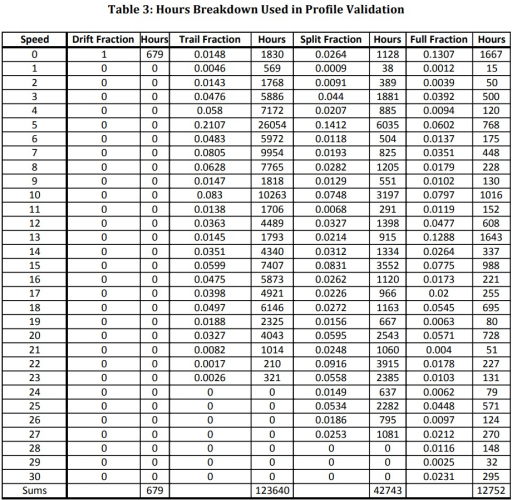
Good point on EMCON but as I've said before our data from the past 50 years feel more like peace time than intense war time like WWII.
ddg51 speed-time profile0.png
This doesn't tell anything about other power usage, though.

Agreed. I think the minimum effective self-defense level is now about 48x Mk41. Add a few Tomahawks and we're talking about 58-61x Mk41 cells.
I've a few ideas how to significantly increase magazine depth for a bit more voume but they need some drawing/3D work to get it across.
ESSM/AIM-260 replacing SM2?
yes, on the ower range end. ESSM needs a bit more range like another 10km/4nm and AIM260 would solve this.
Because the SM6 upper stage basically is replacing SM2, as the SM2 Block IIIC. The difference is that the SM2Blk3C doesn't have the big booster under it, while SM6 does.
Differences in boosters is fine for more grained range selection. If magazine depth can be significantly increased on the lower range end the midde range won't need a lot of rounds.
Naturally, unifying them would result in common production line, logistics and eventually give us even lower cost than today. That's the more important reason to be honest.
 
Good point on EMCON but as I've said before our data from the past 50 years feel more like peace time than intense war time like WWII.
Fair enough.

It's good we don't have speed data for modern ships under serious missile attack in terms of not nuking the planet, but it's bad for planning things.


I've a few ideas how to significantly increase magazine depth for a bit more voume but they need some drawing/3D work to get it across.
I'm thinking something that can be triple-packed into a Mk41 cell.
 
I'm thinking something that can be triple-packed into a Mk41 cell.
From a design point of view the simplest is what has been done with the Mk70 VLS for the army. A naval version should be bay size compatible (not deck visual size) with 3 cells and give a 1.5x if replaced 1:1.
If half replaced (1.5 + 1)/2 = 1.25 etc.

For a complete new design I would still go for a 4-pack SM2 & 9-pack ESSM design which would be ~37.68/38" for 6 cell instead of 8 MK41. Cold launch prefered. This would give a 3x SM2 or 1.7x ESSM increase.

As can be seen VLS isn't very space efficient. An automated magazine like those found with land artillery could get a much higher density. The only downside is a small number of launchers about 3? per Mk41 block. But it seems past navy version were as inefficient as the VLS and it's not worth it to do this in the space of less than 64 cells. But it would work out well for a compact arsenal ship.
 
As can be seen VLS isn't very space efficient. An automated magazine like those found with land artillery could get a much higher density. The only downside is a small number of launchers about 3? per Mk41 block. But it seems past navy version were as inefficient as the VLS and it's not worth it to do this in the space of less than 64 cells. But it would work out well for a compact arsenal ship.
I have no idea who told you VLS isn't space efficient, that's patently untrue. No US missile launching system except for the Mk 13 GMLS has better payload density than Mk 41 VLS. On top of that VLS provides a degree of payload versatility unmatched by any other system ever conceived. "Automated magazines" to my knowledge have never achieved this level of versatility or payload density, not to mention simplicity, fire rate, and safety.
 
Proposed frigate concepts would likely need boost developed technology, not what's in development. Upcoming and emerging technologies have nasty habit failure. Upgrade-ability is essential.

Standpoint new frigate need
Depending size somewhere between 32-64 VLS.
- quad packed air defense. But hypothetically if that missile can attack surface target
- VLASROC definitely needs an upgrade
- Hull sonar
- evolved CIWS.
- response rapid Naval gun. 76-127mm caliber.
- Torpedo tube
- anti-ship missiles are must but if said missile could also function to substitute land attack roles

Add on boats/helicopter

Is ballistic defense plausible, given patrol nature. Many navies frigates are their largest vessels therefore participating ABMD may require such.
1000043099.jpg
 
quad packed air defense. But hypothetically if that missile can attack surface target
- VLASROC definitely needs an upgrade
Yes it does.
- Hull sonar
Useful if its on a quietened hull, but not essential according to USN. Most people acknowledge there are situations where the hull sonar is the most immediate sensor available and worth having. Not so much if self-noise is a problem, possibly the reason the FF has no ASW onboard sensors at all.
- evolved CIWS.
LOL it needs to jump ahead a couple of generations already just to catch up.
- response rapid Naval gun. 76-127mm caliber.
Utility of 127mm has been debated so much. Maybe useful if the rate of fire was realistic for air defence, but its not. No gun can out-range an AShM so guns need to be included as part of layered air defence.
- Torpedo tube
- anti-ship missiles are must but if said missile could also function to substitute land attack roles
There are other ships and especially aircraft would normally carry land attack missiles. For USN, Tomahawks probably get spread around the fleet but thats because any frigate would get AEGIS compatible VLS and CMS that has them integrated by default.
 
When Dutch commissioned De Zeven class frigates, they contracted Lithuanian and Estonian shipyards for hulls then outfitted them. Berry Amendment aside US Navy could potentially contract hull components like ordering Lego blocks.
1000043566.jpg

A 485 foot hull, FFG(X) would have 48 VLS cells. Enough for...depending
- x8 cells ESSM totalling x32.
- x8 SM2/SM6
x4-8 VLASROC
x8 Sm3? Unlikely without AEGIS, unless smaller still networked version AN/SPY could adapt as it's already chosen F127.
Will there be Tomahawks?
- Diagonal launchers for anti-ship missiles. Likely NSM or JSM.
- LRASM?
what potential hypersonic contenders.

Guns? Likely 57-76mm however 5 inch is preferable if Navy wants high velocity or developed strike rounds
 
- Letting the USN shove all its gold plated requirements into one hull, leading to three very expensive 15,000t white elephants (DDG-1000)
DDG-1000 is not a white elephant. They're the best ASW combatants afloat. The program's cancellation is down to a shifting threat environment in which AAW combatants were prioritized over ASW combatants. In hindsight this decision was probably a mistake given the rising submarine threat but everything is easy in hindsight.

Also what "gold plated" requirements? List them for me champ
- Letting the USN run amuck with unproven PowerPoint concepts, leading to a class of 35 combatants with almost zero wartime utility (LCS)
The Littoral Combat ships serve a few key capabilities for the USN. First they are great for training young commanders and cultivating talent. Second they are excellent MCM platforms. Third they conduct SOUTHCOM presence missions. I swear to god you either haven't read anything about the program or are being deliberately facetious
- Letting the USN take a perfectly functional and proven high end frigate and change it until nothing of the original design is left and skyrocketing vosts and delays lead to cancellation (FFG-62)
The commonality between an Aquitaine and a Bergamini is around 10%, per the French government. The French and Italians also changed the design until nothing is left I suppose? This also implies that the commonality between a Bergamini and a Constellation will likely be higher than the commonality between an Aquitaine and a Bergamini.
The problem with the program explicitly lay in converting the FREMM platform to US DC standards. Weapons, sensors, and habitability changes by all indications were largely successful.
 
Last edited:
DDG-1000 is not a white elephant. They're the best ASW combatants afloat. The program's cancellation is down to a shifting threat environment in which AAW combatants were prioritized over ASW combatants. In hindsight this decision was probably a mistake given the rising submarine threat but everything is easy in hindsight.
Do they even have a towed sonar? Iirc only a basic suite in the bow. Being silent isn't being ASW.
The program's cancellation is down to a shifting threat environment in which AAW combatants were prioritized over ASW combatants.
Don't know about ASW, but they were meant to be 100% AAW combatants. This got reduced into a glorified frigate to keep costs down, but this is not "AAW over ASW".
 
Don't know about ASW, but they were meant to be 100% AAW combatants. This got reduced into a glorified frigate to keep costs down, but this is not "AAW over ASW".
According to Friedman's Destroyers:

"The combination of a large existing force of Ticonderoga class Aegis cruisers and the ongoing program of Arleigh Burke-class destroyers made it unnecessary to build an entirely new air defense ship. Instead, existing units could be upgraded. In particular, the Ticonderogas were to be upgraded with improved air defense command and control facilities... Plans called for building 32 ships to replace retiring Perry and Spruance-class ships."

@TomS has also explicitly stated in the past that Zumwalt was a replacement for the Spruance class. To quote:
The DD-21 was a direct roles and missions replacement for the DD-963, plus enhanced air defense for the modern near-shore threat environment and stealth to survive against advanced coastal defenses.
To borrow from the same post because he said it all in one:
The DDG-1000 didn't sacrifice ASW. Zumwalt is incredibly quiet, which is a big plus in ASW. Sensor-wise, it has the Multi-Function Towed Array active/passive sonar that is becoming the standard across the USN. The big difference from the DDGs is the switch to the SQS-60 MF sonar and SQS-61 HF combo, tailored more for near-shore waters than the giant SQS-53 LF sets across the rest of the fleet.

To that I will also add that sufficient air warfare capability is a key component of a modern ASW combatant. Fairly common submarine launched AShMs have consistently demonstrated the capability to conduct time on target multi-vector attacks. Indeed even the DD-963s were criticised for lacking sufficient air defence capabilities.

Despite this TSCEI is still unable to conduct ballistic missile defence and is inferior to Aegis in most ways when it comes to air warfare. The idea that DDG-1000 was designed as an air warfare combatant falls over unless you can reconcile this decision and your proposed intention.
 
Last edited:
Don't know about ASW, but they were meant to be 100% AAW combatants. This got reduced into a glorified frigate to keep costs down, but this is not "AAW over ASW".
No, Zumwalts were always replacements for the ASW-focused Spruance class.

So the Zs are somewhat weak in AAW. Basically incapable in BMD. I'm honestly not sure they can operate SM6, and they require a custom version of the SM2 (and iirc a custom ESSM version).
 
No, Zumwalts were always replacements for the ASW-focused Spruance class.

So the Zs are somewhat weak in AAW. Basically incapable in BMD. I'm honestly not sure they can operate SM6, and they require a custom version of the SM2 (and iirc a custom ESSM version).
They can use SM-6, although primarily for surface strike. They can use them for AAW but it wouldn't fall within their CONOPS aiui. The main problem is that the cancellation of the VSR meant that SPY-3 had to take over that role. It's less than optimal but does ok
 
No, Zumwalts were always replacements for the ASW-focused Spruance class.

So the Zs are somewhat weak in AAW. Basically incapable in BMD. I'm honestly not sure they can operate SM6, and they require a custom version of the SM2 (and iirc a custom ESSM version).
With original DBR and 80 cells, they were hardly meant to be weak though.
 

Similar threads

Back
Top Bottom