

You are using an out of date browser. It may not display this or other websites correctly.
You should upgrade or use an alternative browser.
You should upgrade or use an alternative browser.
Anti-drone technologies and tactics
- Thread starter uk 75
- Start date


- Joined
- 3 June 2011
- Messages
- 21,090
- Reaction score
- 19,501
jsport
what do you know about surfing Major? you're from-
- Joined
- 27 July 2011
- Messages
- 8,684
- Reaction score
- 6,958

Wotan
ACCESS: Secret
- Joined
- 18 April 2023
- Messages
- 449
- Reaction score
- 1,236
Looks efficient and cost-effective.
https://defence-blog.com/poland-to-arm-m28-bryza-aircraft-for-hunting-drones/
https://defence-blog.com/poland-to-arm-m28-bryza-aircraft-for-hunting-drones/

Forest Green
ACCESS: USAP
- Joined
- 11 June 2019
- Messages
- 14,727
- Reaction score
- 32,030
Forest Green
ACCESS: USAP
- Joined
- 11 June 2019
- Messages
- 14,727
- Reaction score
- 32,030
Inside Ukraine’s Interceptor Drone Innovations Swatting Down Thousands Of Russian Shaheds
https://www.twz.com/news-features/i...ions-swatting-down-thousands-of-shahed-drones
Wotan
ACCESS: Secret
- Joined
- 18 April 2023
- Messages
- 449
- Reaction score
- 1,236
Ainen
I really should change my personal text
- Joined
- 25 August 2011
- Messages
- 2,921
- Reaction score
- 5,056
View: https://x.com/GarethJennings3/status/2055785616902640044?s=20
Apkws gone operational on typhoon. Speaking of advantages of being within US weapon ecosystem.
Apkws gone operational on typhoon. Speaking of advantages of being within US weapon ecosystem.
Wotan
ACCESS: Secret
- Joined
- 18 April 2023
- Messages
- 449
- Reaction score
- 1,236
In the case of the drone warfare the size of a country becomes a big disadvantage.
https://www.atlanticcouncil.org/blo...nes-are-turning-russias-size-into-a-weakness/
You just can`t put interceptors everywhere...
https://www.atlanticcouncil.org/blo...nes-are-turning-russias-size-into-a-weakness/
You just can`t put interceptors everywhere...
Forest Green
ACCESS: USAP
- Joined
- 11 June 2019
- Messages
- 14,727
- Reaction score
- 32,030
Ainen
I really should change my personal text
- Joined
- 25 August 2011
- Messages
- 2,921
- Reaction score
- 5,056
But you absolutely can put interceptors everywhere, and Russia problem is largely interceptor problem.In the case of the drone warfare the size of a country becomes a big disadvantage.
You just can`t put interceptors everywhere...
E-7(i.e. modern AWACS, preferably S band one) and modern American fighters together are solution to this specific problem.
Everyone else (ok, other than UK since last month) do indeed lack this of that.
jsport
what do you know about surfing Major? you're from-
- Joined
- 27 July 2011
- Messages
- 8,684
- Reaction score
- 6,958
Wotan
ACCESS: Secret
- Joined
- 18 April 2023
- Messages
- 449
- Reaction score
- 1,236
Classic interception: F-16 versus drone, in conditions of heavy electronic warfare.
https://www.theguardian.com/world/2...blamed-nato-jet-downs-ukrainian-drone-estonia
A Sidewinder missile was used.
https://www.theguardian.com/world/2...blamed-nato-jet-downs-ukrainian-drone-estonia
A Sidewinder missile was used.

Sineva
ACCESS: Secret
- Joined
- 29 April 2010
- Messages
- 480
- Reaction score
- 1,341
I might want the guns above and below the optics...outermost guns aimed slightly outward...innermost inward...other barrels straight. Two cones of fire.
On maneuvering
https://techxplore.com/news/2026-05-ai-human-real-humans-classic.html
Chilling...true autonomy
https://arstechnica.com/ai/2026/06/...y-autonomous-drones-to-kill-russian-soldiers/
Improvements
View: https://m.youtube.com/watch?v=Um2B9NBLGNc&ra=m
Channel wings are back
https://hackaday.com/2026/06/15/custers-revenge-evtol-drone-brings-back-channel-wings/
Full EV plane
https://hackaday.com/2026/06/17/solid-state-batteries-take-to-the-sky/
To protect your hangar
View: https://www.youtube.com/watch?v=DKBVmaCR30o
https://hackaday.com/2026/06/16/security-camera-gets-several-defensive-upgrades/
On maneuvering
https://techxplore.com/news/2026-05-ai-human-real-humans-classic.html
Chilling...true autonomy
https://arstechnica.com/ai/2026/06/...y-autonomous-drones-to-kill-russian-soldiers/
Improvements
Channel wings are back
https://hackaday.com/2026/06/15/custers-revenge-evtol-drone-brings-back-channel-wings/
Full EV plane
https://hackaday.com/2026/06/17/solid-state-batteries-take-to-the-sky/
To protect your hangar
https://hackaday.com/2026/06/16/security-camera-gets-several-defensive-upgrades/
Last edited:
Wotan
ACCESS: Secret
- Joined
- 18 April 2023
- Messages
- 449
- Reaction score
- 1,236
Forest Green
ACCESS: USAP
- Joined
- 11 June 2019
- Messages
- 14,727
- Reaction score
- 32,030

- Joined
- 15 July 2020
- Messages
- 2,105
- Reaction score
- 7,533
Forest Green
ACCESS: USAP
- Joined
- 11 June 2019
- Messages
- 14,727
- Reaction score
- 32,030

shin_getter
ACCESS: Top Secret
- Joined
- 1 June 2019
- Messages
- 1,496
- Reaction score
- 2,195
Forest Green
ACCESS: USAP
- Joined
- 11 June 2019
- Messages
- 14,727
- Reaction score
- 32,030
- Joined
- 15 July 2020
- Messages
- 2,105
- Reaction score
- 7,533
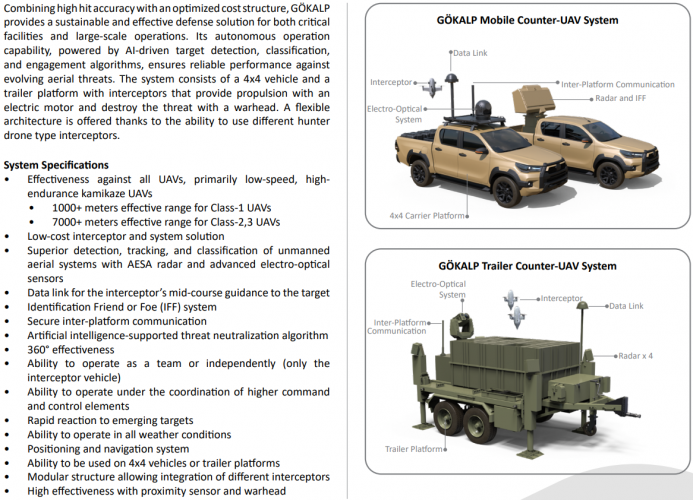
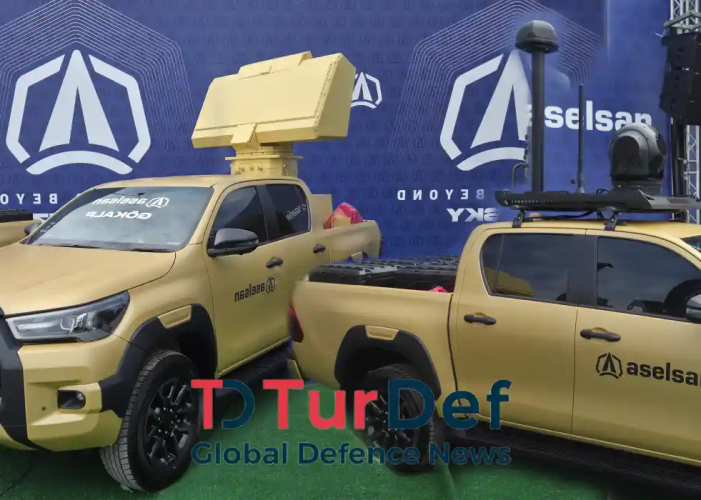
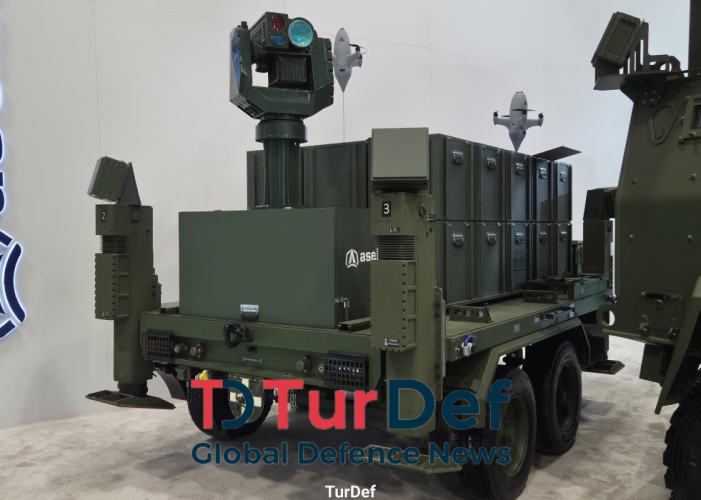
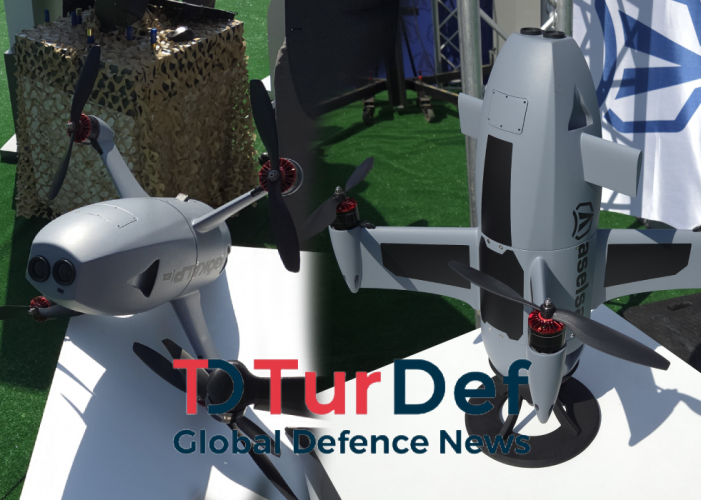
Turkey's Aselsan is developing; https://www.aselsan.com/en/defence/product/gokalp
GÖKALP a hard-kill counter-drone system optimized for the protection of critical infrastructure and military bases from various unmanned aerial systems. By fully integrating advanced radar and electro-optical sensors, the system delivers an end-to-end kill chain capability encompassing detection, identification, and tracking.

GÖKALP a hard-kill counter-drone system optimized for the protection of critical infrastructure and military bases from various unmanned aerial systems. By fully integrating advanced radar and electro-optical sensors, the system delivers an end-to-end kill chain capability encompassing detection, identification, and tracking.
Attachments
Scott Kenny
ACCESS: USAP
- Joined
- 15 May 2023
- Messages
- 19,822
- Reaction score
- 28,426
At the infantry squad-to-platoon level, I'm thinking Tungsten Super Shot loaded into Federal Flight Control wads, launched out of a box fed semi-auto shotgun. Give that shotgun a low power thermal scope that still has a decent field of view, problem solved.
More Dakka!
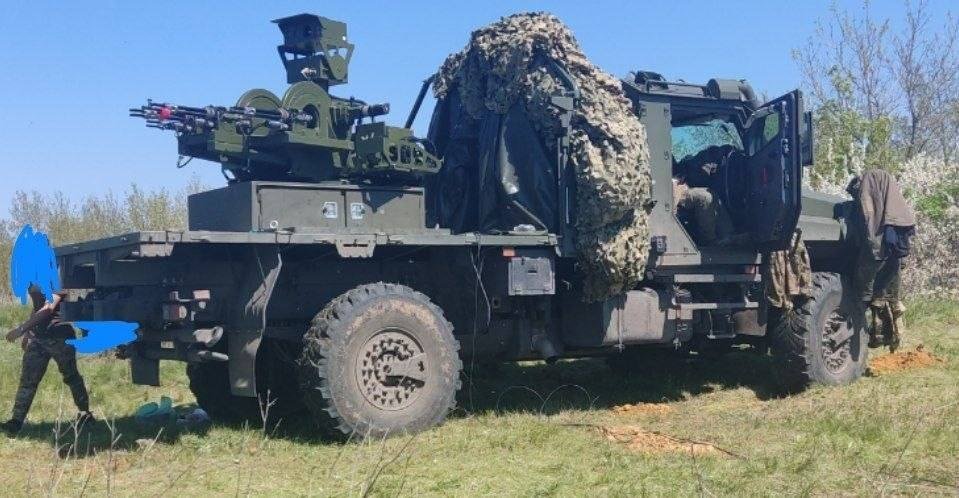
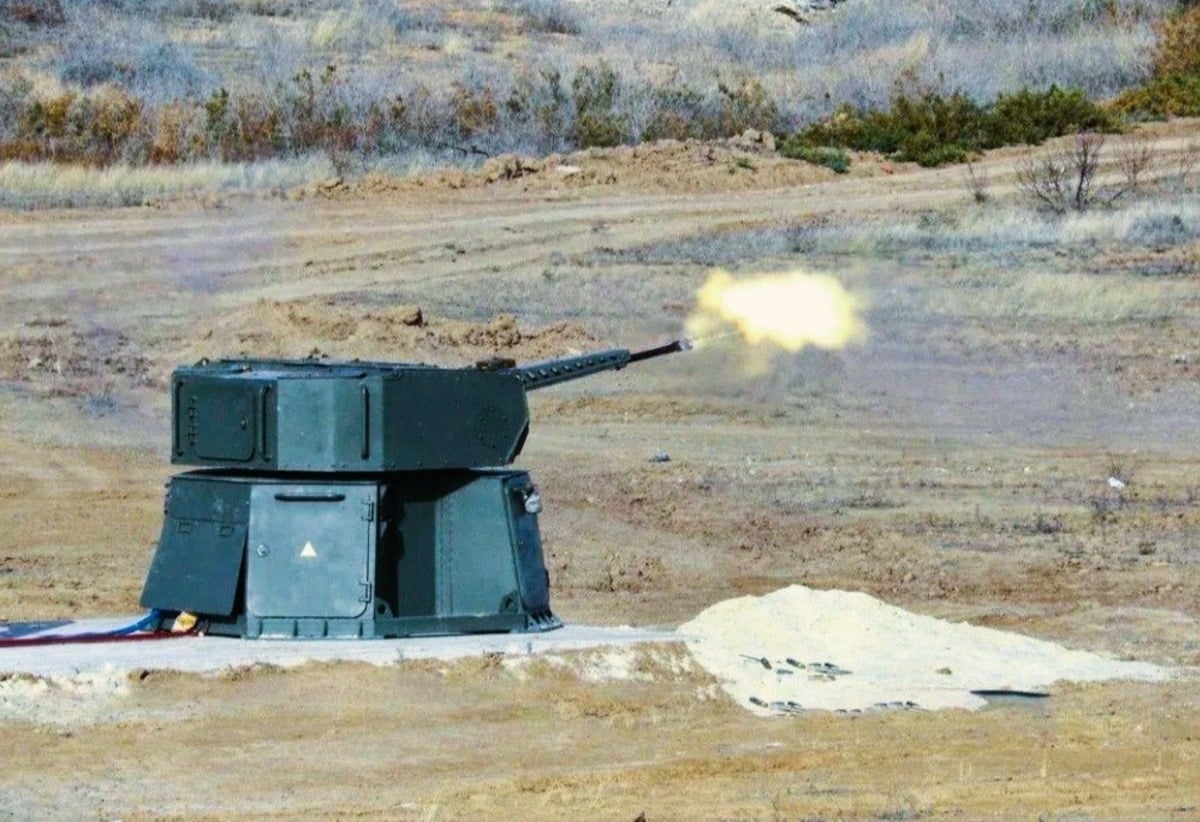
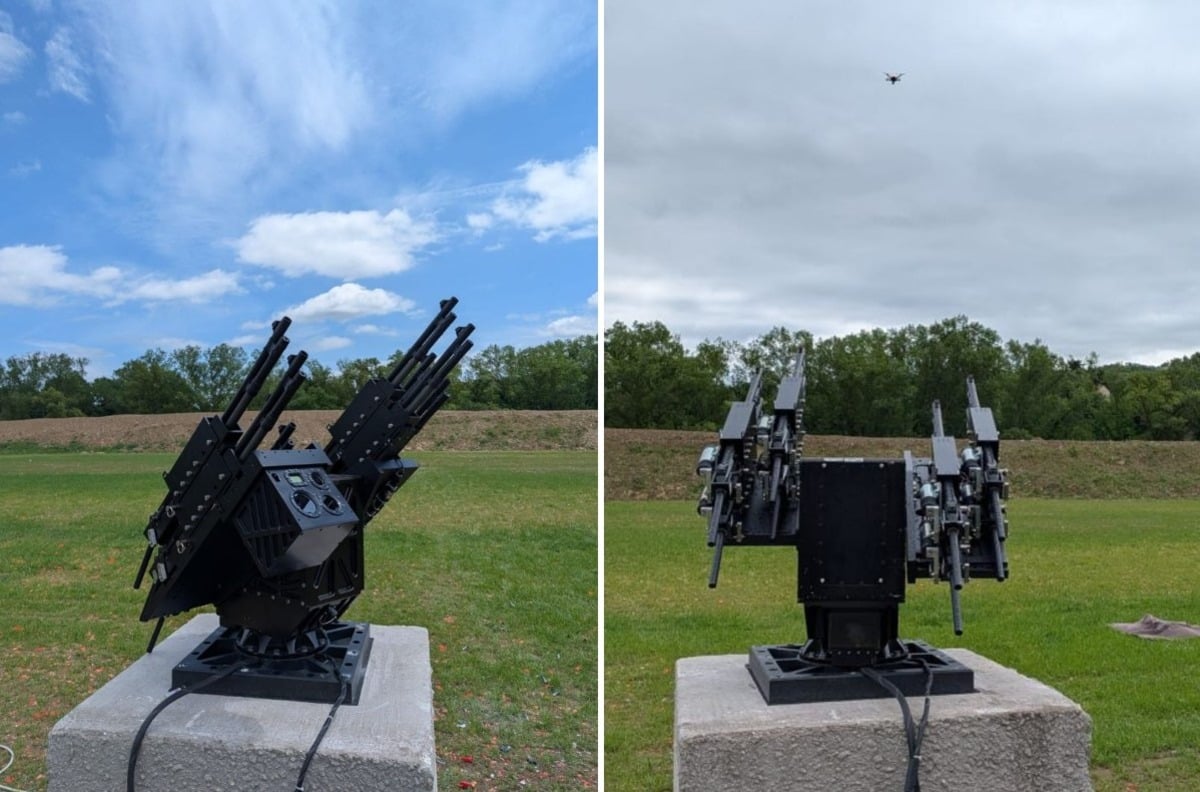
A new Russian close-range counter-UAS system equipped with four GShG-7.62 rotary machine guns is capable of achieving a combined rate of fire of up to 24,000 rounds per minute.
View attachment 813316
If Rambo saw those he'd pitch a tent
.


- Joined
- 15 July 2020
- Messages
- 2,105
- Reaction score
- 7,533
What about this approach: When troops (or vehicles) need to relocate/move so they are more open to attack - a mass of defensive fpv drones (or AI assisted swarm drones) are moving with them. Those drones must have some sort of sensor. Probably simple optical cameras and microphones - as anything else might be too expensive to scale up massively and would draw too much battery. So range of those sensors might be sort of similar to human sight and hearing. For better performance, drones could communicate between themselves and share sensor data - though again, that might end up being prohibitively expensive or power demanding. We're still talking maybe a 100 meters for interception, probably not more. Sure, some attack drones would slip past - but idea is lowering casualties, not stopping them completely.
The idea simply being that when an unknown drone is detected coming too close to your assets - the defensive drones intercept and detonate close by using a very light fragmentation warhead - still likely lethal to a drone from several meters away.
There would have to enough such drones, of course. As those defensive drones might still be more expensive and less available than regular attack fpv drones. You'd probably have to plan movement very carefully - so a protected area is reached before your defensive drones run out of power. Alternatively, replacement additional drones would need to be sent in, periodically.
Besides technology potentially not being there to work at scale and at desired price - another big question is whether you can count on having more drones than the attacker. If you have a 1000 km frontline, but you're making a movement with your troops only at 10 places, along say 20 km of the frontline in total - would that allow you to focus your defensive drones (which are probably not numerous enough to go alongside the 1000 km front all the time) on those 10 places and still outnumber the attacking fpv drones - because while those are cheaper and more plentiful, they are still distributed in units alongside all the 1000 km of the front. So localy and temporarily - the side using defensive drones might have more of them at hand and enough to do their job?
The idea simply being that when an unknown drone is detected coming too close to your assets - the defensive drones intercept and detonate close by using a very light fragmentation warhead - still likely lethal to a drone from several meters away.
There would have to enough such drones, of course. As those defensive drones might still be more expensive and less available than regular attack fpv drones. You'd probably have to plan movement very carefully - so a protected area is reached before your defensive drones run out of power. Alternatively, replacement additional drones would need to be sent in, periodically.
Besides technology potentially not being there to work at scale and at desired price - another big question is whether you can count on having more drones than the attacker. If you have a 1000 km frontline, but you're making a movement with your troops only at 10 places, along say 20 km of the frontline in total - would that allow you to focus your defensive drones (which are probably not numerous enough to go alongside the 1000 km front all the time) on those 10 places and still outnumber the attacking fpv drones - because while those are cheaper and more plentiful, they are still distributed in units alongside all the 1000 km of the front. So localy and temporarily - the side using defensive drones might have more of them at hand and enough to do their job?
- Joined
- 23 August 2011
- Messages
- 2,582
- Reaction score
- 8,510
What about this approach: When troops (or vehicles) need to relocate/move so they are more open to attack - a mass of defensive fpv drones (or AI assisted swarm drones) are moving with them. Those drones must have some sort of sensor. Probably simple optical cameras and microphones - as anything else might be too expensive to scale up massively and would draw too much battery. So range of those sensors might be sort of similar to human sight and hearing. For better performance, drones could communicate between themselves and share sensor data - though again, that might end up being prohibitively expensive or power demanding. We're still talking maybe a 100 meters for interception, probably not more. Sure, some attack drones would slip past - but idea is lowering casualties, not stopping them completely.
The idea simply being that when an unknown drone is detected coming too close to your assets - the defensive drones intercept and detonate close by using a very light fragmentation warhead - still likely lethal to a drone from several meters away.
There would have to enough such drones, of course. As those defensive drones might still be more expensive and less available than regular attack fpv drones. You'd probably have to plan movement very carefully - so a protected area is reached before your defensive drones run out of power. Alternatively, replacement additional drones would need to be sent in, periodically.
Besides technology potentially not being there to work at scale and at desired price - another big question is whether you can count on having more drones than the attacker. If you have a 1000 km frontline, but you're making a movement with your troops only at 10 places, along say 20 km of the frontline in total - would that allow you to focus your defensive drones (which are probably not numerous enough to go alongside the 1000 km front all the time) on those 10 places and still outnumber the attacking fpv drones - because while those are cheaper and more plentiful, they are still distributed in units alongside all the 1000 km of the front. So localy and temporarily - the side using defensive drones might have more of them at hand and enough to do their job?
There is an 'AWACS' style large quadcopter being developed by a company in Europe. Not sure if its tethered or not. But carries a small AESA and cues other 'effectors' to deal with incoming drones.
That might also work - providing the radar can have enough range (10+ km?) so effectors could be triggered to intercept in time. I'd guess tethered is still the way to go, due to power consumption, but that shouldn't be as much of a problem as long as the awacs quadcopter can move around all the time. Still - as long as it is emitting - it's gonna be a target on its own, the enemy is gonna try to locate its emissions and various fires are gonna get sent its way. Ideally the sensors should be both passive, long range and fairly reliable.
If going with a radar sensor - I'd think multiple such radar drones should work in a group so they periodically emit, move around, then emit again. leapfrogging each other.
If going with a radar sensor - I'd think multiple such radar drones should work in a group so they periodically emit, move around, then emit again. leapfrogging each other.
Forest Green
ACCESS: USAP
- Joined
- 11 June 2019
- Messages
- 14,727
- Reaction score
- 32,030
View: https://x.com/qwest__/status/2058829700454117805?s=20Testing of the Ukrainian Drone Interceptor with Rocket BoosterThe system lifts the interceptor to an altitude of 2 km, and it is released. This preserves the charge for further target searching in the sky.
View: https://x.com/front_ukrainian/status/2059263805293506651?s=20
Last edited:
Wotan
ACCESS: Secret
- Joined
- 18 April 2023
- Messages
- 449
- Reaction score
- 1,236
A KH-101 interceptet near Kyiv by a Hawk SAM missile.
https://www.facebook.com/reel/1661556424886801
And the curios case of a misidentification
View: https://x.com/Maks_NAFO_FELLA/status/2059010355351699624?ref_src=twsrc%5Etfw%7Ctwcamp%5Etweetembed%7Ctwterm%5E2059010355351699624%7Ctwgr%5E%7Ctwcon%5Es1_&ref_url=
https://www.facebook.com/reel/1661556424886801
And the curios case of a misidentification
View: https://x.com/Maks_NAFO_FELLA/status/2059010355351699624?ref_src=twsrc%5Etfw%7Ctwcamp%5Etweetembed%7Ctwterm%5E2059010355351699624%7Ctwgr%5E%7Ctwcon%5Es1_&ref_url=
- Joined
- 15 July 2020
- Messages
- 2,105
- Reaction score
- 7,533
Beretta system use shotguns or machine guns?
I believe it uses this; https://benelli.it/en/arma/m4-ai-drone-guardian

Sineva
ACCESS: Secret
- Joined
- 29 April 2010
- Messages
- 480
- Reaction score
- 1,341
A possible weapon for personal antidrone use is the interesting Mag-7 from south africa.
It looks a bit like an uzi on steroids,but is actually an extremely compact pump action shotgun firing a shortened 12 gauge round using a 5 round removable magazine in the grip.
There are long barrel & fixed stock versions,but the short barrel folding stock version is very compact.
Long barrel version,not exactly pretty looking.
It looks a bit like an uzi on steroids,but is actually an extremely compact pump action shotgun firing a shortened 12 gauge round using a 5 round removable magazine in the grip.
There are long barrel & fixed stock versions,but the short barrel folding stock version is very compact.


aonestudio
I really should change my personal text
- Joined
- 11 March 2018
- Messages
- 3,384
- Reaction score
- 9,243
Similar threads
-
Ukrainian and Russian Anti-drone Systems and ECCM
- Started by yahya
- Replies: 89
-
 The APKWS is now capable of shooting down drones
- Started by AN/AWW-14(V)
- Replies: 377
-
 Theoretical countermeasures and policies to protect strategic assets from drones
- Started by EmoBirb
- Replies: 11
-
-
