
Air Superior
ACCESS: Confidential
- Joined
- 31 October 2025
- Messages
- 54
- Reaction score
- 146
Where else are they supposed to put it?as every time somebody wants to add a sensor they just stick it someplace on the outside.

Where else are they supposed to put it?as every time somebody wants to add a sensor they just stick it someplace on the outside.

Where else are they supposed to put it?
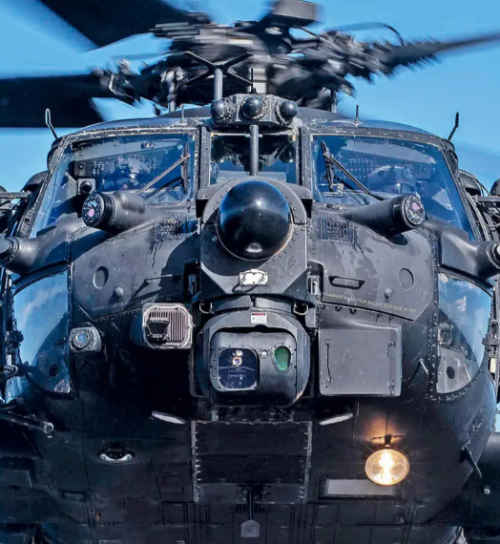

Perhaps pay some attention to aerodynamics?Where else are they supposed to put it?


Much would depend on how extended the nose fairing becomes. Helicopters are somewhat sensitive to center of gravity. Relatively minor adjustments might be able to be dealt with through Control Law adjustments, although this might induce more frequent maintenance actions. Larger fairings could result in significant chages. You could end up like the OH-58D that had to have 50lbs(?) lead weight in the tail cone to mitigate all of the systems forward of teh CG. That's 50 lbs less fuel or ammo.I've got to agree on this matter, for the amount of effort that has gone into developing these specialized variants something like an extended nose fairing would make a lot of sense. Not much that can be done about some features like the refueling probe though.
Sometimes I've also got to wonder if they're trying to jam too much into the H-60 airframe.
That's the actual problem.I've got to agree on this matter, for the amount of effort that has gone into developing these specialized variants something like an extended nose fairing would make a lot of sense. Not much that can be done about some features like the refueling probe though.
Sometimes I've also got to wonder if they're trying to jam too much into the H-60 airframe.
Much would depend on how extended the nose fairing becomes. Helicopters are somewhat sensitive to center of gravity. Relatively minor adjustments might be able to be dealt with through Control Law adjustments, although this might induce more frequent maintenance actions. Larger fairings could result in significant chages. You could end up like the OH-58D that had to have 50lbs(?) lead weight in the tail cone to mitigate all of the systems forward of teh CG. That's 50 lbs less fuel or ammo.


Okay. So you put the helicopters on flat bed trucks, drive to the landing zone. Everyone gets out. Trucks go back to the assembly area.SOCOM wants capabilities that allow rotary-wing aircraft to operate more quietly
https://insidedefense.com/daily-new...low-rotary-wing-aircraft-operate-more-quietly

Okay. So you put the helicopters on flat bed trucks, drive to the landing zone. Everyone gets out. Trucks go back to the assembly area.
You save a lot of gas too!
An equally sound idea!You just engage "whisper mode" and have the editors turn down the helicopter noises in the soundtrack.

Calls for a new acronym: ENEO - Extreme Nap-of-the-Earth Operations.Okay. So you put the helicopters on flat bed trucks, drive to the landing zone. Everyone gets out. Trucks go back to the assembly area.
Pretty sure 160th already flies at "truck bed height" altitudes as normal.Calls for a new acronym: ENEO - Extreme Nap-of-the-Earth Operations.
Yes but not as quietlyPretty sure 160th already flies at "truck bed height" altitudes as normal.
Then you need to swap between the loud rotorcraft and the quiet ones at some point. Which means an intermediate LZ the enemy can interdict.Just a thought and without reading the rest of the article behind the paywall on a recent Check 6 podcast they mentioned that the Joby urban air mobility air taxis are incredibly quiet. Perhaps the solution is to ferry forward new electric air vehicles than have a much lower sound profile and keep the traditional rotorcraft a little further in the rear.
Agree although I suspect most UH-60 LZs are probably going to be within interdiction range of something.Then you need to swap between the loud rotorcraft and the quiet ones at some point. Which means an intermediate LZ the enemy can interdict.
That would be ideal although in that scenario visual monitoring probably made the sound profile somewhat redundant anyway.Admittedly, for some places that's not a problem. Mogadishu, for example, the target of the Black Hawk Down raid was IIRC 1.5 miles from the airport flight line, so Delta et al could have taken the super-quiet birds directly to the target from the airport.
Just a thought and without reading the rest of the article behind the paywall on a recent Check 6 podcast they mentioned that the Joby urban air mobility air taxis are incredibly quiet. Perhaps the solution is to ferry forward new electric air vehicles that have a much lower sound profile and keep the traditional rotorcraft a little further in the rear.
Oh, right, this is the UH60 thread, not the MV-75.Agree although I suspect most UH-60 LZs are probably going to be within interdiction range of something.
Only if you're doing the raid in daytime. Silent helos at night? Zero Dark Thirty raids? That strange sound you just heard was the entire SOCOM giggling maniacally.That would be ideal although in that scenario visual monitoring probably made the sound profile somewhat redundant anyway.
Sadly I suspect that the T901 engine will only bring H-60 back to it's original lift requirement under some atmospheric conditions. Engine efficiency changes with atmosphic conditions of course, so you might get a 10% performance boost at sea level, and much less at higher or hotter days. This is not to say that the new engine is not warranted, but I do think the sales pitch somewhat over hypes the capability given historically overstated capabilities.New Engines Key To Night Stalker MH-60M Black Hawk Upgrade Plans
https://www.twz.com/air/new-engines-key-to-night-stalker-mh-60m-black-hawk-upgrade-plans

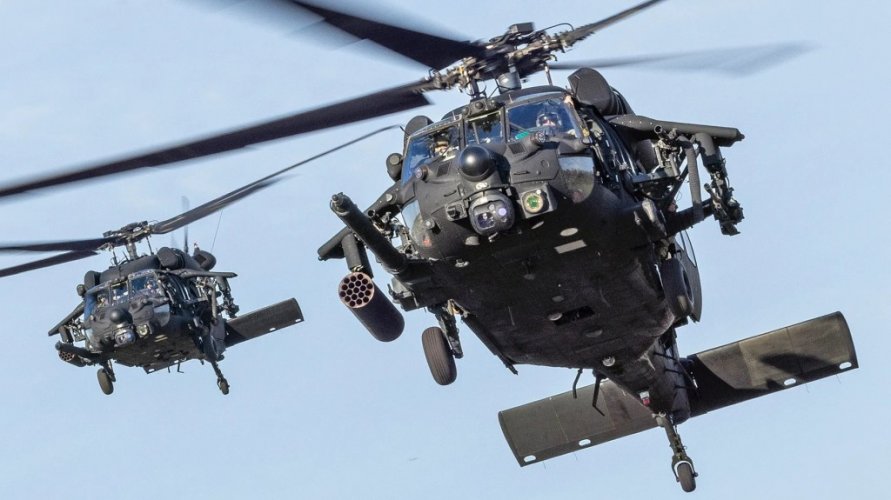
The Army is probably banking on Congress topping the program up again and allocated that funding elsewhere.Interestingly, the Army again rejected funding for the ITEP/T901 project in its fiscal year 2027 budget request.
Mike Souza, the GE T901 project manager, stated, "The project requires a small amount of additional funding to complete the EMD phase, but far less than the funding already received (Congress allocated approximately $175 million in fiscal year 2026)."
I mean, AW101s are inarguably better for CSAR type missions than any flavor of H60.State department approves Norway to purchase UH-60M
https://www.state.gov/releases/bure.../2026/08/norway-uh-60m-black-hawk-helicopters
Makes interesting reading as the they originally ordered the HH-60W got potential approval FMS then cancelled due to concerns about the Trump administration. And decided to use the money to purchase additional AW101…
