Bell MV-75 Cheyenne II (aka V-280 Valor)

The wing is rotating to me.
Yeah, definitely rotating to stow, like the Osprey.
Wow! That is almost an entirely new aircraft! Landing gear, gun and other ordnance structures

I could see some of the features being of interest to AFSOC, especially the refuelling probe and the CLTs in the aft fuselage. Also possibly the folding features. Yes, it should be able to self-deploy but being able to stow AFSOC birds efficiently on ships is still a useful capability.
 
Some more MV-75 news hitting the press - Bell and KAI collaborating on efforts related to the HSMUH contract in South Korea

https://news.bellflight.com/en-US/2...standing-with-korea-aerospace-industries-kai/

Admittedly, I would think some of the Tilt Rotor's unique advantages in range and speed are somewhat diluted in a small theatre like the Korean Peninsula, which could make the increased cost more of a negative if not dealing with the "Tyranny of Distance", but it also makes good sense for ROK and U.S. forces to be aligned on equipment given the closeness of operations in the ROK.
 
Admittedly, I would think some of the Tilt Rotor's unique advantages in range and speed are somewhat diluted in a small theatre like the Korean Peninsula
On the other hand, one of the jobs for this thing will be logistics, which involves a lot of back-and-forth trips. More range means less time spent refueling (or more possible bounces between destinations where fuel isn’t available), and higher speed means more round trips in the same amount of time.
 
Some more MV-75 news hitting the press - Bell and KAI collaborating on efforts related to the HSMUH contract in South Korea

https://news.bellflight.com/en-US/2...standing-with-korea-aerospace-industries-kai/

Admittedly, I would think some of the Tilt Rotor's unique advantages in range and speed are somewhat diluted in a small theatre like the Korean Peninsula, which could make the increased cost more of a negative if not dealing with the "Tyranny of Distance", but it also makes good sense for ROK and U.S. forces to be aligned on equipment given the closeness of operations in the ROK.
Don´t forget how the Korean war unfolded: allied force having to fight from a remote corner of the country launching a large share of their daily missions from remote Japan.
Cheyenne´s range and speed matter. It´s a guarantee of resilience and tactical relevance (and Korea is not that small at Prop range).
 
And for the Maritime strike role , even as replacement for the Marine Corps AH-1Z/ UH-1Y

https://www.twz.com/air/new-cruise-missile-armed-mv-75-tiltrotor-concept-for-the-marines-shown-off

cheers
I would not place too much detail accuracy or credibility on any future aircraft AI generated imagines or small scale models presented by Bell or any other aerospace companies. Company Marketing and Art departments typically generate these designs in the absence of any consultations with engineering SMEs.
 
Last edited:
To be expected of course, and the sudden huge drop off in budget for those two aircraft seems a bit off unless I'm misreading something. There is still a need for work and production of both the UH-60M and AH-64E.
 
"More than 40 lawmakers want briefing from Hegseth on Army aviation cuts"
Article is behind a paywall at Inside Defense, but the title says it all. The cascade effect of terminating a major aviation program in the United States can now put ~ 100K people looking for a new job. Major programs can employ people in more than half of the states.
 
Probably that ordering Boeing to build some Cheyenne would do the trick. Think Mustang B & C.
 
Foreign military, sales of both the Blackhawk and Chinook would’ve been healthy for the next decade if it had not been for the current administrations actions. Both these aircraft offer capabilities at a price point that makes them attractive to countries that cannot afford a Cheyenne II. Helicopter‘s more than fixed wing aircraft require a reliable supply of replacement parts. This is good news for my friends in Europe, at Airbus and Leonardo developing new military helicopters.
 
The lack of performance would not offset political diatribes*. We live in an era post NH-90.

(you can already see that happening in late Europe orders)

*then if Trump is succeeded by one of his hard core political mignon, things might eventually turn that way. It's one thing to be 80+ with misconception but another to have reached that already at 40 (see what happens with the French Presidency deserted by most of its traditional empowering allies, including the US).
 
Last edited:
I believe we’re both correct. Recent sales are short term, a decade out is long-term. It will take at least a decade to develop an all new replacement for the Blackhawk.

However, militarized versions of the Airbus H175 and Leonardo 189 while not optimal, can fulfill a large percentage of the missions as an interim solution.
 
It’s hard to not find the hysteria about the end of new procurement of these legacy platforms a bit excessive - they will be in inventory for decades to come, with support/sustainment and maybe even midlife updates still to come. Plus, where were the similar histrionics about the V-22 and H-1 lines ending… or is it only of concern when it’s not a Bell program?

Sikorsky has the H-53K and a massive fleet of H-60s to support, Boeing is still building H-64s and H-47s for FMS customers… and again, these are programs that exist to support the DOD, not for Corporate welfare.

Look how great it turned out when Congress forced the Navy to buy both LCS designs at half quantity versus allowing a downselect because “OMG JOBS IN MY DISTRICT”…

But with how Washington works these days, watch the Army cave because someone won’t want to upset the congressional delegation from Pennsylvania or some nonsense like that.
 
The lack of performance would not offset political diatribes*. We live in an era post NH-90.

(you can already see that happening in late Europe orders)

*then if Trump is succeeded by one of his hard core political mignon, things might eventually turn that way. It's one thing to be 80+ with misconception but another to have reached that already at 40 (see what happens with the French Presidency deserted by most of its traditional empowering allies, including the US).
NH-90? Hasn't that been a disaster of a program for everyone who has bought them?

For its size and weight class I don't see the UH-60 as lacking in performance. If you're comparing it to a significantly larger helicopter of course it won't be able to carry or lift as much since you can't cheat physics. As for the CH-47 it has always done good work.

Perhaps one can argue Sikorsky should have invested more into making a militarized cargo/utility variant S-92 to compete with the AW101 and EC225 but I think they missed that chance. They have plenty of H-60 related work, but I'd be a bit worried about the long-term outlook since I'm doubtful any military/government customer will adopt one of the X2-type designs unless the US commits to an order first.

Civilian compound-helicopters are a tough sell and civilian tilt-rotor designs haven't had much luck either though I can appreciate how the Italians have persisted with the AW609.
 
Perhaps one can argue Sikorsky should have invested more into making a militarized cargo/utility variant S-92 to compete with the AW101 and EC225 but I think they missed that chance.
Actually, Sikorsky militarized variant of the S-92, The Canadian CH-148 Cyclone. The CH-148 program can only be considered to be successful in comparison to the NH-90. No plans for any future sales following Canada's experience.
 
https://www.defenseone.com/defense-...eplacement/413219/?oref=d1-featured-river-top

Normal non-commital USMC response to the popular question. IF the USMC goes this route, I think they are for all intent building a new aircraft that utilizes some components from MV-75.
Agreed, I expect they'll build an AV-75 that uses the MV75 wing and engines with a bespoke fuselage. A bit narrower but with weapons bays that will clear the proprotors in forward flight.

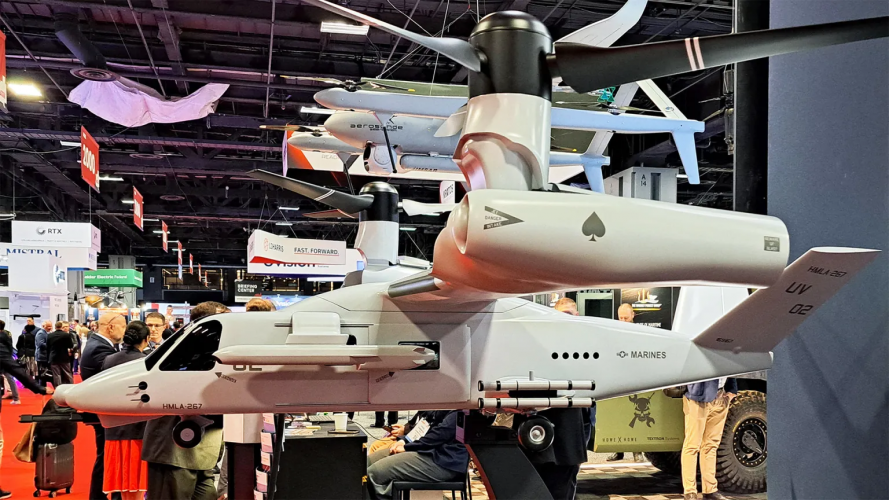
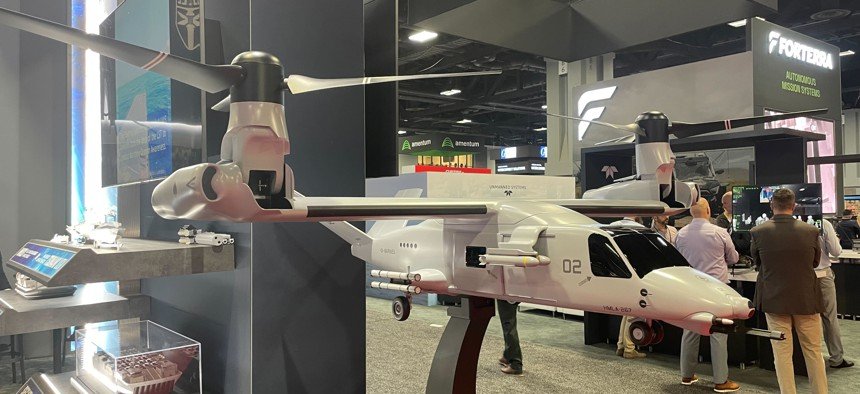
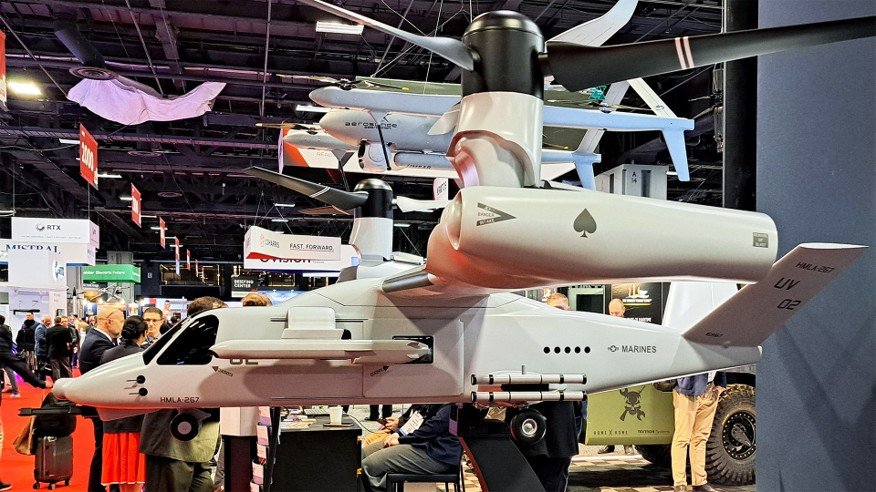
That said, this isn't a terrible-looking thing:
Armed MV-75 from Modern Day Marine conference.jpg
Those JAGMs on the forward stubs make me wonder where the blade tips are in forward flight.

Gun and EOTS eyeball need some better integration, IMO. I assume that the MV-75 has at least a weather radar, if not a full TFR in the nose already, so the EOTS needs to be clear of the radar(s) in the nose.
 
Those JAGMs on the forward stubs make me wonder where the blade tips are in forward flight.
I don't think the rotors will pose a problem. The center is level with the wings so all stores are on the lower half of the circle area.
And the JAGM are rail launched so they won't suddenly veer off into the blades.
The manpads in the back on the other hand are more problematic imho. What happens when the aircraft suddenly turns while firing?
This could be accidental rather than intended by the pilot.

Anyhow, what about a targeting radar like those on top of the apache's. They also got anti-drone antennas. Those need to be placed around the fuselage, too.
 
I would not place too much detail accuracy or credibility on any future aircraft AI generated imagines or small scale models presented by Bell or any other aerospace companies. Company Marketing and Art departments typically generate these designs in the absence of any consultations with engineering SMEs.
I wasn’t going to bother to get into details, but since the topic is still alive, I’d like to point out a few minor issues with the USMC MV-75 variant model. The MV-75 fuselage is much narrower than the V-22. There is no volume envelope in forward fuselage for a nose wheel to retract and crew to sit. The chin mount gun and ammo magazine would wipe out the crew footwells.
 
@CTR : Given the extensive changes with this configuration, it would be natural to have the front cockpit fully redesigned. Think also naval requirements for crew egress, outside view, floatation device etc...

For example, the gun barrel and ammo drum might have been the main beneficiary of the landing gear suppression. The swiveling nose landing gear being a necessary modification for deck handling, so that would have been provisioned early, not the other way around.

Hence, I am pretty sure the entire front section is completely new, not just a marketing trick to give it an Alligator look.
 
Last edited:
@CTR : Given the extensive changes with this configuration, it would be natural to have the front cockpit fully redesigned. Think also naval requirements for crew egress, outside view, floating device etc...

For example, the gun barrel and ammo drum might have been the main beneficiary of the landing gear suppression. The swiveling nose landing gear being a necessary modification for deck handling, so that would have been provisioned early, not the other way around.

Hence, I am pretty sure the entire front section is completely new, not just a marketing trick to give it an Alligator look.
It’s not a matter of redesign, it’s trying to put 100 pounds of potatoes in the 50 pound bag. The only way to fit both a nose gear and the crew in the same area shown in the model would be to either widen the forward fuselage or make it longer. If you widen the forward fuselage, you need to make the wing span bigger for the rotors to clear. If you make the forward fuselage longer you need to make the aft fuselage longer also.

The Seahawk version of the Blackhawk has a tail wheel and works well for spotting. Finally tow bar clearance to the nose mounted gun would be an issue with the nose gear shown on this model.

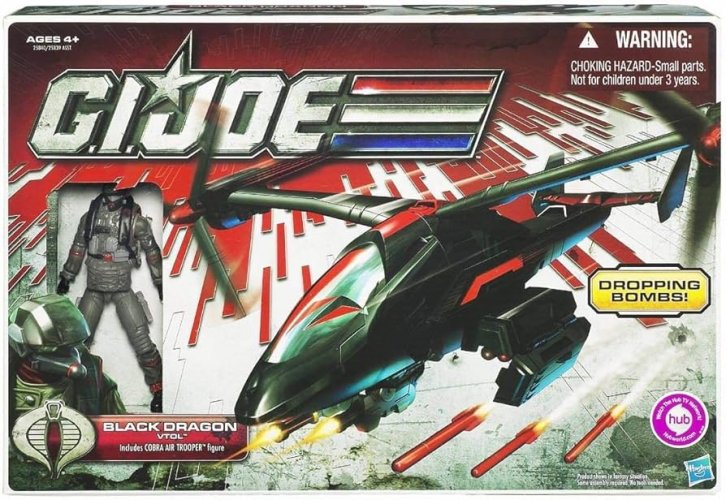
The model is no more than a cartoon by marketing. In some ways, it reminds me of the G.I. Joe toy model of a Tiltrotor aircraft.
 

Attachments

  • IMG_9685.jpeg
    IMG_9685.jpeg
    126.9 KB · Views: 50
Tow bar: FLG extension (also needed for ship landing -see MH-60 Seahawk)
CG Balance: MLG is now aft with all its own mass well behind the CG
Front fuselage is longer (see pilots side windows) and probably taller (see pitot tubes)

What I don't understand is the lack of wing pylons. A retarded separation (ballute/chute) could clear the weapon with enough separation before its propulsion engine is switched on.
 
TWZ posted some better photos and a more detailed article on the USMC MV-75 model. Don't know what the cruise missiles weigh, but not positioning them below the wing and rotor center of lift is not a good design practice.

https://www.twz.com/air/new-cruise-missile-armed-mv-75-tiltrotor-concept-for-the-marines-shown-offView attachment 812881
Those look like NSMs, so about 770 pounds each.

The Red Wolf missiles on the other side are something under 250 pounds each.
 
The more I look at this the more I see a completely different aircraft that happens to have some common parts. Fuselage is changed with reversed landing gear and structural stiffening for weapon pylons. Auto fold will require more weight on the top of the aircraft. Who knows how much marinization will impact the aircraft. Folding vertical stabilizers. Fuel systems will likely change. Of course the electronics will be different which may require different electrical equipment. Software would likely be a complete rewrite. Good news is that the power train and dynamics (less the proprotors) might be common.
 
Which suggests series production from that factory and maybe IOC in late 2027...


The more I look at this the more I see a completely different aircraft that happens to have some common parts. Fuselage is changed with reversed landing gear and structural stiffening for weapon pylons. Auto fold will require more weight on the top of the aircraft. Who knows how much marinization will impact the aircraft. Folding vertical stabilizers. Fuel systems will likely change. Of course the electronics will be different which may require different electrical equipment. Software would likely be a complete rewrite. Good news is that the power train and dynamics (less the proprotors) might be common.
Is that really a bad thing, though? See UH1/AH1 commonality for an example. Especially UH-1Y/AH-1Z commonality, where the common parts are the rotors, transmission, engines, and entire tail boom.

Though I still think that the "AV-75" gunship version needs a narrower cabin than the MV-75, so that the weapons in bays will clear the proprotors.
 
I would be surprised to see Bell move military production away from Amarillo since all of the trained personnel live there. I would expect the new facility will make all of the sub components to be shipped north.
We are approaching midway through 2026 and the first prototype is not flying, so IOC (that requires production aircraft) in 2027 is not likely.
 
Which suggests series production from that factory and maybe IOC in late 2027...
Don't read into these press releases more than is there. Remember the V-22 Osprey fuselage is manufactured by Boeing in Philadelphia PA, the wing pylons (including gearboxes and rotors) are manufactured in the DFW Metroplex of TX, and the aircraft's final assembly is in Amarillo TX.

For the MV-75 production the fuselage will be manufactured in Wichita KS, the wing pylons (including gearboxes and rotors) will be manufactured in the DFW Metroplex of TX, and the aircraft's final assembly will be in Amarillo TX.

Note, new build production of the V-22 Osprey in Amarillo ends in 2027. In return for tax breaks and other compensation Bell promised the city of Amarillo that the MV-75 would fill the void left by the end of V-22 production.
 
Back
Top Bottom