Bell MV-75 Cheyenne II (aka V-280 Valor)

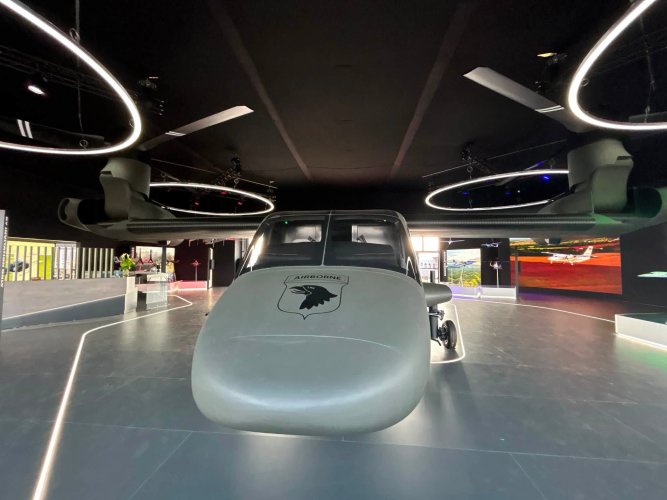
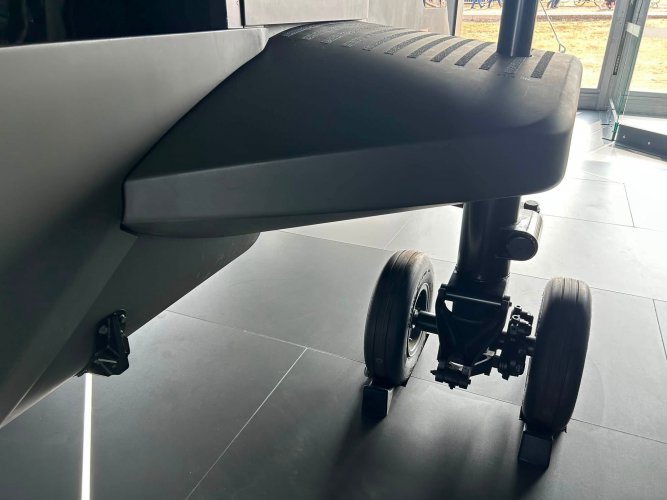
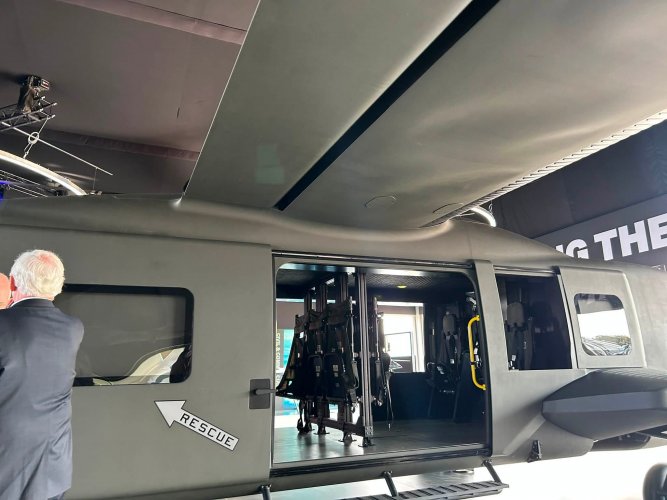
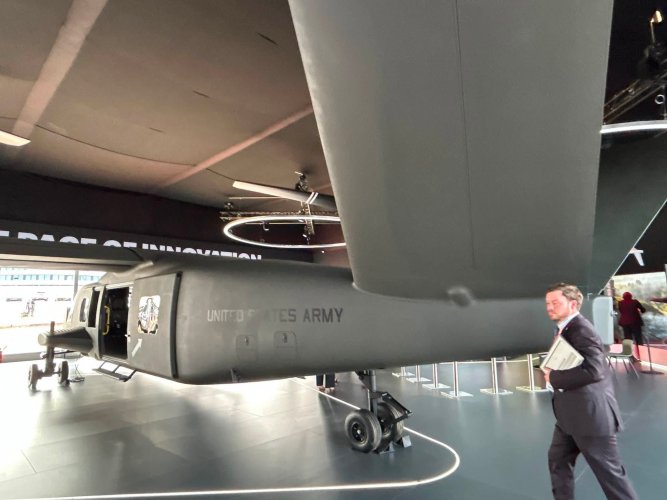
Since its been long days for me here at FArnborough Air Show 2026, including traveling have not had time to upload my photos. Anyhow very grateful for Textron at beginning of the week for hosting me so here are my photos of MV-75 mock up.

Farnborough_2026_Bell_MV_75_0.jpg Farnborough_2026_Bell_MV_75_2.jpg Farnborough_2026_Bell_MV_75_3.jpg Farnborough_2026_Bell_MV_75_5.jpg Farnborough_2026_Bell_MV_75_6.jpg
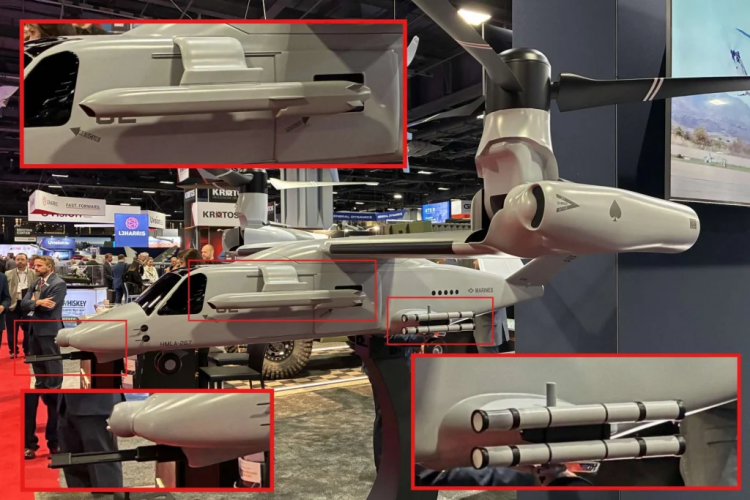
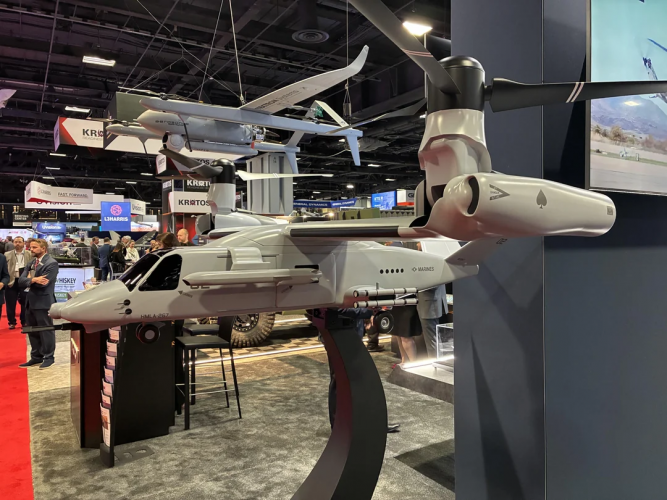
Farnborough_2026_Bell_MV_75_4.jpg


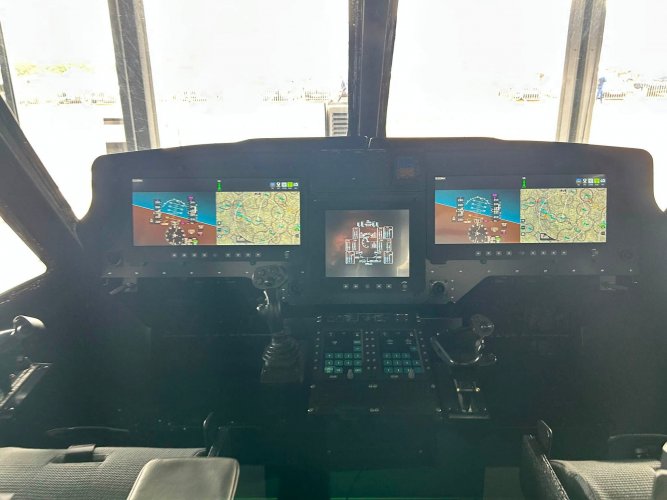
So the final revamped design I am led to believe, some noticeable compared to the V-280, like the cockpit etc,

cheers
 
Last edited:
Since its been long days for me here at FArnborough Air Show 2026, including traveling have not had time to upload my photos. Anyhow very grateful for Textron at beginning of the week for hosting me so here are my photos of MV-75 mock up.

View attachment 818818View attachment 818819View attachment 818820View attachment 818822View attachment 818823View attachment 818819

So the final revamped design I am led to believe, some noticeable compared to the V-280, like the cockpit etc,

cheers
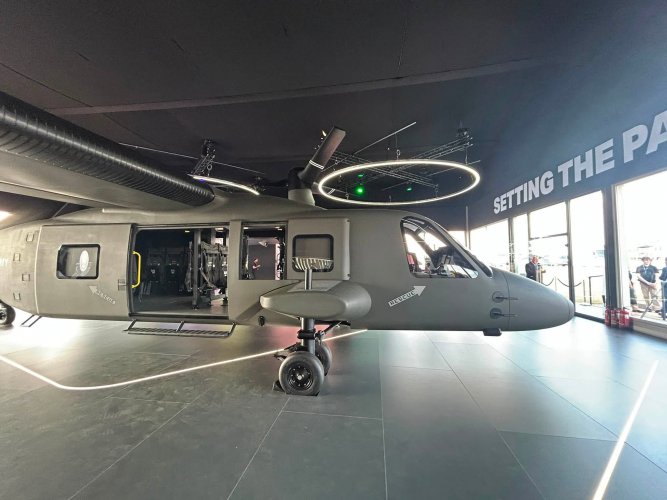
Thank you for the photos RavenOne. Interesting to see the changes in the MV-75 cockpit from the V-280 demonstrator. Gone are the cockpit doors, access is now through the passageway behind the crew like on the V-22. Also gone are the side stick collective interceptors borrowed from the Bell 525. These have been replaced with V-22 style throttle (AKA Blottle) interceptors.
 
@RavenOne - As always my gratitude at your sharing thses brilliant photos.
These changes tells me that with the U.S. Army desire to accelerate the program, some of the "stretch " technology has been deferred or dropped.
Building six prototype aircraft is likely also a gamble toward acceleration. However with a digital twin and new production technologies it may not be as risky as it might be with old tech means.
 
@RavenOne - As always my gratitude at your sharing thses brilliant photos.
These changes tells me that with the U.S. Army desire to accelerate the program, some of the "stretch " technology has been deferred or dropped.
Building six prototype aircraft is likely also a gamble toward acceleration. However with a digital twin and new production technologies it may not be as risky as it might be with old tech means.
Six aircraft being built at the same time is just building out a small flight test fleet. It's inefficient to use just one or two aircraft for all the testing that is required.
 
Nope. Doors deleted. The cockpit and cabin are supposed to be integrated so everyone can use the same doors. The cockpit side windows can release in an emergency egress situation.
Just like the Chinook and Osprey, nothing particularly unusual about this design decision.
 
yes, But it's going to be hard to return direct fire if those doors are deleted and windows are for emergency only. (not that this happens often but there are some occurrences)
 
Last edited:
Thats 12 regular seats i see plus 2 more behind the cockpit. though the rear wall of the cabin is not visible. could be a few more there but not sure how likely is that.

and reason for cockpit door deletion is likely weight saving. 99% of aircraft projects put a premium on weight saving.
 
Last edited:
Thats 12 regular seats i see plus 2 more behind the cockpit. though the rear wall of the cabin is not visible. could be a few more there but not sure how likely is that.

and reason for cockpit door deletion is likely weight saving. 99% of aircraft projects put a premium on weight saving.
Another major factor I believe is the incorporation of side stick inceptors in place of conventional center cyclic and left side collective controls. Side stick interceptors makes crew ingress egress through external doors more difficult. This was a major reason why the commercial Bell 525 Helicopter does not have crew doors.
 
Last edited:
When you really look at the model, everything below the wing and rotors is a new aircraft that has a resemblance to the MV-75. Perhaps a MV-75K ?
 
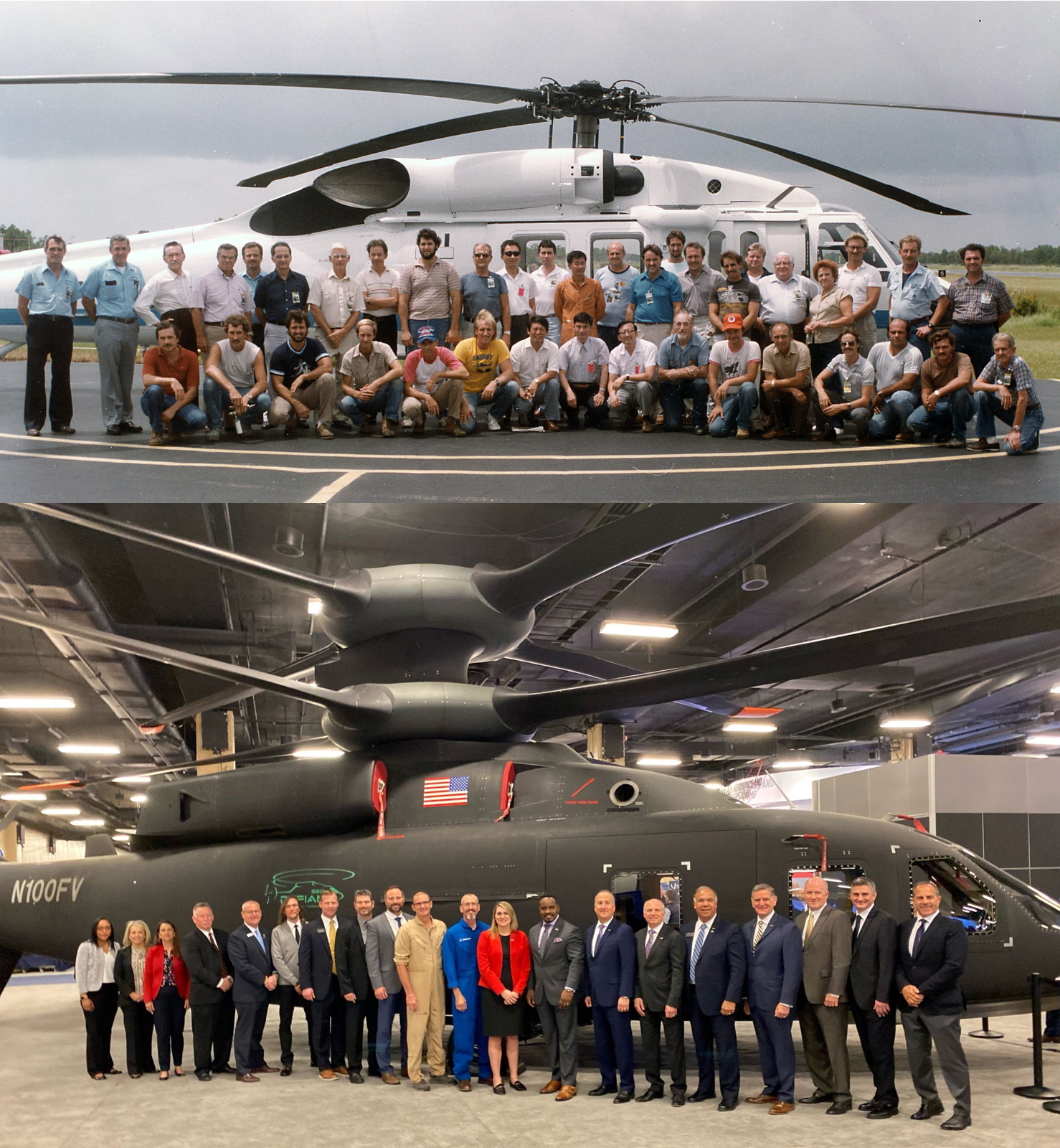
i think one of reason that Sikorsky–Boeing SB-1 Defiant was not selected
was do enormous size of there Helicopter, while Bell V-280 has much lower profile...
FjY1YBAXkAYoJvC

shame would be nice to see both in service (sorry fantasising here as its mega hot in UK 32 degrees lol) even the golfballs at RAF Menwith Hill seem smaller lol in comparison.

I imagine it came down to that very reason. Would it even fit in a c5 let alone a 17? Was it going to ferry from conus to the middle east or Europe? If it can't deploy easily then its no better than having nothing at all.

Then again like my Travis AFB 60th AMW t shirt says size does matter....and perhaps the FVL requirement was NOT to be airlifted but self deploy. I know that was a factor perhaps for the then 280 as the likes of the Nightstalkers would want to deploy say across the Pacific to (by AAR) then land swap crews for the first mission. So maybe the SB-1 not designed in mind to be ferried in a C-5M, or C-17A..

cheers
 
Highly agree with that view point RavenOne, I too would like to have seen both in service, but then we can dream I suppose.
 
All of the coaxial compounds could fly well enough, but they suffered from the same issues with all helicopters; vibration. They had twice the vibration level of other helicopters 8:1. This was not a happy point for the maintainers. The number of rotor blades (16) on the aircraft and the size of the transmission did not sit well with the logisticians. The tilt rotor had issues as well, just not as many traumatic ones.

I think everyone was hoping for both technologies to make the grade. Might have, if the FARA program had not died.
 
To be fair, the construction chosen by Sikorsky seems oddly bulky and complex, compared to the assemblies found on the helicopters designed by Kamov (which have decades of service, even at sea, under their belt).
 
To be fair, the construction chosen by Sikorsky seems oddly bulky and complex, compared to the assemblies found on the helicopters designed by Kamov (which have decades of service, even at sea, under their belt).

Kamov isn't driving a pusher prop or going for extreme speed. They have a very conventional coaxial system, which is fine for saving deck area, but is also very tall to give their very bendy blades adequate clearance. The X-1 configuration is quite different in practice; you need a clutch to drive the pusher and you need close-set rotors to reduce drag, which in turn means you need really rigid rotor blades so they don't bump.
 
Kamov isn't driving a pusher prop or going for extreme speed. They have a very conventional coaxial system, which is fine for saving deck area, but is also very tall to give their very bendy blades adequate clearance. The X-1 configuration is quite different in practice; you need a clutch to drive the pusher and you need close-set rotors to reduce drag, which in turn means you need really rigid rotor blades so they don't bump.
That's what I was saying, just more detailed.

Which is that coaxials by themselves are not overly troublesome if their unique traits are accounted for. What Sikorsky did, was attempting to cramp all sorts of novelties into the SB-1 which made it mechanically complex to a laughable degree.
 
That's what I was saying, just more detailed.

Which is that coaxials by themselves are not overly troublesome if their unique traits are accounted for. What Sikorsky did, was attempting to cramp all sorts of novelties into the SB-1 which made it mechanically complex to a laughable degree.

I guess I'm confused then. Sikorsky didn't cram in novelties just for fun, they built SB-1 the way they did to hit a specific set of requirements that a classical coaxial design would not even come close to achieving. So the comparison to the Kamov designs is pointless.

To me, the road not taken that seems like to would make sense is the Piasecki ring pusher. It doesn't give you the crazy speed of the X-1 or tilt rotor configurations, but it would let you wring another 40 knots or so out of basically the same footprint.
 
Last edited:
Sikorsky was given a set of requirements by the government to design to. They did that. If you look at the AVX concept for the FVL Cap Set 3 their design was more like the Kamov construct. The AVX design was probably very sound given the pedigree of the design team. It did not meet the U.S. Army's requirements so they did not get selected.

As to the Piasecki ring pusher, which has been repeatedly demonstrated since the early 1960's (?), I suspect it was due to hubris on the part of Sikorsky. Not that you see that very much in the aerospace industry :rolleyes:
 

Sikorsky-Boeing’s FLRAA bid was much cheaper, but couldn’t offset ‘unacceptable’ design metric: GAO

'The Army reasoned “Sikorsky’s proposal provided something similar to a drawing of what the house looked like on the outside…. Such a picture did not provide the functional detail that the Army required showing what the space would look like on the inside,” according to the Government Accountability Office'.

https://breakingdefense.com/2023/04...ouldnt-offset-unacceptable-design-metric-gao/


While it is more entertaining to discuss all the SB>1 performance and technical 'What ifs", the truth is that Sikorsky and Boeing lost because they didn't believe the FLRAA program would ever succeed in producing a replacement for the UH-60 Blackhawk. Their belief was based on a long history of US Army new helicopter program cancelations, and their mutual arrogance in thinking that Bell working with out a major partner could never compete against Sikorsky and Boeing combined. Sikorsky then selected a high risk concept, and failed to invest adequate development resources. Boeing's engineering support for FLRAA was minimal if not a drag on the program's progress.

For Bell with the V-22 and H-1Y/Z production contracts ending soon, FLRAA was a must win to remain being a major military contractor. As the largest US producer of commercial helicopters (by revenue dollars), Bell knew how to minimize technical risks and build a strong team of major suppliers to develop hardware at minimal risk.

Sikorsky and Boeing knew that based on flight tests and meeting schedule milestones that the V-280 was the US Army's performance and low risk winner. This realization by Sikorsky and Boeing explains their final hour attempt to buy a FLRAA win by submitting an unrealistically low bid without any substantiating data.
 
Last edited:
...

Sikorsky and Boeing knew that based on flight tests and meeting schedule milestones that the V-280 was the US Army's performance and low risk winner. This realization by Sikorsky and Boeing explains their last minute attempt buy a FLRAA win by submitting an unrealistically low bid without any substantiating data.

Very accurate no doubt but the technical failings of the SB>1, I am told, made the decision even more easy to make. The aforementioned logistics and maintenance concerns were also a factor.

For Bell, the old adage of being wary of the cornered tiger rings true.
 
From the GAO report.

“Of note, for the engineering design and development factor, architecture subfactor, the agency assessed four significant weaknesses, 11 weaknesses, and assigned a rating of unacceptable to Sikorsky’s proposal. SSEB Report at 60-72. The SSEB found that Sikorsky “did not provide allocation of functions below the system level of the logical architecture representing an incomplete functional decomposition, allocation, and traceability for the definition, application, and use of system functions[.] 7 Id. at 68. The SSEB noted that “it is unclear to the evaluators how the subsystems and components and their boundaries were determined,” and further concluded:

Overall, the functional architecture provided by [Sikorsky] did not
demonstrate an adequate approach to meet the requirements of the
solicitation and deferred the work scope to the Weapon System
Development Program where the functional architecture would be more
fully defined. These significant weaknesses and weaknesses resulted
from insufficient evidence and inadequately defined scope to determine
how [Sikorsky’s] proposed architecture would meet the government’s
MOSA[8] and architecture requirements and presents a cost and
schedule impact resulting in an unacceptable risk during the Weapon
System Development Program.
 
I will hypothesize that Boeing and Sikorsky pretty much felt like owned U.S. Army Aviation. Army Aviation had retired the last Bell product and Bell was seen as a USMC Company. They no doubt felt they were in the driver's seat as the U.S. Army was never going to do tilt rotors. Both companies have retired flag officers paid to keep the company informed of what was going on at the Aviation HQ and the Pentagon. It would not surprise me if they rationalized that they could negotiate how much MOSA was inclusive in the contract. Anyway the sloopy contract was likely a product of this perception by the SB>1 team thinking it was a foregone conclusion that they would be awarded the contract.

The team no doubt low balled the proposal expecting to recoup the cost delta with contract award and future corrections as the aircraft was built.
 
When you really look at the model, everything below the wing and rotors is a new aircraft that has a resemblance to the MV-75. Perhaps a MV-75K ?
I think that there's a few more pieces shared.

But UH1/AH1 worked for a long time.

======================

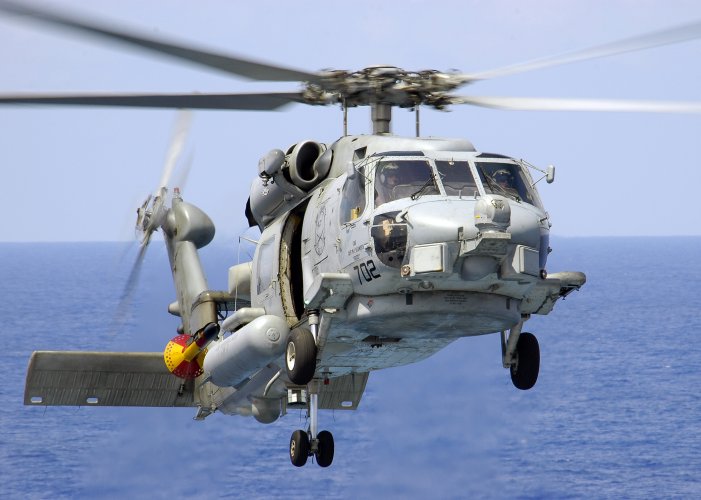
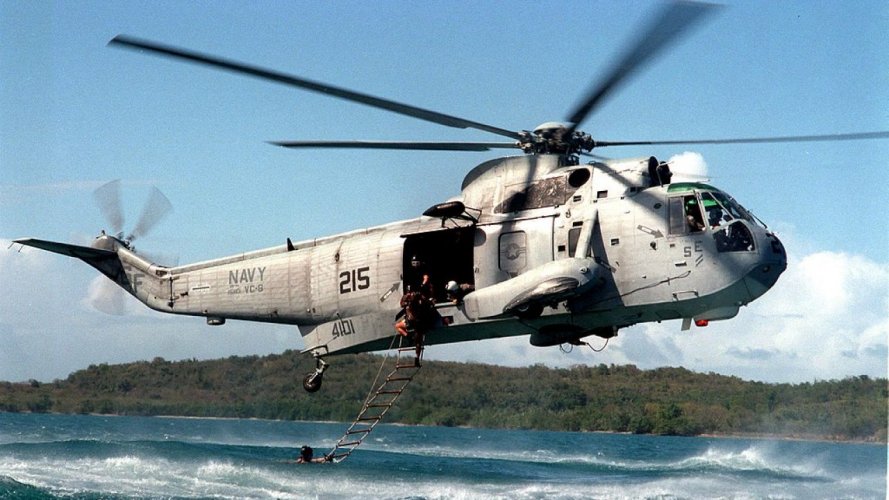
Also, what's up with the Army preferring taildragger helos while the Navy likes tricycle helos?
 
As is commonly the case with helicopters, there never is a single reason that determines a design configuration decision.
 

Attachments

  • IMG_9990.jpeg
    IMG_9990.jpeg
    2.6 MB · Views: 14
  • IMG_9991.jpeg
    IMG_9991.jpeg
    188.4 KB · Views: 13
As the largest US producer of commercial helicopters (by revenue dollars), Bell knew how to minimize technical risks and build a strong team of major suppliers to develop hardware at minimal risk.
Strictly speaking... is this true? That I can think of, Bell currently produces 0 commercial helicopters per year in the U.S. until the 525 gets certified, unless we are throwing in Mirabel-produced aircraft from up in Canada. But Robinson, Airbus, and Leonardo all build aircraft in the U.S. too, don't they? Heck, even small players like MD and Enstrom produce more commercial helicopters in the U.S. these days.
 
Back
Top Bottom