exclaimedleech8
ACCESS: Top Secret
- Joined
- 30 September 2024
- Messages
- 823
- Reaction score
- 999
Golden Dome Could Cost $1.2 Trillion Over 20 Years, CBO Says
https://www.airandspaceforces.com/golden-dome-could-cost-1-2-trillion-over-20-years-cbo-says/
But inevitably our enemies would respond by building more missiles, leaving us no safer than we were before.About $60bn per year. Pretty reasonable.
Less money for conventional warfare on their part and the system seems built to deal with a large number. Possibly 600-1200 ICBMs/SLBMs by SBI means alone by a rough calc.But inevitably our enemies would respond by building more missiles, leaving us no safer than we were before.
Which makes it more likely that if wars start, nuclear escalation will follow. Wars are fought with the weapons available.Less money for conventional warfare on their part
It also means less money for conventional warfare on our part.Less money for conventional warfare on their part and the system seems built to deal with a large number. Possibly 600-1200 ICBMs/SLBMs by SBI means alone by a rough calc.
And the enemies are building more missiles anyway.
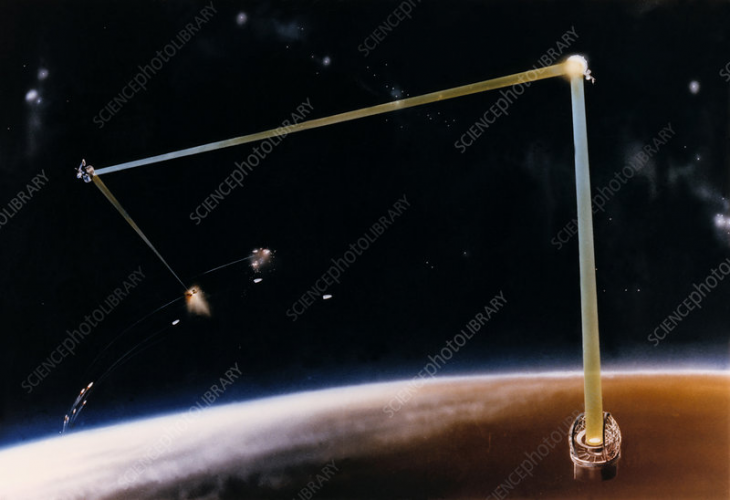
They calculated for anti-space use; I calculated for anti-surface lasing.I mean they did do relay mirror studies for SDI
GPT image 2 seems superfluous for this
Or it could be that the aforementioned Agents of Aggro reduce their aggro due to insufficent funds for said aggro.Which makes it more likely that if wars start, nuclear escalation will follow. Wars are fought with the weapons available.
A way out - or a logical consequence whether we want it or not - might be raising global defence spending. An arms race. How would that end?
Not if spending is at 4-5% of GDP instead of 2-3%. Also means conventional warfare is less likely if enemies have less to spend on it.It also means less money for conventional warfare on our part.
Your maths is way out. KKVs on satellites put into space using RLVs are several orders of magnitude cheaper than ICBMs. I mean nuclear MIRVs are like $100m each, so a missile will 10 is ludicrously expensive before you even factor in the huge missile.And the problem is those missiles (rather drones) are far cheaper than the interceptors we'd be using to stop them. Also, if they were launched from submarines, they'd be able to bypass 3 of the 4 defense layers in the CBO concept system
Nah, it was the technology ratio. ICBMs are just way simpler than the interceptors designed to stop them. Even 50 years ago it required a nuclear warhead to stop a nuclear warhead and that was at like 20-30km range. 20 years ago it cost ~$30k/kg to orbit (and twice than for the Space Shuttle), now it's like $500/kg with Falcon 9 (internal costs not customer prices).It's the cost-exchange ratio and it has been the stumbling block of all ABMs for 60 years
Feels to me (born in 1961) like the Cold War never really ended.Which makes it more likely that if wars start, nuclear escalation will follow. Wars are fought with the weapons available.
A way out - or a logical consequence whether we want it or not - might be raising global defence spending. An arms race. How would that end?
“Who told you the Cold War was ever over?” -Colonel Sergei Tretyakov, SVR. Defected to the United States in October 2000.Feels to me (born in 1961) like the cold war never really ended.
Inconsistent with what I replied to earlier.Or it could be that the aforementioned Agents of Aggro reduce their aggro due to insufficent funds for said aggro.
And the enemies are building more missiles anyway.
I distinctly remember footage of anti-war protests in England...protesting against the fighters used by the Few.Less money for conventional warfare on their part and the system seems built to deal with a large number. Possibly 600-1200 ICBMs/SLBMs by SBI means alone by a rough calc.
And the enemies are building more missiles anyway.
Wars are less likely to start if the Agents of Aggro have less money for aggro and it would be a real gamble to start a nuclear war when the result might just be that only their country gets obliterated. This is even more the case for smaller adversaries with less nukes and it may lead to other small adversaries not even bothering with nuclear programs when they know they have no chance of getting anything through with small numbers.Inconsistent with what I replied to earlier.
Defence just against smaller adversaries does not appear to be what Golden Dome is projected to deal with.This is even more the case for smaller adversaries with less nukes
The % changes at every telling of the story. First it was 30%, now it's 50%.The numbers game doesn't look good, according to the latest Iran war reports the US (and allies) blew threw 50% of its weapons offensive and defensive, while Iran still has 70% of theirs left. And Iran spends far less that the US, without counting everyone else involved. Offense is always cheaper.
If smaller adversaries use nuclear weapons, that's absolutely what it will be used for. As such it is a deterrent in many ways.Defence just against smaller adversaries does not appear to be what Golden Dome is projected to deal with.
Golden Dome sized for defence against PRC's and Russia's missiles will be expensive. More expensive still when missile numbers are increased in reaction to Golden Dome's construction.
The history of the old ABM treaty bears looking into.
https://en.wikipedia.org/wiki/Anti-Ballistic_Missile_Treaty
That is not what will drive the cost of Golden Dome, because GD is expressly sized to deal with PRC's and Russia's missiles. That GD size will provoke a reaction from both countries, with particularly the PRC's industrial and economic power easily sufficient to sustain such an effort.If smaller adversaries use nuclear weapons, that's absolutely what it will be used for
I don't disagree with the purpose of Golden Dome but go back and read my original point.That is not what will drive the cost of Golden Dome, because GD is expressly sized to deal with PRC's and Russia's missiles. That GD size will provoke a reaction from both countries, with particularly the PRC's industrial and economic power easily sufficient to sustain such an effort.
That, in turn, will drive increased US spending on GD.
But I feel I am repeating myself.
https://www.secretprojects.co.uk/threads/golden-dome-for-america.46088/post-908596
https://www.secretprojects.co.uk/threads/golden-dome-for-america.46088/post-908880
An arms race. How will that end?
Then there's the long term prospect of former allies turning first to neutral actors, then to actual new rivals after being pissed off left, right and centre with the US left standing alone, needing even more effort on GD.
This is even more the case for smaller adversaries with less nukes and it may lead to other small adversaries not even bothering with nuclear programs when they know they have no chance of getting anything through with small numbers.
Nuclear arms are a very real option for smaller powers to discourage superpowers from waging war against them.go back and read my original point
GD didn't start it, pulling out of ABM did... Note that Russia and China assumed the US would go with a GD program back when ABM died and began planning against it since then. So they already have a hug head start on defeating GD. We are going about this all ass backwards.I don't disagree with the purpose of Golden Dome but go back and read my original point.
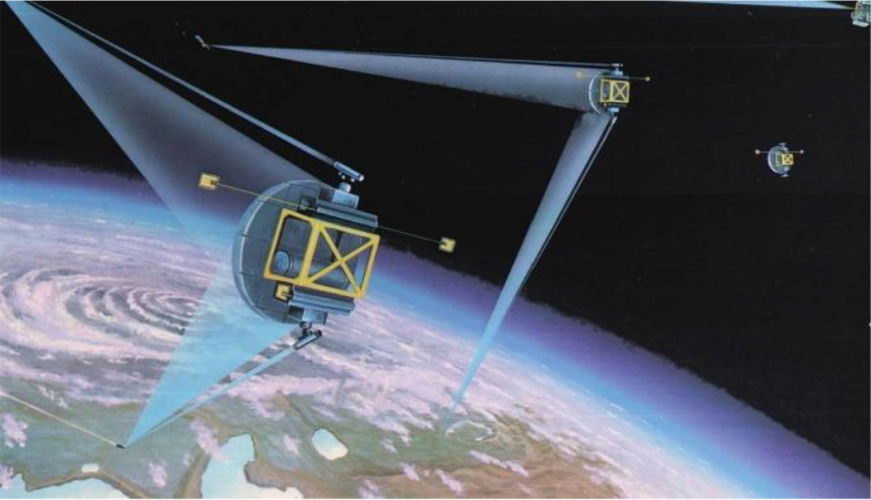
Golden Dome will evolve over time, SBIs using KKVs first and then lasers and/or GBI lasers with spacve mirrors.
By China increasing nuclear warheads and refusing to join START protocols and with Russia pulling out and DPRK building up, an arms race was already started. It's not like Golden Dome started it. Golden Dome is the response not the trigger.
Don't see how GD would alienate allies. You'll have to explain that one.
Not GD, but the current US government's erratic behaviour towards allies.Don't see how GD would alienate allies. You'll have to explain that one.
It's not built to deal with a large number.Less money for conventional warfare on their part and the system seems built to deal with a large number. Possibly 600-1200 ICBMs/SLBMs by SBI means alone by a rough calc.
And the enemies are building more missiles anyway.
Exactly. And the cost to build and field more missiles, RVs, and decoys is far cheaper than the cost of expanding the interceptor pools to counter them. For every extra target the enemy fires at us, we must have a bare minimum of 2–4 additional EKVs (and a proportionate number of interceptors) ready to counter it. Each NGI intercept costs a minimum of >$80 million. A single superheavy ICBM with 10 RVs and 40 decoys requires >$4 billion of interceptors to counter.But inevitably our enemies would respond by building more missiles, leaving us no safer than we were before.
Not at anywhere near the scale that they would be if we actually deployed Golden Dome.And the enemies are building more missiles anyway.
Not according to the CBO.Your maths is way out. KKVs on satellites put into space using RLVs are several orders of magnitude cheaper than ICBMs. I mean nuclear MIRVs are like $100m each, so a missile will 10 is ludicrously expensive before you even factor in the huge missile.
And yet, as per the CBO, the overwhelming majority of the cost is the cost of the interceptor, not the cost of the launch. Therefore even if launch costs fell to $0, orbital boost phase intercept constellations would still remain unaffordable. Additionally, launch costs for interceptors are dramatically different than costs for bulk commercial launches. And even commercial launch costs alone are still drastically higher than sticker launch costs.Nah, it was the technology ratio. ICBMs are just way simpler than the interceptors designed to stop them. Even 50 years ago it required a nuclear warhead to stop a nuclear warhead and that was at like 20-30km range. 20 years ago it cost ~$30k/kg to orbit (and twice than for the Space Shuttle), now it's like $500/kg with Falcon 9 (internal costs not customer prices).
Per the CBO, each would only have one interceptor.7,800 satellites with 10 interceptors/KKVs each
Per public reports, only three EKVs are expected to be carried aboard each NGI. There are no indications that more than three EKVs will be carried (or could even fit) aboard the NGI, and the expected price of the NGI is incompatible with having anywhere near that number of EKVs carried on each interceptor.180 NGIs. If they are 12 MOKVs each, that's a further 2,160.
That would cost even more money.Golden Dome will evolve over time, SBIs using KKVs first and then lasers and/or GBI lasers with spacve mirrors.
Why should China join START? Their arsenals are tiny. They are right to claim that they have the right to build up their arsenals to peer levels. We have absolutely no right whatsoever to demand that they limit themselves to historic arsenal sizes. Our arms control agreements with Russia targeted equal levels of strategic weapons for each party to the agreement, not massively asymmetric levels.By China increasing nuclear warheads and refusing to join START protocols and with Russia pulling out and DPRK building up, an arms race was already started. It's not like Golden Dome started it. Golden Dome is the response not the trigger.
Because it incentivizes us to shift money away from nuclear and conventional military spending in order to fund golden dome. Golden dome only protects the CONUS. It does nothing to protect our allies, which rely solely on US nuclear sharing agreements, US nuclear umbrella promises, and the might of US conventional forces to protect them. Golden Dome stinks of isolationism, and that is an ill omen for any nation that is currently dependent on the United States for security guarantees.Don't see how GD would alienate allies. You'll have to explain that one.
It absolutely will discourage smaller powers from investing in the pointless. It would be like investing in bow and arrows made of cheese during WWII.Nuclear arms are a very real option for smaller powers to discourage superpowers from waging war against them.
I doubt even full-fat GD will discourage smaller powers from deploying nuclear arms.
It will encourage any superpower to respond in kind.
Don't see how that equates will 7,800 satellites with 10 interceptors and 180 NGIs with 12 KKVs. That's 9,500 SBIs per quadrant of Northern hemisphere.It's not built to deal with a large number.
You can saturate every layer of the system by simply launching >18 R-36 ICBMs in a single salvo.
10 are destroyed by a single satellite of which there are 950/quadrant. 10 interceptors per satellite.Let's say you want to conduct a nuclear strike on the US, and that your goal is to deliver 100 warheads.
To achieve this, you simply need to fire 28 R-36 ICBMs in a single salvo.
10 of these ICBMs are intercepted and destroyed by the space based boost phase interceptor layer, which is fully saturated by the attack. The other 18 ICBMs slip through the ensuing coverage hole.
Source for 3? I've seen images for 6 and 12.Based on public information, the 140 NGI interceptors appear to be capable of carrying three EKVs per interceptor, while the 40 GBI interceptors carry one EKV per interceptor.
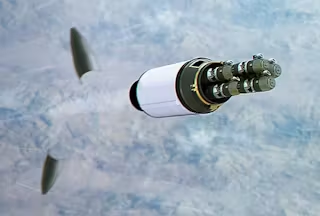
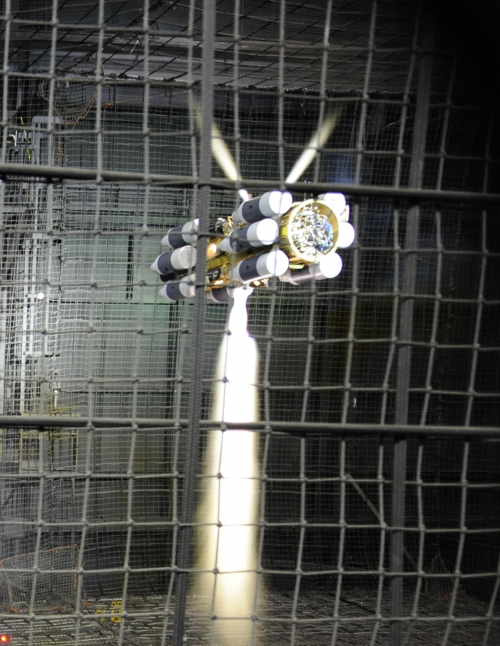
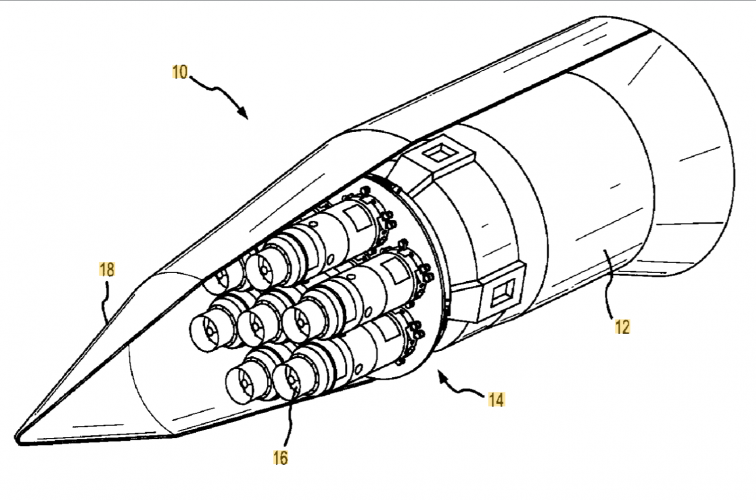
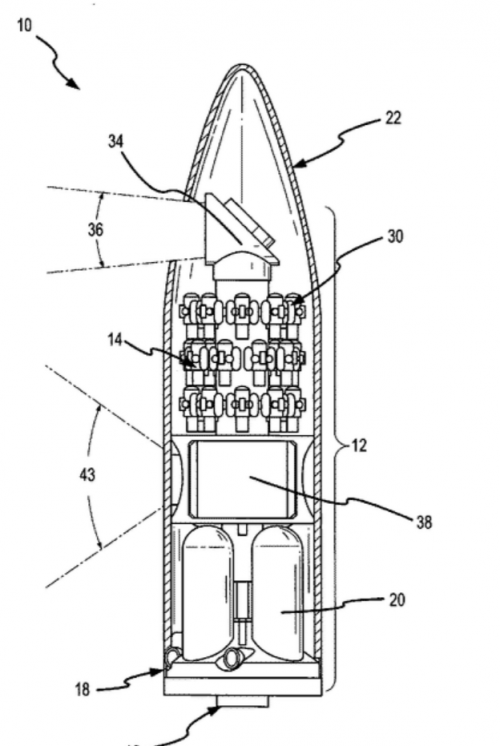
During an engagement with the enemy, the divert and attitude control component will maneuver the carrier vehicle, with its bandolier of 8-20 small kill vehicles, onto the path of the in-bound threat complex. With the enemy now in its sights, the carrier vehicle dispenses the kill vehicles guiding them to destroy their designated targets.
Not according to the CBO.
The orbital boost phase layer is also obscenely expensive due to the way the number of required interceptors to intercept simultaneously launched missiles scales, which is a limitation of orbital mechanics. It doesn't matter how cheap the interceptors are when you have to add 780 additional interceptors for every additional simultaneous missile interception capability you add. Then even worse, every single one of these interceptors have to be replaced every 5 years. So you have to factor in the cost of the additional replacements every 5 years until the end of time. To keep 7800 interceptors in orbit for 20 years, you will have to build and launch a total of over 30,000 interceptors.
Other countries manufacture warheads for far cheaper than the US does. Heck, we used to manufacture them for far cheaper as well. So your cost projections are useless. Just because we neglected our industry for 30+ years doesn't mean that other countries did the same. Other counties have far cheaper cost of goods and labor, way less overhead, drastically laxer safety standards, and no ability for citizens to gum up the works with endless lawsuits. They don't have anti nuclear politicians forcing them to build pit manufacturing piecemeal at multiple sites. They don't have EPA raids shutting down pit factories over environmental crimes. They don't have endless political debate over funding nuclear weapons programs, or decades-long delays in approving critically needed new nuclear weapons program facilities/capabilities/weapons/systems. They can literally dump reprocessing waste into public waterways with no fear of the EPA coming to stop them or federal lawsuits ordering them to stop, and no need to worry over the impact on affected citizens downstream consuming radionuclide-contaminated water. The US is an outlier, not the norm.
Decoys are dirt cheap and only require a tiny amount of additional throw weight and volume. The planned US system has little to no capability to discriminate decoys.
No way of knowing how many China is building, or Russia (now START has collapsed). Build will ultimately be limited by cost.Not at anywhere near the scale that they would be if we actually deployed Golden Dome.
Source?Per the CBO, each would only have one interceptor.
To me that says 10 per sat.
- A space-based constellation of 7,800 satellites designed to take out up to 10 intercontinental ballistic missiles launched near simultaneously as well as hypersonic glide vehicle threats
Post-development, it would cost less to maintain and much less per shot.That would cost even more money.
Not based on what many experts are saying. Their declared arsenals are tiny(ish) but growing. Most say at least 1,000 minimum, some say 5x what they've declared. The 600 figure does not compute vs silo or launcher number.Why should China join START? Their arsenals are tiny.
Nobody asked them to limit themselves to historic levels, simply to join the treaty/discuss maximum levels and submit to verification of said levels as per START.They are right to claim that they have the right to build up their arsenals to peer levels. We have absolutely no right whatsoever to demand that they limit themselves to historic arsenal sizes. Our arms control agreements with Russia targeted equal levels of strategic weapons for each party to the agreement, not massively asymmetric levels.
At the moment...The DPRK is a joke. We have nothing to fear from them. Their nukes guarantee the regime's security, and they are not stupid enough to use them.
With only 40-60 single KKV interceptors, there's no hard guarantee that even 1-2 wouldn't get through.The DPRK also literally can't afford to build an arsenal large enough to truly threaten the US.
A second Cold War has already begun.Golden Dome would be the start of an entirely new arms race, one that would quickly grow to Cold War proportions if allowed to proceed unchecked.
Space-based boost-phase intercept and mid-course intercept would benefit every ally and last I read allies weren't as isolated from it as you make out.Because it incentivizes us to shift money away from nuclear and conventional military spending in order to fund golden dome. Golden dome only protects the CONUS. It does nothing to protect our allies, which rely solely on US nuclear sharing agreements, US nuclear umbrella promises, and the might of US conventional forces to protect them. Golden Dome stinks of isolationism, and that is an ill omen for any nation that is currently dependent on the United States for security guarantees.

Do the maths on it. If you have say 20ish ICBMs like maybe DPRK and your adversary has 7,800 SBI with 10 KKVs that can intercept during boost-phase and during mid-course followed by 180 NGIs with 6-12KKVs each, followed by 48 SM-3 IIB guarding important targets are you seriously going to push your luck?The USA is not the only adversary, and even the USA would hesitate before military action against any nation with nuclear weapons.
View attachment 812380
It works both ways.
Not when you examine the maths. Although a war is unlikely unless DPRK attacks ROK. At this point I doubt the US wants to remove the DPRK and China doesn't want to either I suspect. It's a useful wall.I agree the DPRK would lose catastrophically in an all-out war with the USA.
I do not expect the DPRK is going to look for that particular fight. To rule out the DPRK using whatever it has in its armoury once such a war starts smells of terminal optimism to me.
Numbers, statistics. And then real life rears its head.Not when you examine the maths
Tell that to the CBO.Numbers, statistics. And then real life rears its head.
Never mistake your model of reality for reality itself.
Congressional Budget Office estimate that pegs the 20-year cost of the Pentagon’s Golden Dome program at $1.2 trillion dollars is based on inaccurate assumptions about the advanced missile shield’s architecture, according to the general in charge of the project.
Hofstadter's law: It always takes longer than you expect, even when you take into account Hofstadter's law
Just to pick one reason: DPRK nuclear weapons.I doubt the US wants to remove the DPRK
The CBO are bean counters, not engineers or military.And the Pentagon has a sterling reputation for its projects delivering on time, on budget, on specification?
Zero confidence in their models.
https://en.wikipedia.org/wiki/Hofstadter's_law
China and the US (or ROK) are two neighours who don't particularly want to see each other - the wall is too useful to both.Just to pick one reason: DPRK nuclear weapons.
The Pentagon and its political overlords have a history of overambitious (overly optimistic? downright unrealistic?) planning, so beancounters serve a purpose.The CBO are bean counters, not engineers or military.
Look at how Ukraine fared after it signed away its nuclear weapons in a treaty not worth the paper it was written on.
Different times, different situation, different adversaries with less comprehensive missile defences.Consider why India and Pakistan acquired nuclear weapons.
Look at Israel's nuclear program.
The USA is not the only threat to smaller nuclear powers.
Project managers on an engineering project typically consult the engineers as regards timescales and BoM (Bill of Materials) to calculate man-hours and cost. Here, it appears that didn't happen:The Pentagon and its political overlords have a history of overambitious (overly optimistic? downright unrealistic?) planning, so beancounters serve a purpose.
Shooting the bearer of bad news is, and always has been, a really bad idea.
Guetlein agreed that there is a dearth of public detail on the program due to concerns about security and classification, which he said likely explains why CBO’s estimate is seven times the Defense Department’s own $185 billion, 10-year projection. However, according to Guetlein, CBO didn’t consult the program office before releasing its report.
Making proper oversight much harder.Guetlein agreed that there is a dearth of public detail on the program due to concerns about security and classification