There is neither merit nor value ...
Values are a many a thing; we invest accordingly. If Russia or Putin's regime sees Ukraine as a vassal or a non-entity without agency, that doesn't necessarily apply to others.
The thing about open warfare is that resources do "ultimately evaporate along the way" (as you put it), that is sort of the nature of violently forcing one's will on the other. It is destructive. But as the intent of that phrasing seems to imply improper use of resources one has to note that both disinformation and corruption are integral parts of Russia's escalation doctrine in weakening adversaries in the run up to kinetic action. Russia's CPI (Corruption Perceptions Index) is also quite a lot worse than Ukraine's. NATO views these parts of power projection spectrum rather differently.
As to the state of the VKS, RUSI at the beginning of the year did indeed report a "marginal" increase in the number of airframes and capabilities. Contrast this to Russia switching to a pretty much full-on wartime economy (~25% of all government spending in 2021 ramping up to the illegal, unprovoked invasion of Ukraine and a full 40% last year) and that aeronautical achievement seems less than ideal in terms of any imaginable ROI. Still better than the cost of every bloody meter of some Donbas sunflower field or keeping the Black Sea fleet afloat though.
In some unintentional way I suspect we may agree that the EU economies (about eight to nine times the size of Russia's) are, given the circumstances, still underinvesting in defense and security, Ukraine included. The vibes of that appraisal may land differently, of course.
Every fmr. Warsaw pact country, fmr. Soviet state or otherwise Russia bordering NATO applicant in turn has heard some iteration of the line "(you have nothing) to offer to NATO except bodies" (I had to paraphrase your version somewhat to accommodate for grammar here). It is such a staple of Russian divide et impera reflexive control. I've always thought it also weirdly confessional one in terms of Russian intent, too thinly veiled to not betray the innate malice and coercion to be effective but especially viewed against the backdrop of Ukraine, a moot point. A grim and tragic one as well given Russia's own casualty rates in Ukraine.
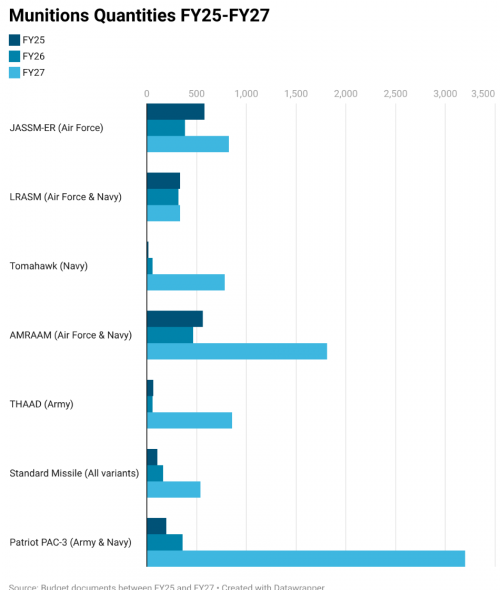
To appraise Ukrainian doctrine, technology and expertise in air defense as useless in light of GCC's and Israel's U.S aided air defense against Iran's (Russian assisted) missile and UAV onslaught is certainly a perspective. A rather weird one though, given GCC/U.S. went through high end interceptors at such a rate (especially against basic UAVs) that for weeks since we've heard analysts' grave concerns about an unsustainable offense-defense balance, "magazine depth" and years-long timescales to replenish stocks. While the U.S. may have remained (largely) silent about the (at least initial) differences between them and Ukraine in allocating resources against similar types of threats, multiple GCC countries have meanwhile initiated decadal co-operation with Ukraine in air defense. Instead of, say, with the U.S. president's sons' new UAV venture. Meanwhile there is nary a European NATO country without some joint venture or intent to produce and develop Ukrainian UAVs and air defense systems. Some notable Russians have gone through the trouble of threatening these expressly.
European NATO countries investing tens of billions directly in 2025 and just recently clearing an indefinite €90bn loan (as Hungary finally came through) for Ukraine is a pretty good indication that due diligence determinations of "merit and value" have already been made, the results being something other than "neither/nor". In some other environments it may be conceivable that such resources may be expended out of some revanchist zero-sum imperial spite alone, I don't know. Certainly looks that way.
That was certainly many a tangent from my suggestion that as the study of the NATO Ukraine aid should be accompanied by similar appraisals of the value of Ukraine to (especially) European NATO countries. Off the cuff exchanges on forums (your perceptions of the seriousness thereof may vary, nota bene) aside, I do hope enterprising researchers such as the Kiel Institut will devote resources to this as well.
In any case, had Putin's regime indeed occupied Ukraine in three days or at any point since, it is highly disingenuous to suggest that European NATO countries' defense and security demands would be lesser than they currently are. Putinesque Russkiy Mir ideas aside.