Concept Cars

That reminds me of Alec Issigonis teaming up with Alvis to try to design the next generation of Alvis v8 powered 4 door cars.
Sadly it didnt work out but you can certainly see his styling at work

Alvis, Rover, Triumph, MG... the list goes on. Heroes all mutilated, driven into exile or slain by a dark lord more evil than Sauron.
 

Attachments

  • Screen Shot 2022-09-10 at 1.07.08 AM.png
    Screen Shot 2022-09-10 at 1.07.08 AM.png
    417.9 KB · Views: 33
  • British Leyland.jpg
    British Leyland.jpg
    23.6 KB · Views: 13
Last edited:
That reminds me of Alec Issigonis teaming up with Alvis to try to design the next generation of Alvis v8 powered 4 door cars.
Sadly it didnt work out but you can certainly see his styling at work
https://alvisarchive.com/1950-1967-the-three-litre/the-ta350-what-might-have-been/

TA350-Rex-3-e1546248592606.jpg
Alec Issigonis never did very well engineering larger cars. One might argue that his Mini was the last British car of any global commercial significance, although the Mini itself couldn’t pass American 1967 crash safety requirements and was replaced there by a variant of the otherwise successful ADO16, which flopped as the Austin American.

This Alvis V8 suffered from the same visual awkwardness as the far later trio of Landcrab, Maxi and Austin 3-liter, all of which shared the same doors. Honestly, this Alvis wouldn’t have been able to compete with the “Ponton” Mercedes, so it was just as well that it was cancelled. Daimler had a perfectly fine little 2.5 liter Hemi head V8 engine that that never did well commercially, so this Alvis wouldn’t have either. As it was, Alvis survived as a defense supplier, so it all ended up just as well.

Looking back, Issigonis’ implementation of front drive with a transmission in the oil pan was a dead end of gear whine. Fiat’s end on transmission was the future as it allowed for the development of a scalable 5 speed manuals and the use of proper transmission fluid. Rear wheel drive should have been easier, the disastrous Austin 3-liter was something of a disgrace even compared to the big Fords of the era. Ford’s English engineering was unimpressive, but the “Dagenham Dustbins” tended be more conventionally designed and better built than their British counterparts. Ford became the UK’s “national brand,” with much loved mediocrities with nicknames like the Ford Crapi and Grandad. Issigonis’ front drive failings with the Landcrab and Maxi eventually lead to the recycling of his own dated 1940s Morris Minor suspension design under the Morris Minor in an attempt to take on Ford. Is it any wonder that sane British drivers bought Ford Cortinas?

With the benefit of hindsight, I really can’t defend any Issigonis design bigger than the ADO16, which itself was a slightly larger Mini. Oddly enough, that car premiered in the USA at about the same time as the first gen Toyota Corolla, a far less space efficient and profoundly conservative car in terms of engineering - a bit like the original 1967 Ford Escort but obsessively improved with each iteration.
 
Last edited:
In real life use, including city traffic, hybrid drive is a rational propulsion choice. IC engines stink, literally and figuratively, in stop-go traffic.
At 795 kg kerb weight, please explain heavy?
You lost me on draggy.
Have you ever paid attention to mileage competitions ?

They drive 4000 km with a litre. 40 times better than that pathetic Volkswagen XL.

You just just have to be more "spartan" to endure the trip.

Practical 2 seater may be 0.5 liter to the 100 km ( 3 wheeler of course ).

View: https://www.youtube.com/watch?v=42OBTkosYdA
 
Last edited:
Your expectations are unrealistic. The bulk of extra weight in vehicles these days is not entirely "luxury" content but rather mandated things like crash cell structure, pedestrian impact tech, ADAS, etc etc.

Unless the likelihood of dying in a paper-mache car that folds up on you when hit by a 3t SUV is also something to be "endured"? Let us know how you get on with that.
 
Your expectations are unrealistic. The bulk of extra weight in vehicles these days is not entirely "luxury" content but rather mandated things like crash cell structure, pedestrian impact tech, ADAS, etc etc.

Unless the likelihood of dying in a paper-mache car that folds up on you when hit by a 3t SUV is also something to be "endured"? Let us know how you get on with that.
You have to avoid hitting SUVs on the road....I passed two Porsches yesterday with a 1.2 litre VW.

Fear is the worst enemy in any kinda transportation.
 
You have to avoid hitting SUVs on the road....I passed two Porsches yesterday with a 1.2 litre VW.

Fear is the worst enemy in any kinda transportation.
The 'enemy' in any transportation system is the 'nut behind the wheel'. Impatience, substance abuse, over judging one's talent at the wheel, showboating, blah, blah blah. I really doubt folk intend an incident no matter what vehicles are involved but the thought that everything can be controlled is so easily disproven it needs a face palm at least. Pedestrian wandering around with their heads in a 'phone' and unable to walk down a pavement without supervision to. The amount of times I have had to drag someone off the road because they walked around slower pedestrians right into oncoming road vehicles I can only describe as a resurgence of Darwin's theorem.
 
Well Cd of 0.0055 is low. I mean 0.159 is nothing.
Well, it depends on what people will buy and use - and aspire to as well. The various 'bubble cars' of the 1950s suited devastated European cities of the post-war period and rural villages with narrow streets where people had never owned a car at all. The Citroën 2CV and the original Beetle (KdF-Wagen) were respectively rural and aspirational working-class products designed before WWII and successful afterwards in the post-war environment.

If someone were to try to sell one of those nowadays... well... I agree, we could do much better that what we do now. It's not just legislation and regulation forcing increases in complexity and weight, but consumer expectations that a car should be a mobile palace. Modern SUVs are a pathological and absurd expression of this expectation and any 'efficient design' only tries to put one of these bloated monsters on a diet for pathetic marginal gains when they should really go back to first principles. I'd love to see cars rethought as exemplars of functional engineering - but how are you going to get people to buy them?

The VW XL1 seemed to be a good evolutionary step at least.
 
Your expectations are unrealistic. The bulk of extra weight in vehicles these days is not entirely "luxury" content but rather mandated things like crash cell structure, pedestrian impact tech, ADAS, etc etc.
To expand on this a little.

One of the "flying cars"/roadable aircraft was intended to be registered as a Light Sport class, at a time when the LSA max weight was 900lbs. Once they added all the DOT-mandated systems of ~20teens, the weight was 1500lbs. (I may have that backwards, too!) The FAA issued a special exemption to allow the thing to still be registered as a Light Sport, despite being the same weight as a Cessna 172.

A modern Mustang weighs 4500lbs. The 1980s/90s Fox Body weighed 3200. 1300lbs of safety systems and extra computers.
 
Well, it depends on what people will buy and use - and aspire to as well. The various 'bubble cars' of the 1950s suited devastated European cities of the post-war period and rural villages with narrow streets where people had never owned a car at all. The Citroën 2CV and the original Beetle (KdF-Wagen) were respectively rural and aspirational working-class products designed before WWII and successful afterwards in the post-war environment.

If someone were to try to sell one of those nowadays... well... I agree, we could do much better that what we do now. It's not just legislation and regulation forcing increases in complexity and weight, but consumer expectations that a car should be a mobile palace. Modern SUVs are a pathological and absurd expression of this expectation and any 'efficient design' only tries to put one of these bloated monsters on a diet for pathetic marginal gains when they should really go back to first principles. I'd love to see cars rethought as exemplars of functional engineering - but how are you going to get people to buy them?

The VW XL1 seemed to be a good evolutionary step at least.
They have to be really "sexy"....and superior in performance. Not butt ugly like the bloated SUVs.
 
A modern Mustang weighs 4500lbs. The 1980s/90s Fox Body weighed 3200. 1300lbs of safety systems and extra computers.
Wrong. A loaded 2026 Mustang GT convertible is barely 4000lbs and a base Ecoboost Mustang is around 3600lbs. An early 4-cylinder Fox body Mustang was less than 2600lbs, but that was without power brakes, power steering or air conditioning and about zero sound deadener. It’s also worth noting that the Fox body was exceptionally light and well packaged by late 1970s standards. That’s a nice way of saying that a 1979 Mustang was built like an empty tin can. There is a huge gulf in size and performance between an 88 horsepower Mustang from 1979 and the current 315hp base model, not to mention the addition of an independent rear suspension. Overall, I’d attribute the vast majority of weight growth to size, performance, features and comfort.
 
Wrong. A loaded 2026 Mustang GT convertible is barely 4000lbs and a base Ecoboost Mustang is around 3600lbs. An early 4-cylinder Fox body Mustang was less than 2600lbs, but that was without power brakes, power steering or air conditioning and about zero sound deadener. It’s also worth noting that the Fox body was exceptionally light and well packaged by late 1970s standards. That’s a nice way of saying that a 1979 Mustang was built like an empty tin can. There is a huge gulf in size and performance between an 88 horsepower Mustang from 1979 and the current 315hp base model, not to mention the addition of an independent rear suspension. Overall, I’d attribute the vast majority of weight growth to size, performance, features and comfort.
Volkswagen 1 L concept was only 588 lbs.


450-500 lbs with more streamlining might be a ½ liter mover.
 
Wrong. A loaded 2026 Mustang GT convertible is barely 4000lbs and a base Ecoboost Mustang is around 3600lbs. An early 4-cylinder Fox body Mustang was less than 2600lbs, but that was without power brakes, power steering or air conditioning and about zero sound deadener. It’s also worth noting that the Fox body was exceptionally light and well packaged by late 1970s standards. That’s a nice way of saying that a 1979 Mustang was built like an empty tin can. There is a huge gulf in size and performance between an 88 horsepower Mustang from 1979 and the current 315hp base model, not to mention the addition of an independent rear suspension. Overall, I’d attribute the vast majority of weight growth to size, performance, features and comfort.
A late Fox Body GT was 3200, and the full scream 2024 Dark Horse weighs 4000.

Looks like I was remembering GVWR, not curb weight.

Still talking 800+ pounds of flab in the newer cars.
 
Volkswagen 1 L concept was only 588 lbs.


450-500 lbs with more streamlining might be a ½ liter mover.
But what is the real point of what essentially amounts to an ICE cycle car? These days, setting a record for fuel economy with an ICE car seems a bit dated. Moreover, there have been fuel economy oriented two seaters over the years. Honda tried the original two seat Insight hybrid and CR-Z, neither of which made any sense as they combined an impractical form factor with compromised performance. Hilariously, GM sold the Pontiac Fiero as an economical two-seat commuter car, and it actually sold well the first year before high insurance rates and a reputation for engine fires killed sales.

And that brings us to a bigger concern than fuel economy: auto insurance! I pay far more for insurance every year than any other category of expense, aside from taxes. I can’t imagine that a tiny cycle car would be anything but hideously expensive to insure.
 
Last edited:
A late Fox Body GT was 3200, and the full scream 2024 Dark Horse weighs 4000.

Looks like I was remembering GVWR, not curb weight.

Still talking 800+ pounds of flab in the newer cars.
You can still buy a 2800lb Toyota GR86 or Subaru BRZ if you’re worried about “800+ pounds of flab” in newer cars. However, you’re not going anywhere to save any money over an Ecoboost Mustang as the pricing is virtually identical. And you’ll lose significant performance and longevity. Apparently, the Toyota/Subaru has quite a reputation for oil deprivation related engine failures due to a quirk of engineering that causes the oil pressure to drop in hard right turns and excessive RTV use at the factory to block the oil pickup and kill the engine.

The reality is that there’s nothing wrong with the weight of a 3600lb base Mustang when it goes 0-60 in 4.5 seconds. Compare than that a stripped 1979 Mustang that might have taken 14 to 16 seconds with a 4 speed manual for a combined 21MPG. Or for that matter a current BRZ/GR86 that can make it in a bit less than 6 seconds.

I’m not a huge Ford or Mustang fan, even though I’ll be the first to admit that I know way too much about the issues and quirks of early Fox bodies. They were better cars than the preceding Pinto based Mustang II or the Falcon-based Maverick. Oddly enough though, GM was doing quite well selling far heavier and more expensive Trans Ams and Camaros in the same era, which goes to prove that Ford’s smaller, lighter, flimsier strategy wasn’t the only way to go even in the late 1970s.
 
Last edited:
But what is the real point of what essentially amounts to an ICE cycle car? These days, setting a record for fuel economy with an ICE car seems a bit dated. Moreover, there have been fuel economy oriented two seaters over the years. Honda tried the original two seat Insight hybrid and CR-Z, neither of which made any sense as they combined an impractical form factor with compromised performance. Hilariously, GM sold the Pontiac Fiero as an economical two-seat commuter car, and it actually sold well the first year before high insurance rates and a reputation for engine fires killed sales.

And that brings us to a bigger concern than fuel economy: auto insurance! I pay far more for insurance every year than any other category of expense, aside from taxes. I can’t imagine that a tiny cycle car would be anything but hideously expensive to insure.
Well 5 hp is 3,4 kW.

You can certainly choose....ICE or E-Motor.
 
Well 5 hp is 3,4 kW.

You can certainly choose....ICE or E-Motor.
Why would anyone be limited to 5 hp? I’m well aware that the French have microcars from Aixam and Ligier with odd horsepower limits to allow teenagers to legally drive under bizarre French laws. Other than artificial legal loop holes, why else would anyone create microcars driven by tiny Lombardini single cylinder diesels? When it comes to EVs, there not much to be gained as tiny aren’t much more economical than larger electric motors. You don’t increase the range of an EV by down rating the motor.

In the end, VW played around with some odd concepts and flirted with a Polo based 3 wheeler at one point. The cycle car concept just doesn’t make a lot of sense. And sure, they are legal even in America. Anyone can buy a Polaris Slingshot, albeit not for reasons of fuel economy.
 
Last edited:
Why would anyone be limited to 5 hp? I’m well aware that the French have microcars from Aixam and Ligier with odd horsepower limits to allow teenagers to legally drive under bizarre French laws. Other than artificial legal loop holes, why else would anyone create microcars driven by tiny Lombardini single cylinder diesels? When it comes to EVs, there not much to be gained as tiny aren’t much more economical than larger electric motors. You don’t increase the range of an EV by down rating the motor.

In the end, VW played around with some odd concepts and flirted with a Polo based 3 wheeler at one point. The cycle car concept just doesn’t make a lot of sense. And sure, they are legal even in America. Anyone can buy a Polaris Slingshot, albeit not for reasons of fuel economy.
Well bikes are limited to 250 watts.

10 kW would be easily doable.
 
Why would anyone be limited to 5 hp?
In the Netherlands microcars were first used by elderly drivers who wanted to stay mobile but didn't trust themselves anymore in cars, then found users among teenagers who were just old enough (16+) for riding mopeds but not old enough (18+) to drive a car. They also became popular among drivers of all ages in crowded Dutch cities.
Electric microcars are all the rage in cities now.
 
Last edited:
Last edited:
In the Netherlands microcars were first used by elderly drivers who wanted to stay mobile but didn't trust themselves anymore in cars, then found users among teenagers who were just old enough (16+) for riding mopeds but not old enough (18+) to drive a car. They also became popular among drivers of all ages in crowded Dutch cities.
Electric microcars are all the rage in cities now.

The bicycle culture in Amsterdam is uniquely comprehensive, so running what amounts to an enclosed mobility scooter in bicycle lanes seems appealing for the elderly, if something of a menace for bicyclists who are already harassed by reckless e-bike operators. From the American perspective, something like the Canto being run on and parked on sidewalks would be a safety and liability nightmare.
 
In my experience, a microcar in a bicycle lane is a rarity. Only slightly more common than the occasional car that should not be there at all. There is the 30 km/h speed limit in many city centres which poses no challenge at all to microcars.
The 50km/h speed limit on through roads, in suburbs and in towns is only slightly higher than the 45 km/h microcars are allowed. I sometimes see microcars on 60 km/h country roads. As well as bicycles.
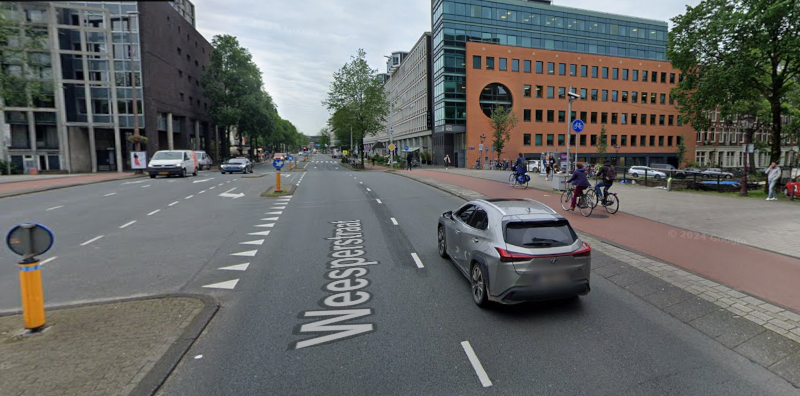
First attached image shows Weesperstraat in Amsterdam, max speed 50 km/h.
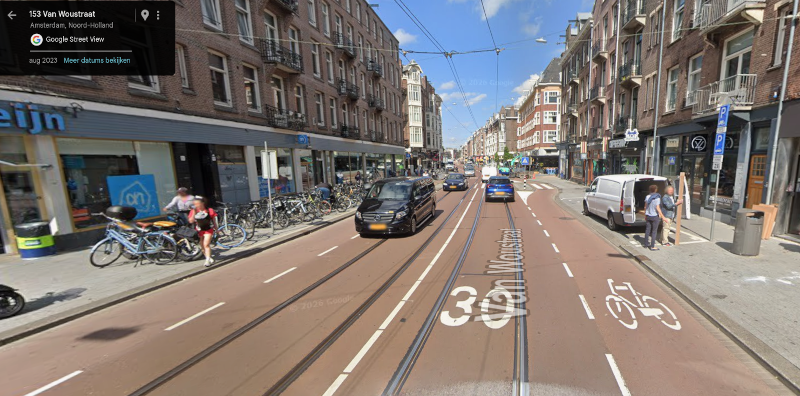
Second image shows Van Woustraat in Amsterdam, max speed 30 km/h.
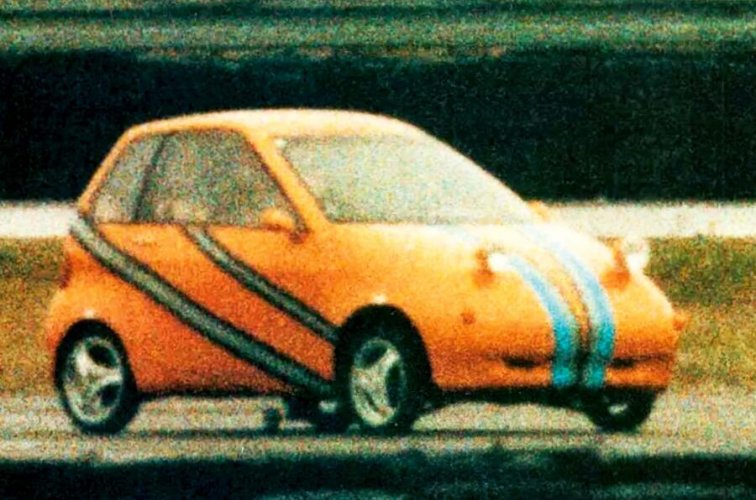
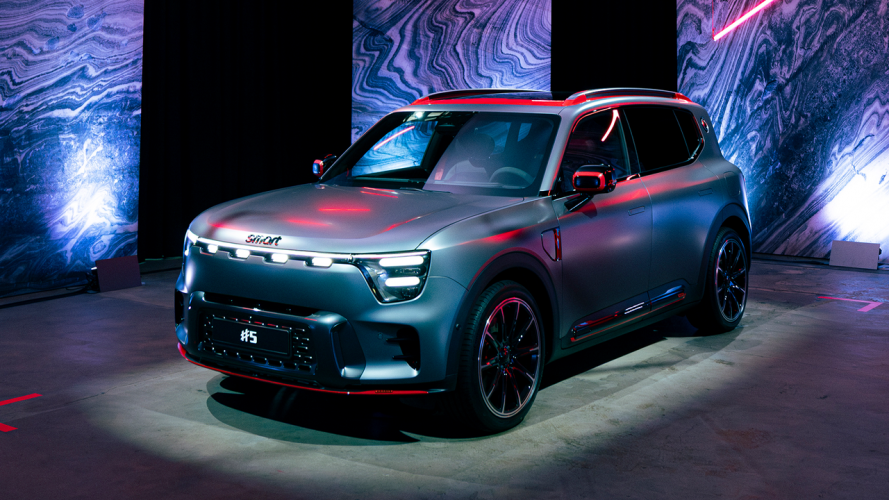
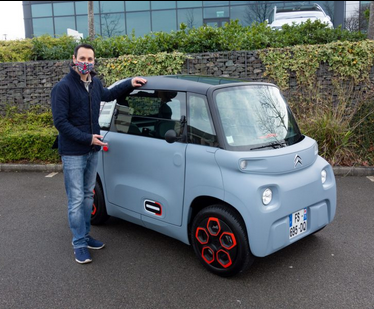
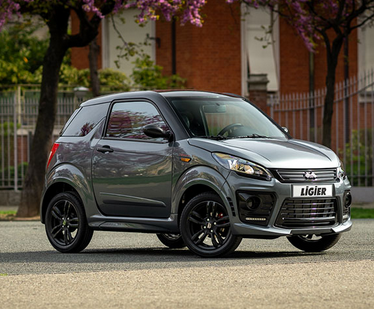
Third and fourth images show typical city dwelling microcars. They are too wide to fit comfortably on most urban cycle lanes, so microcars avoid them. Generally, Dutch city traffic can be a bit hectic but would be much worse without cycle lanes.

Driving a microcar on the sidewalk is illegal.
Fatbikes are a real safety hazard. In real life, they will be just as fast as mopeds (moped licence AND 16+ minimum age required) but a 10-year old can´t be legally stopped from riding a fatbike by anyone but their parents. Local authorities are working on fatbike bans in parks and the like. I expect at some time e-bikes will be legally restricted in the same way as mopeds.
Enforcing those restrictions is, of course, the next hurdle.
 

Attachments

  • Weesperstraat.png
    Weesperstraat.png
    565.5 KB · Views: 6
  • Van Woustraat.png
    Van Woustraat.png
    618.8 KB · Views: 5
  • Citroen Ami.png
    Citroen Ami.png
    229.7 KB · Views: 6
  • Ligier.png
    Ligier.png
    237.9 KB · Views: 14
Last edited:
Fatbikes are a real safety hazard.
I hate these damn things. Allegedly they are limited to 15.5mph in the UK but I've experienced them doing nearly 30mph. Plus they zoom down bicycle lanes (which are fairly narrow in the UK - and these fatbikes usually have a large box on the back for uberdelivrooeat on them) at full speed, which is unnerving when you're in stationary traffic. One day I'm sure I'm going to lose a wing mirror...
 
I assume you refer to the tilting mechanism, but that is precisely what makes it fun to drive.

TINSTAAFL. Although it should be very cheap to run - tilting makes for a narrow yet stable vehicle, small frontal area means less drag.

In which way?
I refer to the design I made last year .....which has these qualities. But it amn't free.

I made an earlier design few years ago....just little before the Cyber Truck...by Tesla.

The new one is several times better. It takes lot of effort to develope these.

I also have a record breaker for the absolute speed record on pedal powered vehicles...something like 145-148 km/h in the Battle Mountain. It is very complex system...much more than making a 3-wheeler ( super efficient ) car.
 

Attachments

  • 3wx (1).jpg
    3wx (1).jpg
    34.2 KB · Views: 22
I hate these damn things. Allegedly they are limited to 15.5mph in the UK but I've experienced them doing nearly 30mph. Plus they zoom down bicycle lanes (which are fairly narrow in the UK - and these fatbikes usually have a large box on the back for uberdelivrooeat on them) at full speed, which is unnerving when you're in stationary traffic. One day I'm sure I'm going to lose a wing mirror...
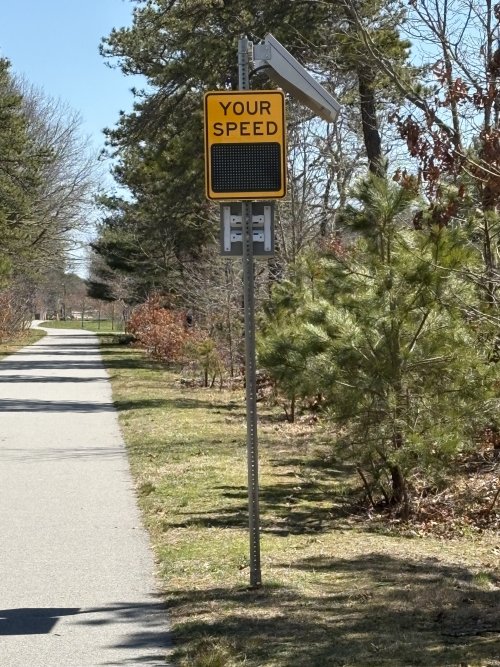
Waaay off topic here, but the fat-tired e-bike situation has gotten out of hand here on Cape Cod. After a few dramatic examples of imbeciles being imbeciles, we now have speed tracking on the pedestrian/bike trails. (Not sure of the enforcement mechanism, however.)

This, coupled with normal biker d-bag behavior, makes walking a dog a more challenging experience than one would like.
 

Attachments

  • IMG_1159.jpeg
    IMG_1159.jpeg
    2.7 MB · Views: 16
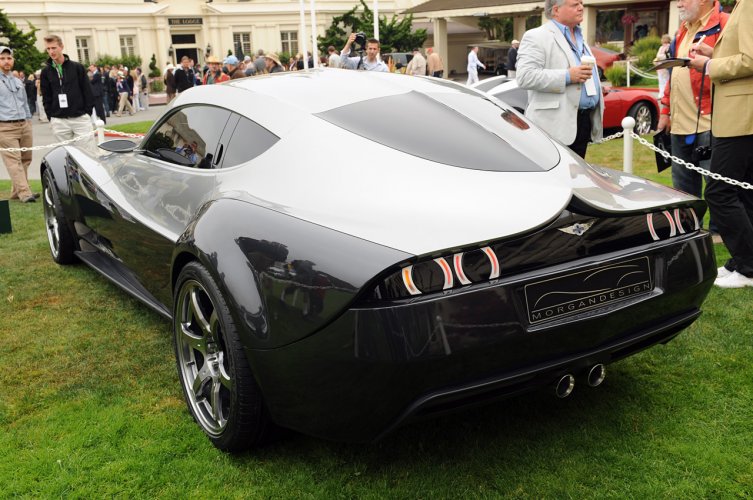
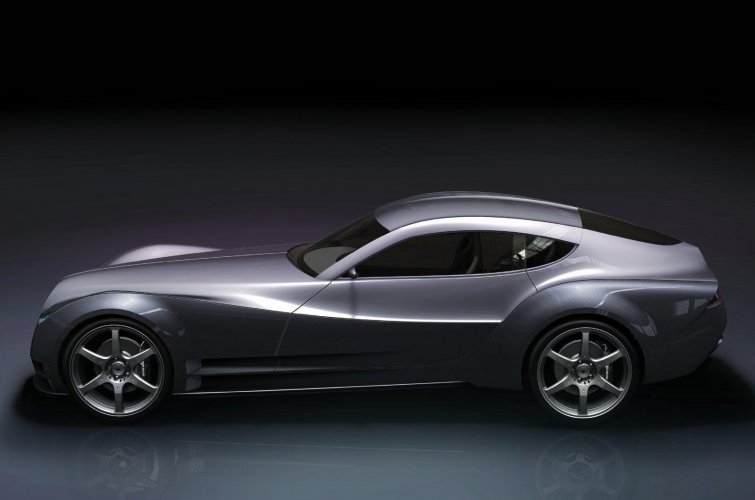
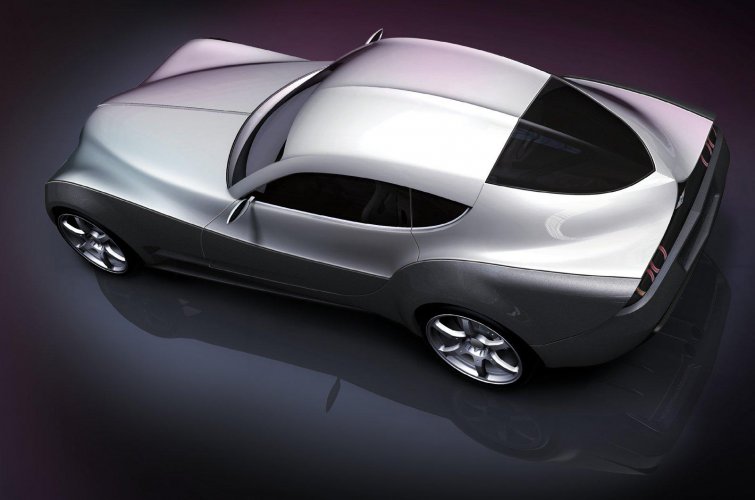
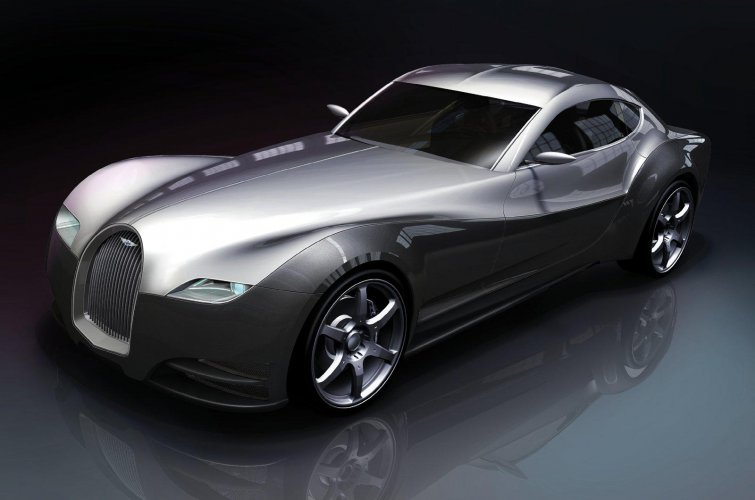
Back in 2010, Morgan presented the Eva GT concept in model and render form. It was a serious proposal but they ultimately decided against this more conventional direction.
 

Attachments

  • 01morganevagtlive.jpg
    01morganevagtlive.jpg
    384.1 KB · Views: 7
  • 04morganevagtlive.jpg
    04morganevagtlive.jpg
    376.1 KB · Views: 5
  • 328483860635015943.jpg
    328483860635015943.jpg
    97.1 KB · Views: 4
  • 1256473306730553040.jpg
    1256473306730553040.jpg
    113.6 KB · Views: 4
  • 7895665471288002105.jpg
    7895665471288002105.jpg
    125.2 KB · Views: 5
Last edited:
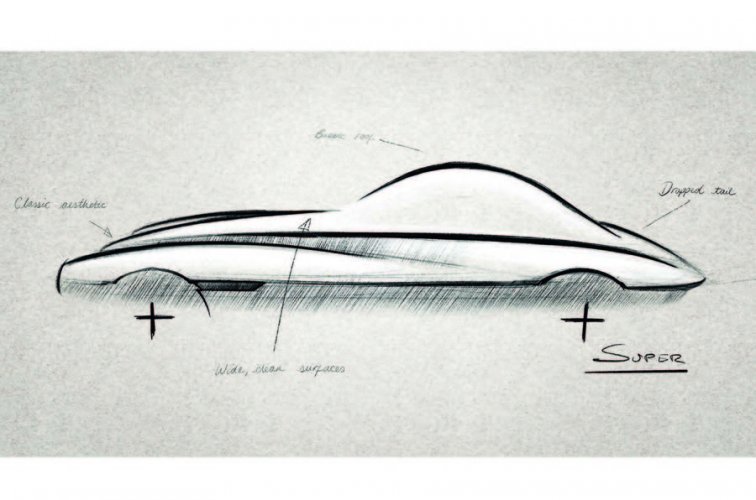
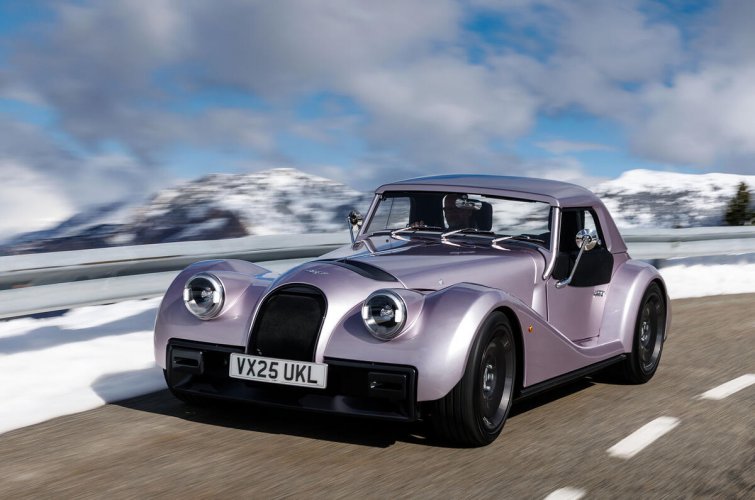
In 2018, Morgan showed this sketch of a car they were working on, saying that the production version would appear in the mid-2020s. What actually emerged was the Supersport. It has been highly praised but in terms of design it remains firmly in Morgan's alternate universe - which is their USP anyway.
 

Attachments

  • visual.jpg
    visual.jpg
    1.9 MB · Views: 8
  • morgan_supersport_2025-review-front-tracking-004.jpg
    morgan_supersport_2025-review-front-tracking-004.jpg
    132.8 KB · Views: 7
In 2018, Morgan showed this sketch of a car they were working on, saying that the production version would appear in the mid-2020s. What actually emerged was the Supersport. It has been highly praised but in terms of design it remains firmly in Morgan's alternate universe - which is their USP anyway.
Never forget Jeremy Clarkson's quip "Morgan hasn't got a styling department, have they? They just got a photocopier"
 
Morgan always amazes me as a company that keeps going in business and yet builds very odd cars that you never see on the roads.
 
Morgan always amazes me as a company that keeps going in business and yet builds very odd cars that you never see on the roads.
I admire companies like Morgan, Ariel, Gordon Murrray Automative, and Caterham that don't give a damn about aspiring to be the clone of a big brand and are able to survive on tiny volumes doing exactly what they want to do. It's not easy - look at Bristol. Aston Martin and McLaren want to be Ferrari and bleed money, Jaguar and Rover before them wanted to be BMW and failed catastrophically.

Now, Stellantis wants to be British Leyland. Oh dear.
 
Last edited:
Never forget Jeremy Clarkson's quip "Morgan hasn't got a styling department, have they? They just got a photocopier"
Bah, Clarkson is proof that Eton is England's Chornobyl. Dangerous emissions - look at all those Prime Ministers. It needs to be encased in concrete and an exclusion zone enforced.
 

Similar threads

Back
Top Bottom