Exclusive civilian point of view from the Karaj bridge being bombed the other day, 8 dead, 95 wounded.
View: https://www.dailymotion.com/video/xa4a3mm


Although the majority of the IDF believes that Iran only has several hundred ballistic missiles left, which can reach Israel from its original 2,500 total, IDF sources have admitted to The Jerusalem Post that no one really knows for certain.
The exchange came after Channel 12 reported on Saturday night from air force IDF Col. "T" that the Islamic Republic still has more than 1,000 ballistic missiles left, directly contradicting the prior IDF estimate of several hundred missiles.

C130 were probably transporting the little birds. When C130s were blown up, little bird blew up with them.Seems the helo rotor could be from a MH-6. So this contradicts the US narrative of being "stuck in the sand".
View: https://x.com/Osinttechnical/status/2040696625790607738
We probably dont have any in theater...Why didn't they use MV-22 ?


Except that Ukraine has made sure that Putler and company profit from this by repeatedly carrying out drone and cruise-missile attacks on the two ports in the Baltic Sea and the port in the Black Sea.
Ryan says the Trump administration has demonstrated a critical limitation alongside its firepower: it can manage one major war at a time, and it has stripped out much of the institutional decision-making architecture that would normally govern a conflict of this scale. “These decisions look to be being made much more on impulse,” Ryan said, pointing to what he described as shifting and inconsistent strategic objectives since the campaign began.
Certain people are looking to turn this failure of the US against Iran into a failure for Russia too, in order to feel slightly less bad about it.Why do you keep bringing Russia oil into this thread? It has nothing to do with this war even by a stretch.

Oil tankers are civilian assets as much as power stations and bridges are. Russia has targeted power stations multiple times in Ukraine, and in the middile of winter, which is clearly not just aimed at reducing war production.Targeting/killing civilians and destroying civilians infrastructures is a warcrime, at time of war :
One could argue it is somewhat relative regarding impact of Combat Military Operation on global economy. But good luck having a meaningful conversation with a certain group of people, which was shlurping whatever kool-aid Ukranian flags were posting on Twitter for the last four years.Why do you keep bringing Russia oil into this thread? It has nothing to do with this war even by a stretch.
https://www.timesofisrael.com/liveb...telligence-chief-iranian-state-media-reports/The chief of intelligence in Iran’s Islamic Revolutionary Guard Corps has been killed in a strike, the IRGC announces.
Majid Khademi served as head of the Intelligence Protection Organization of the IRGC and the Intelligence Organization of the IRGC.
In a statement carried by the Tasnim news agency, the IRGC announces Khademi’s death following an airstrike this morning.
https://economictimes.indiatimes.co...sis-rattles-markets/articleshow/130053087.cmsA $19.50 oil premium: Saudi Arabia sets record crude price as Hormuz crisis rattles markets

It won't. Its strike rate will just diminish to irrelevance. Like the Houthis, it will be capable of only disruptive actions.How will Iran sustain these ballistic missile launches over say a 6-12 month period? Unless they are able to continue producing them somehow but doesnt seem safe having full production underground for such kinds of missiles.
Why do you keep bringing Russia oil into this thread? It has nothing to do with this war even by a stretch.
Ha ! Because we are talking about this war, and one big consequence of this war is oil (Putin's main resource) prices surging, so the war in Ukraine can last longer, and it pisses me off.Certain people are looking to turn this failure of the US against Iran into a failure for Russia too, in order to feel slightly less bad about it.
Why do you keep bringing Russia oil into this thread? It has nothing to do with this war even by a stretch.

"Boots on the ground" i.e. a conventional ground invasion and occupation - is a longstanding but otherwise unfounded myth that should not be entertained for as long as the US has not set any operational objective that requires that.If Iran strikes one oil tanker every week, shipping insurance premiums will rise enough - if they haven't done so already - to stop oil tankers navigating the Persian Gulf. Drones, for example like the ones Ukraine uses against the Russian navy. Asymmetric warfare. US boots on the ground would be needed to effectively counter that. How long would the US want to sustain that?
By all accounts, there's probably way more relevant Ru weapons in Gulf now (like Pantsirs in Saudi Arabia) than there was even before June in Iran...Because whether or not we like it the two are connected, Russia is giving intelligence to Iran and Ukraine is aiding the Gulf-states in defending themselves from Iranianian strikes, I strongly suspect that we're in the early stages of WWIII.
But that's the only effective way to open the Gulf properly."Boots on the ground" i.e. a conventional ground invasion and occupation - is a longstanding but otherwise unfounded myth that should not be entertained for as long as the US has not set any operational objective that requires that.
There lies the problem. Regime change? Something else?the US has not set any operational objective

The Bab was reopened without any ground component and with primarily an escort mission.But that's the only effective way to open the Gulf properly.
Right now there's no way to even start proper traffic outside of Iranian protection. That requires destruction of IRGC flotillas underground(Iranian navy destroyed).
Going forward, there's need to establish protection against any coastal efforts to interfere with traffic - and depending on type(MLR-launched sea mines, ASCMs) - those go all the way into mountains; price/risk equation from Yemen has already demonstrated, that even mild threat and engagement tempo still keeps Iranian choking hold.
That is a very counter-productive assumption that clouds your judgments of things as they happen.There lies the problem. Regime change? Something else?
The Israeli position seems to be to simply cause chaos in Iran.
Unrealistic without boots on the ground. In Teheran, not just the coast of Iran. Bloody unlikely. Very bloody indeed if tried.Regime change is an option and certain US+Israeli actions indicate it is an objective.
US and Israel tried finishing that last year using only air attacks, did not happen.nuclear program
We disagree.very counter-productive assumption
Bab was reopened by signing rather humiliating ceasefire with Houthis(which they felt free to break). Contested commercial traffic didn't resume before that, too risky.The Bab was reopened without any ground component and with primarily an escort mission.
How exactly? Destroyed numbers go lower and lower with time, as it turned out that most destroyed were temporarily (and at great expense) blocked in shelters - or just waited out early surge in sorties. Number of launches is growing, and frankly there are growing signs that even their production didn't really stop.You might say this is some impossible war of attrition, but I remind that the same was said of TEL hunting until recently, and look how successfully that was done in this and the last war.
There's no reason to strike something not moving. Ships which did try - were struck.Additionally, there's no real high volume of fire coming from IRGC on the SoH. There are no dozens of ships struck every day. Ships are staying put because they're uninsured, and the US so far is not escorting them out.
Oh, there's ample evidence how stability has improved.Regime change is an option and certain US+Israeli actions indicate it is an objective. But it is most likely an optional one, and even a significant degradation of Iran's DIB, arsenal, and nuclear program, will provide a substantial improvement in regional security and stability.

At least some of those Iranian 'drones' are likely a mix of missile and suicide boats, alongside manned minisubs. And mines are yet again proving their cost effectiveness.Drones, for example like the ones Ukraine uses against the Russian navy.
Sounds terrible for Iran. Unless they don't have to expend anything using the mere threat of such attacks.Every missile, drone, and personnel used in these strikes on shipping, is something they won't get back. They expend these permanently.
Which seems to be the case. Weirdly enough, you seem to think that Iran strangling global economy, while propping up its own economy and ruining those midterm chances for Republican party in both Congress and Senate without spending their offensive potential is somehow bad for them. While it only means that it is Trump, who is under time constraints and pressure to resolve this as fast as possible. A prime time for either boots on the ground or TACO&damage control on social media.Ships are staying put because they're uninsured, and the US so far is not escorting them out.
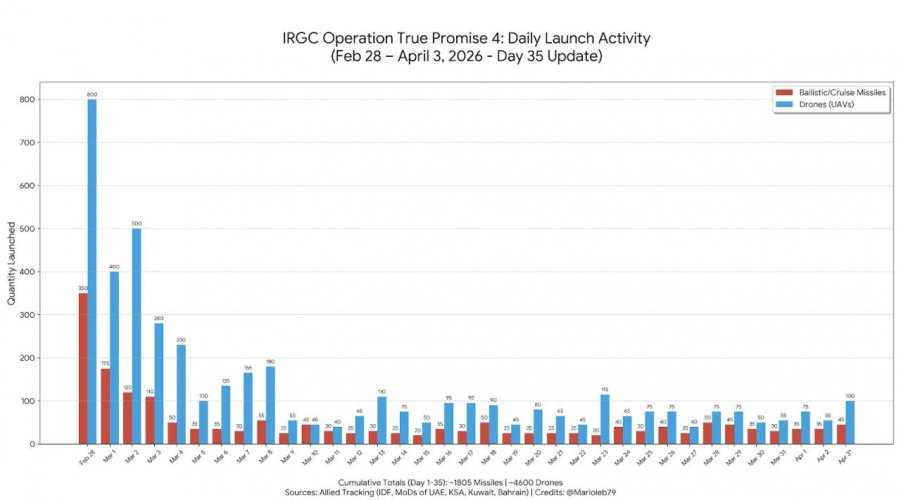
Was it, really? They are maintaining the same number of launches through most of March, at about 50 ballistic missiles and a 100 drones per day. Naturally, with production facilities destroyed or damaged, their supply will eventually dry out, but there is no telling how long that will take.You might say this is some impossible war of attrition, but I remind that the same was said of TEL hunting until recently, and look how successfully that was done in this and the last war.
The IRGC's structure poses a serious challenge, but it is not impossible for a popular grassroots movement to succeed, especially if they get assistance in arms and coordination.Unrealistic without boots on the ground. In Teheran, not just the coast of Iran. Bloody unlikely. Very bloody indeed if tried.
Degradation was successful. "Finishing off" the nuclear program was never an operational objective.US and Israel tried finishing that last year using only air attacks, did not happen.
The Houthis took serious beating. Their financial lifeline was significantly degraded when their main port was damaged along with its oil storage and tanker servicing facilities.Bab was reopened by signing rather humiliating ceasefire with Houthis(which they felt free to break). Contested commercial traffic didn't resume before that, too risky.
The more you destroy - the fewer are left to deal with. It is only mathematically logical that the number of destroyed TELs goes down over time.How exactly? Destroyed numbers go lower and lower with time, as it turned out that most destroyed were temporarily (and at great expense) blocked in shelters - or just waited out early surge in sorties.
They actually did a "show" launch just a couple days ago for Passover. Not coincidentally, a bunch more TELs were reportedly destroyed.Yes, Iran doesn't do stupid show launches like in their drama revenges anymore - but effects on ground are steady and consistent; if anything, they've grown.
Were they escorted? (no)There's no reason to strike something not moving. Ships which did try - were struck.
No, I think it is beneficial to Iran in the short term. At least if their plan is the IRGC's survival. But if the IRGC survives, Iran will find itself in a post-war reality where the SoH is largely bypassed via alternatives Iran incentivized.Which seems to be the case. Weirdly enough, you seem to think that Iran strangling global economy, while propping up its own economy and ruining those midterm chances for Republican party in both Congress and Senate without spending their offensive potential is somehow bad for them.
That is not indicative of low attrition. It is also important to separate MRBMs and SRBMs, which this graph didn't do.Was it, really? They are maintaining the same number of launches through most of March, at about 50 ballistic missiles and a 100 drones per day. Naturally, with production facilities destroyed or damaged, their supply will eventually dry out, but there is no telling how long that will take.
You don't negotiate worse status settlement with someone whom you won against - and they don't block when they chose.The Houthis took serious beating. Their financial lifeline was significantly degraded when their main port was damaged along with its oil storage and tanker servicing facilities.
A ceasefire is the political continuation to a military operation. The military pressure succeeded. From then on, it's a matter of whether the coalition prepares for renewed fighting if it happens, or if the Houthis are left to reconstitute.
I remember Israel destroyed 70-80% on the first day, and 80-90% on the second.The more you destroy - the fewer are left to deal with. It is only mathematically logical that the number of destroyed TELs goes down over time.
Assume you have 1,000 units of something. I destroy 50% per day. On the first day I destroyed 500. You have 500 left.
What is 50% of 500? 250. On the second day I destroy 250. Then 125 (50% of 250) and so on and so forth.
Not much of a show, but launching right after strike near Zoubin (south-western corner of the country) was indeed insulting. Reporting launchers after destroying 90% of them, which is now 50, is just that - reporting.They actually did a "show" launch just a couple days ago for Passover. Not coincidentally, a bunch more TELs were reportedly destroyed.
What are these "effects" you speak of?
By the way, since it's related, Iran has long ago shifted to cluster munitions. These are much less effective than unitary warheads. This points to significant demoralization within the IRGC, realizing they are failing to get past defenses so they improvize with largely symbolic attacks.
USN explicitly declined to escort ships through gulf. Who'll do that, Israeli navy?Were they escorted? (no)
Yet another attempt was made (is being made?) to, err, diminish it. Try, then try again. And again."Finishing off" the nuclear program was never an operational objective
One can always wish. Right now, no sign of that.The IRGC's structure poses a serious challenge, but it is not impossible for a popular grassroots movement to succeed, especially if they get assistance in arms and coordination.
I agree that sometimes it's better to fight the long war and win decisively, but the airstrikes were producing diminishing returns, and there was no viability for a ground operation.You don't negotiate worse status settlement with someone whom you won against - and they don't block when they chose.
Please do not make up numbers. If you want to have a proper debate, quote the numbers given by the relevant defense officials.I remember Israel destroyed 70-80% on the first day, and 80-90% on the second.
Now it's 50% of the initial, maybe
Iran's DIB was and still is being targeted, across all components. Missiles, drones, naval systems, air defenses, and their components and subcomponents.At current launch tempo it means all remaining missiles will be launched, and if Iran somehow gets to produce more (which is possible) - they'll be launched as well. As such, Iran doesn't feel any need to compromise - their leverage won't end anytime soon.
On the other hand, switch to bridges and powerplants when force destruction goes well - and this is exactly what Trump does.
Now ask yourself why the USN declined.USN explicitly declined to escort ships through gulf. Who'll do that, Israeli navy?
I'm btw very much looking to a positive answer, every tank fill now is an exciting anticipation.
If I understand that things degraded can be rebuilt.Yet another attempt was made (is being made?) to, err, diminish it. Try, then try again. And again.
Published April 1, 2026, so it could be his private joke.President Trump’s statement was the second time in 24 hours that he had declared that the nuclear problem with Iran had been solved, despite all evidence to the contrary.
Iran’s top intelligence chief has been killed in US-Israeli air strikes a day after Donald Trump threatened to send the country “to hell”.
Majid Khademi, head of Iran’s Islamic Revolutionary Guard Corps intelligence division, was said to have been directly responsible for war crimes against Israel.
The US and Israel have killed dozens of high-profile political and military figures in Iran since their joint air strikes began on Feb 28.
On Monday morning, Tehran warned of a “devastating and widespread” retaliation to any US attacks on its civilian infrastructure if it did not reopen the Strait of Hormuz.
In an expletive-laden rant on Sunday, Mr Trump threatened to hit Iranian power plants and bridges if Tehran refused to end its blockade of the strait.
“Tuesday will be Power Plant Day, and Bridge Day, all wrapped up in one ... Open the f---ing strait, you crazy b-----rds, or you’ll be living in hell – just watch! Praise be to Allah,” he said on Truth Social.
Iran’s top intelligence chief has been killed in US-Israeli air strikes a day after Donald Trump threatened to send the country “to hell”.
Majid Khademi, head of Iran’s Islamic Revolutionary Guard Corps intelligence division, was said to have been directly responsible for war crimes against Israel.
The US and Israel have killed dozens of high-profile political and military figures in Iran since their joint air strikes began on Feb 28.
On Monday morning, Tehran warned of a “devastating and widespread” retaliation to any US attacks on its civilian infrastructure if it did not reopen the Strait of Hormuz.
In an expletive-laden rant on Sunday, Mr Trump threatened to hit Iranian power plants and bridges if Tehran refused to end its blockade of the strait.
“Tuesday will be Power Plant Day, and Bridge Day, all wrapped up in one ... Open the f---ing strait, you crazy b-----rds, or you’ll be living in hell – just watch! Praise be to Allah,” he said on Truth Social.
Advertisement
But Iran’s military threatened to ramp up attacks, saying: “If attacks on civilian targets are repeated, the next stages of our offensive and retaliatory operations will be much more devastating and widespread.”
The Iranian navy also warned that the strait would “never return to its former state” and vowed to impose a “new Persian Gulf order”.