No bomber pilot would want to have that thing on his plane right behind the bomb bay.A large enough termite charge might do the trick.

You are using an out of date browser. It may not display this or other websites correctly.
You should upgrade or use an alternative browser.
You should upgrade or use an alternative browser.
What if the atomic bomb had been available sooner?
- Thread starter exclaimedleech8
- Start date

T. A. Gardner
ACCESS: Top Secret
- Joined
- 18 February 2021
- Messages
- 2,007
- Reaction score
- 3,558
In an airplane, in combat, carrying several tons of bombs... The British did try but it was recognized that sooner or later the Germans would get one and discover its secrets.A large enough termite charge might do the trick.
Rule of cool
ACCESS: Top Secret
- Joined
- 16 January 2024
- Messages
- 3,567
- Reaction score
- 4,520
Could a couple of solid rockets be strapped to a Lancaster and fired once the bomb has been dropped to give it a big boost of speed and altitude to clear the blast, then jettisoned?
ArtosStark
ACCESS: Confidential
- Joined
- 2 December 2020
- Messages
- 87
- Reaction score
- 146
Would it not be easier to slow the bomb down? Drogue chutes and flat bomb noses were both used in real life, a bit later.Could a couple of solid rockets be strapped to a Lancaster and fired once the bomb has been dropped to give it a big boost of speed and altitude to clear the blast, then jettisoned?
T. A. Gardner
ACCESS: Top Secret
- Joined
- 18 February 2021
- Messages
- 2,007
- Reaction score
- 3,558
But it could drift off course and blow up the wrong city or something...Would it not be easier to slow the bomb down? Drogue chutes and flat bomb noses were both used in real life, a bit later.
ArtosStark
ACCESS: Confidential
- Joined
- 2 December 2020
- Messages
- 87
- Reaction score
- 146
Was that an issue when it was used in the Cold War?But it could drift off course and blow up the wrong city or something...
If my googling is correct it seems to have been used as a deceleration aid on the B61, B83 and WE.177. All of which appear to have been considered accurate enough to make use of.
Scott Kenny
ACCESS: USAP
- Joined
- 15 May 2023
- Messages
- 19,532
- Reaction score
- 27,985
Versus much faster aircraft, not a heavy bomber that is barely making 500kph.Was that an issue when it was used in the Cold War?
If my googling is correct it seems to have been used as a deceleration aid on the B61, B83 and WE.177. All of which appear to have been considered accurate enough to make use of.
T. A. Gardner
ACCESS: Top Secret
- Joined
- 18 February 2021
- Messages
- 2,007
- Reaction score
- 3,558
Was that an issue when it was used in the Cold War?
I don't think so, but it's fun to speculate that some thermonuclear weapon is floating across some country drifting on the wind looking for a place to detonate. Sort of Dark Star meets Dr. Strangelove.
It is an interesting idea, but considering that even a C‑130 equipped with RATO suffers from poor acceleration, no matter how many heavy RATO units you carry, the achievable acceleration would at best reach around 100 km/h.
What this would ultimately enable does not seem to be anything beyond what a new‑generation bomber could already accomplish.
As an alternative, rather than attaching RATO to the bomber itself, How about attach RATO to the bomb?not deceleration,It mean aceleration for bombing from far away
What this would ultimately enable does not seem to be anything beyond what a new‑generation bomber could already accomplish.
As an alternative, rather than attaching RATO to the bomber itself, How about attach RATO to the bomb?not deceleration,It mean aceleration for bombing from far away
Last edited:
ArtosStark
ACCESS: Confidential
- Joined
- 2 December 2020
- Messages
- 87
- Reaction score
- 146
Yes but, AIUI the chutes were for use at much lower altitudes. If the problem facing the use of a Lancaster is the lack of speed and altitude to escape the blast of its own bomb is not the obvious solution to slow the bombs descent?Versus much faster aircraft, not a heavy bomber that is barely making 500kph.
T. A. Gardner
ACCESS: Top Secret
- Joined
- 18 February 2021
- Messages
- 2,007
- Reaction score
- 3,558
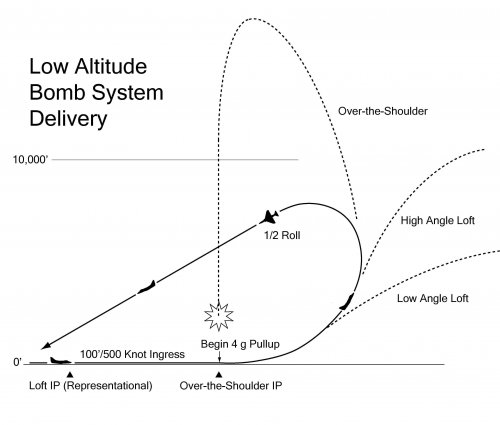
Well, one thing's for certain, a Lancaster isn't doing a LABS delivery...

Scott Kenny
ACCESS: USAP
- Joined
- 15 May 2023
- Messages
- 19,532
- Reaction score
- 27,985
LOL. Definitely not.Well, one thing's for certain, a Lancaster isn't doing a LABS delivery...
But it is doing 450kph (max) at 15-20kft. Which isn't fast enough to get clear of a large blast.
A B-29 is doing 575kph (max) at 30kft, which gives a lot more time to get clear of the blast.
And of course Grandpa BUFF is doing 1000kph at 50kft for a high altitude drop.
ArtosStark
ACCESS: Confidential
- Joined
- 2 December 2020
- Messages
- 87
- Reaction score
- 146
Fat Man and Little Boy took around 45 seconds to get from their 30,000+ foot drop height to their 1500-2000 ft detonation height. That is consistent with a dense streamlined mass reaching and maintaining critical velocity.LOL. Definitely not.
But it is doing 450kph (max) at 15-20kft. Which isn't fast enough to get clear of a large blast.
A B-29 is doing 575kph (max) at 30kft, which gives a lot more time to get clear of the blast.
And of course Grandpa BUFF is doing 1000kph at 50kft for a high altitude drop.
It was calculated that the B-29’s needed to be at least 8 miles away by the time of detonation to be safe from the blast. They made around 11.5.
Dropping the same object from 25,000 ft would take around 40 seconds. In that time a Lancaster VI at 25,000 ft could make around 280 mph which would only allow them to get 3.1 miles away. Which is too little to survive.
However, with a 20 ft drogue chute the terminal velocity is significantly reduced and the time to ground is increased to between 2.8-4.1 minutes. Even at 2.8 minutes and 280 mph the Lancaster would have been over 13 miles away by time of detonation. Safely outside the blast zone.
If the specialized Lancaster was given the ability to go faster at that altitude (the Lancaster VI’s speed dropped off a fair bit above 18,000 ft) or to bomb from higher altitude, so much the better. If the drogue chute allowed the bomb to drop at closer to 4 minutes better yet. But even at the inside of those variables use of drogue chutes should allow a Lancaster to carry the bomb and not get caught in the blast.
AIUI the use of a parachute as a deceleration aid on WE.177 was for use in the laydown attack method, where the aircraft overflew the target at low level, dropped the bomb, which was slowed by the parachute toWas that an issue when it was used in the Cold War?
If my googling is correct it seems to have been used as a deceleration aid on the B61, B83 and WE.177. All of which appear to have been considered accurate enough to make use of.
1. allow the aircraft to make a high speed exit at low level; and
2. limit damage to the bomb itself as it contacted the ground before exploding some time later depending on its fusing.
https://en.wikipedia.org/wiki/Laydown_deliveryAnd from Wiki.
"Intended clearance by 1970 for other types of aircraft and delivery methods included:
aircraft and delivery methods
| aircraft | version | delivery methods |
|---|---|---|
| Handley Page Victor Mk.2 | WE.177A/B | laydown, ballistic, retarded |
| Avro Vulcan[2] | WE.177A/B | laydown, ballistic, retarded |
| Vickers Valiant Mks: B.1, P.R., K.1., P.R.K.1 | WE.177A | laydown, ballistic, retarded |
| BAC TSR-2[2] | WE.177A/B | laydown, ballistic, retarded, loft, dive toss |
| English Electric Canberra Mk.B.15 & B.16 | WE.177A | laydown, ballistic, retarded, loft |
| Blackburn Buccaneer Mk.2[2] | WE.177A | laydown, loft, retarded |
| Sea Vixen Mk.2 | WE.177A | laydown, loft, retarded |
| Westland Wasp | WE.177A | depth charge |
| Westland Lynx HAS.1 | WE.177A | depth charge |
| Westland Wessex HAS.3 | WE.177A | depth charge |
| Westland Wessex HUS | WE.177A | depth charge |
| Hawker Siddeley Nimrod | WE.177A | depth charge |
I wouldn't want to be trying a laydown drop in a Lancaster, or even a Superfort!!
ArtosStark
ACCESS: Confidential
- Joined
- 2 December 2020
- Messages
- 87
- Reaction score
- 146
Fair. I wouldn’t either. However, the point of a chute was to slow the fall of the bomb to allow the dropping aircraft to escape the blast in drop profiles where it otherwise wouldn’t be able to. Which it seems to me this qualifies for.AIUI the use of a parachute as a deceleration aid on WE.177 was for use in the laydown attack method, where the aircraft overflew the target at low level, dropped the bomb, which was slowed by the parachute to
1. allow the aircraft to make a high speed exit at low level; and
2. limit damage to the bomb itself as it contacted the ground before exploding some time later depending on its fusing.
https://en.wikipedia.org/wiki/Laydown_deliveryAnd from Wiki.
"Intended clearance by 1970 for other types of aircraft and delivery methods included:
aircraft and delivery methods
"
aircraft version delivery methods Handley Page Victor Mk.2 WE.177A/B laydown, ballistic, retarded Avro Vulcan[2] WE.177A/B laydown, ballistic, retarded Vickers Valiant Mks: B.1, P.R., K.1., P.R.K.1 WE.177A laydown, ballistic, retarded BAC TSR-2[2] WE.177A/B laydown, ballistic, retarded, loft, dive toss English Electric Canberra Mk.B.15 & B.16 WE.177A laydown, ballistic, retarded, loft Blackburn Buccaneer Mk.2[2] WE.177A laydown, loft, retarded Sea Vixen Mk.2 WE.177A laydown, loft, retarded Westland Wasp WE.177A depth charge Westland Lynx HAS.1 WE.177A depth charge Westland Wessex HAS.3 WE.177A depth charge Westland Wessex HUS WE.177A depth charge Hawker Siddeley Nimrod WE.177A depth charge
I wouldn't want to be trying a laydown drop in a Lancaster, or even a Superfort!!
Out of curiosity, your chart also lists “retarded” as a delivery method. Lay down is a form of retarded delivery, but the fact that they listed it separate raises the question whether there was a planned use of retarded delivery for air burst as well?
T. A. Gardner
ACCESS: Top Secret
- Joined
- 18 February 2021
- Messages
- 2,007
- Reaction score
- 3,558
Fat Man and Little Boy took around 45 seconds to get from their 30,000+ foot drop height to their 1500-2000 ft detonation height. That is consistent with a dense streamlined mass reaching and maintaining critical velocity.
It was calculated that the B-29’s needed to be at least 8 miles away by the time of detonation to be safe from the blast. They made around 11.5.
Dropping the same object from 25,000 ft would take around 40 seconds. In that time a Lancaster VI at 25,000 ft could make around 280 mph which would only allow them to get 3.1 miles away. Which is too little to survive.
However, with a 20 ft drogue chute the terminal velocity is significantly reduced and the time to ground is increased to between 2.8-4.1 minutes. Even at 2.8 minutes and 280 mph the Lancaster would have been over 13 miles away by time of detonation. Safely outside the blast zone.
If the specialized Lancaster was given the ability to go faster at that altitude (the Lancaster VI’s speed dropped off a fair bit above 18,000 ft) or to bomb from higher altitude, so much the better. If the drogue chute allowed the bomb to drop at closer to 4 minutes better yet. But even at the inside of those variables use of drogue chutes should allow a Lancaster to carry the bomb and not get caught in the blast.
Also to consider is that at 30,000 ft., A B-29 was largely immune to 8.8 cm fire reducing the number of effective--yes 88's could reach that altitude, but the firing time was so short as to make them ineffective--flak batteries to a small fraction of those available. This is a consideration for a German nuke drop.
The B-29 is far more likely to survive flak than a Lancaster.
- Joined
- 5 May 2007
- Messages
- 2,016
- Reaction score
- 4,277
I'm not quite sure how the conversation went from 'you can't drop a nuke on Germany because the aircraft might be shot down' to 'obviously you need to use a slower, lower aircraft that the bomb doesn't fit in'.Also to consider is that at 30,000 ft., A B-29 was largely immune to 8.8 cm fire reducing the number of effective--yes 88's could reach that altitude, but the firing time was so short as to make them ineffective--flak batteries to a small fraction of those available. This is a consideration for a German nuke drop.
The B-29 is far more likely to survive flak than a Lancaster.
ArtosStark
ACCESS: Confidential
- Joined
- 2 December 2020
- Messages
- 87
- Reaction score
- 146
True, but as was extensively covered earlier, if you have a B-29 you are going to be using a B-29. The discussion of the Lancaster is interesting (hence why I am putting the time into it) but would only be relevant if the B-29 was not available and there was not another aircraft you could shove into the role in the same time frame.Also to consider is that at 30,000 ft., A B-29 was largely immune to 8.8 cm fire reducing the number of effective--yes 88's could reach that altitude, but the firing time was so short as to make them ineffective--flak batteries to a small fraction of those available. This is a consideration for a German nuke drop.
The B-29 is far more likely to survive flak than a Lancaster.
If the choice is whether to use your potentially war winning weapon on a Lancaster significantly earlier or not be able to make use of it, I am guessing they will suck it up and use the Lancaster. Outside of being presented with that dichotomy they probably will not.
As to the exact amount of danger flak would present to a Bomb armed Lancaster I cannot be sure. Lancaster carrying Grand Slams would have been even more vulnerable (since it flew like a big with one of those on board) and managed to return home. However, that was later than would be imagined here and not against city targets.
When the Lancaster was brought up as a possibility earlier on it was dismissed out of hand based on several factors (Bomb Bay size, vulnerability on the way to target, inability to escape the bast zone). You did it yourself just now. So it seemed an interesting and useful exercise to examine the validity of those concerns. Apologies if this is too far off topic to be useful, however.I'm not quite sure how the conversation went from 'you can't drop a nuke on Germany because the aircraft might be shot down' to 'obviously you need to use a slower, lower aircraft that the bomb doesn't fit in'.
The desirability of the B-29 or probably even the B-32 over the Lancaster is, to me, established. But if the B-29 program did end up unsuitable and the B-32 cannot be made available in time it seemed a valuable exercise to examine the less suitable back up.
On the bomb bay issue (your objection) the Lancaster could absolutely fit the bomb in length and weight (it being half the weight and one third the length of Grand Slam). The only tricky issue is the width (it being similar to Grand Slam which was carried without Bomb Bay doors). However, that was a dovetailing of a wider bomb than the doors then available could take and a need to reduce weight. So the complete removal of the doors made sense. The extra drag was hardly going to matter much as it was already going to wallow with the weight. But, if the package was awkwardly wide but not so cripplingly heavy (and, importantly, considered war winningly critical to carry) then bulged bomb bay doors, probably pneumatically controlled, seems to be a small barrier.
On the drop survivability, it was interesting to run the math and confirm that, barring a massive increase in speed and a smaller one in useful altitude, the Lanc indeed could not clear the blast zone in time. But that aids do exist (drogue chutes, possibly flattened bomb casing heads) that would have allowed “safe” delivery.
The question of vulnerability to target is one I am not familiar enough with to comment on.
exclaimedleech8
ACCESS: Top Secret
- Joined
- 30 September 2024
- Messages
- 823
- Reaction score
- 999
Your country very nearly collapsed into civil war in 1918-1919You appear to think of Germany as a feral place of various antagonistic tribal groups. While there is certainly some more or less friendly ribbing between different regions/federal states, that was decidedly not my experience growing up and maturing(?) in my mother (and father) country.
Scott Kenny
ACCESS: USAP
- Joined
- 15 May 2023
- Messages
- 19,532
- Reaction score
- 27,985
And again in the mid 1920s.Your country very nearly collapsed into civil war in 1918-1919
martinbayer
ACCESS: Above Top Secret
- Joined
- 6 January 2009
- Messages
- 5,063
- Reaction score
- 6,969
Well, we didn't.Your country very nearly collapsed into civil war in 1918-1919
Scott Kenny
ACCESS: USAP
- Joined
- 15 May 2023
- Messages
- 19,532
- Reaction score
- 27,985
Missed a few.
See this comment:
Maybe. It'd be a very tight interception geometry.Outbound and target at 30k feet or a bit more I get, best data I have meant the aircraft descending rapidly to gain speed to escape. Would that not leave them open to a pissed off interceptor?
No guarantee obviously but a chance?
See this comment:
Sounds like the best option would be to send fighter sweeps across the jet and rocket fighter bases before a nuclear strike.Looking at the PR Mosquito operations flying around 30,000ft the main threat came from the Me262 jet fighter (from July 1944) and the Me163 rocket fighter (entered operational service in May 1944). To counter the Me262 PR Mosquito tactics were to evade by turning tightly inside the enemy and losing altitude fast to gain speed to try to outrun them. But those Luftwaffe types were not available in large numbers and their bases were known. PR Mosquitos continued to operate in relative freedom until the end of the war.
Those would not be options for a B-29 carrying an atomic bomb, but maybe it becomes a reason for retaining all the remote turrets. Another option would be fighter sweeps over bases known to have these types, rather than close escort.
A B-35 flying wing isn't carrying the bombs externally. The 6 bomb bays are inside the wing.The first bombs could not be transported externally because the detonators had to be mounted by a technician inside the bomb bay during flight.
exclaimedleech8
ACCESS: Top Secret
- Joined
- 30 September 2024
- Messages
- 823
- Reaction score
- 999
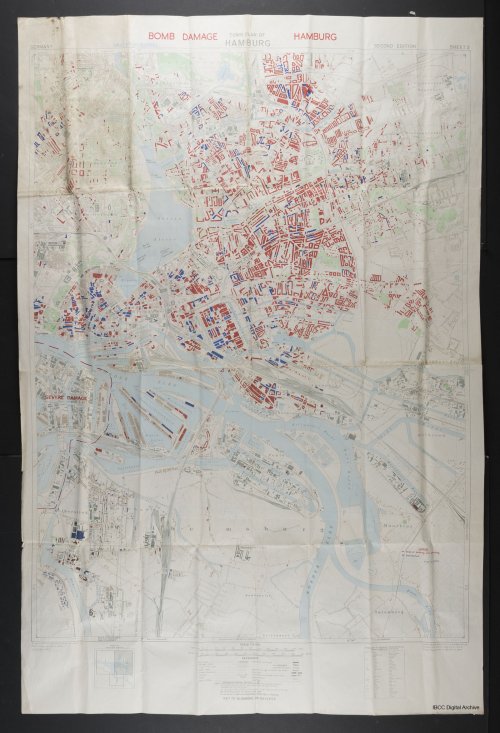
Hadn't Hamburg already burned to the ground a year earlier?Hamburg in the north. Specifically the Rotherbaum.
Scott Kenny
ACCESS: USAP
- Joined
- 15 May 2023
- Messages
- 19,532
- Reaction score
- 27,985
Probably not for an atomic bomb. For similar reasons as the Tallboy and Grand Slam attacks.Wouldnt the Lancaster be dropping at night?
T. A. Gardner
ACCESS: Top Secret
- Joined
- 18 February 2021
- Messages
- 2,007
- Reaction score
- 3,558
And, it would likely be 614 Squadron (I may have that number off a bit) as they were the ones trained on precision drops with Tallboys and Grand Slams using the STABS bombsight.Probably not for an atomic bomb. For similar reasons as the Tallboy and Grand Slam attacks.
Are you aiming for an air-burst that produces minimal radiation on the ground?
or
Are you aiming for a ground burst that creates lots of radiation?
Ground bursts at key cities and rail junctions in East Germany would serve two functions: first they would help the Red Army defeat Nazi Germany.
Secondly, a few weeks later Russian soldiers start dying of radiation poisoning. Those large numbers of casualties would hobble the Red Army, preventing them from "liberating/seizing" all of Central Europe.
A cruel way to treat allies ....
or
Are you aiming for a ground burst that creates lots of radiation?
Ground bursts at key cities and rail junctions in East Germany would serve two functions: first they would help the Red Army defeat Nazi Germany.
Secondly, a few weeks later Russian soldiers start dying of radiation poisoning. Those large numbers of casualties would hobble the Red Army, preventing them from "liberating/seizing" all of Central Europe.
A cruel way to treat allies ....
exclaimedleech8
ACCESS: Top Secret
- Joined
- 30 September 2024
- Messages
- 823
- Reaction score
- 999
It would definitely be airburst to maximize the blast damageAre you aiming for an air-burst that produces minimal radiation on the ground?
or
Are you aiming for a ground burst that creates lots of radiation?
Ground bursts at key cities and rail junctions in East Germany would serve two functions: first they would help the Red Army defeat Nazi Germany.
Secondly, a few weeks later Russian soldiers start dying of radiation poisoning. Those large numbers of casualties would hobble the Red Army, preventing them from "liberating/seizing" all of Central Europe.
A cruel way to treat allies ....

- Joined
- 13 August 2007
- Messages
- 10,406
- Reaction score
- 18,054
on A-Bomb Target in Third reich
The City of Lübeck was first Target
Why ?
Berlin was out of Question the Soviets were surround it, nuke it would be counterproductive...
...Since Stalin wanted the would be painter alive.
Lübeck on other hand was near the Wehrmacht HQ and last remaining form of Government in Third Reich,
in town of Flensburg around 171 km from Lübeck.
mean the Government could take look themself what is left from Lübeck.
on other targets.
not much info, the Third Reich collapse so fast and surrender, seems they got only Lübeck on list...
and i think the Nazi would surrender after Lübeck.
The City of Lübeck was first Target
Why ?
Berlin was out of Question the Soviets were surround it, nuke it would be counterproductive...
...Since Stalin wanted the would be painter alive.
Lübeck on other hand was near the Wehrmacht HQ and last remaining form of Government in Third Reich,
in town of Flensburg around 171 km from Lübeck.
mean the Government could take look themself what is left from Lübeck.
on other targets.
not much info, the Third Reich collapse so fast and surrender, seems they got only Lübeck on list...
and i think the Nazi would surrender after Lübeck.
T. A. Gardner
ACCESS: Top Secret
- Joined
- 18 February 2021
- Messages
- 2,007
- Reaction score
- 3,558
Except the later is not true. As the US found out in extensive testing postwar through the 1950's, the short-term dangers of radiation are grossly overstated. Sure, in the long-term, many of those soldiers might be affected by exposure, but in the short term? No. It would make cleaning up the damage more dangerous, but in a military setting, it makes little difference.Are you aiming for an air-burst that produces minimal radiation on the ground?
or
Are you aiming for a ground burst that creates lots of radiation?
Ground bursts at key cities and rail junctions in East Germany would serve two functions: first they would help the Red Army defeat Nazi Germany.
Secondly, a few weeks later Russian soldiers start dying of radiation poisoning. Those large numbers of casualties would hobble the Red Army, preventing them from "liberating/seizing" all of Central Europe.
A cruel way to treat allies ....
A low air burst would be perfectly acceptable for creating lots of damage.
Rotherbaum was spared. It was their elite homestead. Rich people generally spare other rich people.Hadn't Hamburg already burned to the ground a year earlier?
exclaimedleech8
ACCESS: Top Secret
- Joined
- 30 September 2024
- Messages
- 823
- Reaction score
- 999
It looks more like because the buildings in Rotherbaum were more spaced out and probably built of higher quality materialsRotherbaum was spared. It was their elite homestead. Rich people generally spare other rich people.
T. A. Gardner
ACCESS: Top Secret
- Joined
- 18 February 2021
- Messages
- 2,007
- Reaction score
- 3,558
Or, because the rich rarely live next to things like factories, industrial ports, rail yards, and military installations...Rotherbaum was spared. It was their elite homestead. Rich people generally spare other rich people.
Scott Kenny
ACCESS: USAP
- Joined
- 15 May 2023
- Messages
- 19,532
- Reaction score
- 27,985
While true, that wouldn't necessarily save them from the British bombing offensive.Or, because the rich rarely live next to things like factories, industrial ports, rail yards, and military installations...
T. A. Gardner
ACCESS: Top Secret
- Joined
- 18 February 2021
- Messages
- 2,007
- Reaction score
- 3,558
True. But the British usually targeted a city center since they were either bombing off a navigation aid like GEE or using H2X and such. Bombing the 'burbs doesn't buy you much.While true, that wouldn't necessarily save them from the British bombing offensive.
Scott Kenny
ACCESS: USAP
- Joined
- 15 May 2023
- Messages
- 19,532
- Reaction score
- 27,985
Deliberately bombing the burbs doesn't buy you much, no.True. But the British usually targeted a city center since they were either bombing off a navigation aid like GEE or using H2X and such. Bombing the 'burbs doesn't buy you much.
But we've also seen the accuracy level of the UK bombing campaign.
There were also remote controlled bombers with the extra boom available. They might need to add the latest TV camera around that time for the controller. So the control aircraft can get away rather than remain on its wing.

Nik
ACCESS: Top Secret
- Joined
- 15 July 2009
- Messages
- 1,374
- Reaction score
- 1,209
My Alt-TBO had the B-29 Silverbird pairs attack at night, the path-finder / camera aircraft dropping a really big parachute flare to supplement Radar targeting.
Also, as the 'Gun Type' Device was retarded by drogue chute to provide that forty-some seconds escape margin, the parachute flare would hopefully distract AA gunners, plus confuse via reports of its slowly descending Whatsit...
Yes, the chance of a disabling AA hit on the drogue-retarded Device was minimal, but better not to risk it...
Also, as the 'Gun Type' Device was retarded by drogue chute to provide that forty-some seconds escape margin, the parachute flare would hopefully distract AA gunners, plus confuse via reports of its slowly descending Whatsit...
Yes, the chance of a disabling AA hit on the drogue-retarded Device was minimal, but better not to risk it...
At Second Quebec Conference, British and American governments decided to drop on Japan at sep 1944.
If we consider only military, Germany had the capability to intercept B-29s at 10,000m yet and Japan dont have it expect for air to air kamikaze.
So When nuclear bomber down, It is Risk of confidential nuclear information leakage.
I think if they would drop on Germany, Point is selected there is no risk for drop. That makes it all the more reason If Second Quebec Conference at sep 1943.
If we consider only military, Germany had the capability to intercept B-29s at 10,000m yet and Japan dont have it expect for air to air kamikaze.
So When nuclear bomber down, It is Risk of confidential nuclear information leakage.
I think if they would drop on Germany, Point is selected there is no risk for drop. That makes it all the more reason If Second Quebec Conference at sep 1943.
Similar threads
-
 Stalin's Missed Chance - What if USSR invaded Germany in 1941?
- Started by Hammer Birchgrove
- Replies: 17
-
What if the Su 75 and the Yak 141 had a baby?
- Started by Nicolas10
- Replies: 9
-
WW2 Luftwaffe - what if strategic vision had prevailed?
- Started by pathology_doc
- Replies: 89
-
 Could the start date of World War 2 been changed?
- Started by uk 75
- Replies: 4
-
 What if, 18" Hood effect on WNT and the Hunt for Bismarck
- Started by Tzoli
- Replies: 22