USAAF 0.60-caliber Machine Gun????

An AN/M3 firing the 16mm Vega would have been a helluva thing.
It's kind of interesting to me that aircraft guns somewhat carcinize towards 14.5x114 until you get to the dominance of cannons. It's kind of notable to me that 23x115 was necked up 14.5, which traded 300 m/s of muzzle velocity to avoid the weight and recoil issues that plagued the 23x152 VYa-23. Notably, it was replacing the 20x99mm round derived from 12.7x108mm.

At the same time, 14.5x114 aircraft guns pose an interesting what if. 1000gr at 1000 m/s is pretty sporty, and you're probably looking at similar ammunition loads to NS-23 (i.e. half that of 20x99mmR), but somewhat flatter shooting.
 
At the same time, 14.5x114 aircraft guns pose an interesting what if. 1000gr at 1000 m/s is pretty sporty, and you're probably looking at similar ammunition loads to NS-23 (i.e. half that of 20x99mmR), but somewhat flatter shooting.
Yeah, it is kinda weird how the US really settled on .50bmg for AA and aircraft guns while the Soviets didn't do the same with 14.5mm.
 
Hi Scott,

If you cannot lead properly you're not going to hit. But a faster ammo makes for less lead required at the same engagement ranges so the pilots are less likely to mess it up.

I just remembered a study, published in Luftfahrt International 15, that compares the low-velocity MK 108 battery installed in the Me 262 with a high-velocity battery consisting of 2 x MK 103 and 2 x MG 151 (15 mm).

It considers weapons effect against Mosquito-sized jet bombers capable of a 750 km/h top speed, which the authors figured the Allies might field in the future.

MK 108 and MK 103 were assumed to fire mine shells, while the MG 151/15 was assumed to fire incendiary ammunition for the purpose of the study.

With standard reflector sight:
  • At 400 m range, the MK 108 battery is superior to the MK 103/MG 151 battery for lead angles of up to 30°.
  • At 600 m range, the same applies as at 400 m range.
  • At 800 m range, the absolute hit chances drops so low that neither battery can expect a kill with the available ammunition supply.
With EZ 42 computing sight:

  • If an EZ 42 computing sight is used, muzzle velocity becomes a minor concern. Accordingly, the MK 108 battery becomes even more effective in relation to the MK 103/MG 151 battery.

Regards,

Henning (HoHun)
 
Yeah, it is kinda weird how the US really settled on .50bmg for AA and aircraft guns while the Soviets didn't do the same with 14.5mm.

The 14.5mm arrived when there was a host of Soviet cartridges well fit for a heavy belt-fed automatic weapon, like the 12.7mm, 20mm, and 23mm. Soviets went with the 37mm as the main AA calibre for the AA, with a sprinkle of 25 and 12.7mm, and post war they went with the 23mm, 57mm and the automatic 14.5mm, plus the 12.7mm as the pintle gun. Add also the lousy 45mm for the Navy.

US Army went with 37mm, Navy went with 28mm, and then both of them with 40mm, together with the 12.7mm.

Using the HMGs as air-defence weapons is all fine and dandy until the bullets start hitting the ground and friendly people and assets - a shortcoming the AA guns with their self-destructing shells don't have.
 
The 14.5mm arrived when there was a host of Soviet cartridges well fit for a heavy belt-fed automatic weapon, like the 12.7mm, 20mm, and 23mm. Soviets went with the 37mm as the main AA calibre for the AA, with a sprinkle of 25 and 12.7mm, and post war they went with the 23mm, 57mm and the automatic 14.5mm, plus the 12.7mm as the pintle gun. Add also the lousy 45mm for the Navy.

US Army went with 37mm, Navy went with 28mm, and then both of them with 40mm, together with the 12.7mm.

Using the HMGs as air-defence weapons is all fine and dandy until the bullets start hitting the ground and friendly people and assets - a shortcoming the AA guns with their self-destructing shells don't have.
I'm still surprised that the Soviets didn't go to the 14.5mm as their standard AA pintle on tanks etc.
 
Hi,

It's kind of interesting to me that aircraft guns somewhat carcinize towards 14.5x114 until you get to the dominance of cannons.

I just stumbled upon this document from the Korean War era, which shows a big difference in the effectiveness of hits between 20 mm cannon and 12.7 mm MG fire: The chances of losing an aircraft when it's hit by 20 mm fire is about four to five times as high as when it's hit by 12.7 mm fire:

https://archive.org/details/DTIC_AD0841042/page/10/mode/2up
Now that skips the "15 mm class" machine guns including the 60 caliber MG, and it doesn't say anything about the probability of hitting the aircraft in the first place, but I think it might illustrate the reason for what you termed "the dominance of cannons".

Regards,

Henning (HoHun)
 
Hi Tomo,

Already the NSVT was a hefty piece. The KPV was double the weight, sorta the MG 151 or the 15mm Besa territory, and really required a tripod installation.

Good point. Considering that tank crews were not specialized anti-aircraft troops, and didn't use anything but basic anti-aircraft sights and a single gun operator (I presume, since I know nothing about tanks :), I think the difficulties of hitting an aircraft target were so large that it wasn't worth the effort to increase the range or the effectiveness of the tank's gun.

I presume in practice, it was more about the number of guns firing and creating a "dangerous zone" in the sky, which would cause enemy aircraft to use tactics that minimized their exposure and thus reduced the effectiveness of the air-to-ground munitions they might employ.

Coincedentally, this document ...

DTIC AD0841042: DAMAGE SUFFERED BY USN AND USMC GROUND ATTACK AIRCRAFT IN KOREA

https://archive.org/details/DTIC_AD0841042/page/n7/mode/2up
... states "The density of the ground fire about the aircraft appears to be relatively uniform", which can safely be interpreted as "ground fire is basically unaimed/barrage style".

At least, that's my interpretation without the benefit of actual AAA experience as you have, so feel free to correct me! :)

Regards,

Henning (HoHun)
 
Hi Sienar,


Well, the described good characteristics all are a direct result of the high muzzle velocity. The bad characteristics are low rate of fire, high weapon weight and high ammunition weight, showing that the good characteristics are the result of a trade-off (as is inevitable).

Here's Memorandum Report No. 462, Airplane Vulnerability and Overall Armament Effectiveness, by Herbert K. Weiss/Arthur Stein, based on extensive firing trials with various weapons, including the 0.60" machine gun: https://apps.dtic.mil/sti/pdfs/ADA800394.pdf

Excerpt:

View attachment 805769

An "A" kill is a hit that takes the aircraft out of action within 5 minutes. Note that the 60 caliber rounds are much better (round per round) than the 50 caliber rounds, but about the same as the 20 mm rounds also used during testing.

Considering the increased weight, the 60 caliber gun doesn't look like a quantum jump to me.

Regards,

Henning (HoHun)
Well yes, in hindsight the approach was clearly the wrong one. But in the early war period when the USAAF was discovering that aircraft needed much more armor than they had anticipated, and self sealing fuel tanks, then the appeal starts to make more sense.

Especially since they may not have learned of the mineshell. With its thin drawn steel shell that allowed much more explosive to be carried, this seems to be one of the big steps in making HE shells the way to go for A2A rounds. If the US hadn't learned of this development then explosive rounds look less appealing. Its also worth noting that thinner wall shells also means that lower muzzle velocity becomes a requirement.

It may be worth comparing the 0.60 to where the Japanese took their clone of the Browning M2, the Ho-103. First they dropped the muzzle velocity to gain a higher RoF, then they developed a copy of an Italian HE/incendiary round into a fuzeless round with more than double the HE of the Italian originals.
 
I don't think a functional .60 caliber MG would have been a bad weapon, it would be more than good-enough to shred fighter sized targets in WWII. But reliable 20mm cannons would have worked just as well against fighters with the benefit of being better against larger aircraft and many types of ground targets.

The biggest problem here is simply that the T17 didn't reach maturity until well after the war had ended. The later variants (T17E5?) had a good rate of fire by WWII standards and were apparently reliable enough. But by that time the threat was changing, new jet aircraft were faster and structurally stronger. The USAF wanted higher rates of fire than what any of these existing designs could do.
 
I don't think a functional .60 caliber MG would have been a bad weapon, it would be more than good-enough to shred fighter sized targets in WWII. But reliable 20mm cannons would have worked just as well against fighters with the benefit of being better against larger aircraft and many types of ground targets.

The biggest problem here is simply that the T17 didn't reach maturity until well after the war had ended. The later variants (T17E5?) had a good rate of fire by WWII standards and were apparently reliable enough. But by that time the threat was changing, new jet aircraft were faster and structurally stronger. The USAF wanted higher rates of fire than what any of these existing designs could do.
The German's developed MG FF in 15mm caliber. Screenshot_24-3-2026_171428_www.google.com.jpeg
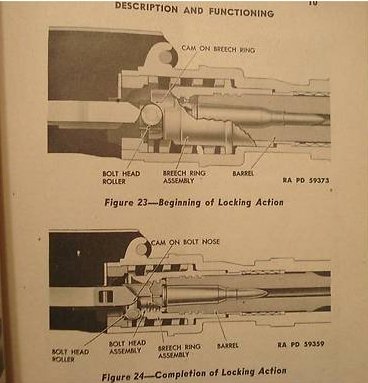
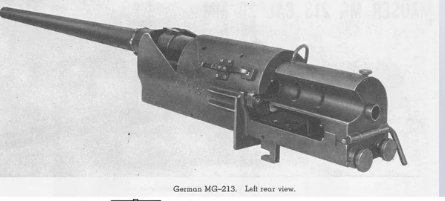
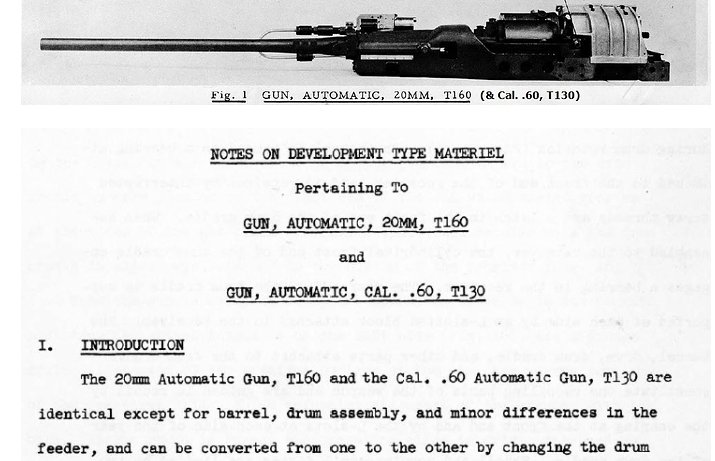
But the cannon was immature, the design formed basis for MG213 which was studied. USAF arrived same conclusion high velocity alone despite high rate of fire wasn't sufficient. So Necked up larger cartridge, experimental T160 Gun. Which became Pontiac/Ford Aerospace M39.
Screenshot_24-3-2026_171521_forum.cartridgecollectors.org.jpeg
 
... Continued.
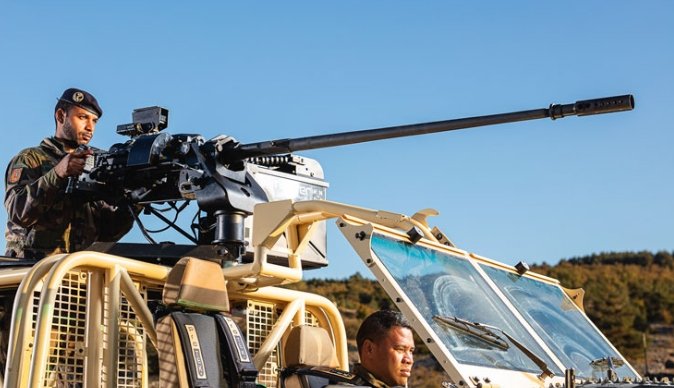
In scenario 20x102 round lived on modern era. Though deemed weaker compared to mechanized vehicle autocannons.
Nexter' P-20 ideal 20mm infantry support. Screenshot_24-3-2026_171815_www.bing.com.jpeg

Defending small installations, the Cannon would been ideal in situations like What happened at Wanat. Airborne infantry even loaded vehicles airdropped need firepower greater than machine guns, squads/platoons often lacking. Generally calling air support is time consuming and expensive vs. being able respond to enemy defilade.
 
The biggest problem here is simply that the T17 didn't reach maturity until well after the war had ended. The later variants (T17E5?) had a good rate of fire by WWII standards and were apparently reliable enough. But by that time the threat was changing, new jet aircraft were faster and structurally stronger. The USAF wanted higher rates of fire than what any of these existing designs could do.
Did the US have access to the ShVAK 20mm? Or the ShKAS 7.62mm?
 
Hi,

I don't think a functional .60 caliber MG would have been a bad weapon, it would be more than good-enough to shred fighter sized targets in WWII. But reliable 20mm cannons would have worked just as well against fighters with the benefit of being better against larger aircraft and many types of ground targets.

I'd say the Luftwaffe experience with the 15 mm MG 151 pretty solidly demonstrates that even against fighters, the 20 mm version of the same gun was better. No Luftwaffe fighter ace ever wanted his 15 mm cannon back, and it would only have taken a simple barrel swap - in fact reverting the barrel swap that upon introduction had been done at unit level to convert the 15 mm cannon to 20 mm in the first place.

Not that I disagree that the 0.60-caliber MG would have been effective ... it just wasn't a big step up over the existing weapon, and it still had some question marks with regard to barrel life (as even the 0.50-caliber M2 couldn't withstand prolonged bursts) and dispersion (as the guns were found to vibrate violently in post-war flight testing).

The biggest problem here is simply that the T17 didn't reach maturity until well after the war had ended. The later variants (T17E5?) had a good rate of fire by WWII standards and were apparently reliable enough.

Good point about the timeline. From reading a couple of maybe not perfectly reliable sources, I'd guess that the version described at the Joint Fighter Conference as being 12 months away from potential introduction probably was the T17E3, based on the weight and rate-of-fire data, which was (unsurprisingly) a bit worse than the later T17E5 for which more detailed information seems to be available.

Regards,

Henning (HoHun)
 
Hi Scott,

If you cannot lead properly you're not going to hit. But a faster ammo makes for less lead required at the same engagement ranges so the pilots are less likely to mess it up.

Coming back to that point, because I think you've probably identified the USAAF's main reason to wish for the 0.60-calibre gun: The gain in lead angle can be quantified, and maybe it's of interest to look at the numbers.

Using the general approach of the British "Bag the Hun" training manual, we simplify the problem by assuming that deflection is based upon crossing speed, and (measured as an angle) independent of range.

Now we can pick a deflection angle as the maximum at which a typical service pilot can still hit a target with a deflection shot, and than calculate which angle this would correspond to if he would be using a high-velocity gun.

Using a 150 m/s target crossing at 30 degrees, the proper deflection to achieve hits with an 890 m/s 0.50-caliber Browning M2 is 84 mils.

Using a slightly generous 1100 m/s for the 0.60-caliber E17T5, the angle that corresponds to 84 mils of deflection is 38 degrees.

Accordingly, the gain in "gun firing envelope" is 8 degrees of deflection (going from 30 degrees to 38 degrees).

If that could be achieved with "everything else being equal", that would of course be a clear win for the high-velocity weapon, but as we're facing numerous trade-offs when designing a gun for high velocities, how much operational relevance does shooting at deflection angles between 30 and 38 degrees have?

The greater the deflection angle, the more difficult sustained tracking becomes, and with a low-firepower weapon (as I'd characterize all machine guns), you probably need to fire at a target for a prolonged period, making tracking a necessity.

That's an advantage of high-firepower cannon ... you can set up your attacks differently, going for crossing shots without needing to "saddle up", as sustained tracking is sometimes called in fighter pilot slang. For some reason, this is rarely mentioned in the literature I am aware, though "The Aerial Attack Study" by John Boyd of Energy Maneuvering fame describes a technique where the attacker sets up a short deflection attack against an imaginary aircraft moving at half the speed of the actual target, letting the target aircraft fly through the burst. Sort of difficult to describe, but basically it's "controlled hosing" :)

(The background of that technique was high-altitude interception of jet bombers by early jet fighters, with the interceptors not having much of a performance advantage over their targets. Even with early air-to-air missiles considered, that was quite challenging for a number of reasons, and a number of factors still made guns a very good choice.)

Regards,

Henning (HoHun)
 
Not that I disagree that the 0.60-caliber MG would have been effective ... it just wasn't a big step up over the existing weapon, and it still had some question marks with regard to barrel life (as even the 0.50-caliber M2 couldn't withstand prolonged bursts) and dispersion (as the guns were found to vibrate violently in post-war flight testing).
A thing with the .60 is that it would not be a 1:1 swap with the .50 wrt. the installed weight. Not a real problem when the horsepower is right - a R-2800, or the 2-stage Merlin, or two turbocharged V-1710s on a fighter, but indeed a problem with the aircraft that combine relatively high weight with the HP deficit, like the P-40 and P-39.
A P-47 or a P-38 will still happily chug along with, say, 4 .60s, but does it really offer anything over the historical batteries installed?
 
Hi Tomo,

A thing with the .60 is that it would not be a 1:1 swap with the .50 wrt. the installed weight. Not a real problem when the horsepower is right - a R-2800, or the 2-stage Merlin, or two turbocharged V-1710s on a fighter, but indeed a problem with the aircraft that combine relatively high weight with the HP deficit, like the P-40 and P-39.
A P-47 or a P-38 will still happily chug along with, say, 4 .60s, but does it really offer anything over the historical batteries installed?

Ironically, bigger aircraft guns are often more weight-efficient than smaller aircraft guns, so a battery of equal firepower and ammunition supply (measured by total muzzle energy) might even be light if it uses heavier guns.

The graph I posted here shows weight efficiency for a certain set of assumptions: https://www.secretprojects.co.uk/threads/usaaf-0-60-caliber-machine-gun.14481/post-889399

The T17E3, guesstimating from the incomplete data I've seen, would probably sit near to, but above and to the fight of the MG 151, and have a weight efficiency (represented by size of the graphical disk) close to, probably a bit better, than the MG 151.

That would not be quit as weight efficient as even the early Japanese Type 99-1, but of course with a much higher muzzle velocity. However, if you compare it to the H.S. II of 1941, which as Tony Williams pointed out was usually firing "ball" ammunition only, it's markedly less weight-efficient, and by the time the T17E3 was prepared, the US already had the 20 mm Hispano M2 in service with armour piercing and high-epxlosive shells, which really was a lot more weight efficient than any of the heavy machine guns.

The Hispano didn't have the super high muzzle velocity of the T17E3, but the graph shows that the overwhelming trend was to have guns firing at something in the 750 m/s to 850 m/s range, indicating that everyone else thought the best trade-offs were to be had there, and Hispano II even sat at the upper end of that range. (The Hispano V, arguably a better gun, again traded a bit of velocity for a bit more firepower.)

And just to hint at the complexity of the topic ... if you have a lighter gun battery, your fighter will enjoy better performance and agility, so you might be able to fly it into a better firing position and not even need all that muzzle velocity that drove up the weight of your gun battery :) Frederick C. Blesse in his "No Guts, No Glory" declares that much long-range shooting was in fact showing that pilots were firing at the enemy despite knowing they were practically out of range, simply because they didn't have the performance to get into a better firing position ...

Regards,

Henning (HoHun)
 
Coming back to that point, because I think you've probably identified the USAAF's main reason to wish for the 0.60-calibre gun: The gain in lead angle can be quantified, and maybe it's of interest to look at the numbers.
There is actually an explanation of the USAAF's thinking in the Joint Fighter Conference report;
Colonel COATS: “I'll try to answer that in this way. I believe the feeling in the Army generally is that we would like to have a lethal density pattern. The most bullets going across one place at a given instance. We would like to have the smallest caliber gun that can do the job. If it takes a 22-mm. to tear a Messerschmitt or a Mitsubishi apart, we want 20’s, but as long as a 50 will do the job we feel that if we can carry a greater number of guns and a greater amount of ammunition with the same weight, with an equal or greater fire power, that is the gun we want. If you are strafing an airdrome you can put out more bullets. A Jap doesn’t care whether he gets killed by 20 mm’s or a 50 caliber. We can put out more bullets and we have more weight covering the same area. Another thing that comes into this matter of sighting is the training of the personnel. I believe that with more guns, you can put out bigger density pattern for the training of your personnel. When we get sights to the point where we can pull the trigger just once and hit a fellow, then we can go to the bigger calibers. It is a matter of training of pilots. The Mark 14, the gyro sight, we found didn’t increase our accuracy for our control gunner to any great extent. However, it did bring the people in the middle and lower brackets up as much as 5 or 6 times better than they had shot before. I think we in the aircraft game should be worrying about the people in the middle third or the bottom half, that we have to make better sights, better cockpit arrangements, easier planes to fly for those people. We don’t need to worry about our top shot or our best pilot. He can get along in any kind of a rig. That is the reason — we feel we can get a bigger density pattern. “I would also like to point out, Iwon’t go into an argument with 20’s versus 50’s, but I think a lot of it has to do with the arrangement in the plane. For instance, in a P-47 or F4U, you have the guns in the wings. Of necessity you must cross the fire pattern at some fixed distance from the plane. With all your guns over one fixed point at a given number of yards, you have a great X forming out there. At 600 you are wasting a great amount of your bullets. If you close up on a fellow at 200 yards, you are also wasting bullets. In the F7F or the P-38 you can put all your guns in the nose; firing parallel streams of lead, your bullets all going out forming a lethal density pattern as far as the bullets go. In an installation like that you could possibly be better off firing four 20’s than you would be firing six 50’s. In the P-47 with four guns in each wing, we recommend that they cross the first two guns at 250 yards, the next at 350, at 450 and 550. That gives you a density pattern in depth as well as width for about 200 yards, which in turn gives the mediocre pilot a better opportunity to hit an airplane in flight.”
 
Ironically, bigger aircraft guns are often more weight-efficient than smaller aircraft guns, so a battery of equal firepower and ammunition supply (measured by total muzzle energy) might even be light if it uses heavier guns.
How heavy/light should be the 4 gun battery of the 0.60 guns the US were experimenting with, together with the ammo for the same duration like the P-47 had, and together with reinforcements of the wing?
 
"In the P-47 with four guns in each wing, we recommend that they cross the first two guns at 250 yards, the next at 350, at 450 and 550. That gives you a density pattern in depth as well as width for about 200 yards, which in turn gives the mediocre pilot a better opportunity to hit an airplane in flight.”
Huh. I hadn't thought about setting the guns to converge at different distances.
 
Hi Tomo,

How heavy/light should be the 4 gun battery of the 0.60 guns the US were experimenting with, together with the ammo for the same duration like the P-47 had, and together with reinforcements of the wing?

You wouldn't want to scale for the same duration, as that's not really a tactical relevant parameter. To illustrate that, just imagine the P-47 being fitted with only 4 guns, but carrying the same total number of rounds. Is this a bigger ammunition load now? Obviously not, though the firing duration has doubled.

So a better parameter to keep constant would be total destructive capability of the ammunition load, which I'd approximate by looking at the total muzzle energy (kinetic plus chemical) of the ammunition loadout.

I don't have my detailed guesstimate calculations handy at the moment, but I believe the 0.60-caliber T17E3 came out as slightly more weight efficient that the 12.7 mm M2, and the P-47 would have carried four E17T3 guns along with ammunition for an equivalent destructive potential as the P-47's 12.7 mm M2 battery.

However, that's neglecting possible structural reinforcement, which might well be necessary, considering that the 0.60-caliber guns were found to vibrate violently even in the normally sturdy P-38 nose mountings.

As the weight efficiency advantage of the T17E3 wasn't great, such reinforcements might have made it insignificant or even turned it into a disadvantage in the worst case - I really can't tell.

I'd also point out that when you're introducing a new weapon, a slight improvement in capability might not be enough to justify the considerable effort involved in the switch, which I'd speculate might have been one reason the USAAF didn't push for an introduction of the T17 in the E3 form.

Regards,

Henning (HoHun)
 
I don't have my detailed guesstimate calculations handy at the moment, but I believe the 0.60-caliber T17E3 came out as slightly more weight efficient that the 12.7 mm M2, and the P-47 would have carried four E17T3 guns along with ammunition for an equivalent destructive potential as the P-47's 12.7 mm M2 battery.

However, that's neglecting possible structural reinforcement, which might well be necessary, considering that the 0.60-caliber guns were found to vibrate violently even in the normally sturdy P-38 nose mountings.

As the weight efficiency advantage of the T17E3 wasn't great, such reinforcements might have made it insignificant or even turned it into a disadvantage in the worst case - I really can't tell.

I'd also point out that when you're introducing a new weapon, a slight improvement in capability might not be enough to justify the considerable effort involved in the switch, which I'd speculate might have been one reason the USAAF didn't push for an introduction of the T17 in the E3 form.
That was kinda my point - the .60 HMG was bringing too small of an improvement over the .50 HMG in order to be worthwhile for the costumer.
 
Hi Sienar,

There is actually an explanation of the USAAF's thinking in the Joint Fighter Conference report;

Thanks a lot! I don't think it's really addressing the 0.60-caliber as such, but still a useful snapshot of the Army's mind at the time.

It seems a bit unfocused and not necessarily of watertight stringency, so I'll try to work my way through it in detail:

I believe the feeling in the Army generally is that we would like to have a lethal density pattern. The most bullets going across one place at a given instance. We would like to have the smallest caliber gun that can do the job.

The "most bullets across one place" is most "lethal" only if we're talking about bullets of the same lethality per bullet, which when comparing 12.7 mm to 20 mm clearly is not the case. "The smallest caliber gun that can to the job" probably implies that the 7.7 mm Browning is too small to do the job, but otherwise, the preference for smaller caliber is not explained.

If it takes a 22-mm. to tear a Messerschmitt or a Mitsubishi apart, we want 20’s, but as long as a 50 will do the job we feel that if we can carry a greater number of guns and a greater amount of ammunition with the same weight, with an equal or greater fire power, that is the gun we want.

That sounds sensible, but accounting for the greater lethality per projectile of the 20 mm cannon, the 20 mm cannon actually provides the greater destructive potential per weight. "A greater number of guns" really is of no value by itself ... four 20 mm cannon provide more firepower than eight 12.7 mm machine guns.

If you are strafing an airdrome you can put out more bullets. A Jap doesn’t care whether he gets killed by 20 mm’s or a 50 caliber. We can put out more bullets and we have more weight covering the same area.

To a degree, that might be justified, though my vague impression is that if you're not shooting at infantry, but at motor transport, 20 mm guns actually have an advantage. However, at the same Joint Fighter Conference, the US Navy said they very much preferred the 20 mm cannon for strafing since their didn't overheat in longer bursts (destroying the barrel liners and ruining accuracy ... there are some strafing videos on the Youtube channel "WW2 US Bombers" documenting this effect, though the video author seems to understimate the phenomenon).

I believe that with more guns, you can put out bigger density pattern for the training of your personnel. When we get sights to the point where we can pull the trigger just once and hit a fellow, then we can go to the bigger calibers.

That's quite unfocused ... a bigger pattern has a lower density, so what does he even mean?

And the question really isn't just about hitting someone, it's about the product of rounds fired, the probability of a hit and the probability of destruction upon a hit. The last factor can totally change the answer to the question "Which weapon is best", and it seems to be ignored here. If at the same hit probability, you fire only half as many projectiles per second, but each projectile is three times as likely to bring down the target upon a hit, the weapon with the lower round count is better. If it has a lower hit probability, you still need to consider all factors to see whether is better, equal or worse.

That is the reason — we feel we can get a bigger density pattern.

[...]

In the P-47 with four guns in each wing, we recommend that they cross the first two guns at 250 yards, the next at 350, at 450 and 550. That gives you a density pattern in depth as well as width for about 200 yards, which in turn gives the mediocre pilot a better opportunity to hit an airplane in flight.”

Again, bigger pattern = lower density. That nose guns are much better for hitting fighter-sized targets is evident ... one of the Luftwaffe aces commented, "One gun in the nose is worth two in the wings". That's a bit simplified, but in average over all ranges, it's a good approximation.

If you look at the patterns of the P-38 and the P-47 for a straight, no-deflection stern shot against a P-47-sized target, it turns out that at most ranges, the P-38 achieves more hits with its four machine guns than the P-47 does with its eight. The exception is the convergence range of the P-47, where the bullet streams of both wing cross.

The staggered pattern where the bullet streams of each port/starboard machine gun pair cross at different ranges alleviates the disadvantage of the P-47 in making the range band in which it has an advantage a bit larger, but it also reduces the size of the advantage.

I am also surprised by the suggestion to use very long crossing distances, as by the USAAF's own training manuals, due to weapon dispersion, the 12.7 mm machine gun would not provide fire of lethal density beyond 400 yards.

Of course, I don't know Colonel Coats background. To me, it sounds as if he wasn't necessarily involved in the analysis and decision-making progress, but maybe accompanying the process from a related function, and just giving everyone present a run-down of what he understood from his perspective, so I don't intend to be overly critical. It's good that we have his account of the situation at the time! :)

Regards,

Henning (HoHun)
 
Hi Scott,

I think he's meaning a higher density pattern.

The problem is, he is talking about making hitting easier, and that would imply a larger pattern. But the source text is a bit ambiguous and possibly self-contradictory, so you might be right too :)

Regards,

Henning (HoHun)
 
The problem is, he is talking about making hitting easier, and that would imply a larger pattern. But the source text is a bit ambiguous and possibly self-contradictory, so you might be right too :)
I'm thinking from the ads for Tungsten Supershot ammunition, which has smaller pellets and so makes a denser pattern more likely to hit something critical in the target bird.
 
Hi Scott,


The problem is, he is talking about making hitting easier, and that would imply a larger pattern. But the source text is a bit ambiguous and possibly self-contradictory, so you might be right too :)

Regards,

Henning (HoHun)
Hit probably is a function of shot density, pattern size, and aim. Larger patterns only help if shot density stays viable. If you lose density it's like shooting skeet with buckshot.

Conversely, if you can keep a similar shot density but improve aiming (such as by using a flatter shooting cartridge to reduce deflection for lead and range) that is much more reliable.

In WWII terms think about the 20mm Oerlikon going from a spider sight single mount to a lead computing single to a twin.
 
I'm thinking from the ads for Tungsten Supershot ammunition, which has smaller pellets and so makes a denser pattern more likely to hit something critical in the target bird.
a major problem with the steel/tungsten shotgun analogy is that a.) less density than lead, b.) more shot per ounce than lead with same shot size, c.) tighter patterns than lead due to almost zero deformation of the pellet compared to lead.

If same muzzle velocity for steel/tungsten, the kinetic energy is lower.

I always select at least the next LARGER shot size (say #5steel vs #6lead) for Pheasant and open the choke (with screw in choke tubes) from say Mod to more open Improved Cylinder. About the same amount of pellets, equivalent energy and equivalent patterns.

Anecdotally, many of the Luftwaffe aces experienced in Mustang duels were thankful that the P-51s they encountered were not equipped with 20mm. Korea taught the USAF the failings of 50 caliber at high altitudes against the MiG 15 despite excellent gunsights and high concentrations of centerline patterns.
 
a major problem with the steel/tungsten shotgun analogy is that a.) less density than lead, b.) more shot per ounce than lead with same shot size, c.) tighter patterns than lead due to almost zero deformation of the pellet compared to lead.

If same muzzle velocity for steel/tungsten, the kinetic energy is lower.

I always select at least the next LARGER shot size (say #5steel vs #6lead) for Pheasant and open the choke (with screw in choke tubes) from say Mod to more open Improved Cylinder. About the same amount of pellets, equivalent energy and equivalent patterns.

Anecdotally, many of the Luftwaffe aces experienced in Mustang duels were thankful that the P-51s they encountered were not equipped with 20mm. Korea taught the USAF the failings of 50 caliber at high altitudes against the MiG 15 despite excellent gunsights and high concentrations of centerline patterns.
As I pointed out earlier, the 16 mm Vega appears to be kind of a missed opportunity. You're basically a barrel change away from converting your machine guns into cannons while retaining your original ammo loadout...
 
Hi,

Hit probably is a function of shot density, pattern size, and aim. Larger patterns only help if shot density stays viable. If you lose density it's like shooting skeet with buckshot.

Good point - the somewhat intransparent language of Col. Coats' text might in fact indicate that he was thinking not about single-shot hit probability, but about some aggregated "random event", like a single-second burst. Our problem is, we have a hard time following his thoughts because we don't know the assumptions beneath this aggregation.

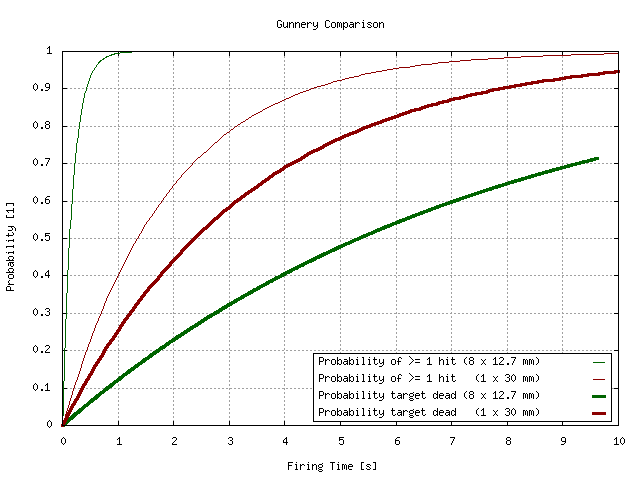
Focusing on hit probability without talking about the probability of achieving a kill leaves out a really important part of the picture (obviously :) ... here's an illustration, based on generic values and not meant to be historically accurate:

gunnery_comparison.png

The green graphs show a battery of 12.7 mm machine guns firing at a target with a certain hit probability for each round fired, the red graphs show a single 30 mm MK 108 firing with the same hit probability for each round.

Due to the large number of rounds fired by the 12.7 mm machine gun in the same space of time, the probability of achieving at least one hit is dramatically higher for this battery than for the single cannon, but this is all compensated for by the high lethality of the cannon round, which (in this generic example) reaches a 50% probability of kill after a 2.3 second burst, while the 12.7 mm machine gun battery reaches a 50% probability of kill only after 5.3 s.

However, the 12.7 mm battery will almost certainly have damaged the target even if no lethal hit was scored ... a direct parallel to the USAF intelligence summary of fighter combat in the Korean War, where they observed that if the F-86 was hit by Soviet cannon, it would go down with a very high probability, while the MiG-15 when hit by 12.7 mm fire often got away.

So I'd say Col. Coats was facing conflicting objectives, reliability of hitting (which you pointed out in the shotgun example, too) and probability of achieving a kill, sort-of assigning second priority to the latter by saying, "When we get sights to the point where we can pull the trigger just once and hit a fellow, then we can go to the bigger calibers."

In my opinion, it would have been better to account for all factors involved and look at the end result. If you take the example graph I posted here and reduce the hit probability for each round of the 30 mm cannon (to account for its lower muzzle velocity), you can reduce it quite a bit and still find the cannon to be the better weapon, even before switching to a multiple-cannon battery, which is easily possible within the same weight budget as for the 12.7 mm machine gun battery.

I haven't seen this kind of consideration from the USAAF - not to say they never ran these numbers, but if they have, I've never come across them.

By the way, while Col. Coats favours the smallest weapon that still is effective, I suspect that the heaviest weapon that still doesn't overkill is the best choice, as with less effective projectiles, you'll have to rely on cumulative damage, and with projectiles striking all over the target, you'll lose a lot of the weight going downrange to punching ineffective holes in the target. If you have a cannon that kills the target with a single hit, there are no wasted hits. (That's an idealized consideration, but you get the idea :)

Regards,

Henning (HoHun)
 
Hi,

As I pointed out earlier, the 16 mm Vega appears to be kind of a missed opportunity. You're basically a barrel change away from converting your machine guns into cannons while retaining your original ammo loadout...

@drgondog - do you think that the necked-up 0.50-caliber cartridges you mentioned in another thread could have been Vega ammunition? It seems that these are so rare that even specialist cartridge collectors hardly ever get their hands on them! :)

Regards,

Henning (HoHun)
 
a major problem with the steel/tungsten shotgun analogy is that a.) less density than lead, b.) more shot per ounce than lead with same shot size, c.) tighter patterns than lead due to almost zero deformation of the pellet compared to lead.

If same muzzle velocity for steel/tungsten, the kinetic energy is lower.
The TSS specifically has very dense pellets so they can get away with smaller pellets that carry for a greater distance.
 
Hi,


@drgondog - do you think that the necked-up 0.50-caliber cartridges you mentioned in another thread could have been Vega ammunition? It seems that these are so rare that even specialist cartridge collectors hardly ever get their hands on them! :)

Regards,

Henning (HoHun)
I do. My recollections as a 10-16 yr old were that the inert rounds were 50BMG cases necked up and later research pointed to Vega as possible.
 
WRT the issues around pilot training and generating the appropriate deflection, and the effects of muzzle velocity, remember we're also seeing a parallel sea change in optical sights, from simple cross-hairs, to lead computing gyro sights, with radar ranging just on the point of appearing.
 
Hi,

WRT the issues around pilot training and generating the appropriate deflection, and the effects of muzzle velocity, remember we're also seeing a parallel sea change in optical sights, from simple cross-hairs, to lead computing gyro sights, with radar ranging just on the point of appearing.

Good point, though the sights came with their own weaknesses and were not universally liked. The USAF during the Korean War were quite critical of these sights:

https://www.secretprojects.co.uk/th...-mig-15-f86a-f86e-in-korea.42098/#post-618918
Without automatic ranging, the sight was a bit more complicated to use, but more importantly, it only worked in a steady tracking situation and after the pilot had tracked for a second or two. The US implementation (and thus probably the British implementation, too) had not established the practically ideal damping factor and were not operating optimally.

Furthermore, due to the operating principle, the sight found the proper lead poorly if, as inevitable with a pursuit curve that was the result of steady tracking, the G load on the sight steadily decreased. This is described in detail in John Boyd's "Aerial Attack Study".

As many good attack opportunities in air combat were not steady tracking shot and more hindered than helped by the gyro gunsights of the time, it's not surprising Col. Coats and the Joint Fighter Conference pointed out the value of the sight for the less experienced pilots:

It is a matter of training of pilots. The Mark 14, the gyro sight, we found didn’t increase our accuracy for our control gunner to any great extent. However, it did bring the people in the middle and lower brackets up as much as 5 or 6 times better than they had shot before. I think we in the aircraft game should be worrying about the people in the middle third or the bottom half, that we have to make better sights, better cockpit arrangements, easier planes to fly for those people. We don’t need to worry about our top shot or our best pilot. He can get along in any kind of a rig.

Ironically, the Luftwaffe figured out that gunnery could be massively improved by fitting fighter aircraft with an autopilot that kept the attacking fighter in coordinated flight, as any inadvertent yaw angle would cause the bullets to divert from the trajectory the shooter expected them to take. Thus, the fitting of a "Jägerkurssteuerung" (fighter aircraft directional autopilot) was made a standard requirement for all fighters - though as many of the late-war developments, this didn't have any operational impact I'd be aware of.

Of course, this autopilot was supposed to be used in conjunction with the German version of the gyro gunsight, which was a bit more complicated than the British/US one, but operated on generally the same principles. In combat testing, Luftwaffe pilots found it was very effective, but they were attacking slow and heavy four-engined bombers, which probably was the sweet spot where they were most suitable.

Regards,

Henning (HoHun)
 
Here's a diagram a prepared quite a while back which shows the where most of the common fighter weapons were located in the "trade-off space", with the horizontal axis showing muzzle velocity, the vertical axis firepower per barrel, and the size of the disk the weight efficiency in terms of firepower per weight of a gun battery, including a certain (realistic) amount of ammunition.

I'm having a bit of trouble figuring this out. The wording is unclear to me.

It would seem the relevant properties are:
- Kinetic energy (Kj) is mass of shell x muzzle velocity.
- Incendiary/Explosive power is determined by the mass of the filling (with potential room for modifiers based on the effectiveness of the filling).

To compare weapons these values should be multiplied by the rate of fire:
- Kinetic energy per second is mass of shell x muzzle velocity x rate of fire (RPM/60)
- Incendiary/Explosive power delivered per second is determined by the mass of the filling x rate of fire (RPM/60).

If one is interested in penetration, that could be a third value (as it is based on the kinetic energy of a single projectile irrespective of rate of fire).

If one wanted to increase the accuracy of the results for kinetic energy one should also consider the kinetic energy at impact (200m or 400m would be good values, taking into account the drag curve for the projectile, and including the additional muzzle velocity given by the speed of the aircraft itself).
 
The US implementation (and thus probably the British implementation, too) had not established the practically ideal damping factor and were not operating optimally.
The UK Mk II Gyro sight (built by Ferranti at what's now Leonardo UK) was license-built by the US as the Sperry K-14 (USAAF) and Mk 18 (USN), Sperry messed with the ergonomics, relocating the main control knob to the side from the front, and added a ground attack mode, so whether it still matched the UK sight's performance is open to question.
 
Hi,

It would seem the relevant properties are:
- Kinetic energy (Kj) is mass of shell x muzzle velocity.
- Incendiary/Explosive power is determined by the mass of the filling (with potential room for modifiers based on the effectiveness of the filling).

Basically correct. Kinetic energy is actually 1/2 * mass * velocity^2 though, you're describing momentum.

The mass of the filling is then multiplied (for my statistics) with the energy content of TNT, because the exact composition can be hard to find, and the dependency of damage on total energy is mostly probabilistic anyhow, so it doesn't pay off to go overboard with accuracy.

To compare weapons these values should be multiplied by the rate of fire:

Correct again, for my graph they indeed are.

If one is interested in penetration, that could be a third value (as it is based on the kinetic energy of a single projectile irrespective of rate of fire).

That's right. It's not a very interesting consideration in air combat though as aircraft are fairly soft targets. The US ballistics tests I quoted above show the percentage of vulnerable area of the target aircraft in the test to the different weapons, and explosive shell capable of damaging the aircraft structure have a clear advantage here, so I'd say optimizing for penetration would not be a good strategy.

If one wanted to increase the accuracy of the results for kinetic energy one should also consider the kinetic energy at impact (200m or 400m would be good values, taking into account the drag curve for the projectile, and including the additional muzzle velocity given by the speed of the aircraft itself).

You're right again :) It's fairly complicated though, as the influence depends on further factors such as (already pointed out by you) the velocity of the shooting platform as well as of the targeted platform, as well as the flight altitude. I ran the numbers for a selection of weapons for which I had the data, and it turned out that the higher-velocity, machine-gun type weapons mostly relying on kinetic energy for effect lost power downrange quicker than the lower-velocity cannon, as the chemical energy of the shell contents remained unaffected.

So, it's sort of conservative to use muzzle energy in as far as not to underestimate the smaller calibres.

Regards,

Henning (HoHun)
 
Back
Top Bottom