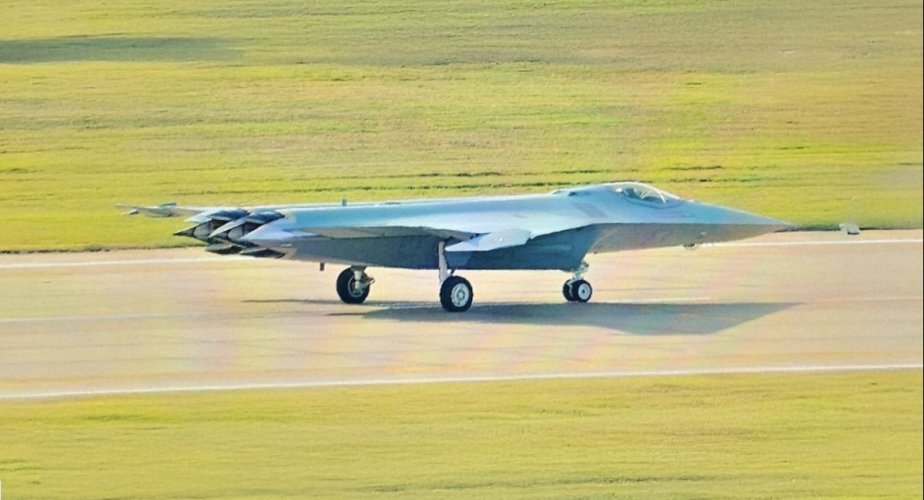
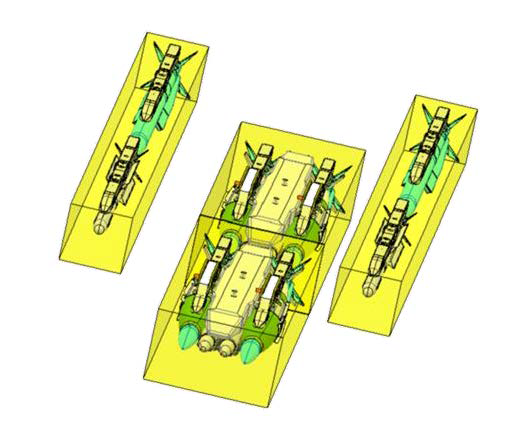
Possible configuration of the Northrop Grumman F/A-XX

Yeah. 2x 500lb tandem. It could maybe add a third one if we sacrifice some exhaust length.
I don't think adding a third 500lb would be worth it. That'd be a ~7.5m long bay.

But adding just enough length to have 3x SDBs would be worth it, IMO. That's only like 5.7m for bay length.
 
3x 500 lb in tandem is too much for side by side main bays. You can go back and look at my extensive bay options for the F47 from the beginning. If NATO allies' weaponry is considered like the Taurus at 5.1m an extension to 5.2 m could be considered.
A AIM120+CUDA combo which is same as 3x SDB is the exterem end. But with rack at the doors my slightly wider bay already could accomodate 12 SDB so there's no need.
From what I see Mk84 length and Mk83 box size are the most needed for first-day:
JDAM-LR, Ice Breaker/Bullseye, SDB, SPICE-1000, AASM-500, MALD and future powered stores/missiles.
The recent request for a cheape alternative to AARGM-ER tells me they want something closer to AIM120 size. And this happens to be in the same size catagory.
Currently, I can fit 3 per bay.
I'm still in the process to fit 8x 500lb...
 
The recent request for a cheape alternative to AARGM-ER tells me they want something closer to AIM120 size.
Yes, all the latest munitions are being standardised to 12 foot and 6 foot length. I have mentioned this in multiple threads for many months.

The US has created multiple standoff munitions to allow non-stealthy aircraft to get the job done. These are a stop gap solutions. It is ridiculous to design a 6th gen fighter around these temporary weapons.

The 12 foot and 15inch box allows for multiple new weapons for a 6th gen platform such as the following options:

1) 1,000lb warhead unpowered with folded wings to allow 50nm range.
2) 500lb warhead with small jet engine and wings to allow for 300nm range.
3) 200lb warhead with engine and wings to allow 500nm range.
4) 100lb warhead and rocket powered for SEAD.
5) 50lb warhead and rocket powered for air to air.

1,000lb JDAM with wingkit becomes an affordable option 1.

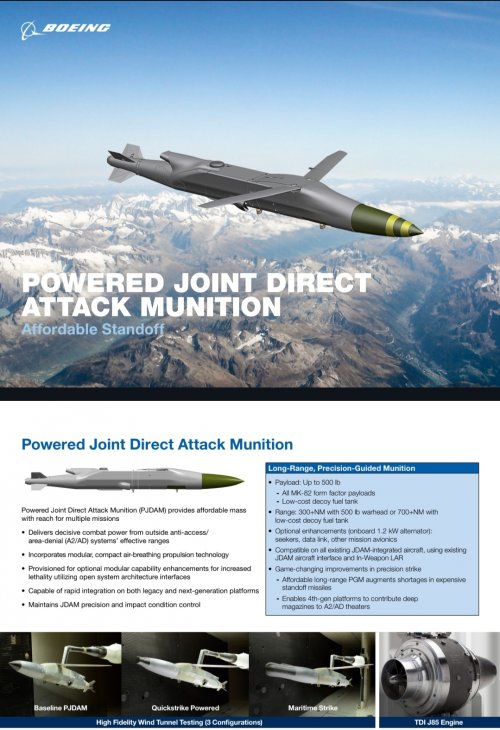
Powered 500lb JDAM adds a wing kit and a small jet engine to the back. Length is now up to 12 feet and is an affordable option 2.

Barracuda 500 is option 3.

There is simply too many new projects to list.

Then the 6 foot length munitions. We have the smaller Barracuda, stormbreaker

Members will say the US needs a 2,000lb weapon for deep targets. The US could easily make a 2,000lb bunker buster that fits the AMRAAM footprint. The 5,000lb GBU-28 bunker buster is only 15inch in diameter and has a 13 foot bomb body length. The steel casing makes it really heavy for its size. Scaling down the GBU-28 down to AMRAAM size comes in around 2,000lb.
 
The US has created multiple standoff munitions to allow non-stealthy aircraft to get the job done. These are a stop gap solutions. It is ridiculous to design a 6th gen fighter around these temporary weapons.
Could be, but arguments can be made either way here.

Like you said - one option could be to standardized around the same munition size as an AMRAAM. But one might argue that there's a need for larger AAMs - not just because the Chinese have longer ranged AAMs, but because you've got a lot of distributed sensors now and longer ranged AAMs for all manned platforms helps survivability with less compromise to lethality. How much range can be gained by more sophisticated motors? and how much more from simply adding rocket length? I'm not sure. Maybe rocket / fuel amount isn't that big a deal here.

On the other hand, stand in platforms could possibly make do with less capable munitions - though I'd much prefer the capability to be taken out of SRM section size or explosive mass and not the quality of seekers and guidance. I'd always thought though that these smaller munitions were being made for use on CCAs while manned fighters, regardless of whether they are stand-in or not, are engaging the more important targets with more capable munitions.
 
Last edited:
Where is the sweet spot for F/A-XX?
I suspect that sweet spot for length is ~5.7m long, enough for 3x SDB in tandem.

Sweet spot for bay width is likely 2x 2000lb weapons (~1m), or 1x AGM-158 sized weapon. However, a bay wide enough for 3x 2000lb weapons (~1.6m) would also be wide enough for 2x AGM-158s or ASALM-type weapons.
 
Members will say the US needs a 2,000lb weapon for deep targets. The US could easily make a 2,000lb bunker buster that fits the AMRAAM footprint. The 5,000lb GBU-28 bunker buster is only 15inch in diameter and has a 13 foot bomb body length. The steel casing makes it really heavy for its size.
From the beginning in the F47 thread I was going for both GBU-31 2000 lb and GBU-72 5000 lb bunker busters for different cases all in Mk84 footprint.
Scaling down the GBU-28 down to AMRAAM size comes in around 2,000lb.
I'm guessing these would be all powered type since the trade off might leave them with too little explosives to blow up their thicker shells.
Also do not forget AIM120 box size doesn't mean you can pack them to the same desnity! The AIM120 has a lot of shared wingspace when staggered. The new weapons virtually use up the whole box volume even good old GP bombs can't be staggered well.

But one might argue that there's a need for larger AAMs - not just because the Chinese have longer ranged AAMs, but because you've got a lot of distributed sensors now and longer ranged AAMs for all manned platforms helps survivability with less compromise to lethality. How much range can be gained by more sophisticated motors? and how much more from simply adding rocket length? I'm not sure. Maybe rocket / fuel amount isn't that big a deal here.
I've been off this mind from the beginning, too, hence my suggestion for the inner wing station be rated for 7500 lb and all my long bay versions.
More range can only be achieved with better more efficient motors or energetic material resullting in higher ISP. Making missiles longer with boosters has its length limitation from a rocket science perspective not just bay size. Like being too long resulting in the tail end to aerodynamically drag it down. This also applies to scalling where the same L/D finess ratio virtually won't change anything given same tech.

I suspect that sweet spot for length is ~5.7m long, enough for 3x SDB in tandem.

Sweet spot for bay width is likely 2x 2000lb weapons (~1m), or 1x AGM-158 sized weapon. However, a bay wide enough for 3x 2000lb weapons (~1.6m) would also be wide enough for 2x AGM-158s or ASALM-type weapons.
This is basically a question between "single" large bay (F22)(plus two side bays) or two separeted side by side (with smaller side bays or combined).
5.7m could be made to fit but this leaves almost no room toward the engine if the aircraft is to remain within F18/NATF-23 length. Not to mention wheel housing, too. And this would create sever fuel capacity problems.
2x AGM-158 total is certainly is not ideal. Imho ideal should be half of F-18's external capacity.
I'm thinking that the newer "smaller" stores have to make up for the numbers and serve as attritable ones.
Note the 200 shots targeted in a strike is the old math for sinking one single carrier!
 
From the beginning in the F47 thread I was going for both GBU-31 2000 lb and GBU-72 5000 lb bunker busters for different cases all in Mk84 footprint.
Making GBU-72 effect in a Mk84 footprint is a challenge. I don't have a good mental image for what or how that would need to happen. The simplicity of strapping a rocket onto the end of a BLU-109 isn't really going to work. Shackles aren't in the right spot, it'd be too long to fit into any reasonable bay length.

That Lockheed patent with the rocket booster wrapped around the outside of the impactor might work, but a rough guess for a Mark-84-sized version is only going to have a BLU-110 (1000lb penetrator) inside the rocket. While that concept with a 2000lb impactor is going to be ~25" or more in diameter. (Nevermind the fun of thermally insulating the bomb casing!)


I've been off this mind from the beginning, too, hence my suggestion for the inner wing station be rated for 7500 lb and all my long bay versions.
I'd missed that, mea culpa!

And yes, a big 7500lb pylon is likely to happen. I think you can hang 2x ~5000lb hypersonics off a 7500lb pylon. With a new six-rack MER we could hang 6x 1000lb bombs. Or hang 3x AIM-174s on it. 2x AGM-158s (holy crap!).


This is basically a question between "single" large bay (F22)(plus two side bays) or two separeted side by side (with smaller side bays or combined).
5.7m could be made to fit but this leaves almost no room toward the engine if the aircraft is to remain within F18/NATF-23 length. Not to mention wheel housing, too. And this would create sever fuel capacity problems.
Yes, the 5.7m bay does make for a long airframe. Not much choice about it.


2x AGM-158 total is certainly is not ideal. Imho ideal should be half of F-18's external capacity.
Isn't "half an F-18" only 2x AGM-158 and 4x BVRAAMs?


I'm thinking that the newer "smaller" stores have to make up for the numbers and serve as attritable ones.
Note the 200 shots targeted in a strike is the old math for sinking one single carrier!
Problem is, I'm not sure that a 500lb weapon is heavy enough to be effective. IIRC the old standard was 1000lbs.
 
But one might argue that there's a need for larger AAMs - not just because the Chinese have longer ranged AAMs, but because you've got a lot of distributed sensors now and longer ranged AAMs for all manned platforms helps survivability with less compromise to lethality.
The range of a missile is directly linked to the launch speed and altitude. The main reason the AIM-174B was developed was to make up for the lack of speed/altitude/stealth of the Super Hornet.

The 6th gen platforms should be launching air-to-air missiles higher and faster than the F-22. This should give AIM-260 excellent range. There would be no need for anything larger in my opinion.

AIM-260 launched at Mach 1.6 and 60,000 feet will probably have greater range than the huge AIM-174B launched at half the speed and half the altitude.
I'm guessing these would be all powered type since the trade off might leave them with too little explosives to blow up their thicker shells.
I'm assuming a simple unpowered bomb. Just a much thicker steel shell to increase overall weight and penetrating power. This would then make a perfect line-up.

2,000lb penetrating bomb ~10 mile range
1,000lb glide bomb ~ 50 mile range
500lb jet powered glide bomb ~ 300 mile range
200lb jet powered glide bomb ~ 500 mile range

The 1,000lb glide bomb is MK83 JDAM-ER
The 500lb powered glide bomb is MK82 powered JDAM.
The 200lb jet powered glide bomb is Baracuda 500.

All fits within the AMRAAM box. Trading destructive power for moee range.

Also do not forget AIM120 box size doesn't mean you can pack them to the same desnity! The AIM120 has a lot of shared wingspace when staggered.
Making the bays to suit 2 Baracuda 500 or JDAM-ER side by side then allows 3 staggered AMRAAM due to the fins and narrower bodies.

The F-22 bays are close to the ideal size. It would effectively allow 4 of these hypothetical 2,000lb penetrators. Or 4 of the 1,000lb JDAM-ER or 4 of the 500lb JDAM cruise missiles. Or a mix of these.
 
The range of a missile is directly linked to the launch speed and altitude. The main reason the AIM-174B was developed was to make up for the lack of speed/altitude/stealth of the Super Hornet.

The 6th gen platforms should be launching air-to-air missiles higher and faster than the F-22. This should give AIM-260 excellent range. There would be no need for anything larger in my opinion.

AIM-260 launched at Mach 1.6 and 60,000 feet will probably have greater range than the huge AIM-174B launched at half the speed and half the altitude.

I'm assuming a simple unpowered bomb. Just a much thicker steel shell to increase overall weight and penetrating power. This would then make a perfect line-up.

2,000lb penetrating bomb ~10 mile range
1,000lb glide bomb ~ 50 mile range
500lb jet powered glide bomb ~ 300 mile range
200lb jet powered glide bomb ~ 500 mile range

The 1,000lb glide bomb is MK83 JDAM-ER
The 500lb powered glide bomb is MK82 powered JDAM.
The 200lb jet powered glide bomb is Baracuda 500.

All fits within the AMRAAM box. Trading destructive power for moee range.


Making the bays to suit 2 Baracuda 500 or JDAM-ER side by side then allows 3 staggered AMRAAM due to the fins and narrower bodies.

The F-22 bays are close to the ideal size. It would effectively allow 4 of these hypothetical 2,000lb penetrators. Or 4 of the 1,000lb JDAM-ER or 4 of the 500lb JDAM cruise missiles. Or a mix of these.
This is all very interesting. Would be a good exercise for you to present the in CAD or even just powerpoint. Do you have any software? (not having a dig!)
 
Making GBU-72 effect in a Mk84 footprint is a challenge. I don't have a good mental image for what or how that would need to happen. The simplicity of strapping a rocket onto the end of a BLU-109 isn't really going to work. Shackles aren't in the right spot, it'd be too long to fit into any reasonable bay length.
It's already a done deal so the question is what are its exact specs?
First of is it truely 5000 lb? It seems to me the media is partly confused and partly ignorant.
The USAF labeled it as "Advanced 5K (A5K)" Penetrator. And this seems to be the source of the weight claim. But is it or am I missing something? Previsouly, the BLU-137 was labeled as the Advanced 2,000 lb (A2K).
I assume it's an evolution from the GBU-31(V)4B (BLU-109) JDAM but with a complete new body design. Instead of a subcaliber it's a full Mk84 caliber with less energetic material volume but same omp as other 5000 lb equivalents.
My quick and dirty calculation tells it's around 4850 lb. So it checks out.
Isn't "half an F-18" only 2x AGM-158 and 4x BVRAAMs?
Originally, it was 6 shots for both with JSOW and I was certain there's a two mount rack for 2000 lb. Anyhow, the six shot number was what mattered.
The F-22 bays are close to the ideal size. It would effectively allow 4 of these hypothetical 2,000lb penetrators. Or 4 of the 1,000lb JDAM-ER or 4 of the 500lb JDAM cruise missiles. Or a mix of these.
We've already pass that bar in the F47 thread before starting all these Northrop/Boeing FA-XX threads.
We are just arguing about the minor fitting details.

I'm just stuck with positioning the center racks for the 8x 500 lb packing.
And I'm not happy with the side bay solution because of the main gear. The gear has to be split and I'm muling over splitting the bays, too, so it would be possible to fire backwards and clearing the wing flaps down for the defensive missiles.
 
The range of a missile is directly linked to the launch speed and altitude.
Yeah thats just basic physics, but this hardly stands as a solution when your opponents will be flying just as high and just as fast but with inherently long ranged missiles.

At a certain point you just cant fly "higher and faster".
 
Yeah thats just basic physics, but this hardly stands as a solution when your opponents will be flying just as high and just as fast but with inherently long ranged missiles.
China has shown nothing that comes remotely close to the F-22 in terms of flying high and fast. I expect the US 6th gen aircraft to be just as fast as the F-22 but that high speed is even more usable due to much greater fuel capacity and range.

The range of a missile isn't linked to the physical size. It's fuel fraction. The range is determined by the empty weight relative to the fully fueled weight using the rocket equation. The AMRAAM used a smaller warhead and seeker to allow it to have longer range than the heavier Sparrow. The newer AMRAAM versions are getting longer range due to the seeker becoming smaller and lighter allowing for a greater volume of propellant.

AIM-174B has a huge warhead so it's range is really poor for such a big missile. It's clearly just a stop gap solution for the Super Hornet. A clean sheet missile with a smaller warhead or hit-to-kill tech should be able to match the range of the AIM-174B in the size of the AMRAAM.
 
China has shown nothing that comes remotely close to the F-22 in terms of flying high and fast. I expect the US 6th gen aircraft to be just as fast as the F-22 but that high speed is even more usable due to much greater fuel capacity and range.
Pretty sure china has... J20, J-XDS and J-36. At a minimum.
The range of a missile isn't linked to the physical size. It's fuel fraction. The range is determined by the empty weight relative to the fully fueled weight using the rocket equation.
Im not sure why there needs to be a comparison to the AIM-174.

Firstly, AIM-174 Is a stopgap solution. I am comparing the AMRAAM to the chinese AAMs here because thats what it will be facing down.

Secondly, chinese missiles arent air defense missiles converted to AAMs. They are built as air to air missiles with longer fuel sections. Its probably going to be heavier than the AMRAAM empty, but certainly not AIM-174 kind of heavy either. Its safe to say that the PL-15s are at least as performant range wise as the AMRAAM - an assessment that many will consider an understatement.

So there absolutely is a need for longer ranged missiles. Or else there wouldn't be a reason for the AIM-260 or a stopgap like the AIM-174. The only questions to me is how that range extension will be achieved and what kind of missiles ranges would each fighter type be carrying.

For F-47s, maybe upping weapon bay size to accommodate a 13 ft missile + better motor and fuel grain would be enough against other 6th gen fighters.

There may be uses for a larger missile like the PL-17, but I doubt you could fit an 18 ft missile into an F-47. You either need a larger plane for that or you're looking at external carry options.
 
Last edited:
The only questions to me is how that range extension will be achieved and what kind of missiles ranges would each fighter type be carrying.
The full answer is both new motor and larger size. I'm trying to keep this simple.
Thrust is proportional to diameter (of the throat) or rather the area as in thrust/per area. So scalling won't give you a better missile as volume increases more than just cross section area. However, chamber size can be increased with less impact for much more thrust compared to a smaller body. Therefore you can get more thrust and speed with a larger body and this can be exchanged for more range by adjusting the thrust amount more finely.
 
Its safe to say that the PL-15s are at least as performant range wise as the AMRAAM - an assessment that many will consider an understatement.
It would be absolutely stupid to assume that PL-15s are shorter-ranged than AMRAAM-C6s, if not -Ds.


So there absolutely is a need for longer ranged missiles. Or else there wouldn't be a reason for the AIM-260 or a stopgap like the AIM-174. The only questions to me is how that range extension will be achieved and what kind of missiles ranges would each fighter type be carrying.
My initial assumption would be ramjet, though the AIM-260 does seem to be rocket powered.

I'm wondering if they are using CL20 explosive as rocket fuel.


For F-47s, maybe upping weapon bay size to accommodate a 13 ft missile + better motor and fuel grain would be enough against other 6th gen fighters.
Assuming that F-47 can carry SiAWs, that means it can carry a 14ft weapon. F-22s are stuck with their shorter bays, however.


There may be uses for a larger missile like the PL-17, but I doubt you could fit an 18 ft missile into an F-47. You either need a larger plane for that or you're looking at external carry options.
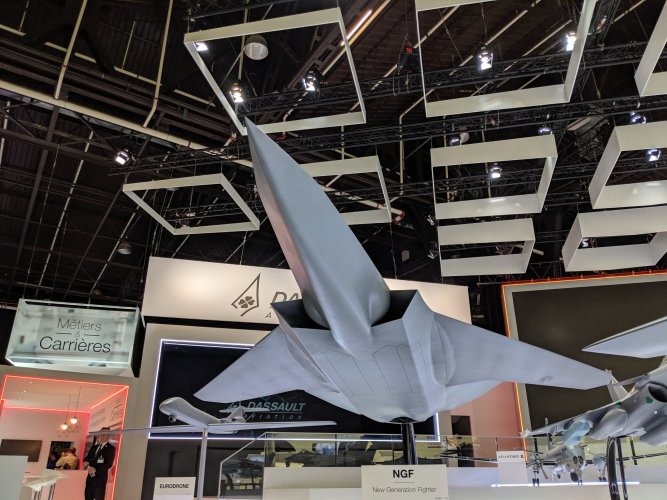
However, the French SCAF could pack such a missile (design wise it's looking like a main bay plus 2 very long side bays).
 
It's already a done deal so the question is what are its exact specs?
First of is it truely 5000 lb? It seems to me the media is partly confused and partly ignorant.
The USAF labeled it as "Advanced 5K (A5K)" Penetrator. And this seems to be the source of the weight claim. But is it or am I missing something?
GBU-72? That's the BLU-138

What confuses me is that the B-1B can apparently carry them. I can only assume that this is being handled in the forward bays as if it's a cruise missile (or I guess on any external pylons). At least assuming that the GBU-72 is the same length as a GBU-28.


Previsouly, the BLU-137 was labeled as the Advanced 2,000 lb (A2K).
I assume it's an evolution from the GBU-31(V)4B (BLU-109) JDAM but with a complete new body design. Instead of a subcaliber it's a full Mk84 caliber with less energetic material volume but same omp as other 5000 lb equivalents.
My quick and dirty calculation tells it's around 4850 lb. So it checks out.
So, you're assuming a DU case on a roughly Mk84/BLU-109 sized body? Not a GBU-28 length beast?

Interestingly, the GBU-28 only has 675lbs of Tritonal. The Mk84 holds 945lbs of boom, the BLU-109 holds 550lbs of Tritonal. So a denser casing would leave as much volume for explosive as the old GBU-28s, while still staying in the overall size constrictions as a Mk48.


Originally, it was 6 shots for both with JSOW and I was certain there's a two mount rack for 2000 lb. Anyhow, the six shot number was what mattered.
So, 6x JSOW or 2000lb bombs is our target number?
 
GBU-72? That's the BLU-138
Yes
So, you're assuming a DU case on a roughly Mk84/BLU-109 sized body? Not a GBU-28 length beast?

Interestingly, the GBU-28 only has 675lbs of Tritonal. The Mk84 holds 945lbs of boom, the BLU-109 holds 550lbs of Tritonal. So a denser casing would leave as much volume for explosive as the old GBU-28s, while still staying in the overall size constrictions as a Mk48.
Initially, I did but things didn't work out.
My assumption is full Mk84 diameter but penetrator body type not aerodynamic body at full length. There's uncertainy for length but within margin of reasonable error. I'm using M-steel at 7.8 g/cm^3 = 7.8 t/m^3 and AFX-757 equivalent as found in GBU-28 / BLU-122 for ~785 lb
For the shell material volume I got ~0.22409 m^3 for ~3853.39 lb. Using same tail kit for 176.29 lb. They said it's modified so I assume it's somewhat heavier.
So, 6x JSOW or 2000lb bombs is our target number?
Yes, but upgraded to JASSM or whatever comes next.

That's kinda insane. If you were talking about bay size in the SCAF thread, the design for the 7.2m weapon bay is longer than even the J-36's weapon bays.
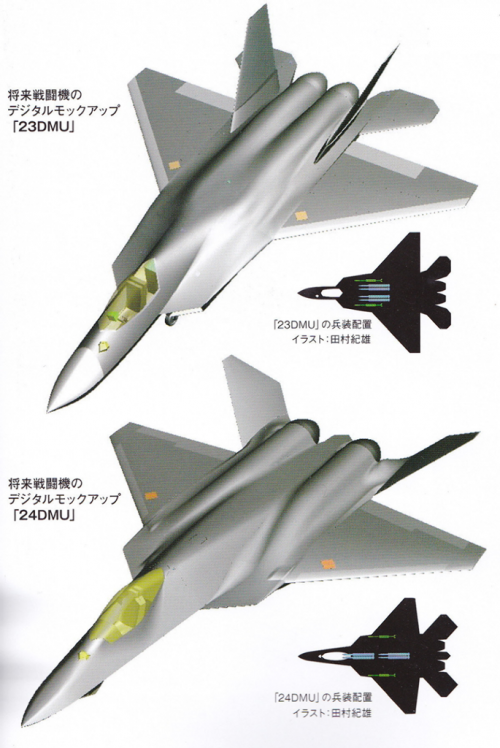
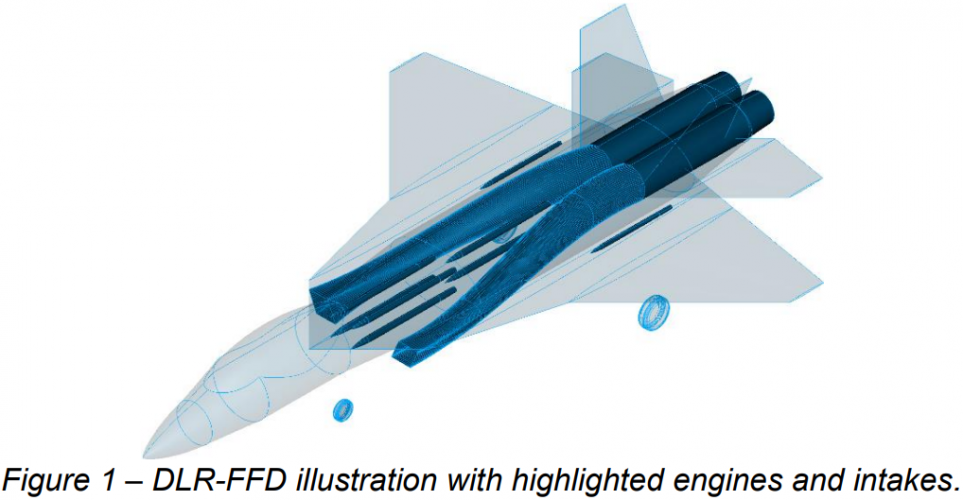
The German DRL-FFD designs had more or less the same long side bay, too. And the Japanese also went for a similar solution.
I was also going for it with various iteration of the F47. But for airframe compactness of the F/A-XX it kind of fits better with a thicker wing design that is more similar to the DLR-FFD/NATO drone research than SCAF...
 
Last edited:
Initially, I did but things didn't work out.
My assumption is full Mk84 diameter but penetrator body type not aerodynamic body at full length. There's uncertainy for length but within margin of reasonable error. I'm using M-steel at 7.8 g/cm^3 = 7.8 t/m^3 and AFX-757 equivalent as found in GBU-28 / BLU-122 for ~785 lb
For the shell material volume I got ~0.22409 m^3 for ~3853.39 lb. Using same tail kit for 176.29 lb. They said it's modified so I assume it's somewhat heavier.
Okay, so NOT GBU-28 length or thereabouts. Nose cone shaped to line up with JDAM, simple cylinder body shape for the penetrator, and a thicker casing to make it heavier?

A GBU-28 is~19ft all told. A bare BLU-113 is 13ft3in/4.04m long.

Do you happen to have the length of a JDAM tailcone? I'm wondering if the whole thing can be made to fit within a ~14ft overall length.


Yes, but upgraded to JASSM or whatever comes next.
Hrm. Thing is, a JSOW is only about 13" in "diameter," while JASSMs are 22-25" wide (current references seem to say -A models are 22", while JASSM-B or -C are 25" wide). Major difference in bulk, which screws over your bay size discussions.
 
That's kinda insane. If you were talking about bay size in the SCAF thread, the design for the 7.2m weapon bay is longer than even the J-36's weapon bays.
I agree it seems weird, but it does look to be a side bay at least long enough for MICA+Meteor in tandem, if not two Meteors in tandem.

Remember that SCAF needs a bay long enough for ASN4G as well.
 
Do you happen to have the length of a JDAM tailcone? I'm wondering if the whole thing can be made to fit within a ~14ft overall length.

It would still be over 4,000lb total weight. I assume you are trying to work out the biggest penetrator bomb that could fit in the larger SiAWs box. I think the US would just use normal 2,000lb JDAM if they have the larger box to play with.

A small penetrator bomb only makes sense if the 6th gen fighters are limited to the AMRAAM box. A new custom heavy casing bomb is the only way to create a 2,000lb bomb in the small AMRAAM box.

It only takes a couple weapons to be produced to allow a weapon bay with only AMRAAM box to cover all missions. Scaling down the AGM-88G to a 500lb weapon and 100lb warhead would be sufficient for a SEAD weapon. Then add a dedicated penetrator bomb.

Powered JDAM.jpg

Powered JDAM increases the length of the MK82 bomb up to AMRAAM length. Multiple seeker options.
SLAM-ER has a 800lb warhead.
JASSM LRASM has a 1,000lb warhead
JSM has a 260lb warhead

People on here often say JSM doesn't have enough boom to replace JASSM/LRASM. The Powered JDAM is a nice half way point between
the two.

I'd like to know what else would be missing if the 6th gen fighters are limited to AMRAAM box.
 
@Seragina

I might have missed it in the SCAF thread but is do you have any pictures of this long side bay?
No. I only got pics of main bays for the 2 SCAF designs.
I realized I'm missing one crucial slide with the Japanese bay. This gonna be a pain to dig them up. Anyhow, see attachment. That's all I got.

Okay, so NOT GBU-28 length or thereabouts. Nose cone shaped to line up with JDAM, simple cylinder body shape for the penetrator, and a thicker casing to make it heavier?

A GBU-28 is~19ft all told. A bare BLU-113 is 13ft3in/4.04m long.

Do you happen to have the length of a JDAM tailcone? I'm wondering if the whole thing can be made to fit within a ~14ft overall length.
Exactly, might be a few millmeter difference in length compared to Mk84 but it's not possible to know atm.
I used L ~2.86164 m = 112.663" for the whole body with ~2.11321 m = 83.197" for the cylinder section.
GBU-31(V)4B tail kit L 51.04" D 25.32"
I already did include in post #401 of the F47 thread.
Hrm. Thing is, a JSOW is only about 13" in "diameter," while JASSMs are 22-25" wide (current references seem to say -A models are 22", while JASSM-B or -C are 25" wide). Major difference in bulk, which screws over your bay size discussions.
Can't be helped. For other reasons I won't go for a centered bay.
I'd like to know what else would be missing if the 6th gen fighters are limited to AMRAAM box.
It won't be able to do any of the crucial missions that disable the whole underground systems that China has (like Iran just larger and more numerous). It wouldn't be able to hunt for mobile launchers in a time critical matter (SiAW/Mako) but delayed (SDB).

Anyhow, this is the Navy specific thread so we need to prioritize sea missions first. Then follow on the USAF and clean up the mess they left behind. On the USAF side they disable crucial system and clean the field to make it easier for the B21 and Navy to do the bulk of the destructive work.
 

Attachments

  • 1925d6239ee3eaf6f4adeca240a1377d.png
    1925d6239ee3eaf6f4adeca240a1377d.png
    976.9 KB · Views: 103
  • dlr-p10f6.png
    dlr-p10f6.png
    190.1 KB · Views: 100
  • dlr-p03f1.png
    dlr-p03f1.png
    247.4 KB · Views: 93
  • D9R-Zg3XYAE_bjk.jpg
    D9R-Zg3XYAE_bjk.jpg
    539.6 KB · Views: 93
  • 20171107_FuturAirPower_FullHD_20MBit-0x1080-15000k.mp4_snapshot_01.22_[2024.04.09_23.22.09].jpg
    20171107_FuturAirPower_FullHD_20MBit-0x1080-15000k.mp4_snapshot_01.22_[2024.04.09_23.22.09].jpg
    1.1 MB · Views: 96
  • 20171107_FuturAirPower_FullHD_20MBit-0x1080-15000k.mp4_snapshot_00.33_[2024.04.09_23.21.02].jpg
    20171107_FuturAirPower_FullHD_20MBit-0x1080-15000k.mp4_snapshot_00.33_[2024.04.09_23.21.02].jpg
    811 KB · Views: 90
Exactly, might be a few millmeter difference in length compared to Mk84 but it's not possible to know atm.
I used L ~2.86164 m = 112.663" for the whole body with ~2.11321 m = 83.197" for the cylinder section.
Okay, that is making sense now. Sorry my brain has not been working.


GBU-31(V)4B tail kit L 51.04" D 25.32"
Wow that's a lot longer than I thought.


I already did include in post #401 of the F47 thread.
How'd I miss this? *facepalm*


Can't be helped. For other reasons I won't go for a centered bay.
Yeah, tandem bays get implausibly long for an 80k MTOW airframe. But side-by-side bays each wide enough for 4x AGM-158s get implausibly wide for a supersonic airframe.
 
It won't be able to do any of the crucial missions that disable the whole underground systems that China has (like Iran just larger and more numerous). It wouldn't be able to hunt for mobile launchers in a time critical matter (SiAW/Mako) but delayed (SDB).
The deep underground systems would be taken out with the B-21. A 2,000lb bunker buster that fits the AMRAAM box would cover the vast majority of bunkers. Due to the thick casing it should be able to hit deeper targets than a normal 2,000lb JDAM.

So basically all the US need to do is make a fast strike weapon that fits the AMRAAM box. That sounds very easy. An air-to-ground weapon won't need such large fins compared to an air-to-air weapon. A Sparrow missile sized weapon with strakes and small fins would fit the AMRAAM box. That's a 500lb weapon. As the 6th gen fighters will be launching missiles from a faster speed it could have a smaller rocket motor while allowing it to maintain the same range and warhead. Mobile launchers don't need a very big warhead.

So they only need two new weapons to fit the AMRAAM box. That is much easier than compromising the 6th gen fighters with large weapons bays.
 
. It wouldn't be able to hunt for mobile launchers in a time critical matter (SiAW/Mako) but delayed (SDB).
I spoke too soon. The US is requesting a new missile for time critical ground targets designed to fit the F-47. This points to the F-47 not being able to fit the current SiAW. F-47 and F/A-XX will most likely be AMRAAM box. As I have said for many months it's easier to designs new weapon than to compromise your 6th gen fighter performance.


I spoke too soon. The US is requesting a new missile for time critical ground targets designed to fit the F-47. This points to the F-47 not being able to fit the current SiAW. F-47 and F/A-XX will most likely be AMRAAM box. As I have said for many months it's easier to designs new weapon than to compromise your 6th gen fighter performance.


Or maybe they just want more vendors?
 
I spoke too soon. The US is requesting a new missile for time critical ground targets designed to fit the F-47. This points to the F-47 not being able to fit the current SiAW. F-47 and F/A-XX will most likely be AMRAAM box. As I have said for many months it's easier to designs new weapon than to compromise your 6th gen fighter performance.

You really have a vivid imagination.
 
Can't be helped. For other reasons I won't go for a centered bay.
Dear Seragina,

I'm attempting to design an aircraft with twin central bays at the moment - what were your main objections? Forgive me I suspect you have already detailed in another thread but a clear list would be very helpful. I think I understood most peoples arguments on structural efficiency and intake geometry / engine position.

Hope you don't mind my request, John
 
I spoke too soon. The US is requesting a new missile for time critical ground targets designed to fit the F-47. This points to the F-47 not being able to fit the current SiAW. F-47 and F/A-XX will most likely be AMRAAM box. As I have said for many months it's easier to designs new weapon than to compromise your 6th gen fighter performance.

Instead of linking to the oh so tempting clickbait, why not link to the actual source?


DISCLAIMER
THIS SOURCES SOUGHT IS FOR INFORMATIONAL PURPOSES ONLY. THIS IS NOT A REQUEST FOR PROPOSAL. IT IS A MARKET RESEARCH TOOL BEING USED TO DETERMINE POTENTIAL FIRMS CAPABLE OF PROVIDING THE SUPPLIES DESCRIBED HEREIN PRIOR TO DETERMINING THE METHOD OF ACQUISITION AND ISSUANCE OF A REQUEST FOR PROPOSAL. THE GOVERNMENT IS NOT OBLIGATED TO AND WILL NOT PAY FOR ANY INFORMATION RECEIVED FROM POTENTIAL SOURCES AS A RESULT OF THIS SOURCES SOUGHT. THIS DOES NOT CONSTITUTE A SOLICITATION AND SHALL NOT BE CONSTRUED AS A COMMITMENT BY THE GOVERNMENT. RESPONSES IN ANY FORM ARE NOT OFFERS AND THE GOVERNMENT IS UNDER NO OBLIGATION TO AWARD A CONTRACT AS A RESULT OF THIS ANNOUNCEMENT. NO FUNDS ARE AVAILABLE TO PAY FOR PREPARATION OF RESPONSES TO THIS ANNOUNCEMENT. ANY INFORMATION SUBMITTED BY RESPONDENTS TO THIS TECHNICAL DESCRIPTION IS STRICTLY VOLUNTARY.
INTRODUCTION
The Stand-in Attack Weapon (SiAW), Program Office (PO) is responsible for Air Force acquisition of next generation munitions built to rapidly strike mobile targets within an congested enemy environment. The SiAW PO is currently executing a Middle Tier Acquisition (MTA) Rapid Prototyping phase. The purpose of this RFI is to conduct market research to identify potential sources capable of providing a SiAW equivalent missile system which consists of the All-Up-Round (AUR) missile to include hardware and software, as well as any unique logistics elements, trainers, SiAW flyout model, and all system verification elements. This AUR must be compatible with existing launch platforms and infrastructure currently supporting the SiAW.
THIS SOURCES SOUGHT IS NOT A REQUEST FOR PROPOSAL. It is a market research tool being used to determine potential and eligible firms capable of providing the capability described herein prior to determining the method of acquisition and issuance of a Request for Proposal. The Government is not obligated to and will not pay for any information received from potential sources as a result of this sources sought.
BACKGROUND/REQUIREMENT
The USAF is seeking to enhance its capabilities to suppress and neutralize enemy air defenses in contested environments. This effort aims to identify and potentially acquire a weapon system that provides similar or improved capabilities compared to the SiAW, focusing on extended range, advanced targeting, counter-countermeasures, and integration with existing and future platforms.
Required Capabilities
Interested vendors are requested to provide information regarding their capabilities to provide a weapon system (or key subsystems) with the following characteristics (at a minimum):
Extended Range: Weapon system capable of engaging targets at significant standoff distances.
Targeting:
Advanced anti-radiation seeker with broad frequency coverage.
Ability to target modern and advanced radar systems, including frequency-agile and low-probability-of-intercept (LPI) emitters.
Ability to target modern ballistic threats, and other non-cooperative targets
Precision navigation and guidance system (e.g., GPS/INS with anti-jamming capabilities).
Potential for pre-emptive targeting capabilities.
Ability to re-attack.
Electronic Counter-Countermeasures (ECCM): Robust ECCM capabilities to defeat enemy countermeasures, including chaff, flares, and jamming.
Lethality: High probability of kill against a wide range of targets.
Platform Integration:
Compatibility with F-35, F-16, F-47 and B-21.
Open architecture design to facilitate integration with future platforms to include foreign partners.
MIL-STD-1760 and Universal Armament Interface (Rev6) compliance (or equivalent) for aircraft integration.
Common Flexible Weapon Interface Control Document compliance highly desired
Reliability and Maintainability: High operational availability and minimal maintenance requirements with ability to meet a 15-year service life.
Logistics Support: Comprehensive logistics support package, including training, maintenance manuals, spare parts, technical assistance, transportation and shipping at AUR and section level and missile compatibility with both CMBRE + and CE.
Cybersecurity: Compliant with current cybersecurity standards for weapon systems IAW DoDI 8500.01, DoDI 5200.44, NIST SP 800-53, and CNSSI 1253 .
Exportability: Expected to be open and modular such that future exportability and potential partner compatibility is not restricted.
Affordability & Producibility: Capabilities should be affordable and producible in support of delivering quantities of up to 600 production AURs per year.
Security: Expected to already have facilities and personnel to support classified requirements
Current access to CORE
Current ability to handle and process SECRET and TOP SECRET data and materials
ANTICIPATED PERIOD OF PERFORMANCE
The anticipated period of performance will be from 2026 and is expected to run for approximately 48 months from Contract award to 2030 (Production Lot 1 delivery).

Note the platforms they want it to be compatible with.
 
Dear Seragina,

I'm attempting to design an aircraft with twin central bays at the moment - what were your main objections? Forgive me I suspect you have already detailed in another thread but a clear list would be very helpful. I think I understood most peoples arguments on structural efficiency and intake geometry / engine position.

Hope you don't mind my request, John
This is my design specific solution and consideration it may not be generally applicable.
Your design may require differing consideration althogether.

1. cross-section; keep engine spacing "thigh" => large wing root tanks/wing root missile bay/wheel tyre housing; possible wing sonic boom reduction/up-to 46.5% wing drag reduction & 3-5% increased fuel capacity
1b. 360° sensor placement without further widening fuselage
1c. all wing station placement setup remain at same distances (F22) from the fuselage & not too tight for wing root missile bay drop clearance/rail launch
2. "less" visibility from directly below fligth path when bays are open; center fuel buddy tank (probably new stealth design)/able to land on the tank for belly landing
3. DEW/HEL contingency/expansion bay; DEW/HEL belly turret; more COTOBAR structure options
4. free 3-dimensional orientation for bays/engines ... (tbd)
5. more centered and less or no dispersed (like thin&tiny etc.) fuselage fuel tanks
6. expected somewhat superior drop clearance & rack mounting spacing design; slightly reduced bay volume for same size
7. nearby DEW/HEL array and sensor cavities don't have to deal with tanks between or around them

Problems:
main gear;
side bay size; wing size/planform & vortex generation/ LEX/LEVCON-placement;
wing structure missile alignment (not really an issue but space options for large missiles)
 
So basically all the US need to do is make a fast strike weapon that fits the AMRAAM box. That sounds very easy. An air-to-ground weapon won't need such large fins compared to an air-to-air weapon. A Sparrow missile sized weapon with strakes and small fins would fit the AMRAAM box. That's a 500lb weapon. As the 6th gen fighters will be launching missiles from a faster speed it could have a smaller rocket motor while allowing it to maintain the same range and warhead. Mobile launchers don't need a very big warhead.
Compatibility with F-35, F-16, F-47 and B-21.
The only certain size given it the F-35's bay size.

Keep in mind AMRAAM box size does not equal body size. I prefer and expect them all to have folded wings.
The AGM-88G AARGM-ER is literally the latest design and yet is larger than the old HARM. That says something about guidance/sensor and motor size requirement. Although, the warhead seems to be the same I think it's likely different in fragmentation design.
The warhead is a heavy tungsten ragmentation for armor penetration and dealing real damage to machinery like engine blocks. An ordinary blast bomb won't do for the same reason a 20mm CWIS can't damage a speedboats engine block.
So the missile has to be able to carry a similar large and heavy warhead. We probably need newer sensors like David's Sling. This payload naturally determines everything else.

The deep underground systems would be taken out with the B-21.
If you haven't noticed the B-2 was sent last year after Israel bombed the iranian defenses for two weeks.
And now the B-2 were send 6 days after things started. And all that despite them having mostly 70's weaponry if not guns only left.
Even if we consider the B-21 and chinese technology gap to be similar distanced it doesn't look like the bombers will come in on the first day to me.
 
Note the platforms they want it to be compatible with.
Ah, excellent, confirmation that F-47 is supposed to carry SiAW/equivalent!


The only certain size given it the F-35's bay size.
Yep, and IMO the best "max size" I've found for that is the JSM.


Keep in mind AMRAAM box size does not equal body size.
Correct, Box Size is the width of the fins while on the rail. Which for AMRAAM means 13.5" W by 13.5" T by 12ft long.
 
Instead of linking to the oh so tempting clickbait, why not link to the actual source?

My post has the exact same link you provided. Maybe slow down and read more than the first sentence of my posts.

Or maybe they just want more vendors?
Or maybe the US doesn't want to design their 6th gen weapons bay around large stop gap weapons designed for 4th gen platforms.

Anyway please continue with another 10 pages of weapon bay discussion.
 
My post has the exact same link you provided. Maybe slow down and read more than the first sentence of my posts.

Your post linked to an article that linked to the solicitation. Again, why not link to the source itself?

The solicitation itself does not support a hypothesis that the US is looking for a smaller SiAW.
 
The solicitation itself does not support a hypothesis that the US is looking for a smaller SiAW.
You completely missed the point. My argument was that this weapon bay discussion is pointless as the US would just develop new weapons. Now we have the US making new weapons. My point is proven.

There are hundreds of posts over multiple threads trying to design weapon bays around existing standoff weapons. SiAW is commonly mentioned and members said there is no alternative weapon. Now we have alternative weapons under development. Scott Kenny even suggested plastic straps to hold the fins of the AIM-174B and the strap breaks as the weapon is released. The weapon bay discussion has become a joke.

Many months ago I said that there would be mini missiles that further make the weapon bay discussion pointless. Members again said there were no mini missiles. Then on Feb 13 we find out mini missiles are coming.


There is no point discussing weapon bay dimensions if there are multiple new weapons coming of unknown size. In the last 5 years every new known weapon has been 12 foot or 6 foot long. Optimised for AMRAAM box. Clearly everything is being optimised around the AMRAAM box
 
Last edited:
I had intended to specullate on some future weapons last week but it seems reality has rendered it moot now.

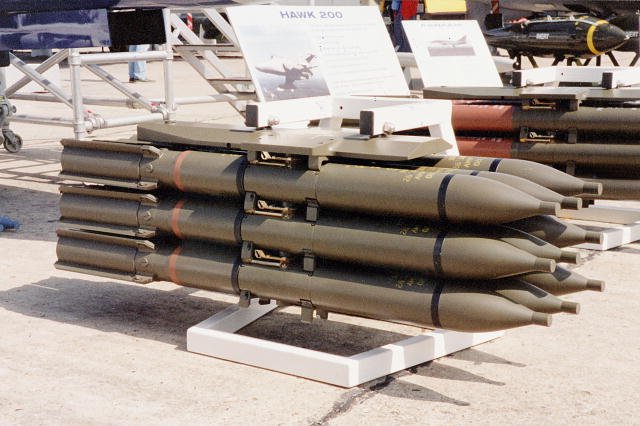
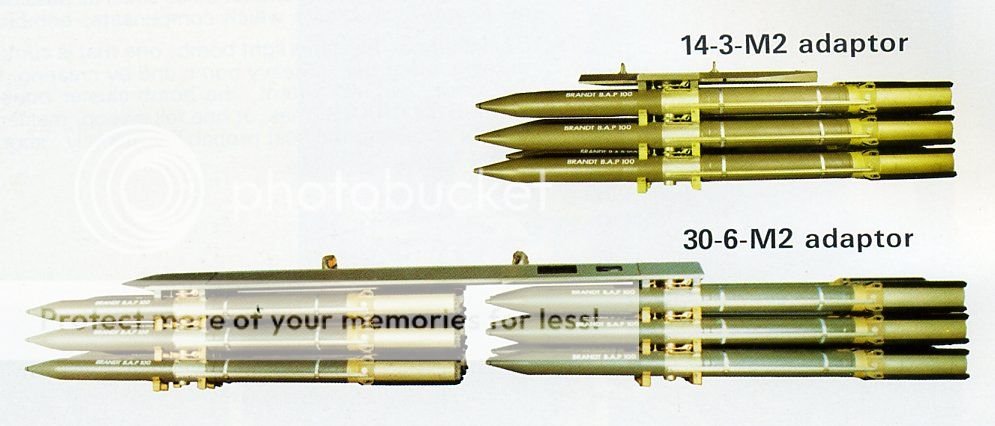
My idea was to have a design based on the BAP 100, BAT 120 and replace the parachute with a booster and add 4 small glide wings to give it a range of 70-150 km. This design would have replaced SDB-I/SDB-II but with 18 possible rounds instead of 4 rounds.
pistabap100b.jpg
BAP10010.jpg
But with the revealed small ALRRM missile its hypersonic requiremen obviously requires a large and likely making the package as long as an AIM-120. I doubt it will offer much of packing.

Other future options
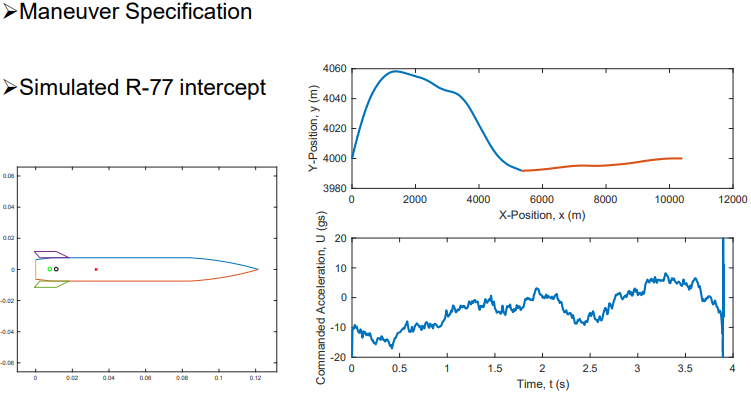
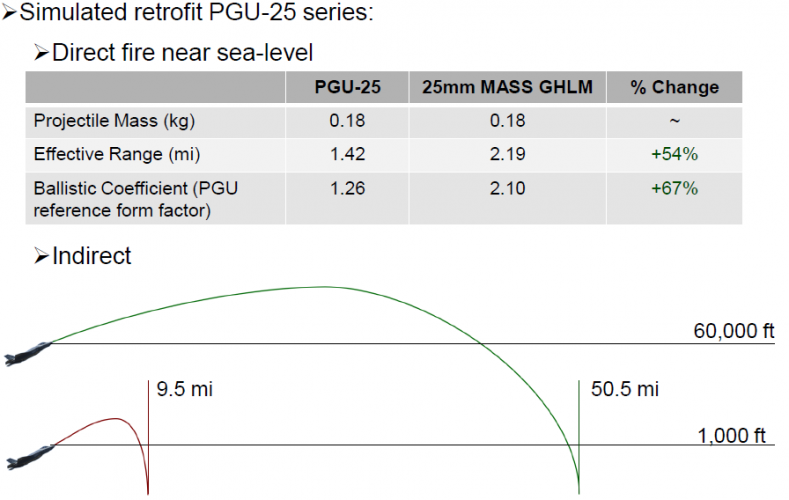
for self defense would be guided cannon shots : Guided Hard Launch Munitions (GHLM)
guided-shot-p14.png guided-shot-p21.png
As you can see the range and time is halved compared to a micro missile but it would give a large magazin depth for head-on defense.
Apparently, the design has been promoted for rear defense, too. Micro missiles are better for this as the shot would have to waste a lot of kinetic energy to negate forward motion.

About the AARGM-ER/SiAW alternative option discussed above. Looking around it seems the war head, hence, sensor/guidance section can't be smaller than the 9" found with the ALARM and the newer Indian MAR family.
The reason here is sensor size of 4 spiral antennas in the ALARM. Although, we have different radar tech today the triangulation and resolution requirement are the same. Assuming we can get away with a similar smaller warhead ~40-50 kg combining with an airbreathing design similar to Meteor or THOR-ER it looks like 300-330 km range might be possible if launched and cruise at high altitude. That is lofting to 30-35 km and a speed of 3.7-3.8 Mach.
 
Also take note from the
award notice: https://www.sbir.gov/awards/211185

This particular case of Air-Launched Rapid Reach Missile (ALRRM) (note this effort encompasses a whole range of missiles like AGM-183)
limited the size to
15 feet in length, weigh less than 2000 lbs
The usual requirement for F22/F35 bay weapons is within 156".
And since this award is from the Navy there's a high chance it applies to the F/A-XX's bay.
And by extension this might apply to the F-47, too
 
Also take note from the
award notice: https://www.sbir.gov/awards/211185

This particular case of Air-Launched Rapid Reach Missile (ALRRM) (note this effort encompasses a whole range of missiles like AGM-183)
limited the size to

The usual requirement for F22/F35 bay weapons is within 156".
And since this award is from the Navy there's a high chance it applies to the F/A-XX's bay.
And by extension this might apply to the F-47, too
15ft length is the maximum length of weapons that fit on the carrier weapons elevators. I would expect the FAXX bays to be ~16-19ft long. (19ft would allow for carrying 3x SDBs in tandem, though that may be reserved for SCAF)
 
Back
Top Bottom