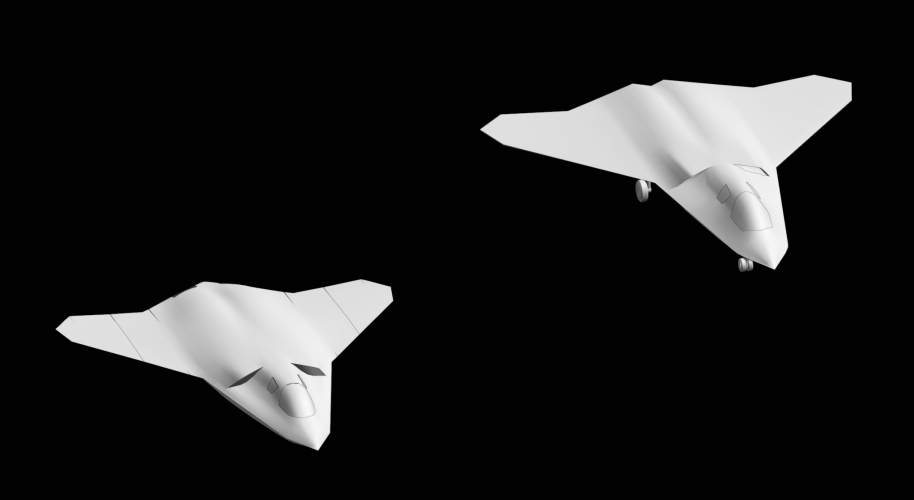
Regarding the order of importance, think of which customer each of the big 3 chose to focus on in this modern round of US air superiority fighters. Focusing on one instead of both would naturally lead the aircraft to better reflect that customer’s unique needs.
Regarding NGAD, I meant the program that produced the F47. I have no visibility to that program outside of some competitive intelligence, but knowing the new capability, I could see it being required on both customers’ fighters.
Again, consider my original #2 question when assessing this new capability. I know it sounds obvious to say “New fighter can do new things,” but if you frame the question as “what new capability requires a new fighter,” it will make more sense.
I have been thinking along similar lines.
Some examples:
1) New Longer range (intermediate class?) ballistic missiles targeting carriers push the CVN battlegroup further out = longer range (SH and F-35C both not great hence all the discussion on the good old days of A-6s and cancelled A-12). Since loss of the ability to deliver reliably a lot of ordnance on surface targets in contested airspace the USN has a problem of relevance relative to USAF that can bring long ranged ULO bombers to the problem ie. B-2 and B-21.
a) Therefore long range at least in early phases of a conflict
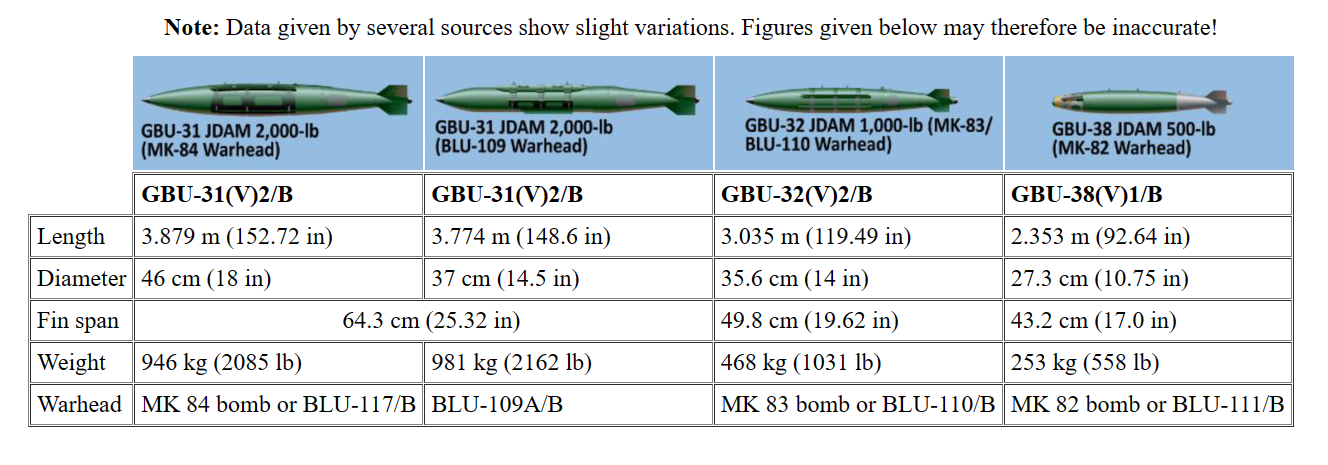
b) Heavy capacity of magazine, ie ideally back to ATA goals would be the dream if perhaps not 20,000lbs
c) Self escort and penetrating (likely more appealing to USN management to not just have a platform launching Cruise missiles, since can't F35 and/or SH basically achieve that(?) Sure, deeper into enemy territory is better but that then drives internal carriage
d) Ideally you want to achieve a large amount of delivered ordnance per sortie, especially as your greatest opportunities to achieve knockouts is early in the campaign before the opponent is fully up to speed, which is at odds with the range requirement (ie. Hanging lots of large cruise missiles underwing only works to a point if you're pushed back from the enemies front yard)
So this would be an example where if I was Boeing I would really want to give my existing Super Hornet customer the machine that addresses a lot of the headaches they have had since DF-21 emerged
I really took to heart Sferrin's completely sensible comment about the threats to carrier groups being nothing new (ie. Backfires and Kh-22 missiles) but I suspect/guess it was exactly those type of issues going away post 1990 that have enabled gradual erosion of the carrier groups aircraft based power projection ability. It's not like the fleet planned to fight right off murmansk after all.
In this model I also think that fleet air defence as a priority makes less sense since by virtue of being a long way off shore and the opponent not having a large fleet of anti ship missile dedicated aircraft (DF-21 being their solution). Naturally though an aircraft capable of the above role can carry a lot of fuel and a lot of missiles, internally and without the drag of external stores so would be an excellent modernisation for the role lost when the F-14 was retired
2) Hypersonic missiles (I fully admit I am somewhat fuzzy on the full details and look forward to being set straight), but it seems fairly clear that faster speeds and dynamic manouverability are very desirable of course but don't necessarily mean great range. Furthermore the tracking of missiles with high IR signature against cold skies is also not ideal. On the other hand these missiles are based on the principle of getting inside the sensing and reaction time cycle of the opponent and launched from closer in are very potent. They tend to be relatively big, not especially easy to fit in any current 5th gen aircraft internally and represent a missile that ok, can be launched from 600miles out but will that be enough advantage over a 1000nm conventional low observable missile to be worthwhile. On the other hand a carrier aircraft able to deliver much closer in to the enemy has a big advantage, so I would say for the US again without an aircraft with large and deep IWBs they are bit players, and again if I were Boeing I would lay out this to the customer and say I want to provide a solution.
I thought about the above (admittedly I much prefer argument 1 and don't really have a view on (2) other than I would feel better if I was the US that I would have a platform capable of matching the USAF's striking power and delivery effectiveness if it was needed.
3) Directed energy weapons - definitely coming, definitely need integrated power systems, cooling and engine integration plus and airframe strategy so that too drives new strategies. That still needs new engines but not necessarily the fullest extent of say three-stream technology.
4) Drone and UAV/UCAVs - I appreciate the potential a lot but I don't see any equivilant to a full strike wing capability. Someone will set me straight but at the moment the strategy seems to be to massively increase the opponents air defense problem through mass of aircraft and improve the penetrating capabilities of the manned strike packages (while also being managed in some or all part by those manned platforms). This of itself doesn't necessary drive a new aircraft but it's not as effective if your fleet is limited by the manned aircraft range capabilities.
Conclusions (sorry for rambling) - I think who went after who in the competition is pretty well discussed, as was the very USAF focused nature of the Lockheed bid (as far as I know there wasn't discussion ever of a Lockheed equivilant offering to the US, was there one?), so the Boeing offering had aspects focused on being attractive to the USN, as well as no doubt general techniques and new ground capabilities that were attractive to both services (not getting into arguments about canards, at least not for F-47).
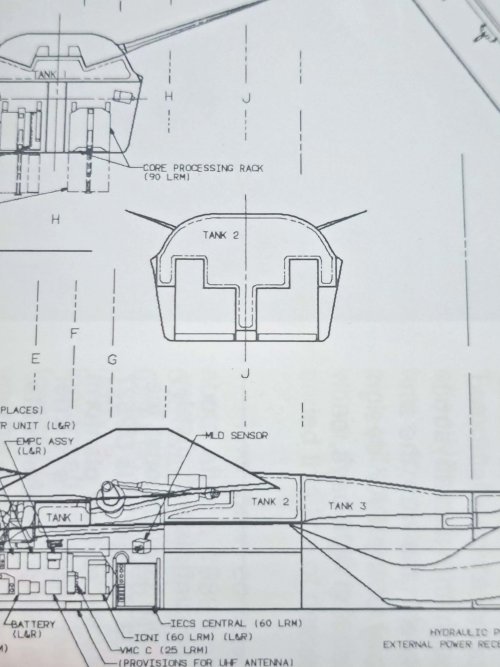
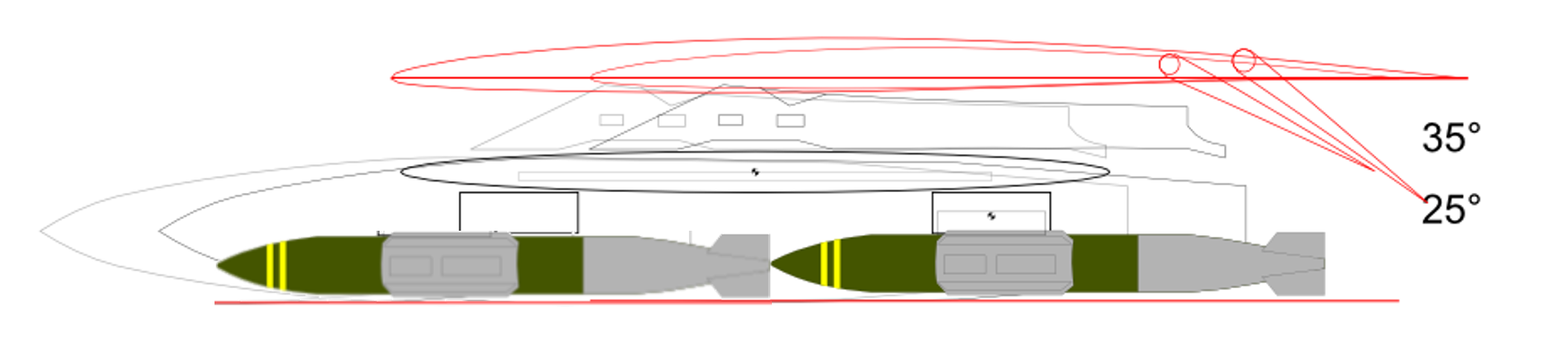
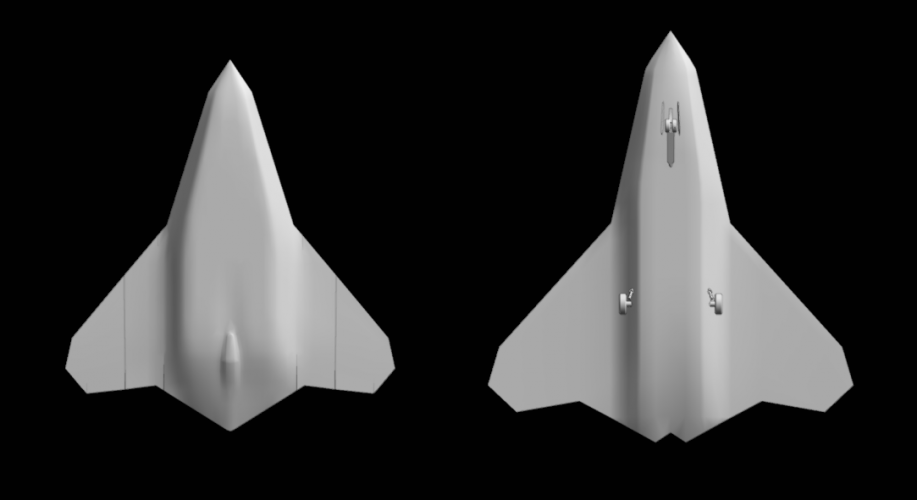
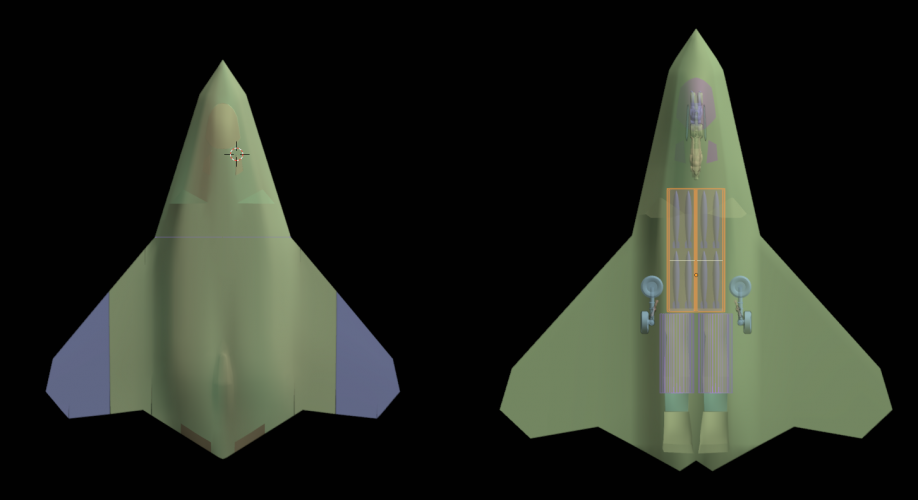
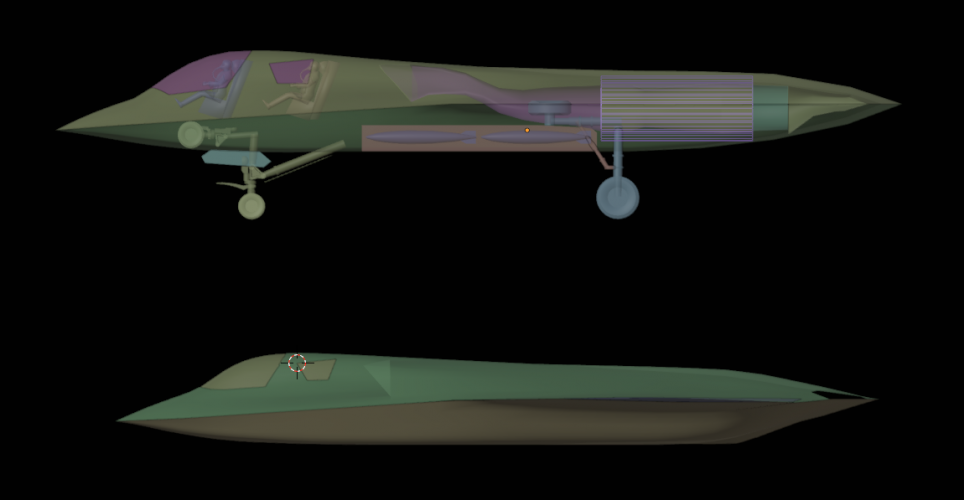
I'm a professional engineer working on very high performance electric machines mainly in high end automotive and some stuff in aerospace but fortunately I'm a mechanical eng by training and can use CAD but my surfacing skills are terrible. I have spent too long over the last month messing around on a design to explore the arguments around the viability or otherwise of the very large central weapons bay and meeting the ATA 8x 2000lb payload internally with a plausible structural and aerodynamic package. Basically I liked Scott Kenny's Arguments in favour but I saw the sense in both the proposed packages put forward by VTOLlicious and Reddington777.
I hate to annoy anyone but I'm not going to share it now as it's too late here and to a certain degree it looks a little crap given I hacked the model up twice already(!). I'm going to DM Vtol and Reddington777 and let them explore it (it's a solidworks model) but not for a few days while I get some real work done.
Thanks for sharing your thoughts all, J