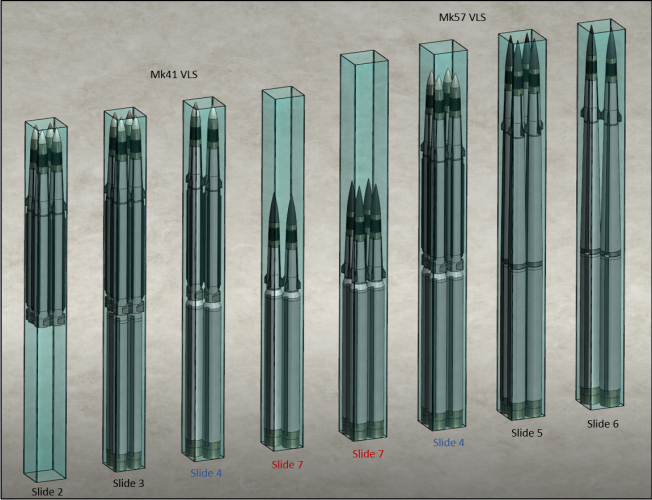
The article makes it sound like there is a common kill vehicle for different booster stacks that would be single-pack (SM-3 equivalent), dual-pack (PAC-3 MSE equivalent), or quad-pack (PAC-3 equivalent). Once they have the booster stacks, they can put other warheads and guidance packages on for anti-air and anti-surface missions.
*cough* j/k ;)

1687704652622.png


Golden Dome Czar Charts Two-Year Plan Focused on Command and Control, Interceptors​

The Pentagon’s Golden Dome Director said Jan. 23 his top priorities for the advanced homeland missile defense shield over the next two years are establishing a baseline command-and-control capability and integrating interceptors into that system.
First on the list is to develop an integrated command-and-control system by this summer. Guetlein described the system as a “glue layer” that will connect all of the tactical C2 capabilities that will contribute to Golden Dome.
In 2027, the program’s focus will shift toward integrating interceptors into that architecture, a task Guetlein hopes to achieve by that summer. It’s not clear how many or what types of interceptors will be part of that initial effort. The Space Force is working with industry to prototype space-based interceptors that can take out enemy missiles in the boost and midcourse phases of flight.
 
View: https://x.com/Redwire/status/2016120282025476370?s=20

Redwire Selected for Missile Defense Agency’s $151 Billion Multi-Vendor SHIELD IDIQ to Support Homeland Defense​


To overcome Golden Dome ‘affordability’ hurdle, DoD needs acquisition reform, AI: Official​

The effort has two key objects, the announcement said:

  • Threat Detection, Tracking, and Discrimination: Demonstrate capabilities to detect, track and support the engagement of Intercontinental Ballistic Missiles (ICBMs) or Hypersonic Glide Vehicles (HGVs) across multiple flight phases (boost, midcourse, and glide). Advanced technologies to deliver the precise positional data and target characteristics required to reliably discriminate lethal payloads from non-threats, such as debris and countermeasures.
  • Fire Control Enablement: Provide high-accuracy, real-time tracking data (including precise range, angular resolution and high update rates) necessary for successful Kinetic Kill Vehicle (KKV) engagements in endo-atmospheric and/or exo-atmospheric environments. Key characteristics for consideration:
The announcement stresses that the effort has an “aggressive” schedule, with prototypes ready for lab demonstration within six to eight months of award and on-orbit hosted payload demonstrations within 12 to 24 months. Interested vendors have until Feb. 17 to respond with proposals.
 

Teledyne infrared sensors selected for SDA Tranche 3 tracking layer​

The Tracking Layer's third tranche focuses on enhancing detection and tracking of sophisticated missile threats, including hypersonic glide vehicles and other advanced systems. Teledyne's focal plane modules employ radiation-hardened, multi-megapixel detectors engineered for high sensitivity, precision and reliability under the demanding conditions of space.
 
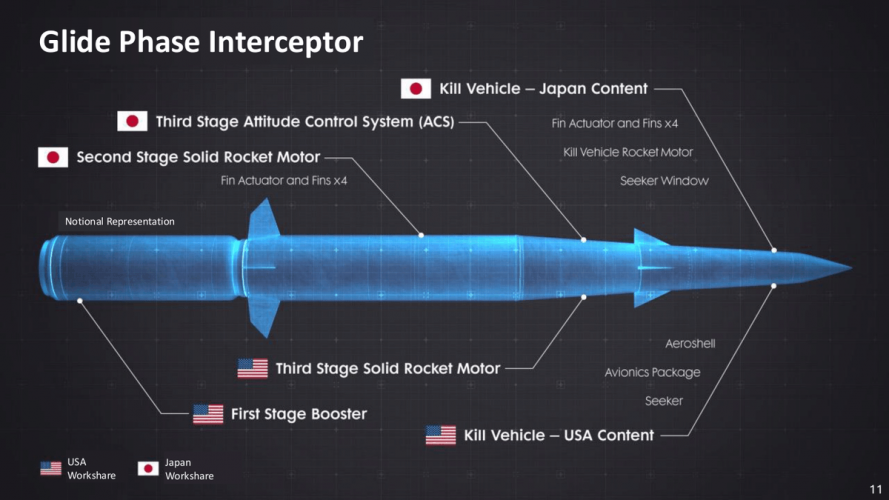
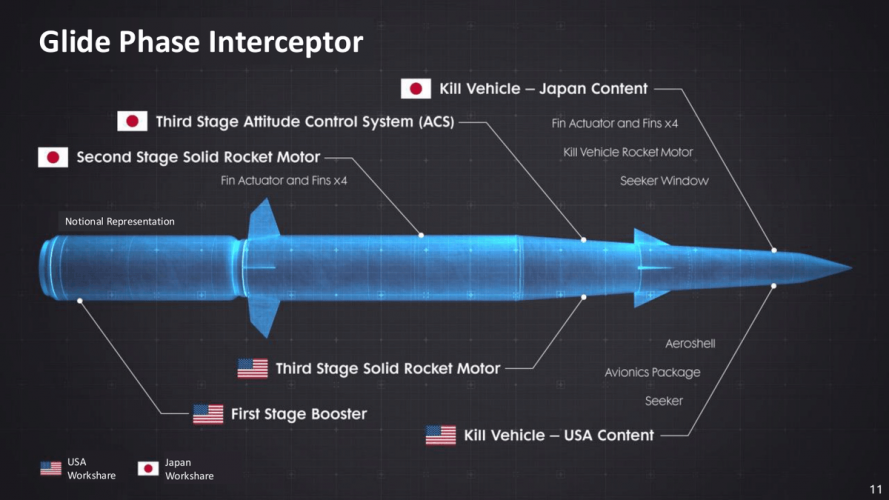
On Glide Phase Interceptor (GPI) one might assume that the first and second stages are the same as those on SM-3 Block II. Maybe even the third. Does anybody know if this is the case or are these to be completely new motors? This might explain why the fat-body SM-6 was put on hold. This would basically be a better version of that (for high end targets), albeit without the surface attack capability.
 

Attachments

  • 1770627810716.png
    1770627810716.png
    611.9 KB · Views: 29
Last edited:
One might assume that the first and second stages are the same as those on SM-3 Block II. Maybe even the third. Does anybody know if this is the case or are these to be completely new motors? This might explain why the fat-body SM-6 was put on hold. This would basically be a better version of that, albeit without the surface attack capability.
I suspect that 1st and 3rd stages are the same as SM3. Not sure about the Japanese-produced second stage.
 
One might assume that the first and second stages are the same as those on SM-3 Block II. Maybe even the third. Does anybody know if this is the case or are these to be completely new motors? This might explain why the fat-body SM-6 was put on hold. This would basically be a better version of that, albeit without the surface attack capability.

I do not know, but NG just made a new 21” booster, right? It sure looked like a mk72 replacement.
 
On Glide Phase Interceptor (GPI) one might assume that the first and second stages are the same as those on SM-3 Block II. Maybe even the third. Does anybody know if this is the case or are these to be completely new motors? This might explain why the fat-body SM-6 was put on hold. This would basically be a better version of that (for high end targets), albeit without the surface attack capability.
My guess is that you change a couple of end stages (3rd and KV) and you basically get an SM-6IB. That might be the reason, develop the hardest one first and maximise the synergy.
 

Rocket-Powered, Space-Based Interceptors Enter Golden Dome Discussion​

The U.S. Defense Department’s Golden Dome program is seeking a space-based interceptor with the thrust to intercept long-range ballistic and hypersonic missiles and the range to cover multiple launches from sites on land and submarines in the open sea.
Revealing the size of the interceptors necessary to provide boost-phase coverage, this concept would shoot down incoming missiles launched from Earth with a constellation of theater interceptor-size missiles in space.

  • Change to rocket motor’s exhaust nozzle opens path to hypersonic and space applications
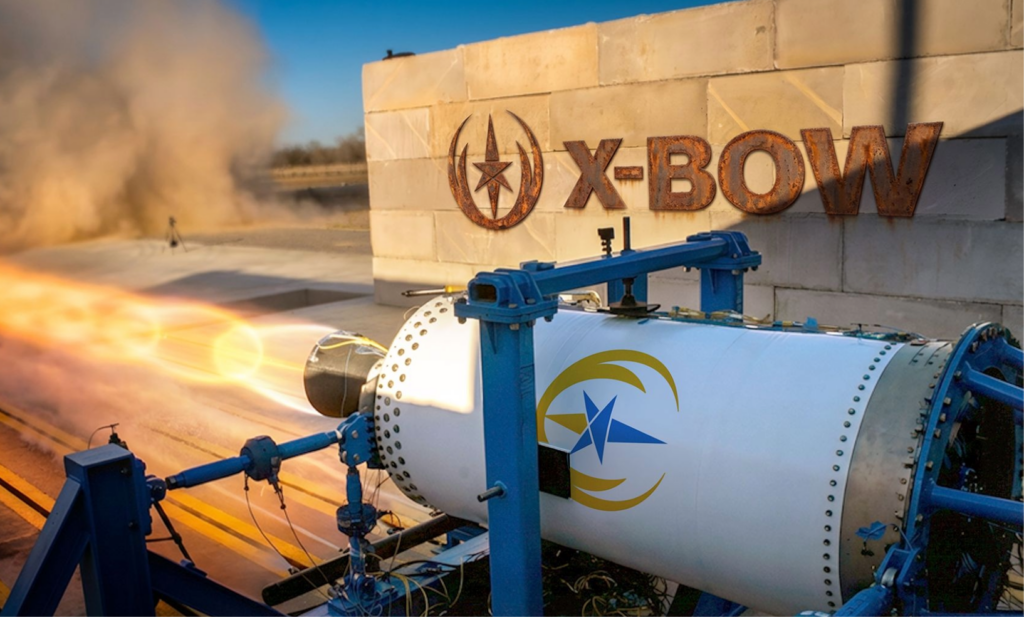
  • X-Bow is assessing latest XB-34 static fire test results
The size of the interceptors involved is indicated by a technical change that X-Bow (pronounced “Crossbow”) Systems plans to make to the exhaust nozzle of the freshly tested, 34.5-in.-dia. XB-34 solid rocket motor.
But the U.S. military selected the XB-34 to become a second-source supplier to Northrop Grumman on two hypersonic missile programs, removing a potential production capacity constraint. That decision makes X-Bow a future supplier for the 34.5-in.-dia., two-stage rocket that powers the Navy’s Conventional Prompt Strike (CPS) missile and the Army’s Long-Range Hypersonic Weapon (LRHW), also known as the Dark Eagle.

To qualify for the hypersonic missile role, X-Bow Systems plans to modify the XB-34 motor with the same type of flexseal nozzle that Northrop uses for the CPS and LRHW missiles. The flexseal nozzle includes a swivel bearing, which allows the rocket to meet the CPS and LRHW requirement for thrust-vector control steering.

Making that single change, however, opens a new path for the XB-34 as the steerable propulsion system for a space-based missile.
“Instead of a [High-Mobility Rocket Artillery System (Himars)] launcher on the ground, you basically have your Himars in space,” Hundley tells Aviation Week.
The concept has emerged as the Defense Department refines the architecture for the Golden Dome missile shield. In additional to a terrestrial “underlayer” of land-based interceptors, the architecture includes a space layer focused on shooting down ICBM and hypersonic glide vehicles during the short boost phase after launch, Pentagon officials say.
The catch is that intercepting offensive missiles in boost phase is challenging. The stage lasts only 3-5 min. In the 1980s and early 1990s, the Strategic Defense Initiative proposed the Brilliant Pebbles program, which envisioned a constellation of about 2,000 satellite-like interceptors, with solid rocket motors on board to propel them toward the incoming missiles (AW&ST Feb. 26, 1990, p. 62). But the vastness of low Earth orbit and the limitations of those thrusters meant that only a handful of Brilliant Pebbles interceptors would be in range of any single ICBM launch. An enemy that launched multiple ICBMs nearly simultaneously could defeat the system.

But propelling space-based interceptors with large solid rocket motors—especially an XB-34—could change the orbital math, expanding the reach of each missile over a broader coverage area.

The concept envisions a constellation of XB-34-powered interceptors in low Earth orbit, each refreshed by a new interceptor every 3-5 years. The thrust available to the rocket motor makes deorbiting into the Earth’s atmosphere unnecessary, Hundley said. The missiles instead could be launched on a solar trajectory. That ability to rocket away from the planet also makes these interceptors an option for asteroid defense, Hundley adds.
Asked if space-based, rocket-powered interceptors had advanced beyond the concept stage, Hundley says: “Most of the conversations going on in this area are classified, but we think we’ve got some low-cost, affordable and scalable capability in this area that could be a game changer on that equation.”
 
Last edited:
"Space based interceptors enter Golden Dome discussion"?

What, did some Tech Bro finally read this forum? We've been discussing Brilliant Pebbles et sim basically since Golden Dome was announced!
 
A rocket nozzle made with flexseal?

View attachment 804620

How well do solid rocket motors do with long-duration spaceflight? I can't think of anything off the top of my head besides the Soyuz landing retromotor. The vast majority of Star/PAM motors were burned within a few hours of launch, but this kind of application would involve years in space.
Solid fuels generally keep better than liquids and for a boost-pase intercept solid is really the only option to achieve the high acceleration critical to meet the small time window. My guess is that they will be shorter than an SM-3, despite the 34.5 inch motors, to achieve that acceleration hit.

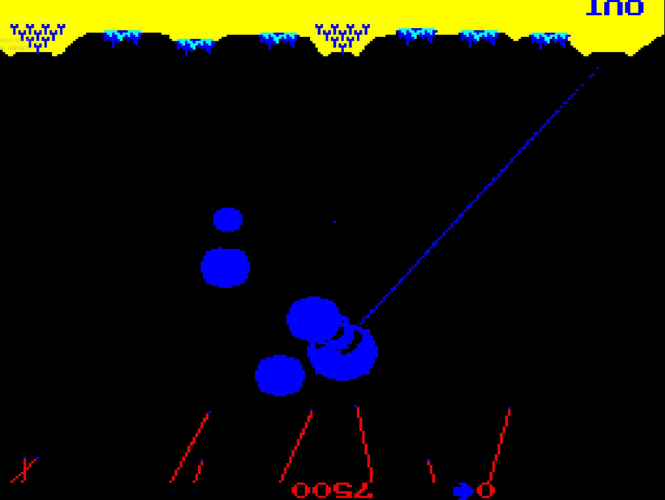
Missile Command 2030:

1772980900867.png
 
Last edited:

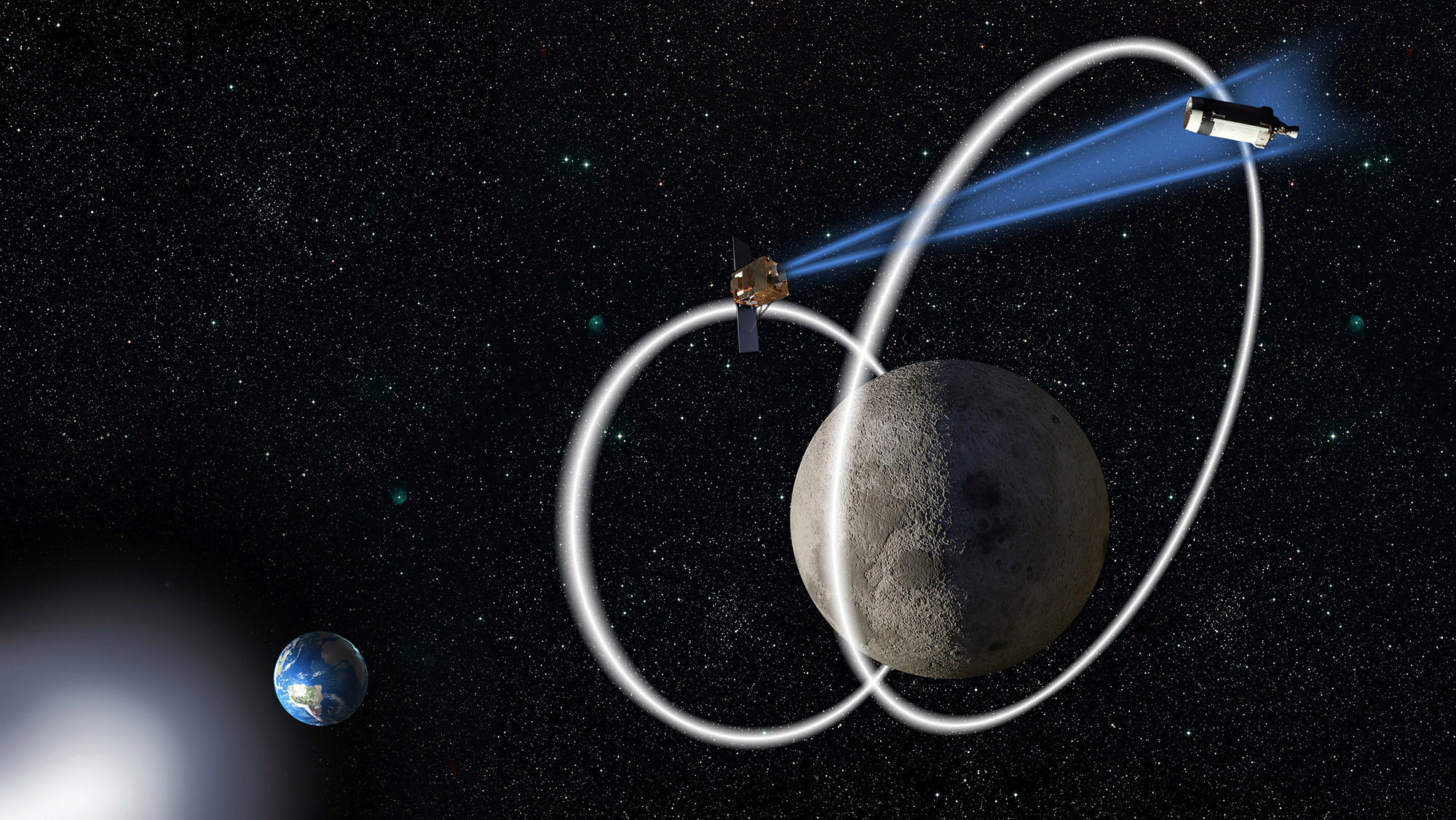
Space Force ‘Serious’ About Planning for Cislunar Operations​


What is the Pentagon’s ‘Space Data Network,’ and why does it matter for Golden Dome?​


Pentagon Set To Unveil ‘Generational’ $1.5 Trillion Spending Plan​

The Golden Dome plan includes existing systems as well as new technologies at an increasing cost.

Space Force to overhaul legacy ground-based missile defense radar systems​

 
Last edited:

Kratos scores $447M Space Force award for missile tracking ground system​

The Space Force has awarded Kratos Technology and Training Solutions a new award worth up to $446.8 million to build the ground system for the service’s medium Earth orbit (MEO) constellation to track ballistic and hypersonic cruise missiles.
 

EXCLUSIVE: SDA’s Sandhoo likely to lead Space Force Missile Warning & Tracking portfolio​

The programs currently include SDA’s Tracking Layer of satellites in low Earth orbit, and the two flagship efforts by Space Systems Command. The first is the Next Generation Overhead Persistent Infrared (Next-Gen OPIR) constellation, which will be comprised of two satellites in geosynchronous Earth orbit and two in polar orbit. Next-Gen OPIR is being developed to replace the six operational Space-Based Infrared System (SBIRS) satellites. SSC’s second effort is the Resilient Missile Warning and Tracking (MWT) Medium Earth Orbit (MEO) program, that will be optimized for tracking hypersonic missiles.

One Space Force official explained that bringing all the programs for detecting and tracking ballistic and hypersonic missiles together is meant to ease officials’ ability to ensure compatibility and that the various ground systems are integrated.
 

Space Force programs supporting Golden Dome see big FY27 budget boost​


The Golden Dome’s missing layer: On-orbit logistics for a resilient missile defense​

 
Expand multi-mission capabilities to enhance effectiveness and affordability for warfighters.
Explore additional launch strategies for seamless integration into future national defense architectures.
This is telling me two things:
1. They are working on the ability to engage different types of targets.
2. They are working on launch platforms other than naval VLS.
 

Golden Dome czar signals space-based interceptors not guaranteed, as DoD weighs cost​

The general in charge of America’s Golden Dome missile defense shield said today that a high-profile and technologically ambitious element of the project, space-based interceptors (SBIs), may not make it into the final architecture as originally envisioned if the tech is shown to be prohibitively costly.
“Because we are looking at the threats from a multi-domain perspective to make sure I have redundant capabilities and I don’t have single points of failure,” he added. “So, if boost-phase intercept from space is not affordable and scalable, we will not produce it, because we have other options to get after it.

Direct Energy Weapons?:cool:
 

Similar threads

Back
Top Bottom