
You are using an out of date browser. It may not display this or other websites correctly.
You should upgrade or use an alternative browser.
You should upgrade or use an alternative browser.
Small UAS / Drones and related general thread - NOT Swarming ones.
- Thread starter Sferrin
- Start date

Forest Green
ACCESS: USAP
- Joined
- 11 June 2019
- Messages
- 14,499
- Reaction score
- 31,530
Ukrainian Drone Strikes On Parked Russian Aircraft Seen In “Greatest Hits” Video
https://www.twz.com/air/ukrainian-d...-russian-aircraft-seen-in-greatest-hits-videoI read in an article somewhere on the internet about a week ago that the Ukrainians are now salvaging, reconditioning and reusing the engines from Shaheed drones in their own drones, has anyone else heard about this?
Forest Green
ACCESS: USAP
- Joined
- 11 June 2019
- Messages
- 14,499
- Reaction score
- 31,530
Forest Green
ACCESS: USAP
- Joined
- 11 June 2019
- Messages
- 14,499
- Reaction score
- 31,530
Last edited:
A lesson to reflect upon at Ubiquiti...
The glare of the publicity spotlight needs to be shone on this company, perhaps that's something Musk could help with.
Forest Green
ACCESS: USAP
- Joined
- 11 June 2019
- Messages
- 14,499
- Reaction score
- 31,530
Forest Green
ACCESS: USAP
- Joined
- 11 June 2019
- Messages
- 14,499
- Reaction score
- 31,530
Forest Green
ACCESS: USAP
- Joined
- 11 June 2019
- Messages
- 14,499
- Reaction score
- 31,530
Russian Forces In Ukraine Scramble To Overcome Musk’s Starlink Restrictions
https://www.twz.com/news-features/r...amble-to-overcome-musks-starlink-restrictionsRussian Forces In Ukraine Scramble To Overcome Musk’s Starlink Restrictions
https://www.twz.com/news-features/r...amble-to-overcome-musks-starlink-restrictions
Good luck (Not) with that. Here's a relevant video:
Here, Russia’s space program has hit a record-low stalling point, with its long-promised Starlink alternative failing to advance and effectively grinding to a halt. What was meant to connect and modernize the Russian military has instead imploded into delays, funding gaps, and missed launches, leaving forces blind, disconnected, and structurally cut off from modern network-centric warfare.
Russia’s attempt to develop a domestic alternative to Starlink-style satellite internet is increasingly set back by structural and financial difficulties, raising doubts about its viability. The project centers on the low-Earth-orbit broadband constellation, developed by the private firm Bureau 1440 in cooperation with the state space corporation Roscosmos. The initiative is formally embedded in the national project Cosmos, approved by President Vladimir Putin, and calls for the deployment of 365 low-Earth-orbit satellites to provide broadband internet coverage across the Russian Federation. In practice, however, low-orbit satellites don’t remain fixed over national territory, but they continuously traverse the globe along orbital paths. As a result, a constellation designed to cover only Russia would simultaneously provide connectivity over large portions of Ukraine, Europe, and other regions where Russian military or hybrid operations are likely to occur. This allows the program to be framed as mainly for domestic use, while effectively establishing the technical foundation for broader, expeditionary military communications capabilities. The launch of the first 16 satellites, originally scheduled for the end of 2025, has not yet taken place. According to some claims, the delay stems from an inability to meet production obligations by the specified deadline, with the launch now postponed to an unspecified later date in this year, but it is likely to face more delays.
The absence of a resilient, Starlink-class satellite communications network has cascading effects across Russian military operations, beginning with command. A reliable space-based internet allows military leaders and frontline units to stay constantly connected, sharing information quickly and clearly, even in areas where fighting, jamming, or damage has knocked out normal communication networks. Without it, command structures become episodic, dependent on vulnerable line-of-sight radios. This degrades tempo, slows decision-making, and increases the likelihood of outdated orders reaching frontline units. Control is equally affected, as modern military control relies on persistent connectivity to synchronize maneuver, logistics, and air defense. A strong satellite internet network lets different units work together instantly, use shared digital maps and command tools, and quickly change their actions as the situation on the battlefield evolves. In its absence, control becomes fragmented, which forces units to operate semi-independently or without orders, which has historically not worked well within Russia’s military culture of highly centralized hierarchy. Lastly, intelligence flow is critically impaired because space-based internet facilitates the rapid dissemination of drone feeds, satellite imagery, and intelligence down to operational and tactical levels. Lacking such infrastructure, intelligence arrives late or only partially. The result is a force that fights with degraded situational awareness or effective drone coverage and struggles to convert information into actionable decisions.
As a consequence of these shortcomings, Russian battlefield units remain heavily dependent on vulnerable and outdated communications systems, such as the aforementioned line-of-sight radios and intermittent relay networks, which are easily disrupted by jamming, physical destruction, or simple distance, causing delays, disruptions, and inaccuracies to fester. By contrast, Ukrainian forces benefit from stable, satellite-enabled connectivity through Starlink, which provides resilient, mobile communications even under combat conditions. This asymmetry enables Ukraine to maintain real-time coordination, rapidly distribute intelligence, and sustain operational tempo, while Russian units are increasingly isolated and fragmented on the battlefield.
Overall, Russia’s attempt to replicate Starlink has effectively collapsed, as persistent funding shortfalls driven by mounting pressure on state finances under sanctions and wartime conditions undermine its ability to sustain capital-intensive, high-technology projects and make the outlook even less favorable going forward. The failure of Russia’s domestic satellite internet effort forecloses its ability to transition toward true network-centric warfare. Without resilient...
Forest Green
ACCESS: USAP
- Joined
- 11 June 2019
- Messages
- 14,499
- Reaction score
- 31,530
Forest Green
ACCESS: USAP
- Joined
- 11 June 2019
- Messages
- 14,499
- Reaction score
- 31,530
Forest Green
ACCESS: USAP
- Joined
- 11 June 2019
- Messages
- 14,499
- Reaction score
- 31,530
View: https://x.com/RyszardJonski/status/2020473999478620449?s=20
View: https://x.com/DefenseTrends/status/2020523795170148393?s=20
View: https://x.com/DefenseTrends/status/2020523795170148393?s=20
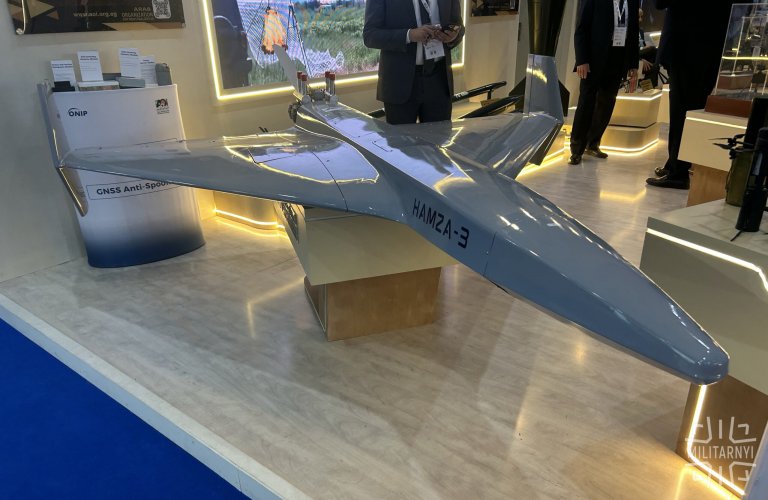
Egypt’s AOI unveils Hamza-3 drone, rocket launcher and unmanned systems jammer
https://breakingdefense.com/2026/02...-rocket-launcher-and-unmanned-systems-jammer/
Last edited:
Forest Green
ACCESS: USAP
- Joined
- 11 June 2019
- Messages
- 14,499
- Reaction score
- 31,530
Saudi firm Intra unveils counter-EW platform, eyes full production of Shalfa munition
https://breakingdefense.com/2026/02...form-eyes-full-production-of-shalfa-munition/Saudi company Intra Defense Technologies unveiled Nathir X, what it calls a mobile electronic support measure (ESM), to better help unmanned aerial vehicles avoid electronic warfare danger zones.
Saudi firm Intra unveils counter-EW platform, eyes full production of Shalfa munition
https://breakingdefense.com/2026/02...form-eyes-full-production-of-shalfa-munition/
No surprise there given that Saudi Arabia has been subject for several years now to Houthi drone attacks using Iranian drones.


Forest Green
ACCESS: USAP
- Joined
- 11 June 2019
- Messages
- 14,499
- Reaction score
- 31,530
Yeah, if the Ukrainians are smart they'll use this to hammer the Russians logistics networks in occupied Ukraine along with taking out C&C nodes and maybe even eliminating Russian drone operators.
Last edited:
Forest Green
ACCESS: USAP
- Joined
- 11 June 2019
- Messages
- 14,499
- Reaction score
- 31,530
Forest Green
ACCESS: USAP
- Joined
- 11 June 2019
- Messages
- 14,499
- Reaction score
- 31,530
Russia Eyes Balloon Communications System To Fill Massive Gap Left After Losing Starlink
https://www.twz.com/news-features/r...o-fill-massive-gap-left-after-losing-starlinkRussia Eyes Balloon Communications System To Fill Massive Gap Left After Losing Starlink
https://www.twz.com/news-features/r...o-fill-massive-gap-left-after-losing-starlink
And no doubt the Ukrainians will come up with some sort of SAM system to interdict these balloons (Assuming they work).
Forest Green
ACCESS: USAP
- Joined
- 11 June 2019
- Messages
- 14,499
- Reaction score
- 31,530
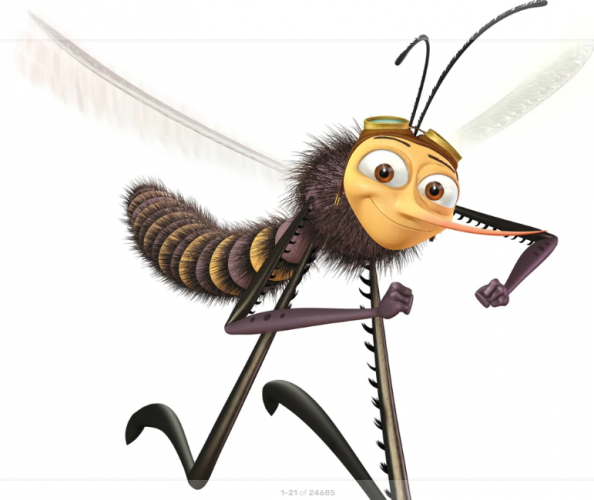
Or maybe balloon warfare. 

Quite an interesting video from an experienced drone operator highlighting challenges:
View: https://www.youtube.com/watch?v=opZPuEkOk2Y

Sineva
ACCESS: Secret
- Joined
- 29 April 2010
- Messages
- 470
- Reaction score
- 1,322
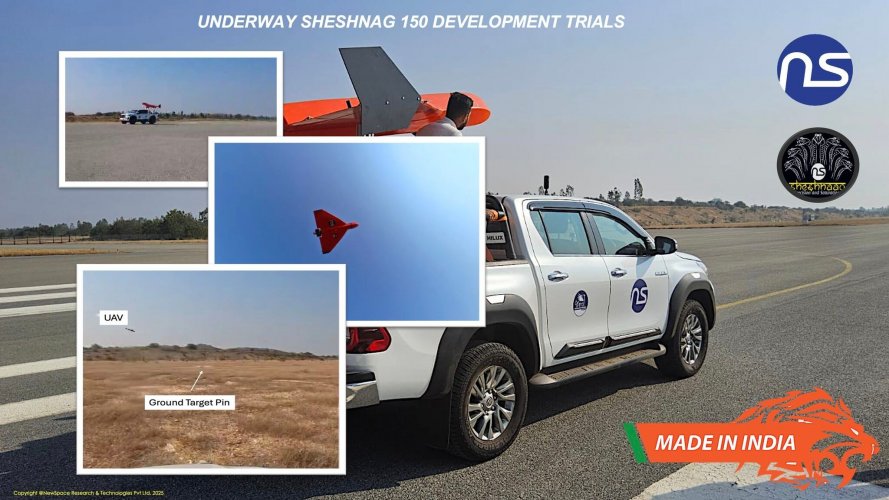
Indias entry in shahed 136 clone class,the Sheshnaag 150

Obvious differences are the square-ish center body & the bolt on unequal length vertical stabilizers,tho they kept the 4 horizontal control surfaces.
Whats the bet the engine has got "made in china" stamped on it somewhere?.
Also they appear to have gone for vehicle assisted launch,smart move.


Obvious differences are the square-ish center body & the bolt on unequal length vertical stabilizers,tho they kept the 4 horizontal control surfaces.
Whats the bet the engine has got "made in china" stamped on it somewhere?.
Also they appear to have gone for vehicle assisted launch,smart move.
Sineva
ACCESS: Secret
- Joined
- 29 April 2010
- Messages
- 470
- Reaction score
- 1,322
Didnt the germans do a catchy pop song about that back in the early 80s?I heard that this guy just joined the Ukrainian Foreign Volunteers:
Red balloons?!

Last edited:

Brett Davidson
ACCESS: Top Secret
- Joined
- 26 September 2006
- Messages
- 4,436
- Reaction score
- 12,819
Long article. Paywalled, but you can register for free or just hit reload and then stop loading immediately after. If you're quick enough, you'll get the whole text. Or you could subscribe.
https://www.newscientist.com/articl...-drone-factory-and-invented-the-future-of-war
Some interesting points:
Previous wars have been fought by large, homogeneous armies with the same kit. But Ukraine is taking a very different approach. The various brigades and corps of the army compete for funding and recruits like commercial companies might, and they are free to procure and use whatever equipment they see fit.
In an effort to ensure that the kit the military needs exists, the Ukrainian government created an unusual organisation called Brave1. It is a programme that collects data from the front lines on what equipment is working, what isn’t and where gaps are. It then provides companies with intelligence, guidance and grants.
Somewhat jarringly, army units earn “e-points” for verified destruction of Russian equipment or soldiers, and are ranked in league tables, which can then be cashed in for new equipment. The points awarded for different targets change regularly and Brave1 says it doesn’t like to publicly disclose the current list, but recent social media posts suggest that 20 points can be won right now for taking out an enemy tank and 12 for an enemy soldier.
This gamification of war can seem, at first glance, to trivialise the brutal conflict, but it is a deeply pragmatic approach to optimising Ukraine’s limited resources in the face of overwhelming numbers. Gamers make good drone pilots, and gamification motivates gamers. “One-hundred per cent, it’s easier for gamers,” says Shark. “For people who used to spend their evenings playing video games, it’s much, much easier.”
Brave1 collects footage of drone attacks from across the war, then analyses it with AI – virtually every drone carries cameras, so this is probably the most documented conflict ever, even if most of the footage remains secret. “We’re analysing why, asking the questions, challenging previous decisions and taking new decisions to increase the effectiveness [of attacks],” says Hrytseniuk. “You can buy 155-millimetre artillery and it will be valid for decades. But for drones, this is absolutely not the story. If you design the best drone for today, in half a year the effectiveness will be very low. The innovation cycle right now is measured in months, sometimes even in weeks, not in years.”
I'm reminded of Stanisław Lem's musings on war and cybernetics.
https://www.newscientist.com/articl...-drone-factory-and-invented-the-future-of-war
Some interesting points:
Previous wars have been fought by large, homogeneous armies with the same kit. But Ukraine is taking a very different approach. The various brigades and corps of the army compete for funding and recruits like commercial companies might, and they are free to procure and use whatever equipment they see fit.
In an effort to ensure that the kit the military needs exists, the Ukrainian government created an unusual organisation called Brave1. It is a programme that collects data from the front lines on what equipment is working, what isn’t and where gaps are. It then provides companies with intelligence, guidance and grants.
Somewhat jarringly, army units earn “e-points” for verified destruction of Russian equipment or soldiers, and are ranked in league tables, which can then be cashed in for new equipment. The points awarded for different targets change regularly and Brave1 says it doesn’t like to publicly disclose the current list, but recent social media posts suggest that 20 points can be won right now for taking out an enemy tank and 12 for an enemy soldier.
This gamification of war can seem, at first glance, to trivialise the brutal conflict, but it is a deeply pragmatic approach to optimising Ukraine’s limited resources in the face of overwhelming numbers. Gamers make good drone pilots, and gamification motivates gamers. “One-hundred per cent, it’s easier for gamers,” says Shark. “For people who used to spend their evenings playing video games, it’s much, much easier.”
Brave1 collects footage of drone attacks from across the war, then analyses it with AI – virtually every drone carries cameras, so this is probably the most documented conflict ever, even if most of the footage remains secret. “We’re analysing why, asking the questions, challenging previous decisions and taking new decisions to increase the effectiveness [of attacks],” says Hrytseniuk. “You can buy 155-millimetre artillery and it will be valid for decades. But for drones, this is absolutely not the story. If you design the best drone for today, in half a year the effectiveness will be very low. The innovation cycle right now is measured in months, sometimes even in weeks, not in years.”
I'm reminded of Stanisław Lem's musings on war and cybernetics.
Last edited:
Brett Davidson
ACCESS: Top Secret
- Joined
- 26 September 2006
- Messages
- 4,436
- Reaction score
- 12,819
I'm reminded of Stanisław Lem's musings on war and cybernetics.
I'm not familiar with these musings.
Brett Davidson
ACCESS: Top Secret
- Joined
- 26 September 2006
- Messages
- 4,436
- Reaction score
- 12,819
Scattered through various novels and fictional essays. War as an ecosystem driving the rapid evolution of machines, favouring small size, simplicity, autonomy or distributed command, and numbers, with the system eventually becoming an end in itself. Discussions by characters in Fiasco, The Invincible, Peace on Earth and essays such as 'The Upside-Down Evolution' (collected in One Human Minute).I'm not familiar with these musings.
War as an ecosystem driving the rapid evolution of machines, favouring small size, simplicity, autonomy or distributed command, and numbers, with the system eventually becoming an end in itself.
That for some reason reminds me of Fred Saberhagen's "Berserker" SF novel series.
Forest Green
ACCESS: USAP
- Joined
- 11 June 2019
- Messages
- 14,499
- Reaction score
- 31,530
Similar threads
-
 The APKWS is now capable of shooting down drones
- Started by AN/AWW-14(V)
- Replies: 376
-

-
 AFRL Low-Cost Attritable Aircraft Technology (LCAAT) Program
- Started by Triton
- Replies: 179
-
 U.S. Transportation Secretary Announces Unmanned Aircraft Registration
- Started by Dragon029
- Replies: 9
-
