It matters the budget, sea state, and a bunch of other factors. Right now fuel is historically inexpensive. In more austere times that 14 knots is between about 1/6th to 1/8th the energy requirement of 28 knots. When fuel is at a premium the velocity of ships is substantially impacted. Energy will not always be cheap.

You are using an out of date browser. It may not display this or other websites correctly.
You should upgrade or use an alternative browser.
You should upgrade or use an alternative browser.
US FF(X) Program - DISCUSSION
- Thread starter isayyo2
- Start date

Kat Tsun
eeeeeeeeeeeeeee
- Joined
- 16 June 2013
- Messages
- 1,887
- Reaction score
- 2,669
Hi,
From this GAO Report document it appears that the 12,000nm range for the NSC's was assumed at an average cruise speed of 12 kts.
Similarly, from this story on the HII proposed Frigate variants of the NSC design from 2012 it appears that while those designs were intended to have the same propulsion plant as the base NSC, and would be capable of 28+kts with the GT and both diesels online, 24kts on both diesels, or 18kts on a single diesel, their actual cruise speeds were intended to be in the 9-11kt range.
And finally, from this article on the NSC propulsion plant, appears to also confirm that the base NSC would be capable of 18kts on a single diesel or 28kts on the combine diesel and gas turbine plant.
As such, even if the ship's may be capable of at least 20+ kts on its diesels it does not appear that the 12,000nm range is available at those type speeds.
Regards
Pat
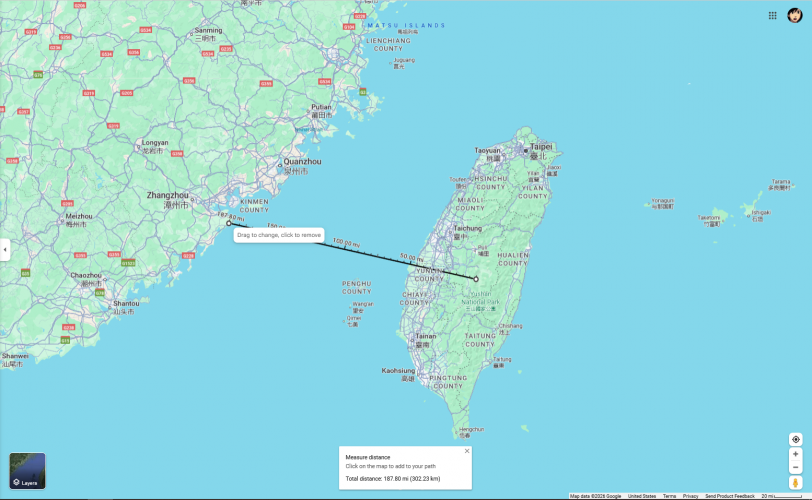
You'd only need 6k nmi for a Taiwan escort job.
According to recent research:
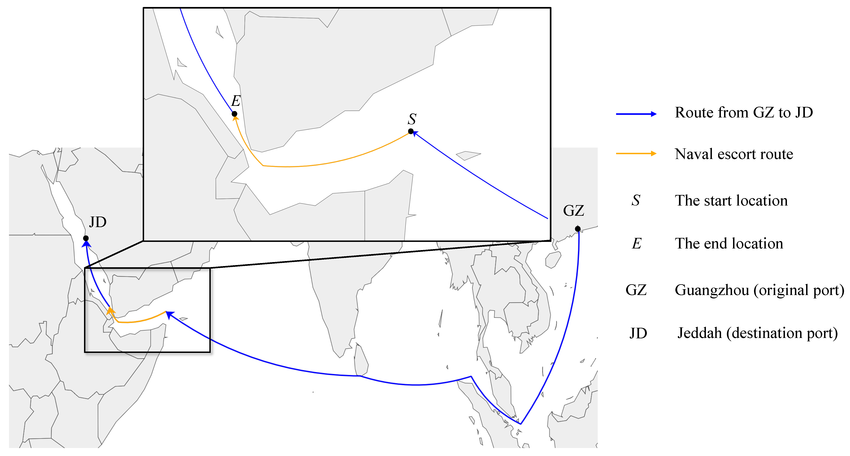
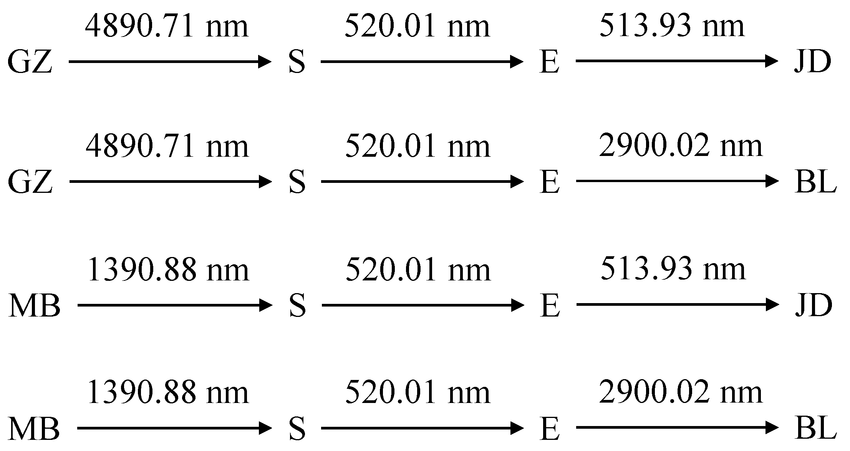
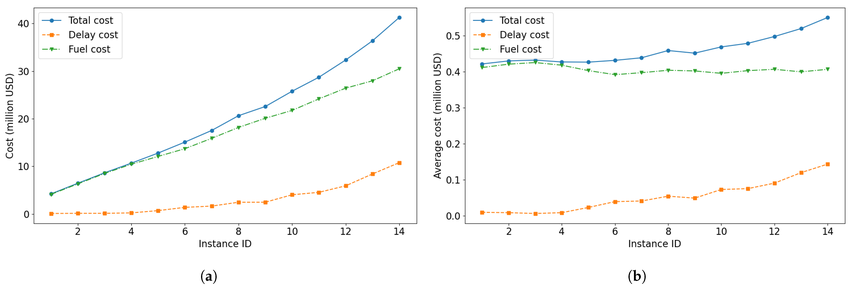
Joint Ship Scheduling and Speed Optimization for Naval Escort Operations to Ensure Maritime Security (2024)

average convoy speed today is ~16.88 to ~20.62 kn. In other words commercial ships are now 2x faster compared to WWII.
Due to physical hull speed and power limitation warships couldn't improve as much and keep their relative advantage from before.
If say an escort doing ASW strays away as far as 10 NM from its asigned position then it needs to be 10 kn faster in order to return within 1 hour. With today's weapons ranges the pressure of having to be back in position may not be as high as in the past. However, things change during a storm where visuals are bad and you can't use allternative communications (signaling). Signaing is still an important tool as well as visual observation.


Joint Ship Scheduling and Speed Optimization for Naval Escort Operations to Ensure Maritime Security (2024)
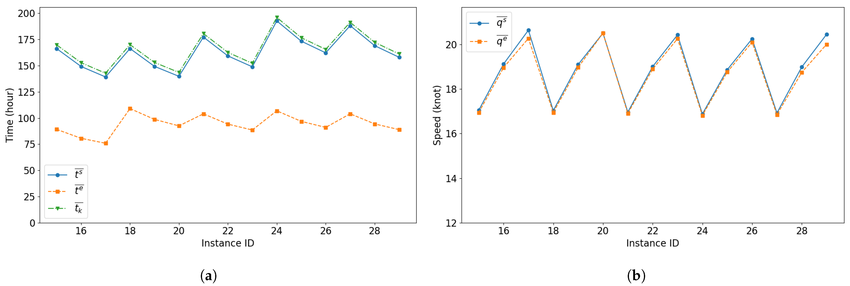
average convoy speed today is ~16.88 to ~20.62 kn. In other words commercial ships are now 2x faster compared to WWII.
Due to physical hull speed and power limitation warships couldn't improve as much and keep their relative advantage from before.
If say an escort doing ASW strays away as far as 10 NM from its asigned position then it needs to be 10 kn faster in order to return within 1 hour. With today's weapons ranges the pressure of having to be back in position may not be as high as in the past. However, things change during a storm where visuals are bad and you can't use allternative communications (signaling). Signaing is still an important tool as well as visual observation.

- Joined
- 16 April 2008
- Messages
- 10,614
- Reaction score
- 18,236
The 9-11 knots parameters for an escort is pretty normal.
Slow and steady wins the race.
Commercial ships have sped up a lot since WW2. Container ships are running closer to 20 knots (slow cruise) and many can push up to 25 knots if speed is more important than economy.
Now, the VLCCs are slower (the global average is down around 9 knots, apparently) but I suspect they would speed up too in situations where protection is required.
- Joined
- 16 April 2008
- Messages
- 10,614
- Reaction score
- 18,236
The 9-11 knots parameters for an escort is pretty normal.
Slow and steady wins the race.
Commercial ships have sped up a lot since WW2. Container ships are running closer to 20 knots (slow cruise) and many can push up to 25 knots if speed is more important than economy.
Now, the VLCCs are slower (the global average is down around 9 knots, apparently) but I suspect they would speed up too in situations where protection is required.
Firefinder
ACCESS: Top Secret
- Joined
- 5 October 2019
- Messages
- 1,264
- Reaction score
- 2,392
You want closer to 8k to cover down for evasive actions and needing to split off to chase off things.You'd only need 6k nmi for a Taiwan escort job.
As well as bouncing up and down the convoy, even if its two ships, as you reposition to get a better track on the sensors.
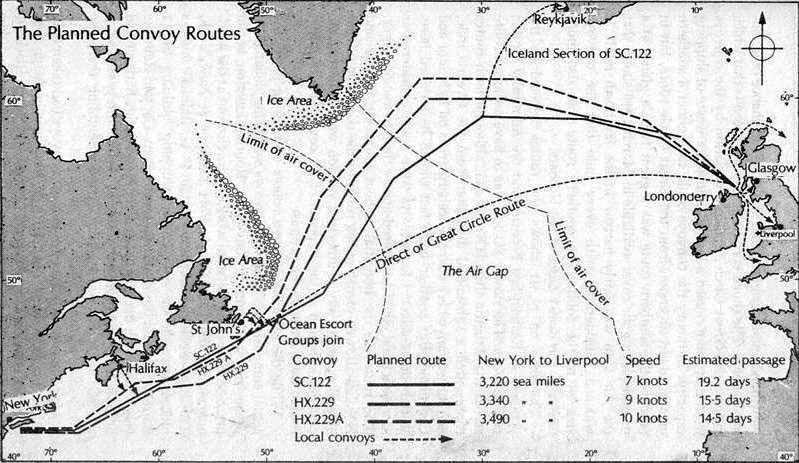
If you look at this Atlantic map from the book "Convoy" by Martin Middlebrook (1976):

The planned convoy route (1943) maxed out at 3490 NM compared to ~3030 NM for the direct route or about 117%.
(Sorry, the maps and appandix in the book are lacking in a few key details like scale or rulers etc.)
The actual mileage is higher, though, as the convoy(s) did run evasive maneuvers.
Let's assume that adds ~5% or ~122% total for the commercial ships. While the escort had to run a few errands as well as saw actions.
Errands as in bringing back a few lost sheeps (storm or technical problems etc.) back into the fold or conducting rescue missions. Let's say on the escort side it's 10% more more instead. Since they run at full speed or roughly 2.25x more energy-fuel being expanded it would equal 22.5% range for a total of 139.5% or ~4227 NM. At least one escort separated such that it took days to rejoin.
Applying this to the above research paper's full route of 8310.74 NM that gives ~11593.4823 NM.
The planned convoy route (1943) maxed out at 3490 NM compared to ~3030 NM for the direct route or about 117%.
(Sorry, the maps and appandix in the book are lacking in a few key details like scale or rulers etc.)
The actual mileage is higher, though, as the convoy(s) did run evasive maneuvers.
Let's assume that adds ~5% or ~122% total for the commercial ships. While the escort had to run a few errands as well as saw actions.
Errands as in bringing back a few lost sheeps (storm or technical problems etc.) back into the fold or conducting rescue missions. Let's say on the escort side it's 10% more more instead. Since they run at full speed or roughly 2.25x more energy-fuel being expanded it would equal 22.5% range for a total of 139.5% or ~4227 NM. At least one escort separated such that it took days to rejoin.
Applying this to the above research paper's full route of 8310.74 NM that gives ~11593.4823 NM.
Hi,
Its my understanding that the 28kt minimum top speed for the NSC came from the desire to be able to support notional high speed commercial ships. Specifically looking at the original System Performance Specification for the Deepwater Program it states that;
3.8.1.1.1 Commercial Shipping. The National Security Cutter shall be capable to take station on, maneuver around, and escort commercial shipping steaming at operational speeds, as verified in Section 4.21.
and
4.21 Speed. This requirement shall be verifiable for 28 knots sustained speed. (See Section 3.8.1.1.1).
From discussions with a USCG Officer at the time that this specification came out I got the impression that it was assumed that the commercial ships would be capable of up to about 20kts (or perhaps 22kts) or so, and that the extra 6-8kts for the NSC was what was considered necessary to allow it to "take station on, and maneuver around them" if I am recalling correctly.
Its my understanding that the 28kt minimum top speed for the NSC came from the desire to be able to support notional high speed commercial ships. Specifically looking at the original System Performance Specification for the Deepwater Program it states that;
3.8.1.1.1 Commercial Shipping. The National Security Cutter shall be capable to take station on, maneuver around, and escort commercial shipping steaming at operational speeds, as verified in Section 4.21.
and
4.21 Speed. This requirement shall be verifiable for 28 knots sustained speed. (See Section 3.8.1.1.1).
From discussions with a USCG Officer at the time that this specification came out I got the impression that it was assumed that the commercial ships would be capable of up to about 20kts (or perhaps 22kts) or so, and that the extra 6-8kts for the NSC was what was considered necessary to allow it to "take station on, and maneuver around them" if I am recalling correctly.
Kat Tsun
eeeeeeeeeeeeeee
- Joined
- 16 June 2013
- Messages
- 1,887
- Reaction score
- 2,669
You want closer to 8k to cover down for evasive actions and needing to split off to chase off things.
As well as bouncing up and down the convoy, even if its two ships, as you reposition to get a better track on the sensors.
Probably but you can refuel along the way as part of a convoy.
It's not super important since the USN will never have enough hulls to do convoy escort.
johnpjones1775
ACCESS: Top Secret
- Joined
- 27 May 2023
- Messages
- 1,373
- Reaction score
- 767
That’s kinda the whole point of the frigates…we’ll soon have 90 burkes, and as the oldest retire they’ll be replaced by DDGX, and then we’ll have something like 30 frigates, and potentially by then the LCSes will have gotten those VLS modules in place of the 30mm guns so potentially another 28 light escorts.Probably but you can refuel along the way as part of a convoy.
It's not super important since the USN will never have enough hulls to do convoy escort.
Kat Tsun
eeeeeeeeeeeeeee
- Joined
- 16 June 2013
- Messages
- 1,887
- Reaction score
- 2,669
That’s kinda the whole point of the frigates…we’ll soon have 90 burkes, and as the oldest retire they’ll be replaced by DDGX, and then we’ll have something like 30 frigates, and potentially by then the LCSes will have gotten those VLS modules in place of the 30mm guns so potentially another 28 light escorts.
DDG(X) doesn't exist anymore. It'll likely be a drop of hull numbers after SLEPing the Flight I DDGs. This is more typical for USN procurement. LCS doesn't have the range or fuel efficiency to be an effective escort unit. It's built to run very quickly between theaters (INDOPACCOM to CENTCOM or EUCOM to CENTCOM), immediately refuel, and wait for an ATF or CVBG while providing a bit of presence.
The USN is going to lean hard on the Japanese, Canadians and Australians in particular for escort duties.
Convoy operations are not a serious mission of the US navy in the sense you are discussing. Arguably they are not even particularly a mission of allied navies in the sense you are discussing. I do not understand where the impression that there will be WW2 style convoys comes from?
Scott Kenny
ACCESS: USAP
- Joined
- 15 May 2023
- Messages
- 19,802
- Reaction score
- 28,417
Old planning from Cold War.Convoy operations are not a serious mission of the US navy in the sense you are discussing. Arguably they are not even particularly a mission of allied navies in the sense you are discussing. I do not understand where the impression that there will be WW2 style convoys comes from?
Two world wars showed how much it sucked shipping an army across the Atlantic when hostile submarines were hunting merchant ships.
Cold War assumed that the Soviet Navy would come out and play the same game, to try to prevent the US from reinforcing NATO.
Convoy operations are not a serious mission of the US navy in the sense you are discussing. Arguably they are not even particularly a mission of allied navies in the sense you are discussing. I do not understand where the impression that there will be WW2 style convoys comes from?
You still need to supply the forces basing out of Aus/Japan/Philippines and maybe even resupply Taiwan with missiles/parts. Maybe you even need to keep fuel going to Taiwan/Japan to keep those country afloat under Chinese interdiction. So I expect you'll have to run convoys whether you like it or not.Probably but you can refuel along the way as part of a convoy.
It's not super important since the USN will never have enough hulls to do convoy escort.

1635yankee
Recovering aeronautical engineer
- Joined
- 18 August 2020
- Messages
- 676
- Reaction score
- 1,033
In addition, trying to do so by air will be an epic fail. I realize this was a long time ago, but during the Yom Kippur war, the US sent some tanks to Israel by air. In the time it took to organize the C-5s, two freighters sailed from Israel to the US and returned with about 200 tanks.You still need to supply the forces basing out of Aus/Japan/Philippines and maybe even resupply Taiwan with missiles/parts. Maybe you even need to keep fuel going to Taiwan/Japan to keep those country afloat under Chinese interdiction. So I expect you'll have to run convoys whether you like it or not.
Protecting against what exactly? China has less than 10 SSNs which will be tasked with hunting carriers and which will in turn be hounded by American SSNs. They cannot effectively “commerce raid” (dead concept) beyond their immediate surrounds. Any supply lines within the 1IC and 2IC need to be escorted by DDGs anyway and definitely not an NSC.You still need to supply the forces basing out of Aus/Japan/Philippines and maybe even resupply Taiwan with missiles/parts. Maybe you even need to keep fuel going to Taiwan/Japan to keep those country afloat under Chinese interdiction. So I expect you'll have to run convoys whether you like it or not.
This assumption died in the 80s when they realised volume and strategic choke points could overcome the Soviet SSN threat anyway and it is even more dead in the Pacific.Cold War assumed that the Soviet Navy would come out and play the same game, to try to prevent the US from reinforcing NATO
Also from the Soviet perspective this was not a goal of their navy and I’m genuinely not sure where this myth arises from
Kat Tsun
eeeeeeeeeeeeeee
- Joined
- 16 June 2013
- Messages
- 1,887
- Reaction score
- 2,669
Convoy operations are not a serious mission of the US navy in the sense you are discussing. Arguably they are not even particularly a mission of allied navies in the sense you are discussing. I do not understand where the impression that there will be WW2 style convoys comes from?
The fact that Taiwan, without receiving regular supplies of energy from ships, will collapse within about 16 weeks or so lol.
https://www.csis.org/analysis/lights-out-wargaming-blockade-taiwan
A blockade can only be broken by blockade running, which requires escort, and likely purchasing of shadow fleet ships.
China probably doesn't want to nuke its international goodwill overnight so something like a Cuba-style "quarantine" is most likely. Armed interdiction of merchants to ward off LNG tankers and CONEX ships, and a de facto blockade, to be broken by the U.S. mustering an escort task group. It will look a lot more like Venezuela 2025 than Iraq 2003 if the PRC is clever. Which means the U.S. will need a lot of hulls, because it isn't going to be able to strip mine entire COCOMs for them, and it may not have those hulls in place at the time anyway.
If it can't build a coalition with Japan and Australia, it may not be able to defend Taiwan, and at that point there's no point to staying in Asia.
It really depends on how aggressive the Japanese and Australians are in going ahead with an Allied quarantine run or something. If the Australians and Japanese aren't game, the US will potentially need to dip out, and then it will need to yank hard on the chains to keep Japan and its other 2nd Island Chain allies in the fold. Of course if the PRC is really dumb, it will end up getting into a shooting war with the U.S., at which point the escorts will be needed because we'll be blasting III Corps through North Korea or something to put pressure on the PLA to defend Manchuria.
Come Caribbean Crisis II or WW3, the USN will need escorts either way, because nothing is getting through without them.
They cannot effectively “commerce raid” (dead concept) beyond their immediate surrounds.
Correct!
The winning method for PRC is to manage to wrangle in a confrontation over Taiwan that keeps the U.S. isolated, under the threshold of a declaration of war, and puts Japan and Australia in particular (and Korea, to a lesser extent) towards "wait and see" rather than active participation. If Japan and Australia throw their hats in the ring, it becomes much harder for the PRC to maintain that a Taiwan Strait Crisis is anything less than the next world war, which is probably the only way America can rally sufficient economic and political support for an Allied coalition.
As long as the conflict is between the U.S. and Taiwan against the PRC, the PLA stands a better than even chance of beating the opposition and forcing concessions, but once Japan, Korea, and in particular the E.U. stand up with the U.S. that chance goes from "50/50" to "majority of the global manufacturing economy".
China is only about a quarter to a third (25-30%) of the global GDP of manufacturing while the U.S. and E.U. combined are about a third of it (both about 15-16%) and with Japan and Korea would be about 40% of global manufacturing GDP. At the end of the day, industrial output wins industrial wars, and WW3 won't be some newfangled exception.
Last edited:
Protecting against what exactly? China has less than 10 SSNs which will be tasked with hunting carriers and which will in turn be hounded by American SSNs. They cannot effectively “commerce raid” (dead concept) beyond their immediate surrounds. Any supply lines within the 1IC and 2IC need to be escorted by DDGs anyway and definitely not an NSC.
This assumption died in the 80s when they realised volume and strategic choke points could overcome the Soviet SSN threat anyway and it is even more dead in the Pacific.
Also from the Soviet perspective this was not a goal of their navy and I’m genuinely not sure where this myth arises from
Acting like China isn’t massively increasing its SSN force and production right now, they won’t outnumber the US SSNs for a few years yet but they have far less distance to travel for resupply and repair. If the US had a study fleet of sub tenders this might alleviate that issue but it doesnt
Kat Tsun
eeeeeeeeeeeeeee
- Joined
- 16 June 2013
- Messages
- 1,887
- Reaction score
- 2,669
Acting like China isn’t massively increasing its SSN force and production right now, they won’t outnumber the US SSNs for a few years yet but they have far less distance to travel for resupply and repair. If the US had a study fleet of sub tenders this might alleviate that issue but it doesnt
They'll have about enough to challenge 7th Fleet in 4-5 years.
3rd Fleet will still have more than twice as many attack subs.
They'll have about enough to challenge 7th Fleet in 4-5 years.
3rd Fleet will still have more than twice as many attack subs.
Intresting.
Would also point out that they have a massive SSK fleet though, while not as capable as European designs or able to do the job of SSNs they aren’t a non factor and are useful in a defensive role, especially when the US would be the one on the offensive.
johnpjones1775
ACCESS: Top Secret
- Joined
- 27 May 2023
- Messages
- 1,373
- Reaction score
- 767
Cite a source DDGX doesn’t exist anymore as it was referenced as being procured in the 2030s in a congressional report this monthDDG(X) doesn't exist anymore. It'll likely be a drop of hull numbers after SLEPing the Flight I DDGs. This is more typical for USN procurement. LCS doesn't have the range or fuel efficiency to be an effective escort unit. It's built to run very quickly between theaters (INDOPACCOM to CENTCOM or EUCOM to CENTCOM), immediately refuel, and wait for an ATF or CVBG while providing a bit of presence.
The USN is going to lean hard on the Japanese, Canadians and Australians in particular for escort duties.
johnpjones1775
ACCESS: Top Secret
- Joined
- 27 May 2023
- Messages
- 1,373
- Reaction score
- 767
Those cute little armed merchant cruisers they appear to be building. That’s with what.Protecting against what exactly? China has less than 10 SSNs which will be tasked with hunting carriers and which will in turn be hounded by American SSNs. They cannot effectively “commerce raid” (dead concept) beyond their immediate surrounds. Any supply lines within the 1IC and 2IC need to be escorted by DDGs anyway and definitely not an NSC.
This assumption died in the 80s when they realised volume and strategic choke points could overcome the Soviet SSN threat anyway and it is even more dead in the Pacific.
Also from the Soviet perspective this was not a goal of their navy and I’m genuinely not sure where this myth arises from
The USN only has 49 SSNs right now and is not building at replacement rate (much less fleet growth - which is a stated goal), in-part because of priority on the Columbia SSBNs, and in-part an inability to amplify the submarine workforce & supply base. Turns out that sending a bunch of “C” students to college to become baristas & professional protestors, instead of to trade school, has its downside.Protecting against what exactly? China has less than 10 SSNs which will be tasked with hunting carriers and which will in turn be hounded by American SSNs. They cannot effectively “commerce raid” (dead concept) beyond their immediate surrounds. Any supply lines within the 1IC and 2IC need to be escorted by DDGs anyway and definitely not an NSC.
This assumption died in the 80s when they realised volume and strategic choke points could overcome the Soviet SSN threat anyway and it is even more dead in the Pacific.
Also from the Soviet perspective this was not a goal of their navy and I’m genuinely not sure where this myth arises from
And when the PLAN finds the SSN design it likes (they’ll probably just lift our Virginia or SSN-X design), China has the industrial capacity to pass the US sub fleet in less than a decade.
And I don’t know how you resupply Taiwan, Japan, the Philippines, or our island bases without escorting support, logistics, or merchant ships through submarine-infested water…
Given our inabilities and China’s abilities, Congress should fund and demand a commissioning pace of 4x SSNs (Virginia’s or SSN-X) & 4x new-design FFGs per year, incremental to the Columbia and any other warships, in the hope of actually achieving 3x per year for each. The result would be the ~100 SSNs and ~100 FFGs the US Navy needs to address its global responsibilities and protect its national interests.
The fact that the Akulas had 8 tubes and the Alpha had 6 tubes compared to the Los Angeles with only 4 tupes.Also from the Soviet perspective this was not a goal of their navy and I’m genuinely not sure where this myth arises from
The higher number is more suitable to fire a torpedo spread against a convoy while less is more suitable for Hunter Killer.

EmoBirb
ACCESS: Top Secret
- Joined
- 18 January 2025
- Messages
- 2,774
- Reaction score
- 7,083
That's a very odd assumption. Dedicating limited assets for a task which can be more easily and far more safely fulfilled by other platforms. Which in this case means the vast array of Chinese anti-ship weapons, be it sea, land or air launched.China has less than 10 SSNs which will be tasked with hunting carriers
Now this in turn brings the matter of VLS, self defense against missiles and area defense on the table...
johnpjones1775
ACCESS: Top Secret
- Joined
- 27 May 2023
- Messages
- 1,373
- Reaction score
- 767
What do you mean when you say ‘area defense’That's a very odd assumption. Dedicating limited assets for a task which can be more easily and far more safely fulfilled by other platforms. Which in this case means the vast array of Chinese anti-ship weapons, be it sea, land or air launched.
Now this in turn brings the matter of VLS, self defense against missiles and area defense on the table...
All this conversation about a US-China war over Taiwan is hopelessly outdated and fantastical. This discussion has no relationship to reality anymore.
The US President's statement to the New York Times last week on Taiwan:
"He (Xi) considers it to be a part of China, and that’s up to him what he’s going to be doing," Trump told the newspaper on Wednesday.
"But I’ve expressed to him that I would be very unhappy if he did that, and I don’t think he’ll do that. I hope he doesn’t do that."
Meanwhile, the President is also threatening war with a European NATO state, vowing to take Greenland by military force if necessary. This would fracture the NATO alliance and force member states to pick a side. France is obviously taking a hard line against the US, but it is notable that the UK is also siding with Europe here, at least in this period prior to any actual hostilities.
If you must insist on discussing operations and adversaries, then you need to get with the times. What can the FF(X) contribute to wars of conquest in South America? Can the FF(X) contribute to a blockade of Mexican ports? Which European nations might see naval skirmishes with the US? Perhaps France, Italy, and the UK would be good starting points for analysis.
The US President's statement to the New York Times last week on Taiwan:
"He (Xi) considers it to be a part of China, and that’s up to him what he’s going to be doing," Trump told the newspaper on Wednesday.
"But I’ve expressed to him that I would be very unhappy if he did that, and I don’t think he’ll do that. I hope he doesn’t do that."
Meanwhile, the President is also threatening war with a European NATO state, vowing to take Greenland by military force if necessary. This would fracture the NATO alliance and force member states to pick a side. France is obviously taking a hard line against the US, but it is notable that the UK is also siding with Europe here, at least in this period prior to any actual hostilities.
If you must insist on discussing operations and adversaries, then you need to get with the times. What can the FF(X) contribute to wars of conquest in South America? Can the FF(X) contribute to a blockade of Mexican ports? Which European nations might see naval skirmishes with the US? Perhaps France, Italy, and the UK would be good starting points for analysis.
EmoBirb
ACCESS: Top Secret
- Joined
- 18 January 2025
- Messages
- 2,774
- Reaction score
- 7,083
Being able to cover a distinct pre-defined area with it's anti-air equipment. Basically what an AAW destroyer does, although in this instance on a smaller scale. A contributing asset rather than an establishing asset.What do you mean when you say ‘area defense’
johnpjones1775
ACCESS: Top Secret
- Joined
- 27 May 2023
- Messages
- 1,373
- Reaction score
- 767
I mean I can do that with a .308 rifle if the ‘distinct predefined area’ is small enough, and the targets big and slow enough.Being able to cover a distinct pre-defined area with it's anti-air equipment. Basically what an AAW destroyer does, although in this instance on a smaller scale. A contributing asset rather than an establishing asset.
johnpjones1775
ACCESS: Top Secret
- Joined
- 27 May 2023
- Messages
- 1,373
- Reaction score
- 767
It’s unlikely to survive past 2027That stance by the current Administration is unlikely to survive after Jan 2029.
EmoBirb
ACCESS: Top Secret
- Joined
- 18 January 2025
- Messages
- 2,774
- Reaction score
- 7,083
A 308 isn't a valid metric in a naval context though, is it?I mean I can do that with a .308 rifle if the ‘distinct predefined area’ is small enough, and the targets big and slow enough.
johnpjones1775
ACCESS: Top Secret
- Joined
- 27 May 2023
- Messages
- 1,373
- Reaction score
- 767
Why isn’t it? Drones are being shot down by .308 machine guns in Ukraine. Naval vessel also have .308 machine guns.A 308 isn't a valid metric in a naval context though, is it?
So what a predefined area is, is so vague as to be useless. What is the minimum sized area, since you don’t think .308 cannot cover a large enough area to do ‘area defense’
If I get a boat and shoot down a target in a predefined area with an .308 according to you I just performed naval area air defense.
So what are you calling the minimum range for area air defense and against what kind of targets? Shahed drones? Cessna planes? Subsonic missiles? Super sonic misssiles? Hyper sonic missiles? Ballistic missiles? Sea /terrain skimming cruise missiles?
What are the minimum requirements you envision when you say area defense?
Last edited:
Entirely true, an FF(X) as proposed is wholly inadequate for the escort operations you are proposing. Convoy operations will not be to supply CONUS and AustraliaThe fact that Taiwan, without receiving regular supplies of energy from ships, will collapse within about 16 weeks or so lol.
https://www.csis.org/analysis/lights-out-wargaming-blockade-taiwan
A blockade can only be broken by blockade running, which requires escort, and likely purchasing of shadow fleet ships.
China probably doesn't want to nuke its international goodwill overnight so something like a Cuba-style "quarantine" is most likely. Armed interdiction of merchants to ward off LNG tankers and CONEX ships, and a de facto blockade, to be broken by the U.S. mustering an escort task group. It will look a lot more like Venezuela 2025 than Iraq 2003 if the PRC is clever. Which means the U.S. will need a lot of hulls, because it isn't going to be able to strip mine entire COCOMs for them, and it may not have those hulls in place at the time anyway.
If it can't build a coalition with Japan and Australia, it may not be able to defend Taiwan, and at that point there's no point to staying in Asia.
It really depends on how aggressive the Japanese and Australians are in going ahead with an Allied quarantine run or something. If the Australians and Japanese aren't game, the US will potentially need to dip out, and then it will need to yank hard on the chains to keep Japan and its other 2nd Island Chain allies in the fold. Of course if the PRC is really dumb, it will end up getting into a shooting war with the U.S., at which point the escorts will be needed because we'll be blasting III Corps through North Korea or something to put pressure on the PLA to defend Manchuria.
Come Caribbean Crisis II or WW3, the USN will need escorts either way, because nothing is getting through without them.
They absolutely will and they will fierly contest the 1IC and 2IC but FF(X) is inadequate for operating in the 1C and 2IC and is hence relegated to areas the Chinese will have the most difficulty accessing. The convoy ops FF(X) is built for are effectively dead.Acting like China isn’t massively increasing its SSN force and production right now, they won’t outnumber the US SSNs for a few years yet but they have far less distance to travel for resupply and repair. If the US had a study fleet of sub tenders this might alleviate that issue but it doesnt
I love it when people just say things.Those cute little armed merchant cruisers they appear to be building. That’s with what.
How does this refute the notion that FF(X) is built for operations that do not exist? Convoy operations to Taiwan and the Philippines cannot be supported by FF(X) and convoy operations such as those from CONUS to Australia would lead to slower logistics in areas China cannot effectively contestThe USN only has 49 SSNs right now and is not building at replacement rate (much less fleet growth - which is a stated goal), in-part because of priority on the Columbia SSBNs, and in-part an inability to amplify the submarine workforce & supply base. Turns out that sending a bunch of “C” students to college to become baristas & professional protestors, instead of to trade school, has its downside.
And when the PLAN finds the SSN design it likes (they’ll probably just lift our Virginia or SSN-X design), China has the industrial capacity to pass the US sub fleet in less than a decade.
And I don’t know how you resupply Taiwan, Japan, the Philippines, or our island bases without escorting support, logistics, or merchant ships through submarine-infested water…
Given our inabilities and China’s abilities, Congress should fund and demand a commissioning pace of 4x SSNs (Virginia’s or SSN-X) & 4x new-design FFGs per year, incremental to the Columbia and any other warships, in the hope of actually achieving 3x per year for each. The result would be the ~100 SSNs and ~100 FFGs the US Navy needs to address its global responsibilities and protect its national interests.
I mean given the state of carrier ASW defenses I would argue submarines are the greatest threat to the CSG but I could be missing something.That's a very odd assumption. Dedicating limited assets for a task which can be more easily and far more safely fulfilled by other platforms. Which in this case means the vast array of Chinese anti-ship weapons, be it sea, land or air launched.
Bottom line, if anyone thinks FF(X) will effectively contribute to ops in the 1IC and 2IC they are barking mad to be honest
The USN only has 49 SSNs right now and is not building at replacement rate (much less fleet growth - which is a stated goal), in-part because of priority on the Columbia SSBNs, and in-part an inability to amplify the submarine workforce & supply base. Turns out that sending a bunch of “C” students to college to become baristas & professional protestors, instead of to trade school, has its downside.
And when the PLAN finds the SSN design it likes (they’ll probably just lift our Virginia or SSN-X design), China has the industrial capacity to pass the US sub fleet in less than a decade.
And I don’t know how you resupply Taiwan, Japan, the Philippines, or our island bases without escorting support, logistics, or merchant ships through submarine-infested water…
Given our inabilities and China’s abilities, Congress should fund and demand a commissioning pace of 4x SSNs (Virginia’s or SSN-X) & 4x new-design FFGs per year, incremental to the Columbia and any other warships, in the hope of actually achieving 3x per year for each. The result would be the ~100 SSNs and ~100 FFGs the US Navy needs to address its global responsibilities and protect its national interests.
Unfortunately, Congress can fund and demand six SSNs a year but it's not going to happen.
We don't have the industrial capacity to build more than we are building now, at least not yet.
It's a national priority to increase our capacity but it's going to take time.
johnpjones1775
ACCESS: Top Secret
- Joined
- 27 May 2023
- Messages
- 1,373
- Reaction score
- 767
16 VLS is the maximum we’re getting on the NSC hull, so that’s what the USN will have to work with.It's funny you think you're detecting a sub well enough to engage it at 30+ miles or even detecting it at all. You need to chase.
As mentioned a couple times to you by others, your sea giraffe isn't detecting anything that's not a non-stealthy strategic bomber at 200 miles. You also ignore radar horizons. You have a limited number of illuminators, so you want to engage as far out as possible so you make maximal use of their time share. That's also not the correct launch doctrines for anything but the red sea mission. By launching multiple at one target when you have the time to reengage, you've cut your magazine size by half.
Again 16 VLS is not enough. You've also ignored ASROC. If you have 6 ASROC, 8 SM, you have 8 ESSM. Also frigates aren't likely to have illuminators so you're stuck with ESSM block 2 of which not enough have been made to put as many as you'd like
You should go do some reading.
Who are these others that I ‘ignored’?
I know pretty well how good sea giraffe is considering I’m pretty well acquainted with a former WEPs on a freedom.
Illuminators is a good point I over looked, but block 2 ESSM doesn’t require illuminators.
I’m not going to try to argue much about ASW stuff because that’s my weakest warfare area, and I’m not in contact with any my former STG friends any more.
I'm skeptical we will even get 16 VLS on NSC. That ship should be canceled, but you seem wed to it.16 VLS is the maximum we’re getting on the NSC hull, so that’s what the USN will have to work with.
Who are these others that I ‘ignored’?
I know pretty well how good sea giraffe is considering I’m pretty well acquainted with a former WEPs on a freedom.
Illuminators is a good point I over looked, but block 2 ESSM doesn’t require illuminators.
I’m not going to try to argue much about ASW stuff because that’s my weakest warfare area, and I’m not in contact with any my former STG friends any more.
You've ignored posts by Ainen and Mallard, also re-reading his post it can only provide fire control in a ~100 degree arc which is even more limiting. Have those WEPs used in high threat exercises or just detecting aircraft at range.
Again there will not be enough block 2 ESSM production for 20+ FF(X) to all have 50+ ESSM each in addition to other vessels and allied commitments.
Fire control for what? SARH missiles are increasingly becoming antiquated, ARH missiles are the future and iirc FFG(X) was not to have illuminators for this reason. aiui ESSM Blk II and SM-2 MR Blk IIICU are entirely ARH and no longer require illuminators anywayonly provide fire control in a ~100 degree arc
johnpjones1775
ACCESS: Top Secret
- Joined
- 27 May 2023
- Messages
- 1,373
- Reaction score
- 767
I'm skeptical we will even get 16 VLS on NSC. That ship should be canceled, but you seem wed to it.
You've ignored posts by Ainen and Mallard, also re-reading his post it can only provide fire control in a ~100 degree arc which is even more limiting. Have those WEPs used in high threat exercises or just detecting aircraft at range.
Again there will not be enough block 2 ESSM production for 20+ FF(X) to all have 50+ ESSM each in addition to other vessels and allied commitments.
He was involved in missile detection and interception exercises if that’s what you mean by ‘high threat exercises’
He was also an instructor for LCS officers and basically wrote the doctrine for LCS self defense.
I imagine missiles that could use more mid course correction updates and guns. This is the post: LINKFire control for what? SARH missiles are increasingly becoming antiquated, ARH missiles are the future and iirc FFG(X) was not to have illuminators for this reason
Similar threads
-

-
-
-
-
Navy Struggles to Fund SSBN(X), Destroyers, and cost overruns on CVN 78
- Started by Triton
- Replies: 19