jeffb
ACCESS: Top Secret
- Joined
- 7 October 2012
- Messages
- 1,592
- Reaction score
- 3,155
Unless the RVs have their own boosters of course.You do know that once the boosters burn out, that's the fastest the RVs get, right?

Unless the RVs have their own boosters of course.You do know that once the boosters burn out, that's the fastest the RVs get, right?

Tactical Picture of Employment:
1. Engagement Process:
2. Damage Effect:
- The missile follows a quasi-ballistic trajectory.
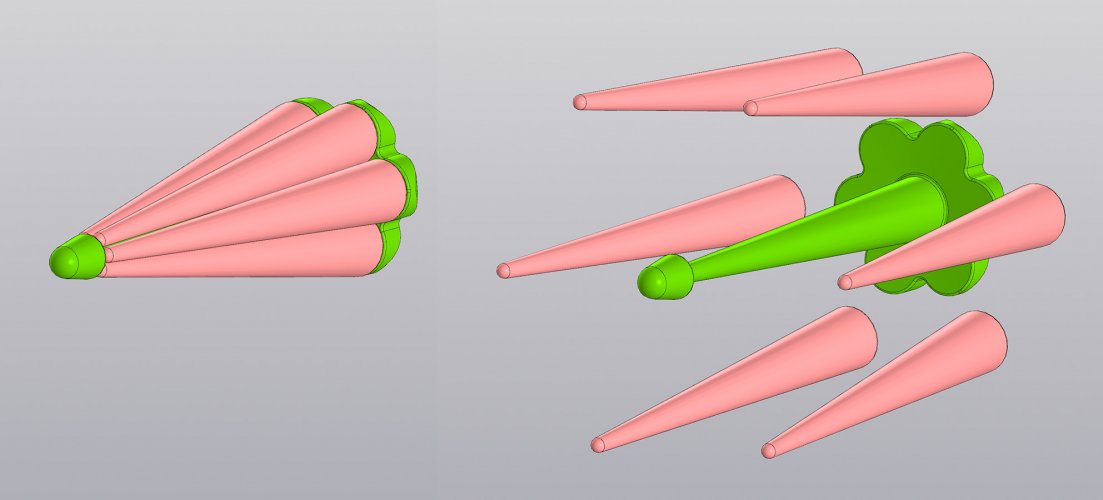
- During the descent phase, the post-boost vehicle ("bus") sequentially deploys 6 guided reentry vehicles.
- Each vehicle, using its own guidance system (INS + GLONASS/stellar correction, possibly with optical terminal guidance), maneuvers towards its designated target.
- At an altitude of 20-30 km, the vehicle releases a cluster of 6 kinetic rods, which proceed to the target ballistically, stabilized aerodynamically.
3. Strategic Significance:
- A single target (e.g., a silo, command post) is hit by six rods almost simultaneously from different approach angles (due to cluster dispersion).
- Circular Error Probable (CEP): For the guided vehicle — 5-10 m. For the unguided rods — 20-30 m from the aim point.
- Effect: Guaranteed destruction of a hardened point target.
- Penetration of protective overhead cover (up to 1 m of steel or 2-3 m of reinforced concrete).
- Massive blast and shock effects inside the structure.
- High probability of neutralizing a runway (several craters 3-5 m in diameter rendering it inoperable).
- Anti-ship capability (penetration of the deck and several internal bulkheads, potentially causing magazine detonation or fires).
- Conventional (Non-Nuclear) Deterrence: The capability to deliver a high-precision strike against hardened targets anywhere within range in 10-15 minutes without escalating to nuclear conflict.
- Preemptive/Decapitation Strike: Destruction of command centers, communication nodes, launch facilities, leadership bunkers.
- Counter-PRO Measures: 36 separate objects in flight (6 platforms + 36 rods) create a complex targeting picture for missile defense systems.
Summary Table of Characteristics:
Summary: The configuration with six guided reentry vehicles, each carrying six kinetic penetrator rods, transforms the "Rubezh" into an extremely effective high-readiness global conventional strike weapon. It is capable of solving strategic tasks in a non-nuclear conflict that were previously only achievable with tactical nuclear weapons. This represents a "first-strike" or "decapitation" weapon with minimal collateral damage but guaranteed lethality against hardened targets.
Component Parameter Estimated Value Missile "Rubezh" Launch Mass ~28.5 t Payload (total) ~2050 kg Reentry Vehicle (Guided) Quantity 6 units Mass per unit (with systems) ~130 kg CEP 5-10 m Kinetic Penetrator Rod Total Quantity 36 units (6x6) Mass per unit (total) ~35 kg Core mass (tungsten) ~17 kg Impact Velocity 1500-2000 m/s Kinetic Energy ~27.5 MJ TNT Equivalent ~6.6 kg Steel Penetration up to 0.9 m Reinforced Concrete Penetration up to 2-3 m (due to spalling) Combat Effectiveness Targets Engaged per Launch Up to 6 hardened point targets (one per vehicle) or 1-2 area targets (airfield, base) Time of Flight (for 6000 km) 12-18 minutes

So is that actually 5 rods per unit not 6?(6 platforms + 30 rods)
fixed it, the neural network was missingSo is that actually 5 rods per unit not 6?
Aiming at a moving target is possible for a monoblock, but it is most likely impossible for separating parts.Paralay , It would be interest to know if Oreshnik can target a slow moving ship at Sea or CBG as it deploys 6 guided reentry vehicles ?
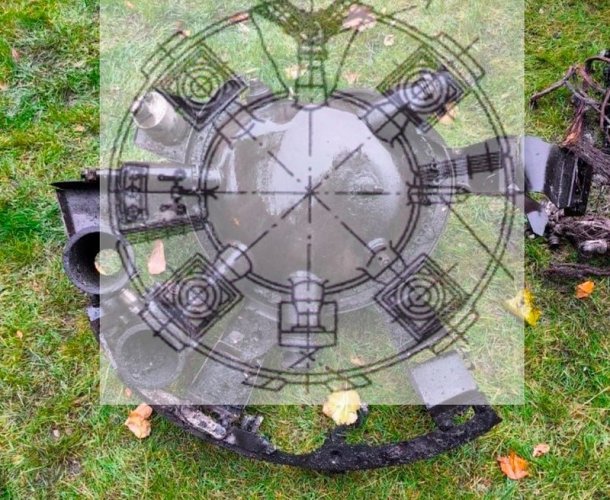
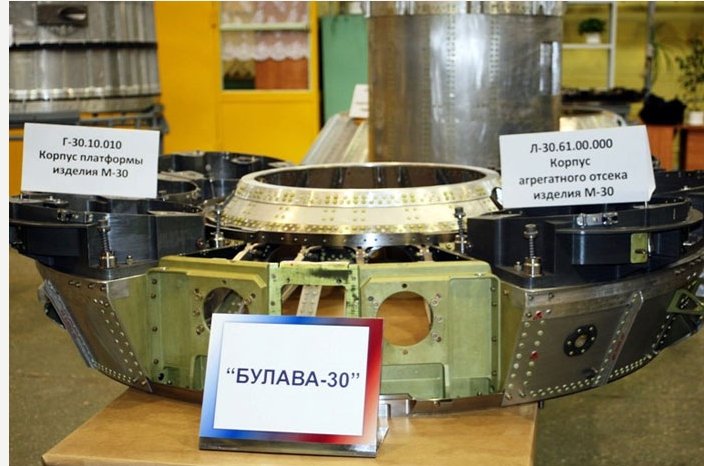
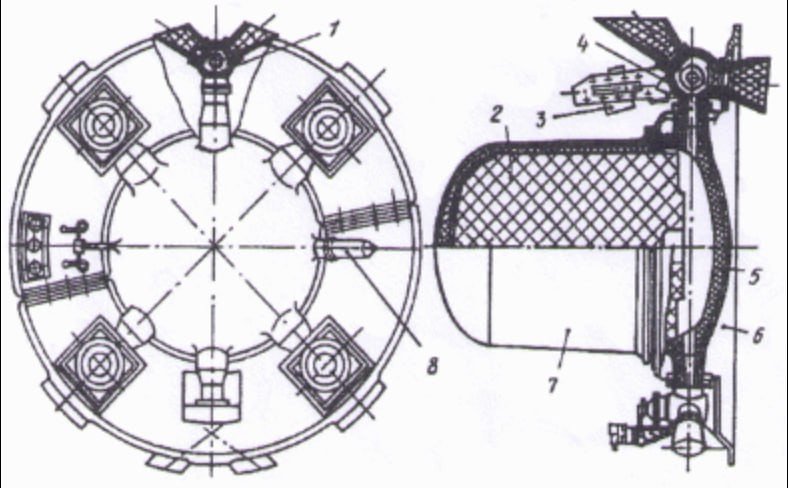
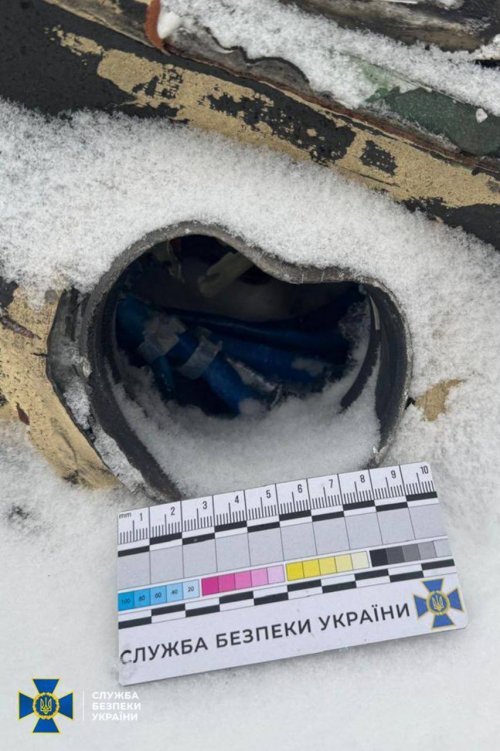
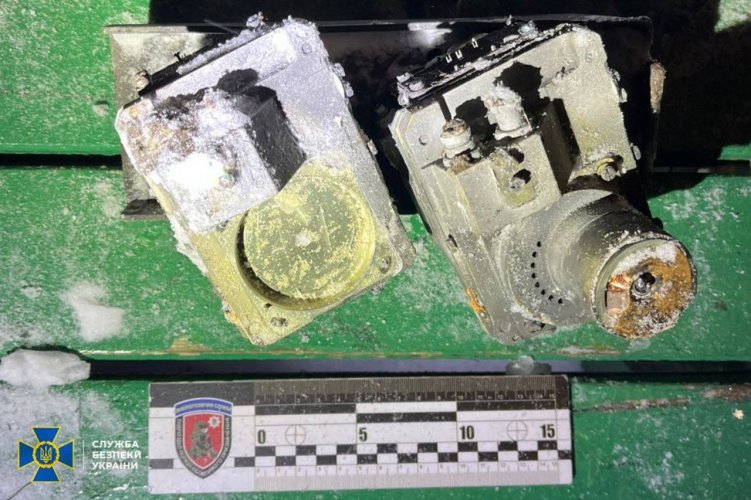
The bus of the 6 combat units or the main missile bus they came off?There is one combat unit in the picture, and there are six of them, the control system on the bus

View: https://x.com/i/status/2009393354732392582After increased activity at Kapustin Yar, it seems like another test launch of Oreshnik has taken place, this time against a target in Lvov. Once again without warheads.

A minority of reports speculate it was a training ground for the AFU but the mainstream thinks it’s the UGSCurrent speculation is that the Bilche-Volytsko-Uherske underground gas storage (UGS) facility outside Lvov was hit.

Plain old kinetic energy of solid slugs, moving at several kilometers per second.Can someone explain how it manage to penetrate deep (100m ?) into the UGS if that were have been the case?
https://www.scmp.com/news/china/sci...t-challenges-us-rods-god-space-weapon-concepthttps://interestingengineering.com/science/chinese-study-rods-from-godPlain old kinetic energy of solid slugs, moving at several kilometers per second.
“There is a maximum penetration depth of about 80 times that of the projectile diameter at the speed of 1.2km per second [about 3.5 times the speed of sound],” Fu’s team said. Increasing the speed to hypersonic levels, beyond Mach 5, would not result in the tungsten rod penetrating any further into the concrete. “The penetration depth under ultra-high speed conditions has no advantages over medium and low-speed penetration,” the team said.
The point is based on research and merely confirms the same conclusions that a study of the US's own Rods from Gods research reached some time ago.I'm unsure if I'd want to cite the south china morning post, good thing Deino isn't active in this thread, it's his personal trigger.
Actually not at all, even when the evidence is clear and damning it is still questioned:You are aware of the hypocrisy, right? I'll tell Dimitri Medvedev to post a picture with a big red X over it, given as that's the standard of "proof" accepted by the gullible masses.
It is indeed Schrodinger's missile because all evidence of it remains hidden in a box.As for the strike, there has been no footage of anything within immediate vicinity of the impact, as per usual. Footage is quick to emerge when it's impossible to hide, like when targets in urban regions are destroyed, or when it's too embarrassing to show and has to be hidden at all costs. They'll wait again a couple weeks to release grainy satellite footage, say nothing happened although all the heating and in parts electricity went out and yet the next time another missile is launched they bitch and moan on social media again.
Schrödingers missile - doesn't cause any damage but leaves thousands of households without gas and causes a meltdown everytime it's used.
This phenomenon needs to be studied.
The same applies especially for the opposite sideAmazing how burdens of proof change thread to thread.

The point is that the research is cited by a Chinese tabloid, presented in a way meant to present US research into high velocity penetrators as futile and a vanity project.The point is based on research and merely confirms the same conclusions that a study of the US's own Rods from Gods research reached some time ago.
And? What are you trying to prove? That penetration of kinetic elements would not be enough to reach underground gas storage? Kinda obvious. What are you missing is a shockwave from hypersonic strikes travelling down. Underground gas storages aren't exactly concrete bunkers; being badly shaken could rupture the access pipes, cause deformation of overlaying layers. Which would made gas storage unusable for some time.https://www.scmp.com/news/china/sci...t-challenges-us-rods-god-space-weapon-concepthttps://interestingengineering.com/science/chinese-study-rods-from-god
Amazing how burdens of proof change thread to thread. E.g. Video of S-400 being blown up in HD - person complains because it's not in UHD, poor evidence. Tweet with a random picture of an Su-35 claiming Su-27 shootdown (unconfirmed) - concrete proof. Tweet claiming UGS blown up despite no fireballs or confirmations by official Russian or Ukrainian sources - concrete proof yet again.
View: https://x.com/i/status/2009804321282777503I've seen some minor speculation about the target being the Lvov State Aircraft Repair Plant, as always I will further wait for confirmation.
EDIT: AMK Mapping in his missile attack report ultimately says ths the target was indeed the UGS.
Apparently it stored and repaired MiG-29s and F-16sSo, all civilian infrastructure as usual.
I've seen the rumor too, if true a very interesting choice of target. Possibly where the Mirage and F-16s and their munitions are stored? But I haven't seen anything yet that points either way (aviation facility or gas storage) in a concrete manner. So for now lots of question marks, little answers.I've seen some minor speculation about the target being the Lvov State Aircraft Repair Plant, as always I will further wait for confirmation.
EDIT 2: The Lvov State Aircraft Repair Plant was indeed targeted
If the actual target, it's a military facility. Although these days probably diversified away from MiGs, of which only a few still exist, and possibly more so used as a hub for aviation equipment in general. The relative proximity to Poland would suggest as such. And this can still be seen as a target that validates the usage of the Oreshnik missile system.The Lviv State Aviation Repair Plant (Львівський Державний авіаційно-ремонтний завод, abbreviated as LDARZ) is an aircraft repair plant of the Ukrainian Defense Industry. It was founded on October 15, 1939, in the city of Lviv. The factory specializes in the repair of the Mikoyan MiG-29 jet fighter.


It's pointless - at over 3 km/s, the energy released from kinetic impact would be greater than releazed from the same mass of explosives. And since explosives are usually less dense than chunks of solid metal, for hypervelocity projectiles there are no real need to carry any (unless you want a hypervelocity shrapnel, and so need some bursting charge inside).Are there any chemical explosives that can withstand those kinds of temperatures, but are pressure sensitive, and would react fast enough to increase the energy released on impact? Some composite detonated by the force of impact itself. Is it possible at those scales (density, impact speed)?
Like @Dilandu said, once you get to 3km/s you are packing your own weight in TNT. And the best option would be something dense, like Tungsten or even Osmium. Maximum weight in minimum package.Are there any chemical explosives that can withstand those kinds of temperatures, but are pressure sensitive, and would react fast enough to increase the energy released on impact? Some composite detonated by the force of impact itself. Is it possible at those scales (density, impact speed)?