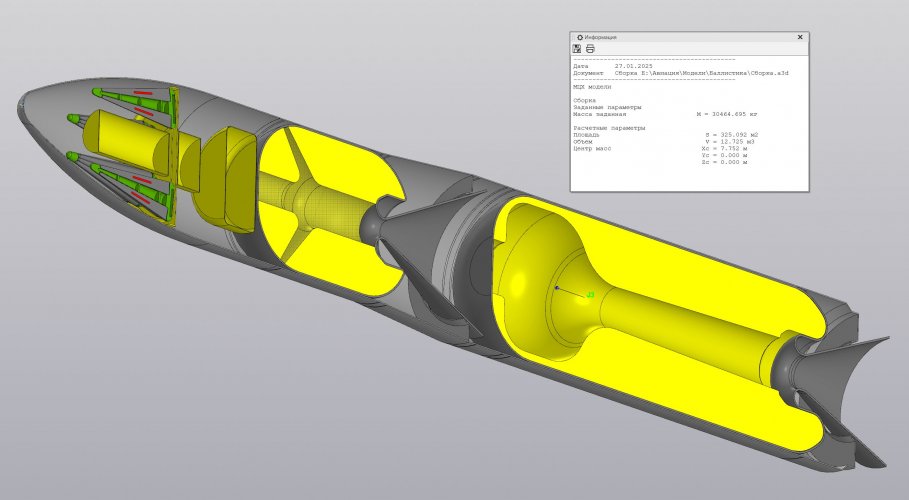
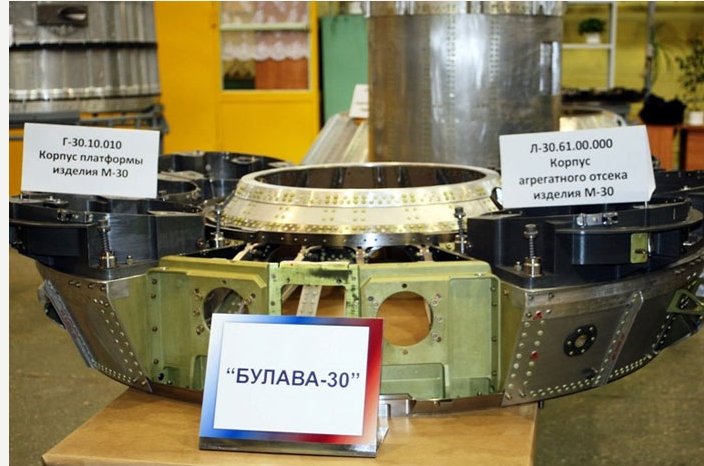
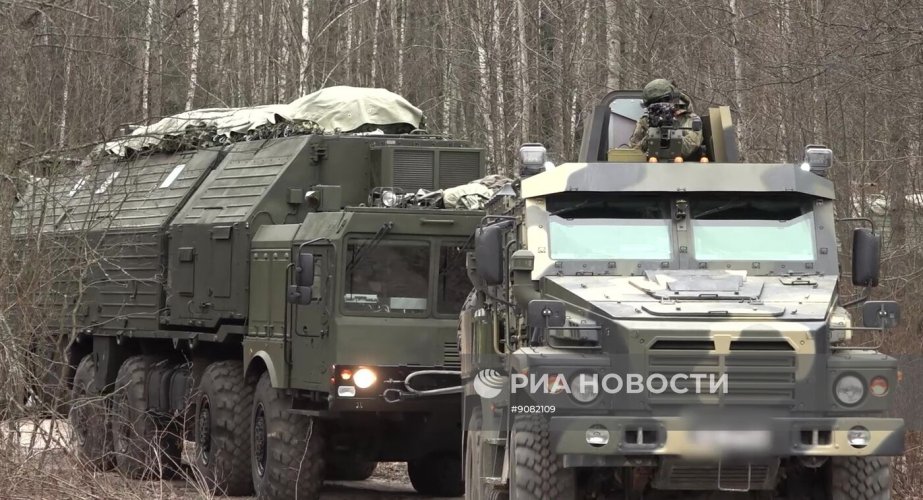
The destruction of a buried and protected bunker with undesirable persons fully justifies the existence of such a system. Moreover, this will not lead to a nuclear escalation
2350 MJ is only 0.6 tons of yield. The smallest nuclear weapon ever fielded is probably the Davy Crockett, which had a yield of 10–20 tons (42–84 GJ = 42,000–84,000 MJ). This is hilariously low yield, well below the nuclear threshold.
Even if you had perfect accuracy (which is impossible), the best you could do is mildly damage the outer entrance to the bunker. It won't touch the occupants. You need a lot of yield and/or accuracy to do anything to a buried bunker with leadership or C&C in it.
The only conventional munition with any utility for bunker busting is the GBU-57 MOP, and even that is pretty awful at bunker busting compared to any vaguely modern US nuclear weapon (e.g. W76, W78, W87, B61, W88, B83), let alone an actual earth-penetrating nuclear weapon (B61-11, B61-13).
Also, your calculations regarding thrust, structural weight, flight time, range, payload weight, arrival speed, energy, etc seem somewhat sketchy to me. Where did you derive these figures from?
Edit: I plugged your figures into my ballistic missile simulator program.
I could not match your results exactly in terms of flight time (flight time is 1074 sec at MET, not 785 sec), range (flight range is 3200 km at MET, not 1513 km), or staging (I was able to match your working times for each stage by deriving the Isp to be 280 on both stages, but this program cannot model delayed stage ignition without rewriting a bunch of code, and I can't figure out why you would even want to have delayed stage ignition in the first place).
The dry mass fraction you used seems kinda overly optimistic, although I guess with modern composites it may be more plausible than I initially thought. However, your figures for total weight are incompatible with the stage, fuel, and payload weights that you've listed. I can't comment on the dimensions, solid fuel density, or thrust figures, but I'm a bit skeptical about their accuracy, especially given the other issues I've found. Would like to see sources/reasoning to justify why those values were chosen.
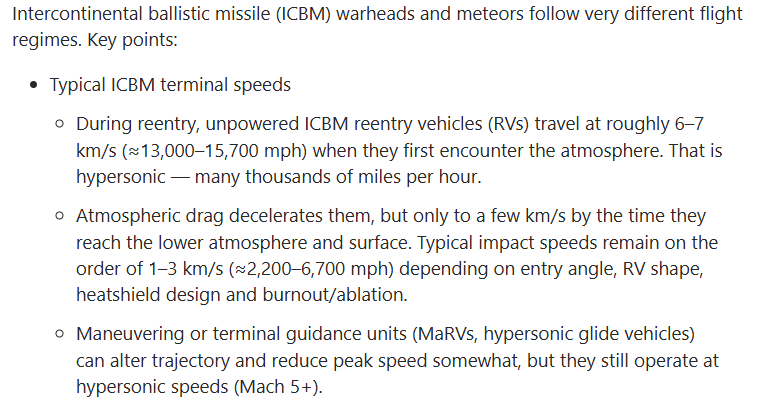
I was able to confirm was that 2.95 km/s is a reasonably sane speed at impact for a missile of the specs you describe under MET, although as the reentry drag simulation in this program isn't really optimized for accurate simulation of reentry deceleration, I don't have high confidence in the accuracy of that result. It's close enough to work with though.