ASW corvette. Single purpose ASW ship to work east of Guam. Doesn’t need 32 VLS cells, a SPY-6, or Naval Strike Missiles, but does need a hangar, a flight deck, a full SQQ-89 suite, and self protective gear: COMBATSS CMS, SPS-80, 8 VLS cells (ESSM & VLA, so could be tactical-length), SeaRSM, JQL launcher, RWS gun, 7m RHIBs. Slightly more displacement than a National Security Cutter to quieten the machinery, and mount the towed sonars & the VLS. Hopefully less expensive than an eventual FFG, which is going to have to be bigger than the Constellation/FREMM to provide ASW for CVSGs & ARGs west of Guam & privateer in the Indian Ocean. Sure, we could just build 200 FFGs, but I’m just trying to shave cost where we can. We’ll need ~100 of each, so the economics/volume might make the KKG design worthwhile.

You are using an out of date browser. It may not display this or other websites correctly.
You should upgrade or use an alternative browser.
You should upgrade or use an alternative browser.
Future USN Frigate Design Speculation
- Thread starter Maskoki
- Start date
You need vls and radars otherwise any aircraft or other surface combatant will sink the ship. Or even if a sub launches some ASM at the ship. This means it needs an escort. So you’re just better off building a multi mission shipASW corvette. Single purpose ASW ship to work east of Guam. Doesn’t need 32 VLS cells, a SPY-6, or Naval Strike Missiles, but does need a hangar, a flight deck, a full SQQ-89 suite, and self protective gear: COMBATSS CMS, SPS-80, 8 VLS cells (ESSM & VLA, so could be tactical-length), SeaRSM, JQL launcher, RWS gun, 7m RHIBs. Slightly more displacement than a National Security Cutter to quieten the machinery, and mount the towed sonars & the VLS. Hopefully less expensive than an eventual FFG, which is going to have to be bigger than the Constellation/FREMM to provide ASW for CVSGs & ARGs west of Guam & privateer in the Indian Ocean. Sure, we could just build 200 FFGs, but I’m just trying to shave cost where we can. We’ll need ~100 of each, so the economics/volume might make the KKG design worthwhile.
‘My’ ASW corvette concept has an SPS-80 (TRS-4D), would have some kind of ESM threat detection & ECM (not sure if there is truly a ‘lite’ version of the SLQ-32), calls for an 8-cell Mk.41 VLS, and a SeaRAM launcher. Just not the volume of munitions the FFG mounts, because the corvette is escorting east of Guam - so the volume of inbound missiles likely isn’t overwhelming. I call the ASW Corvette single mission (…ASW) because it’s AAW & ASuW weapons (and sensors) aren’t the top-end systems found on multi-mission ships, saving SWP-C & cost.You need vls and radars otherwise any aircraft or other surface combatant will sink the ship. Or even if a sub launches some ASM at the ship. This means it needs an escort. So you’re just better off building a multi mission ship

- Joined
- 30 May 2023
- Messages
- 692
- Reaction score
- 1,485
Perhaps like USAF moving to an NGAD FoS concept, with several core technologies offboarded to distributed unmanned teammates, FF(X) could enable the USN something crudely similar. Oddly, just like with NGAD, I see power generation to be a critical enabler, along with some kind of headroom to adopt new DE based effectors.
Ozair’s correct. ‘We the people’ have to throw dollars at ships the US Navy doesn’t need just to have the ability to build something else later.
If we were smart (if…), we would build the minimum number of Flight I FFs to keep the necessary yards open, concurrently design a fresh 8,000-ton FFG (not based on the FREMM) and design a fresh 6,000-ton ASW KKG (not based on the National Security Cutter), and hand the FFs over to the USCG once the yards are ready to begin building the FFG & KKG.
No nation of empire in history has built a navy the size of China’s devoid of a plan to use it. War in the Pacific, Indian, & Arctic Oceans is coming, and we’re going to need scores of ASW-heavy warships with full SQQ-89 suites to handle the submarines China will mass-produce.
It is long past time the USN act like the navy of the world’s largest economy.
I was listening to the CAVASSHIPS podcast. They had on Bryan Clark and Brent Sadler. Clark is a former sub guy. He said a couple of things which I didn't know. He said surface ships are losing favor as ASW platforms, that subs would hear them first and would be able to get a shot off sooner than the surface combatant. And I don't thinking he was talking about surface ships giving up their position using active sonar. Additionally he said the ASW rationale for the Constellation was eroding. Clark instead proposed the use of unmanned systems.
To some extent this has always been true. Launching a torpedo or anti ship missile would give up the subs position and increase its vulnerability to prosecution by patrol aircraft, helicopters, and surface ships. Unless near peer subs have gotten extremely quiet and I am not sure there isn't a need for ASW focused frigates. The sub would still have launch a salvo relatively close to a target, unless there have been advances in under water communication or can subs now extend the range of their sonar with UUVs?
Scott Kenny
ACCESS: USAP
- Joined
- 15 May 2023
- Messages
- 19,802
- Reaction score
- 28,416
You need at least 16x Mk41.ASW corvette. Single purpose ASW ship to work east of Guam. Doesn’t need 32 VLS cells, a SPY-6, or Naval Strike Missiles, but does need a hangar, a flight deck, a full SQQ-89 suite, and self protective gear: COMBATSS CMS, SPS-80, 8 VLS cells (ESSM & VLA, so could be tactical-length), SeaRSM, JQL launcher, RWS gun, 7m RHIBs. Slightly more displacement than a National Security Cutter to quieten the machinery, and mount the towed sonars & the VLS. Hopefully less expensive than an eventual FFG, which is going to have to be bigger than the Constellation/FREMM to provide ASW for CVSGs & ARGs west of Guam & privateer in the Indian Ocean. Sure, we could just build 200 FFGs, but I’m just trying to shave cost where we can. We’ll need ~100 of each, so the economics/volume might make the KKG design worthwhile.
6x VL-ASROCs, 10x tubes for ESSM.
You do remember that the primary threat to a surface ship is not torpedoes, right?FFX isn't meant to meet either.
It's big profile threat is submarine, and realistically it isn't meant to win, rather just to deter.
It's impossible to reliably win again full modern submarine (ssn, ssk) at this price point (and frankly at any), it just is not the way it works. Deterrence, on the other hand, is quite achievable.
The primary threat to a skimmer from a submarine is sea-skimming missiles.
So WTF is the point, if it doesn't have ASW gear?No.
"things that are more intrusive to install, like anti-submarine warfare equipment, would be something we would look to do in the future.”
https://news.usni.org/2025/12/19/se...urity-cutter-first-ffx-to-be-built-at-ingalls
Scott Kenny
ACCESS: USAP
- Joined
- 15 May 2023
- Messages
- 19,802
- Reaction score
- 28,416
That was for Ainen's bare-minimum capabilities KKG. The thing that doesn't even have a SPY6 fitted.I'd say you want 32 VLS minimum. As this would allow SM's meaning a pair of these ships can escort all the way to Japan/Aus/Phillipines without needing AAW escorts to escort them when Chinese air/surface/submarine threats increase as you get closer to china.
My minimum FF would have at least 32 cells of Mk41, but that only gives ~20x Standards, 6x VL-ASROCs, and 6x4 ESSMs.
Scott Kenny
ACCESS: USAP
- Joined
- 15 May 2023
- Messages
- 19,802
- Reaction score
- 28,416
The major problem is that the NSC isn't quiet enough for ASW.
The FFX needs to be modified for ASW silencing. Rafted machinery and Prairie/Masker installed. A notional "Flight I" version that isn't silenced is only usable for smuggler interdiction, and should be sold off as soon as the silenced Flight IIs come into service.
A proper FFX needs:
The FFX needs to be modified for ASW silencing. Rafted machinery and Prairie/Masker installed. A notional "Flight I" version that isn't silenced is only usable for smuggler interdiction, and should be sold off as soon as the silenced Flight IIs come into service.
A proper FFX needs:
- Hull sonar (or shallow towed array) and a VDS at the stern.
- Helicopter deck with beartrap and hangar (space for 2 birds or 1+2x VTOL UAVs if possible).
- Primary Weaponry needs at least 6x VL-ASROC and a dozen ESSMs. 16x Mk41s isn't really enough, as you'd have 6x VL-ASROC, 3x+ ESSM cells, and only ~7x SM2s. 24x Mk41s is probably the minimum if you're planning on SM2s, 16x Mk41 might be viable if you're only using ESSMs, as you'd have 6x ASROCs and 40x ESSM.
- Guns:
- While I prefer the OTO 76mm with DART and Vulcano ammunition, the 57mm Mk110 is acceptable.
- Plus it needs 4x Mk38s (or 30mm RWS) for dealing with small boat/UxV swarms.
Dragonlady
ACCESS: Restricted
- Joined
- 5 January 2021
- Messages
- 31
- Reaction score
- 70
At this point my “grand proposal” would be to take a Burke hull & do the following:NSC are already FFBNW a 16 cell Mk41 for ESSM, SVTT, and the Mk 144. They were also originally fitted with RAST so fitting them to USN FFs is simple enough. Weapons integration is nothing but the problem is the weapons add nothing that the USN needs
Eliminate the rear 64 cell VLS (use the gained space for something like a “flexdeck” a la stanflex IDK).
Reduce main propulsion to two LM2500s, install a 4th SSTG, and give each SSTG the hybrid propulsion retrofit that was proposed 15 years ago.
Remove SQS-53 and replace it a smaller, more littoral-focused sonar in the bulb.
Incorporate a VDS of some kind.
Replace SPY-1 with SPY-6v3.
Replace Aegis with COMBATSS-21.
Maybe replace the 5” with the 57mm.
Not the worst ideas but I would poke a couple holes in it, starting with the cost of a Burke hull and the need to open a third lineAt this point my “grand proposal” would be to take a Burke hull & do the following:
Something similar was proposed for fitting LCS modules to Burke flt Is. I'm not sure if you'd need mission modules. A large space to service UxVs might be more handyEliminate the rear 64 cell VLS (use the gained space for something like a “flexdeck” a la stanflex IDK).
Just fit the same ASW suite as on Constellation, it is basically what the USN needsRemove SQS-53 and replace it a smaller, more littoral-focused sonar in the bulb.
Incorporate a VDS of some kind.
No, Aegis Baseline 10 is way better than COMBATSS-21 and better suited to the mission this needs to fill. Especially given the sensor-shooter focus of manned ships going forward, sensors and processing should be prioritized.Replace Aegis with COMBATSS-21.
The other thing would be generating capacity for DEWs. I can honestly say I'm not sure the requisite generating capacity and the quietening measures to optimize the hull for ASW could be installed without such major changes to the hull that it would end up being another Constellation fiasco
Last edited:
Dragonlady
ACCESS: Restricted
- Joined
- 5 January 2021
- Messages
- 31
- Reaction score
- 70
1) I’m going with the “steel is cheap” philosophy. IIRC most of a warship’s unit cost is its combat systems & (to a lesser extent) propulsion machinery, so the best way to cut down cost is to pare down those systems without unduly impacting combat capability. Also the Burke hull-form is a proven performer with excellent growth margin that already meets the Navy’s survivability requirements. Finding a third yard is a bit of a challenge, but I think it can be done. NASSCO is definitely a possible option. IIRC they already do repair & refit work on large surface combatants so they have the capacity.Not the worst ideas but I would poke a couple holes in it, starting with the cost of a Burke hull and the need to open a third line
Something similar was proposed for fitting LCS modules to Burke flt Is. I'm not sure if you'd need mission modules. A large space to service UxVs might be more handy
Just fit the same ASW suite as on Constellation, it is basically what the USN needs
No, Aegis Baseline 10 is way better than COMBATSS-21 and better suited to the mission this needs to fill. Especially given the sensor-shooter focus of manned ships going forward, sensors and processing should be prioritized.
The other thing would be generating capacity for DEWs. I can honestly say I'm not sure the requisite generating capacity and the quietening measures to optimize the hull for ASW could be installed without such major changes to the hull that it would end up being another Constellation fiasco
2) Either way is fine with me. How the space is used is IMO less important than creating the space in the first place.
3) That’s basically my opinion as well, but I feel there are still some use cases for hull-borne sonar, mainly in mine-detection & avoidance, situations where deploying a towed array may be troublesome, & detecting subs hiding on the seafloor in littoral areas. Something like the SeaBeam 3050N would be a good candidate for this IMO.
4) I understand that COMBATSS-21 is heavily derived from Aegis, is fully open-architecture, and that it was the CMS slated for installation on the Constellations. Does Baseline 10 have the same level of open-architecture access?
5) That’s really shouldn’t be a problem. IIRC the upgraded SSTGs on the flight IIIs can each produce 4MW. With the 4 SSTGs planned in my notional “Burke-frigate”, that’s 16MW of power. Also aren’t the Burkes already equipped with extensive hull-quieting measures?
I see.They don’t want level 3 survivability. Constellation was to be built to level 2 survivability, as is Burke. I don’t know where he’s got the level 3 idea from but it is false
Also I thought the Burkes were constructed to level III? IIRC OPNAV 9070.1 explicitly listed DDGs as surface combatants that should be designed to level III standards.
All well and good but it’s very hard to cut down the more relevant capabilities (particularly sensors!) and still save cash. You could theoretically fit SPY-6(V)3 but that is a significant redesign, and then you end up with the Connie issue again.1) I’m going with the “steel is cheap” philosophy. IIRC most of a warship’s unit cost is its combat systems & (to a lesser extent) propulsion machinery, so the best way to cut down cost is to pare down those systems without unduly impacting combat capability.
Essentially yes, the open architecture design is comparable. More importantly AEGIS can handle BMD and, while this notional Burke variant (let’s call it DDV26) will have a smaller onboard magazine, future fleet magazine depth is predicted to be mostly handled by UxVs, hence sensor-shooter capability should be maximised.4) I understand that COMBATSS-21 is heavily derived from Aegis, is fully open-architecture, and that it was the CMS slated for installation on the Constellations. Does Baseline 10 have the same level of open-architecture access?
Not horrible. Then again, a major critique of the BIW submission was the major rework required to make it IEP and/or increase generating capacity so I wouldn’t underestimate the changes required.5) That’s really shouldn’t be a problem. IIRC the upgraded SSTGs on the flight IIIs can each produce 4MW. With the 4 SSTGs planned in my notional “Burke-frigate”, that’s 16MW of power.
Maybe for the 1990s but today they are extremely loud and unfit for purpose. iirc testing with Zumwalt demonstrated just how advantageous a dedicated picket ship with modern quieting features was over Burke.Also aren’t the Burkes already equipped with extensive hull-quieting measures?
auiu the only ship in the fleet today built to Level III standards is Ford and even Ford has some waivers for certain areasAlso I thought the Burkes were constructed to level III? IIRC OPNAV 9070.1 explicitly listed DDGs as surface combatants that should be designed to level III standards
auiu what is/was specified for Constellation aligns very closely with previous standards. I could be wrong, but that’s what I’ve been toldAs have previously posted OpNavInst 9070.1 with Levels I, II & III is now history as superseded back in 2012 by OpNavInst 9070.1A after the LCS fiasco with no Levels specified, its whatever NAVSEA think appropriate at the time
Dragonlady
ACCESS: Restricted
- Joined
- 5 January 2021
- Messages
- 31
- Reaction score
- 70
All well and good but it’s very hard to cut down the more relevant capabilities (particularly sensors!) and still save cash. You could theoretically fit SPY-6(V)3 but that is a significant redesign, and then you end up with the Connie issue again.
If you put them in the same spot as the current SPY-1 arrays it shouldn’t take much effort at all. The (V)3 is half the size of SPY-1D and almost certainly significantly lighter. Software integration should already be a done deal via the flight III program.
Essentially yes, the open architecture design is comparable. More importantly AEGIS can handle BMD and, while this notional Burke variant (let’s call it DDV26) will have a smaller onboard magazine, future fleet magazine depth is predicted to be mostly handled by UxVs, hence sensor-shooter capability should be maximised.
Fair enough. Baseline 10 it is then.
Not horrible. Then again, a major critique of the BIW submission was the major rework required to make it IEP and/or increase generating capacity so I wouldn’t underestimate the changes required.
You’re talking about their FFG(X) submission right? Wasn’t that based on the F100?
Maybe for the 1990s but today they are extremely loud and unfit for purpose. iirc testing with Zumwalt demonstrated just how advantageous a dedicated picket ship with modern quieting features was over Burke.
Still leagues ahead of the NSC which has *zero* quieting features. Also, implementing a HED capability for the SSTGs would go a long way towards improving the acoustic signature.
While some amount of redesign will of course be needed, at the end of the day it would still be far less than what the USN stipulated for Constellation, or what would be needed to make the NSC into a proper frigate.
Interesting. Kinda off-topic, but do you know where the Zumwalts fall into here? They were designed well after 9070.1 was published (but before 9070.1A) so one would think they were level III.auiu the only ship in the fleet today built to Level III standards is Ford and even Ford has some waivers for certain areas
auiu what is/was specified for Constellation aligns very closely with previous standards. I could be wrong, but that’s what I’ve been told
Oh true, but in that case fitting SPY-6(V)4 would provide greater sensor capability for a more than reasonable cost increase.If you put them in the same spot as the current SPY-1 arrays it shouldn’t take much effort at all. The (V)3 is half the size of SPY-1D and almost certainly significantly lighter. Software integration should already be a done deal via the flight III program.
YepYou’re talking about their FFG(X) submission right? Wasn’t that based on the F100?
Hmm fairStill leagues ahead of the NSC which has *zero* quieting features. Also, implementing a HED capability for the SSTGs would go a long way towards improving the acoustic signature.
I'm not sure, Zumwalt is a bit weird because of the TSCEi and the funding issues which forcedInteresting. Kinda off-topic, but do you know where the Zumwalts fall into here? They were designed well after 9070.1 was published (but before 9070.1A) so one would think they were level III.
Any proof to back this up or just going to say whatever you feel like..? The requirements for Constellation were essentially optimized for ASW, everything else came second to the point that directors were not included.Constellation wasn't exactly the poster child of ASW.
(Which have been a bad decision since they were acquired in the 90s due to their less than stellar weapons suite and relevance to peer conflict)Australia's ANZAC class frigates.
Ok so this is a really bad way of looking at it. For one, even the FFBNW gear is still for adversaries who are the furthest thing from peer threats and the goal of Constellation was clearly to fight peer threats. On top of that, it is still a cutter and the weapons are designed to counter USCG threats, not US Navy threats.Now the Navy just needs to fit these additional weapons and sensors in the first flight of ships. Get the thing into production ASAP.
I think you need to seriously review the materials available about the Arleigh Burke class because this is not only a verifiably bad plan, it's impossible.Instead of DDG(X) they should just purchase stretched Arleigh Burke-class destroyer. It has a really wide 20 meter wide beam. This is 20% wider than the Ticonderoga class cruisers and is wider than the retired 12,000 ton nuclear cruisers. I would simply take the existing Arleigh Burke-class destroyer and add a hull extension. This stretch technique has been done many times including with the Perry-class frigates and even the virginia class submarines. Add an extra generator or VLS tubes for future growth.
The Burke hull is maxed out, you can't just keep adding. It has been studied. This argument has been rebutted time and time again
insidersource
ACCESS: Top Secret
- Joined
- 24 March 2025
- Messages
- 521
- Reaction score
- 745
The ANZAC frigates did an excellent job. A heavier armed Legend-class frigate would be an upgrade from the LCS(Which have been a bad decision since they were acquired in the 90s due to their less than stellar weapons suite and relevance to peer conflict)
A stretch of the hull completely solves this issue. Please provide a source to where this has been rebutted? The current length hull is definitely maxed out. Ships are not like aeroplanes where a stretch of the fuselage puts more load on the wings. A stretch of a ship is very common way to increase the size without many drawbacks. The four gas turbines of the Burke can easily handle extra displacement. The added space would allow for more growth and extra power generators.The Burke hull is maxed out, you can't just keep adding. It has been studied. This argument has been rebutted time and time again
The only mentioned source of a stretch is a Forbes article.
https://www.forbes.com/sites/lorent...-needs-to-keep-improving-what-it-already-has/
The answer isn’t a new class of destroyers, which will take two decades to join the fleet in appreciable numbers. The answer is to develop a Flight IV variant of the Burke that stretches the hull to provide additional space.
The increased volume would enable the Navy to reconfigure the hull’s internal architecture while bolstering an already impressive array of warfighting systems.
Perhaps more vertical launch systems could be added. Perhaps an air-defense radar even more capable than Flight III’s SPYPY+0.2%SPY+0.2%-6 could be installed. Perhaps integrated power sufficient to support lasers in the 150-600 kilowatt range would become feasible.

Dilandu
I'm dissatisfied, which means, I exist.
Hm, an interesting solution!The more I think about it the more I like the idea of dedicated ASW San Antonio motherships with drones. You could probably get one for two Connies and it would have more helps and drones.
They are the primary cause of RAN capability loss since the Cold War. They were widely argued to be bad ships and not fit for purpose when bought. They were a political decision, not a navy decision. They were a penny pinching option that prioritised FFBNW above genuine capability and the ASMD upgrade did little to negate this.The ANZAC frigates did an excellent job.
these aren’t replacing LCS, can you even read? They are replacing Constellation. This is barrier to entry knowledge.A heavier armed Legend-class frigate would be an upgrade from the LCS
Literally the US Navy has repeated this multiple times, it is the impetus for the DDG(X) program. It was most recently retired in Ward Carrol’s interview with former Rear Admiral Ted LeClair.Please provide a source to where this has been rebutted?
Spoken like a guy who doesn’t know anything about naval architecture. First of all you have to account for ship strength, you can just stretch the hull indefinitely because this adds weight and increases strain on the ship in rough weather. Secondly it doesn’t address the underlying issues with a hull from the 80s.Ships are not like aeroplanes where a stretch of the fuselage puts more load on the wings. A stretch of a ship is very common way to increase the size without many drawbacks.
Ok NavArch, explain how to completely reconfigure the ship to be IEP, fit Virginia payload tube sized cells for hypersonic weapons, fit even larger radars than that of flight 3, expand the flag facilities, and negate the auditory signature of the ship.The four gas turbines of the Burke can easily handle extra displacement. The added space would allow for more growth and extra power generators.
And don’t cite Forbes, they are an unreliable and foolish paper home to such genius articles as “The USAF has just admitted the F-35 has failed”. Forbes couldn’t tell a missile from an arrow, let alone understand a DDG
that means literally nothing. The requirements were designed around the ASW mission and they essentially selected the most optimal gear for the mission while remaining somewhat budget conscious (implementation aside)The Navy didn't agree that Constellation met the program goals for the ASW mission, so that is magical thinking to read all the marketing points as why it was a success. But hey, they are first hand working with the equipment.

EmoBirb
ACCESS: Top Secret
- Joined
- 18 January 2025
- Messages
- 2,774
- Reaction score
- 7,083
Being able to effectively utilize missiles like ESSM or the later blocks of SM-2 to engage and destroy aerial targets like missiles, drones and other types of aircraft over medium to long ranges. This obviously requires a sensor package, including a capable radar, to go along.What are the minimum requirements you envision when you say area defense?
Ironically, a lot of this is what was envisioned for the Constellation-Class.
I would not consider ESSM area defense to be honest SM2 in my opinion is the minimum. To me it implies being able to protect a somewhat spread out past force or convoy. You can’t really do that with ESSM.Being able to effectively utilize missiles like ESSM or the later blocks of SM-2 to engage and destroy aerial targets like missiles, drones and other types of aircraft over medium to long ranges. This obviously requires a sensor package, including a capable radar, to go along.
Ironically, a lot of this is what was envisioned for the Constellation-Class.
We also saw similar issues in the Red Sea with limited ESSM range becoming a problem and many targets needing to be intercepted with SM2
johnpjones1775
ACCESS: Top Secret
- Joined
- 27 May 2023
- Messages
- 1,373
- Reaction score
- 767
And this is why I pushed for birb to define what they meant. To me it sounds like you’re describing theater defense.I would not consider ESSM area defense to be honest SM2 in my opinion is the minimum. To me it implies being able to protect a somewhat spread out past force or convoy. You can’t really do that with ESSM.
I’m with birb though. 27+Nemo is a pretty large area to cover particularly in terms of escorting convoys
Last edited:
If your task force or convoy is say 4 miles wide. Plus you’re two or 3 miles away looking into a sub contact. You now have 20 nautical miles of range then you factor in supersonic missile response time and you suddenly have very little time to engage. This also means you will not have a second chance to engage leakers. Whereas with SM2 you will at least get two rounds of engagement maybe even three.And this is why I pushed for birb to define what they meant.
I’m with birb though. 27+Nemo is a pretty large area to cover particularly in terms of escorting convoys
It also means you need a lot more ships to cover straits, which is very important in Southeast Asia
Last edited:
johnpjones1775
ACCESS: Top Secret
- Joined
- 27 May 2023
- Messages
- 1,373
- Reaction score
- 767
Regardless of missile range, you have roughly the same engagement time. Engagement time will be predicated on radar range, RCS of incoming threat and missile speed.If your task force or convoy is say 4 miles wide. Plus you’re two or 3 miles away looking into a sub contact. You now have 20 nautical miles of range then you factor in supersonic missile response time and you suddenly have very little time to engage. This also means you will not have a second chance to engage leakers. Whereas with SM2 you will at least get two rounds of engagement maybe even three.
It also means you need a lot more ships to cover straits, which is very important in Southeast Asia
In 2026 you’re not chasing a submarine with your frigate like it’s 1926. You’re sending the helo to chase it
You will still chase it with your ship, as your towed array is much better than the helos.Regardless of missile range, you have roughly the same engagement time. Engagement time will be predicated on radar range, RCS of incoming threat and missile speed.
In 2026 you’re not chasing a submarine with your frigate like it’s 1926. You’re sending the helo to chase it
You absolutely do not have the same engagement time if you’re protecting a task force or defending a strait. You’ll have picket ships, awacs, or other sensors further away , meaning you’ll have much extended radar ranges, and the sm2 has around 4x the range
johnpjones1775
ACCESS: Top Secret
- Joined
- 27 May 2023
- Messages
- 1,373
- Reaction score
- 767
sorry I interpreted/read engagement time as reaction time.You will still chase it with your ship, as your towed array is much better than the helos.
You absolutely do not have the same engagement time if you’re protecting a task force. You’ll have picket ships or awacs, meaning you’ll have much extended radar ranges, and the sm2 has around 4x the range
No ship borne ASW is not better than airborne ASW surface ships are terrible at ASW, and unless you have a strike/full length VLS it doesn’t matter much if you find the sub unless you’re practically on top of it since SVTT is almost completely useless.
Shipborne asw is absolutely needed. You use it direct the helo. As the ship has much sensitive sonars, then the helo to dip in that region.sorry I interpreted/read engagement time as reaction time.
No ship borne ASW is not better than airborne ASW surface ships are terrible at ASW, and unless you have a strike/full length VLS it doesn’t matter much if you find the sub unless you’re practically on top of it since SVTT is almost completely useless.
Without shipborne sonar getting a you’re just guessing at random with a small detection area on the helo.
Assoc can fit in tactical length vls. Self defense vls is almost pointless.
johnpjones1775
ACCESS: Top Secret
- Joined
- 27 May 2023
- Messages
- 1,373
- Reaction score
- 767
What’s the range on ASROC again exactly?Shipborne asw is absolutely needed. You use it direct the helo. As the ship has much sensitive sonars, then the helo to dip in that region.
Without shipborne sonar getting a you’re just guessing at random with a small detection area on the helo.
Assoc can fit in tactical length vls. Self defense vls is almost pointless.
12-15miles?
Vs
A heavy torpedo with ranges of 30+ miles?
If you’re in ASROC range there’s probably already fish in the water.
Anyway back to air defense discussion.
You’ll get as many opportunities to engage as missiles you choose to launch.
The 2016 Red Sea missile launches indicated doctrine at the time was launch 1 SM family missile and 2 ESSMs to intercept.
So one way or another they had time to launch at least two ESSMs whether they were all volleyed together, ripple launched, or launched with varying amounts of delay.
If you have a sea giraffe that sees 200nmi you have plenty of time to launch 2 or 3 ESSMs, if you have AWACs or other more powerful radar or even equal radar closer to the threat you get more reaction time to decide how you’re going to intercept.
Again though this is where the problem comes in, do we need SM-2s on our frigates, or is ESSM good enough.
Remember you cut your magazine depth by 3/4 for every SM2 you load into a VLS cell.
16 VLS is 64 ESSM. Fill two of those VLS with SM2 now you’re down to 58 total missiles. You’ve lost out on 6 missiles.
Last edited:
It's funny you think you're detecting a sub well enough to engage it at 30+ miles or even detecting it at all. You need to chase.What’s the range on ASROC again exactly?
12-15miles?
Vs
A heavy torpedo with ranges of 30+ miles?
If you’re in ASROC range there’s probably already fish in the water.
Anyway back to air defense discussion.
You’ll get as many opportunities to engage as missiles you choose to launch.
The 2016 Red Sea missile launches indicated doctrine at the time was launch 1 SM family missile and 2 ESSMs to intercept.
So one way or another they had time to launch at least two ESSMs whether they were all volleyed together, ripple launched, or launched with varying amounts of delay.
If you have a sea giraffe that sees 200nmi you have plenty of time to launch 2 or 3 ESSMs, if you have AWACs or other more powerful radar or even equal radar closer to the threat you get more reaction time to decide how you’re going to intercept.
Again though this is where the problem comes in, do we need SM-2s on our frigates, or is ESSM good enough.
Remember you cut your magazine depth by 3/4 for every SM2 you load into a VLS cell.
16 VLS is 64 ESSM. Fill two of those VLS with SM2 now you’re down to 58 total missiles. You’ve lost out on 6 missiles.
As mentioned a couple times to you by others, your sea giraffe isn't detecting anything that's not a non-stealthy strategic bomber at 200 miles. You also ignore radar horizons. You have a limited number of illuminators, so you want to engage as far out as possible so you make maximal use of their time share. That's also not the correct launch doctrines for anything but the red sea mission. By launching multiple at one target when you have the time to reengage, you've cut your magazine size by half.
Again 16 VLS is not enough. You've also ignored ASROC. If you have 6 ASROC, 8 SM, you have 8 ESSM. Also frigates aren't likely to have illuminators so you're stuck with ESSM block 2 of which not enough have been made to put as many as you'd like
You should go do some reading.
Last edited:
Examples from the book "Convoy" by Martin Middlebrook (1976) again:
(Sorry, again but the illustrations partialy lacked any scale and different prints had different scales...)
HX.229 convoy (41 transports; 5 escorts)

W 15800-18600 yrd ~7.8-9.2 NM
L 9100 yrd ~4.5 NM
SC.122 convoy (50 transports+1rescue ship; 9 escorts)
W 7.75 NM
L 6.5 NM
Keep in mind 5-6 NM is the minimum point defense range against Mach 5 missiles.
It's the conclusion from a late 90's research paper that said 57 mm is most effective for defense. It's no coincidence SeaRAM has the same range. Sorry, I couldn't find the paper again.
I don't know how much this has changed with today's maneuvering hypersonic missiles, though.
The last line of intercept point range needed for these WWII examples would be ~10+6 NM. Minimum should be 20 NM and no less (because altitude also needs to be accounted for).
(Sorry, again but the illustrations partialy lacked any scale and different prints had different scales...)
HX.229 convoy (41 transports; 5 escorts)
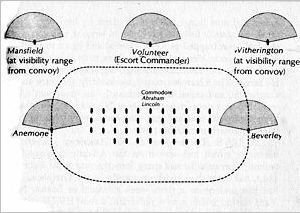
W 15800-18600 yrd ~7.8-9.2 NM
L 9100 yrd ~4.5 NM
SC.122 convoy (50 transports+1rescue ship; 9 escorts)
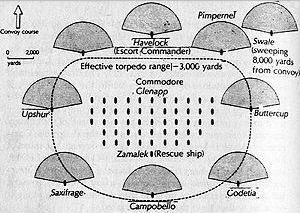
W 7.75 NM
L 6.5 NM
Keep in mind 5-6 NM is the minimum point defense range against Mach 5 missiles.
It's the conclusion from a late 90's research paper that said 57 mm is most effective for defense. It's no coincidence SeaRAM has the same range. Sorry, I couldn't find the paper again.
I don't know how much this has changed with today's maneuvering hypersonic missiles, though.
The last line of intercept point range needed for these WWII examples would be ~10+6 NM. Minimum should be 20 NM and no less (because altitude also needs to be accounted for).

Kat Tsun
eeeeeeeeeeeeeee
- Joined
- 16 June 2013
- Messages
- 1,887
- Reaction score
- 2,669
And NONE of this addresses the thread topic which is FF(X). Even more pertinently to the broader conversation, none of it addresses the role of FF(X) in the broader US fleet and the capabilities it brings to the table.
It's a cheap ship for low intensity combat like the Gowind/Type 31/ASWF to free up fleet Burkes, which are like the FREMM/Type 26/F802 classes, for fighting a high intensity regional war without sacrificing a global presence or regional response capability. Pretty much any competent navy has them but the United States Navy has shown, over the past 30 years or so, that it is anything but competent when it comes to procurement. It might actually be less competent at buying ships than the Russians or Indians. An impressive feat!
It probably should have been bought 20 years ago instead of the LCS.
johnpjones1775
ACCESS: Top Secret
- Joined
- 27 May 2023
- Messages
- 1,373
- Reaction score
- 767
Honestly maybe the frigate shouldn’t be the ‘premier’ ASW asset any more and a very cheap version of a stripped down LPD should be, or a fast ESB.
Utilizing UUV/USVs and helos, or even subchasers like I mentioned here
https://www.secretprojects.co.uk/threads/do-uuvs-and-usvs-make-subchasers-viable-again.50970/
Utilizing UUV/USVs and helos, or even subchasers like I mentioned here
https://www.secretprojects.co.uk/threads/do-uuvs-and-usvs-make-subchasers-viable-again.50970/
johnpjones1775
ACCESS: Top Secret
- Joined
- 27 May 2023
- Messages
- 1,373
- Reaction score
- 767
So make both.They do it by having relatively short endurances. You can't make a non-nuclear torpedo that runs at 20 knots for a week, and more than you can make a non-nuclear sub that does the same.
An ASW dedicated San Antonio would probably be worth like 3-4 frigates. It could carry like 8 helicopters and multiple USVs.Honestly maybe the frigate shouldn’t be the ‘premier’ ASW asset any more and a very cheap version of a stripped down LPD should be, or a fast ESB.
Utilizing UUV/USVs and helos, or even subchasers like I mentioned here
https://www.secretprojects.co.uk/threads/do-uuvs-and-usvs-make-subchasers-viable-again.50970/
johnpjones1775
ACCESS: Top Secret
- Joined
- 27 May 2023
- Messages
- 1,373
- Reaction score
- 767
In my mind it would have almost no sensors and armament so the biggest price would just be the steel.An ASW dedicated San Antonio would probably be worth like 3-4 frigates. It could carry like 8 helicopters and multiple USVs.
Or like i said basically an ESB, just one that goes more than 17 knots.

- Joined
- 11 February 2007
- Messages
- 4,173
- Reaction score
- 8,959
To one place at a time, while four frigates can be in four places at once. Even if the LPD is being used to deploy USVs they still have to start from a common start point - the LPD's dock. And you still need to detect the target at range, which means either the San Antonio streaming a tail, the USVs are streaming tails, or both. A baseline San Antonio is $1.6Bn, this ensemble would be much more.An ASW dedicated San Antonio would probably be worth like 3-4 frigates. It could carry like 8 helicopters and multiple USVs.
Last edited:
johnpjones1775
ACCESS: Top Secret
- Joined
- 27 May 2023
- Messages
- 1,373
- Reaction score
- 767
For escort duty it will take 2-3 frigates to escort a convoy so they’ll be in the same place anyway.To one place at a time, while four frigates can be in four places at once. Even if the LPD is being used to deploy USVs they still have to start from a common start point - the LPD's dock. And you still need to detect the target at range, which means either the San Antonio streaming a tail, the USVs are streaming tails, or both. A baseline San Antonio is $1.6Bn, this ensemble would be much more.
Even at $900m per hull 3 frigates would be $2.7b and since we can all agree the FFX is going to cost more than $900m it would likely be awash.
But the convoy would still need at least one frigate for AAW.
But like i said the ship im envisioning would be very light on sensors and weapons itself.
It would not literally be a San Antonio.
As I said something ideally more like a fast ESB.
View: https://x.com/nomadpossum/status/2011736173295861877
AI Overview
The image shows an FDI (Frégate de Défense et d'Intervention) frigate, a class of multi-purpose warships designed by the Naval Group. The ship in the photo appears to be the HS Kimon (F601), the first of the FDI HN class for the Hellenic Navy, identified by the hull number '620' visible on the bow.
Key specifications:
Speed Maximum: 27 knots (50 km/h; 31 mph)
Range 5,000 nmi (9,300 km; 5,800 mi) at 15 knots (28 km/h; 17 mph)
Endurance 45 days
Complement 125 (+28 passengers)
Displacement 4,460 t (4,390 long tons)
Length 122 m (400 ft 3 in)
Beam 17.7 m (58 ft 1 in)
Propulsion Combined diesel and diesel (CODAD) arrangement
Total output: 32,000 kW (43,000 shp)
Armament
1 × Oto Melara 76 mm Super Rapid gun (in stealth cupola)
2 × Nexter Narwhal 20B 20 mm RWS
8 × Exocet MM-40 Block 3c anti-ship missiles
2 × Sylver A50 8-cell VLS for 16 Aster 15 or 30 surface-to-air missiles (first three French FDIs from build); 4 x 8 (32 Aster 15/30) on last two French FDIs from service entry[3] or retrofit to other vessels of the class in the 2030s
2 × 2 Sadral Mistral Simbad-RC point-defence SAM (either fit from build or retrofit)
2 × twin torpedo tubes for MU90 Impact torpedoes
Cost
€2.1 billion (2017) (equivalent to €2.3 billion in 2022)[1] for 5 units
€3.5 billion (2017) (equivalent to €3.9 billion in 2022)[1] including development costs
The idea that guided missile frigates will be under $2.5 billion seems illogical at this point.
Last edited:
Why? The FDIs cost €720M apiece (Greek contract price), or ~$800M.The idea that guided missile frigates will be under $2.5 billion seems illogical at this point.
So even accounting for US shipyards’ cost inefficiencies I would expect a very capable FFG/mini-DD to cost around $1B or a little more… which (not coincidentally) is where FFG-62 was supposed to end up before Navsea, Gibbs & Cox and Marinette screwed it up.
Last edited:
Hard to see SM2 being useful with the expected radar range, but I would say ESSM has plenty of range if this is to become a properly armed corvette. Not sure if it would get any CEC to work with other ships.The major problem is that the NSC isn't quiet enough for ASW.
The FFX needs to be modified for ASW silencing. Rafted machinery and Prairie/Masker installed. A notional "Flight I" version that isn't silenced is only usable for smuggler interdiction, and should be sold off as soon as the silenced Flight IIs come into service.
A proper FFX needs:
- Hull sonar (or shallow towed array) and a VDS at the stern.
- Helicopter deck with beartrap and hangar (space for 2 birds or 1+2x VTOL UAVs if possible).
- Primary Weaponry needs at least 6x VL-ASROC and a dozen ESSMs. 16x Mk41s isn't really enough, as you'd have 6x VL-ASROC, 3x+ ESSM cells, and only ~7x SM2s. 24x Mk41s is probably the minimum if you're planning on SM2s, 16x Mk41 might be viable if you're only using ESSMs, as you'd have 6x ASROCs and 40x ESSM.
- Guns:
- While I prefer the OTO 76mm with DART and Vulcano ammunition, the 57mm Mk110 is acceptable.
- Plus it needs 4x Mk38s (or 30mm RWS) for dealing with small boat/UxV swarms.
Quiet propulsion and effective sonar should be mandatory, and electric propulsion should create the opportunity to move engines around to use the space more efficiently. Probably also needs a more modern CIWS to deal with the next generation of drones. Along the lines of Millenium Gun.
Last edited:

- Joined
- 6 November 2010
- Messages
- 6,381
- Reaction score
- 8,302
Check. Check. Check. Check. Check.Quiet propulsion and effective sonar
[...]
electric propulsion
[...]
move engines around
[...]
more modern CIWS
I have the nagging feeling all those bits together - maybe some more nice-to-haves that might just be added for good measure *) - will play havoc with budget and timeline of what is proposed as a timely and affordable solution.
Hasn't the USN been here before?
*) Or inevitably.
- Joined
- 11 February 2007
- Messages
- 4,173
- Reaction score
- 8,959
If you put SM-2 in the requirements, you're building an FFG, not an FF.Hard to see SM2 being useful with the expected radar range