Alternate Australian Defence Force 1970s Procurements?

Wasn't the mariner type vessels with landing craft attack cargo ships/attack transport ship?

The Mariner was a post-war C-4 class ship, which were the biggest ships built by US MARCOM in WW2. Only USS Tulare was built as an Attack Cargo ship during the 50s. It looks like most WW2 amphibious transports were smaller S4 and C3 types.

In any case the Defence Committee decided a Mariner with 60 crew was too much and a Scandia of similar size with less crew was too big and an Attack Cargo ship with 400+ crew was way too many. It was decided 2 smaller vessels would be better and that's where the matter seemed to peter out with the Army getting the small 2,400t John Monash in 1965.

I'd suggest something like Jeparit or Boonaroo, but modified to carry a pair of LCMs on deck. It would have a good cargo capacity as well as the means to unload it in austere conditions but not require the huge crew of a proper LKA class ship.
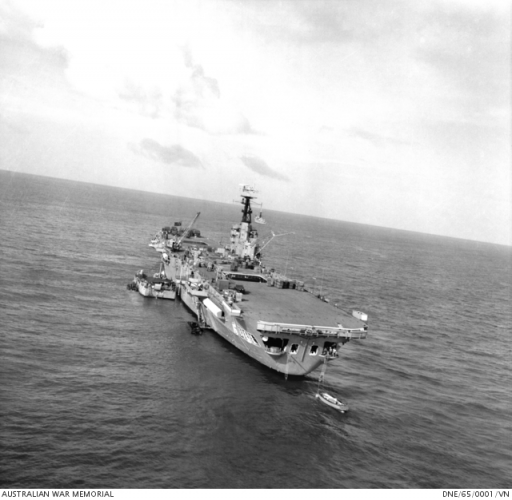
 
Another possibility might be a more extensive refit for Sydney, or even just better use of existing assets in her early voyages. I've read that the Army watercraft training facility in Sydney received an LCM-6 in 1965 and transferred it to the RAN for use on the Sydney in 1967, so there was at least some LCM-6s in service from 1965. Until 1968 Sydney carried no landing craft of its own and unloaded using the crane both she and Melbourne had behind the island and another crane opposite the island. If one of these cranes had the lifting capacity perhaps Sydney could have carried an LCM-6 or two as deck cargo from her first trooping missions.

1764105821860.png

What's really needed is for Sydney to be replaced with something that can carry both LCMs and helicopters in the 70s, that could compliment the LSM-2s.
 
Last edited:
I think that Wiki number is a bit of a stretch, but I won't die in a ditch over it because we have built/bought the LCM-2000 and LCM-1E in order to finesse a few tons from the basic design. In any case, LCMs are transported empty.

View attachment 793112
You need cranes enough to lift a loaded LCM into the water, even if the LCM sits on the deck empty on the way there.


Here's a proper USN LKA Amphibous Caro ship of the type that was rejected as it would require 400+ crew.

View attachment 793114

I'd think something less than this, a cargo ship with a couple of LCM-6s would do for starters. After all HMAS Choules only has 1 LCM-8 and a pair of LCVPs and it's a proper well-dock landing ship.
Something about half that size, then? A pair of LCM-6s and a helo deck?
 
You need cranes enough to lift a loaded LCM into the water, even if the LCM sits on the deck empty on the way there.

Tobruk's derrick was 70t as was the Kanimbla's forward crane, I assume they were lowered into the water empty then loaded from cranes or via the stern ramps.

Something about half that size, then? A pair of LCM-6s and a helo deck?

That's along the lines of what I was thinking.

I think I've had an epiphany, but I'll have to think about it before I embarrass myself by putting it out there.
 
Tobruk's derrick was 70t as was the Kanimbla's forward crane, I assume they were lowered into the water empty then loaded from cranes or via the stern ramps.
The problem is speed to deployment, and vulnerability to sea state.


I think I've had an epiphany, but I'll have to think about it before I embarrass myself by putting it out there.
Oh? looking forward to seeing what you came up with!
 
So basically a mini attack cargo/transport ship is what's wanted.
I think Syndey would be replaced by 1 or 2 tobruks
 
The problem is speed to deployment, and vulnerability to sea state.

I don't think it would be a problem with the sorts of amphibious operations Australia would undertake, ie landing in a benign but undeveloped area with no infrastructure. There's no great hurry to storm the beaches under fire, but it's better to have LCMs on day 1 rather than wait for a week or whatever.

So basically a mini attack cargo/transport ship is what's wanted.

I got the vibe that they would have liked a full-on LKA if they could afford and man it, so a cargo ship with some LCMs is some sort of substitute.

I think Syndey would be replaced by 1 or 2 tobruks

I think that if you have LCM-2s then you don't get the Tobruk, but you do need something other than just 4 x LCM-2s which is where the cargo ship idea comes in.
 
I haven't seen anything though I suspect it was probably due to a combination of funding and no official requirement.
It was part of the reorganisation of the army into task forces with four identical motor brigades. With the end of that plan, the requirement for mobile fires disappeared, too.
 
I don't think it would be a problem with the sorts of amphibious operations Australia would undertake, ie landing in a benign but undeveloped area with no infrastructure. There's no great hurry to storm the beaches under fire, but it's better to have LCMs on day 1 rather than wait for a week or whatever.
If that's our assumed mission and it's on record that these ships WILL NOT allow for contested landings AT ALL all the way up to Parliament, Cabinet, and the Prime Ministers; I can deal with it. Though I'd look at the costs of designing in the heavier cranes to allow for picking up a loaded LCM, to be able to say, "for only 10mil more we could have a ship capable of contested landings, Minister."
 
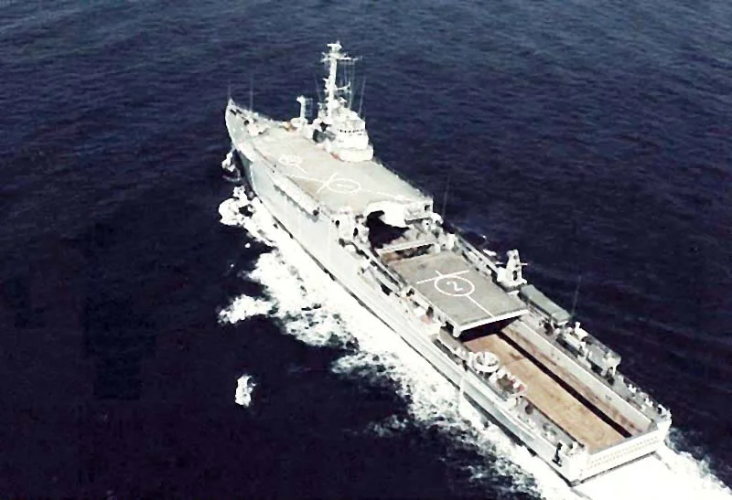
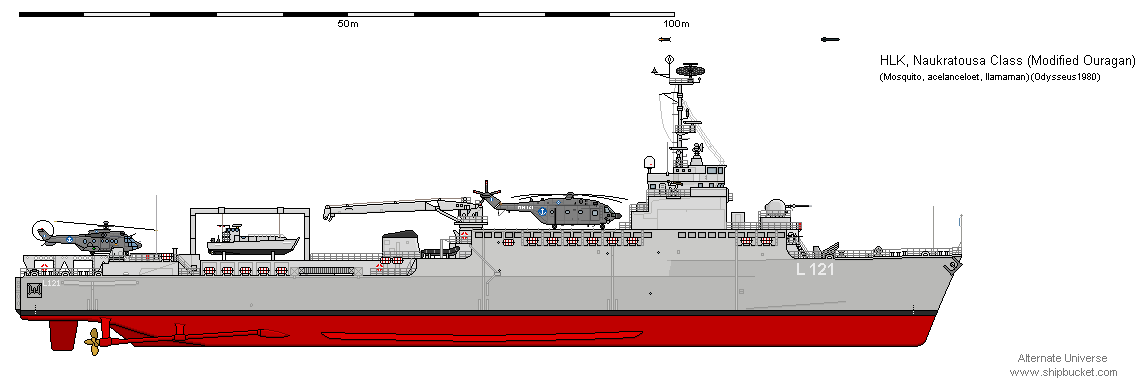
Looking at the LSM-2/LCH/Army/Navy/Tobruk saga as well as the looming retirement of Sydney, from a whole of Government perspective a potential solution becomes apparent, a version of the French Ouragan class LSD. This ship has a crew of 211, compared to 161 for Tobruk and 69 for Jervis Bay and can carry 2 EDIC which are in the class of the Balikpapan LCHs or 8 CTM which are in the class of the LCM-8 or 16 LCM-6 in the 120m x 13.2m well dock. Additionally the dock can be cut in half to create more cargo space and secondary flight decks can be placed over the well dock.

This ship meets the Navy's requirement for higher speed and how a big, long-range ship is the Navy's responsibility. By 1970 there were 11 x LCM-8s and 16 x LCM-6s in service which would fill the well dock, so there's no immediate need for more landing craft in these classes. In 1972, with the LCHs looking like being transferred to the Navy the Army bought 4 long-range LCM-8s. If the Ouragan was under construction, the Army could buy 3 or 4 EDICs which would give it the heavy, long-range coastal logistics capability they want while being able to travel long distances at speed in the LSD dock.

1764135579795.png
 
If that's our assumed mission and it's on record that these ships WILL NOT allow for contested landings AT ALL all the way up to Parliament, Cabinet, and the Prime Ministers; I can deal with it. Though I'd look at the costs of designing in the heavier cranes to allow for picking up a loaded LCM, to be able to say, "for only 10mil more we could have a ship capable of contested landings, Minister."

Define 'contested landing'? Because one of the LSM-1 was hit by 3 RPG2s in Vietnam, but I'd assume that level of threat wouldn't cause the cancellation of an amphibious operation. It is, after all, the opening move of a military operation and some fighting is to expected at some point.

I'd suggest 'contested landing' in the Australian context would mean what the SAS couldn't deal with in an organised attack in reasonable numbers. In the Falklands there was half a company at Fanning head with a pair of 106mm recoiless rifles and I think a pair of 81mm mortars, who opened fire at 2.50am as the British entered San Carlos. These were engaged and defeated by 25 SBS men supported by a single warship's gunfire. I'd say that would be the limit of what Australia's amphibious operation should handle.

When you have dug in troops covering the landing beach with machine guns and pre registered artillery, or a body of troops near enough to counter-attack the landing forget it!
 
I think that if you have LCM-2s then you don't get the Tobruk, but you do need something other than just 4 x LCM-2s which is where the cargo ship idea comes in.
I've just remembered in the 1964 carrier replacement document they wanted to replace Sydney with an Attack Cargo Ship. I believe it has been stated as a FTT Sydney had a crew of 600ish so you could replace her with a Attack Cargo Ship and Tobruk. In an ideal world where the RAFA was re/formed in the 50s they would be crewed by the RAFA
 
I've just remembered in the 1964 carrier replacement document they wanted to replace Sydney with an Attack Cargo Ship. I believe it has been stated as a FTT Sydney had a crew of 600ish so you could replace her with a Attack Cargo Ship and Tobruk. In an ideal world where the RAFA was re/formed in the 50s they would be crewed by the RAFA

An Attack Cargo ship, even a smaller one than the USN had, would be a great compliment to 4 x LSM-2s. An amphibious force of two or three LSM-2, an AKA and the Jervis Bay could land a battalion group or more in a day.
 
Has anyone seen the Army's plan for Littoral Manoeuvre? Basically all 3 Brigades will be transportable via the Adelaide class, 8 new 3,900t LST100s and 18 Birdon LCM 50+m long with 80t payload to the near region, with 3 Brigade being able to defeat any land force in the region's smaller islands. Most importantly with the new 10th Fires Brigade with NASAMS, HIMARS and pending land-mobile, long-range anti-ship missile launchers each of these Brigades also becomes an AA/AD 'bubble'

Given the 'offensive' options we've talked about in this thread, especially if the RAN does a big upgrade on the Melbourne, gets 8 subs and the RAAF keeps the F4Es could that Army pivot to something like this post-Vietnam to give it a more 'offensive' posture? Certainly, a heavy Brigade of tanks, M113s and perhaps wheeled AFVs would be more than a match for almost anything on the nearer islands and light Battalions could be very mobile. I'd think the amphibious lift would have to be at least as big as the biggest options we've discussed here, likely bigger.

What long range missiles could the Army acquire in the 70s to create an offensive and AA/AD capability? Certainly, HAWK SAMs would be a candidate, I suppose Lance is the tactical missile of the 70s as it has conventional warheads. I'd think Exocet was the first AShM, and the Argentine rigged up a launch trailer in 9 weeks in 1982, however Australia first ordered Harpoons in 1976 so perhaps the Army could start work on a launcher then in conjunction with a RAN buy.
 
Has anyone seen the Army's plan for Littoral Manoeuvre? Basically all 3 Brigades will be transportable via the Adelaide class, 8 new 3,900t LST100s and 18 Birdon LCM 50+m long with 80t payload to the near region, with 3 Brigade being able to defeat any land force in the region's smaller islands. Most importantly with the new 10th Fires Brigade with NASAMS, HIMARS and pending land-mobile, long-range anti-ship missile launchers each of these Brigades also becomes an AA/AD 'bubble'

Given the 'offensive' options we've talked about in this thread, especially if the RAN does a big upgrade on the Melbourne, gets 8 subs and the RAAF keeps the F4Es could that Army pivot to something like this post-Vietnam to give it a more 'offensive' posture? Certainly, a heavy Brigade of tanks, M113s and perhaps wheeled AFVs would be more than a match for almost anything on the nearer islands and light Battalions could be very mobile. I'd think the amphibious lift would have to be at least as big as the biggest options we've discussed here, likely bigger.

What long range missiles could the Army acquire in the 70s to create an offensive and AA/AD capability? Certainly, HAWK SAMs would be a candidate, I suppose Lance is the tactical missile of the 70s as it has conventional warheads. I'd think Exocet was the first AShM, and the Argentine rigged up a launch trailer in 9 weeks in 1982, however Australia first ordered Harpoons in 1976 so perhaps the Army could start work on a launcher then in conjunction with a RAN buy.
This is definetly a possibility to happen. Especially with lsm-2 and an attack cargo ship type vessel, plus what ever the RAN also has.
I would say a HAWK sam buy is possible in this scenario as a longer range complement to the Rapier SAMs the army brought. I can definitley see the army buying harpoons for coastal defence with the RAN. For the tactical missile what about the tomahawk cruise missile?
 
This is definetly a possibility to happen. Especially with lsm-2 and an attack cargo ship type vessel, plus what ever the RAN also has.

Thinking about this scenario makes me think about what HMAS Sydney bought to the table; a full battalion of troops, some helicopters and 6 x LCM-6. Add to that 1 LCM-2 with AFVs, another with the battalion's artillery and engineers and a 3rd with SAMs and tactical missiles with the AKA bringing all the supporting rubbish.

However, that does show the firm limits of the sorts of amphibious capability we've been discussing, even with Sydney a single battalion group is all that could be lifted and without her the lift capability falls through the floor, likely to less than a battalion. I'll have t think on how that can be improved.

I would say a HAWK sam buy is possible in this scenario as a longer range complement to the Rapier SAMs the army brought. I can definitley see the army buying harpoons for coastal defence with the RAN. For the tactical missile what about the tomahawk cruise missile?

The first Tomahawk export was to Britain in the mid-late 90s, I can't imagine Australia getting them before that. In any case while I could imagine the RAAF being sort of OK with the 100km range of the Lance and Harpoon I think they'd have a fit over the 1000km range of the Tomahawk.
 
Was A2AD really a thing in the 1960s or 70s?

Hawk is probably your best bet for the SAM unless you drag some naval missiles ashore. Putting 4x Sea Darts onto the back of a truck would be interesting. (Did the aborigines have a work for spear or spear-thrower? *google* oh, "Woomera")

I think I would want both Lance et sim and a dedicated antiship missile like Exocet or Harpoon. Lance is only inertially guided, so it's not going to be effective against ships, and much of the Austrialian Army's work would involve defending against enemy naval/amphibious attacks.
 
Was A2AD really a thing in the 1960s or 70s?

Hawk is probably your best bet for the SAM unless you drag some naval missiles ashore. Putting 4x Sea Darts onto the back of a truck would be interesting. (Did the aborigines have a work for spear or spear-thrower? *google* oh, "Woomera")

I think I would want both Lance et sim and a dedicated antiship missile like Exocet or Harpoon. Lance is only inertially guided, so it's not going to be effective against ships, and much of the Australian Army's work would involve defending against enemy naval/amphibious attacks.

AA/AD wasn't defined the way it is now, but I think it could be done in a small way from the late 70s.

I agree that both Lance and Harpoon would be needed, the Harpoon could close straits to shipping and the Lance could be the first strike against any attack as it formed up.

But, and its a huge but, it would take 2 Tobruk class ships to land a battalion group and a 3rd would be needed if things like HAWKs, Lances and Harpoons were to be moved to a landing area. Perhaps most importantly a proper Defence Policy/Strategy needs to be worked out in the 1972 Defence Review and 1976 Defence White Paper.

Perhaps a semi realistic procurement strategy would be to build the 4 LSM-2 instead of the LCHs, the build a slightly modified Ouragan class in 1979 instead of the Tobruk.
 
Last edited:
Was A2AD really a thing in the 1960s or 70s?

Hawk is probably your best bet for the SAM unless you drag some naval missiles ashore. Putting 4x Sea Darts onto the back of a truck would be interesting. (Did the aborigines have a work for spear or spear-thrower? *google* oh, "Woomera")

I think I would want both Lance et sim and a dedicated antiship missile like Exocet or Harpoon. Lance is only inertially guided, so it's not going to be effective against ships, and much of the Austrialian Army's work would involve defending against enemy naval/amphibious attacks.
I would say if Australia went down the Naval SAM for land use it would use the Standard Missile for commonality with the RAN
AA/AD wasn't defined the way it is now, but I think it could be done in a small way from the late 70s.

I agree that both Lance and Harpoon would be needed, the Harpoon could close straits to shipping and the Lance could be the first strike against any attack as it formed up.

But, and its a huge but, it would take 2 Tobruk class ships to land a battalion group and a 3rd would be needed if things like HAWKs, Lances and Harpoons were to be moved to a landing area. Perhaps most importantly a proper Defence Policy/Strategy needs to be worked out in the 1972 Defence Review and 1976 Defence White Paper.

Perhaps a semi realistic procurement strategy would be to build the 4 LSM-2 instead of the LCHs, the build a slightly modified Ouragan class in 1979 instead of the Tobruk.
I could see 2x Tobruk's and a Attack Cargo Ship being built to replace Sydney, which with the LSM-2 would be able to lift all the equipment required. Plus the HMAS Success carried Landing Craft, so i wouldn't be surprised if HMAS Protector AOE also carried landing craft as well, so it could also be used for amphibious operations . I can't really see the RAN buying a french ship even if it suits them during this period. I definitely see a proper strategy emerging in a post vietnam enviroment instead of the DOA strategy
.
The first Tomahawk export was to Britain in the mid-late 90s, I can't imagine Australia getting them before that. In any case while I could imagine the RAAF being sort of OK with the 100km range of the Lance and Harpoon I think they'd have a fit over the 1000km range of the Tomahawk.
There was a proposed Air launched version of the tomahawk maybe the RAAF could get that for the F-111s as a compromise.
 
I would say if Australia went down the Naval SAM for land use it would use the Standard Missile for commonality with the RAN
Very likely yes, though Standards are heavy things. Though looking at Wiki, only a couple hundred lbs more than Hawk!


There was a proposed Air launched version of the tomahawk maybe the RAAF could get that for the F-111s as a compromise.
Yes, but I'm not sure the Aussies could afford to finish the development.
 
Very likely yes, though Standards are heavy things. Though looking at Wiki, only a couple hundred lbs more than Hawk!


Yes, but I'm not sure the Aussies could afford to finish the development.
So quite possible to stick 2-4 standards on a truck then for a long range SAM, sounds quite good then
If you have aussie interest in the air launched tomahawk before its cancelled it might save it and enter service with the US
 
So quite possible to stick 2-4 standards on a truck then for a long range SAM, sounds quite good then
Well, you still need the rest of the control bits, but yes. Probably still looking at 3 on the trailer or truck like HAWK, it's close to 5000lbs of missiles.


If you have aussie interest in the air launched tomahawk before its cancelled it might save it and enter service with the US
Maybe? the AGM-86B/C/D was a very strong competitor.
 
Well, you still need the rest of the control bits, but yes. Probably still looking at 3 on the trailer or truck like HAWK, it's close to 5000lbs of missiles.


Maybe? the AGM-86B/C/D was a very strong competitor.
The rest can be mounted on other tucks. i wonder why this never happened?
That is true, though the reason i like the tomahawk is the you can have a 3 service buy
 
Why reinvent the wheel when the HAWK exists?

In any case a key part of AA/AD is to deny rear area airspace, where tankers and AEW operate and the HAWK won't manage that. However in the archipelagos North of Australia a few harpoons could deny multiple sea lanes to enemies, and those would need SAM protection.
 
Why reinvent the wheel when the HAWK exists?

In any case a key part of AA/AD is to deny rear area airspace, where tankers and AEW operate and the HAWK won't manage that. However in the archipelagos North of Australia a few harpoons could deny multiple sea lanes to enemies, and those would need SAM protection.
Agree that HAWK exists and would be chosen, though being able to share a missile stockpile allowing Australia to have a large stockpile than smaller stockpile of multiple types of missile is advantageous.
for AA/AD you need a layered defence, as the RAAF doesn't have the numbers or tankers to provide air cover depending on location from Australia
  • Long Range SAM to deny rear area airspace (EG Standard or Bloodhound Mk.2)
  • Medium Range SAM to protect harpoons and other key infrastructure/equipment (EG HAWK)
  • Short Range SAM to short down anything that get through the SAM and Fighter defence, plus protect the more forward areas (EG Rapier)
Basically Post vietnam we need the DOA strategy to become one of quickly deploying forces to the islands in the north to deny access, instead of one based from Australia, If so i can see this becoming a quite a useful strategy to this day and one where having an aircraft carrier would be quite handy
 
I could see 2x Tobruk's and a Attack Cargo Ship being built to replace Sydney,

That'd be good, but apart from Tobruk Sydney wasn't replaced.

the HMAS Success carried Landing Craft, so i wouldn't be surprised if HMAS Protector AOE also carried landing craft as well, so it could also be used for amphibious operations

Success carried a single LCVP, the smallest landing craft that could carry a Land Rover with trailer, rather than and LCM-6 which could carry 2 M113s or LCM-8 which could carry a tank. While handy it doesn't make Success much use for an amphibious operation.
 
That'd be good, but apart from Tobruk Sydney wasn't replaced.
Yep it is a shame the Sydney wasnt replaced properly, i mean you could have built 3-4 tobruks for sydney crew to replace her properly.
uccess carried a single LCVP, the smallest landing craft that could carry a Land Rover with trailer, rather than and LCM-6 which could carry 2 M113s or LCM-8 which could carry a tank. While handy it doesn't make Success much use for an amphibious operation.
I was only using her as an example, cause in this scenario i would say HMAS Protector would get built instead and she might have been able to carry more or bigger landing craft. With Protector/Success i would have her carrying the support personal and lighter equipment to allow the LSM-2, Tobruks and LKA to carry more Infantry, AFVS, Tanks, SAMs, Harpoons, Ect
 
Yep it is a shame the Sydney wasnt replaced properly, i mean you could have built 3-4 tobruks for sydney crew to replace her properly.

I was only using her as an example, cause in this scenario i would say HMAS Protector would get built instead and she might have been able to carry more or bigger landing craft. With Protector/Success i would have her carrying the support personal and lighter equipment to allow the LSM-2, Tobruks and LKA to carry more Infantry, AFVS, Tanks, SAMs, Harpoons, Ect

The RAN was never keen on the Sydney, they had to incur the (large) cost of a ship the Army benefited from. However, if the Point of Departure is that Menzies accepted Moreshead's recommendation to merge the 3 Service Ministries with the Defence Ministry in 1958 that objection will become less 'acceptable' during the 60s.

I don't disagree that 3 Tobruks and an LKA would be a great capability, but it's a massive departure from history at the worst possible time to make big changes. The reason I'd suggest 4 LSM-2s and an altered Ouragan is because the former were an actual project that upon failure was replaced by the LCHs while the latter can be a stand-in for the historical Tobruk. The result is significant increase in amphibious capability in the decade of the change to 'self reliance'. What would be handy is the 1972 Defence Update and in particular the 1976 Defence White Paper stating that the ADF needs to be able to deploy to the near region in an emergency, that would justify the development of a reasonable amphibious capability, especially if the LSM-2 were at it's base.

I think your idea for the oilers to assist with amphibious operations is ahead of its time. Project SEA2200 is for a pair of Joint Logistic vessels that can conduct RAS of fuel and some solids and support an amphibious landing with a well dock and cargo, it the were to replace HMAS Choules. However I think it would be a tough sell in the 70s, I think it would require significant growth in seaborne deployment capability and those came from the shortcomings of Fiji in 1987 and East Timor in 1999.
 
Basically Post vietnam we need the DOA strategy to become one of quickly deploying forces to the islands in the north to deny access, instead of one based from Australia, If so i can see this becoming a quite a useful strategy to this day and one where having an aircraft carrier would be quite handy

100%, but this wasn't made clear in the 70s and then in the mid 80s the Dibb Report came out followed by the 1986 Defence White Papaer. There's a lot wrong with these documents, in particular focusing too much on a contingency that was almost never going to happen at the expense of other, more likely scenarios like Fiji 1987 and Kuwait 1991. However they did represent the first definite attempt to lay out a threat and propose a strategy to meet that threat, so must be commended for that.

I have a vague notion that a single Defence Minister will have an impact on the command arrangements for our large, and for an Ally, uniquely balanced contribution to the Vietnam War. I imagine that COMAFV would take on more of an active role in coordinating how Australian Forces were used, as opposed to being a more like a liaison organsiation for Australian units operatingunder US command.

I think the more 'Jointly' Australians operated in Vietnam, eg the RAN destroyer on station being recalled to 1 ATF if 1 ATF was conducting a mission near the coast, or the RAAF Canberras being available to directly support Army operations the better placed the ADF would be for the transition to 'self reliance' from 1972. This would have positive impacts on Procurement in the 70s and 80s.
 
It was part of the reorganisation of the army into task forces with four identical motor brigades. With the end of that plan, the requirement for mobile fires disappeared, too.
What where these task forces going to look like?
 
The RAN was never keen on the Sydney, they had to incur the (large) cost of a ship the Army benefited from. However, if the Point of Departure is that Menzies accepted Moreshead's recommendation to merge the 3 Service Ministries with the Defence Ministry in 1958 that objection will become less 'acceptable' during the 60s.

I don't disagree that 3 Tobruks and an LKA would be a great capability, but it's a massive departure from history at the worst possible time to make big changes. The reason I'd suggest 4 LSM-2s and an altered Ouragan is because the former were an actual project that upon failure was replaced by the LCHs while the latter can be a stand-in for the historical Tobruk. The result is significant increase in amphibious capability in the decade of the change to 'self reliance'. What would be handy is the 1972 Defence Update and in particular the 1976 Defence White Paper stating that the ADF needs to be able to deploy to the near region in an emergency, that would justify the development of a reasonable amphibious capability, especially if the LSM-2 were at it's base.

I think your idea for the oilers to assist with amphibious operations is ahead of its time. Project SEA2200 is for a pair of Joint Logistic vessels that can conduct RAS of fuel and some solids and support an amphibious landing with a well dock and cargo, it the were to replace HMAS Choules. However I think it would be a tough sell in the 70s, I think it would require significant growth in seaborne deployment capability and those came from the shortcomings of Fiji in 1987 and East Timor in 1999.
I mean all this does become easier with the 58 defence department mergers POD. I can see in the earlier 60s a smaller AKA being built/modified from a commercial vessel instead of the John Monash being built. Than 4 LSM-2 being built late 60s/early 70s replacing the LSM-1s. Then Sydney needs replacing by the late 70s, while i like the your idea of the Ouragan i cant really see the RAN in this period buying French. So Sydney gets replaced by 3-4 Tobruk's which i see quite likely in this scenario. I would like also to see some LCH's brought for the army instead of the modified long range LCM-8s.
I wasn't suggesting the JSS that the RAN wanted before cancelled by the DSR, I was more thinking the role HMAS Success played during East Timor in 1999
 
Looking at the LSM-2/LCH/Army/Navy/Tobruk saga as well as the looming retirement of Sydney, from a whole of Government perspective a potential solution becomes apparent, a version of the French Ouragan class LSD. This ship has a crew of 211, compared to 161 for Tobruk and 69 for Jervis Bay and can carry 2 EDIC which are in the class of the Balikpapan LCHs or 8 CTM which are in the class of the LCM-8 or 16 LCM-6 in the 120m x 13.2m well dock. Additionally the dock can be cut in half to create more cargo space and secondary flight decks can be placed over the well dock.

This ship meets the Navy's requirement for higher speed and how a big, long-range ship is the Navy's responsibility. By 1970 there were 11 x LCM-8s and 16 x LCM-6s in service which would fill the well dock, so there's no immediate need for more landing craft in these classes. In 1972, with the LCHs looking like being transferred to the Navy the Army bought 4 long-range LCM-8s. If the Ouragan was under construction, the Army could buy 3 or 4 EDICs which would give it the heavy, long-range coastal logistics capability they want while being able to travel long distances at speed in the LSD dock.

View attachment 793149
I like it Rool of cool!

In truth, I've never heard of the Ouragan class LSD before your post.

Seemed like a very versatile vessel, with a lot of capability for it's size:
- The standard layout allowed the vessels to transport 349 troops with 14 officers.;
- could transport eight loaded Chaland de transport de matériel (CTMs) or with eighteen Mk 6 landing craft mechanized (LCMs) operating from the well deck. A further three landing craft vehicle personnel (LCVPs) could be carried topside;
- a maximum speed of 17 knots (31 km/h; 20 mph) and a range of 9,000 nautical miles (17,000 km; 10,000 mi) at 15 knots (28 km/h; 17 mph);
- Logistically they could carry 1,500 t (1,500 long tons; 1,700 short tons) of equipment which was serviced by the two 35-ton cranes mounted above the docking well;
- the Ouragan class had a 900-square-metre (9,700 sq ft) flight deck that initially had the ability to operate three Aérospatiale SA 321 Super Frelon helicopters or ten Aérospatiale Alouette IIIs. To accommodate the flight deck, a small island was situated to the starboard side. They could have one further Super Frelon or three Alouettes fly from a removable six-section 36 m (118 ft) flight deck area covering their well deck space. Within its hold, it could carry 18 Super Frelons and 80 Alouettes for transport purposes only.

For the forums further appraisal:
https://en.wikipedia.org/wiki/Ouragan-class_landing_platform_dock
Regards
Pioneer
 

Attachments

  • French Ouragan class LSD profile drawing.png
    French Ouragan class LSD profile drawing.png
    24.4 KB · Views: 19
Last edited:
The reason I like the Ouragan is because it's the smallest ship with a dock with the smallest crew in the 60s-70s. It's 8,500t loaded and 211 crew compared to the UK Fearless class LPD 12,100t and 580 crew, the US Anchorage LSD 14,000t and 358 crew and US Raleigh LPD 13,600t and 665 crew. Tobruk was 5,800t and had a crew of 161.

In the Australian context I think the 120m long (13.2m wide) well dock is overkill, the Ouragan's could install extra space for cargo which shortened the well dock to 60m long. I would make this permanent, and buy some British LCU-9s which have about double the capacity of the LCM-8, so the Australian Ouragans could carry 2 x LCU-9s and 3 x LCM-6s or 4 x LCM-8s. There also was the capacity to increase the troop capacity from 363 to 470, I'd make this permanent as well which might be possible in conjunction with increasing the cargo space. An Australian Ouragan and available LSM-2 would be able to move a well armed battalion to anywhere in the region.
 
I think the more 'Jointly' Australians operated in Vietnam, eg the RAN destroyer on station being recalled to 1 ATF if 1 ATF was conducting a mission near the coast, or the RAAF Canberras being available to directly support Army operations the better placed the ADF would be for the transition to 'self reliance' from 1972. This would have positive impacts on Procurement in the 70s and 80s.
Very much agree here.


I like it Rool of cool!

In truth, I've never heard of the Ouragan class LSD before your post.

Seemed like a very versatile vessel, with a lot of capability for it's size:
- The standard layout allowed the vessels to transport 349 troops with 14 officers.;
- could transport eight loaded Chaland de transport de matériel (CTMs) or with eighteen Mk 6 landing craft mechanized (LCMs) operating from the well deck. A further three landing craft vehicle personnel (LCVPs) could be carried topside;
- a maximum speed of 17 knots (31 km/h; 20 mph) and a range of 9,000 nautical miles (17,000 km; 10,000 mi) at 15 knots (28 km/h; 17 mph);
- Logistically they could carry 1,500 t (1,500 long tons; 1,700 short tons) of equipment which was serviced by the two 35-ton cranes mounted above the docking well;
- the Ouragan class had a 900-square-metre (9,700 sq ft) flight deck that initially had the ability to operate three Aérospatiale SA 321 Super Frelon helicopters or ten Aérospatiale Alouette IIIs. To accommodate the flight deck, a small island was situated to the starboard side. They could have one further Super Frelon or three Alouettes fly from a removable six-section 36 m (118 ft) flight deck area covering their well deck space. Within its hold, it could carry 18 Super Frelons and 80 Alouettes for transport purposes only.

For the forums further appraisal:
https://en.wikipedia.org/wiki/Ouragan-class_landing_platform_dock
Regards
Pioneer
Oh, wow, that is a whole lot of capabilities packed into a small ship! And they gave it 120mm mortars for the primary guns? Weird, but good enough for throwing HE around.

For the Aussie version of that ship, I would also make the extended helo deck a permanent part of the mods in addition to Rule of Cool's changes. That would give you space for 4x Super Frelons (~27pax each) to move those 470 troops.
 
What where these task forces going to look like?
One may have been one tank regiment and two mech inf with M-113, three or four others with one CAV regt and two Motor Btns with Bushmasters, two of which were to have been ready reserve. Going off memory, I will see if I can find the reference. Ready reserve and ARES / General reserve was to be fully integrated.
 
For the Aussie version of that ship, I would also make the extended helo deck a permanent part of the mods in addition to Rule of Cool's changes. That would give you space for 4x Super Frelons (~27pax each) to move those 470 troops.

Different pictures show 2 detachable flight decks, one amidships and the other aft. I think they got removed to give clear space overhead, but if half the well dock is converted to cargo space then I think the amidships fight deck could be fixed permanently. It would need to be able to handle the RAAFs CH47 Chinooks.
 
Different pictures show 2 detachable flight decks, one amidships and the other aft. I think they got removed to give clear space overhead, but if half the well dock is converted to cargo space then I think the amidships fight deck could be fixed permanently.
I wasn't sure if you'd need overhead access to the cargo bay. I'd prefer the forward flight deck be extended aft instead of the detachables.

It would need to be able to handle the RAAFs CH47 Chinooks.
Hrm. Super Frelons are a lot lighter than Chinooks, 13,000kg versus 25,000kg. Those helo decks are going to have to be significantly reinforced.
 
I wasn't sure if you'd need overhead access to the cargo bay. I'd prefer the forward flight deck be extended aft instead of the detachables.

There are cranes either side of the well dock amidships, so perhaps it does need to remain open. I don't know where the well dock goes to, or where the extra cargo space is inside the ship.

Hrm. Super Frelons are a lot lighter than Chinooks, 13,000kg versus 25,000kg. Those helo decks are going to have to be significantly reinforced.

Australia doesn't have any Super Frelons.
 
Back
Top Bottom