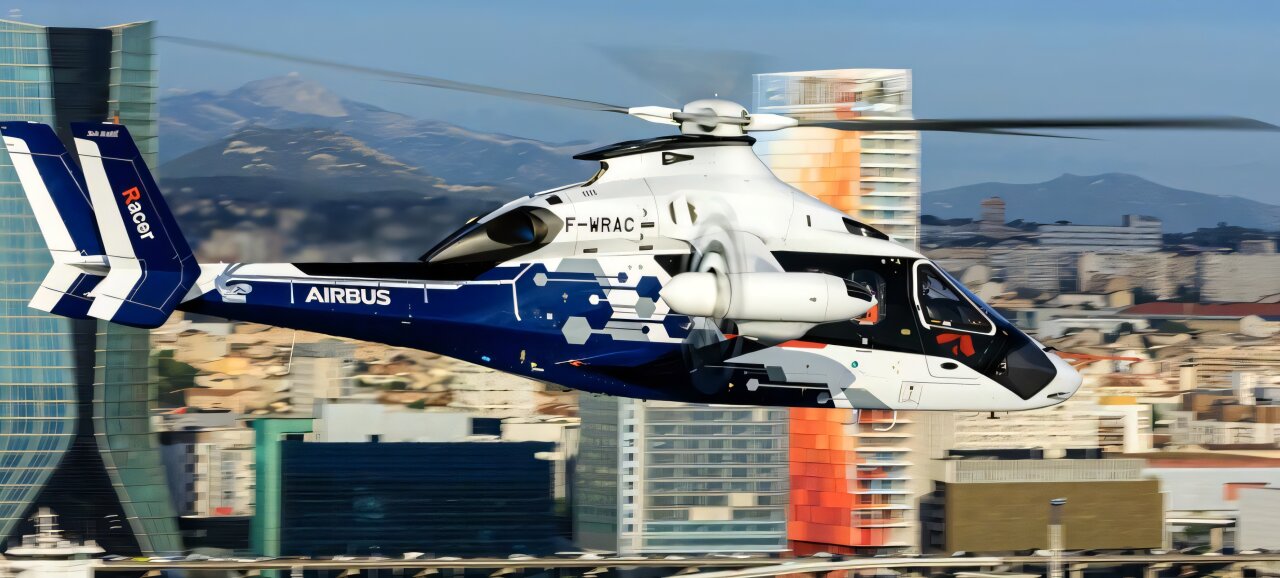
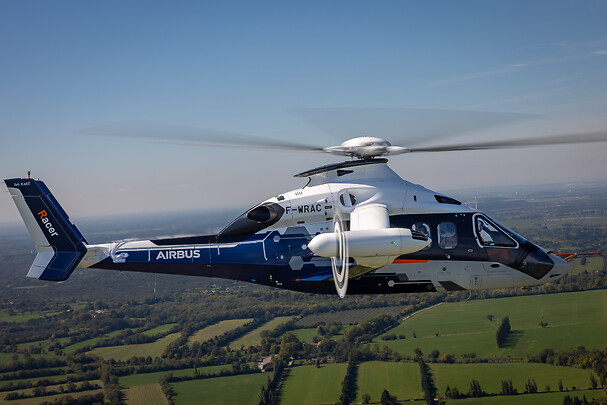
AIRBUS RACER / Clean Sky2 LifeRCraft Demonstrator

The real question is how that power for speed compares to equivalent high speed helo:
- 2600shp for the S-97
- 4000shp for the AH-56
(they are mostly in the same weight category)

Also, which one derivative would provide that speed with the lowest shp per pax? (SFC being somewhat linear with cruise power).

If Racer really fits 10 pax, they might have a play in that new segment. But more pax does not constitute a panacea by itself as Tilt rotors will certainly reign in the heavy/long range segment.

Conclusion: Racer/Raider should discard any attempt to compete for longer range and High Passengers capacity and search for simply being the highest output inter city Taxis an user would be willing to pay.
Porsche & Corvette didn´t fit their models with 1000Hp engines on their first day...
 
Last edited:
The real question is how that power for speed compares to equivalent high speed helo:
- 2600shp for the S-97
- 4000shp for the AH-56
(they are mostly in the same weight category)

Also, which one derivative would provide that speed with the lowest shp per pax? (SFC being somewhat linear with cruise power).
Indeed. For Racer we know it's 1x ~2,500shp for 180 knots and 2x ~2,500 shp for 240 knots. With sustained cruise at 220 knots, which assuming a 80-90% power rating is 2x ~2,000-2,200shp. (All ratings are engine ratings at sea level - actual power at altitude will be lower)

So the cost of speed is quite obvious (and significant) compared to a traditional (but slow) H145 helicopter with the same cabin size and which needs only 2x 750shp to cruise at 134 knots @3.7-3.8 tonnes. To increase speed by 35% (134->180 knots), the power requirement increases by ~25% on a SHP/NM basis (2x 750 -> 1x 2,500 shp). And to increase speed by 65% (134->220 knots), the power requirement per NM increases ~60% (2x 750 -> 2x 2,000 shp).

You could run the same math comparing Racer to a AW169 (4.6-4.8 tonnes) cruising at 150 knots with 2x 920 shp. To increase speed by 20% (150->180 knots) the power requirement per NM increases by ~15%, and to increase speed by 45% (150->220 knots) the power requirement per NM increases by ~50%.

Bottom line is to increase speed you need to increase power per NM... by a little less than ~1% for each 1% increase in speed up to 180 knots, and a little more than 1% from 180 to 220 knots.

Here's a good interview with Racer's flight test engineer, which confirms 7.3 tonne take-off weight (exactly as I had estimated in post #184)... basically 2x an H145!
View: https://www.youtube.com/watch?v=6zRgRW_ZDYo
 
Last edited:
Racer demo at the Paris Air Show... very impressive acceleration from hover, wing-overs with >90 degree bank angles, side slips and other tricks.

View: https://youtu.be/eugfQPAaOO8?feature=shared&t=8

Yeah the thing that struck me was the acceleration and that it sounded like a classic warbird.

On the power versus speed thing its the exact same dilemma you have with trains, the basic power law of aerodynamics is that to increase the speed by a further 50% you need over twice as much power as your currently using.
 
Last edited:
Indeed. For Racer we know it's 1x ~2,500shp for 180 knots and 2x ~2,500 shp for 240 knots. With sustained cruise at 220 knots, which assuming a 80-90% power rating is 2x ~2,000-2,200shp. (All ratings are engine ratings at sea level - actual power at altitude will be lower)

So the cost of speed is quite obvious (and significant) compared to a traditional (but slow) H145 helicopter with the same cabin size and which needs only 2x 750shp to cruise at 134 knots @3.7-3.8 tonnes. To increase speed by 35% (134->180 knots), the power requirement increases by ~25% on a SHP/NM basis (2x 750 -> 1x 2,500 shp). And to increase speed by 65% (134->220 knots), the power requirement per NM increases ~60% (2x 750 -> 2x 2,000 shp).

You could run the same math comparing Racer to a AW169 (4.6-4.8 tonnes) cruising at 150 knots with 2x 920 shp. To increase speed by 20% (150->180 knots) the power requirement per NM increases by ~15%, and to increase speed by 45% (150->220 knots) the power requirement per NM increases by ~50%.

Bottom line is to increase speed you need to increase power per NM... by a little less than ~1% up to 180 knots, and a little more than 1% from 180 to 220 knots.

Here's a good interview with Racer's flight test engineer, which confirms 7.3 tonne take-off weight (exactly as I had estimated in post #184)... basically 2x an H145!
View: https://www.youtube.com/watch?v=6zRgRW_ZDYo
"Drag" is a drag!
 
On the power versus speed thing its the exact same dilemma you have with trains, the basic power law of aerodynamics is that to increase the speed by a further 50% you need over twice as much power as your currently using.
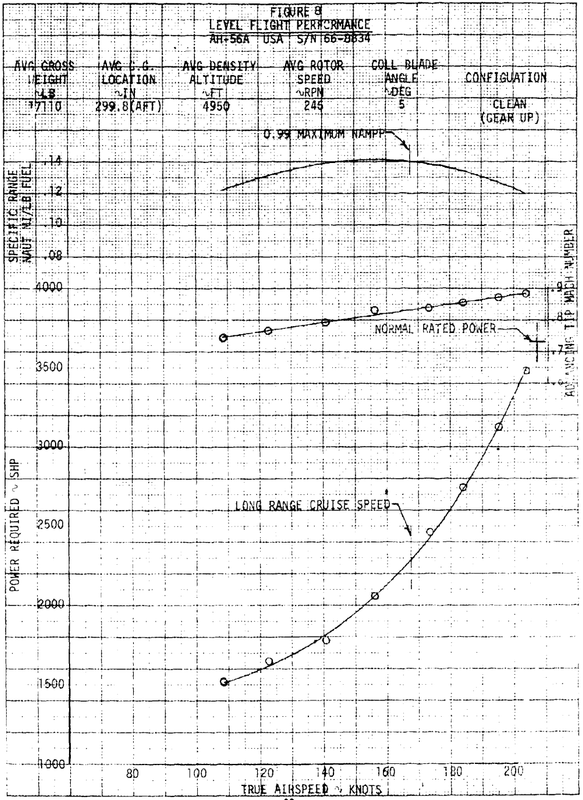
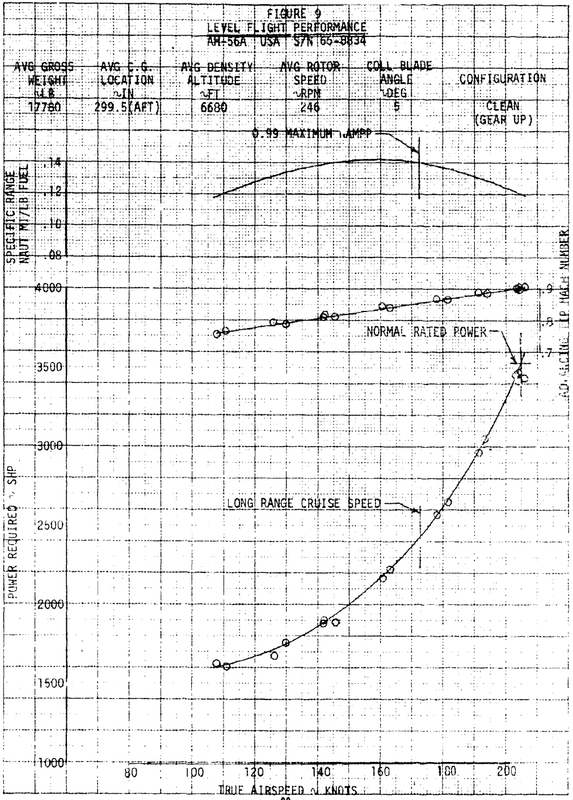
Interestingly Racer seems to follow the same power-speed relationship as AH-56 Cheyenne... another winged/pusher prop compound helicopter configuration.

Take Cheyenne's power curves (below) and adjust them by -15% across the board, and you get a pretty good approximation of Racer. (The -15% illustrates Airbus's ability to clean up Racer's drag with modern aerodynamic knowledge).

Also note that Cheyenne's long range cruise efficiency of .14 nm/lb at 145-175 knots TAS would still be considered excellent by modern standards... that translates to ~0.4kg/nm/tonne. So take that and apply Racer's -15% drag improvement plus an additional ~15% improvement in specific fuel consumption vs. Cheyenne's old T64 turboshaft, and you get a good approximation of how Racer achieves its targeted fuel consumption.

ATTACK HELICOPTER EVALUATION (1972)
AH-56A CHEYENNE COMPOUND HELICOPTER

AH-56-5-000ft.png

AH-56-6-700ft.png
 
Last edited:
Cheyenne had a weapons package, including guns, pylons and turrets plus other draggy and heavy war attributes.
 
Cheyenne had a weapons package, including guns, pylons and turrets plus other draggy and heavy war attributes.
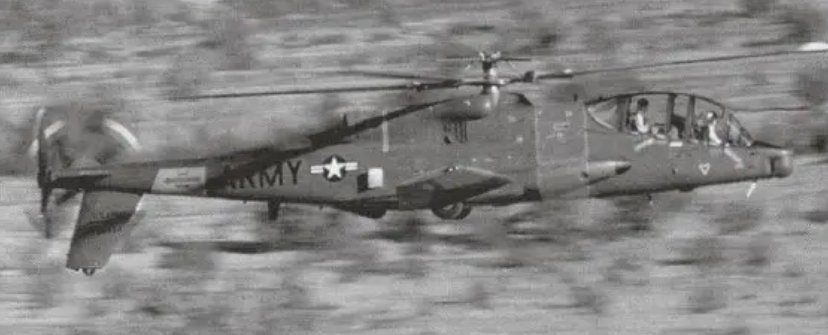
This data is from the engineering test Cheyenne #1010 which had none of those. The test is in clean configuration with no weapons package, guns, pylons or external stores.

#1010 below in similar test configuration
IMG_3999.jpeg
 
Everybody can see the turret, the sensors, the bulbous canopy, the crash worthy landing gear and can guess the mass of the structural reinforcement to be able to carry the required weapons load.
  • Empty weight: 12,215 lb (5,541 kg)
  • Gross weight: 18,300 lb (8,301 kg)
  • Max takeoff weight: 25,880 lb (11,739 kg)
(wiki)

Pax helo can be made out of lightweight materials, or are expected to carry considerably less in Pax mass and cargo (usually!).

At the disadvantage of Racer, there is the side by side seating, cabin volume and raised rotor mast, although Airbus use the front section as a high speed trim surface catching back with power spill (idem Dauphin, H-160...). Then will come the noise abatement measures not present on the prototype that might bring some more spillage of power.
 
Last edited:
Everybody can see the turret, the sensors, the bulbous canopy, the crash worthy landing gear and can guess the mass of the structural reinforcement to be able to carry the required weapons load.

(wiki)

Pax helo can be made out of lightweight materials, or are expected to carry considerably less in Pax mass and cargo (usually!).

At the disadvantage of Racer, there is the side by side seating, cabin volume and raised rotor mast, although Airbus use the front section as a high speed trim surface catching back with power spill (idem Dauphin, H-160...). Then will come the noise abatement measures not present on the prototype that might bring some more spillage of power.
Racer is a ~20,0000lb helo.
 
Just a reconfigure of the Airbus X3 going back 15 years, retreating blade stall is the killer of a non-coaxial Heli design.

Regards,
 
Last edited:
Racer is a ~20,0000lb helo.
Racer's MTOW is 7.3t (16,100lbs), per last week's interview with its flight engineer at the Paris Air Show 25.

I posted the AH-56 Cheyenne data because at similar test weights (7.8 to 8t, 17,100 to 17,700lbs for Cheyenne) and in clean configuration it appears to be a fairly good approximation of the power-speed relationship from a similar compound helicopter design (all things considered obviously). The Cheyenne test was without weapons or sensors (with a fairing in the nose instead of the nose gun), though perhaps not completely drag optimized (but neither is Racer as it has a fatter fuselage cross section to enable passenger carriage). Racer appears to require a little less power than AH-56 (very roughly -15%, maybe a little more) which can likely be explained by a number of improvements to drag (e.g. rotor hub and landing gear fairings), propeller efficiency (pusher props taking advantage of wing tip vortices), wing lift coefficient etc.
 
Last edited:
A write up

Better known for its expertise in car racing rather than aerospace, KLK co-developed the RACER's canopy—the sleek, enclosure over the cockpit that needs to handle airflow efficiently to optimize aerodynamics.

Their involvement highlights one of the RACER's greatest strengths: the wide collaboration that went into its development, which brought in the expertise of major industry players, but also specialized SMEs and leading research organizations.

"Working with people outside aerospace is invigorating," said Makinadjian
 
These military trials explain some of the Racer test flights that have been observed in the last few weeks, with an emphasis on maneuverability, low altitude flight, coming in and out of hover, snap turns etc...

(Behind a paywall unfortunately)
 
Last edited:
These military trials explain some of the Racer test flights that have been observed in the last few weeks, with an emphasis on maneuverability, low altitude flight, coming in and out of hover, snap turns etc...

(Behind a paywall unfortunately)
No suprise that Airbus has made some of the earlier test flights conform to military maneuvers. Racer is their compeditor to the Bell MV-75. Given that many nationns do not have long distance demands for their military, it would probably be a better and more pratical solution.
 
Last edited:
No suprise that Airbus has made some of the earlier test flights conform to military maneuvers. Racer is their compeditor to the Bell MV-75. Given that many nationns do not have long distance demands for their military, it would probably be a better and more pratical solution.
I still hope the military version gets shrouded pusher props... Otherwise, gonna have a lot of troops hitting the blades.
 
I still hope the military version gets shrouded pusher props... Otherwise, gonna have a lot of troops hitting the blades.
I share your concern regarding the open rotors. Perhaps there is a planned means to quickly stop the rotors with weight on wheels or some other means. This is still very risky I think. I have to expect that Airbus is very aware of this and is lookig at options to reduce the risk.
 
I share your concern regarding the open rotors. Perhaps there is a planned means to quickly stop the rotors with weight on wheels or some other means. This is still very risky I think. I have to expect that Airbus is very aware of this and is lookig at options to reduce the risk.
Apparently one of the biggest feedback items from clients when they saw the X3 was that they wanted Airbus to add a clutch to stop the lateral propellers on the ground. Airbus felt like this was overkill as the wing functions as a natural barrier between a safe embarcation area and the no-go area near the props, but acknowledged that the feedback was so universal that they would have to implement a clutch... so I assume this clutch exists on the Racer.

I wonder if there's a middle ground where the pilot could have the option to stop only 1 lateral propeller (e.g. the left side where people embark) so as to allow the other prop to continue providing some countertorque? I imagine this might help when landing on rough terrain to keep the main rotor loaded and reduce the weight on wheels.
 
Last edited:
It would also need an hydro brake and not only the mentioned clutch, as the rotor is driven by a shaft. The other problem would be the impossibility to use such while hovering. You need to complete your landing with a firm stand before declutching (and prop braking). That does not look very compatible with any assault landing, troop infiltration etc...

On the other hand, as an attack helicopter, nothing in this configuration would stand in the way of the mission. On the contrary (it´s fast enough, lower footprint than a tiltrotor with weaker downwash). The cabin volume could be ideal for effectors launch or side bay release and the stub wing for more classical weapon delivery. Chasing UAV and other flying bombs would be an ideal mission.
But, still, hot refueling would need clutch and brake similarly. There is no way to go around for any military use.
 
Last edited:
In a civilian environment this method (stop one of the props) is likely to be very desirable from a passenger perspective as well as the safety consideration. The challenge for a military situation is that in extremis ground soldiers who are looking to get out of a danger zone in a hurry are not as controlled or aware of dangers as they are usually tired, and wired. Thus not at the top of their game. There are numerous incident of people walking into spinning propellers or tail rotors. This used to be acceptable risk. I am not sure that is still a realistic position. Airbus will have to determine the best course of action.

I agree this configuration lends itself to an attack platform more readily. Both the acceleration and decelleration (assuming you can put the props into beta mode) would be very useful. Here the greatest challenge would likely be propellerr damage caused by launching rockets and missiles..
 
Here the greatest challenge would likely be propellerr damage caused by launching rockets and missiles..
I don't see why? The exhaust plumes of fuselage-mounted or inner wing mounted weapons won't come anywhere near the propeller disks.
 
I don't see why? The exhaust plumes of fuselage-mounted or inner wing mounted weapons won't come anywhere near the propeller disks.
I agree with you. Perhaps a bit more clarity was needed. The probability is minute. Even on single main rotor helicopters there is a chance that the tail rotor can be damaged by the efflux from an igniting rocket motor. Not enough to warrant a redesign of the of the dynamic components. At least to my knowledge. So my comment should have reflected a belief that the risks to an attack platform version would be minimal.
However a design consideration for the combat aircraft would be how to deal with the right propulsor (I think) being shot out. At higher speeds this is likely not a controllability issue as the rudders should provide sufficient control of the aircraft. When slowing for a landing it seems to me that the aircraft would need to have beta mode available on the left propulsor in order to overcome the torque, unless a roll on landing is the prefered solution under these circumstances.
Lots of interesting things to watch as the aircraft progresses. Nothing critical enough to preclude it becoming a worthwhile combat aircraft like all of the French rotorcraft.
 
How did the original Fairey Gyrodyne , with the mechanically driven rotor do it ? It only had one propeller , on the left side . . .

cheers,
Robin.
 
Chief Engineer, Brice Makinadjian, answers some questions...
Their reason for not using a rear pusher propeller is interesting… this would impact weight distribution and the « extreme » center of gravity would be destabilizing.

2g maneuverability at 200 knots (60 degree bank) sounds pretty good.

Wonder if the reduced drag of the internally mounted rescue hoist that will be trialed could be interesting on more conventional helicopters flying at 130-150 knots.

Still no answer regarding the weight penalty of the Racer configuration, which was a question I’d asked and they ignored.
 
Still no answer regarding the weight penalty of the Racer configuration, which was a question I’d asked and they ignored.
Back-of-the-envelope guesstimate:
2x prop driveshafts are about the same length as the total tail rotor setup, so no net change.​
2x 90deg gearboxes instead of 1x 47deg and 1x 90deg, probably no net change.​
Wings are likely a hundred pounds each if they're all composite. (edit) +200lbs
2x 6-bladed props, full reversing, are on the order of 300lbs each, maybe more if the blades are metal instead of composite. Tail rotor is on the order of 100lbs. (edit) +500lbs
Engines are a lot bigger and so is the transmission.​
RACER seems to be flying on RTM322s, while an H60 is flying on T700s. RTM322s weigh in at about 550lbs each while the T700s are ~400lbs. (edit) +300lbs
I am not finding any online sources for transmission weights, but I will assume a similar increase in weight over the engines, +25-30%.​


That's +1000lbs before transmission.
 
Last edited:
We should keep in mind that so far we have a series of optimized designs that have not even reached the preliminary design review stage. They all will no doubt see a number of changes. Many likely due to increased weight as the vendors get better resolution on what systems and equipment the customer wants to have the platform carry. In the case of the Airbus winged compound I would expect at least an option for fuel in the wing. This will of course increase the basic weight of the wings.
 

Beyond speed: Racer demonstrator proves agility and stability in latest test campaign​

The Airbus Racer high-speed demonstrator has continued to expand its flight envelope. With over 50 flight hours now logged, the aircraft has stacked new milestones - from steep slope landings to high-G turns - proving its maturity and mission capacity.

Funded by the European programme Clean Sky 2, the Racer was designed to answer a critical question: Can a helicopter combine high speed with improved fuel-efficiency

The demonstrator has already proven it can reach a cruise speed of 440 km/h while burning 25% less fuel than a conventional helicopter. It has also demonstrated the effectiveness of the compound formula offering the best trade-off between speed, cost-efficiency and mission performance.

During its latest test campaign, the demonstrator, continued pushing the boundaries of what the aircraft can do in complex, real-world configurations. Here is a closer look at the latest breakthroughs from the latest flight test campaign.

Airbus Racer in flight


Redefining slope landings​

Landing on uneven terrain is historically one of the most complex manoeuvers for a helicopter pilot. The Racer could change the standard technique entirely.
In recent tests, the demonstrator successfully completed a 14-degree landing. Unlike standard helicopters that require difficult manoeuvers to match the slope, the Racer utilises its unique configuration to its advantage. By keeping its main rotor level and using its side propellers to precisely angle the aircraft, it can land perfectly parallel to the slope. This capability enables the Racer to land in areas that would have been considered off limits for conventional helicopters - greatly expanding the operational possibilities for this type of aircraft.

Racer slope landing

Fast climb-rate capabilities​

While cruise speed is established, vertical performance is equally critical. The Racer recently soared to 10,000 feet in just 2 minutes and 44 seconds.
Travelling at 260 km/h, this translates to a climb rate of 3,600 feet per minute, roughly twice as fast as a conventional rotorcraft. Crucially, this record was not set by a stripped-down prototype, but by the Racer in its standard configuration. For military applications, this "mission-ready" speed can be vital, allowing the aircraft to exit high-threat zones and outrun small arms range rapidly.

Airbus' Racer demonstrator soars above the Mediterranean sea


Agility at high speeds​

High speed often comes at the cost of maneuverability, but the Racer has also proven that you can have both. The demonstrator recently executed sharp 2g turns while flying at 370 km/h.

Once again, the secret lies in the Racer's innovative architecture. At high speeds, the wings take on the lifting load, freeing up the main rotor and side propellers to focus on extreme agility. This compound configuration also enables the aircraft to accelerate and decelerate while maintaining a constant altitude. Unlike conventional helicopters that must pitch the nose down to accelerate or up to brake, the Racer can change speed while remaining level—a clear advantage for military missions requiring stability and target focus.

Airbus Racer in flight


A vote of confidence from military operators​

As part of phase one of ENGRT, guest military pilots from France, Germany and Finland had the chance to pilot the demonstrator and experience the outstanding Racer performance first hand.

Allowing guest pilots on an experimental aircraft is rare and is typically permitted by regulators only when a design is proven to be exceptionally mature and stable. This successful exchange serves as a critical step in de-risking the technology for future military programs and demonstrates a high level of confidence in the platform.

Airbus Racer in flight


What’s Next? Eco-Mode and acoustic optimisation

The innovation pipeline is far from empty. The team is now preparing to test two promising environmental initiatives: the "Eco-Mode" system and optimised low-noise trajectories.

Scheduled for testing later this year, the Eco-Mode will allow the pilot to put one of the two engines on stand-by in cruise. This is projected to reduce fuel burn by an additional 15% while maintaining a fast cruise speed of approximately 330 km/h. Should the pilot need full power back, the system is designed to restart the second engine in mere seconds.

The team is also planning to explore how the Racer’s unique configuration allows for the optimisation of its acoustic footprint. The team has an ambitious goal to validate a reduced sound footprint on the ground of at least 30%. This is achievable thanks to the Racer’s unique compound architecture. The lateral rotors provide an additional degree of freedom, allowing the pilot—or the autopilot—to control the aircraft's attitude and speed independently at every point of the trajectory. By programming the optimal attitude and speed combinations into the flight control system, the Racer can automatically execute trajectories specifically designed to minimise noise.

The latest flight campaign has shown that the Racer demonstrator goes well beyond just a high-speed concept; it is a proven versatile platform that bridges the gap between vertical lift and fixed-wing efficiency. By successfully demonstrating 14-degree slope landings, a 3,600 foot-per-minute climb rate, and high-G agility, Airbus has shown that speed does not have to come at the expense of cost-effectiveness, fuel efficiency and mission performance.

Airbus' Racer demonstrator soars above Marseille, France

 
Unequivocally a great step forward for helicopter technology. For me there are only a few questions that come to mind. Vibratory loads at highest (dash) speed. Sustained max speed. Energy lose in a 2g turns.

I have heard rumor that Airbus might try small turbo-fans in place the propellors at the end of the test program.
 
Interesting idea. Small turbofans instead of props would reduce the danger to people moving around it I guess. Might save weight and complexity too?
 
Oh, do like that slope landing capability.


I have heard rumor that Airbus might try small turbo-fans in place the propellors at the end of the test program.
Turbofans for anti-torque?
 
Back
Top Bottom