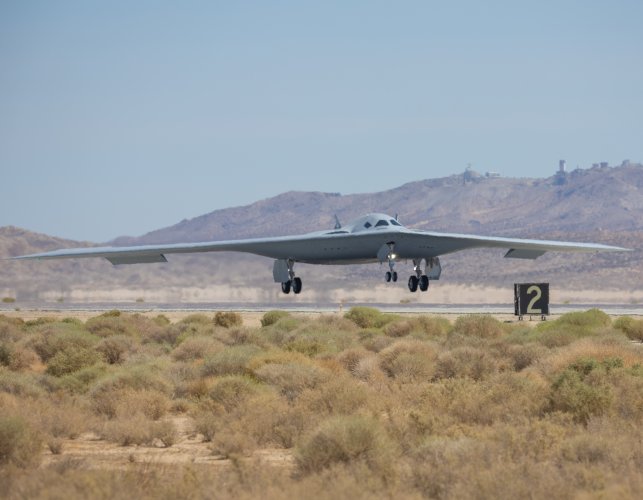
Posted but in lower qualityWas this already posted? ... found at Weibo!

You are using an out of date browser. It may not display this or other websites correctly.
You should upgrade or use an alternative browser.
You should upgrade or use an alternative browser.
Northrop Grumman B-21 Raider (LRS-B)
- Thread starter TomS
- Start date

- Joined
- 21 April 2009
- Messages
- 14,203
- Reaction score
- 9,057

Forest Green
ACCESS: USAP
- Joined
- 11 June 2019
- Messages
- 12,780
- Reaction score
- 27,504
Wow, something to spend my spare $1.5bn on.
14yellow14
ACCESS: Confidential
- Joined
- 7 November 2020
- Messages
- 57
- Reaction score
- 197

- Joined
- 3 June 2011
- Messages
- 20,030
- Reaction score
- 17,223
What a dumb idea. It's difficult enough for two pilots flying those 40-hour missions. Imagine trying to do it by yourself.
What a dumb idea. It's difficult enough for two pilots flying those 40-hour missions. Imagine trying to do it by yourself.
Perhaps the WSO will be a qualified B-21 pilot too?

In_A_Dream
ACCESS: Top Secret
- Joined
- 3 June 2019
- Messages
- 763
- Reaction score
- 861
I wonder what kind of battlefield management interface the pilots will be working with and how that might evolve their role over time.
Forest Green
ACCESS: USAP
- Joined
- 11 June 2019
- Messages
- 12,780
- Reaction score
- 27,504
Must use autopilot?What a dumb idea. It's difficult enough for two pilots flying those 40-hour missions. Imagine trying to do it by yourself.
- Joined
- 3 June 2011
- Messages
- 20,030
- Reaction score
- 17,223
I would think you would at least want the WSO qualified to fly the thing in an emergency. Pilot goes unconscious, for whatever reason, and you lose a plane doesn't seem acceptable to me. It does make me wonder whatever happened to one of the things they were looking into back in the day. I think it might have been the incident where the F-15 landed with one-wing. Basically, if you take damage the system figures out what the aircraft has to work with in the way of control surfaces and reconfigures the control laws so it's transparent to the pilot (or as much as it can with what it's got).Must use autopilot?
Well the WSO on a F-15E can also fly the aircraft, so it might not be that big of a change…?What a dumb idea. It's difficult enough for two pilots flying those 40-hour missions. Imagine trying to do it by yourself.
Slow down folks, B-21 was designed to also be optionally manned so should something happen to the pilot then the aircraft may be recoverable. WSOs are WSOs though, they don't need to be qualified pilots and there is no requirement for them to have any type of pilot certification. That some do is just their personal choice or how their career path has developed.
Hence there is no reason the B-21 could not operate with a pilot and WSO. The battle management aspects of the platform are more important than the hands and feet part. I'd go as far as say the pilot controls of the aircraft but the WSO is the mission commander. In the unlikely event the pilot is incapacitated for some reason and the WSO isn't the WSO should be able to direct the aircraft to recover or likely continue to operate the aircraft until recovery is necessary.
Hence there is no reason the B-21 could not operate with a pilot and WSO. The battle management aspects of the platform are more important than the hands and feet part. I'd go as far as say the pilot controls of the aircraft but the WSO is the mission commander. In the unlikely event the pilot is incapacitated for some reason and the WSO isn't the WSO should be able to direct the aircraft to recover or likely continue to operate the aircraft until recovery is necessary.

- Joined
- 30 May 2023
- Messages
- 560
- Reaction score
- 1,202
It seems to easy imagine several situations where the butts in both seats are doing things other than flying the aircraft full time.
- Joined
- 28 January 2008
- Messages
- 1,486
- Reaction score
- 3,782
In the B-2, the WSO or Mission Commander is also a qualified pilot, both crew members have to be. I assume the B-21 would be the same. The B-2 and B-21, they'll share the same types of missions and the 21 may get additional mission-types. Again, B-21 is an evolved B-2.
Attachments
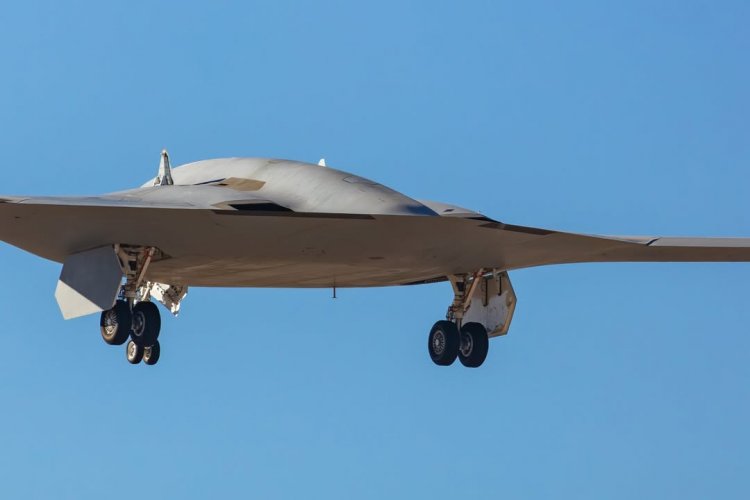
What do you mean by operational? Northrop has said that basically all of the early-run B-21s could be made mission capable... do you mean that this is not a T&E jet? Because surely it's too early for that...Looks like an operational jet, don't see any visible orange wire, amazing. Glad USAF and NG got the jump on this program.

Single Pilot B-21 Raider Operations Hint At Advanced AI Capabilities
An official recommendation that B-21s fly with just one pilot alongside a weapon systems officer raises questions about mitigating risks.
 www.twz.com
Single Pilot B-21 Raider Operations Hint At Advanced AI Capabilities
An official recommendation that B-21s fly with just one pilot alongside a weapon systems officer raises questions about mitigating risks.
If there's AI involved let's hope it's not one of those LLM types
 .
.
Last edited by a moderator:

FighterJock
ACCESS: Above Top Secret
- Joined
- 29 October 2007
- Messages
- 6,692
- Reaction score
- 7,912
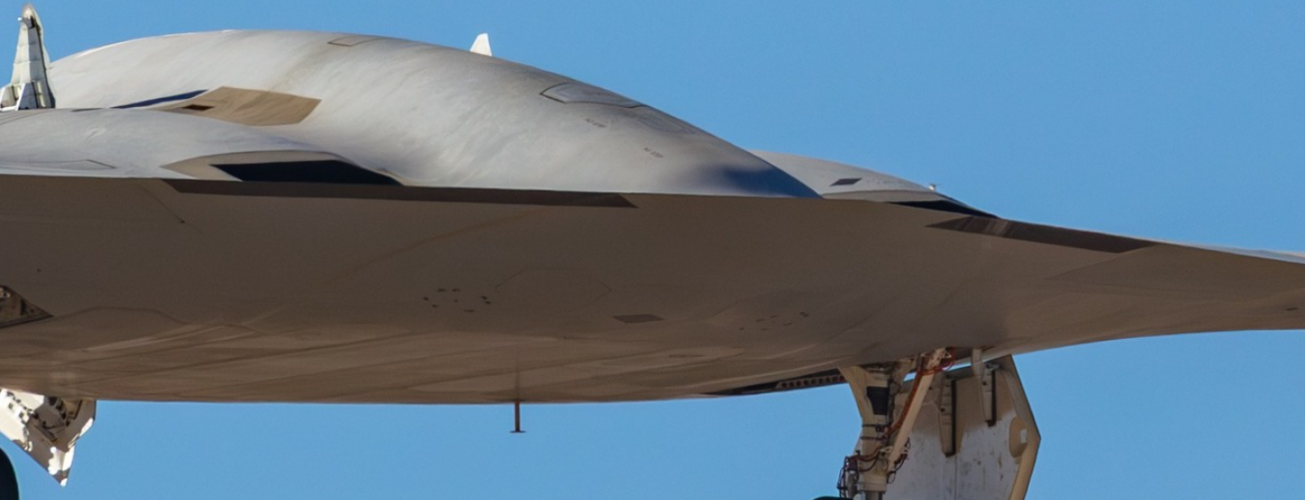
Interesting photo of the B-21 4decaa, especially now that we can see the exhaust nozzles for the first time.

- Joined
- 1 April 2006
- Messages
- 12,024
- Reaction score
- 13,950
Looks like second flight test AV returning to the Palmdale very soon for some reason and I doubt it was planned return from what should be an intense test program. I still may be wrong.Looks like an operational jet, don't see any visible orange wire, amazing. Glad USAF and NG got the jump on this program.
Wonder if the WSO thing is more about finding a place for displaced WSOs once B-1s are retired. You have less pilots to train, saving some money. The Air Force is also supposedly short of pilots. I still don't like it.
How does the seams, gaps, and surfacing generally on the B-21 compare to the Chinese 'sixth generation' fighter; can we tease out any clues at all about which is more advanced, literally on the surface level? And how does it all compare to fifth gen so far? Of course, it's a whole lot of guesswork, and who knows what's going on under the skin.No visible seams, gaps, or anything around the aft hump...I'm stumped!
Also, the radiator panel sees its third iteration with an all-black coating.

EmoBirb
E.S.T
- Joined
- 18 January 2025
- Messages
- 2,210
- Reaction score
- 5,624
Good luck attempting to get footage even close to the resolution seen here from the chinese jets. Even more luck trying to evade Chinese authorities after you obtained and publicized such crisp photos.How does the seams, gaps, and surfacing generally on the B-21 compare to the Chinese 'sixth generation' fighter; can we tease out any clues at all about which is more advanced, literally on the surface level? And how does it all compare to fifth gen so far? Of course, it's a whole lot of guesswork, and who knows what's going on under the skin.
But even these B-21 shots are taken from quite a far and wash a lot of the details out. So while the B-21 lost likely utilizes large individual pieces and thus eliminates certain surface disruptions, I'd be surprised over a complete absence of access panels in the rear and the top half of the aircraft comprising of a handful of large pieces.

My thoughts as well.Wonder if the WSO thing is more about finding a place for displaced WSOs once B-1s are retired. You have less pilots to train, saving some money. The Air Force is also supposedly short of pilots. I still don't like it.
More like they are too expensive to retire. You don't want to retire them only to recall them later because retraining them costs as much as new ones. So you keep them around as long as possible or let go for good.

I doubt it. I think it reflects more that the "stick and rudder" flying part is easily done by computers now and that the bigger need is managing the system and the employment of it. In fact, years ago, I remember talking to one of the F-35 test pilots and even then he was saying that the F-35 pilot training would be more focussed upon using the systems and processing what it was telling you and how best to employ it than the flying part.Wonder if the WSO thing is more about finding a place for displaced WSOs once B-1s are retired. You have less pilots to train, saving some money. The Air Force is also supposedly short of pilots. I still don't like it.
There are plenty of high-resolution photos of the B-21 that show panel and surface details. Many of these HD images have been released by NG. All but a few areas have been captured.Good luck attempting to get footage even close to the resolution seen here from the chinese jets. Even more luck trying to evade Chinese authorities after you obtained and publicized such crisp photos.
But even these B-21 shots are taken from quite a far and wash a lot of the details out. So while the B-21 lost likely utilizes large individual pieces and thus eliminates certain surface disruptions, I'd be surprised over a complete absence of access panels in the rear and the top half of the aircraft comprising of a handful of large pieces.
Comparisons between "how good" paneling is between B-21 and other Chinese aircraft will likely not result in meaningful conversations. B-21 emphasizes maintainability, and NG uses its own proprietary materials to coat the aircraft. I would not believe the Chinese have the same goals as the B-21, nor the same level of 'completeness' in their test articles.
Cerberus21
ACCESS: Restricted
- Joined
- 6 November 2025
- Messages
- 39
- Reaction score
- 78
The B-21 was already intended as pilot-optional. I suspect the suspension of the X-47B program actually continued on as the LRS-B/B-21. It was more than likely what the X-47C was or the somewhat known RQ-180. This would hint at the B-21 autonomous capability- why would you need two pilots. The B-21 is also said to be a C2 hub, the guy/gal in the other seat will be very busy.What a dumb idea. It's difficult enough for two pilots flying those 40-hour missions. Imagine trying to do it by yourself.
- Joined
- 1 April 2006
- Messages
- 12,024
- Reaction score
- 13,950
What a collection of BSI suspect the suspension of the X-47B program actually continued on as the LRS-B/B-21. It was more than likely what the X-47C was or the somewhat known RQ-180.
Robert Wall (13:00): And then I was saying with B-21, Brian and Steve, you guys have been writing about kind of an interesting Air Force policy decision about the staffing around it. So Steve, why don't you kind of walk our audience through what's going on?
Steve Trimble (13:16): Sure. Well, I think it's a policy debate at this point. It's still no decision, although that got a little confusing at the beginning of this too. But I mean, the exciting thing is to talk about disclosure. I mean, trying to get any real information about operational details or operational philosophy on the B-21 has been very difficult due to its classified nature. But now that it's getting much closer to operational service, which actually may still be years away, they've only flown two aircraft. So I mean, that's a clue that they're still far away. But we are getting some more information now. And I saw some social media chatter about this in apparent decision by Global Strike Command to change the crew composition in the cockpit compared to the traditional way you would staff a bomber, which is having two pilots on board. In the case of B-52 and B-1, you also have weapon systems officers either below deck or behind the pilots.
(14:14): In the case of the B-2, there's only two people on board, so it was just two pilots in this case. We got our hands on the memo after this. It was signed on Aug. 15 by Gen. Thomas Bussiere, who is then the Global Strike Command commander. He signed this memo saying definitively that the B-21 crew composition shall consist of a pilot and a weapon system officer. Now if you're in the tactical aviation community, that's not a huge deal. They've been doing that. The F-4 had a RIO, a radar intercept officer. B-1-11 had a weapon systems officer, and even today an F-15E has a weapon systems officer. So I mean, this is a pretty standard thing to do in the tactical aviation community, but it was unknown to the bomber community. And there's still quite a bit of heated discussion internally about which direction they should take.
(15:11): And in fact, when I presented this memo to the Air Force Public Affairs, it's part of this exchange that we have that we've been talking about. We actually got a very strong comment back from the vice chief, the acting vice chief of staff for the Air Force Gen. Jim Slife. Brian can correct my pronunciation of his last name if necessary, where he said that no, that Bussiere's memo represented strictly a recommendation and that it was not a final decision, and that is still being adjudicated by the headquarters Air Force. So we'll see how that goes. But I mean, it really speaks to this creeping degree of automation in cockpits no matter where you look. And as you can imagine as the B-21, as a clean sheet aircraft design with a whole new mission system and cockpit layout that represents the state-of-the-art in technology, that it's going to push that even further.
(16:20): And so there's this question of what can you do with that? And not only that, you're looking at a future of air warfare where understanding your sensors, all the systems that you have on board, managing your signature in real time against real threats is going to take a lot of focus and a lot of attention and expertise. So how should you approach that? Should you train a pilot to be a WSO or should you train your WSO and then have them be able to take over the aircraft in emergency situations or if the pilot gets incapacitated to get out of whatever situation you're in? So that's really what's being debated. I've talked to some pilots about this, some bomber pilots, and they are skeptical that you can always depend on this automation for one thing, especially in a combat scenario. And even then in certain emergencies, not having two pilots on board to manage all the things that you have to manage in those situations is something that they're very concerned about.
(17:30): It makes them very nervous. This is not just about Luddites or we don't like new technology or automation. There are some real concerns about this, and there could be even sort of a nuanced interpretation of how this goes. It may not be this black and white. We either going to have two pilots or we're going to have one pilot and one WSO all the time. It could be situations where you could have, depending on the mission, you could have two pilots on board on different missions. You might have a pilot and a WSO depending on what that mission demands. That's also a possibility and something we've also reported on. So it's a really interesting discussion. I think it goes to a discussion the broader aviation community is going to be having over the next years and decades about how much to trust single pilot cockpits and automation in cockpits. As that technology continues maturing and getting more advanced.
Robert Wall (18:31): Is there a training staffing benefit from making the change? I mean, is that behind it partly?
Steve Trimble (18:39): Well, sure. I mean, right now we have a pilot shortage, especially in the bomber community. The B-2 community is feeling that more than any, and this gets rid of a huge pilot shortage problem, if you only need half the pilots now for all these B-21s that are coming into service plus, they were already talking about retraining WSOs from B-52s and B-1s into B-21 pilots as a way to sort of make up that gap. But now you don't even have to do that. You have this existing community of WSOs and yeah, they'd have to be retrained on the particular sensors and systems that are on board the B-21, you might need to do some other things too. Those pilots, sorry, those WSOs for B-52, they're below deck. They're not trained to fly the aircraft in the event of emergencies. Whereas you talk about an F-15E WSO that WSO has gone through pilot training, they've gone through introduction to fighter fundamentals. They don't go beyond that, but they have plenty of skills to take over the aircraft in most situations. So they would need that additional training. There's only two people on board. Maybe that does solve part of your problem with, and maybe that's driving this even, but there's just a lot of factors going into it.
Podcast: What's Going On At The Pentagon? | Aviation Week Network
Listen to our editors discuss the impact of policy changes at the Pentagon before they break down the latest developments with the B-21 and multiple CCA projects.
 aviationweek.com

- Joined
- 11 February 2007
- Messages
- 3,823
- Reaction score
- 8,088
Well, two people and a mission computer and the combat cloud. There's actually the potential there to supplement the crew as needed. I'd still want the WSO to have basic flight skills, but if the pilot needs help, that doesn't necessarily have to come from the WSO.Podcast: What's Going On At The Pentagon? | Aviation Week Network
Listen to our editors discuss the impact of policy changes at the Pentagon before they break down the latest developments with the B-21 and multiple CCA projects.
"There's only two people on board"
Say you're trying to troubleshoot an emergency, the conventional model is one guy reading checklist items, the pilot flying responding, but it doesn't have to be a pilot calling the checklist items, or even a human.

- Joined
- 19 February 2007
- Messages
- 1,600
- Reaction score
- 3,281
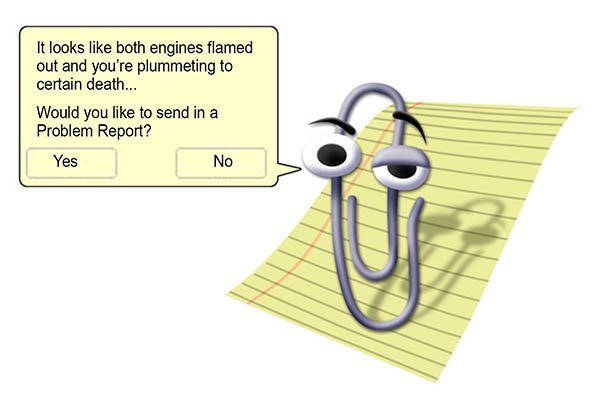
Oh, got that so covered:Say you're trying to troubleshoot an emergency, the conventional model is one guy reading checklist items, the pilot flying responding, but it doesn't have to be a pilot calling the checklist items, or even a human.