Mind that Kratos (and others) have parachute recovery, something easily identified wrongly as an aircraft in distress among the general public.
True, but it’s the location, road closures and lack of communication that makes me think this might have been a classified or at least sensitive asset.
 
No you have not. You had been (and continue to) harp on the errors that the AI made, which were already not the typical case.
Typical or atypical, you still have to invest the same base amount of time to understand the problem and sanity check the solution. A subtle error may take you longer to figure out what's wrong with it, but in general the time spent is going to be roughly consistent with the typical case.

The typical case was stated to be 16 minutes in my article and 12 in yours. I proposed 5 minutes as what it takes to evaluate the result that AI gave.
"The AI generated 1.25 COAs every second, the humans generated one COA every 5.3 minutes"

You don't believe, but the math you propose doesn't add up unless your idea of working with AI is to ignore it and do everything over again.
That's how you check a solution: understand the problem, then understand the solution. You're spared the decision making and typing out, but you still need to understand what you're checking.

The coding example is you using a 10% case to try and disprove my 90% case. On the average, 90% of the time pull request, does it take you longer to review the code or to write the code yourself?
I literally said "with the exception of the code anecdote".
 
Typical or atypical, you still have to invest the same base amount of time to understand the problem and sanity check the solution. A subtle error may take you longer to figure out what's wrong with it, but in general the time spent is going to be roughly consistent with the typical case.

That's how you check a solution: understand the problem, then understand the solution. You're spared the decision making and typing out, but you still need to understand what you're checking.
....

total time = understanding time + execution time.

How does total time remain the same when you've literally reduced execution time to near zero?

If all it takes to make a decision and execute after something is understood, then sure, AI adds no benefit here. If your execution requires any non-zero number (and it's likely to take matter of minutes rather than seconds here), then explain to me how in the world can you conclude that there's no time difference?

Even with current automation (and again with the general case, in which the AI does give a correct answer), you still have to go in and manually compare your options after you understand the situation. With AI, you only need to evaluate if its one answer is viable or not. If so you send it on its way. If not, you've already evaluated one of the options and you go back to your typical execution overhead.

"The AI generated 1.25 COAs every second, the humans generated one COA every 5.3 minutes"
1759264975797.png
https://www.airandspaceforces.com/air-force-grapples-with-limitations-of-ai/
Our sources say different numbers - either misreporting or different ways of measurement.
 
Last edited:
As stated in the contract notice, its not all for interceptors. It includes launchers, radars, and other equipment used to support the fixed site and mobile variants of the LIDS system.
 
Understood that. Just like your good old MQ-1. But do we have any idea of what is the public price of a Coyote, let´s say, as compared to an APKWS-F?
 
Understood that. Just like your good old MQ-1. But do we have any idea of what is the public price of a Coyote, let´s say, as compared to an APKWS-F?
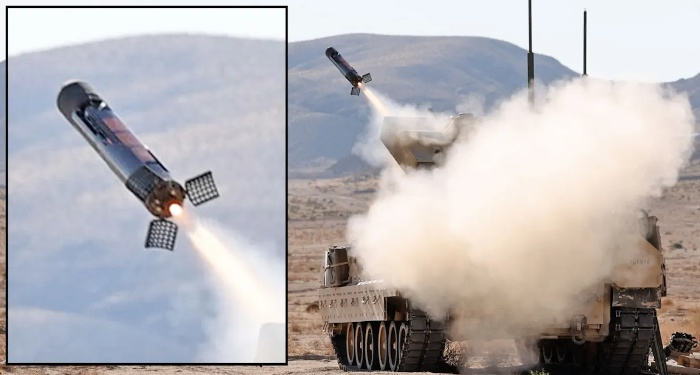
Yes we do. The kinetic block 2C costs approximately $125K while the non-kinetic reusable system is in excess of $200K. You cannot really compare it to the APKWS based system both from a capability standpoint, and from a production volume stand point. A significant increase in production volume for Coyote (think 3x or more) should result in a sub $100K cost especially if things like the seekers and other features (propulsion and proximity sensor) are being shared with other weapon systems like the NG-CUAS weapon and even the air launched short range launched effect variant of the Coyote (which they are). I'll have to do some digging but a Coyote block 1 variant with an active seeker was less than $60K so more similar to what an enhanced APKWS costs now.
 
Understood that. Just like your good old MQ-1. But do we have any idea of what is the public price of a Coyote, let´s say, as compared to an APKWS-F?
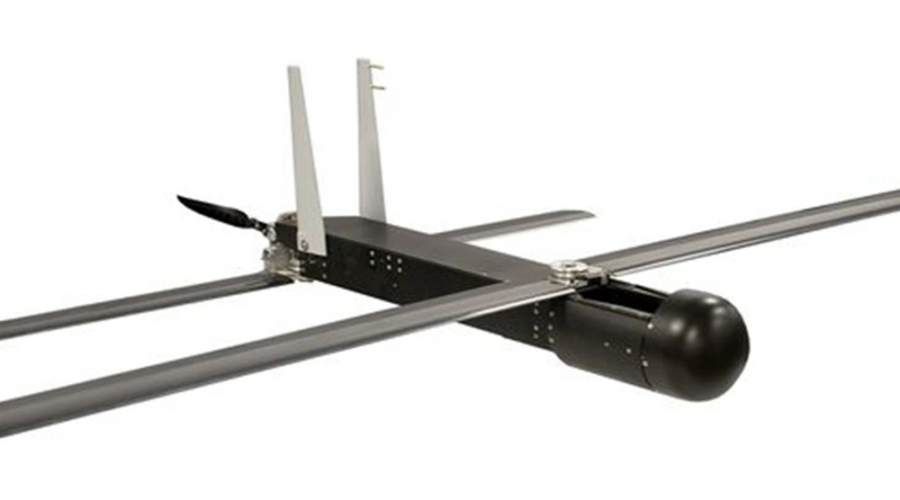
It's potentially not just counter-drone missiles, Coyote Block 3 has been renamed Coyote Launched Effect-Short Range, with a reconnaissance capability.

As for Baseline Cost: "On January 16, 2024, the U.S. Army awarded a contract action to RTX Corporation in the amount of $75 million for the production of 600 Coyote 2C Interceptors in direct support to the U.S. counter-unmanned aircraft systems mission."

https://www.army.mil/article/273625...on_authority_contract_for_coyote_interceptors
 
https://defence-blog.com/pentagon-awards-5b-deal-to-raytheon-for-coyote-drone-interceptors
"Bids were solicited online, with one proposal received, the Pentagon said."

One bid? Makes you wonder what happened to Anduril's Roadrunner, bragged as the great Coyote rival.

Anduril Roadrunner is not the Coyote or the fixed / mobile LIDS system. Army sought to order fixed and mobile LIDS elements. Only the entity capable of producing the elements of the system being sought applied and was awarded the contract.
 
It's potentially not just counter-drone missiles, Coyote Block 3 has been renamed Coyote Launched Effect-Short Range, with a reconnaissance capability.
Coyote block 3 is a non-kinetic coyote drone built on the something more closely related to the original Coyote block 1. Both the Army and Air Force buys it / is buying it for both the non-kinetic (HPM) payload as CsUAS (Group 1 and some Group 2 defeat). It is also offered as a LE.

1759345481509.png

The Coyote Launched Effect short range is basically a Coyote 2 adapted for the LE application.

1759345330901.png
 
Honeywell HON1600 for CCA unveiled:

"This engine is very similar to an APU (Auxiliary Power Unit) we might find in a 737 or H320 aircraft. We make about 2,500 of those a year at Honeywell.... so we can leverage that supply chain and that manufacturing capability to produce these engines," Pope said.
HON1600 specs state the engine supports turbojet or turbofan variants from 800-to-1600 pound force-thrust and 40,000-feet high altitude capabilities. A Honeywell essay on the engine adds that the HON1600 is engineered for "rigorous G-level performance and ability to reach maneuvering targets."
Pope explained that the engineering process for the HON1600 involved extensive analysis of composite materials along with cost, weight and performance variables to pursue a product that would deliver manufacturable performance. Honeywell used digital engineering as part of its development of the HON1600, a process through which performance parameters and design possibilities are carefully and fully assess through computer simulations. The intent with digital engineering, which has been used with success in a variety of systems such as the Sentinel ICBM and F-47, is to leverage advanced computer technology to make critical discernments before having to "bend metal."

"We used model-based engineering and digital engineering to integrating the newest in manufacturing technology with fabric manufacturing and metal injection molding. We combined what's old and what's new to really deliver a more fire-resistant engine," Pope said.

https://warriormaven.com/news/air/honeywell-unveils-new-cca-small-thrust-class-drone-engine
Honeywell announcement

And a short Market survey:

https://breakingdefense.com/2025/09...in-mind-small-engines-make-a-big-show-at-afa/
Interesting to see b/w the lines that attritability, might favor a dual engines setup.
 
Last edited:
https://www.defensenews.com/air/202...gmen-to-get-own-squadrons-chief-nominee-says/
The U.S. Air Force plans to create independent squadrons for its future fleet of collaborative combat aircraft instead of adding the drone wingmen to already-existing squadrons of manned fighters.

Gen. Kenneth Wilsbach, the nominee to be the service’s next chief of staff, told the Senate Armed Services Committee during his confirmation hearing Thursday the Air Force Reserve and Air National Guard also may stand up their own CCA squadrons, along with the active duty.
I fear yet another trainwreck is coming along.
 
I think it makes more sense for training, maintenance, and administration than having a single squadron operating two aircraft types. I would start to be worried if they are not integrated into ACC Fighter Wings or aren't at the same bases as the fighters. Normal mission packages are thrown together with multiple aircraft types from multiple squadrons, so I wouldn't expect the addition of another aircraft type (the CCA) to be that much of a complication.
 
I think it makes more sense for training, maintenance, and administration
I agree. It makes no sense right now to push them into a fighter wing when someone somewhere needs to hammer down the basics of utilizing them first.

Not sure what warrants the doom and gloom...

The first and foremost problem in CCA utilization isnt even actually drilling tactics with them. Its working on deploying, maintaining and recovering them first from normal air fields and then from remote airfields - particularly given the way they are intended to be used. You wont be able to work out the difficulties and problems with their deployment and maintenance by shoving them in a mixed wing right now. You have to have people who know how to get them set up before you can think about how you get the into a wing. Baby steps.
 
One problem is that the USAF CCA concept of operations is heavily reliant on closely working with manned combat aircraft, both as wingmen to and controlled/directed by same. So these new standalone units will likely at the very least need manned command planes of some sort as part of their TOE for both training and ferrying needs, with all the complications that implies, including the fact that existing USAF frontline units are already having problems with equipment availability as it is, which is not going to be helped at all by the maintenance and other support requirements for the planned new units. Including their administrative needs, such as the human staff which will be needed by the 'necessary' bureaucracy for setting up and running these new formations. A right all headache.


In another development elsewhere:
https://aviationweek.com/defense/ai...p-aims-deliver-autonomous-airlifter-usaf-2028
Meet the Tacit Spear, a concept from the Atropos Group, a two-month-old startup based in Arlington, Virginia.

It is an autonomous aircraft designed by Darold Cummings—a former Northrop Grumman aircraft configuration lead and a current Aviation Week contributor—to deliver a Leonardo C-27J Spartan-like payload of about 20,000 lb. with a cargo bay large enough to carry three military-standard 463L pallets. Air-dropped munitions, including mines, are also a payload option. It would come with a ferry range of 2,500 nm, which is long enough to self-deploy to staging bases in the Pacific. And its twin-turbofan, embedded engines and swept wings can take off and land from unimproved airfields as short as 5,000 ft.

With sharps chines down the upper fuselage, forward-swept inlets and canted tails, the Tacit Spear is designed to operate in hostile airspace. The concept would add a new capability in air mobility, not a direct replacement for existing aircraft derived from commercial models.

As the timeline for the unveiling suggests, Atropos’ founders are focused on speed. The Tacit Spear is scheduled for a first flight in less than three years. Atropos also plans to develop more products, including commercial variants of the uncrewed airlifter.
 
One problem is that the USAF CCA concept of operations is heavily reliant on closely working with manned combat aircraft, both as wingmen to and controlled/directed by same.
That's only a fair concern if CCAs remain in a standalone unit in the future.

First you need people to actually be trained to ground maintenance on CCA. Then you would also need a people to evaluate and secure the logistics trail for employing CCAs in the first place. After that, there's likely a lot more to flying CCAs beyond just fly testing the air frame. This includes developing new deployment, flight and recovery procedures just for having a bunch of autonomous systems in the air by themselves without the added complexity of teaming with manned aircraft yet.

The tactical aspect is also more easily solved this way. Existing fighter wings can rotate in and out of working with the CCA unit without the added burden of worrying about logistics. That allows people who are focusing on aerial tactics to focus on tactics and the people focusing on deployment and logistics to iron out their problems first. Considering how operational wings are already struggling, I don't see how giving them CCAs and letting them just "figuring it out" is going to do them any good when adding substantially new types comes with any number of nasty surprises.

In future operation settings, given the sheer amount of CCAs that the US wants to deploy, and given the proclivity towards subsonic CCAs, the likelihood that your CCAs will only be deployed inside fighter wings is not terribly likely, because in practice, you aren't going to have your subsonic CCAs follow your fighter all the way in and back out. Instead, manned aircraft will likely be networking with different CCAs along their ingress route instead. That means that while air wings will definitely operate their own CCAs too, there will be standalone CCA units forward deployed as well. This makes having a standalone CCA unit far more sensible too.

I must also add that the idea of CCAs as only drone wingmen is inaccurate. If you have enough autonomy to fly with a human to perform air combat tactics, you have enough autonomy to execute a number of other, non-lethal missions, completely autonomously. There's plenty of usage for CCAs outside of merely manned unmanned teaming and more than enough for a single unit to figure out for at least a year or two.
So these new standalone units will likely at the very least need manned command planes of some sort as part of their TOE for both training and ferrying needs, with all the complications that implies
For the purposes of developing the knowhow needed to actually get these things flying safely and logistically supported, you don't need fighter aircraft or its associated expensive logistics trail. A business jet or two or even a handful of cessnas equipped with control software is more than enough. I expect at least a year or two before they are actively being integrated into fighter wings.
 
Last edited:
@Grey Havoc To add to this (and the article you posted), there's going to be a whole host of different uses for "CCAs" that aren't just YFQ-42/44. There are already EW, jammers, shooters and sensors. This article mentions air lift options that are modest in payload but more easily and safely deployable. NGAS might even have some unmanned component to it as well. There's a lot to figure out for a CCA unit already that doesn't lend itself to become added burden for another air wing and it's not just the simple math of relieving manned fighters or boosting readiness.

Once you've figured all this out, then air wings will have a readily available and accurate assessment of what it takes in order to deploy all the necessary types of CCAs required to support a mixed air wing. If you plug it into an existing air wing that's already spread thin on their own responsibilities, it's hard to see how they'll have the bandwidth to take advantage of CCAs to their fullest potential.
 
https://aviationweek.com/defense/aircraft-propulsion/boeing-enters-large-vtol-uas-race-cxr-concept
?Boeing 247?

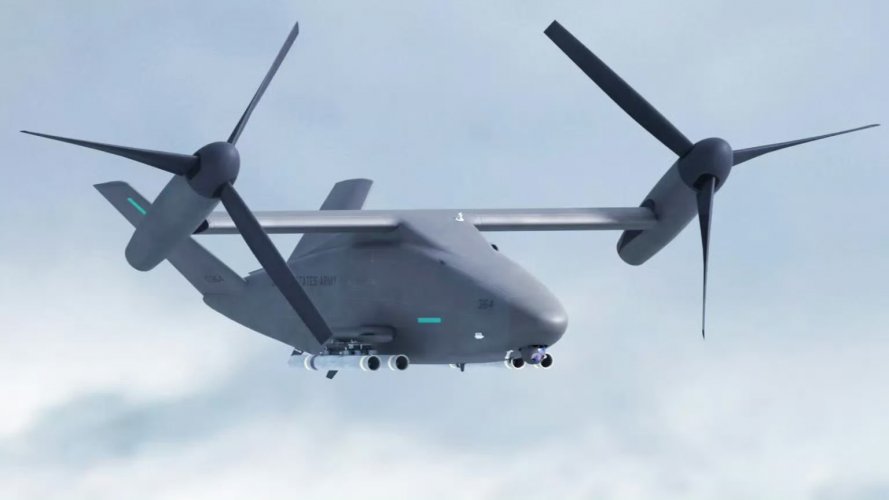
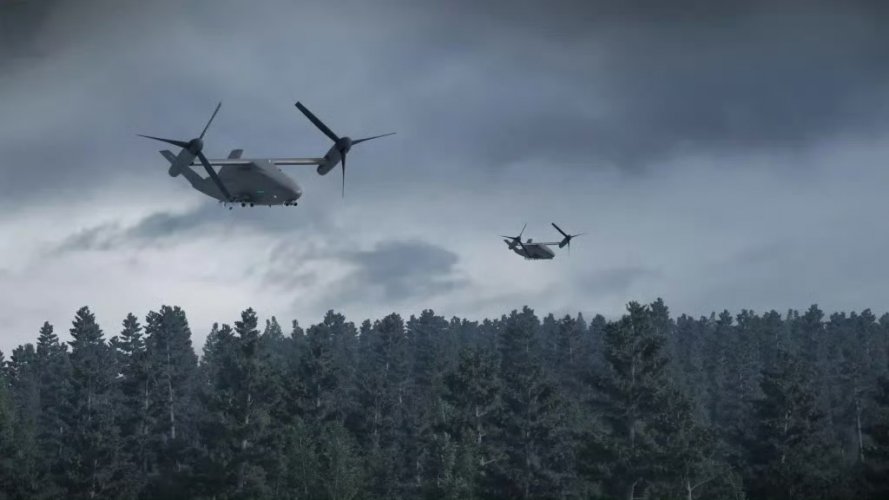
Boeing’s Collaborative Transformation Rotorcraft (CxR) concept design proposes to introduce the largest UAS in the Army inventory since the 2011 arrival of the fixed-wing, 3,600-4,200-lb. General Atomics Aeronautical Systems Inc. MQ-1C Gray Eagle and breaks from the Army’s recent focus on a class of smaller, expendable air vehicles known as “launched effects.”

The 5,000-7,000-lb. CxR design features a 200-250-kt.-capable tiltrotor configuration, with a single gas-fueled, turboshaft engine powering two tilting propellers, Chris Speights, chief engineer for Boeing’s Vertical Lift division, told reporters.

In a combat role configuration, the CxR could carry weapon and sensor payloads weighing up to 1,000-2,000-lbs., including acting as a mother ship for smaller launched effects.
 

Attachments

  • IMG_6759.jpeg
    IMG_6759.jpeg
    87.1 KB · Views: 37
  • IMG_6760.jpeg
    IMG_6760.jpeg
    92.9 KB · Views: 33

Netherlands joins US for drone wingmen development​

Tuinman said that the Netherlands has now unlocked “total access” into the US Air Force’s CCA program “on all levels,”
...Tuinman said there could be a need for over a 1,000 CCA in the near future
I'd like to see a more potent increment 2 that gets developed/produced by US and Europe so that it's got a rock solid production base.
 
Last edited:
Much optimism on the part of authors and senior leaders. I have doubts. Then again I have been wrong before.

Apache replacement is the only viable course I think.
 
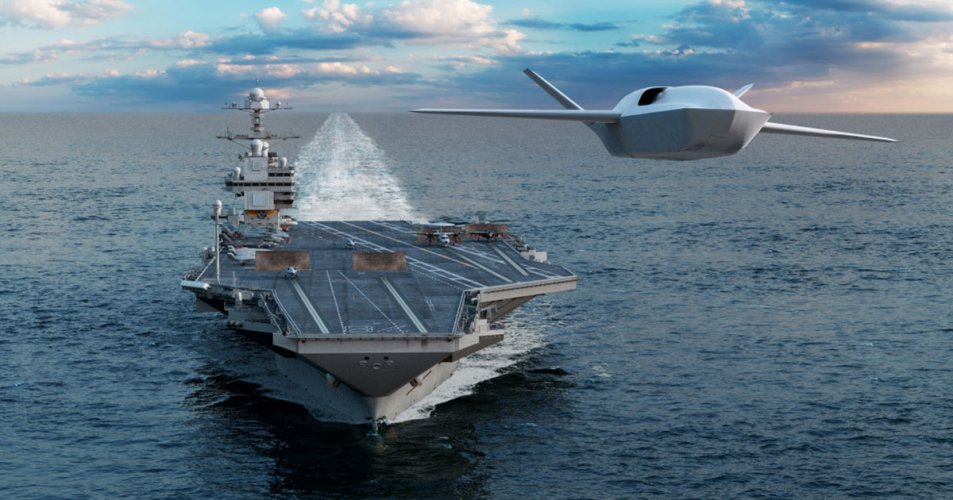
https://www.ga-asi.com/ga-asi-selected-to-support-us-navy-cca-design-effort
GA-ASI was selected to work on Navy CCA designs emphasizing a modular approach to platform selection, capable of being rapidly reconfigured and upgraded to meet changing mission requirements, including operations on and from aircraft carriers. GA-ASI's approach supports the Navy's revolutionary acquisition strategy of smaller, frequent purchases that enable rapid technology insertion rather than traditional long-lifecycle programs
The Navy’s CCA design will emphasize seamless coordination among manned fighters, uncrewed vehicles and support platforms; accommodate elevated risk profiles and reduce risk to crewed platforms; support and enhance 4th- and 5th-generation aircraft and complement 6th-generation aircraft; and maximize operational flexibility, cost efficiency and mission effectiveness.

IMG_6898.jpeg
 

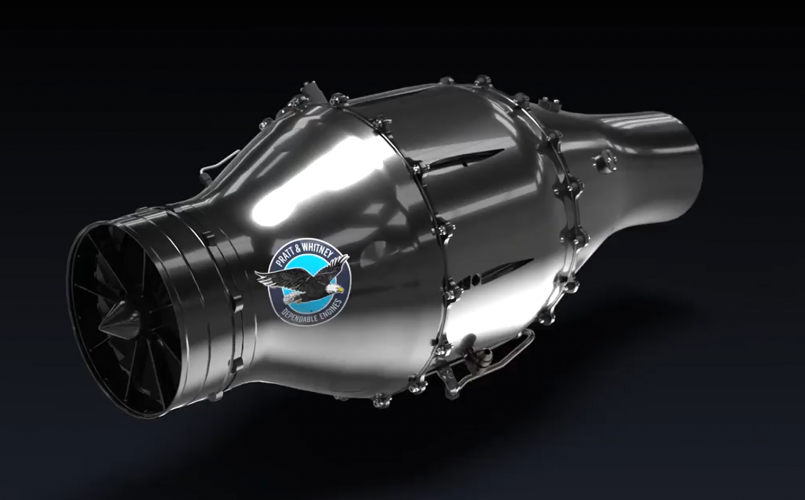
Pratt Developing New Engine Class for CCA Drones, Cruise Missiles​

https://www.airandspaceforces.com/pratt-new-engine-class-cca-drones-cruise-missiles/

1758565438777.png

Looks like an old Williams F107 with a nicer suit.


The Kratos looks more like a new ground up crack at the title.

Would love to know the "affordable price"

Regards,
 
Are those silhouettes alongside the F-35 one of any significance, or just placeholders?
One for every future release of ace combat.

In all seriousness probably not. They look like various iterations of imaginary aircraft and its mostly probably just used to show similarity and evolution of design.
 

Similar threads

Back
Top Bottom