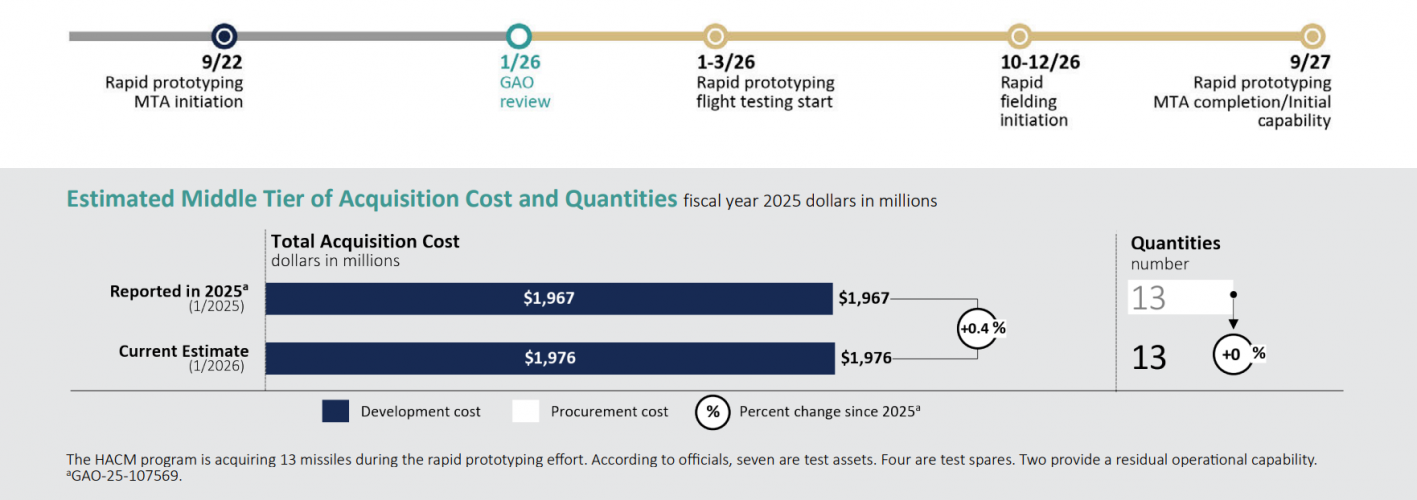
HAWC (Hypersonic Air-breathing Weapon Concept) and HACM (Hypersonic Attack Cruise Missile)

At the risk of inviting Yet Another A-12 Payload Discussion, one’s mind does revisit the question of what payload parameter degrees of freedom beyond JATM exist for F-47s IWB design (selected as a more extreme case than F/A-XX as a strike emphasized concept and implications for IWB accommodating larger footprint payloads than AAMs)…

A very high speed, very long range, very lethal AAM missiles launched 500nm from a penetrating F-47 wont be JATM sized anytime soon, clearly… right??
 
At the risk of inviting Yet Another A-12 Payload Discussion,
Hey, I resemble that remark... :D


one’s mind does revisit the question of what payload parameter degrees of freedom beyond JATM exist for F-47s IWB design (selected as a more extreme case than F/A-XX as a strike emphasized concept and implications for IWB accommodating larger footprint payloads than AAMs)…
I'm certainly not expecting anything bigger than "can hold SiAW".

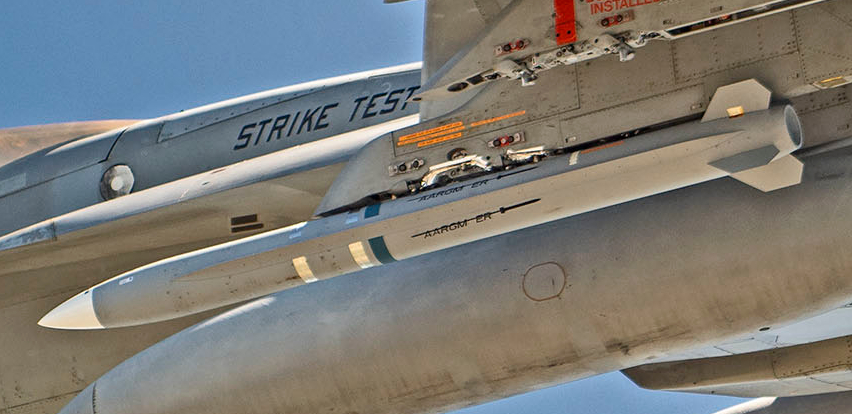
Image from wiki.
AARGM-ERMod.jpg

So yes, ~22" wide but only 160"/4m long. Tail fins on AARGM-ER appear to be less than body diameter, picture angle isn't perfect for eyeballing but I'd say about 6-7" on an 11.5" body. Which makes for a weapon ~26" across the tail fins, ~18.5" deep at the fins.
(crud, that actually makes AARGM-ER even closer to the same "box size" as an AGM-158!)

And I really should use the SiAW picture instead of AARGM-ER, even if SiAW is a development of AARGM-ER.
picture from wiki:
1920px-SiAW_Standing-in_Attack_weapon_-_tactical_air-to-surface_missile_trial_%28cropped%29.jpg


A very high speed, very long range, very lethal AAM missiles launched 500nm from a penetrating F-47 wont be JATM sized anytime soon, clearly… right??
I certainly do not believe so. Even with some fancy ramjet boosters like an enlarged Meteor, you're not getting 500nmi/900km out of a 7" tube.
 
A very high speed, very long range, very lethal AAM missiles launched 500nm from a penetrating F-47 wont be JATM sized anytime soon, clearly… right??
There is no need to size your penetrating aircraft with that large an air to air missile. Even if you stay within HACM dimensions, you are looking at a 20 ft long, 20 inch diameter missile - quite a bit larger than AIM-174. Navy won't even be able to take such a weapon onboard an aircraft carrier. Its probably not a penalty that you want to pay in platform cost, size, and performance. Your fourth gen aircraft, and fifth gen aircraft carrying external stores can support with those weapons.

Something like an AARGM-ER / SiAW class weapon is probably the biggest weapon of this class one can expect from either of the two NGAD fighters IMHO. Lockheed built a 13", 13 foot long missile in MAKO that fits the F-22 so you can fit these large dia weapons even in the two 5th gen aircraft we presently have so there are options that willl probably remain so even for F47/fAXX fighters.
 
I personally do not see any reason for F-47 to carry more than 6x AIM-120/260. Use the rest of the volume for fuel, which is more important. Ultra long ranged weapons can be external, or carried on other aircraft, manned or not. If you shooting at 500 mi/800 km, even B-21 might be in play. I would guess that HACM is integrated with B-21 eventually, even if it is not a high priority.
 
I agree. There is reason the CCA program exists and why being an adjunct magazine is one of the areas of focus for that effort. The USAF is quite clear that it is force mix will have an inside and outside focused force with each focused on their respective roles in this force mix. If you are looking for a near bomber sized F-47 or F/A-XX carrying oversized weapons like HACM then you should prepare to be disappointed IMO. The 'inside' force needs to accomplish its missions at much shorter ranges and/or collaborate with the 'outside' force to deliver very long range stand off effects like hypersonic weapons etc.
 
There is no need to size your penetrating aircraft with that large an air to air missile. Even if you stay within HACM dimensions, you are looking at a 20 ft long, 20 inch diameter missile - quite a bit larger than AIM-174. Navy won't even be able to take such a weapon onboard an aircraft carrier. Its probably not a penalty that you want to pay in platform cost, size, and performance. Your fourth gen aircraft, and fifth gen aircraft carrying external stores can support with those weapons.

Something like an AARGM-ER / SiAW class weapon is probably the biggest weapon of this class one can expect from either of the two NGAD fighters IMHO. Lockheed built a 13", 13 foot long missile in MAKO that fits the F-22 so you can fit these large dia weapons even in the two 5th gen aircraft we presently have so there are options that willl probably remain so even for F47/fAXX fighters.

to me its obvious that two maybe four -ER / SiAW class weapons would seem like the practical limit for F-47, but that form factor doesn't past the sniff test on a 500nm range capability (no fooking way an AMRAAM/JATM FF does that).
 
to me its obvious that two maybe four -ER / SiAW class weapons would seem like the practical limit for F-47, but that form factor doesn't past the sniff test on a 500nm range capability (no fooking way an AMRAAM/JATM FF does that).
No one said that such a weapon in such a class would achieve 500 nmi. Or that your 'inside' force would even be tasked with carrying such a weapon. In fact, what I've written is that the 'outside' force, or bombers if you can build B-21s fast enough and at scale, would be carrying your 20 ft / 20" class HACM and/or larger (ARRW class) weapons and those would begin to deliver the sort of ultra long ranges within ToF limits that you would need. PCA platform along with its adjuncts, and other penetrating aircraft coupled with space based sensors would have to partner to solve the find, fix and track problem to enable such kill chains.
 
To add to this - the kind of targets that have an urgency that can't afford a sub 15 minute wait for an HACM/ARRW/PRSM to arrive is limited to basically high value and quickly relocatable targets - active SAMs sites, HGV/BM launchers and maybe a surfaced submarine or something. That means there's basically zero use case a stand in force has for a long ranged hypersonic weapon that isn't already addressed by SiAW and AARGM-ER.

For other forms of air to ground missions:

If you are within the enemy's joint engagement zone, which is terribly inhospitable for manned aircraft, that place incidentally happens to have more than enough real-estate to deploy attritable CCAs, one way attack drones, Typhon launchers and other surface launched munitions from. In this case (which is going to be the regular case) the F-47 would only need to pass targeting data and keep a fix on the target. If you are flying air cover for a deep strike package, you need to carry at most one or two SiAW or AARGM-88 ERs.

If you aren't within the enemy's joint engagement zone, then the environment is necessarily amenable for F/A-XX and F-35s to fly with stand off munitions at the ready. You might even make a case for 4th gen fighters delivering these munitions too in more permissive environments. In these cases, the F-47's only mission would be to fly air cover.

If in the highly unlikely case where the kind of targets an F-47 would find attractive has devolved from high value targets to infantry, armor and logistics formations, then the environment is also necessarily permissive for other more strike oriented platforms to perform the A2G roles.

So yeah - there's no reason for the HACM to fit in the F-47 or be carried by it. I'd like to have the navy to develop an air breathing A2G munition instead but the navy seems to have neither the interest or the bandwidth right now. The only way HACM would be deployed on the F/A-XX is if F/A-XX makes it into USMC aviation and flies from the same remote airfields the F-47 flies from.
 
HACM will apparently equip RAAF F-18s, or at least be tested from them, so that would be a candidate. F-15 is the threshold aircraft, which implies that the USAF is comfortable pushing oversized loads onto the legacy fighters rather than burdening or designing 5th and 6th gen around them. Again, if you need an oversized missile carrier that can come out of nowhere and disappear again, you could just use B-21. The same aircraft that launched a bunch of HACM today could be dropping a hundred SDBs a day or two later.
 
Good stuff to think about. Bring_it I was thinking out loud about bay space, volumes per weapon and capacities of the weapons that fit those volume quantums. I was not reacting to your post, just noodling on it.

As for air targets, as that’s what I was focusing on, I very much had a FUTURE HVAA in mind such as J-36 or even a less offensive oriented critical sensor that might have DEW defense on board, and how that future threat target may need 2+ long range missiles to be brought down.
 
HACM will apparently equip RAAF F-18s, or at least be tested from them, so that would be a candidate. F-15 is the threshold aircraft,

HACM will equip RAAF aircraft. Both F-15E, and F/A-18F are threshold aircraft for integration. Bombers are expected to get it to later. F-35A and C can carry it externally as well.
 
If you are within the enemy's joint engagement zone, which is terribly inhospitable for manned aircraft, that place incidentally happens to have more than enough real-estate to deploy attritable CCAs, one way attack drones, Typhon launchers and other surface launched munitions from. In this case (which is going to be the regular case) the F-47 would only need to pass targeting data and keep a fix on the target. If you are flying air cover for a deep strike package, you need to carry at most one or two SiAW or AARGM-88 ERs.

If you aren't within the enemy's joint engagement zone, then the environment is necessarily amenable for F/A-XX and F-35s to fly with stand off munitions at the ready. You might even make a case for 4th gen fighters delivering these munitions too in more permissive environments. In these cases, the F-47's only mission would be to fly air cover.
I suspect that while using NGAD in this way would certainly help ensure its survivability, it might not fully exploit NGAD’s inherent capabilities: omnidirectional, wideband stealth technology; a flight envelope (speed and ceiling) that is greatly expanded both in military-thrust and afterburner modes; and significantly enhanced infrared sensors and infrared-spectrum situational-awareness capability.

If a NGAD with those characteristics also had greater range and could carry a long-range hypersonic weapon, it might be able to coordinate with unmanned stealth CCAs to bypass the joint engagement zone from the flank, strike fifth-generation fighters positioned behind the opponent’s joint engagement zone — and even the more rearward tankers and AWACS — and then withdraw relatively safely. In that way, we end up with a J-36.

That is not to say this approach is without risk or guaranteed to succeed. Even if NGAD is not actually employed in this manner, as long as the adversary believes NGAD has such a capability, they will be forced to disperse sensors out to the flanks, which reduces sensor density and situational awareness inside the joint engagement zone — and that, too, is advantage.
 
I suspect that while using NGAD in this way would certainly help ensure its survivability, it might not fully exploit NGAD’s inherent capabilities: omnidirectional, wideband stealth technology; a flight envelope (speed and ceiling) that is greatly expanded both in military-thrust and afterburner modes; and significantly enhanced infrared sensors and infrared-spectrum situational-awareness capability.

If a NGAD with those characteristics also had greater range and could carry a long-range hypersonic weapon, it might be able to coordinate with unmanned stealth CCAs to bypass the joint engagement zone from the flank, strike fifth-generation fighters positioned behind the opponent’s joint engagement zone — and even the more rearward tankers and AWACS — and then withdraw relatively safely. In that way, we end up with a J-36.

That is not to say this approach is without risk or guaranteed to succeed. Even if NGAD is not actually employed in this manner, as long as the adversary believes NGAD has such a capability, they will be forced to disperse sensors out to the flanks, which reduces sensor density and situational awareness inside the joint engagement zone — and that, too, is advantage.
If you can bypass the outer engagement zone, why would you need to carry a super long range weapon in the first place? Keep in mind AIM-260 is hardly a short ranged weapon to begin with. If your target is a 5th gen, then the limiting factor is probably detection range, not no escape zone.

If you want J-36 internal bays you are going to end up with a J-36 sized aircraft with all of the associated expense. I see no reason to do emulate that model; the PLAAF has vastly different requirements.

The administration has described F-47 as more or less a super F-22, and I think that is what will be delivered: a half dozen BVR AAMs on a largish twin engine dedicated air superiority aircraft that still falls somewhat short of interceptor in size, with very long range being derived from a combination of adaptive engines and increased fuel fraction (~ 0.4 vs 0.3). Anything else takes away from range or adds unnecessary expense or both, IMO. There are CCAs for extra AAMs and bombers and legacy fighters for oversized stores.
 
People should remember that the J-36 - and likewise the ability to throw oversized munitions - is not the silver bullet that people want to believe it is.

Even with the VLO that 6th gen fighters bring, you still aren't going to avoid being targeted while operating alone. Whether in the air or on the ground inside the joint engagement zone like China's, there are a host of multistatic arrays and aerial assets looking for you. The energy you reflect isn't disappearing and the density of sensors in the area necessarily preclude the ability for a single platform to do much damage alone. So in this kind of environment, if your requirement is air supremacy, you'd be relying on smaller, more numerous F-22/ F-47 / J-20 / J-XDS sized aircraft, with powerful radars, distributed sensing in concert with other aerial EW assets. A J-36 monstrosity in this setting doesn't really have more tangible benefits than it's smaller cousins while possibly/definitely paying compromises in maneuverability, maintenance and cost.

The 2nd island chain is a very different story here. China doesn't have the reach to sustain large numbers of supporting elements like CCAs, sensor/shooters and EW assets in the 2nd island chain. In the 2nd island chain you also don't necessarily need that either. There also isn't enough real estate or strategic depth for the US to deploy the kind of IADS and area denial networks you can deploy off of a continental coast like in the Chinese case. Naturally then, the JEZ is much smaller and much less dense. That's the kind of environment that is amenable to J-36 + large drones and it's why the J-36 is a multirole fighter as much as being an air superiority fighter.

So with that in mind, unless we are fighting the Chinese in the central pacific and we too need to hit them in places where there's somewhat less dense IADS, then there's not a huge need to have a dedicated air superiority platform that can also do a ton of multirole work.
 
Last edited:
The key words now are leaving options available and keeping the enemy guessing as expressed by Europeans and the US Air Force.
From what I see from past and current Europeans, Japanese, Boeign/LM/NG more than a few did feature large or long/tandem bays so there are requirement calling for such. We just don't know the details. So I wouldn't bet too hard.
 
I am all in. Not a pound for air to ground, and no need to carry oversized super long ranged weapons when your primary targets are other high end fighters. I do not think F-47 will be hunting tankers and AWACS, though it probably will provide targeting for such. I think it will be mostly hunting J-20 and J-36 (with help).
 
@Reddington777 but life comes at you fast in a shooting war

As for penetrating IADS, I suspect we are back to the future, only digital. Pinpoint precision rolling back of specific sensors via missiles and denial of important wavelengths, phased and tightly interwoven, to create some temporal corridor of permittivity for other systems to deliver effects not possible but for that corridor.
 
So yeah - there's no reason for the HACM to fit in the F-47 or be carried by it.
I'm thinking maybe external carriage, not internal.


The administration has described F-47 as more or less a super F-22, and I think that is what will be delivered: a half dozen BVR AAMs on a largish twin engine dedicated air superiority aircraft that still falls somewhat short of interceptor in size, with very long range being derived from a combination of adaptive engines and increased fuel fraction (~ 0.4 vs 0.3). Anything else takes away from range or adds unnecessary expense or both, IMO. There are CCAs for extra AAMs and bombers and legacy fighters for oversized stores.
Remember that SiAW is (apparently) also part of the overall NGAD program, so I expect that the F-47 main bay is designed around that.

And SiAW is a pretty large beast dimensionally, even if it is only ~1200lbs. It's roughly 4m long by 500mm tall/wide!
 
Remember that SiAW is (apparently) also part of the overall NGAD program, so I expect that the F-47 main bay is designed around that.

And SiAW is a pretty large beast dimensionally, even if it is only ~1200lbs. It's roughly 4m long by 500mm tall/wide!
I am unaware of SiAW explicitly being an NGAD thing, but if it is, that hardly means F-47 is where it lives. I also am not convinced AGM-88G is the form factor; the first thing I would do if I wanted my stand in fast weapon in my stand in bomber is remove the strakes and fold the fins.
 
I also am not convinced AGM-88G is the form factor;
There's a picture of something very AARGMER-like dropping from an F-16, and it has SiAW stenciled on it. Does look like the fins are not perpendicular to each other, though.

(from wiki)
1920px-SiAW_Standing-in_Attack_weapon_-_tactical_air-to-surface_missile_trial_%28cropped%29.jpg


My current "box size" for SiAW is the JSM. 4m long by 480mm wide by 520mm tall. Because both JSM and SiAW have to fit into F-35A/C bays.


the first thing I would do if I wanted my stand in fast weapon in my stand in bomber is remove the strakes and fold the fins.
The strakes are needed for lift at speed to provide range, plus you do have a trapezoidal space around a rotary launcher. So there is room for strakes.

But yes, I do think that the operationally-representative SiAW will have folding tail fins.
 
There's a picture of something very AARGMER-like dropping from an F-16, and it has SiAW stenciled on it. Does look like the fins are not perpendicular to each other, though.

(from wiki)
1920px-SiAW_Standing-in_Attack_weapon_-_tactical_air-to-surface_missile_trial_%28cropped%29.jpg


My current "box size" for SiAW is the JSM. 4m long by 480mm wide by 520mm tall. Because both JSM and SiAW have to fit into F-35A/C bays.


The strakes are needed for lift at speed to provide range, plus you do have a trapezoidal space around a rotary launcher. So there is room for strakes.

But yes, I do think that the operationally-representative SiAW will have folding tail fins.
If I a stealth aircraft I do not necessarily require range, probably only speed, and the rotary seems like massive over kill for a ~1000# weapon. I was thinking SBRA.
 
If I a stealth aircraft I do not necessarily require range, probably only speed, and the rotary seems like massive over kill for a ~1000# weapon. I was thinking SBRA.
Fair point. Not sure if it'd fit in that by volume, but I'd be very happy to be proven wrong! SBRA holds what, 20x 1000lb? I'm only seeing lists for 40x 500lb and 18x 750lb CBUs.

I was assuming that the external dimensions were such that the only usable rack was the rotary, despite the light weight per station. 2-4x SiAW, 4-6x 2000lb.

Also, nuclear role would require the rotary.
 
SBRA and the like were made for classic carpet bombing with legacy bombs coming from WWII/Korea was the 750 lb M117 & 500 lb MK82.
The 1000 lbs became common after Vietnam, hence the rotary with the B-1s; the 2000 lbs after the Golf Wars; and in the next war GBU-72 types with the better kabooms.
 

Similar threads

Back
Top Bottom