Alternate Australian Defence Force 1970s Procurements?

Probably i was just going off what the post said. Maybe tobruk would be more a logistic ship carring the equipment while the LSM does the offensive ampibious landings??

The article said that the design was developed for the RAN, but no longer required. I wonder what that story is?

The concept is based on the Tobruk which presumably means it was developed from the late 70-early 80 and the article says that by 1986 the RAN no longer needed it. Perhaps it was a Melbourne replacement proposal and that requirement was cancelled in 1983 by Bob Hawke.
 
The article


With 4 DDGs and rebuilt Melbourne having more A4s from the mid 60s there would be less need to have the Darings replaced by a DDG in the early 70s when area defence SAMs were still a big deal. Perhaps the River class replacement could be a DDG in the 80s when Standards SAMs were far more common.

I once had a bit of a thought bubble that the UH1/AH1/OH58 helicopter buy could be modified by incorporating SH2s for the Navy while cutting OH58 and UH1 numbers. That would get light ASW helicopters into service in the early-mid 70s.

We have to have 2 oilers for the 2 ocean navy.

Yes, upgraded Bloodhounds could serve until the 80s.

I'd forgotten about the 2nd batch of 4 subs, they're a must.
So basically build the gp escort that was joint designed with the RN? Seacat or Sea Sparrow? I would like to sea ikara on it but I dont think that wpuld be possible. How many of these? 5 were planned for the gp escort

So build the tartar/standard version of the DDL in the 80s to replace the rivers?

What do ypu replace the bloodhounds with in the 80s?

SH2 not a bad shout the main reason I say the lynx cause everything i have seen with the DDL shows either the lynx or the wessex
 
The article said that the design was developed for the RAN, but no longer required. I wonder what that story is?

The concept is based on the Tobruk which presumably means it was developed from the late 70-early 80 and the article says that by 1986 the RAN no longer needed it. Perhaps it was a Melbourne replacement proposal and that requirement was cancelled in 1983 by Bob Hawke.
Same its a shame we did not build this it would have been quite useful and better than the modified Newport's
 
Same its a shame we did not build this it would have been quite useful and better than the modified Newport's

Perhaps, but it would be better to have a properly thought out plan for amphibious ships and build to that. I'd think the 4 LSM Mk2s would be such a huge jump in capability that Australia wouldn't need to do anything on the amphibious ship front for a decade at least. The likes of the LCHs and Tobruk are the result of that decision.
 
Perhaps, but it would be better to have a properly thought out plan for amphibious ships and build to that. I'd think the 4 LSM Mk2s would be such a huge jump in capability that Australia wouldn't need to do anything on the amphibious ship front for a decade at least. The likes of the LCHs and Tobruk are the result of that decision.
That is true i was just more thinking along the lines for a Sydney replacement, plus you could crew 2 from Sydney's crew
 
That is true i was just more thinking along the lines for a Sydney replacement, plus you could crew 2 from Sydney's crew

My first thought was that given Sydney was only ever used as a Commando carrier in one exercise in 1973 does she need to be replaced like for like.

Some 61,000 Australian personnel went to the Vietnam war. HMAS Sydney transported 16,902 soldiers to Vietnam, which while a lot is not close to the total requirement of the forces in Vietnam. For example in May-June some 2400 troops were flown from Darwin to Vung Tau by C130 Hercules and some 700 in 1970-71. However, it was some 600 QANTAS charter flights that transported about half the service personnel to Vietnam, that's about 30,000 compared to Sydney's 17,000.

Out of a total of 200,000 tons of cargo sent to Vietnam Sydney transported 5,753 tons of cargo, 2,375 vehicles, and 14 aircraft, but this is dwarfed by HMAS Jeparit's 175,000 tons including most of the Centurion tanks.

If the LSM Mk2s are built I don't think there's a need for something like the Sydney, as the Melbourne can be used as a Commando carrier if one is really needed.
 
My first thought was that given Sydney was only ever used as a Commando carrier in one exercise in 1973 does she need to be replaced like for like.

Some 61,000 Australian personnel went to the Vietnam war. HMAS Sydney transported 16,902 soldiers to Vietnam, which while a lot is not close to the total requirement of the forces in Vietnam. For example in May-June some 2400 troops were flown from Darwin to Vung Tau by C130 Hercules and some 700 in 1970-71. However, it was some 600 QANTAS charter flights that transported about half the service personnel to Vietnam, that's about 30,000 compared to Sydney's 17,000.

Out of a total of 200,000 tons of cargo sent to Vietnam Sydney transported 5,753 tons of cargo, 2,375 vehicles, and 14 aircraft, but this is dwarfed by HMAS Jeparit's 175,000 tons including most of the Centurion tanks.

If the LSM Mk2s are built I don't think there's a need for something like the Sydney, as the Melbourne can be used as a Commando carrier if one is really needed.
I was thinking in a post vietnam that sydney would be refited as a commando carrier to provide airbourne assault to the amphibous task group with the LSM providing the heavy lift. So by the 80s Sydney would probably need replacing
 
That may have been what the Army wanted, but in reality the postwar growth the ARA (and RAAC) was painfully slow, basically a 3 btn infantry regt, a 3 sqn Tank Regt and a 3 bty artillery regt in the 50s, so little that IIRC it wasn't formed into a Brigade until about 1957. The ARA got a 2nd artillery regt in 1960, a 4th infantry btn in 1964 and 2 Armoured (APC/Recce) units in 1965, at which point conscription kicked in.

I haven't read Hopkins in maybe a decade, but I suspect that plan was in the 50s when the CMF was 2 full divisions and had 2 Armoured Brigade HQs. In the 50s 2 CMF units had some Centurion tanks for training, a few CMF Light Horse units had Ferrets and the plan was to form the 3rd AIF and re-fight WW2 more or less, complete with mass production of tanks and AFVs.
If I recall correctly, the plan was for Centurions in the regular tank brigade and Comets in the two CMF tank brigades.

Because Australia switched to operations in the Pacific the large, armoured formations, intended for North Africa and Europe, were mostly disbanded. Both NZ and South Africa converted an Infantry Brigade to Armour, in part to save on manpower. Australia went the other direction, converting motorised and mech cavalry regiments and infantry carrier platoons to light rec and special forces.

Mongomery wanted to retain Australian divisions for Italy and Normandy; it is conceivable that a deal could have been struck for one or two AIF divisions to stay in North Africa and be deployed to Europe, in exchange for some other support for the defence of Australia. Maybe an expedited return of the AIF infantry divisions in exchange for deployment of one or two armoured divisions.
 
If I may summarize some things that have come out of this thread, if not alternative procurement certainly different courses of action with various kit.
  • Put wheeled AFVs into a Cav regt in 1960 with the intention to keep them in service
  • Work out a path from 1959 that had Melbourne get a Karel Doorman rebuild and a balanced compliment of new generation aircraft in service by about 1965
  • Buy a 4th DDG from 1964
  • Abandon plans to put missiles on Darings
  • Have the DDL project freeze the design in about 1968-69 when it was a GP frigate, and build them in reasonable numbers
  • Undertake, if not he entire early 70s helicopter buy at least enough of it to get the AH1s in service
  • Build the LSM Mk2 to Army specs
  • Retain the F4Es in RAAF service after 1973
  • Scope Project Waler in 2 phases; 1) replace the old British wheeled AFVs 2) replace the M113s

That's the big ones I can think of off the top of my head.
Also the AEW & Electronic Warfare versions of the P3 for the RAAF
 
So basically build the gp escort that was joint designed with the RN? Seacat or Sea Sparrow? I would like to sea ikara on it but I dont think that wpuld be possible. How many of these? 5 were planned for the gp escort

So build the tartar/standard version of the DDL in the 80s to replace the rivers?

What do ypu replace the bloodhounds with in the 80s?

SH2 not a bad shout the main reason I say the lynx cause everything i have seen with the DDL shows either the lynx or the wessex
If I may, I'd like to see the UH-1B and UH-1H replaced earlier by Bell 212/UH-1N's, with its twin-engined arrangement offering greater hot/high performance, as well as superior safety.
These UH-N's should be marinised for operating in support of Army amphibious operations.

Totally support the purchasing of one Squadrons of Bell AH-1G - used to give the Air Force/Army operational experience and formulating doctrine, while supporting the Army.
Later, replace this Squadron of AH-1G's with two Squadrons of more advanced and more capable AH-1J Sea Cobra. I denote the AH-1J Sea Cobra, as it's Pratt and Whitney Twinpac T400 engine gives commonality with the UH-1N, as well as being marinised for operating in support of Army amphibious operations.

For what it's worth, I'd prefer Lynx over SH-2 Seasprite. The Lynx being a much more modern design, incorporating much better sea handing than the older, bigger and heavier Seasprite.

What to replace the Bloodhound SAM with?
Given the inherent neglect of Area Defence SAM development and fielding by the West, bar the U.S., I would think the only design available would be the U.S. Improved Hawk SAM system (it entering U.S. operational service in 1971).
Although the Patriot SAM system entered U.S. Army service in 1981, with its initial operational capacity achieved in 1984, then as now, I think it's realistic to say it's a prohibitively expensive system, with an 'advertised' capability, which I'm confident to say, exceeds the threat basis for the time, in this region - better that sort of money go towards the P-3 AEW's, IMO.
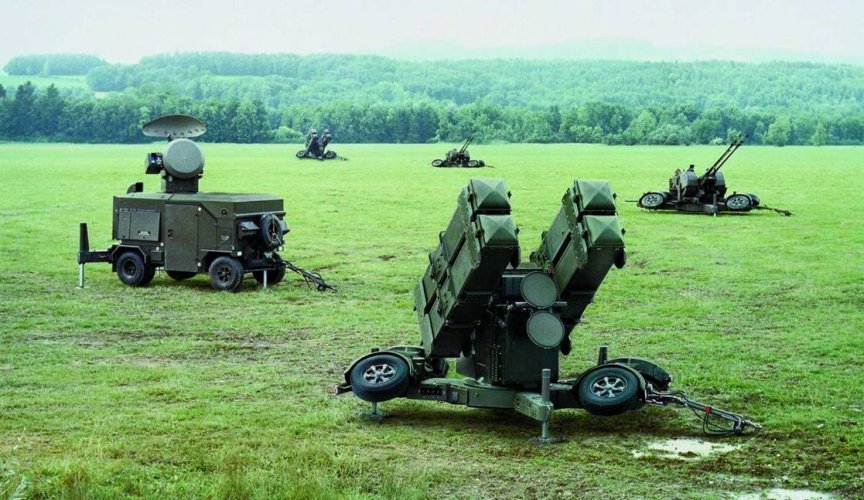
If we're talking about ground-based air defence of strategically important airfields bases, naval institutions, and the like, I'd prefer to see the likes and capabilities of Oerlikon Skyguard - a combined system of Skyguard fire control system, ground-launched RIM-7H Sparrow launchers and Oerlikon twin 35mm towed GDF-003 anti-aircraft guns. (A battery consists of one Skyguard fire control system. Two twin 35mm towed GDF-003 anti-aircraft guns, two launchers with 4 Sparrow missiles each.)
Later, this system could/should be complemented with Ericsson Giraffe AD radar systems.

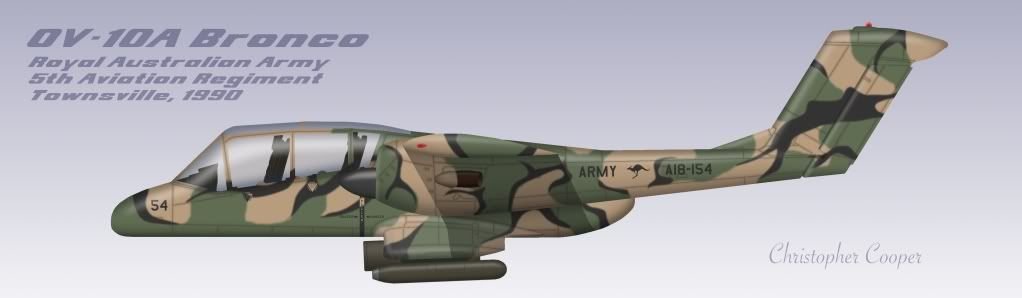
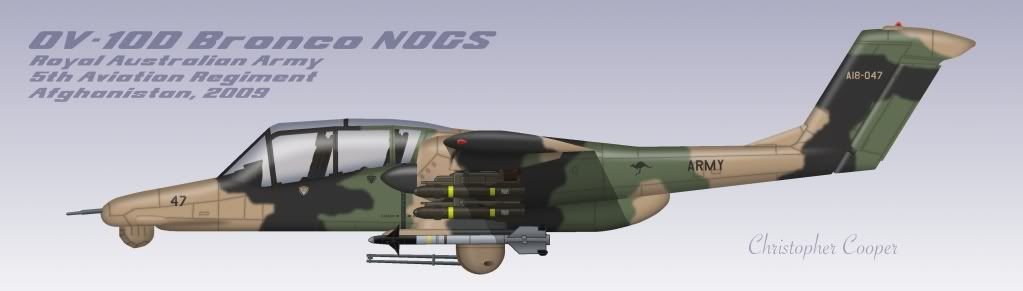
Also, want to draw attention to specialised FAC/COIN within the ADF, which seemingly goes through a on again/off again flavour in the ADF. As such, I would propose at least one Squadron (in place of one Squadron of OH-58's) of OV-10 Bronco's, starting off with early OV-10A and later OV-10D. The Bronco's get much usage in PNG, East Timor, and Afghanistan.

Regards
Pioneer

 

Attachments

  • oerlikon skyguard air defence system.jpg
    oerlikon skyguard air defence system.jpg
    138.1 KB · Views: 22
  • proxy-3.jpg
    proxy-3.jpg
    25.3 KB · Views: 18
  • proxy-4.jpg
    proxy-4.jpg
    25.5 KB · Views: 18
Last edited:
I was thinking in a post vietnam that sydney would be refited as a commando carrier to provide airbourne assault to the amphibous task group with the LSM providing the heavy lift. So by the 80s Sydney would probably need replacing

That would imply the desire and wider ability to conduct an opposed amphibious landing that Australia simply doesn't have. If there was resistance any greater that that of the Fanning Head Mob at San Carlos in the Falklands, an 81mm mortar and 2 x 106mm recoiless rifles and 62 troops, Australia wouldn't be able to conduct a landing. Mines, artillery, hundreds of troops let alone aircraft and/or warships would require combat power that Australia lacks and would never acquire.

If needed be a company could travel with Melbourne and land by helicopter from Her, but it would be into an almost totally permissive environment.
 
That would imply the desire and wider ability to conduct an opposed amphibious landing that Australia simply doesn't have. If there was resistance any greater that that of the Fanning Head Mob at San Carlos in the Falklands, an 81mm mortar and 2 x 106mm recoiless rifles and 62 troops, Australia wouldn't be able to conduct a landing. Mines, artillery, hundreds of troops let alone aircraft and/or warships would require combat power that Australia lacks and would never acquire.

If needed be a company could travel with Melbourne and land by helicopter from Her, but it would be into an almost totally permissive environment.
I'm think in post war environment where the US won't necessarily come to are aid having a commando carrier to conduct opposed landings in tandan with the LSMs would be quite handy capability to have. Especially if Melbourne does a couple war cruises, making Australia more confident it might see us interfer in East Timor in 75.
 
If I recall correctly, the plan was for Centurions in the regular tank brigade and Comets in the two CMF tank brigades.

Because Australia switched to operations in the Pacific the large, armoured formations, intended for North Africa and Europe, were mostly disbanded. Both NZ and South Africa converted an Infantry Brigade to Armour, in part to save on manpower. Australia went the other direction, converting motorised and mech cavalry regiments and infantry carrier platoons to light rec and special forces.

Mongomery wanted to retain Australian divisions for Italy and Normandy; it is conceivable that a deal could have been struck for one or two AIF divisions to stay in North Africa and be deployed to Europe, in exchange for some other support for the defence of Australia. Maybe an expedited return of the AIF infantry divisions in exchange for deployment of one or two armoured divisions.

What timeframe are you talking about? Because IIUC in the 50s Australia acquired 51 Churchill and ~108 Centurion tanks, 15 Saladins, 25 Saracens and 264 Ferrets.

I see Australia's defence policy go through 3 stages:
1949-57: mass mobilisation to fight a WW2 style war with 2 full size CMF divisions
1957-72: forwarded defence limited war as single services within alliance structures
1972 -: self-reliance with more 'joint' operations, tending toward continental defence

While the shift from limited war to self-reliance is smooth enough the move from mass mobilisation to limited war was more difficult. Most of the assumptions and structures set up for mass CMF mobilisation for total war weren't appropriate for smallish Regular units fighting limited wars.
 
I'm think in post war environment where the US won't necessarily come to are aid having a commando carrier to conduct opposed landings in tandan with the LSMs would be quite handy capability to have. Especially if Melbourne does a couple war cruises, making Australia more confident it might see us interfer in East Timor in 75.

Australia would want to have made some pretty good procurement decisions and had a significantly different Vietnam with much better outcomes from an Operational Military perspective: ie experience with Joint Command of RAAF and RAN combat units directly supporting 1-ATF in combat before confronting Indonesia and the TNI in East Timor.

In any case the ADF wouldn't want to land into an area covered by TNI units, but rather in an area controlled by a friendly militia who invited Australia.
 
Australia would want to have made some pretty good procurement decisions and had a significantly different Vietnam with much better outcomes from an Operational Military perspective: ie experience with Joint Command of RAAF and RAN combat units directly supporting 1-ATF in combat before confronting Indonesia and the TNI in East Timor.

In any case the ADF wouldn't want to land into an area covered by TNI units, but rather in an area controlled by a friendly militia who invited Australia.
Agreed could probably happened with a 58 merger of the Defence departments. I would say that is the key POD to make most things happen. As it would allow for more joint exercise earlier and more joint operations in Vietnam
 
FWIW while 1ATF is well known there was another level of 'Command' HQ Australian Forces Vietnam, located with the Free World Military Assistance Forces Office in Saigon. This was basically a liaison organisation, rather than having the 1ATF, AATTV, 2 (of 3) RAAF sqns and RAN destroyer under its command it negotiated them being assigned to US command and ensured they weren't used in ways contrary to Australia's interests.

An alternative arrangement could be HQ-AFV having actual command of these disparate forces and 'chopping' them to US commands as required but using them in joint Australian operations whenever possible. For example, DDGs on the gunline did fire in support of 1ATF on a few occasions, but under this arrangement HQ-AFV could chop them to be commanded directly by 1ATF when it was conducting operations. In addition, there were periods when destroyer captains believed that they we're doing useless busy work on the gunline, unobserved firing at suspected targets with little to no result. This could be an opportunity to chop the DDG to 1ATF, where it could do busy work for Australia or do nothing at all. The same goes for the Canberra and Caribou sqns.

If this was the case Australia would come out of Vietnam with considerable experience in joint operations and this would have significant impacts going forward.
 
FWIW while 1ATF is well known there was another level of 'Command' HQ Australian Forces Vietnam, located with the Free World Military Assistance Forces Office in Saigon. This was basically a liaison organisation, rather than having the 1ATF, AATTV, 2 (of 3) RAAF sqns and RAN destroyer under its command it negotiated them being assigned to US command and ensured they weren't used in ways contrary to Australia's interests.

An alternative arrangement could be HQ-AFV having actual command of these disparate forces and 'chopping' them to US commands as required but using them in joint Australian operations whenever possible. For example, DDGs on the gunline did fire in support of 1ATF on a few occasions, but under this arrangement HQ-AFV could chop them to be commanded directly by 1ATF when it was conducting operations. In addition, there were periods when destroyer captains believed that they we're doing useless busy work on the gunline, unobserved firing at suspected targets with little to no result. This could be an opportunity to chop the DDG to 1ATF, where it could do busy work for Australia or do nothing at all. The same goes for the Canberra and Caribou sqns.

If this was the case Australia would come out of Vietnam with considerable experience in joint operations and this would have significant impacts going forward.
Agree 100% there and again the beat way for this to happen would be the 58 defence merger. That is really the most missed opportunity in Australia military capability in the cold war
 
Agree 100% there and again the beat way for this to happen would be the 58 defence merger. That is really the most missed opportunity in Australia military capability in the cold war

I don't know if the 58 DoD merger would make such a thing happen, but it is the most likely opportunity for it to come to pass.
 
I don't know if the 58 DoD merger would make such a thing happen, but it is the most likely opportunity for it to come to pass.
Yeah it does increase the chances cause the military would have been under 1 department for 7 to 8 years (depending in merger happens in 58 or 59) and joint exercises for maybe 5 years
 
The Australian merger of your Defence forces still sounds a hell of a lot more effective the the unification of the Canadian military.
 
The Australian merger of your Defence forces still sounds a hell of a lot more effective the the unification of the Canadian military.

It wasn't a merger of the 3 Military Services, rather it was the merger of 4 government departments that supported them into one, with a minister and assistant minister.
 
I rest my case.
Unification was a fracking gong show.
Done without almost any prior thought to what it was actually going to accomplish.
......aside from allowing the the then Minister of National Defence (MND) to ride on attempt at attaining the Prime Minister's position.
 
What timeframe are you talking about? Because IIUC in the 50s Australia acquired 51 Churchill and ~108 Centurion tanks, 15 Saladins, 25 Saracens and 264 Ferrets.

I see Australia's defence policy go through 3 stages:
1949-57: mass mobilisation to fight a WW2 style war with 2 full size CMF divisions
1957-72: forwarded defence limited war as single services within alliance structures
1972 -: self-reliance with more 'joint' operations, tending toward continental defence

While the shift from limited war to self-reliance is smooth enough the move from mass mobilisation to limited war was more difficult. Most of the assumptions and structures set up for mass CMF mobilisation for total war weren't appropriate for smallish Regular units fighting limited wars.
These were late war plans for a post war army.
 
I was reading from empire defence to long haul and it said the post war plans was
Regular Army
2x Infantry Brigades
1x Armoured Regiment
CMF
2x Infantry Divions
2x Armoured Brigades
According to the book I referenced earlier is was 5x regular tank regiments and 10x CMF
 
If I may, I'd like to see the UH-1B and UH-1H replaced earlier by Bell 212/UH-1N's, with its twin-engined arrangement offering greater hot/high performance, as well as superior safety.
These UH-N's should be marinised for operating in support of Army amphibious operations.

Totally support the purchasing of one Squadrons of Bell AH-1G - used to give the Air Force/Army operational experience and formulating doctrine, while supporting the Army.
Later, replace this Squadron of AH-1G's with two Squadrons of more advanced and more capable AH-1J Sea Cobra. I denote the AH-1J Sea Cobra, as it's Pratt and Whitney Twinpac T400 engine gives commonality with the UH-1N, as well as being marinised for operating in support of Army amphibious operations.

Once committed to the UH1D/H in numbers they will serve their ~20 lives and won't be replaced by twin engine variants to get marginal improvements. Indeed replacing UH1Hs early would mean money won't be available for other things.

For what it's worth, I'd prefer Lynx over SH-2 Seasprite. The Lynx being a much more modern design, incorporating much better sea handing than the older, bigger and heavier Seasprite.

I don' disagree, but the Sea Sprite can be ordered in the 1971 helicopter buy for service on earlier DDLs by 1973-74. In contrast the naval Lynx didn't enter service until 1979 with France and 1981 with Britain so wouldn't be available for export to Australia until the early 80s.

What to replace the Bloodhound SAM with?
Given the inherent neglect of Area Defence SAM development and fielding by the West

Bloodhounds were a compliment to the short-range, poor-performing-AAM, Mirage IIIs. Keeping the F4E will reduce the need for such big SAMs and the replacement of the Mirages and Phantoms by Hornets will eliminate the need entirely.

If we're talking about ground-based air defence of strategically important airfields bases, naval institutions, and the like, I'd prefer to see the likes and capabilities of Oerlikon Skyguard - a combined system of Skyguard fire control system, ground-launched RIM-7H Sparrow launchers and Oerlikon twin 35mm towed GDF-003 anti-aircraft guns. (A battery consists of one Skyguard fire control system. Two twin 35mm towed GDF-003 anti-aircraft guns, two launchers with 4 Sparrow missiles each.)
Later, this system could/should be complemented with Ericsson Giraffe AD radar systems.

It would be good for air bases to have some defence, although the threat is very small as virtually no country in the region has aircraft that could hit Australia even from Indonesia.
Also, want to draw attention to specialised FAC/COIN within the ADF, which seemingly goes through a on again/off again flavour in the ADF. As such, I would propose at least one Squadron (in place of one Squadron of OH-58's) of OV-10 Bronco's, starting off with early OV-10A and later OV-10D. The Bronco's get much usage in PNG, East Timor, and Afghanistan.

I like the Bronco as a COIN aircraft, but it would have to be operated by the RAAF and purchased at the expense of other things.
 
Bloodhounds were a compliment to the short-range, poor-performing-AAM, Mirage IIIs. Keeping the F4E will reduce the need for such big SAMs and the replacement of the Mirages and Phantoms by Hornets will eliminate the need entirely.
Would replacing the Bloodhounds with the rapier allowing a bigger buy with the Army be a good idea?
I don' disagree, but the Sea Sprite can be ordered in the 1971 helicopter buy for service on earlier DDLs by 1973-74. In contrast the naval Lynx didn't enter service until 1979 with France and 1981 with Britain so wouldn't be available for export to Australia until the early 80s.
Be no different to the Adelaide's when they entered service, I've seen drawings of the joint RN/RAN GP Escort with armed UH-1 like the UH-1 BUshrangers as the helicopters, so maybe that would happend till the Lynx enter service
 
I don't know if it's well known but the RAN bought 2 Westland Scouts for hydro survey that were delivered in 1963 and the RAAF bought 3 Alouette IIIs for use at Woomera that were delivered in 1964 and sold in 1967.

Some 62 Bell 47s were bought for the Army, 13 delivered 1960 and the rest in 4 batches 1965-69. I'd like the 49 1965-69 Bell 47s and the 3 Alouette IIIs to be Westland Scouts instead, which would give the Army a modern, powerful little helicopter for Vietnam and the RAAF Woomera Scouts could be transferred to the Army in 1967-68. The Scout wouldn't need replacing in 1971 like the Bell 47 did so the 1971 helicopter order would be dramatically different and create space for the Navy to buy SH2s for the DDL frigates.

Speaking of SH2s, the RAN also had 7 UH1Cs delivered in 1964-66, the RAN could use the Sh2 as an opportunity to rationalise its helicopter fleet by transferring the UH1s to the RAAF and getting some utility UH2s alongside the ASW Sh2s in the 1971 order.
 
I don't know if it's well known but the RAN bought 2 Westland Scouts for hydro survey that were delivered in 1963 and the RAAF bought 3 Alouette IIIs for use at Woomera that were delivered in 1964 and sold in 1967.

Some 62 Bell 47s were bought for the Army, 13 delivered 1960 and the rest in 4 batches 1965-69. I'd like the 49 1965-69 Bell 47s and the 3 Alouette IIIs to be Westland Scouts instead, which would give the Army a modern, powerful little helicopter for Vietnam and the RAAF Woomera Scouts could be transferred to the Army in 1967-68. The Scout wouldn't need replacing in 1971 like the Bell 47 did so the 1971 helicopter order would be dramatically different and create space for the Navy to buy SH2s for the DDL frigates.

Speaking of SH2s, the RAN also had 7 UH1Cs delivered in 1964-66, the RAN could use the Sh2 as an opportunity to rationalise its helicopter fleet by transferring the UH1s to the RAAF and getting some utility UH2s alongside the ASW Sh2s in the 1971 order.
I quite like this idea. Why did the army want 84 Kiowas anyway?
Would you replace the scouts in the 80s with more ah1s?
 
FWIW I've been re-reading ORGANISING AN ARMY: THE AUSTRALIAN EXPERIENCE 1957- 1965 by J. C. BLAXLAND for some background of the Pentropic Division.

While people focus on its failures, notably it failed on exercise in Tropical conditions and ruined the CMF, it did have some considerable positives in procurement terms.
  • It ensured the money saved by ending conscription was spent on the Regular Army, not saved or spent on the RAN or RAAF.
  • It established a couple of new Regular units, notably 4th Field Regt artillery and 16th Light Aviation sqn, these were able to be expanded upon later.
  • Procured equipment for the new Division, notably the M113 and I suspect had input into the Caribou and UH1 acquisition
Those things might not have occurred without such a radical re-organsiation.
 
Why did the army want 84 Kiowas anyway?

The same reason why the Army was talking multiple Armoured Divisions going in 1945, because the Government hadn't told them what the post-war structure would be.

In 1971 the on-paper strength of the Regular Army was:
  • 9 infantry battalions.
  • 4 regiments of field artillery.
  • 3 regiments of cavalry.
  • 1 regiment of tanks.
A force that big probably needs 84 Kiowas and 42 more UH1s.
 
I quite like this idea.

I haven't applied any budget rigour to it, so it may not be feasible, or at least not in those numbers.

Would you replace the scouts in the 80s with more ah1s?

I imagine if the Army got the Scout and RAAF got the AH1 any AH1 replacements for the Scout would go to the RAAF which wouldn't be OK with the Army.

BTW keeping most of the helicopters in the RAAF would be a better result than transferring them to the Army from the late 80s. It took the Army decade to get their heads around the idea that a multi-million-dollar, turboshaft-powered helicopter isn't just a different type of truck and that flying them isn't something a rifleman can do on the side.
 
FWIW I've been re-reading ORGANISING AN ARMY: THE AUSTRALIAN EXPERIENCE 1957- 1965 by J. C. BLAXLAND for some background of the Pentropic Division.

While people focus on its failures, notably it failed on exercise in Tropical conditions and ruined the CMF, it did have some considerable positives in procurement terms.
  • It ensured the money saved by ending conscription was spent on the Regular Army, not saved or spent on the RAN or RAAF.
  • It established a couple of new Regular units, notably 4th Field Regt artillery and 16th Light Aviation sqn, these were able to be expanded upon later.
  • Procured equipment for the new Division, notably the M113 and I suspect had input into the Caribou and UH1 acquisition
Those things might not have occurred without such a radical re-organsiation.
I suspect these wpuld have happened whether pentropic had happend or not cause conscription would have ended anyway meaning more money allocated to the regs. There might have been a slower expansion of the regs though with pentropic infantry numbers expander but not battalions so maybe not.
 
The same reason why the Army was talking multiple Armoured Divisions going in 1945, because the Government hadn't told them what the post-war structure would be.

In 1971 the on-paper strength of the Regular Army was:
  • 9 infantry battalions.
  • 4 regiments of field artillery.
  • 3 regiments of cavalry.
  • 1 regiment of tanks.
A force that big probably needs 84 Kiowas and 42 more UH1s.
I forget how big the reg army was post Vietnam that is an impressive force structure
 
I haven't applied any budget rigour to it, so it may not be feasible, or at least not in those numbers.


I imagine if the Army got the Scout and RAAF got the AH1 any AH1 replacements for the Scout would go to the RAAF which wouldn't be OK with the Army.

BTW keeping most of the helicopters in the RAAF would be a better result than transferring them to the Army from the late 80s. It took the Army decade to get their heads around the idea that a multi-million-dollar, turboshaft-powered helicopter isn't just a different type of truck and that flying them isn't something a rifleman can do on the side.
Sorry i was just thinking along the lines of how we replaced the Kiowas in the 2000s. Plus I would like for AH1s than 11
I dont think you would be able to get a 1 to 1 Scout for Sioux but even 0.5/0.75 to 1 Scout for Sioux would be good
So the scout replacement would be either the kiowa or the lynx on the 80s then?
I agree with keeping the Chinooks, Iroquois and cobras with the RAAF not thr Army
 
Last edited:
I forget how big the reg army was post Vietnam that is an impressive force structure

It is, that's 3 brigades each with APC and artillery support and an Artillery regiment and tank regiment as divisional troops.

Sorry i was just thinking along the lines of how we replaced the Kiowas in the 2000s. Plus I would like for AH1s than 11
I agree with keeping the Chinooks, Iroquois and cobras with the RAAF not thr Army

I'd think that the RAAF would want to replace the AH1 with a real heavy hitter, if only to justify keeping them in the RAAF, and the heaviest hitter in the 80s is the Apache! Woo hoo!

I dont think you would be able to get a 1 to 1 Scout for Sioux but even 0.5/0.75 to 1 Scout for Sioux would be good

The Army could keep the remains of the initial 13 Bell 47s (they crashed a few in a very short time) for training. If the Army only got 0.5-0.75 Scout for Sioux those extra 3 for free from Woomera would be a handy bonus.

So the scout replacement would be either the kiowa or the lynx on the 80s then?

What is the hot light Army helicopter in the 80s? Gazelle and Bo.105 might be a bit old and a bit European. The OH58D might be the go, I think the Lynx would be too close to the Blackhawk to be chosen.
 
It is, that's 3 brigades each with APC and artillery support and an Artillery regiment and tank regiment as divisional troops.


I'd think that the RAAF would want to replace the AH1 with a real heavy hitter, if only to justify keeping them in the RAAF, and the heaviest hitter in the 80s is the Apache! Woo hoo!


The Army could keep the remains of the initial 13 Bell 47s (they crashed a few in a very short time) for training. If the Army only got 0.5-0.75 Scout for Sioux those extra 3 for free from Woomera would be a handy bonus.


What is the hot light Army helicopter in the 80s? Gazelle and Bo.105 might be a bit old and a bit European. The OH58D might be the go, I think the Lynx would be too close to the Blackhawk to be chosen.
I wonder if the money was there amd a better vietnam experience would we be able to support this with no conscription

Probably not be able to get Apache's in the 80s when we got the Cobras in the 70s. I could see a second batch and attrition replacements brought plus upgrading the original cobras

Yes they would.

I would say with big UH1 buy the blackhawks won't get brought in the 80s
So the lynx could be the scout replacement but the OH58D might be the way to go
 
Probably not be able to get Apache's in the 80s when we got the Cobras in the 70s. I could see a second batch and attrition replacements brought plus upgrading the original cobras
I would say with big UH1 buy the blackhawks won't get brought in the 80s

You're right, the Blackhawks were bought to replace the UH1s bought in the 60s, many of which had seen war service. A big batch of helicopters in mid 70s would mean replacement in the 90s.

So the lynx could be the scout replacement but the OH58D might be the way to go

There would be responsibility demarcation between Army and RAAF and I'd guess the Lynx is too close to what the RAAF would operate for the Army to get it. The Army would get a good light helicopter.

I wonder if the money was there amd a better vietnam experience would we be able to support this with no conscription

Perhaps if they offered good enough conditions, but service life isn't for everyone. In any case I'd suggest such a powerful force is serious overkill for the security environment of the 70s and 80s. I personally like the force structure of the 80s with a heavy brigade and a light brigade, but the more recent multi-role brigade with 2 infantry btns and a composite armoured cavalry regiment with tanks, APCs and wheeled AFVs that could also be a useful structure.
 
You're right, the Blackhawks were bought to replace the UH1s bought in the 60s, many of which had seen war service. A big batch of helicopters in mid 70s would mean replacement in the 90s.


There would be responsibility demarcation between Army and RAAF and I'd guess the Lynx is too close to what the RAAF would operate for the Army to get it. The Army would get a good light helicopter.


Perhaps if they offered good enough conditions, but service life isn't for everyone. In any case I'd suggest such a powerful force is serious overkill for the security environment of the 70s and 80s. I personally like the force structure of the 80s with a heavy brigade and a light brigade, but the more recent multi-role brigade with 2 infantry btns and a composite armoured cavalry regiment with tanks, APCs and wheeled AFVs that could also be a useful structure.
So blackhawks replace the UH1s in the 90s. Upgraded the CH47Cs to the D model, and the Cobras replaced by Super Cobras or Apache's in the 90s aswell?

Say OH58Ds for the Scout replacement in the 80s they get replaced by UAVs in the 00/10s?

I like the bigger force structure to allow for more flexibility in operations, such as a big intervention in say East Timor or more a couple smaller ones at the same time like in Fiji and Solomon Islands

Maybe in the 80s go off what project waler was planing 1st Division's be light and mobile with 2x reg brigades and the 2x QLD Res brigades

3rd Division becomes the Heavy Mechanised Force with 1x Reg and 1x Res brigade

The rest of the reserves in 2nd Division
 
Back
Top Bottom