Alternate Australian Defence Force 1970s Procurements?

In the era of the 'globalisation' economic model it wouldn't have an economic business case and Government of all stripes since the 80s at least only do things for economics.
Yeah thats in the 80s, it was proposed post ww2 along with the standardisation of Vic's broad gauge and sa broad and narrow gauge lines, which whould the also been done to ease the break of gauges and increase logistics between the states
 
That's all fine and dandy, but when money and manpower are scarce spending on that most likely comes at the expense of Melbourne's 145' cat and 8 degree deck rebuild.
That is true in an ideal scenario there would be enough money.
We could always buy more in the late 60s and 70s
 
Yes, adding that railway is pretty much required. Best way to move lots of materials is by rail. Means you can have hardware built or repaired on one side of the country and then delivered to the other side of the country with a lot more security than delivery by ship.

I once saw a booklet written about what RAAF Tindal would require if an F111 sqn deployed there alongside the Hornet sqn. The tonnages, particularly of jet fuel, were staggering and the point of the booklet was that trucks, even road trains would struggle and likely fail to keep up with the requirements. I can't recall if the the author was pushing for railways or pipelines or what.

These days the Katherine railway passenger terminal and other sidings etc are a mere 18km from RAAF Tindal by road, and trains do a far better job of moving bulk fuel than even road trains. Road trains could do the shuttling of fuel from the train to the fuel farm, or perhaps a pipeline could be rigged up in an emergency.
 
I once saw a booklet written about what RAAF Tindal would require if an F111 sqn deployed there alongside the Hornet sqn. The tonnages, particularly of jet fuel, were staggering and the point of the booklet was that trucks, even road trains would struggle and likely fail to keep up with the requirements. I can't recall if the the author was pushing for railways or pipelines or what.

These days the Katherine railway passenger terminal and other sidings etc are a mere 12km from RAAF Tindal, and trains do a far better job of moving bulk fuel than even road trains.
Trains in general are better at moving frieght. The only time trucks are better is getting the frieght to its final location.
The old 3ft 6inches north Australia railway line used to have an RAAF siding at Darwin air port and a RAN siding at Darwin harbour
This should have been replicated for Tindal and other northern defence infrastructure
 
Trains in general are better at moving frieght. The only time trucks are better is getting the frieght to its final location.
The old 3ft 6inches north Australia railway line used to have an RAAF siding at Darwin air port and a RAN siding at Darwin harbour
This should have been replicated for Tindal and other northern defence infrastructure

The entire reason why RAAF Laverton was built because it was cheaper to build a new airbase right on the existing rail line than run a spur less than 7km down to Point Cook!
 
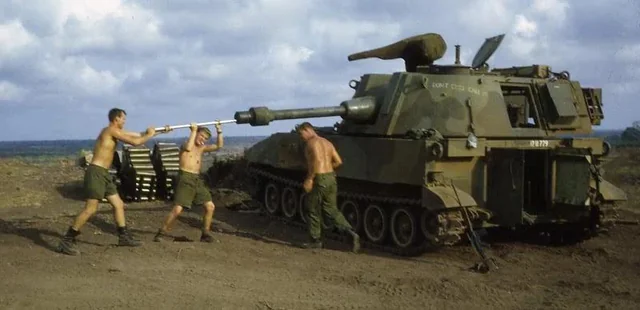
Has anyone heard of 6 Troop, A Squadron, 3rd Cavalry Regiment borrowing six M108 SP Howitzers in 1967? They were used mainly in the direct fire role for base defence at Nui Dat and were returned when the Centurions arrived.

Another niche capability we had for a short time and never kept!

1760668642624.png
 
Has anyone heard of 6 Troop, A Squadron, 3rd Cavalry Regiment borrowing six M108 SP Howitzers in 1967? They were used mainly in the direct fire role for base defence at Nui Dat and were returned when the Centurions arrived.

Another niche capability we had for a short time and never kept!

View attachment 788381
The 105mm gun in an SPH was completely deprecated in service. 105mm was too short range and too small a boom.

Now, keeping some 155mm SPH/SPG would have been a good idea.
 
Has anyone heard of 6 Troop, A Squadron, 3rd Cavalry Regiment borrowing six M108 SP Howitzers in 1967? They were used mainly in the direct fire role for base defence at Nui Dat and were returned when the Centurions arrived.

Another niche capability we had for a short time and never kept!

View attachment 788381
Well like you said the arrival of more Centurions relieved these requisited M108s from the base defense role.

I remember several senior Aussies in this forum chewing over the history and it was mentioned that initially M113 FSVs were ordered to take up the slack from a low numbers of Centurions in both offensive (mobile fire support and escort) and defensive duties. Eventually the uptick of available MBTs kicked the can down for early retirement of these makeshift fire support vehicles except in some where-be and abouts mission in isolated areas that were to be given to Scorpion turret equipped M113s, informed by Vietnam experiences that shaped up the requirements of a light, air transportable vehicle.

So it could be imagined that a vehicle in the vein of that could've taken over, combined: base defense, light recce by fire and SOF support.
 
I think less can be more and more (as in better) can be (cost) less.

Australia's involvement in Vietnam was very expensive in cash, manpower and public support/goodwill. Having an Essex that could be deployed in support of the US in Vietnam, while very expensive, may have worked out cheaper than increasing the RAR to 9 battalions and permanently deploying a TF/Brigade to Vietnam for several years.

Armoured units require fewer personnel than infantry meaning the army could be increased in size and hardened without the manpower overhead of an infantry division, which is what the Australian Army was built around for Vietnam.

For example, six battalions were probably sustainable without conscription, especially if some of them were integrated with reserve/CMF units. Taking a US Army structure of a Mech Bde with two infantry and one tank Btns and Armd Bde of one infantry and two tank Btns, a Mech Div has two Mech and one Armd Bdes, an Armd Div has one Mech and two Armd Bdes. The Army could quite affordably, assuming no major Vietnam deployment, consist of one regular Armoured division supported by two reserve Mech Divisions.

SPG Regts have fewer personnel than towed, Cav and Tank Regts have fewer than infantry Btns.

I suggested six infantry Btns, four would be Mech (split between one Mech and two Armd Bdes), and two would be Light Infantry / Commando (likely one airmobile and the other amphibious).

This setup would require five tank Regts/Btns (ironically what was planned as the core of the post-war army). Assuming an integrated structure, say one Sqn in each is reserve, and one Sqn in each is a Cav/Rec element, this should be affordable.
 
Last edited:
In the 70s the army could go German, Leopard, Marder, Lynx and Fuchs, plus the HK G3 family of weapons, G3/G33/HK21 and MG-3.

I like the idea of going French for the navy and will go into that later. I definitely like the Mirage F-1. With an Essex class carrier, I can't help but think A-7E and F-4K, Viking and Seaking.
 
One thing i've just though about was during this time period Australia almost aquired nuclear weapons until Mchahon cancelled the project, what if he didnt?
How would nukes effect the ADF?
Would Whitlam keep them or get rid of them?
 
"As part of Air Staff Requirement (Operational Requirement/Air) 36 for bomber aircraft in the 1950s, the Royal Australian Air Force specified a requirement for "an offensive tactical strike capability" and "strategic defence of Australia" with targets "as far north as the Kra Peninsula". The bomber was required to have a range of not less than 4,000 nautical miles (7,400 km) and be capable of carrying at least 20,000 pounds (9,100 kg) of conventional bombs or one BLUE DANUBE nuclear weapon (which had been air dropped at Maralinga on 11 October 1956).[35] Locally manufactured versions of the Avro Vulcan or Handley Page Victor nuclear bombers were some of the options considered." Wikipedia Australia and weapons of mass destruction
What would the effect on the RAAF if Vulcans (which were prefered) are procured?
 
One thing i've just though about was during this time period Australia almost aquired nuclear weapons until Mchahon cancelled the project, what if he didnt?
How would nukes effect the ADF?
Would Whitlam keep them or get rid of them?

I'd think 'almost' is a stretch, certainly the government kept the option open until the late 60s, when they signed the NPT in 1968. IIUC McMahon cancelled the Jervis Bay nuclear power station at the earliest stage of construction, which is a shame.
 
"As part of Air Staff Requirement (Operational Requirement/Air) 36 for bomber aircraft in the 1950s, the Royal Australian Air Force specified a requirement for "an offensive tactical strike capability" and "strategic defence of Australia" with targets "as far north as the Kra Peninsula". The bomber was required to have a range of not less than 4,000 nautical miles (7,400 km) and be capable of carrying at least 20,000 pounds (9,100 kg) of conventional bombs or one BLUE DANUBE nuclear weapon (which had been air dropped at Maralinga on 11 October 1956).[35] Locally manufactured versions of the Avro Vulcan or Handley Page Victor nuclear bombers were some of the options considered." Wikipedia Australia and weapons of mass destruction
What would the effect on the RAAF if Vulcans (which were prefered) are procured?

IIUC the British dropped us like a hot spud as soon as the US restarted nuclear cooperation in 1958. They didn't need nuclear cooperation with the Commonwealth any more.
 
I'd think 'almost' is a stretch, certainly the government kept the option open until the late 60s, when they signed the NPT in 1968. IIUC McMahon cancelled the Jervis Bay nuclear power station at the earliest stage of construction, which is a shame.
Yeah i agree that jervis bay power station would have been very handy, especially if a couple more are built
 
IIUC the British dropped us like a hot spud as soon as the US restarted nuclear cooperation in 1958. They didn't need nuclear cooperation with the Commonwealth any more.
I mean i dont really blame the poms there cause it easier than with us help to get nukes than doing it with Australia, Though it does mean Australia has to go it alone for nukes.
If we did go ahead with nukes and buying 36 Vulcans would they replace the Canberras in service or serve along side them?
 
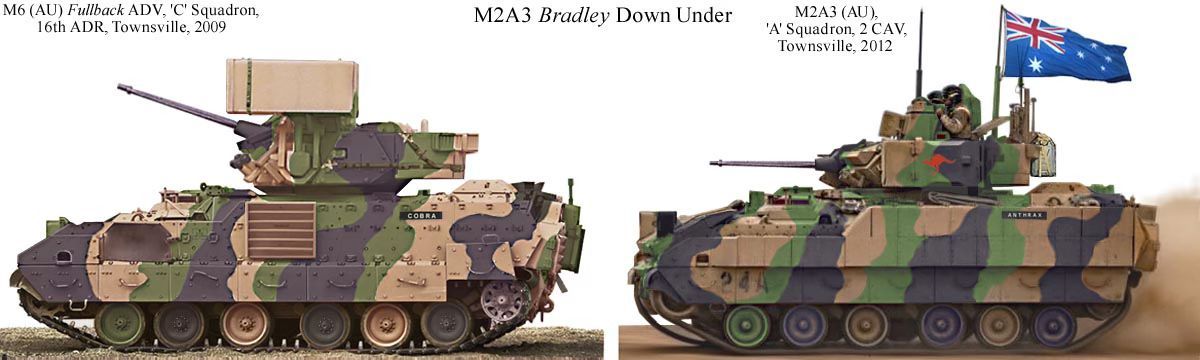
Including this here only because the thread has seemingly expanded beyond the original 1970s scenario - is a fictional, alternate history story surmising an earlier Land 400, Land 907, continued/modified Land 17 etc (basically bringing recent real world programs forward by about a decade or more):

http://beyondthesprues.com/Forum/index.php?topic=11037.0
And a teaser for those who like pictures:

tempImageT1XHTE.heic
 
I think less can be more and more (as in better) can be (cost) less.

Australia's involvement in Vietnam was very expensive in cash, manpower and public support/goodwill. Having an Essex that could be deployed in support of the US in Vietnam, while very expensive, may have worked out cheaper than increasing the RAR to 9 battalions and permanently deploying a TF/Brigade to Vietnam for several years.

Armoured units require fewer personnel than infantry meaning the army could be increased in size and hardened without the manpower overhead of an infantry division, which is what the Australian Army was built around for Vietnam.

For example, six battalions were probably sustainable without conscription, especially if some of them were integrated with reserve/CMF units. Taking a US Army structure of a Mech Bde with two infantry and one tank Btns and Armd Bde of one infantry and two tank Btns, a Mech Div has two Mech and one Armd Bdes, an Armd Div has one Mech and two Armd Bdes. The Army could quite affordably, assuming no major Vietnam deployment, consist of one regular Armoured division supported by two reserve Mech Divisions.

SPG Regts have fewer personnel than towed, Cav and Tank Regts have fewer than infantry Btns.

I suggested six infantry Btns, four would be Mech (split between one Mech and two Armd Bdes), and two would be Light Infantry / Commando (likely one airmobile and the other amphibious).

This setup would require five tank Regts/Btns (ironically what was planned as the core of the post-war army). Assuming an integrated structure, say one Sqn in each is reserve, and one Sqn in each is a Cav/Rec element, this should be affordable.

I agree with your sentiment here and where you're going with the force structure more or less but I believe you're jumping the gun by decades. It's important to keep in mind that the Regular Army was purely a training organisation until 1949 when the 3 btn RAR and the 1st Armoured Regiment and even then still was largely a training organisation for the 2 CMF divisions of conscripts until 1959. Even after concription ended in 1959 the Regulars didn't get a 4th RAR until 1964 (although 2 RAR btns were enlarged for the pentropic division) and 1st Cav and 1 APC sqn until 1965.

I think it's plenty possible for the Army to improve on this 1959-65 performance in terms of structural development I'd think landing on Mech/Armoured units in the early is a bridge too far. That didn't happen until the 80s.

I also agree that 6btns should have been enough, especially if the CMF was allowed to raise the odd battalion of CMF volunteers as was allowed by 1964 legislation and the CO of the CMF 'begged' to do in 1965. The retention of wheeled AFV and their and tanks early deployment to Vietnam and a few other things should be able to eliminate conscription while fostering much greater inter-service cooperation.
 
I'm looking at the Artillery to see if there's any scope for changes to procurement there, and it looks as if the Artillery grew slowly much like the Armour in the Regular Army and had a big expansion in the Vietnam era followed by the familiar amalgamations post Vietnam. What is interesting is that no Regular Artillery units were equipped with the 5.5" howitzer, of which the Army had 34 on strength, and certainly no 5.5" pieces were deployed to Malaysia or Vietnam.

On the procurement side the Army bought the lightweight, L5 105mm pack howitzer to go along with the air mobile mantra of the early 60s. However in Vietnam it was shown that the lightweight L5 wasn't up to the task of prolonged, heavy bombardments (18 L5s fired 3,000+ rounds in a single afternoon during the Battle of Long Tan Augn 66). Thus the Army bought the US M2 105mm howitzer, whose heavy construction was more suited to prolonged bombardments in Vietnam, despite it's inherent lack of mobility compared to the L5.

The acquisition of L119 105mm and M198 155mm pieces in the 70s and 80s pretty much sorted out the Australian artillery for decades, although I would like some SPGs in that period.
 
I agree with your sentiment here and where you're going with the force structure more or less but I believe you're jumping the gun by decades. It's important to keep in mind that the Regular Army was purely a training organisation until 1949 when the 3 btn RAR and the 1st Armoured Regiment and even then still was largely a training organisation for the 2 CMF divisions of conscripts until 1959. Even after concription ended in 1959 the Regulars didn't get a 4th RAR until 1964 (although 2 RAR btns were enlarged for the pentropic division) and 1st Cav and 1 APC sqn until 1965.

I think it's plenty possible for the Army to improve on this 1959-65 performance in terms of structural development I'd think landing on Mech/Armoured units in the early is a bridge too far. That didn't happen until the 80s.

I also agree that 6btns should have been enough, especially if the CMF was allowed to raise the odd battalion of CMF volunteers as was allowed by 1964 legislation and the CO of the CMF 'begged' to do in 1965. The retention of wheeled AFV and their and tanks early deployment to Vietnam and a few other things should be able to eliminate conscription while fostering much greater inter-service cooperation.
There were plans to increase the RPIR from 2 btns to 3 btns in PNG would this have helped as well?
I agree on sending the CMF to mayalsia for our commonwealth commitments.
I'm looking at the Artillery to see if there's any scope for changes to procurement there, and it looks as if the Artillery grew slowly much like the Armour in the Regular Army and had a big expansion in the Vietnam era followed by the familiar amalgamations post Vietnam. What is interesting is that no Regular Artillery units were equipped with the 5.5" howitzer, of which the Army had 34 on strength, and certainly no 5.5" pieces were deployed to Malaysia or Vietnam.

On the procurement side the Army bought the lightweight, L5 105mm pack howitzer to go along with the air mobile mantra of the early 60s. However in Vietnam it was shown that the lightweight L5 wasn't up to the task of prolonged, heavy bombardments (18 L5s fired 3,000+ rounds in a single afternoon during the Battle of Long Tan Augn 66). Thus the Army bought the US M2 105mm howitzer, whose heavy construction was more suited to prolonged bombardments in Vietnam, despite it's inherent lack of mobility compared to the L5.

The acquisition of L119 105mm and M198 155mm pieces in the 70s and 80s pretty much sorted out the Australian artillery for decades, although I would like some SPGs in that period.
If we went with the british FV340 APC instead of the M113's we could have got the Abbot 105mm SPG as well maybe
 
I agree on sending the CMF to mayalsia for our commonwealth commitments.

" MAJGEN Paul Cullen, argued strongly for the raising of a composite CMF Battalion for service in Vietnam. He proposed that the composite Battalion would undergo six months training to bring the skill levels up to speed before deployment to South Vietnam (SVN). "

The Malaysia btns were on a 2 year 'posting' as opposed to Vietnam which was a 1 year 'tour of duty', but the Malaysian btns were subject to a 4 month rotation into active combat zones during their posting.

One problem with Australia's Vietnam campaign was the separation of the Logistics Group in Vung Tau and 1ATF in Nui Dat meant both bases needed to be guarded against attack. In Vung Tau the Logistics personnel did guard duty and manned defensive pits etc. At Nui Dat this had to be done by an infantry btn, leaving only 2 for offensive operations. If they were co-located the 3rd infantry btn wouldn't be needed to defend the base.
 
" MAJGEN Paul Cullen, argued strongly for the raising of a composite CMF Battalion for service in Vietnam. He proposed that the composite Battalion would undergo six months training to bring the skill levels up to speed before deployment to South Vietnam (SVN). "

The Malaysia btns were on a 2 year 'posting' as opposed to Vietnam which was a 1 year 'tour of duty', but the Malaysian btns were subject to a 4 month rotation into active combat zones during their posting.

One problem with Australia's Vietnam campaign was the separation of the Logistics Group in Vung Tau and 1ATF in Nui Dat meant both bases needed to be guarded against attack. In Vung Tau the Logistics personnel did guard duty and manned defensive pits etc. At Nui Dat this had to be done by an infantry btn, leaving only 2 for offensive operations. If they were co-located the 3rd infantry btn wouldn't be needed to defend the base.
Wasn't there also plans for a PIR btn to go to Vietnam aswell?
 
Wasn't there also plans for a PIR btn to go to Vietnam aswell?

I haven't heard. You also need to discern between a suggestion or thought bubble and a plan. Just because someone olimpoerant or relevant suggests something, or a piece of kit is investigated doesn't make it a plan. For example the Lightning F2 and Drakken were suggested but by the time things became an actual plan only the Mirage III and F104G were left.
 
I haven't heard. You also need to discern between a suggestion or thought bubble and a plan. Just because someone olimpoerant or relevant suggests something, or a piece of kit is investigated doesn't make it a plan. For example the Lightning F2 and Drakken were suggested but by the time things became an actual plan only the Mirage III and F104G were left.
Well i've read that there were plans to send either a company or btn to of the PIR to vietnam to allievate the man power problem for infantry. Ive also read that there were plans to create a 3rd btn.
 
Well i've read that there were plans to send either a company or btn to of the PIR to vietnam to allievate the man power problem for infantry. Ive also read that there were plans to create a 3rd btn.

Sure, but what's the story, why didn't it happen? Was it a serious reason, or something feeble like the excuses to delay sending tanks or the Vendetta.
 
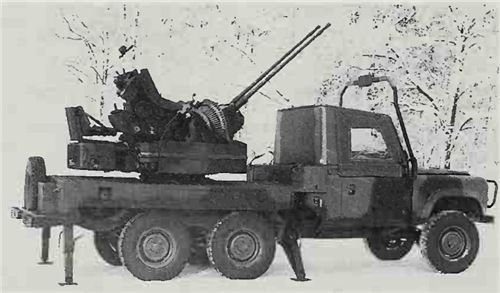
Hence my suggestion of the TA-20 turret 20mm system - best mounted on the wheeled component of Project Waler.
Or perhaps something no bigger than a Cadillac Gage V-150 Commando 4x4......

Regards
Pioneer
At minimum, bare bones Australian Army SPAAG - twin 20mm on 6x6 Land Rover (although, I'd prefer it on a Mercedes Unimog 4x4!)

Regards
Pioneer
 

Attachments

  • 6x6 Land Rover with twin 20mm AA mount.jpg
    6x6 Land Rover with twin 20mm AA mount.jpg
    28.8 KB · Views: 27
In this sencario with melbourne getting the 8degree refit, what would happen to sydney post vietnam do you keep or as a fast troop transport, convert her to a commando carrier or decommission and replace her?
 
It's interesting, Menzies served in the Militia in WWI but did not
I agree with your sentiment here and where you're going with the force structure more or less but I believe you're jumping the gun by decades. It's important to keep in mind that the Regular Army was purely a training organisation until 1949 when the 3 btn RAR and the 1st Armoured Regiment and even then still was largely a training organisation for the 2 CMF divisions of conscripts until 1959. Even after concription ended in 1959 the Regulars didn't get a 4th RAR until 1964 (although 2 RAR btns were enlarged for the pentropic division) and 1st Cav and 1 APC sqn until 1965.

I think it's plenty possible for the Army to improve on this 1959-65 performance in terms of structural development I'd think landing on Mech/Armoured units in the early is a bridge too far. That didn't happen until the 80s.

I also agree that 6btns should have been enough, especially if the CMF was allowed to raise the odd battalion of CMF volunteers as was allowed by 1964 legislation and the CO of the CMF 'begged' to do in 1965. The retention of wheeled AFV and their and tanks early deployment to Vietnam and a few other things should be able to eliminate conscription while fostering much greater inter-service cooperation.
My reference to what was planned for the post-war army came from this.

Australian armour: A history of the Royal Australian Armoured Corps, 1927-1972 Hardcover – 1 January 1978​

by Major-General R. N. L. Hopkins (Author)
 
It's interesting, Menzies served in the Militia in WWI but did not

My reference to what was planned for the post-war army came from this.

Australian armour: A history of the Royal Australian Armoured Corps, 1927-1972 Hardcover – 1 January 1978​

by Major-General R. N. L. Hopkins (Author)
I read it years ago when I was in a LH Regt, found it on Amazon, but at $348, I don't think I can sneak it past SWMBO.
 
It's interesting, Menzies served in the Militia in WWI but did not

My reference to what was planned for the post-war army came from this.

Australian armour: A history of the Royal Australian Armoured Corps, 1927-1972 Hardcover – 1 January 1978​

by Major-General R. N. L. Hopkins (Author)

That may have been what the Army wanted, but in reality the postwar growth the ARA (and RAAC) was painfully slow, basically a 3 btn infantry regt, a 3 sqn Tank Regt and a 3 bty artillery regt in the 50s, so little that IIRC it wasn't formed into a Brigade until about 1957. The ARA got a 2nd artillery regt in 1960, a 4th infantry btn in 1964 and 2 Armoured (APC/Recce) units in 1965, at which point conscription kicked in.

I haven't read Hopkins in maybe a decade, but I suspect that plan was in the 50s when the CMF was 2 full divisions and had 2 Armoured Brigade HQs. In the 50s 2 CMF units had some Centurion tanks for training, a few CMF Light Horse units had Ferrets and the plan was to form the 3rd AIF and re-fight WW2 more or less, complete with mass production of tanks and AFVs.
 
In this sencario with melbourne getting the 8degree refit, what would happen to sydney post vietnam do you keep or as a fast troop transport, convert her to a commando carrier or decommission and replace her?

That depends on what other amphibious vessels are built. I think the chances would be higher if the LSM Mk2s were built that Sydney would be retained for a while as a austere Commando carrier and maybe replaced by some other key amphibious ship that may not be a commando carrier.

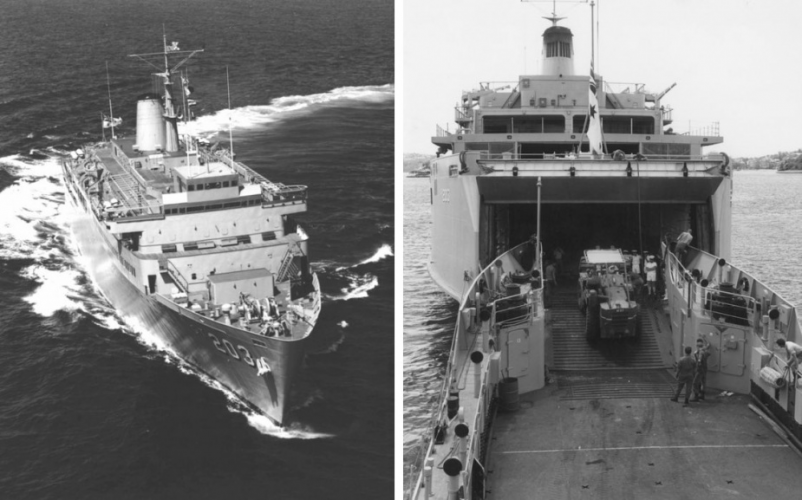
If the Army is stuck building LCHs then Sydney is a goner, and 'replaced' by HMAS Jervis Bay which when purchased by the RAN in 1976 was equipped to carry 190 passengers and 125 cars but was modified post-RAN service for 1,120 passengers and 300 cars. As a ro-ro ferry she was capable of transferring troops and vehicles to LCHs and other landing craft. TBH I don't hate the Jervis Bay for the 70s RAN, obviously not nearly as good as a complete amphibious group, but I suspect it would have done OK in Sydney's Vietnam role.

Photo from the Sea Power Centre.
1760817739669.png
 
According to this post in the LSM Mk2 forum by @Abraham Gubler
Paving the Way, Volume IV: The Royal Australian Engineers 1945 to 1972
Chapter 11 Movements and Transport pp 396-397

In the years after the war, particular with Australia’s commitment to PNG and later to SEATO, the Army maintained its interest in small craft. The need to move Centurion tanks dictated the Military Board decision to purchase the first two Landing Ships, Medium (LSM). The purchase of the second two LSMs was initiated by the Chairman of the Joint Planning Committee, Cdre. Alan McNicoll, who urged that Defence should sponsor the acquisition. The Defence Committee decided that Army would sponsor the acquisition of the additional LSMs.

While the LSM gave great flexibility in the deployment and support of an Australian force, there was a diminishing number of Australian owned ships suitable for military cargo and, in 1963, DTn [Director of Transport, Lt.Col. Phil Greville] put forward a proposal for Army to acquire a suitable ship for that purpose. He proposed that the ship be loaned back to the Australian National Line for use on certain prescribed tasks then not needed by Army. The Chief of Naval Staff (CNS) proposed that it be manned by RAN. Greville opposed this in a Minute to DMO&P claiming that while ever it is considered a ‘white ensign ship, trouble will be experienced getting any naval officer to understand the purpose for which the ship is wanted.

He claimed that the CNS in his letter had illustrated this when claiming that the type of ship suggested, a Mariner Class ship with between 50 and 60 officers and men could not operate in any way other than as a cargo ship. Greville agreed. He also agreed that if any amphibious capability was approved, and an assault cargo vessel (AKA) was acquired, then the CNS was correct in stating that such a ship would required 38 officers and 400 men to crew it. This claimed Greville:

“…highlights the difference in philosophy between Navy and Army. Army uses all sorts of simple cargo vessels and produces the terminal organisation to work the winches, the hatches, the stowage, etc. as well as planning the loading and discharge, operating the lighterage and shore (including beach) facilities [at the port]. It is most uneconomical to provide on board every ship this type of (terminal) organisation.”

Greville eventually proposed that a more modern ship than the Mariner be purchases, such as a Scandia at $5m. It needed far less crew and the gear was more modern. The Defence Committee sponsored a study, which found the Scandia was too big and recommended the purchase of two ships about half the size. Procrastination over the procurement of a logistic ship meant that it as never available for Vietnam. In that time it cost Army over $10m to hire MV Jeparit and some millions more to hire Bonnooroo and Harima Maru. If a ship and been brought in 1964, its cost would have been saved in the Vietnam years alone. Navy eventually got its way and built in Australia, a British Landing Ship Logistics (LSL), which it named HMAS Tobruk. This ship never met the requirements that Navy insisted upon through its resistance to the Army procuring a ship. HMAS Tobruk cost over $50m.

Recognising that the excellent LSM had a limited life, DTn set in train the long process of obtaining a replacement vessel, which he called the LSM Mk 2. He set out, with the help of Maj. J.S. Wilson to draw up a set of characteristics that included the best of the LSM and the experience of six years’ operation of the four vessels. The RAN had no experience in landing ships, nor had the Australian Ship Building Board, and he sought permission to advertise for a design contract. This was won by Dr Corlette, consultant to the British Indian Shipping Company, who was not only a naval architect but an aeronautical engineering. This was an advantage as the LSM hull exhibited many characteristics of aeroplane design. After experiencing the capabilities of the LSM, Dr Corlette declared that ‘the ship must have been the last designed by three competent professionals. Naval architect, marine engineer and electrical engineer, modern ships being too often the result of the machinations of committees’.

The LSM Mk 2 got to the stage of being model tested and costed at $2.5m, but Navy opposed the LSM Mk II on the grounds that they were larger and faster than the original ships and therefore not within the Army’s responsibilities. A decision was made then to replace the proposed LSM Mk II by eight Landing Craft Utility, to be built in Australia and renamed Landing Craft Heavy (LCH). DTn (now Lt. Col. Hallet) accepted reluctantly the decision knowing that these craft had a much lesser capability for self-deployment than the LSM and the eight LCH would carry less than four LSM. DTn intended to man the craft with eleven soldiers, with a Warrant Officer in charge of each craft.

So according this to, could Australia build
4x LSM Mk.2 to replace the LSMs
HMAS Tobruk to replace John Monash
2-3x Carrington Slipways LPH Proposal to replace HMAS Sydney
This would be quite the amphibious force by the 80s

 
If I may summarize some things that have come out of this thread, if not alternative procurement certainly different courses of action with various kit.
  • Put wheeled AFVs into a Cav regt in 1960 with the intention to keep them in service
  • Work out a path from 1959 that had Melbourne get a Karel Doorman rebuild and a balanced compliment of new generation aircraft in service by about 1965
  • Buy a 4th DDG from 1964
  • Abandon plans to put missiles on Darings
  • Have the DDL project freeze the design in about 1968-69 when it was a GP frigate, and build them in reasonable numbers
  • Undertake, if not he entire early 70s helicopter buy at least enough of it to get the AH1s in service
  • Build the LSM Mk2 to Army specs
  • Retain the F4Es in RAAF service after 1973
  • Scope Project Waler in 2 phases; 1) replace the old British wheeled AFVs 2) replace the M113s

That's the big ones I can think of off the top of my head.
 
If I may summarize some things that have come out of this thread, if not alternative procurement certainly different courses of action with various kit.
  • Put wheeled AFVs into a Cav regt in 1960 with the intention to keep them in service
  • Work out a path from 1959 that had Melbourne get a Karel Doorman rebuild and a balanced compliment of new generation aircraft in service by about 1965
  • Buy a 4th DDG from 1964
  • Abandon plans to put missiles on Darings
  • Have the DDL project freeze the design in about 1968-69 when it was a GP frigate, and build them in reasonable numbers
  • Undertake, if not he entire early 70s helicopter buy at least enough of it to get the AH1s in service
  • Build the LSM Mk2 to Army specs
  • Retain the F4Es in RAAF service after 1973
  • Scope Project Waler in 2 phases; 1) replace the old British wheeled AFVs 2) replace the M113s

That's the big ones I can think of off the top of my head.
Would the DDL be better as a GP frigate or the Final version?
Yep basically, plus
  • Lynx for the DDLs
  • Sea king or Super frelon for wessex replacement?
  • 1 or 2 Protector Class AOE
  • SPG's for the army
  • Bloodhound upgraded to Mk.2
  • The cancelled 2 oberons
IIUC the LSM Mk2s were similar in size to Tobruk, so I doubt the latter will get built if the former do.


I've missed this, can you provide a reference?
Probably i was just going off what the post said. Maybe tobruk would be more a logistic ship carring the equipment while the LSM does the offensive ampibious landings??
Heres the link to the Forum
https://www.secretprojects.co.uk/th...ole-helicopter-carrier-amphibious-ship.49874/
 
The article
Would the DDL be better as a GP frigate or the Final version?
Yep basically, plus
  • Lynx for the DDLs
  • Sea king or Super frelon for wessex replacement?
  • 1 or 2 Protector Class AOE
  • SPG's for the army
  • Bloodhound upgraded to Mk.2
  • The cancelled 2 oberons

With 4 DDGs and rebuilt Melbourne having more A4s from the mid 60s there would be less need to have the Darings replaced by a DDG in the early 70s when area defence SAMs were still a big deal. Perhaps the River class replacement could be a DDG in the 80s when Standards SAMs were far more common.

I once had a bit of a thought bubble that the UH1/AH1/OH58 helicopter buy could be modified by incorporating SH2s for the Navy while cutting OH58 and UH1 numbers. That would get light ASW helicopters into service in the early-mid 70s.

We have to have 2 oilers for the 2 ocean navy.

Yes, upgraded Bloodhounds could serve until the 80s.

I'd forgotten about the 2nd batch of 4 subs, they're a must.
 
Back
Top Bottom