Alternate Australian Defence Force 1970s Procurements?

I think you would need more than 250x wheeled and 250x tracked AFVs im not quite sure how many ypu would need but there would be 7x regiments worth of wheeled afvs and 2/3x tracked regiments & 3x infantry battalions worth of tracked ifvs

Yeah the wheeled afv would just be an ealier ASLAV with the same variants as the Army got. I like the dingo name for the aslav
For the tracked afvs I was thinking going with what the dutch replaced there m113s with the AIFV.
I would call it waler in my opinion. I think the army would get an
Infantry Section Carrier (IFV)
APC variant
Recconissance Variant (like an m3 bradley)
Surveillance variant
Command post variant
Ambulance variant
120mm or 81mm mortar variant
And maybe a AA defence variant

I agree that 500 x Project Waler vehicles is too few. But stick to OTL reduced number of 650 vehicles and the Waler budget also follows the OTL pattern down to zero AUD.

FMC's AIFV/YPR-765 was just a turreted M113 with infantry gun ports. The latter was one of the least useful of early IFV features. And, personally, the less said about aluminium armour, the better. Still, if you are determined to go American for Project Waler, you'll need to mix AIFVs with newer-model M113A3s.

Infantry Section Carrier (IFV) - The AIFV/YPR-765 is already an IFV but it is too small to accommodate the full 2 x 'bricks' making up an infantry section (max dismounts are 7 with light kit).

Reconnaissance Variant - Presumably an AIFV with a more sophisticated sensor suite and recce team dismounts?

APC variant - The APC variant of an AIFV would just be an M113A3. Indeed, your Surv, Amb, and MC variants would all benefit from the M113A3's slightly more capacious hull. The CP, of course, would be the M577A3.

None of the AIFV/M113A3 family represent much of an advantage over the older M113s that the Australian Army already had in service. But they would be cheaper than true IFVs like Marder, etc., and maybe you'd get your 650 vehicles?
 
I agree that 500 x Project Waler vehicles is too few. But stick to OTL reduced number of 650 vehicles and the Waler budget also follows the OTL pattern down to zero AUD.

FMC's AIFV/YPR-765 was just a turreted M113 with infantry gun ports. The latter was one of the least useful of early IFV features. And, personally, the less said about aluminium armour, the better. Still, if you are determined to go American for Project Waler, you'll need to mix AIFVs with newer-model M113A3s.

Infantry Section Carrier (IFV) - The AIFV/YPR-765 is already an IFV but it is too small to accommodate the full 2 x 'bricks' making up an infantry section (max dismounts are 7 with light kit).

Reconnaissance Variant - Presumably an AIFV with a more sophisticated sensor suite and recce team dismounts?

APC variant - The APC variant of an AIFV would just be an M113A3. Indeed, your Surv, Amb, and MC variants would all benefit from the M113A3's slightly more capacious hull. The CP, of course, would be the M577A3.

None of the AIFV/M113A3 family represent much of an advantage over the older M113s that the Australian Army already had in service. But they would be cheaper than true IFVs like Marder, etc., and maybe you'd get your 650 vehicles?
To be honest I always thought project waler was supposed to 800 to 1000 afvs but seems i am wrong there.
I only said the AIFV because I know FMC was one of the competitors and it kind of afv that Australia would get. Cause the marder is not what Australia needs for SEA area where the Army will most likely fighting. As for me the marder is to much for the army.
The Infantry Section Carrier in my head you would have 2 ISC carrier a section with each one carrying 5 personal is how I had it in my head
The Recce variant bang on the mark
 
I think the lSM Mk2 was going to be around but slightly smaller than HMAS Tobruk was. Tobruk could carry 18 MBTs and 40 M113s. So i would say LSM mk2 would be able to carry a similar buy slightly smaller load. It's funny how the army had no requirement for tobruk to be able to beach except the ran wanted it do the ship had flexibility. Yet they where up in arms about the other wanting the LSM mk2s to have beaching capability the hypocrisy

The LSM Mk2 is an interesting case, that seems to happen so often in Defence circles. The Army has ex-USN LSM Mk1s which was 900t loaded and could carry 4 MBTs, so presumably wanted something bigger and better than that with a bow door and slow speed but the RAN wanted 20kt speed for convoying, which meant no bow door. The Navy also argued that a ship bigger and more capable than the LSM Mk1 exceeded the Army's responsibility, so the Army packed up its bat and ball and went home, to buy the LCH which is a touch over half the size of the LSM Mk1 and could carry 3 MBTs.
 
The LSM Mk2 is an interesting case, that seems to happen so often in Defence circles. The Army has ex-USN LSM Mk1s which was 900t loaded and could carry 4 MBTs, so presumably wanted something bigger and better than that with a bow door and slow speed but the RAN wanted 20kt speed for convoying, which meant no bow door. The Navy also argued that a ship bigger and more capable than the LSM Mk1 exceeded the Army's responsibility, so the Army packed up its bat and ball and went home, to buy the LCH which is a touch over half the size of the LSM Mk1 and could carry 3 MBTs.
Good old interservice rivalry hey. I do agree that the navy should have operated, but gone with the army 15k knots and beaching capability. I'm not opposed to the army also receiving LCHs of some description for use in North Australia and PNG. Imagine if the ADF had 4x LSM mk2s, Attack Transport Ship (Sydney replacement) and 2x protector class AOE for INTERFET. I would say ever logistics officer would have signed a breath of relief
 
Good old interservice rivalry hey. I do agree that the navy should have operated, but gone with the army 15k knots and beaching capability. I'm not opposed to the army also receiving LCHs of some description for use in North Australia and PNG. Imagine if the ADF had 4x LSM mk2s, Attack Transport Ship (Sydney replacement) and 2x protector class AOE for INTERFET. I would say ever logistics officer would have signed a breath of relief

The/A problem is that the Army, RAN and RAAF didn't expect to fight together in any meaningful way until the 70s and 80s. The first 'joint' command was 1ATFV because it had 9 Sqn RAAF helicopters integrated into the Army Task Force (Brigade), the RAN destroyer, RAAF Caribous and Canberras operated within larger US formations. While they did directly support 1ATF at times this was not because 1ATF or even HQ-AFV controlled them. As such the RAAF was interested in strategic bombing and air defence and the RAN blue water sea battles, not cooperating with the Army in an all-Australian campaign, and arranged their procurement priorities accordingly. The RAN was very unhappy with the re-activation of HMAS Sydney in 1962, they were paying for a ship that the Army was going to benefit from, for example.

Lines on org charts and the decisions of a handful of key people can have huge impacts on our favourite projects and pieces of kit, which is why I obsess over them so much.
 
Lines on org charts and the decisions of a handful of key people can have huge impacts on our favourite projects and pieces of kit, which is why I obsess over them so much.
Agree definitely and it wouldn't be hard to change it at all really
But want gets me is the navy said no to 15knots and beaching capability in 1971 and then 4 years later with Tobruke there like sure why not
 
But want gets me is the navy said no to 15knots and beaching capability in 1971 and then 4 years later with Tobruke there like sure why not

My guess is that the LCH order clarified the role of amphibious ships in Australian service to one of logistic support in the northern arc in permissive environments. A convoy into a contested area, which is something the RAN might get its teeth into, was totally off the table by 1975 whereas that probably wasn't clear in 1971.

That said LSM Clive Steele was hit by three B40 RPG rockets the Mekong Delta in transit between Can Tho to Vung Tau on the 5 January 1969.
 
My guess is that the LCH order clarified the role of amphibious ships in Australian service to one of logistic support in the northern arc in permissive environments. A convoy into a contested area, which is something the RAN might get its teeth into, was totally off the table by 1975 whereas that probably wasn't clear in 1971.

That said LSM Clive Steele was hit by three B40 RPG rockets the Mekong Delta in transit between Can Tho to Vung Tau on the 5 January 1969.
Fair enough. I was thinking along the lines they go with the army requirements, navy operators them and the Army gets some LCHs to operate in logistics role in the north. I feel that would be the best compromise and could get the lsms over the line.
Plus I feel like the army does need something like the LCHs in the logistics role
 
This thread has opened up some interesting issues, I've never really looked into the LSM Mk2 and I don't think I'd even heard of Project Waler.

Fair enough. I was thinking along the lines they go with the army requirements, navy operators them and the Army gets some LCHs to operate in logistics role in the north. I feel that would be the best compromise and could get the lsms over the line.
Plus I feel like the army does need something like the LCHs in the logistics role

Say what you want about the Navy version not being what the Army wanted it would give Australia an offensive amphibious capability to go alongside the other wishlist items like 8 subs, a Centaur carrier with plenty of A4s, tankers and AEW for the RAAF, SPG for the Army etc etc.

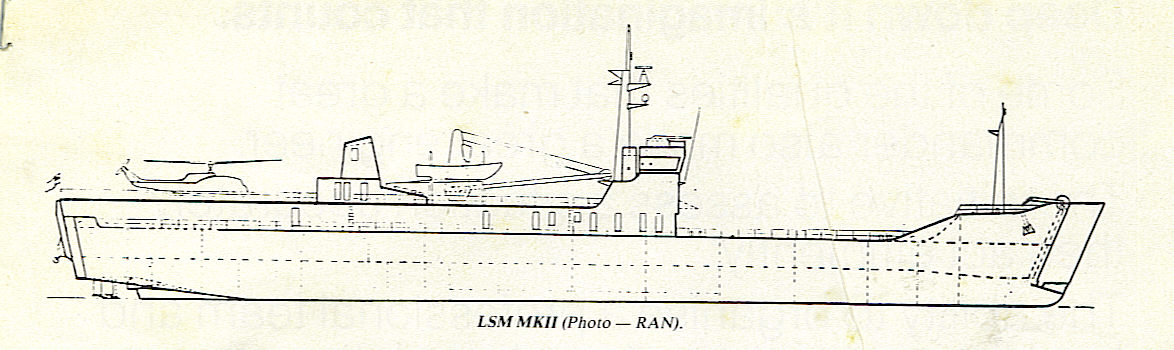
I wonder what a new build, modern design LSM built not to the Army's requirements list, but to the limit of what is within the Army's remit to operate before it has to be operated by the Navy. The old LSM Mk1s were ~900t fully loaded and 200' long, and the John Monash was 2,400t loaded and 233' long. According to this thread the LSM Mk2 pictured here would be about 350' long, making it big enough for the Navy to operate, so perhaps an LSM the size of the John Monash could be what the Army could build when the Mk2 project falls over.


1760078011992.png

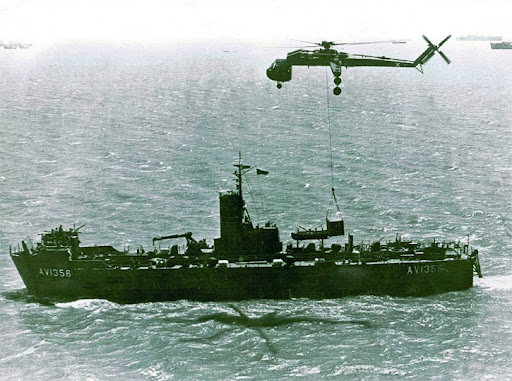
Here's an LSM Mk1 operating in the South Vietnamese theatre.

1760079124118.png
 
This thread has opened up some interesting issues, I've never really looked into the LSM Mk2 and I don't think I'd even heard of Project Waler.


Say what you want about the Navy version not being what the Army wanted it would give Australia an offensive amphibious capability to go alongside the other wishlist items like 8 subs, a Centaur carrier with plenty of A4s, tankers and AEW for the RAAF, SPG for the Army etc etc.

I wonder what a new build, modern design LSM built not to the Army's requirements list, but to the limit of what is within the Army's remit to operate before it has to be operated by the Navy. The old LSM Mk1s were ~900t fully loaded and 200' long, and the John Monash was 2,400t loaded and 233' long. According to this thread the LSM Mk2 pictured here would be about 350' long, making it big enough for the Navy to operate, so perhaps an LSM the size of the John Monash could be what the Army could build when the Mk2 project falls over.


View attachment 787569

Here's an LSM Mk1 operating in the South Vietnamese theatre.

View attachment 787572
Yeah its really sending us down the rabbit hole.
I honestly prefer the navy's version to do the the offensive amphibious operations with everything the adf getting.
The only reason I choose the army version, cause with the limited knowledge I have on the LSM mk2 I've got no idea how the navy version I'd going to unload the tanks, afvs and cargo.
At least with the army version I know it can just be beached to unload
I dont think the navy version would have a well dock for unloading.
It might have had to mate landing craft to it like the animals class did.
In that case you would want some LCHs so you can offload more at once
Nice photo of the lsm 1
 
The Navy's insistence on 20kt is stupidity with the sort of ships Australia can afford to buy and operate. To get the 20kt speed the USN Newport class LSTs had that big, high ramp set-up, every other contemporary LST had bow doors and accepted 15kt speed like the RAN should have. Such a ship would have been able to support the Army in remote areas as well as make a landing against some opposition.
 
The Navy's insistence on 20kt is stupidity with the sort of ships Australia can afford to buy and operate. To get the 20kt speed the USN Newport class LSTs had that big, high ramp set-up, every other contemporary LST had bow doors and accepted 15kt speed like the RAN should have. Such a ship would have been able to support the Army in remote areas as well as make a landing against some opposition
Agree so basically when need the Army speed and beaching requirement and the Navies requirement for Offensive Amphibious Operations requirement and we have out LSM Mk.2 basically
Which is what the RAN did with HMAS Tobruk anyway a few years later, what a shit show
 
Which is what the RAN did with HMAS Tobruk anyway a few years later, what a shit show

In 1973 the Departments of the Army, Navy and Air each with their own Ministers were merged into a single Department of Defence with a a single, more senior, Minister. Surprise, surprise shortly after the inter-service contention about an amphibious ship that led to the cancellation of the LSM Mk2 and construction of the LCHs gets resolved one way or another.

In 1958 PM Menzies ordered a review of the Defence group of departments, Defence, Army, Navy, Air, Supply and Defence Production by renowned General Leslie Morshead. Morshead recommended amalgamating Supply and Defence Production, which was undertaken, and amalgamating Defence, Army, Navy and Ar which was not undertaken. At the same time a separate Chairman of the Chief of Staffs Committee was established, who while he had no statuary authority to give orders did coordinate the activities of the 3 services on operations and during Vietnam made decisions before seeking retro-active endorsement from the other Chiefs.

I believe that if Menzies had taken Morshead's recommendation to merge Defence, Army, Navy and Air in 1958 I believe that many of the petty inter-service squabbles would be decided by The Minster in consultation with SecDef and Chairman-COSC. The services would still pursue their core roles, but where they interact such as RAAF helicopter support to the Army, Navy transport and amphibious support for the Army etc a decision would be made and carried out rather than being abandoned like the LSM Mk2 and AH1G* after prolonged arguments.

*AM Murdoch was a bomber pilot and not at all keen on providing support for the Army, he argued for Harriers when the Army asked for attack helicopters in Vietnam for example.
 
In 1973 the Departments of the Army, Navy and Air each with their own Ministers were merged into a single Department of Defence with a a single, more senior, Minister. Surprise, surprise shortly after the inter-service contention about an amphibious ship that led to the cancellation of the LSM Mk2 and construction of the LCHs gets resolved one way or another.

In 1958 PM Menzies ordered a review of the Defence group of departments, Defence, Army, Navy, Air, Supply and Defence Production by renowned General Leslie Morshead. Morshead recommended amalgamating Supply and Defence Production, which was undertaken, and amalgamating Defence, Army, Navy and Ar which was not undertaken. At the same time a separate Chairman of the Chief of Staffs Committee was established, who while he had no statuary authority to give orders did coordinate the activities of the 3 services on operations and during Vietnam made decisions before seeking retro-active endorsement from the other Chiefs.

I believe that if Menzies had taken Morshead's recommendation to merge Defence, Army, Navy and Air in 1958 I believe that many of the petty inter-service squabbles would be decided by The Minster in consultation with SecDef and Chairman-COSC. The services would still pursue their core roles, but where they interact such as RAAF helicopter support to the Army, Navy transport and amphibious support for the Army etc a decision would be made and carried out rather than being abandoned like the LSM Mk2 and AH1G* after prolonged arguments.

*AM Murdoch was a bomber pilot and not at all keen on providing support for the Army, he argued for Harriers when the Army asked for attack helicopters in Vietnam for example.
So the adf created in 1958 will mean a higher chance that LSMs Mk2, the big helicopter buy, possibly project waler goes ahead instead of being cancelled?

One question if all the gear the adf is getting how would this affected doctrine?
 
I'd definitely continue with Project Waler, ensuring that the Army being realistic in it's threat and operational environment outlook in delivering a realist vehicle requirement and expectations verses General's wet dreams in fighting Fulda Gap battles!

I'd definitely incorporate a Hi-Lo mix of Tracked (Hi) and Wheeled (Lo) into the RfP for post cost (purchase, operational and maintenance reasons) and strategic mobility.

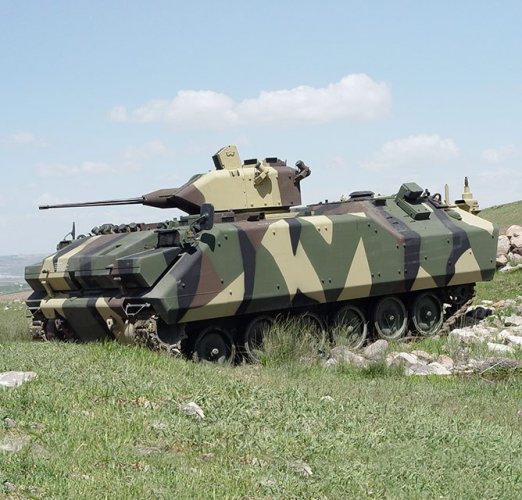
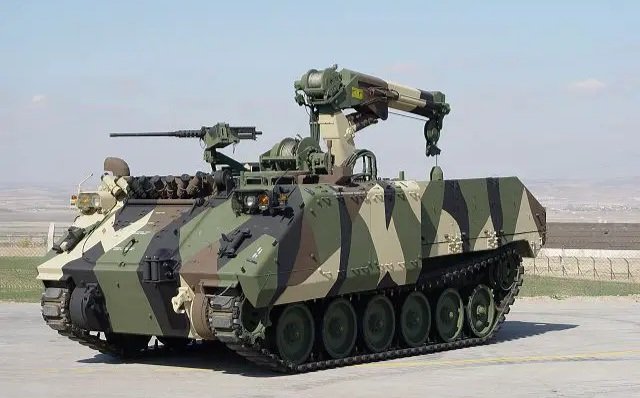
For the 'Tracked' component of Project Waler, I'd select a more powerfull and stretched (extra pair of road wheels) derivative of the FMC AIFV/YPR-765 IFV. FMC eagerly coming to the party, appreciating the added capabilities and export potential of a larger capacity version of its AIFV (in essence a Turkish ACV-19 before its day.) being sorted and launched by the Australian Army.

Apophenia, if you don't mind me saying, the FMC AIFV/YPR-765 offers a little bit more than 'just a turret and gun ports'. Again, I think one needs to appreciate that realistically Australian Army isn't facing divisions of BMP-2's and BMP-3's in its AO. The proven simplicity, reliability and cost effectiveness of the legacy M113 wouldn't be lost on both the Australian Army and government alike.

I select derivative of the FMC AIFV/YPR-765 because, in truth, the likes of the Marder 1, Bradley IFV's, and the likes are realistically excessive of the region, their operational weights, their complexity and of course, their excessive cost.

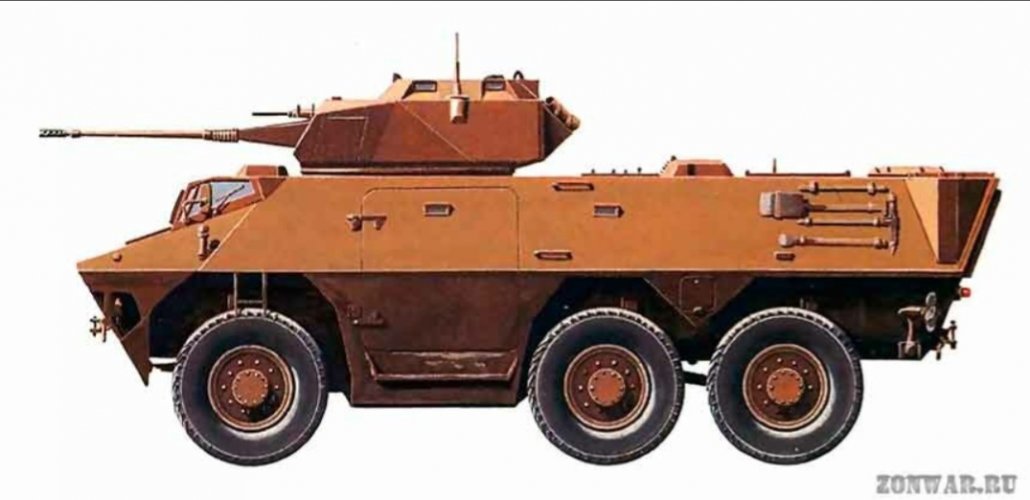
As for the 'Wheeled' component of Project Waler, I'd select a derivative of the SIBMAS 6x6 IFV. My notion is that the Australian Army appreciating the attributes and cost effectiveness of the South African Army's Ratel 6x6 IFV in an operational environment not to unlike that of Australia. But because of political constraints of sanctions against the Ratel's purchase, the Australian Army in cahoots with the Australian government, utilise the SIBMAS to emulate the Ratel, given that the SIBMAS was engineered from the same prototype as the Ratel.

The Australian Army orders both it's AIFV and SIBMAS in the following variants:
- IFV (Oerlikon KBA 25mm cannon)
- AFSV (Cockerill 90mm gun)
- ACV;
- AMV (81mm & 120mm);
- ARV

Regards
Pioneer
 

Attachments

  • 1623846532_akinci-zma-25-zirhli-muharebe-araci-2653484456.jpg
    1623846532_akinci-zma-25-zirhli-muharebe-araci-2653484456.jpg
    131.1 KB · Views: 10
  • ACV-19_TLC_tracked_logistic_carrier_armoured_vehicle_FNSS_Turkey_Turkish_defence_industry_640_...jpg
    ACV-19_TLC_tracked_logistic_carrier_armoured_vehicle_FNSS_Turkey_Turkish_defence_industry_640_...jpg
    79.9 KB · Views: 13
  • Screenshot_20251011_083127_DuckDuckGo.jpg
    Screenshot_20251011_083127_DuckDuckGo.jpg
    107.5 KB · Views: 10
I'd definitely continue with Project Waler, ensuring that the Army being realistic in it's threat and operational environment outlook in delivering a realist vehicle requirement and expectations verses General's wet dreams in fighting Fulda Gap battles!

I'd definitely incorporate a Hi-Lo mix of Tracked (Hi) and Wheeled (Lo) into the RfP for post cost (purchase, operational and maintenance reasons) and strategic mobility.

For the 'Tracked' component of Project Waler, I'd select a more powerfull and stretched (extra pair of road wheels) derivative of the FMC AIFV/YPR-765 IFV. FMC eagerly coming to the party, appreciating the added capabilities and export potential of a larger capacity version of its AIFV (in essence a Turkish ACV-19 before its day.) being sorted and launched by the Australian Army.

Apophenia, if you don't mind me saying, the FMC AIFV/YPR-765 offers a little bit more than 'just a turret and gun ports'. Again, I think one needs to appreciate that realistically Australian Army isn't facing divisions of BMP-2's and BMP-3's in its AO. The proven simplicity, reliability and cost effectiveness of the legacy M113 wouldn't be lost on both the Australian Army and government alike.

I select derivative of the FMC AIFV/YPR-765 because, in truth, the likes of the Marder 1, Bradley IFV's, and the likes are realistically excessive of the region, their operational weights, their complexity and of course, their excessive cost.

As for the 'Wheeled' component of Project Waler, I'd select a derivative of the SIBMAS 6x6 IFV. My notion is that the Australian Army appreciating the attributes and cost effectiveness of the South African Army's Ratel 6x6 IFV in an operational environment not to unlike that of Australia. But because of political constraints of sanctions against the Ratel's purchase, the Australian Army in cahoots with the Australian government, utilise the SIBMAS to emulate the Ratel, given that the SIBMAS was engineered from the same prototype as the Ratel.

The Australian Army orders both it's AIFV and SIBMAS in the following variants:
- IFV (Oerlikon KBA 25mm cannon)
- AFSV (Cockerill 90mm gun)
- ACV;
- AMV (81mm & 120mm);
- ARV

Regards
Pioneer
Yeah thats why i like the FMC AIFV/YBR-765, especially the modifications you state for it, its what australia needs for a tracked AFV in the region.
Nice proposal for the Wheeled AFV though i still prefer an ASLAV for it
 
So the adf created in 1958 will mean a higher chance that LSMs Mk2, the big helicopter buy, possibly project waler goes ahead instead of being cancelled?

I can't say in what form these projects might go ahead, but I think there would be less delay, for example with AM Murdoch being a naysayer for the Army's request for attack helicopters, and decisions made to go ahead instead of cancellations over inter-service disagreements.

One question if all the gear the adf is getting how would this affected doctrine?

Not at first, but as the RAAF and RAN get more stuff specifically to support the Army rather than it getting cancelled then 'joint' doctrine would development much earlier and more completely than happened historically.
 
I can't say in what form these projects might go ahead, but I think there would be less delay, for example with AM Murdoch being a naysayer for the Army's request for attack helicopters, and decisions made to go ahead instead of cancellations over inter-service disagreements.


Not at first, but as the RAAF and RAN get more stuff specifically to support the Army rather than it getting cancelled then 'joint' doctrine would development much earlier and more completely than happened historically.
So less delay and less inter service rivalry then.
With an earlier joint doctrine and more equipment would this lead to more interventions by the ADF in the 70s and 80s
Would the ADF intervene in East Timor in 1975 and Fiji 1987?
If the ADF doesn't intervene in East Timor in 75 how would the intervention look in 1999 with longer joint doctrine and more equipment (LSM Mk2, Protector AOE, APA, Tankers, AEW & Armour)
 
Yeah thats why i like the FMC AIFV/YBR-765, especially the modifications you state for it, its what australia needs for a tracked AFV in the region.
Nice proposal for the Wheeled AFV though i still prefer an ASLAV for it
Cheers Caryina2642.

The biggest issue with the ASLAV (well LAV-25) is once you included the turreted cannon arrangement, you lose your troop capacity down to six Diggers.
The ASLAV in its pure APC configuration loses firepower. something serious to consider whether you want a Wheeled IFV or a pure APC.

If you're looking at the LAV-25/ASLAV configuration, Caryina2642, pperhaps you're better to go back to the orginial Mowag Piranha 8×8 design.

My other consideration was the Engesa EE-11 Urutu 6x6, if it came down to pure budget (EE-11 US$ $149,100 (unarmed) vs. SIBMAS US$$307,800 (unarmed)). The EE-11 offers a lot of capabilities and ruggedness for its price. But I was adamant that Australia would probably want something more 'brand-named'.

As for LAV-25/ASLAV, Ive found costings of US$900,000 (can't verify if this is with or without armament)
But like both the LAV-25 and EE-11, they both have centre of hull turret rings, which inherently eat into their troop compartments.

Regards
Pioneer
 
Last edited:
Cheers Caryina2642.
The biggest issue with the ASLAV (well LAV-25) is once you included the turreted cannon arrangement, you lose your troop capacity down to six Diggers.
The ASLAV in its pure APC configuration loses firepower.
If you're looking at the LAV-25/ASLAV configuration, perhaps better to go back to the Mowag Piranha 8×8.
My other consideration was the Engesa EE-11 Urutu 6x6, if it came down to budget (EE-11 US$ $149,100 (unarmed) vs. SIBMAS US$$307,800 (unarmed)). As for LAV-25, Ive found costings of US$900,000 (can't verify if this is with or without armament)
But like both the LAV-25 and EE-11, they both have centre of hull turret rings, which inherently eat into their troop compartments.

Regards
Pioneer
Fair enough Pioneer
My idea with the wheeled AFVs is that there mainly for Recce and Fire Support as a replacement for the M113 in the 1st & 2nd Division RAAC Units which is way i choose the ASLAV
The Tracked AFVS are for the Mechanization of 3rd Division (1st & 4th Brigade)
In my Head
 
Fair enough Pioneer
My idea with the wheeled AFVs is that there mainly for Recce and Fire Support as a replacement for the M113 in the 1st & 2nd Division RAAC Units which is way i choose the ASLAV
The Tracked AFVS are for the Mechanization of 3rd Division (1st & 4th Brigade)
In my Head
My dear Caryina2642, you're thought is most likely correct re the 'Recce and Fire Support'. But my analogy goes back to my thinking of a Hi-Lo [Heavy & Light, if you like] mix scenario.
I envisage the Hi [Heavy] 'Tracked' component literally doing the hard slogging in terms of peer on peer combat. Where as the Lo [Light] 'Wheeled' component doing the Ready Deployment operations overseas, in situations like Timor or PNG, if it comes to it. The 'Wheeled' component being much easierly (due to their lower weight) airlifted by RAAF Hercules and Short Belfast's.
Also, an important consideration is the likes of mechanised Company's/Battalion's operating 'up North' where both geographical distances and terrain chew up the lifespan, fuel and spare parts like no tomorrow. But when you consider the rationale and demonstrated combat effectiveness of the Ratel (hence the Australian SIBMAS), I think this logic could/should be emulated.

Regards
Pioneer
 
My dear Caryina2642, you're thought is most likely correct re the 'Recce and Fire Support'. But my analogy goes back to my thinking of a Hi-Lo [Heavy & Light, if you like] mix scenario.
I envisage the Hi [Heavy] 'Tracked' component literally doing the hard slogging in terms of peer on peer combat. Where as the Lo [Light] 'Wheeled' component doing the Ready Deployment operations overseas, in situations like Timor or PNG, if it comes to it. The 'Wheeled' component being much easierly (due to their lower weight) airlifted by RAAF Hercules and Short Belfast's.
Also, an important consideration is the likes of mechanised Company's/Battalion's operating 'up North' where both geographical distances and terrain chew up the lifespan, fuel and spare parts like no tomorrow. But when you consider the rationale and demonstrated combat effectiveness of the Ratel (hence the Australian SIBMAS), I think this logic could/should be emulated.

Regards
Pioneer
Fair enough mate
i get where your coming from and i don't mind it at all. In my head with a successful project waler with tracked afvs to slog against a near peer force and a wheeled afv for recce and fire support, you would probably see an earlier bushmaster project to provide troop mobility for the mobile deployments to PNG, East Timor and Up North
 
The more I think about Project Waler the more I think the Army backed itself into a corner discarding the wheeled AFVs in the 60s. They were already paid for and 2 Cav wasn't going to Vietnam, it could have operated them without detriment to the war effort. The rest of the Ferrets could be scattered around the CMF, again they were already paid for and would have cost the same to operate as a truck or Land Rover.
 
The more I think about Project Waler the more I think the Army backed itself into a corner discarding the wheeled AFVs in the 60s. They were already paid for and 2 Cav wasn't going to Vietnam, it could have operated them without detriment to the war effort. The rest of the Ferrets could be scattered around the CMF, again they were already paid for and would have cost the same to operate as a truck or Land Rover.
Yeah agreed it did it would have made it a lot easier. There are so many good what if for australia
 
Does it still go Canberra, interim F-4E, F-111?

A thought crosses my mind is could the F-111 be skipped with the RAAF adopting a strike version of their current fighter going forward and acquiring a tanker force earlier? Maybe a cheaper strike type, Corsair II, Super Etendard, or Jaguar, even Skyhawk, instead of the fighter?
Remember that the Australian government actually ordered the F-111Cs in 1963 so to have them not introduced in the 1970s under this scenario would require that order to be cancelled. Highly unlikely IMHO especially given the capability they offered.
 
The only thing i could think of is the RAAF would either buy another 12 F-111Cs for another squadron (Replacing 2nd squadron canberras) or they keep the F-4s for SEAD & escorting the f-111 i can see either happening

I'm a bit surprised more hasn't been made of this option given how easy it would be and how much of a boost to capability it would provide.

Same here, though to be honest i kind of forgot about them at the start. They would allow a big boost to capability allowing the RAAF to have 4-5 Fighter Squadrons (Depending if they replace the Mirage III Squadron that got decommissioned) & 2x Bomber Squadrons
Though it would push back any mirage IIIO replacement to the 80's leading to the Hornets as OTL.
The idea of keeping the F-4s has been discussed before. It was not possible without somehow increasing the size of the RAAF or parking something else. The RAAF simply was unable to have the F-111s, F-4s and other platforms at the time.
 
The Army defiantly neglected and as such needs a basic SPAAG system, even if it's as simple as the French TA-20 turret (2x20mm cannon).
The effectiveness of such a SPAAG against ground targets in a secondary role can't be underestimated either.

Regards
Pioneer
Against what threat?
 
Mirage F1-M53s with F-15Es (to replace the F-111s) would make a nice one-two punch. The RAAF already uses the BAe HAwk, so why not a combat version of the T-45 Goshawk as an A-4 replacement?
For the RAAF or RAN?
 
The idea of keeping the F-4s has been discussed before. It was not possible without somehow increasing the size of the RAAF or parking something else. The RAAF simply was unable to have the F-111s, F-4s and other platforms at the time.

76 sqn flying Mirages was disbanded in 1973, and 2 sqn flew about 10 Canberras in the aerial survey role until about 1980 despite 1 and 6 sqn converting first to Pahtoms then F111. There is scope with these changes for a single Phantom sqn of ~16 aircraft to be kept in the OOB from 1973, with the rest of the aircraft stored in reserve and/or deep maintenance.
 
FWIW I found the structure of the proposed but never implemented Recce Regiment for the 1960 Pentropic Division. https://researchcentre.army.gov.au/sites/default/files/aaj_133_jun_1960.pdf

The full 3 sqn regiment had a strength of 67 Ferret scout cars, 15 Saladin Armoured Cars, 25 Saracen APC and 5 Mortar Carriers which I think might have supposed to be Saracen APCs. However that is basically every single Saladin and Saracen owed by the Army at the time, although with 264 Ferrets in 2 versions there's no shortage of scout cars. I'd suggest only 2 sqns be stood up n the Regular Recce Regiment in 1960, lets call it 2 Cav, freeing up 5 Saladins and 8 Saracens and 1 Mortar Carrier for training and deep maintenance.

In addition 1st Armoured Regiment had a Recce/Scout troop of Ferrets from 1954, although information on this sub-unit is much harder to come by than the tank sqns. From 1952 there was a Nucleus sqn for tanks to form 2rd Armoured Regiment, but this was abandoned in 1955 and this Nucleus sqn was bought into 1st AR as it's 3rd tank sqn.

So from 1955-60 I AR had 3 tank sqns and a Recce troop, then A sqn was disbanded and it's personnel used to create the Regular 'A' sqns in a pair of CMF Light Horse regiments.

Sorry to go down these labyrinthine unit histories, but just like the Air Force with it's wings and squadrons, Army procures equipment to equip the fighting units it has on strength and/or plans to have. I'm trying to find a historical path to get the core of Project Waler, the M113 replacement part, up and running and in my mind decreasing the size by decoupling the/a wheeled element makes the scope more affordable even with individually expensive IFVs.
 
76 sqn flying Mirages was disbanded in 1973, and 2 sqn flew about 10 Canberras in the aerial survey role until about 1980 despite 1 and 6 sqn converting first to Pahtoms then F111. There is scope with these changes for a single Phantom sqn of ~16 aircraft to be kept in the OOB from 1973, with the rest of the aircraft stored in reserve and/or deep maintenance.
It would have been very easy for the RAAF to keep the F4s
FWIW I found the structure of the proposed but never implemented Recce Regiment for the 1960 Pentropic Division. https://researchcentre.army.gov.au/sites/default/files/aaj_133_jun_1960.pdf

The full 3 sqn regiment had a strength of 67 Ferret scout cars, 15 Saladin Armoured Cars, 25 Saracen APC and 5 Mortar Carriers which I think might have supposed to be Saracen APCs. However that is basically every single Saladin and Saracen owed by the Army at the time, although with 264 Ferrets in 2 versions there's no shortage of scout cars. I'd suggest only 2 sqns be stood up n the Regular Recce Regiment in 1960, lets call it 2 Cav, freeing up 5 Saladins and 8 Saracens and 1 Mortar Carrier for training and deep maintenance.

In addition 1st Armoured Regiment had a Recce/Scout troop of Ferrets from 1954, although information on this sub-unit is much harder to come by than the tank sqns. From 1952 there was a Nucleus sqn for tanks to form 2rd Armoured Regiment, but this was abandoned in 1955 and this Nucleus sqn was bought into 1st AR as it's 3rd tank sqn.

So from 1955-60 I AR had 3 tank sqns and a Recce troop, then A sqn was disbanded and it's personnel used to create the Regular 'A' sqns in a pair of CMF Light Horse regiments.

Sorry to go down these labyrinthine unit histories, but just like the Air Force with it's wings and squadrons, Army procures equipment to equip the fighting units it has on strength and/or plans to have. I'm trying to find a historical path to get the core of Project Waler, the M113 replacement part, up and running and in my mind decreasing the size by decoupling the/a wheeled element makes the scope more affordable even with individually expensive IFVs.
Nice find mate, its a good read
If only the army had implement this,, though without doing pentropic plan would have been nice
 
Against what threat?
Well, GTX, my notion is that in this 'What If' Australia would act in a more independent manner, as opposed to act as a able and willing subordinate of the U.S. As such, I envisage the ADF being far better and practically prepared and equipped, without the tokenism we're accustomed to - aka the U.S. supplying logistics, air superiority, close air support, ISR, etc....
I invisage Australia more formally aligned with PNG after their independence, as a geopolitical strategy to support PNG (as opposed to this new bullshit paranoid China whistling agreement between Australia and PNG). As such, ADF forces and facilitates need to be equipped with such a rudimentary SPAAG to solidify such an element of air defence within their ORBAT, which since WW2 has been woefully neglected, on the premises of both Australia's geographical distance and the complacency that the U.S. would supply air defence of our troops deployments/actions. For if East Timor or PNG ever went hot at the behest of Indonesia, I'm real world terns, what would the Australian Army have defend its deployed/stationed units against both fixed wing and rotary wing threats? A hand full of RBS-70, which would by historical example could be employed by RAN ships to compensate their neglect of short range air defence systems? Or employed to defend RAAF airfields because the RAAF woefully neglects the air defence of their strategically important airfields.......
Also, one seriously needs to keep pace with the evolution of regional economic and hence military capabilities. Indonesia is no longer some backwater third world country. Indonesia’s quantum leap in state-off-the-art weapons systems, be it combat aircraft, submarines and of course cruise missiles has been a potential threat for sometime now - before everyone shit their pants about 'real war' like that demonstrated in the proxy Russian-Ukrainian Conflict, which has both the Australian government and ADF scrambling to field the most rudimentary ground based air defence systems, which they intentionally neglected for decades....

Fact is, it's a little unrealistic to think, as Australia has and does, that it/the ADF will have windows of time to see and respond to military threats. I've always said, you can't just purchase a weapon system, give it to a Digger and say they're ya go mate, work out how it works, how to effectively deploy it within your unit, oh and for spare rounds and tech support, you'll work it out whilst you're being attacked, bombed and strafed by the enemy.....

Again, as I so often do, I must emphasise the utility of a SPAAG's role in the ground fire role. Yes, it isn't and wouldn't be a practical justification for it's purchase and position in a formations ORBAT. But you can't throw Aim-120's from NASAMS's at enemy troops or armoured vehicles when in contact with the enemy. But you can and should employ, in this case, 20mm cannon rounds.

For a long time, it's been a discusting false economy and detrimental to Digger's to expect them to defend their units/formations with 7.62mm and more recently 12.7mm MG's!

Regards
Pioneer
 
76 sqn flying Mirages was disbanded in 1973, and 2 sqn flew about 10 Canberras in the aerial survey role until about 1980 despite 1 and 6 sqn converting first to Pahtoms then F111. There is scope with these changes for a single Phantom sqn of ~16 aircraft to be kept in the OOB from 1973, with the rest of the aircraft stored in reserve and/or deep maintenance.
Keeping one squadron is hardly cost effective from a support perspective. Moreover, you do realise that the RAAF didn't just have pilots sitting around doing nothing don't you. As I said, to keep the Phantoms would means cutting somewhere else.
 
There is a lot of wishful thinking in this thread and not a lot of realistic alternate scenarios. For instance, introducing new perceived threats that didn't actually exist or ignoring some realistic restrictions or similar.
 
Keeping one squadron is hardly cost effective from a support perspective. Moreover, you do realise that the RAAF didn't just have pilots sitting around doing nothing don't you. As I said, to keep the Phantoms would means cutting somewhere else.
It would not mean cutting somewhere else cause you still have no. 2 Squadrons Canberra bombers that need replacing or allowing No. 76 Squadron to Replace its Mirage IIIO. It allows the RAAF to keep a 4 Fighter Squadron & 2 Bomber Squadrons.
 
There is a lot of wishful thinking in this thread and not a lot of realistic alternate scenarios. For instance, introducing new perceived threats that didn't actually exist or ignoring some realistic restrictions or similar.
What new perceived threats?
I agree the SPAAGs are extremely unlikely, but everything else is what the Army, Navy and Air Force had planned at this time, but got canned for different reasons that easily could be changed
 
It would not mean cutting somewhere else cause you still have no. 2 Squadrons Canberra bombers that need replacing or allowing No. 76 Squadron to Replace its Mirage IIIO. It allows the RAAF to keep a 4 Fighter Squadron & 2 Bomber Squadrons.
I recommend that you do some research into what actually happened. The Air Board reviewed the ability of the RAAF to keep the F-4Es and found that the cost of keeping them would be prohibitive and cuts in squadrons would be necessary. They actually looked into this.

Books such as:
  • McDonnell F-4 Phantom: Spirit in the Skies by Jon Lake
  • From Controversy to Cutting Edge: A History of the F-111 in Australian Service by Mark Lax
are good starting points.
 
I recommend that you do some research into what actually happened. The Air Board reviewed the ability of the RAAF to keep the F-4Es and found that the cost of keeping them would be prohibitive and cuts in squadrons would be necessary. They actually looked into this.

Books such as:
  • McDonnell F-4 Phantom: Spirit in the Skies by Jon Lake
  • From Controversy to Cutting Edge: A History of the F-111 in Australian Service by Mark Lax
are good starting points.
Wasn't the main reason the RAAF didn't want to keep the F-4s so they didn't prolong the replacement of the Mirage III's to the 80's, which is what ended up anyway. I see if the F-4s you would combined 2 sqns anyway, No. 2 & No. 73 sqn if they are kept in service
 
There is a lot of wishful thinking in this thread and not a lot of realistic alternate scenarios. For instance, introducing new perceived threats that didn't actually exist or ignoring some realistic restrictions or similar.

Of course, the 70s and 80s was strategically quiet in S.E.A., meaning a minimal level of threat for Australia and therefore minimal urgency for procurement of cool toys. This is why when I think about alternate Australia scenarios I focus on the 60s and how cool toys picked up in that era could carry the ADF through the new few decades.

However this is a technical forum, so its hardly surprising that technical ideas come first and political realities to make said idea happen comes well after that.
 
Back
Top Bottom