They tend to go the same way; that Britain can't afford it, or follow the plan, or build the medium carrier, or the VTOL aircraft works or whatever. I'm interested in the technology of a plain-Jane, big but RN (not USN) sized fleet/strike/attack carrier using late 70s tech.
Ok, I will nibble.
From your OP it looks like the RN has a 1952 carrier, presumably refitted and updated for Phantom in the early 1970s and CVA-01 was built and commissioned sometime around 1973. And that what you're looking for is a replacement for HMS Eagle or Ark Royal (whichever got the Phantom recent in this scenario) to enter service by 1978-80.
CVA-01 is the logical starting point. Some factors I have thought of:
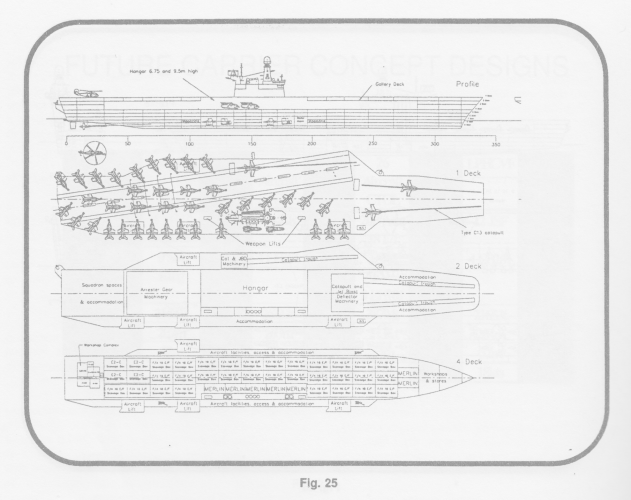
1. Size still matters. CVA-01 was ultimately designed for cross-decking USN F-111Bs and doubtless in this scenario where the RN has cat n trap carriers, there will still be a desire to cross-deck F-14A Tomcats on occasion. Presumably the RN in this scenario is likely to buy E-2 Hawkeyes. So it still needs a relatively large deck.
Whatever aircraft the FAA is looking to buy to replace Phantom/Bucc (or even if it runs them on into the 90s), the fuel and stores needs will be no less. So the basic hull is likely to still be the smallest practical carrier.
2. The Alaskan Highway. Operational use of CVA-01 will determine whether it is a valuable feature or one of those ideas that seemed good on paper but less so in operation. If dropped, that supposes some basic redesign of the ship, moving the island outboard.
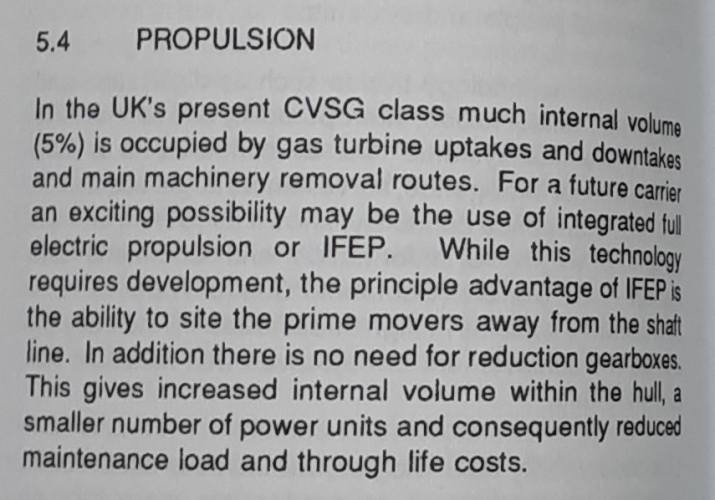
3. Powerplant. The options are tricky. The Invincibles had four Olympus TM3B for 97,000shp, with a maximum total continuous power of 94,000shp to two shafts, so a six-turbine three-shaft layout should produce 141,000shp, which should be plenty. Endurance might suffer given you need to feed two extra Olympus. The donkey boilers would need to be pretty hefty to provide enough steam, they could also run turbo-generators so reducing the need for diesel generation (the Invincible had eight diesel generators). But we're talking multiple fuel types now, oil, diesel, plus aviation fuel for the Olympus and the aircraft. Saving on weight compared with steam propulsion might fully compensate.
Also need to think about trunking and exhausts. Six Olympus need a lot of air and expel a lot, I think you'd need two funnels plus you need to vent the donkey boilers. Invincible's island is a massive two funnel affair, this perhaps further reinforces the need to abandon the Alaskan Highway and move the island outboard to avoid the trunking intruding on the hangar space. But a massive outboard island needs balancing and that is not as easy with the parallel deck of CVA-01, whether that influences a shift to a return to the classic angled deck is another question to ponder.
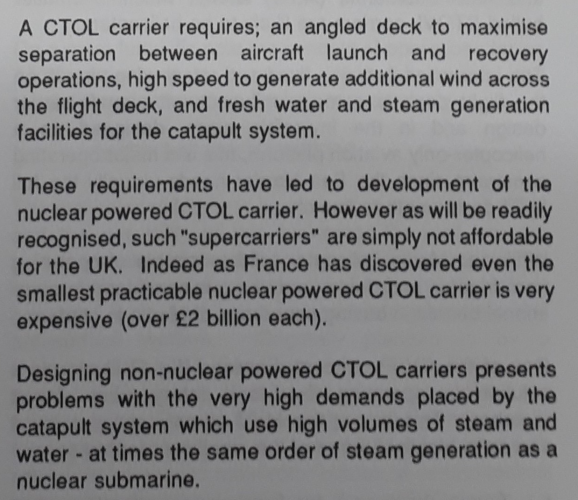
Nuclear. Not beyond the realms of technical possibility, but I'm not sure a pair of PWR1 would be up to it. Plus we're talking massive costs and how to build it? Barrow building those sections of hull and shipping them to Scotland? Plus it probably means sacrificing a couple of SSNs in the building programme. It seems a step too far.
4. Catapults & arrester gear. Updated BS.6 and DAAG should suffice. Might even get an export bonus with France choosing the AU BS.6A for Charles de Gaulle.
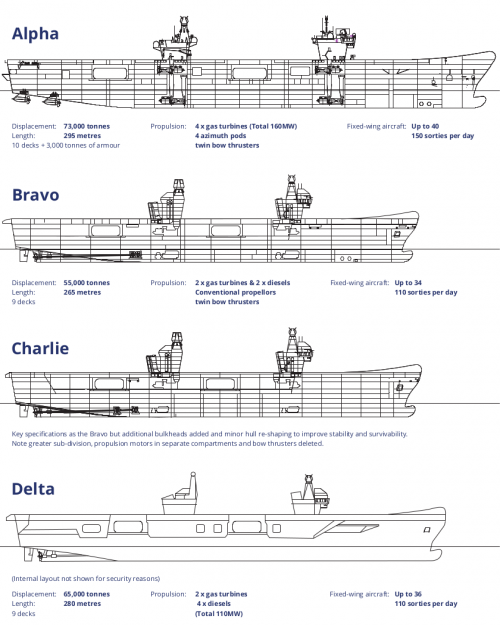
5. STOVL. The real conundrum is ASTOVL. Putting aside the whole P.1154 debacle, HSA and BAC and BAe never lost sight of ASTOVL and neither did the RAF. The 1970s were rife with STOVL designs. Of course no Harrier successor is likely to enter service much before the early 1980s, but its not inconceivable that with the RN looking to replace its Phantoms and Buccs that a joint RAF-RN supersonic ASTOVL programme isn't launched in the late 1970s. If so all bets are off and the CV-3 could well turn out to be a CVS with ski-jump. Perhaps something not unlike the CVF we know today but single island, twin-funnel, COGAG, ski-jump bows.
It's interesting that CVF is 30ft shorter in hull length and 6ft beamier in the hull compared with CVA-01. The flight deck is much larger of course with overhangs etc. CVA's hangar was 162ft longer but 31ft narrower and 5-15ft lower. They are pretty evenly matched with similar airgroup size and avgas capacity.