- Joined
- 3 June 2011
- Messages
- 20,030
- Reaction score
- 17,235
Better call 'em up and give 'em what fer.And oh god its still got tails...do horizontal still increase RCS spikes?

Better call 'em up and give 'em what fer.And oh god its still got tails...do horizontal still increase RCS spikes?

For carrier aviation I can imagine you want a responsive aircraft with lots of low speed control upon landing. So you need something, be it canards (NATF-23) or other stabilizers.And oh god its still got tails...do horizontal still increase RCS spikes?
Whichever way you can get the aircraft into a high-drag, high-power setting for landing to have enough power for a bolter. From the NG image, I saw no apparent tails or canards (the image on TMZ) but only the first of probably more revealing images. The nose/forward fuselage area oozes evolved F-23. Goes to show our YF/F-23 was very advanced for the timeframe. Even though we lost to Lockheed, NG really gain a lot from the competition and knew what needs to happen for future fighter platforms. Now with inlets on top, still may still have very maneuverability possibly, it's all about advanced aero, we puzzled Lockheed with our YF-23 diamond wing and v-tails.For carrier aviation I can imagine you want a responsive aircraft with lots of low speed control upon landing. So you need something, be it canards (NATF-23) or other stabilizers.
How does the rear-mounted air intake meet the engine's air needs at high angles of attack? In the A/F-X project, the air intakes of both NG schemes were not on the top.Whichever way you can get the aircraft into a high-drag, high-power setting for landing to have enough power for a bolter. From the NG image, I saw no apparent tails or canards (the image on TMZ) but only the first of probably more revealing images. The nose/forward fuselage area oozes evolved F-23. Goes to show our YF/F-23 was very advanced for the timeframe. Even though we lost to Lockheed, NG really gain a lot from the competition and knew what needs to happen for future fighter platforms. Now with inlets on top, still may still have very maneuverability possibly, it's all about advanced aero, we puzzled Lockheed with our YF-23 diamond wing and v-tails.

I'm pretty sure we can exclude AI here.One who isn’t driven by clickbait incentive would put “possibly AI generated placeholder” in the header

As for the "hipster socks", there was a crazy socks / crazy hat spirit day that was the root of those pictures.Interestingly "Northrop Grumman has provided" it the day after photos of beaming guys with hipster socks and interesting images in the background appeared.


It'll be interesting to find out in the coming months or years. Northrop Grumman has put a lot of effort into making dorsal inlets work. The reduction in profile for the subsonic B-21 versus the B-2 is remarkable. What have they done with the supersonic F/A-XX?How does the rear-mounted air intake meet the engine's air needs at high angles of attack? In the A/F-X project, the air intakes of both NG schemes were not on the top.
Hopefully, we will find out of NG wins the competition providing funding continues, let's hope F/A-XX does not get screwed up by the USN/USG.It'll be interesting to find out in the coming months or years. Northrop Grumman has put a lot of effort into making dorsal inlets work. The reduction in profile for the subsonic B-21 versus the B-2 is remarkable. What have they done with the supersonic F/A-XX?
It could be a good new, the YF-23 was the most beautiful and advanced fighter of all times I think the FA//XX made by Northrop could be a jewelry.Hopefully, we will find out of NG wins the competition providing funding continues, let's hope F/A-XX does not get screwed up by the USN/USG.


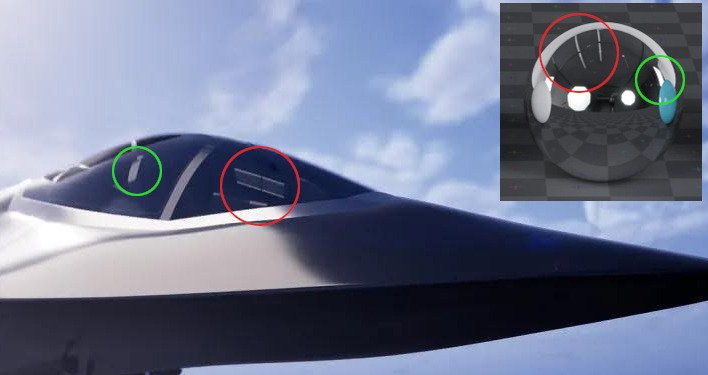
I'm not convinced it's using that HDRI, the red and green highlighted light sources are long edges parallel in the HDRI and orthogonal in the render. Also why use an indoor HDRI for lighting when there's no shortage of outdoors ones?I'm pretty sure we can exclude AI here.
I think I recognize the reflections that can be seen in the glass of the canopy as part of this HDRI image:
View attachment 780795
I believe the people (or person) that made this rendering for NG, used a (free) HDRI picture downloaded from Poly Haven of an indoor studio.


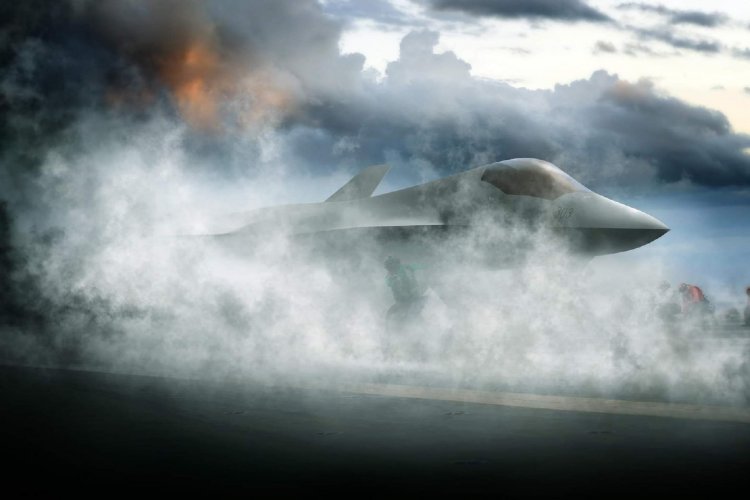
Interesting the Northrop Grumman artist rendering.

F/A-XX Next Generation Naval Fighter Concept Art Emerges From Northrop Grumman
Northrop Grumman has provided a very rare glimpse of what the F/A-XX could look like at a time when the program's future is in serious doubt. Northrop Grumman has provided a very rare glimpse of how the future F/A-XX carrier-based stealth combat jet might look.www.twz.com
View attachment 780754
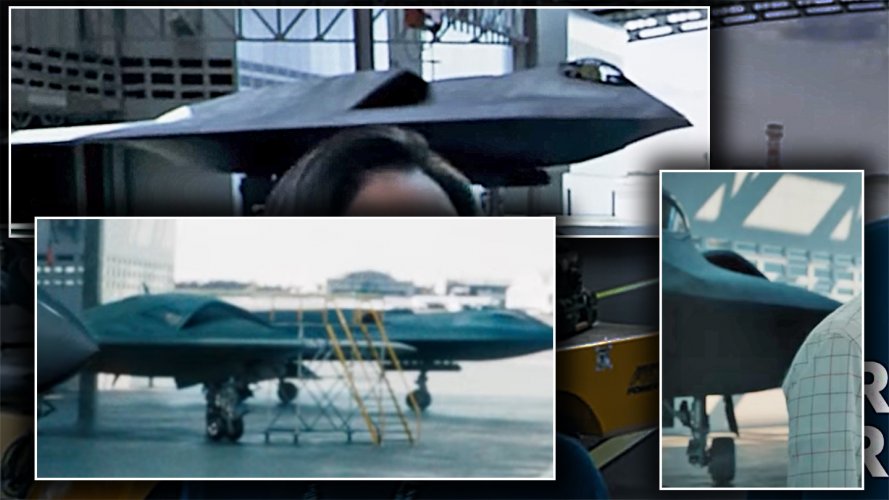
I’d like to say if anyone remembers the N-G video of few years back with the employee going out of elevator to each segment of the company. The mystery jet with the fuselage mounted engines I am referring to …
Cheers
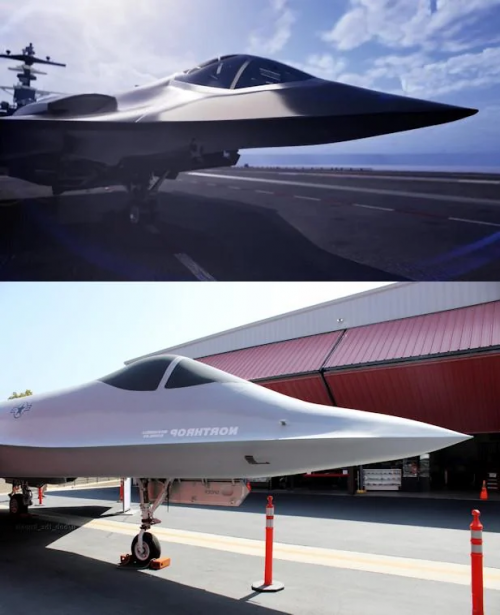

Could be X/Y jet like Bird-of-Prey, or just another excellent graphics.Im still clinging to this rendition as their submission on the basis that the other aircraft surrounding it areas are accurate in representation.
It's not very intuitive, but it essentially depends on how the scene is setup and the geometries/surfaces of the 3d involved reflect the HDRI that is around them.I'm not convinced it's using that HDRI, the red and green highlighted light sources are long edges parallel in the HDRI and orthogonal in the render.
Sometimes, one might want to use a particular HDRI to achieve the reflections and lightning they are looking for on certain materials and geometries.Also why use an indoor HDRI for lighting when there's no shortage of outdoors ones?
AI image generators don't use HDRIs to make reflections, they just put together results based on whatever images they have been fed/were trained on.WRT AI, I wouldn't necessarily exclude AI-generated images accessing an HDRI for their lighting set-up, either directly, via training, or baked into an image used in training.
It's not very intuitive, but it essentially depends on how the scene is setup and the geometries/surfaces of the 3d involved reflect the HDRI that is around them.
Think of an object put inside of a sphere
AI image generators don't use HDRIs to make reflections
look at how low resolution the clouds in the background are (or the carrier itself is)

I'm not convinced it's using that HDRI, the red and green highlighted light sources are long edges parallel in the HDRI and orthogonal in the render. Also why use an indoor HDRI for lighting when there's no shortage of outdoors ones?

In vainIm still clinging to this rendition as their submission on the basis that the other aircraft surrounding it areas are accurate in representation.
1.6 billion for year 2026 , and have the all support of Navy commander, I think it is more advanced than we think.In the era of slop image generation, I feel like this thread is taking this image way too literally for a program that might not even be funded.
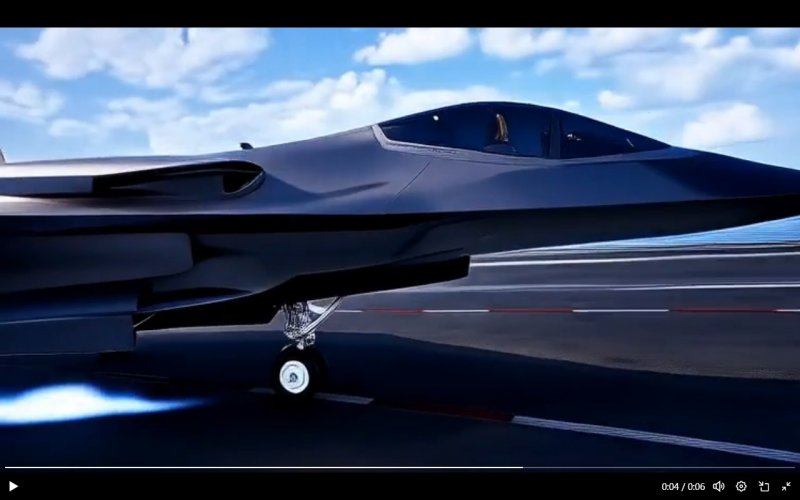
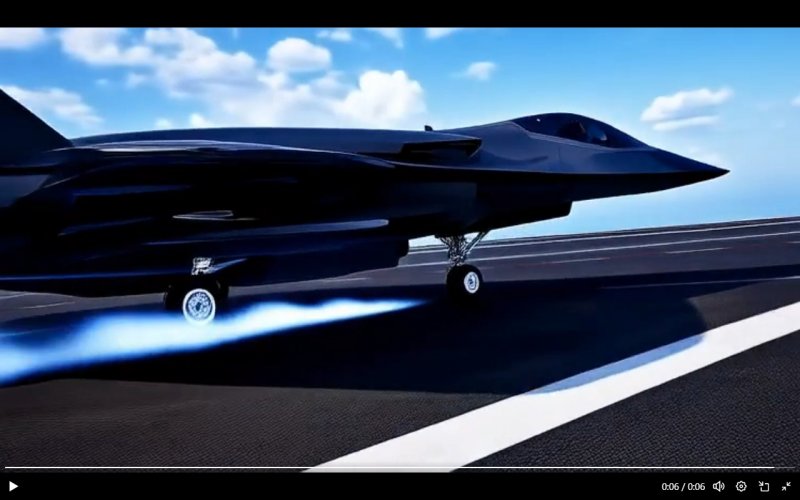
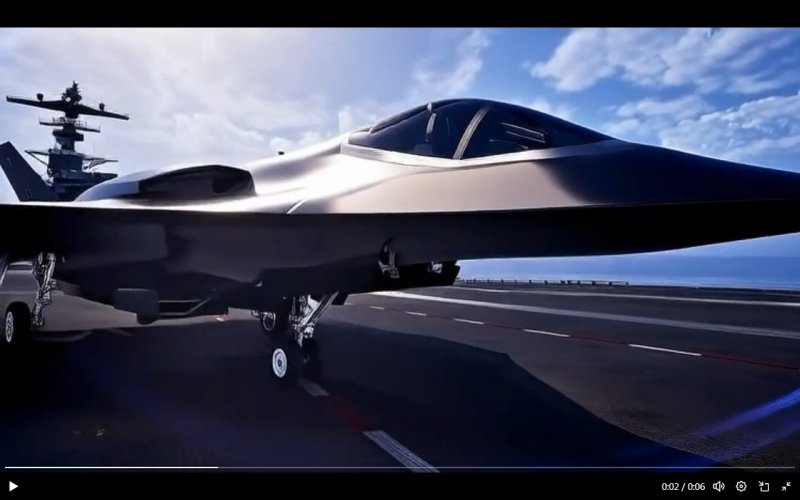
Where the video come from ?It loos like a delta wing, with 2 rudders, only top flat intakes with middle separator.
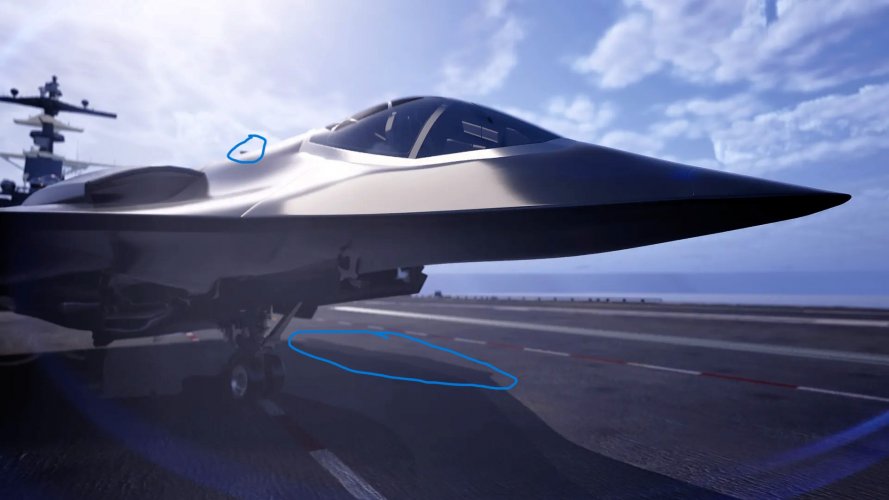
Dark & difficult to see under wing & belly. There seems to be SWB & IWB.
View attachment 781001
View attachment 780999
View attachment 781000
I spotted on a comment on X.Where the video come from ?
you don't know may be a need for a new engine type ?Unless the navy wants to go with a three (or four, lol) engine design it makes no sense to have seperators in the two intakes...
IS it Northrop Grumman the source ?I spotted on a comment on X.
No, the commentor looks like usual citizen.IS it Northrop Grumman the source ?
First, it would have been nicer if you had shared the link, instead of just saying "I saw it on Twitter".It loos like a delta wing, with 2 rudders, only top flat intakes with middle separator.
Dark & difficult to see under wing & belly. There seems to be SWB & IWB.
View attachment 781001
View attachment 780999
View attachment 781000
I went out with family, hence i replied just short line which is usually not my style.First, it would have been nicer if you had shared the link, instead of just saying "I saw it on Twitter".
I'm very new on using X, just few posts, so after spotting a line below his video "Create your own on Grok iOS and Android." i asked that user if he used Grok & so far no reply from him.Second, from the comment you left under the video, you are perfectly aware of the fact that this was generated using Grok starting from the original NG picture, which is to say that this is AI generated slop that has no relevance to the original image released by NG.
I always appreciate art-work, either by CAD tools by artists like i appreciated CADs by you & other artists & also by using AI.I find it very dishonest, especially, to make statements on it trying to pass it as material even worth taking it into consideration, with reference to details of the aircraft that Grok came up with on its own.
Artists like you & others create the best fan-art.Those stills you posted from the video are even worth less than fan art.