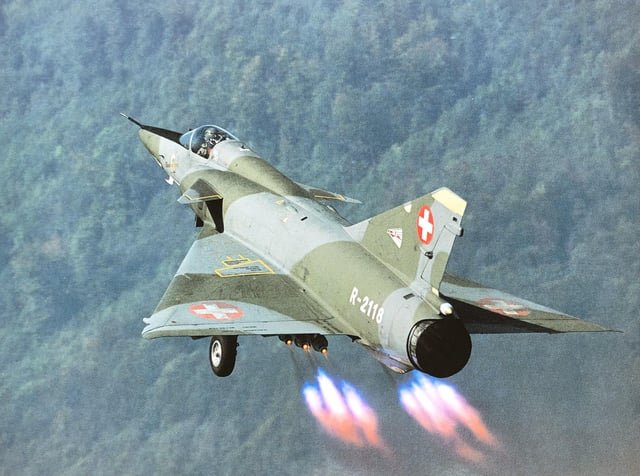
Swiss Mirage IIIS ISMA Upgrade alternatives

overscan (PaulMM)

Administrator
Staff member
Joined
27 December 2005
Messages
19,230
Reaction score
35,696
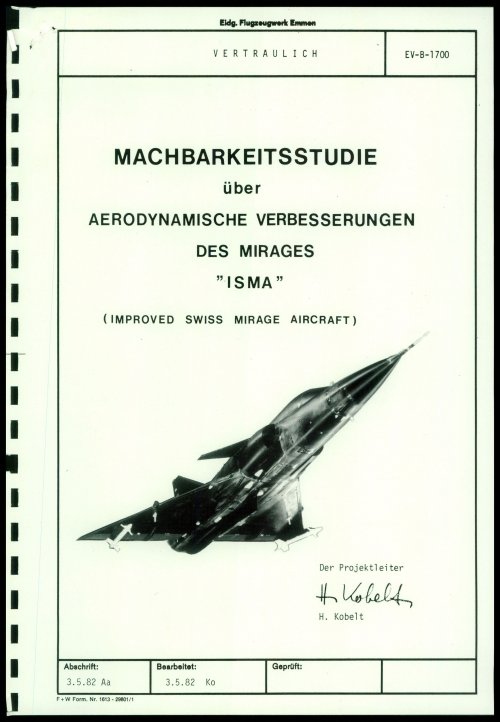
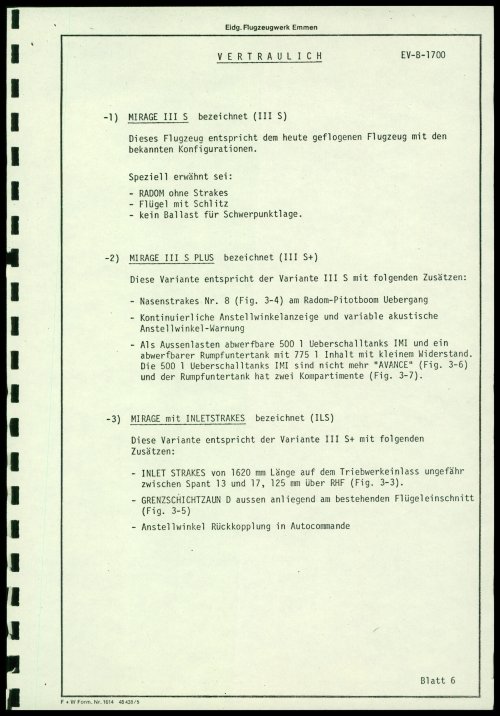
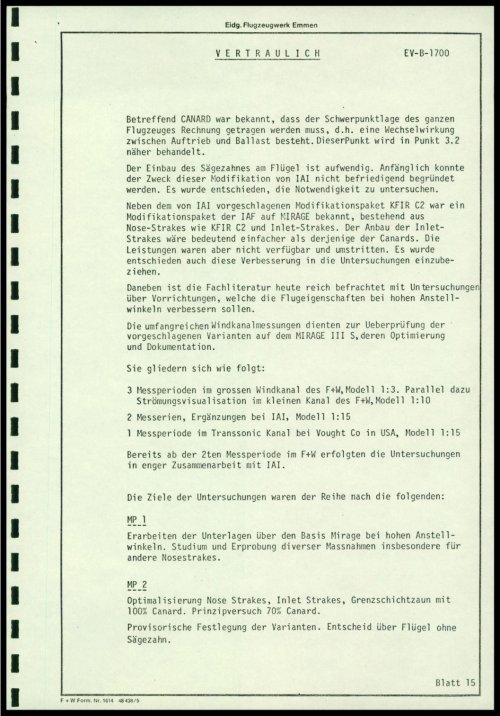
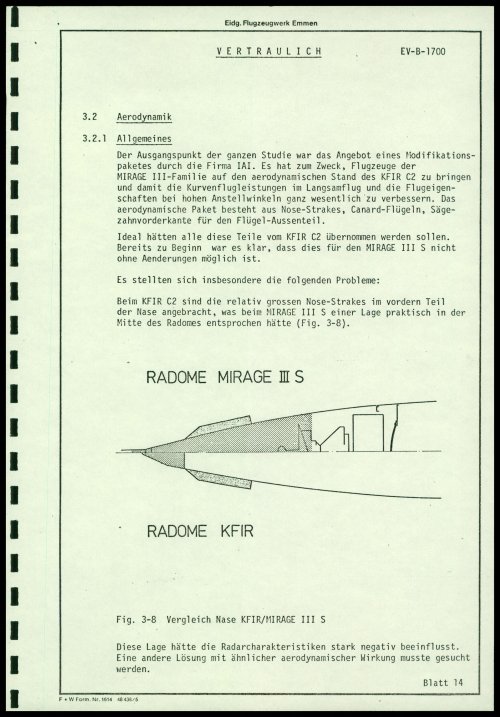
The ISMA program to upgrade Swiss Mirage IIIS was carried out in partnership with IAI, though the documentation in the Swiss Archives is pretty reticent on this and refers to them throughout as the "seller".

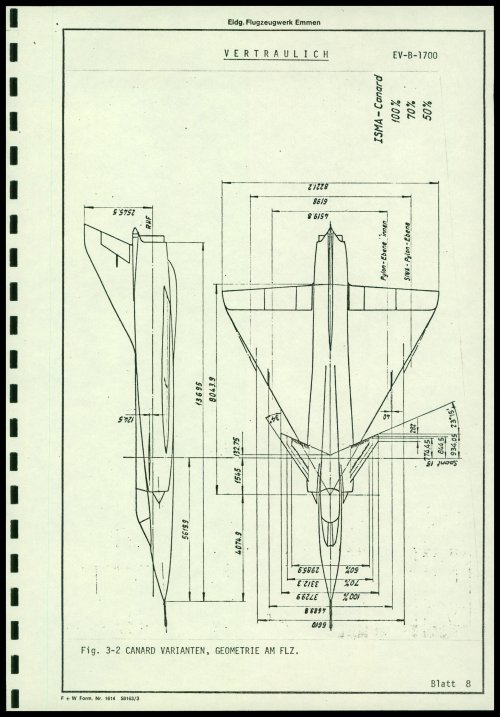
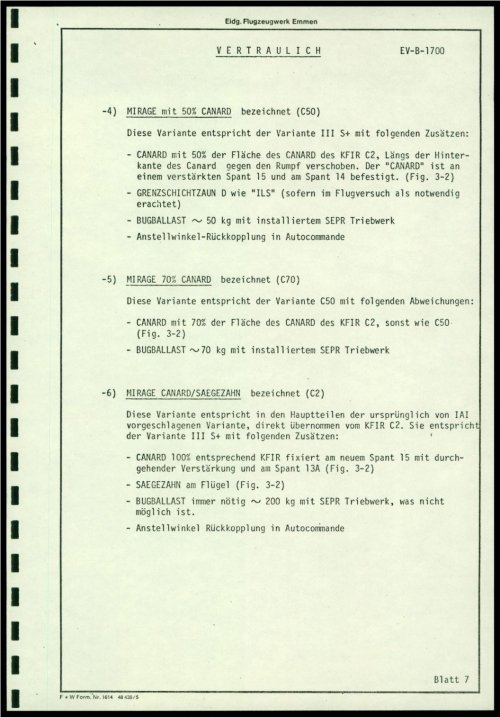
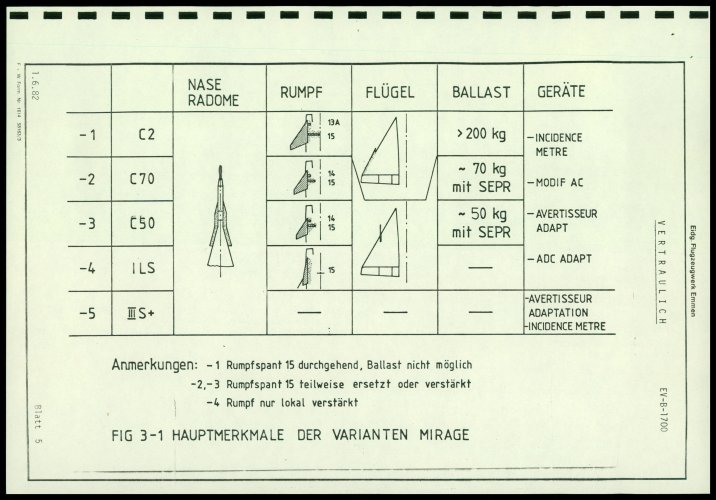
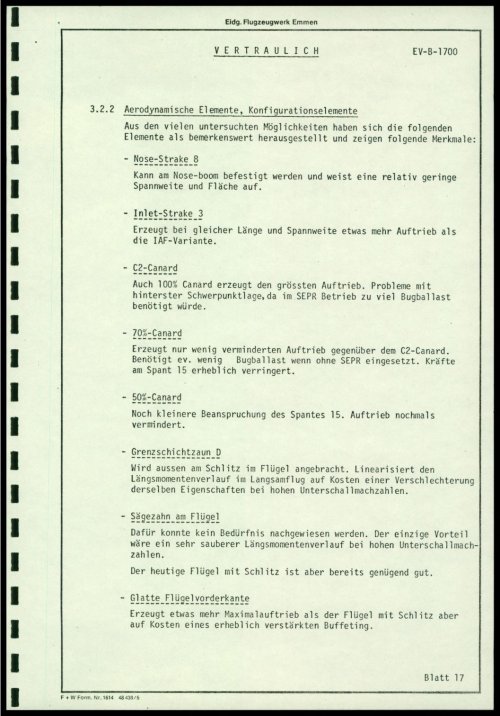
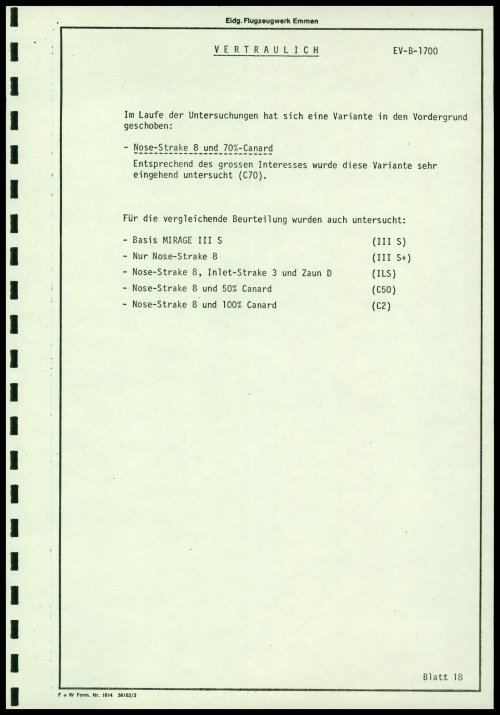
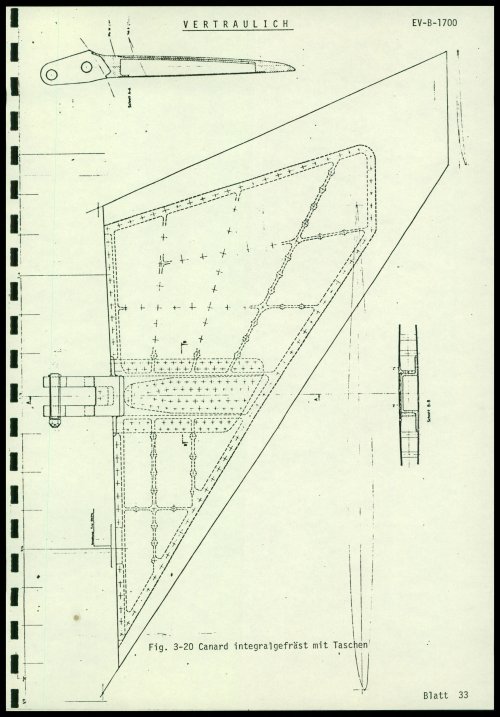
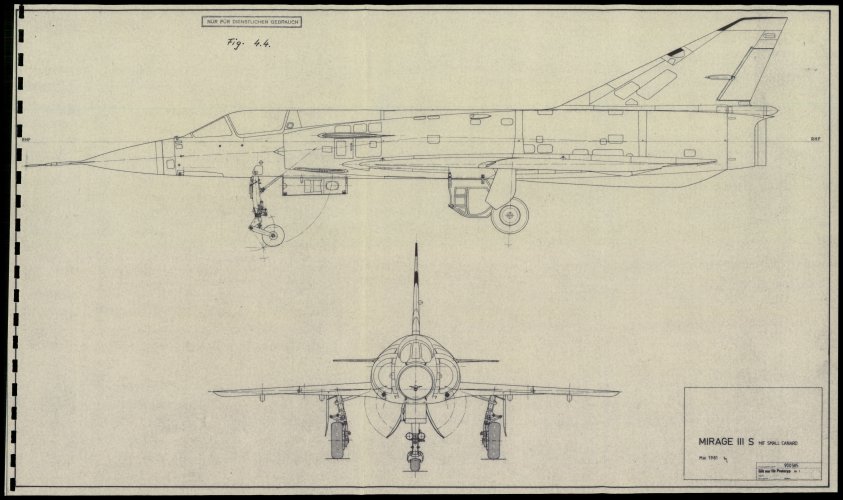
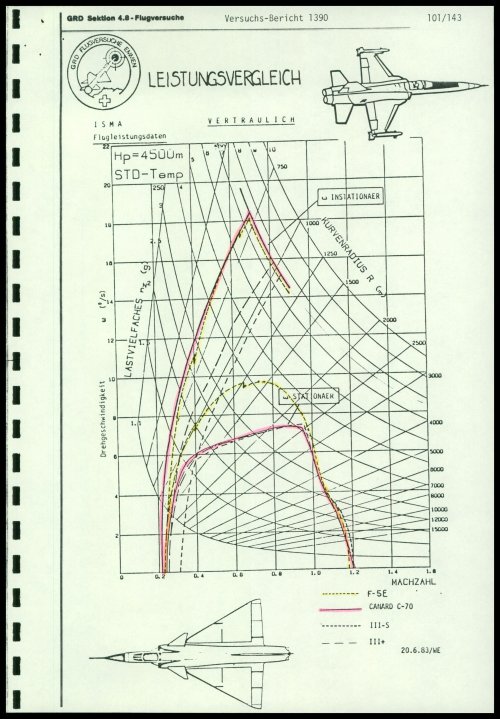
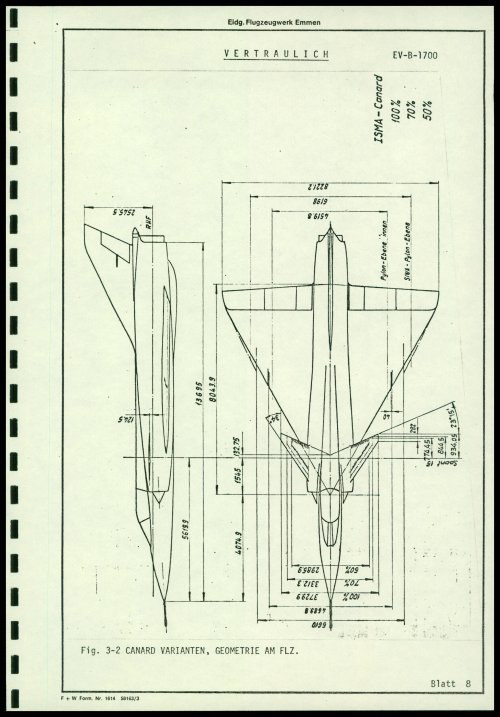
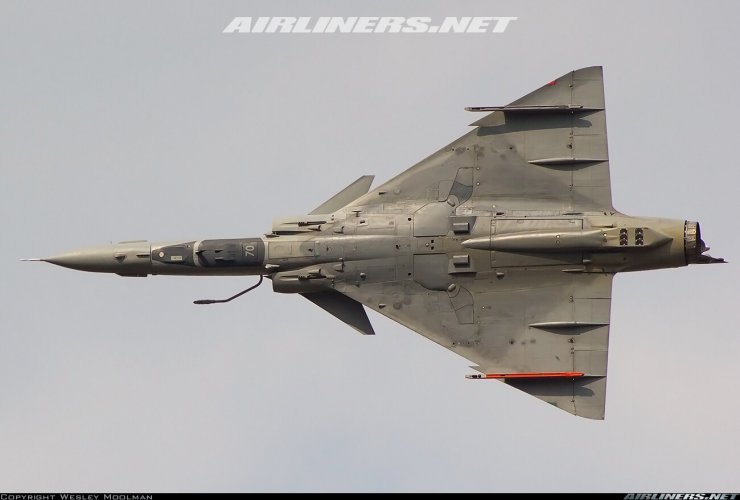
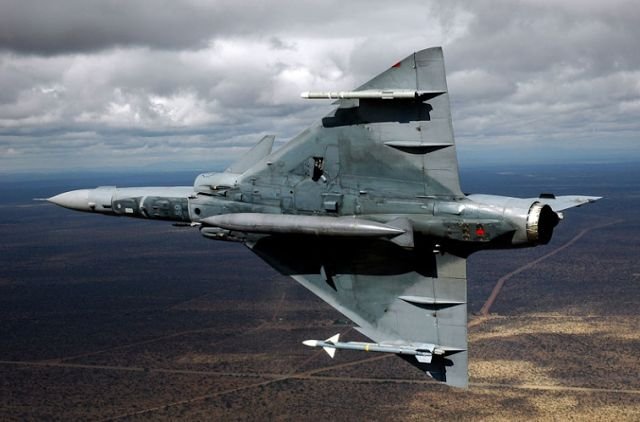
Several options were considered. The biggest change version was C.2 which adopted the full Kfir C.2 canard. This was partnered with a modified wing, and needed 200kg of ballast to be added.

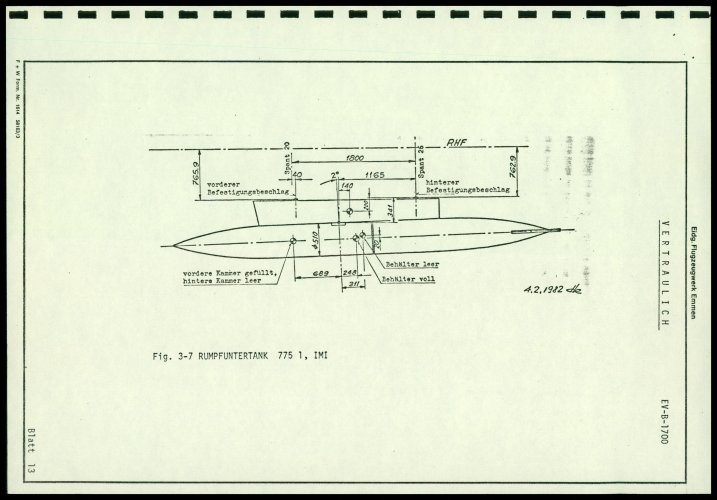
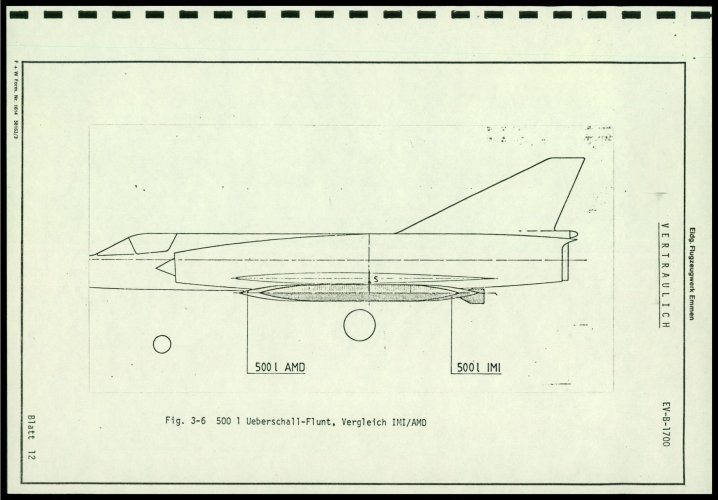
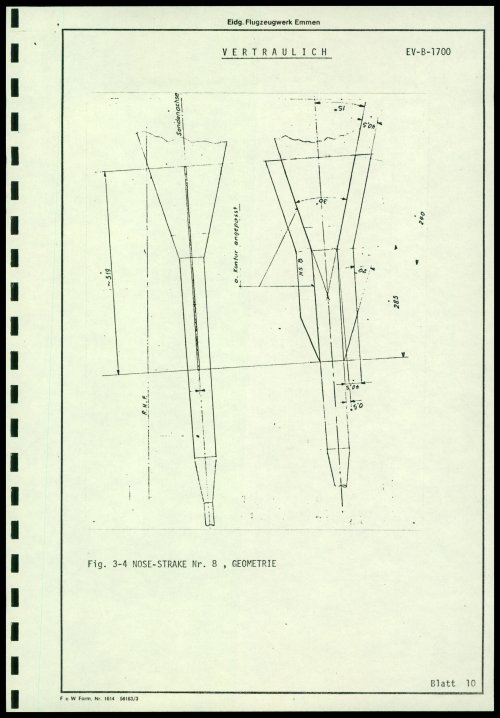
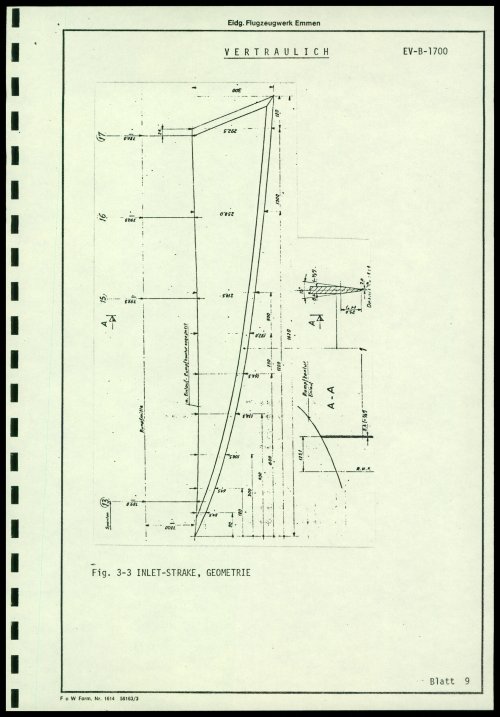
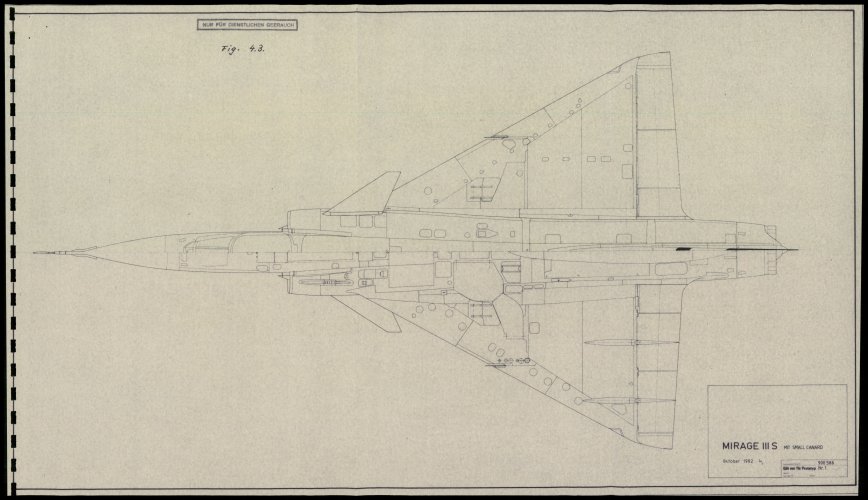
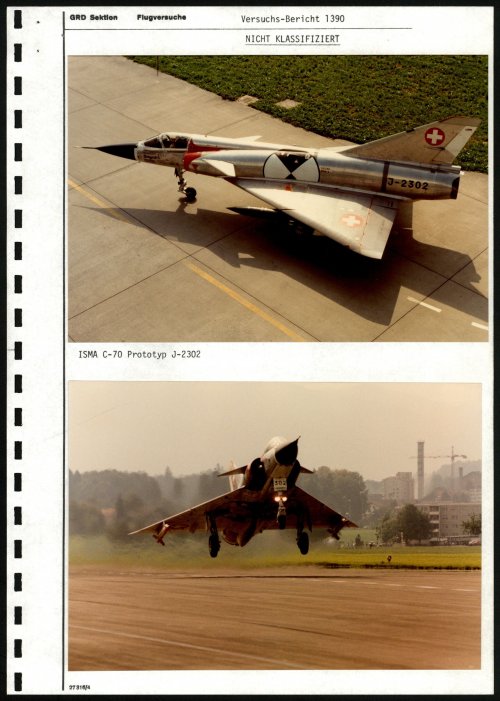
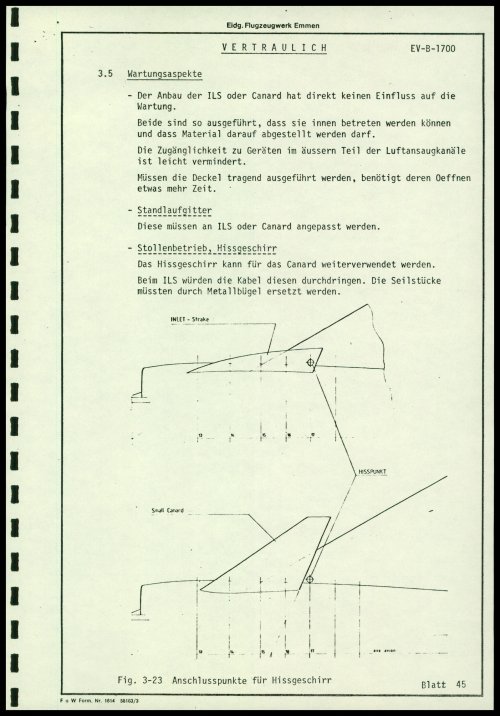
Three other options were studied, ILS (a Mirage 2000ish strake),C50 (a 50% scale canard), and C70 (a 70% scale canard). These required minimal other airframe modifications and less ballast. Performance was best with the C2 canard, but the 70% canard was close behind and simpler and cheaper to implement. This was the selected configuration, which was built as the Mirage IIIS C70. The upgrades also included AIM-9P4 compatibility, Martin Baker MB6 ejection seat replacing the MB4, and Israeli IMI drop tanks.
 

Attachments

  • ISMA-1.jpg
    ISMA-1.jpg
    630 KB · Views: 212
  • ISMA-10.jpg
    ISMA-10.jpg
    898.1 KB · Views: 158
  • ISMA-9.jpg
    ISMA-9.jpg
    315 KB · Views: 137
  • ISMA-8.jpg
    ISMA-8.jpg
    900.7 KB · Views: 126
  • ISMA-7.jpg
    ISMA-7.jpg
    893.8 KB · Views: 118
  • ISMA-6.jpg
    ISMA-6.jpg
    917.6 KB · Views: 130
  • ISMA-5.jpg
    ISMA-5.jpg
    1,023.6 KB · Views: 142
  • ISMA-4.jpg
    ISMA-4.jpg
    203.7 KB · Views: 120
  • ISMA-3.jpg
    ISMA-3.jpg
    1,009.4 KB · Views: 112
  • ISMA-2.jpg
    ISMA-2.jpg
    921.6 KB · Views: 122
Last edited:
Attachments

  • ISMA-13.jpg
    ISMA-13.jpg
    213.8 KB · Views: 108
  • ISMA-12.jpg
    ISMA-12.jpg
    238.6 KB · Views: 91
  • ISMA-11.jpg
    ISMA-11.jpg
    1 MB · Views: 99
  • ISMA-14.jpg
    ISMA-14.jpg
    878.7 KB · Views: 92
  • ISMA-15.jpg
    ISMA-15.jpg
    973.6 KB · Views: 102
  • ISMA-16.jpg
    ISMA-16.jpg
    950.6 KB · Views: 127
  • ISMA-17.jpg
    ISMA-17.jpg
    2.4 MB · Views: 156
  • ISMA-18.jpg
    ISMA-18.jpg
    2.3 MB · Views: 181
  • ISMA-19.jpg
    ISMA-19.jpg
    1 MB · Views: 170
  • ISMA-20.jpg
    ISMA-20.jpg
    1.1 MB · Views: 166
Last edited:
Interesting documents, thanks Paul.
I've always noted that the Swiss never modified the main wing, and most of the documents above show this to be still the case even with these proposed modifications.
However, this drawing amongst them seem to show the dogtooth leading extensions as found on Kfir (C2 onwards) and Cheetah, unless my eyes are deceiving me?
 

Attachments

  • ISMA-5.jpg
    ISMA-5.jpg
    1,023.6 KB · Views: 187
Last edited:
The need for ballast is interesting, sounds like they were trying to add the canard without significantly affecting the existing c-of-g.
 
The need for ballast is interesting, sounds like they were trying to add the canard without significantly affecting the existing c-of-g.
The whole cg thing on the various Mirage upgrades or reinventions is interesting.
I've posted previously photos of Mirage IIICZ and Cheetah C from the same perspective, and they are basically differently sized aeroplanes.
The Cheetah C got a full size canard, but never needed ballast due to the extended forward fuselage (fuselage plug inserted between the intakes and cockpit). That also enabled a much neater AAR probe installation, and avionics space. (See windtunnel model posted on this forum of Cheetah C investigated but discarded with bulged spine but sans fuselage extension)

No idea of the Kfir C10, but that is a whole hot mess with the various air scoops and much hotter and a bit heavier J79 with cooling/shielding.
The Swiss programme is quite interesting to me.
 
Last edited:
Excellent find.
The need for ballast is always mentioned in connection with the installed rocket motor at the rear underside of the fuselage. I expect that no ballast would be needed with an uninstalled rocket motor.
Btw I wonder how the Mirage III NG canard would compare in size - does it exeed the 100% size? The NG also had a front extension of the wing root which seems to shift the aerodynamic center; I suggest this was compensated with the switch to fly by wire.
 
Excellent find.
The need for ballast is always mentioned in connection with the installed rocket motor at the rear underside of the fuselage. I expect that no ballast would be needed with an uninstalled rocket motor.
Btw I wonder how the Mirage III NG canard would compare in size - does it exeed the 100% size? The NG also had a front extension of the wing root which seems to shift the aerodynamic center; I suggest this was compensated with the switch to fly by wire.
The problem is that the ventral fairing and associated space that the rocket motor was installed in originally became very valuable internal space for other goodies such as extra fuel, antennae, or ECM/chaff/flares.
As an example:
 

Attachments

  • 120d4c7a3cb458629af0edb73f400758c9765374.jpeg
    120d4c7a3cb458629af0edb73f400758c9765374.jpeg
    128.9 KB · Views: 121
  • 3784e622c0d6860e843869c14a322067.jpg
    3784e622c0d6860e843869c14a322067.jpg
    38.9 KB · Views: 128
Last edited:
The Swiss Mirages were pretty unique from what I can gather.
Apart from the obvious differences in the cockpit, avionics, and weapons fit, I have read that they had strengthened wings, airframe and undercarriage akin to that of a carrier aircraft, as well as an extended length front undercarriage leg....all per Swiss request. This strengthening also facilitated the hoisting and movement on the cavern bases they had.

This sounds very much like a full carrier version, minus maritime corrosion measures.
Does anyone have any further details of these features of the Mirage IIIS?
 
The Swiss Mirages were pretty unique from what I can gather.
Apart from the obvious differences in the cockpit, avionics, and weapons fit, I have read that they had strengthened wings, airframe and undercarriage akin to that of a carrier aircraft, as well as an extended length front undercarriage leg....all per Swiss request. This strengthening also facilitated the hoisting and movement on the cavern bases they had.

This sounds very much like a full carrier version, minus maritime corrosion measures.
Does anyone have any further details of these features of the Mirage IIIS?
Are there any references to the mentioned structural changes? The hoist points are on all Mirage IIIs to my knowledge so not really a novel Swiss feature. Digging around I can find no mention of an airframe/under carriage so strengthened as mentioned either. Visually the main gear is identical to any other Mirage IIIE. Only real change apart - from the well known radome driven by the avionics - is the extendable nose gear.
 
Are there any references to the mentioned structural changes? The hoist points are on all Mirage IIIs to my knowledge so not really a novel Swiss feature. Digging around I can find no mention of an airframe/under carriage so strengthened as mentioned either. Visually the main gear is identical to any other Mirage IIIE. Only real change apart - from the well known radome driven by the avionics - is the extendable nose gear.
I will have to find out where I read that.

I seem to recall that the Swiss had certain additional requirements due to the topography of some of their airfields (mountainous) that drove some modifications, such as shorter landing profiles and rocket assisted takeoffs with JATO's.
These same requirements also lead to the extendable front undercarriage.

I cannot say definitively off the top of my head that the strengthening happened, just that I recall reading about the Swiss additional requirements.
 

Attachments

  • i3ajsn0j52z61.jpg
    i3ajsn0j52z61.jpg
    54.9 KB · Views: 70
  • images (3).jpeg
    images (3).jpeg
    5.3 KB · Views: 79
Interesting documents, thanks Paul.
I've always noted that the Swiss never modified the main wing, and most of the documents above show this to be still the case even with these proposed modifications.
This thread is facinating and I keep coming back to it!

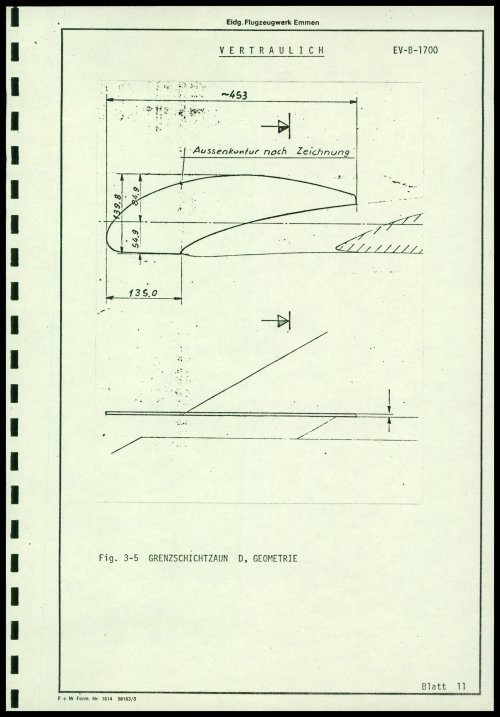
One thing I initially missed was that there was indeed the proposal to modify the base wing by adding a small fence beside the existing wing notch. It is proposed with all solutions, bar the 100% Kfir canard. This seems to tie in well with South Africa's 70% canard Cheetah's needing a fence as the dogtooth was in the wrong position for the canard size.

What I do however find interesting is that the Swiss never implemented the fence. I wonder why?
 
Back
Top Bottom