Vertical Launch Surface to Air Missiles

BernardQuatermass21

ACCESS: Restricted
Joined
17 June 2025
Messages
27
Reaction score
18
The line of travel for new SAM systems seems to be to go for vertical launch. Rather than have an awkward and slow to reload trainable launcher, all you have to do is add thrust vector control, ensure you have three axis gyro stabilisation and fit enough computing to transition the missile from vertical flight to its initial pursuit course. Then you can fire right out of the storage tube. Of course in reality thats quite tricky to make work, so generations of SAMs were hung on trainable launchers. I saw a MKII bloodhound the other day and the launcher is nearly as imposing as the massive missile.

i think (but really am not certain) that VL Sea Wolf was probably the first vertical launch SAM in British service, on Type 23 frigates. Which raises the questions:

- when did other SAM developing nations perfect their first Vertical Launch SAM ?
- are there any that have chosen not to go for VL at all in modern designs?
- were there earlier proposals for earlier VL SAMs that didnt make it into service ?
 
Was anything earlier than the S-300s on the Kirovs?
 
Sprint and Spartan were silo launched, there are launch videos on youtube. Those were mid-70s, but the program was older and I don't know when the first tests were. I also don't know when S-300s were first tested from a vls, or when it was first planned for vertical launch.

I'm pretty sure I've seen plans for vls SAMs from earlier, maybe even the '50s. My guess would be that ABMs would be the first hardware actually tested and flown.

Pereh was deployed in the 80s, and is a good candidate for first AFV mounted vertical launch missile, but it's an ATGM, not a SAM.
 
Last edited:
S-25 Zenit (aka SA-1 Guild) was vertical launch in the '50ies.
 
- are there any that have chosen not to go for VL at all in modern designs?

How do you define modern here? There are quite a few SAMs still in procurement using angled launchers:

  • Patriot
  • THAAD
  • Iron Dome
  • NASAMS
  • Some versions of IRIS-T SLS are angled (some are vertical)
  • The US Multi-Mission Launcher
And of course many naval short-range launchers (RAM, the latest Mistral, and their Chinese and Turkish counterparts).
 
Apparently General Dynamics proposed a cold-launch VLS system in the early 1960s


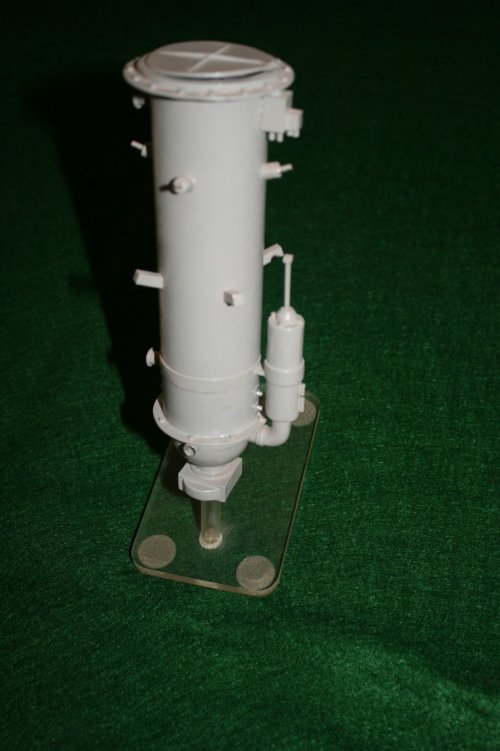
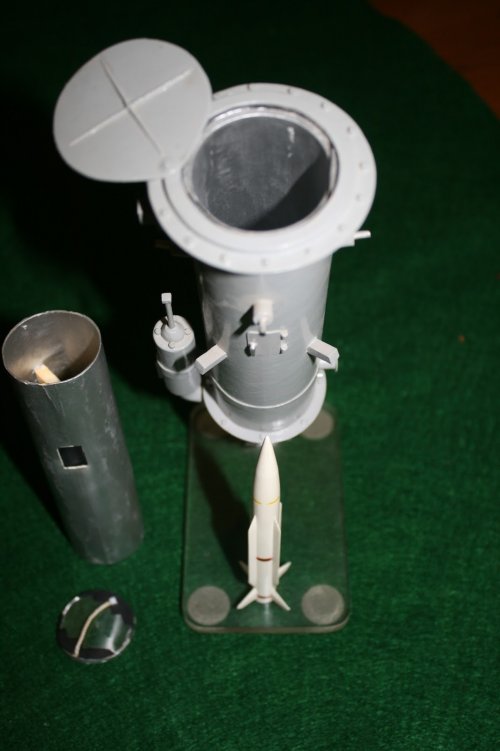
In 1963, I was an engineer working for Freeman M. “Steve” Stephens (Section Head, Advanced Missile Development Group) at then General Dynamics/Pomona, Pomona, California. I developed and proposed in a meeting with military and civilian personnel of the then Bureau of Naval Weapons (BuWeps), a modified configuration of the Missile Ejector Group, Mk 18, as a vertical launch system for integration into the Advanced Surface Missile System (ASMS) which was to evolve into the Aegis Missile System in 1969. The system which employed a sabot powered by high pressure steam generated by a solid grain rocket propellant, had already been developed and employed in the Navy’s Polaris Missile/Fleet Ballistic Missile Submarine Program. This was a deployed, fully operational system. It was effectively a “cold launch” as opposed to a “hot launch”, where the missile rocket engine is ignited in the launch tube. I had learned of the system while working at General Dynamics/Electric Boat Division, Groton, Connecticut, prior to transferring to Pomona. Remember the year was 1963.

At that time GD/Pomona was producing both the Tartar Missile (RIM-24) and Standard Missile (RIM-66), and was teamed with RCA Moorestown, Cherry Hill, NJ, who were simultaneously developing a fixed planar array radar for ASMS, which was to become the AN/SPY-1 Series of Radars., and the nucleus of the AEGIS Weapon System. Steve Stephens would frequently meet with the RCA Project Manager, William V. “Bill” Goodwin, who was later promoted to a RCA Vice President over their entire Missile and Surface Radar Division.

The Guided Missile Launching Systems Mk 7, Mk 9, Mk 10, Mk 11, Mk 13 and Mk 22 (Mk 26 was yet to come) were already well established and installed in US Navy surface ships. Like conventional naval gun systems, all of these launchers were trained in azimuth and elevation with complex amplidyne drive systems, and reloaded from protected magazines. Even though by every measure of combat effectiveness (reaction time/reload speed, reliability, survivability, maintainability, safety, design/manufacturing simplicity, reduction of rotating machinery, simultaneous multi-warfare/multi-target engagement, lower CG, volumetric efficiency, concealment, and cost, to name a few) the vertical launch concept was clearly superior, the ultra-conservative minds of the Department of the Navy remained entrenched, rejecting the concept. I would come to call them “cannon-cockers”. In addition a contributing factor may well have been a highly effective lobbying effort by Northern Ordnance and FMC Corporation, manufacturers of the existing launching systems.

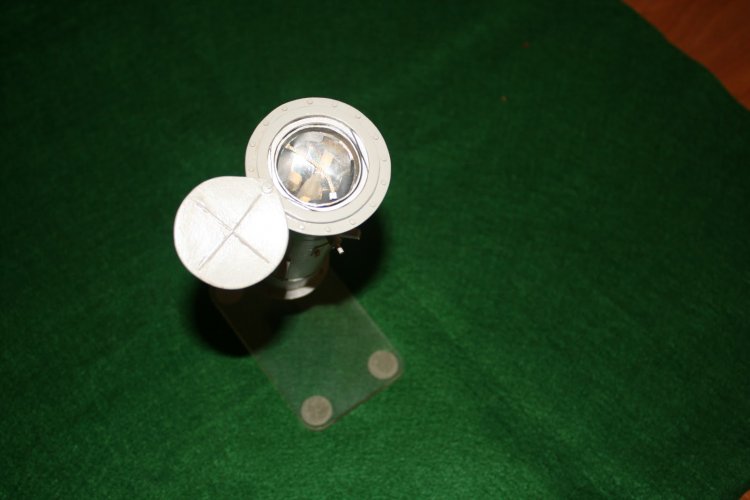
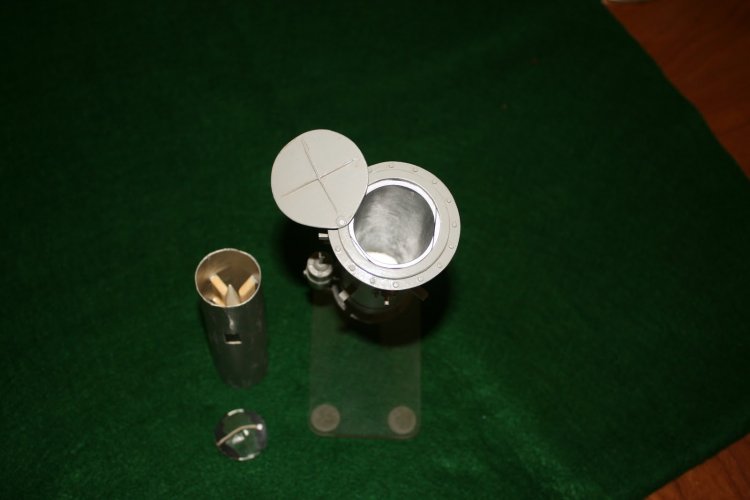
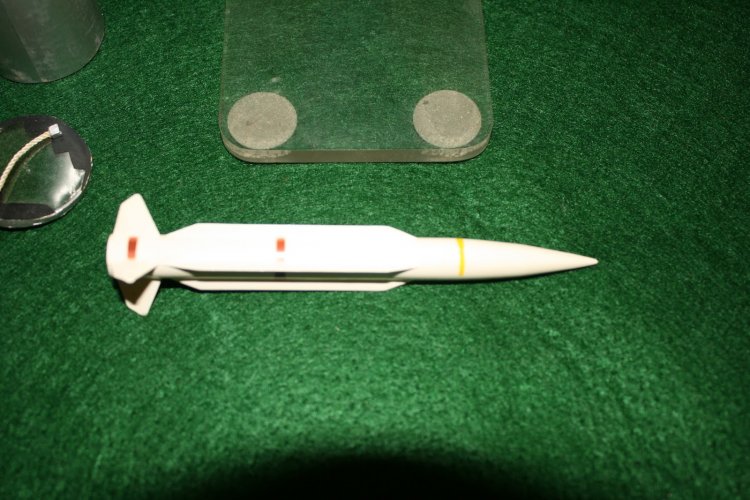
I still have the scale model of the vertical launched missile system proposed to the US Navy in 1963. It was built from a toilet paper tube (thicker cardboard back then) , and incorporated a inner sleeved shipping canister containing a plastic model of a Standard (RIM-66) surface-to-air missile. The majority of the protruding fittings seen on main launch tube were safety and fire suppression systems, as well as positive constraints on the missile to insure adequate launch pressures. Many of these features would have proven unnecessary, simplifying and streamlining the final design configuration. It's unfortunate that there currently isn't a quick, accurate and reliable forensic dating method that could be applied to the model. Unfortunately all my analyses, drawings, reports, and other presentation materials were left at GD/Pomona. This was due to the fact that most of it was both proprietary and classified information. The green maze background is an intentional "freudian slip" representing the "long green table" symbolic of a Navy Board of Inquiry, which was obviously never held.

IMG_3381.JPG
IMG_3383.JPG
IMG_3384.JPG
IMG_3386.JPG
IMG_3387.JPG
 
Last edited:
So if the ever reliable Wikipedia is to be believed, first launch of the S25 / SA1 was on 25 June 1951, which I assume it was VL in its first variant ? Impressive for 1951 if it was.

For me silo launched ABM interceptors don’t count as SAMs somehow…

By SAM developing nations that have chosen to not go VL, I meant ones that have never fielded a VL SAM, rather than ones that are still fielding some conventional launch missiles, along with VL systems.
 
Actually during the evolution of Seaslug, there was a moment in the late 40's were VL was thought to be the future. But time and financial constraints, meant that this couldn't be pursued.
 
Actually during the evolution of Seaslug, there was a moment in the late 40's were VL was thought to be the future. But time and financial constraints, meant that this couldn't be pursued.
VL Sea Slug ! I would consider that to be an excellent use of tax payers money.

It was the County Class destroyer being “built round the missile system” with its complex transport and huge launcher that made me wonder about early VL SAMs.

In a parallel universe there was a VL Sea Slug, VL Bloodhound and VL Thunderbird….

Before I get too bought in…do you have a reference for the VL Sea Slug deliberations?
 
S-25 Zenit (aka SA-1 Guild) was vertical launch in the '50ies.
By that measure, so was the Wasserfall in the 40s. Pretty sure that's not what's meant here.
 
i think (but really am not certain) that VL Sea Wolf was probably the first vertical launch SAM in British service, on Type 23 frigates.
If you include trials, then technically it was Sinner (early VL Sea Wolf) on HMS Loch Fada in 1969.

Hood mentions a 1966 proposal to use PX.430 (=Seawolf) in a VL configuration on the Design Study 919 patrol vessel here.
 
If you include trials, then technically it was Sinner (early VL Sea Wolf) on HMS Loch Fada in 1969
Hood mentions a 1966 proposal to use PX.430 (=Seawolf) in a VL configuration on the Design Study 919 patrol vessel here.
This is fascinating. I didn't realise VL Seawolf was so long in its gestation. Any references to Sinner Trials much appreciated. Was it the standard round with a VL launch pack (as per deployed VL Sea Wolf) or a dedicated VL round ?
 
Well, Nike's were essentially vertical-launched; a slight inclination was only so the booster would fell into designated "booster dumping" area, and won't fell on someone's head.
Nike is an interesting one. Im not sure whether Nike would qualify as Vertical Launch within the definition I laid out ? Accepting it has a very steep launch angle. But could it be launched without its very substantial launch rail to stabilise it until its up to aerodynamic control speed ? I don't know but I suspect the Nike booster didn't have any thrust vector control capability ?
 
By that measure, so was the Wasserfall in the 40s. Pretty sure that's not what's meant here.
I think Wasserfall absolutely qualifies (three axis stabilisation, thrust vector control, no launcher beyond a stand) and it would be hard to find anything earlier.

But it only qualified in the "prototype" category as it never engaged a target and didn't get to deployment.
 
VL Sea Slug ! I would consider that to be an excellent use of tax payers money.

It was the County Class destroyer being “built round the missile system” with its complex transport and huge launcher that made me wonder about early VL SAMs.

In a parallel universe there was a VL Sea Slug, VL Bloodhound and VL Thunderbird….

Before I get too bought in…do you have a reference for the VL Sea Slug deliberations?
Friedman I forget which, so I'll have to dig.
Here we go.
The Postwar Naval Revolution
(ISBN 0 85177 414 8)

Had they known IOC was more like 1960.....
But then this would have meant keeping Type 902 'gathering' set going instead of piling on the requirements to Type 901 "Jelly"

but that would setup for a far more sophisticated guidance capability.
 
Last edited:
This is fascinating. I didn't realise VL Seawolf was so long in its gestation. Any references to Sinner Trials much appreciated. Was it the standard round with a VL launch pack (as per deployed VL Sea Wolf) or a dedicated VL round ?
Given the time period, I'm not sure the 'standard' Sea Wolf round was actually available yet, it may have been Confessor - the developmental Sea Wolf - with a VL launch pack. According to wiki VL development then stagnated until the 1980s.
 
GAST.1210 saw various booster options for Seawolf. So studies continued
 
I've checked the rules of The World Cup of VL SAMs and C2 Wasserfall is only competitive in the prototype category, as its development was cut short by the end of the war so it never made a trial intercept.

Current leaders in the operational category are the Soviets with the s25 / SA1. With Nike Ajax disqualified on a technicality.....getting stability help by riding the rail of its erector. For the American team, I would think BOMARC is a strong early contender ? It's erector clearly falls away before it makes a nice clean controlled launch.

And the plucky British currently trailing in third with VL Seawolf and it's protypes a clear 18 to 30 years after the S25.

The soviets could perhaps even increase their lead if there's evidence of an intercept with the R101 Waterfallski ?

And no showing from the French team ?
 
- Germany 1944, Wasserfall C2

- Germany 1944, Wasserfall C2

The C2 is already in the lead for first prototype.

It’s harder to make and argument that it was perfected in 1944/45 as it still had to complete a target intercept. There seems to be no evidence that any of the flight trials were made against a target, let alone achieving an intercept. So still very much a development project when it was abandoned.
 
It’s a rule, universally acknowledged, that every discussion of early missiles ends in a disagreement on the capabilities of German wartime developments. But here goes….

The wartime evidence for the state of development of the C2 is good, though the documentation is spread between archives in the US, UK and Germany. It’s quite easy to get hold of facsimiles of drawings, design documents, flight test reports, and discussions on the outstanding problems. These are primary sources from the Peenemunde development team. The post war intelligence interviews with senior and junior engineers from the team are also available online.

The documentation shows the C2 was where it could be expected after a year of flight testing in uniquely challenging conditions. It had not made any intercept trial against a target, had unresolved problems with air burst after engine cut off and the final five test flights were devoted to testing a new fin servo, at least the third type tried in flight testing. Four of the final five flights were deemed to be failures. And it had no proximity fuse or terminal homing seeker. The challenge of integrating it with its guidance system awaited.

Given the development test situation it would be remarkable for it to have been used operationally. And there seems to be no evidence for this at all.

Personally I think the C2 is an impressive technical achievement. The fact that its development was terminated with many problems left to be solved makes it more interesting, not less.

So I think it’s reasonable to judge the C2 as a remarkable prototype, but a significant way from being perfected.
 
Well, Nike's were essentially vertical-launched; a slight inclination was only so the booster would fell into designated "booster dumping" area, and won't fell on someone's head.
Nike was vertically launched. So was BOMARC. With Nike, there was a big effort to design a frangible booster that would disintegrate on release, and while designers came close the ending of the use of Nike Ajax and reduction in the number of sites using Hercules eliminated the problem and the booster design process was ended.
 
The fuse was likely the only developmental challenge left.

Some authors claim C2 was used against enemy bombers, but wartime documentation is elusive.
This is incorrect. The proposed guidance systems never came close to realistic testing, and based on postwar systems that were developed, those systems wouldn't have worked operationally.

Problems included:
The radars to be used lacked sufficient accuracy.
The radars lacked automatic tracking and operators doing this manually were found to lack the skill to get consistent and accurate tracking of the target.
There was no automatic guidance computer available.
Use of MCLOS was completely unworkable and manual command was equally unworkable.
The proposed fire control computers barely existed and hadn't been tested with any missile system.

So, no, Wasserfall was never tested or operationally fired at a live target. In fact, it is almost certain that it was never tested using the proposed radar or optical fire controls and guided to a mock intercept. There was some testing of the flight controls using either Keil Strassburg or Kogge Brigg but this was limited to just seeing if the controls would alter the missile's course.
 
The line of travel for new SAM systems seems to be to go for vertical launch. Rather than have an awkward and slow to reload trainable launcher, all you have to do is add thrust vector control, ensure you have three axis gyro stabilisation and fit enough computing to transition the missile from vertical flight to its initial pursuit course. Then you can fire right out of the storage tube. Of course in reality thats quite tricky to make work, so generations of SAMs were hung on trainable launchers. I saw a MKII bloodhound the other day and the launcher is nearly as imposing as the massive missile.

i think (but really am not certain) that VL Sea Wolf was probably the first vertical launch SAM in British service, on Type 23 frigates. Which raises the questions:

- when did other SAM developing nations perfect their first Vertical Launch SAM ?
- are there any that have chosen not to go for VL at all in modern designs?
- were there earlier proposals for earlier VL SAMs that didnt make it into service ?
Nike was going pretty close to operational by 1949. It was also the first to go into operational service about two years later.

The big problem with early vertical launch SAMs is their minimum altitude for an intercept. These systems were unable to fire against anything below somewhere between, roughly, 2 to 3,000 meters altitude, minimum. That leaves a pretty big low altitude gap in their coverage. The point and shoot models could better cover this lower range of altitudes but that came at the price of reduced range usually.
 
Nike was vertically launched. So was BOMARC. With Nike, there was a big effort to design a frangible booster that would disintegrate on release, and while designers came close the ending of the use of Nike Ajax and reduction in the number of sites using Hercules eliminated the problem and the booster design process was ended.
If I recall the story correctly, works on self-destructive fiberglass booster were halted after the first test - when, instead of exploding in air & falling on the ground as harmless lightweight debris, the booster fell down and THEN exploded like enormous fragmentation grenade. If anyone were inside the booster drop area, he would have no chances to survive the hailstorm of fiberglass shrapnel. Investigation showed that lanyard that was supposed to activate self-destruction fuze was too strongly attached, so it tore off the whole fuze instead. While the problem COULD be solved, all observers decided that the simple metal tube of old booster would be much less risky.
 
Problems included:
The radars to be used lacked sufficient accuracy.
The radars lacked automatic tracking and operators doing this manually were found to lack the skill to get consistent and accurate tracking of the target.
There was no automatic guidance computer available.
Use of MCLOS was completely unworkable and manual command was equally unworkable.
The proposed fire control computers barely existed and hadn't been tested with any missile system.
Yep. A lot of countries tried to develope something useful out of Wasserfall post-war - and every single one eventually concluded that it would be cheaper and faster to develope a new missile from scratch, than trying to fix all the deficiences in half-completed (at best) German project.
 
Nike was going pretty close to operational by 1949. It was also the first to go into operational service about two years later.

The big problem with early vertical launch SAMs is their minimum altitude for an intercept. These systems were unable to fire against anything below somewhere between, roughly, 2 to 3,000 meters altitude, minimum. That leaves a pretty big low altitude gap in their coverage. The point and shoot models could better cover this lower range of altitudes but that came at the price of reduced range usually.
No doubt on Bomarc. Videos clearly show the erector falling away and the missile taking off under its own guidance. Documents list it as having thrust vector control. But it looks like Nike has a fairly hefty rail launcher ? Did it manage its own stability from the ground up ? Some form of thrust vector control ?
 

Yep. A lot of countries tried to develope something useful out of Wasserfall post-war - and every single one eventually concluded that it would be cheaper and faster to develope a new missile from scratch, than trying to fix all the deficiences in half-completed (at best) German project.
I think it’s an amazing achievement, even allowing for its technical issues.

My Wasserfall is clearly half full, rather than half empty :)
 
If I recall the story correctly, works on self-destructive fiberglass booster were halted after the first test - when, instead of exploding in air & falling on the ground as harmless lightweight debris, the booster fell down and THEN exploded like enormous fragmentation grenade. If anyone were inside the booster drop area, he would have no chances to survive the hailstorm of fiberglass shrapnel. Investigation showed that lanyard that was supposed to activate self-destruction fuze was too strongly attached, so it tore off the whole fuze instead. While the problem COULD be solved, all observers decided that the simple metal tube of old booster would be much less risky.
That's incorrect. There were several fiberglass boosters designed with the principal problem being a weight issue. The boosters were heavier and slightly larger than the ones in service use. This presented a problem using the existing launchers and more importantly resulted in an unacceptable loss of performance in the missile. Eventually the weight was brought down to a level that was marginally acceptable but that point Nike Ajax was going to be phased out, so the program was dropped. The Hercules booster was for all intents 4 x the Nike Ajax one at that point and it was the reduction in sites that made the self-destructing booster unnecessary.
 
No doubt on Bomarc. Videos clearly show the erector falling away and the missile taking off under its own guidance. Documents list it as having thrust vector control. But it looks like Nike has a fairly hefty rail launcher ? Did it manage its own stability from the ground up ? Some form of thrust vector control ?
The rail was mostly for loading and allowing the missile to be serviced in a horizontal position. For launch it was close to a zero-length launcher and just brought the missile to vertical for firing. The Nike went from 0 to supersonic in under 2 seconds. On the Ajax, note that both engines ignited at launch and were running throughout the flight. The missile stage stayed on the booster by a press fit only and when the booster expired, it was simply pushed away from the missile.
 
Brakemine was ready for operationalisation. Multiple were fired off after cancellation for future development research.
But the team was broken up and RO Westcott lost the future to a somewhat harebrained scheme to get aviation firms to build missiles. Hence EE getting government money to build a factory in Luton.
While Admiralty claimed AW for Seaslug and Bristol got ramjet work.

UK scientific establishment did not copy German designs. For good reason.
Neither did the US, USSR or France.
Even the Swiss and Italians didn't copy the Germans.
 
The rail was mostly for loading and allowing the missile to be serviced in a horizontal position. For launch it was close to a zero-length launcher and just brought the missile to vertical for firing. The Nike went from 0 to supersonic in under 2 seconds. On the Ajax, note that both engines ignited at launch and were running throughout the flight. The missile stage stayed on the booster by a press fit only and when the booster expired, it was simply pushed away from the missile.
Nike documentation lists one of the launch rail functions being to “guide the missile until airborne”. Which is to be expected if it’s depending wholly upon aerodynamic control for its stability. That’s conventional launch to me not VL.
 
Brakemine was ready for operationalisation. Multiple were fired off after cancellation for future development research.
But the team was broken up and RO Westcott lost the future to a somewhat harebrained scheme to get aviation firms to build missiles. Hence EE getting government money to build a factory in Luton.
While Admiralty claimed AW for Seaslug and Bristol got ramjet work.

UK scientific establishment did not copy German designs. For good reason.
Neither did the US, USSR or France.
Even the Swiss and Italians didn't copy the Germans.
Brakemine was vertically launched ? The pictures online seem to show a conventional launch version.
 
Brakemine was vertically launched ? The pictures online seem to show a conventional launch version.
Brakemine was rail launched from a modified 3.7" gun mount and relied on aerodynamic lift to a degree to get airborne.

As for Nike, I consider it vertically launched because it goes nearly or completely straight up on launch. Vertical launch from a tube often uses the tube to keep the missile moving in a straight line so I don't see that as part of the description. Now, if you are only talking about free standing vertical launch...

Another US one was Hermes A-1. This was a short-lived program as a SAM by GE as a backup to Nike. GE made a total of 6 launches of what amounted to modified Wasserfall missiles, all free standing and vertical launches, before dropping that part of the Hermes program because it was obvious that missile was not going to produce a viable SAM before Nike was in service.

In the vertical launch / free standing category there are a number of French SAMs of the late 40's and early 50's that were launched that way. None made it to production, however.
 
Brakemine was ready for operationalisation. Multiple were fired off after cancellation for future development research.
But the team was broken up and RO Westcott lost the future to a somewhat harebrained scheme to get aviation firms to build missiles. Hence EE getting government money to build a factory in Luton.
While Admiralty claimed AW for Seaslug and Bristol got ramjet work.

UK scientific establishment did not copy German designs. For good reason.
Neither did the US, USSR or France.
Even the Swiss and Italians didn't copy the Germans.
Brakemine got as far as being a proof-of-concept design. The guidance was beam riding and extremely basic. The missile was unsuitable as a SAM as it was subsonic and fairly short ranged. It's twist-steer system was copied on other British SAMs including Bloodhound and Thunderbird for example.

Ramjets were a go-to in early SAMs to get the range. Bristol worked closely with first, Marquardt, and then Boeing in the US to get a good ramjet design tossing in some of their own ideas along the way. For example, Bristol came up with a much better and reliable igniter than the use of a flare like Boeing was using in GAPA.
 
Back
Top Bottom