how to rebuild US shipbuilding, and prepare for future conflicts

The JSM is a high end weapon designed for high end threats.

Any threat worth an anti-ship missile is a "high end threat" lmao.

The alternative isn't a "cheaper cruise missile" for low end threats, it's a JDAM, or raking fire from a Mk 44 or 5" gun.

If we wanted to describe all cars as the same market segment, ie a mode of transport, then sure they fit together, but I don't go to the BMW dealership expecting to pay Ford costs.

This is a really asinine description because it's the opposite of what you're doing. You're describing all cruise missiles as a single market segment. I'm telling you the JSM is a hatchback that nobody buys many of. Barracuda-500 is someone's proposed cheaper hatchback.

If you're talking about Barracuda-100...you should have said that in the first place.

If you're saying Barracuda-500 is a good replacement for LRASM...lol.

Barracuda is aimed at a different market and really a different target set than the JSM

What is a different target that requires triple digit nautical miles of range or a similar weight and effects warhead?

and that alone is the primary reason for the cost difference and the ability to manufacture at the rate Anduril projects and that JSM could almost certainly not meet.

Anduril hasn't made any Barracudas and its prior experience in mass manufacturing don't give joy. It failed with Roadrunner to make something competitive with RTX's Coyote. Q-44 does not seem well suited to the job asked of it (air-to-air) given external stowage versus Q-42's internal stowage and moderate LO either. It is now likely to fail with even securing orders given that Kongsberg has the market segment of "lightweight medium range anti-ship missile" locked down.

It is a distant possibility they may be able to compete with Spike-NLOS's "helicopter launched long range guided missile", given that is an area of interest of armed forces and relatively poorly penetrated, so there's not many products in that space yet. Depends on how well Barracuda-100 handles a BLOS datalink.

but there is clearly an opportunity and market space for it be successful if they can deliver on the promise.

Not for an air- or naval-launched anti-ship missile. JSM has that market segment locked in. It's much cheaper to continue to buy JSMs than to approve a new weapon, given JSM is only purchased at a rate of "a few dozen" a year, too.
 
Any threat worth an anti-ship missile is a "high end threat" lmao.

The alternative isn't a "cheaper cruise missile" for low end threats, it's a JDAM, or raking fire from a Mk 44 or 5" gun.
Again you are missing the point. The debate here is about 500t targets that are not high end threats. That target is not necessarily in range of a JDAM or a 5" shell from a surface platform.
This is a really asinine description because it's the opposite of what you're doing. You're describing all cruise missiles as a single market segment. I'm telling you the JSM is a hatchback that nobody buys many of. Barracuda-500 is someone's proposed cheaper hatchback.
Except I don't agree with your assessment of JSM and neither do the nations buying it.
If you're saying Barracuda-500 is a good replacement for LRASM...lol.
Again you have very much missed the point.
 
Again you are missing the point. The debate here is about 500t targets that are not high end threats. That target is not necessarily in range of a JDAM or a 5" shell from a surface platform.

Littoral threats are not something the U.S. Navy concerns itself with because the U.S. Navy cannot operate in the South China Sea without first destroying the PLAN's surface fleets. The missile boats are something that will be picked off by aviation once the sea becomes amenable to operations of offensive carrier groups hundreds of miles outside the range of the C-802s or YJ-83s or whatever they carry.

The practical reality is that the PLAN has 50 Burkes, 45 Perries, and is slowly gaining enough Kitty Hawk sized carriers to muster one to three CVBGs, and these are far greater threats than some missile boats.

The Type 22 and Type 37 FACs that the PRC operates, which are the only ships that fit in roughly that tonnage range, can be defeated by a Seahawk with a JAGM or a Super Hornet with a 500 lbs LJDAM. They are threats to be destroyed once the main battle fleet has been sunk and the South China Sea has been secured for operations by surface ships in the first place.

They are not a threat to aviation and a minor threat to surface warships because they do not have the range to attack carrier battlegroups in deep ocean. Far more concerning to a carrier skirting the second island chain while flinging F-35Cs at stuff is the 40-something Kilos and half dozen 688is the PLAN has.

As I said, Anduril could make a lot of money. Just not in making missiles, or anything like missiles, because they've proven quite bad at that.

Except I don't agree with your assessment of JSM and neither do the nations buying it.

A 250 lbs warhead isn't really a Burke killer lol. A pair of 250 lbs warheads had trouble disabling a Perry.

Those are the things you fire LRASM or JASSM at. JSMs are suitable for killing the Type 22s, 37s, and 56s. They might disable a 53 or 54 since those are Perry sized but you'd need more than one probably. The latter three are what is really important since they have missiles that out range the JAGM and are primary surface units that can traverse the SCS beyond just the littorals and immediate Taiwan area.

The 22s and 37s are just going to die to AH-1Zs loaded with Hellfires pretty much after the U.S. actually wins the war, since it'll win based solely on how quickly troops from ROK and the JSDF can arrive, and how much the ROKN and JMSDF surface units can attrit the PLAN undersea forces before they die to PLAN/PLANAF/PLAAF aviation.

Besides not being a serious threat, due to a variety of reasons ranging from being maintenance queens to simply not having range both sailing and weapon-wise, it's the lack of air defense that kills the Type 22. It's a warmed over Osa class and, like in the Battle of Bubiyan, it would be slaughtered by fixed wing and helicopter aviation before it ever spots an enemy warship.

It'd be scary if it had a bow mounted HQ-7 because then it might actually be able to defend itself from the helicopters hunting it. Alas...

Again you have very much missed the point.

Your point is that the Barracuda-500 is sized to kill a Type 22. Okay? Cool I guess.

I mean, it's not wrong, but it misses the part where killing the Type 22 is something that occurs at the very end of an otherwise successful naval campaign and doesn't need a weapon specific to it. By the time you're needing to swat the little missile boats you've secured air superiority over the PRC coast and are probably looking to launch an amphibious invasion. Much less does the Navy need a FAC that can close in, with Phalanxes and tiny missiles, to bully other missile boats when it has trouble producing enough surface units to secure its SLOCs and trade convoys.

There are plenty of weapons that are already in inventory where it would be much cheaper, and much faster, to simply put in additional orders to establish new factories and production lines to be honest. LJDAM, JAGM, Hellfire-R, JSM...

There's no need for the DAF or DON to actually buy Barracuda-M of any size when existing inventory covers it more or less. There's about 100 or so ships with very limited air defense that won't be able to stop a laser guided bomb from an F-18 dropped from 10,000 feet.

Conversely, there's plenty of reason to believe that Anduril can't be trusted to deliver on their promises either. The last time anyone gave them a chance (DON and the Roadrunner-M), they ended up costing 5x as much as the competition (RTX Coyote) per shot, but it's not like anyone will be buying more Barracuda-M. They'll be bought at the same rate, and likely the same quantity, as JSM!

If anyone "needs" Barracuda-M it's the Taiwanese, not the United States, because the US has enough money to just mass produce JSMs, JASSMs, and LRASMs. Which is exactly what it's doing. Assuming the Barracuda-M comes anywhere close to $200,000, and not something more like $2,000,000, since Anduril has a habit of misplacing zeroes in their cost predictions, maybe they could include a free integration on F-CK-1, stores tests, local production facility, and initial 300 war rounds on the house for that.

Since Barracuda-M is so cheap, all that is basically nothing to Anduril, right.

 
Last edited:
The practical reality is that the PLAN has 50 Burkes, 45 Perries,
The practical reality is, that PLAN has:

* 8 missile cruisers (roughly equivalent "if Ticonderoga was build right now")
* 31 missile destroyer (six roughly equivalent to early "Arleigh Burke", the rest are more or less compatible with Flight II)
* 11 missile destroyers of older types (no direct analogue in USN, less capable than "Arleigh Burke" Flight I)
* 38 missile frigates (no direct analogue in USN, but order of magnitude more capable than old OHP-class)
* 10 missile frigates of older types
* 50 missile corvettes capable of sea operations
 
The practical reality is, that PLAN has:

* 8 missile cruisers (roughly equivalent "if Ticonderoga was build right now")
* 31 missile destroyer (six roughly equivalent to early "Arleigh Burke", the rest are more or less compatible with Flight II)
* 11 missile destroyers of older types (no direct analogue in USN, less capable than "Arleigh Burke" Flight I)
* 38 missile frigates (no direct analogue in USN, but order of magnitude more capable than old OHP-class)
* 10 missile frigates of older types
* 50 missile corvettes capable of sea operations

I was speaking for ship survivability. I doubt the PLAN is building anything as squishy as a Tico lol. Perry is a proven tough cookie, compared to contemporaries like the 42s, while Burke was an improvement in survivability over the Ticos. Anyway all those vessels are worth an LRASM or JASSM. The Type 22s can eat a JSM or something since they aren't very numerous and their air defenses are very limited.
 
Last edited:
The practical reality is, that PLAN has:

* 8 missile cruisers (roughly equivalent "if Ticonderoga was build right now")
* 31 missile destroyer (six roughly equivalent to early "Arleigh Burke", the rest are more or less compatible with Flight II)
* 11 missile destroyers of older types (no direct analogue in USN, less capable than "Arleigh Burke" Flight I)
* 38 missile frigates (no direct analogue in USN, but order of magnitude more capable than old OHP-class)
* 10 missile frigates of older types
* 50 missile corvettes capable of sea operations
You are far underestimating 052Ds, they are much more similar to flight III Burkes in technology and can carry much more potent antisurface weapons. There are also in fact 40(or possibly 39) 052Ds total if you count all the ones that are underconstruction and could be commissioned in the next 2ish years. There are also 9 055s and a few more in late stages of construction(unclear wether the new batch would have 6 or 8 ships since only 6 are spotted underconstruction). As for older DDGs, I personally would count them as large anti air/command frigates post-MLU as most of them are fitted with similar subsystem as 054A/Bs with similar weapon config(but capable of carrying more due to being physically larger).

PS: Your frigate number didn't account for the newly comissioned 054Bs and I think a few more new 054As.

Effectively your info is a good 5-8 years out of date.
 
Last edited:
In fact, the 14th 055 is almost out, and the 11th and 12th ships were launched in May this year.
 
Assuming this is a conflict taking place in 2035, by then long-range stealth fighters and stealth bombers will be in large-scale service. The USN will no longer send major surface combatants deep into the East China Sea or the Yellow Sea, into areas within 500 km of the Chinese coastline. Likewise, the PLAN will not send major surface combatants in the East China Sea or the Yellow Sea into waters more than 600 km from its coastline. Decisive fleet battles will not take place in these areas, because in these areas, a CSG would be easily overwhelmed by land-based aviation. The underwater contest here will be dominated by SSNs.

Deep strikes, including air strikes against ports and warships, will be led by the USAF. The F-47 has a combat radius of up to 1,000 nm. If the F-47 is based in Osaka, that is enough to cover the coastline from Dalian to Fuzhou.

The USN’s mission will shift away from decisive fleet battle and toward open-ocean blockade and open-ocean commerce raiding. The USN needs a class of guided-missile frigate with a range of 10,000 nautical miles at 16 knots.
 
Assuming this is a conflict taking place in 2035, by then long-range stealth fighters and stealth bombers will be in large-scale service. The USN will no longer send major surface combatants deep into the East China Sea or the Yellow Sea, into areas within 500 km of the Chinese coastline. Likewise, the PLAN will not send major surface combatants in the East China Sea or the Yellow Sea into waters more than 600 km from its coastline. Decisive fleet battles will not take place in these areas, because in these areas, a CSG would be easily overwhelmed by land-based aviation. The underwater contest here will be dominated by SSNs.

Deep strikes, including air strikes against ports and warships, will be led by the USAF. The F-47 has a combat radius of up to 1,000 nm. If the F-47 is based in Osaka, that is enough to cover the coastline from Dalian to Fuzhou.

The USN’s mission will shift away from decisive fleet battle and toward open-ocean blockade and open-ocean commerce raiding. The USN needs a class of guided-missile frigate with a range of 10,000 nautical miles at 16 knots.
That's all navies done for most history. Fleet engagements, rare events. Statically so rare, old joke Navy's biggest adversary is rust and boredom. Spend much their time patrol or inflicting harm on weaker opponents, because fighting fair is for idiots

35 Battleships by various navies in WWI, only One major, 7 minor engagements of significant scale: Jutland.
WWII, 130 Battleships in service.......only 9 major direct engagements in the span of six years. Lofoten, Mers-el_Kabir, Spartivento, Denmark Straight, Sinking of the Bismarck, Casablanca, Guadalcanal, North Cape, Surigaro.

2nd basing fighters on land, on Japan is crazy. Because we saw in Iran, Russia-Ukraine war, without hangar protection fighters are easy pickings.
 
Assuming this is a conflict taking place in 2035, by then long-range stealth fighters and stealth bombers will be in large-scale service. The USN will no longer send major surface combatants deep into the East China Sea or the Yellow Sea, into areas within 500 km of the Chinese coastline. Likewise, the PLAN will not send major surface combatants in the East China Sea or the Yellow Sea into waters more than 600 km from its coastline. Decisive fleet battles will not take place in these areas, because in these areas, a CSG would be easily overwhelmed by land-based aviation. The underwater contest here will be dominated by SSNs.

Deep strikes, including air strikes against ports and warships, will be led by the USAF. The F-47 has a combat radius of up to 1,000 nm. If the F-47 is based in Osaka, that is enough to cover the coastline from Dalian to Fuzhou.

The USN’s mission will shift away from decisive fleet battle and toward open-ocean blockade and open-ocean commerce raiding. The USN needs a class of guided-missile frigate with a range of 10,000 nautical miles at 16 knots.
Well written
 
Erm. You realize, that PLAN is about twice as numerous as USN? And they have significant reserve of older and auxilary units, they could activate, if required (they have manpower and money to keep their reserve in actually working conditions)?
Are they sending their reservists out to sea to keep them in practice, and are their mothball ships well preserved and ready to go back out to sea?


Any threat worth an anti-ship missile is a "high end threat" lmao.

The alternative isn't a "cheaper cruise missile" for low end threats, it's a JDAM, or raking fire from a Mk 44 or 5" gun.
Or a Hellfire/JAGM.
 
here we go again?

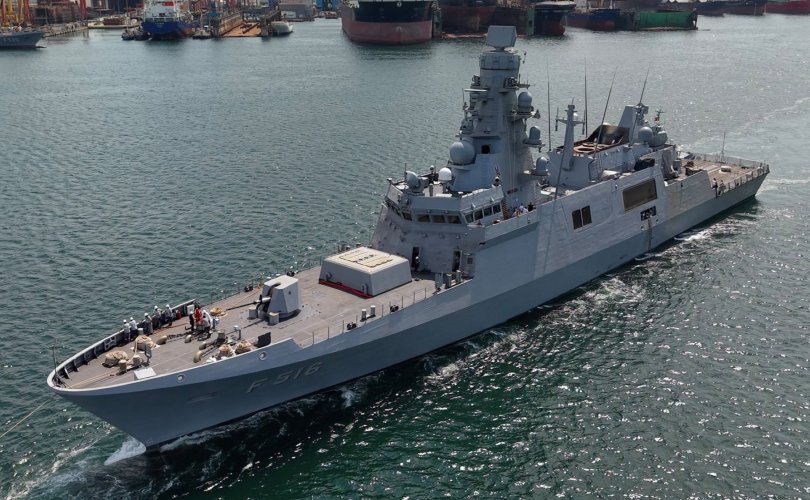
Japanese, South Korean, Turkish Warships Under Consideration for New U.S. Frigate Competition​


https://news.usni.org/2026/09/01/ja...consideration-for-new-u-s-frigate-competition
I posted about it in the Mogami thread, but I do think Mogami is the obvious pick. How a Turkish design is even in the running is a mystery purely from a political and integration perspective. Chungnam have some short comings like a lack of integration into US systems and AEGIS, 16 VLS, 4,500nm range. I think what will make the Mogami the winner is the 10,000nm range and the availability of maintenance facilities in both Japan and Australia. Long range in the Pacific and having access to foreign shipyards for repairs seem like the highest priority for the USN at the moment, but thats leaving out a lot of other advantages of the Mogami that really seal the deal.

Still this is a USN frigate program, so the likely result is the program dies a slow painful death and nothing actually gets adopted.
 
On the plus side we will get some 10 different frigate designs into USN service, so everyone in the forum will have their own design to champion and argue about, keeping the forum in business for the next 50 years...
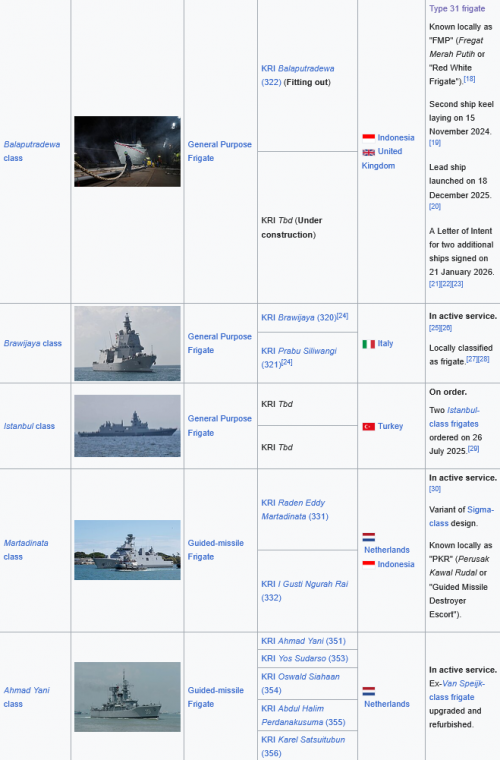
USN seems to be taking notes from the Indonesians about military procurement. 5 different frigate classes in service while also looking at Mogami
 

Attachments

  • 1788308312260.png
    1788308312260.png
    175.5 KB · Views: 38
On the plus side we will get some 10 different frigate designs into USN service, so everyone in the forum will have their own design to champion and argue about, keeping the forum in business for the next 50 years...

Correction: we will spend money on 10 different frigate designs, so everyone in the forum will have their own design to champion and argue about which will be better when they finally enter service, which will neve happen. The upside is that after all 10 designs are canceled, everyone will be able to argue about which would have been better.
 
I posted about it in the Mogami thread, but I do think Mogami is the obvious pick. How a Turkish design is even in the running is a mystery purely from a political and integration perspective. Chungnam have some short comings like a lack of integration into US systems and AEGIS, 16 VLS, 4,500nm range. I think what will make the Mogami the winner is the 10,000nm range and the availability of maintenance facilities in both Japan and Australia. Long range in the Pacific and having access to foreign shipyards for repairs seem like the highest priority for the USN at the moment, but thats leaving out a lot of other advantages of the Mogami that really seal the deal.

Still this is a USN frigate program, so the likely result is the program dies a slow painful death and nothing actually gets adopted.
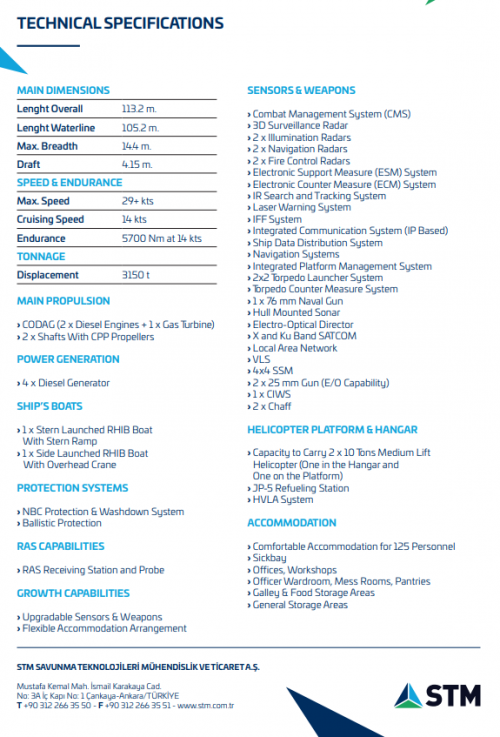
For me, Korea is the obvious pick. İstif is too light for the USN, only 3000 tonnes. On the other hand, Mogami has some serious allegations about survivability. Considering that the US Navy didn't even like the FREMM design for that exact same reason, I don't believe they will choose Mogami to go through the exact same process, only to fail like the Constellation-class again.

Orrr, they will pick Mogami and the program dies a slow painful death and nothing actually gets adopted. My god, that's genius!
 
USN seems to be taking notes from the Indonesians about military procurement. 5 different frigate classes in service while also looking at Mogami
KRI Balaputradewa is still fitting out, and have the Istanbuls even been laid down yet?
 
and have the Istanbuls even been laid down yet?
They're taking over two ships originally intended for the Turkish Navy: one is in sea trials (5th ship IIRC), while the other is nearing launch (7th).

For me, Korea is the obvious pick. İstif is too light for the USN, only 3000 tonnes. On the other hand, Mogami has some serious allegations about survivability. Considering that the US Navy didn't even like the FREMM design for that exact same reason, I don't believe they will choose Mogami to go through the exact same process, only to fail like the Constellation-class again.

Orrr, they will pick Mogami and the program dies a slow painful death and nothing actually gets adopted. My god, that's genius!
I think Mogami still has a serious chance of winning this thing simply due to the USN's admiration for it alone, even if the survivability allegations were true, although I wouldn't be surprised if Chungnam wins it either...

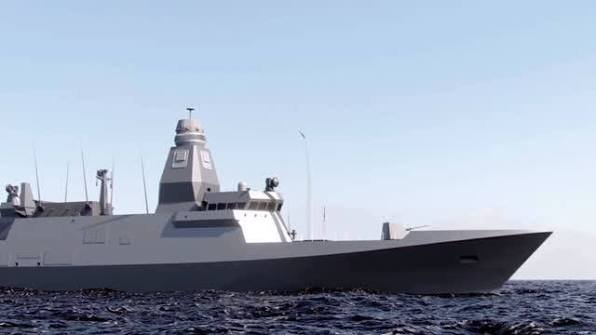
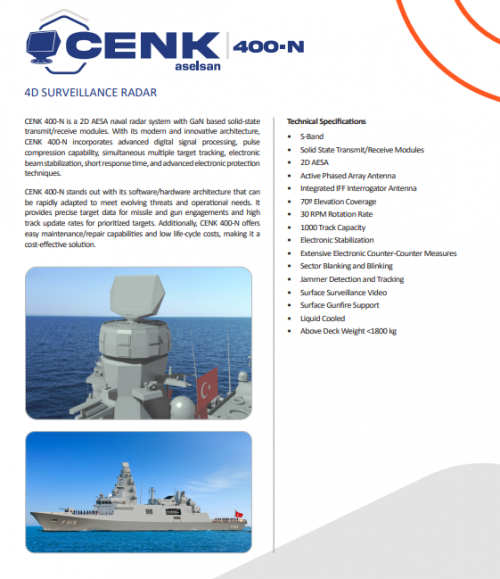
Although it has a pretty damn sophisticated sensor hierarchy for a light frigate as well as 16x AShM launchers and strike-length VLS cells, Istif is simply too light in terms of tonnage/armament, and the ships built for the Turkish Navy don't feature fixed-array MFRs (although it's been advertised with the CENK-350-N developed for Indonesia's AH140 frigates) -- it's a light frigate optimized for the Mediterranean, and even its VDS is fitted-for-but-not-with simply due to this reason alone...

Anyway... Regardless of which ship wins this tender, it's obvious it'll go through a Burke-ification before eventually being cancelled...
 

Attachments

  • HQqXg6hWUAAiL9y.jpg
    HQqXg6hWUAAiL9y.jpg
    959 KB · Views: 20
  • images.jpg
    images.jpg
    15.7 KB · Views: 18
  • Screenshot 2026-09-02 220714.png
    Screenshot 2026-09-02 220714.png
    172.4 KB · Views: 14
  • Screenshot 2026-09-02 222122.png
    Screenshot 2026-09-02 222122.png
    208 KB · Views: 13
Regardless of which ship wins this tender, it's obvious it'll go through a Burke-ification before eventually being cancelled...
I really freaking hope not. The USN really needs small combatants to free up Burkes for the real fight.

I do expect SPY6v3, the 3x9RMA setup. USN is pretty firm about having every. single. ship. (barring LCS) on SPY6. One school, one set of spare parts.
 
I think Mogami still has a serious chance of winning this thing simply due to the USN's admiration for it alone

Which American shipyard is Mitsubishi Heavy Industries looking at buying? Haven't seen even a rumor there, and this is a fairly important piece of this foreign ship purchase plan. Eastern Shipbuilding or Bollinger provide the only options I could even imagine, unless they'll out-bid Hanwha for Austal USA.
 
At this point, I'd argue the USN should just bite the bullet, dont bother with a competition, and order 10 of each, and 10 as well of Constellation, MMSC, NSC, and Independence. Even call up Mexico and get some OPVs as well. Have the first batch built overseas, while the US lines get set up. Cancel BBGN(X) to pay for it. 100 frigates are much more needed than a handful of white elephants.
 
At this point, I'd argue the USN should just bite the bullet, dont bother with a competition, and order 10 of each, and 10 as well of Constellation, MMSC, NSC, and Independence. Even call up Mexico and get some OPVs as well. Have the first batch built overseas, while the US lines get set up. Cancel BBGN(X) to pay for it. 100 frigates are much more needed than a handful of white elephants.
I also like buying and crewing ships which don't serve a discernible purpose within the fleet while introducing multiple unique crewing systems, supply chains, combat management systems, etc.
 
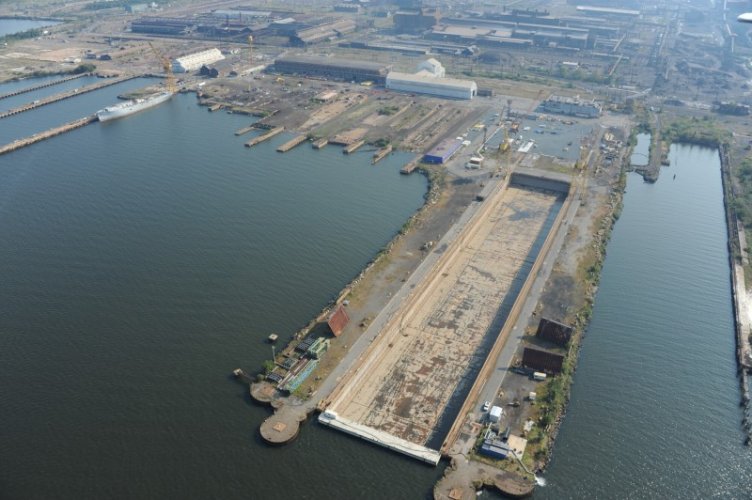
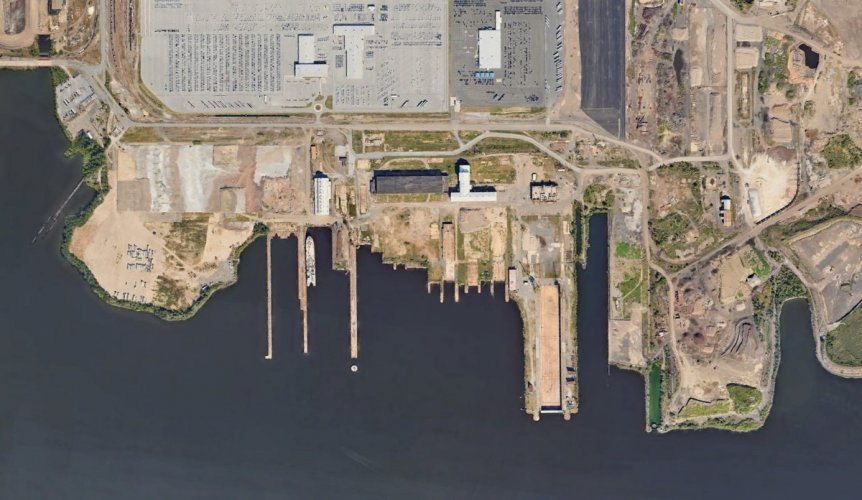
Rebuild the Sparrow Point Shipyard. It has the second-largest dry dock in the United States, 365 meters long and 60 meters wide, and its structure is largely intact, second only to Dry Dock 12 at Newport News.
2012-09-26-07-13-10.jpg

However, that's about the only advantage it has. Apart from the dry dock, the rest of the facilities are in a shambles and would basically need to be rebuilt. The shipbuilding workforce is also pretty much nonexistent.
spsy.jpg

In my view, the reconstruction of this shipyard should adopt an investment model of "state-owned + Japanese and South Korean shipbuilding giants." The government would provide the majority of the funding and retain ownership of the yard.

The Japanese and South Korean giants would contribute a smaller share of the capital, but would be required to send technical personnel to train local American shipyard workers, and to guide them through the actual shipbuilding processes so that they become familiar with the workflows and can eventually establish a shipbuilding system of their own.

The government should mobilize the U.S. Army Corps of Engineers to handle the civil construction of the shipyard, much like what was done with KSP. In subsequent run, outsourcing should be minimized. As a state-owned shipyard, it should directly employ workers—and could even employ them as civilian personnel of the Navy.

At the same time, the government should award the shipyard a steady and sustained stream of orders (at least in the early stages), so that the shipbuilding processes can be localized and the Japanese and South Korean giants can recoup their investments. The new frigate program is a very big pie. This pie should help the shipyard get through the tough localization process.
 
I also like buying and crewing ships which don't serve a discernible purpose within the fleet while introducing multiple unique crewing systems, supply chains, combat management systems, etc.
Purpose is to do all the easy missions so the Burke fleet doesn't fall apart. It sounds like a lot except it really isnt. The navy already operates/is building/ordered 4 of the 7 ships I mentioned, and is planning to order the 5th. Adding a couple more designs while getting rid of the BB, is not going to place a huge burden on the logistics side. The Navy already did this with the LCSs and like the LCS you can group same ships in same fleets.

As for shipyards, just use the DoE format, government owned labs, managed and manned by contractors.
 
In my view, the reconstruction of this shipyard should adopt an investment model of "state-owned + Japanese and South Korean shipbuilding giants."

What would be the incentive of this for foreign investors rather than just leaving the US hanging which results in the US having no other choice but buying a foreign medium surface combatant anyway. No need to divest funds into a foreign country, keep everything in Korea/Japan and the Americans still pay big dollar.

Beggars can't be choosers and the US is becoming a beggar thanks to derelict shipbuilding capacity and obstructing regulative bodies
 
Rebuild the Sparrow Point Shipyard. It has the second-largest dry dock in the United States, 365 meters long and 60 meters wide, and its structure is largely intact, second only to Dry Dock 12 at Newport News.
No, the USN needs another shipyard on the west coast, like Long Beach. IIRC, it's still tied up in knots over environmental contamination and still has rail lines going into it, so it could be rebuilt. BRACed in 1997, tied up in red tape ever since.

Of course, then it's dealing with California government nonsense, which is the biggest obstacle to the project.
 
What would be the incentive of this for foreign investors
Free from blackmail. From shipyards to semiconductor plants, it's same.

A plan like this—where Japan and South Korea provide the technology, and the U.S. government lets them recover their costs through stable orders and even turn a profit—is already fairly decent for the U.S. shipbuilding industry.
 
Last edited:
No, the USN needs another shipyard on the west coast, like Long Beach. IIRC, it's still tied up in knots over environmental contamination and still has rail lines going into it, so it could be rebuilt. BRACed in 1997, tied up in red tape ever since.

Of course, then it's dealing with California government nonsense, which is the biggest obstacle to the project.
Long Beach Naval Shipyard and Todd San Pedro are both part of the Port of Los Angeles/Long Beach now. They're covered in container yards.

Sustaining an industrial workforce in San Francisco, Los Angeles, or San Diego is next to impossible given costs and wages, which was the point of the California Forever project. Somewhere on the river near near Stockton might have slightly more affordable housing for shipyard workers, but then they would have to live in Stockton.
 
No, the USN needs another shipyard on the west coast
The coastline on the West Coast has many mountains, unlike the East Coast, which is much flatter. The remaining coastline is fully occupied by residents, so there isn't much industrial land on the West Coast, small in number and small in size. Either you can't fit large facilities like giant drydocks (Mare island), or they'd be too close to residential areas (Hunter point)—and while shipbuilding isn't a heavily polluting, smoke-belching industry, I still think it's better to keep it away from properties worth hundreds of thousands of dollars.

Compared to California, Washington State might be a better choice. Or expand repair yards into shipbuilding yards.

like Long Beach. IIRC, it's still tied up in knots over environmental contamination and still has rail lines going into it, so it could be rebuilt. BRACed in 1997, tied up in red tape ever since.
The slipways and dry docks in Long Beach have been leveled and filled in, and have been converted into container terminals.
 
Last edited:

Similar threads

Back
Top Bottom