Early Jet Engines Spool-up Rate

KJ_Lesnick

ACCESS: Top Secret
Joined
13 February 2008
Messages
1,042
Reaction score
125
Okay...

How long did it take for some of the early jet-engines such as

- HeS 3 (Heinkel He-178 powerplant)
- Power Jets W.1 (Gloster E.28/39's powerplant)
- Rolls-Royce Welland (Gloster Meteor Powerplant)
- BMW-003A
- Jumo 004
- Rolls-Royce Nene
- Westinghouse J-30
- General Electric J-31
- Westinghouse J-32
- Rolls Royce Derwent / Allison J-33
- Westinghouse J-34
- General-Electric/Allison J-35
- Allison J-71
- General-Electric J-47
- Armstrong Siddely Saphire / J-65
- Rolls Royce Avon

From what I remember the J-35 and J-47 took something like 20 seconds... but the others I have no clue...


KJ Lesnick
 
ı believe Jumo engines on the Me 262 needed about 45 seconds in flight , so you had to land once you committed , it was practically impossible to reposition for a second try .
 
R-16,

Forty-Five seconds? How the hell did they manage to dogfight at all with such an awful slow spool up rate?
 
I flew a couple late versions of the J-34 in the late fifties early sixties as well as J-33 and one or two others. Perhaps the manuals have something in them. I do remember flying one aircraft that required a go-around decision as soon as the wings were level on final. One might make it with into a touch and go, but you would almost certainly touch down. That was including retracting speed brakes, which I do not believe the 8-262 had. However, remember that thrust vs rpm is not linear, If you can carry 50 0r 60% rpm with the speed brakes out, between retracting the speed brakes and full throttle the effective spool up time is reduced.

Best Regards,

Artie Bob
 
Civilian high bypass engines, with their large diametre fans and generally heavier rotating parts, are still pretty slow. Smaller military engines are quite fast nowadays, the F404 takes about four seconds from idle to full afterburner and the M88 is even claimed to be slightly faster.
 
in comparision ...

how long does a classic recip engine take from idle to full power ... something like a RR merlin or a P&W R4360?
 
I got some information back from a friend who is a United Airlines A320 captain and he told me that their IAE V2500 engines have a spool up time of around five seconds.
 
agricola64,

I'd assume they'd be very fast. I mean my car and motorcycle both use reciprocating engines and they rev up right away
 
KJ_Lesnick said:
agricola64,

I'd assume they'd be very fast. I mean my car and motorcycle both use reciprocating engines and they rev up right away

i agree that recips "spool up" very quickly ..

but if you need to accelerate a large anount of ironmongery it is going to take a little while -- it is also taking a little time for the exhaust gasses to reach the turbo-charger, for the turbo-charger to spool up and for the air to go through the intercooler and reach combustion

so i wuld not expect it to be instanteous
 
while the topic is about engine performance , ı think ı might say that Me 262 wasn't meant to dogfight .Although its pilots speak well of it as a flying machine , it had only the speed advantage , the German pilot could look for an unattentive enemy pilot and shoot him down in straight gunnery pass .The statistics suggest about 80 % of air combat kills are from surprises when the targeted aircraft didn't see the attacker or it was too late to do something effective . If the Germans had enough air superiority over their airfields and enough '190s to shoot down the endless streams of bombers the Me 262 would have won the war for them .In 1945 , it was hard to surprise the Allies , or running from them . ı remember reading Tempests following a jet for an half hour . They wouldn't catch him in the air , but he would have to land and options were limited . Not even the Mig-15 would have won the war in 1945 for Germany .
 
Sentinel Chicken said:
I got some information back from a friend who is a United Airlines A320 captain and he told me that their IAE V2500 engines have a spool up time of around five seconds.

Interesting, that's pretty fast!
 
R-16,

ı think ı might say that Me 262 wasn't meant to dogfight .

You sure about that? Back then I was under the impressions that all fighter planes were designed to dogfight as simply put all air to air combat was up close and personal until missiles came around. While Hitler wanted the Me-262 re-designed as a bomber, it was originally a fighter, and from what I read about it, it had excellent handling.

From what it would seem the trick was to use the speed advantage to provide a good rate of turn (in terms of degrees per second -- turning arcs were wider) and to avoid trying to actually turn as tight as propeller driven planes (in terms of turning arc).


KJ Lesnick
 
If you moved the throttle too quickly on the Jumo 004 you could get a flameout anyway. So, the throttle would have been good for adjusting cruise speed and controlling energy during landing approach, but not in combat. It was an interceptor with reasonably good handling, a devastating armament and the ability to pull away from any opponent using a shallow dive (providing the 262 pilot spotted the attacker soon enough). Its edge was in speed and armament. It could destroy a plane in one pass, but it couldn't dogfight its target (or even get a second pass without breaking off from the engagement first). Like most early jets it couldn't handle tricks, rapid throttle adjustments and close manoeuvring the way most biplanes and early war fighters could.
 
I remember hearing something about military jet-engines particularly those used on fighters at some point adopted a fuel control system that produced a tighter surge margin to allow faster spool-ups, and more bleed-valves to compensate for this and allow the pilot to slam the throttles around more liberally without worry.

From what I infer, this sounds like certain turbojets used on jet fighters would spool up a bit quicker. Of course I'm not sure how much faster. With that said how quickly did the J-57's and J-75's used in fighter designs take to spool up from idle to full military power?


KJ Lesnick
 
"it is also taking a little time for the exhaust gasses to reach the turbo-charger, for the turbo-charger to spool up and for the air to go through the intercooler and reach combustion". During WWII most fighters did not have turbo-chargers, the main exceptions being the P-38 and P-47. So turbo spool-up was not a factor except in some USAAF fighters. I am pretty certain no Merlins saw combat with turbos.

Best Regards,

Artie Bob
 
returning to Me 262 , Germans were quite the innovators of the method described ever since they had Albatross fighters against the Allies and the distinction ı am using has been present since 1917 as far as ı can see it . Dogfighters like Camels and performance fighters like the SE-5 . Zero handled the Allies roughly as it was a very good dogfighter with at least equal performance to anything that opposed it in the beginning and it ruled supreme . Then Americans took the performance advantage . It is all relative to the context the fighting is in . Corsair will be defined as a performance fighter since it did so much against the Japanese - dive, shoot and reposition for further attacks - yet New Zealanders in occupation duty in Japan actually caused a few Spitfires in mock combat to lose their wings as tried to match F4-U's tight turning at high speed . And ı don't think 262 suffered in any way by getting bomb racks . Even Spits had them . It is an excuse by German industry to cover the fact that they produced 1400 plus and only 100 or so made it to the frontlines . The guys had to get all those Starfighter contracts you know and they had to prove it wasn't them that failed .
 
I was at RR Bristol before Christmas watching an EJ200 on test. Time from idling to max reheat is only seconds though I can't remember an exact figure. The testing was surprisingly violent with very rapid thrust changes to check that there were no problems. It's also awesome to watch.
 
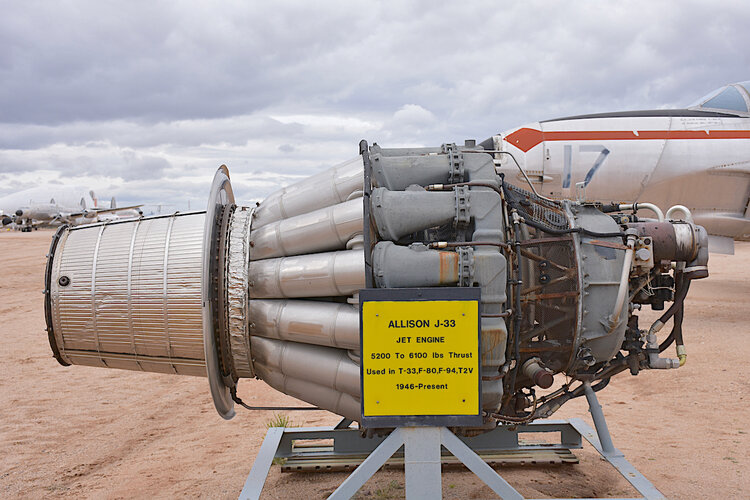
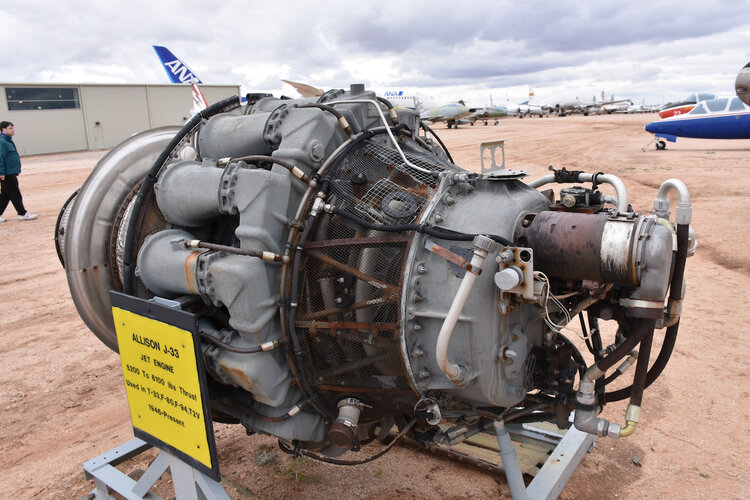
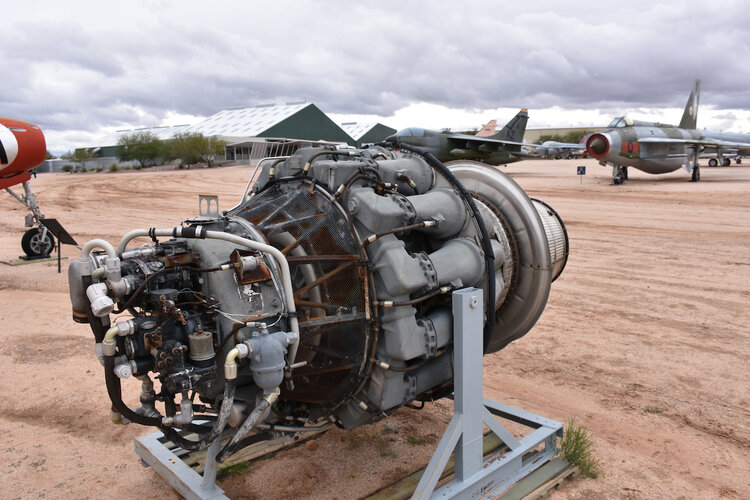
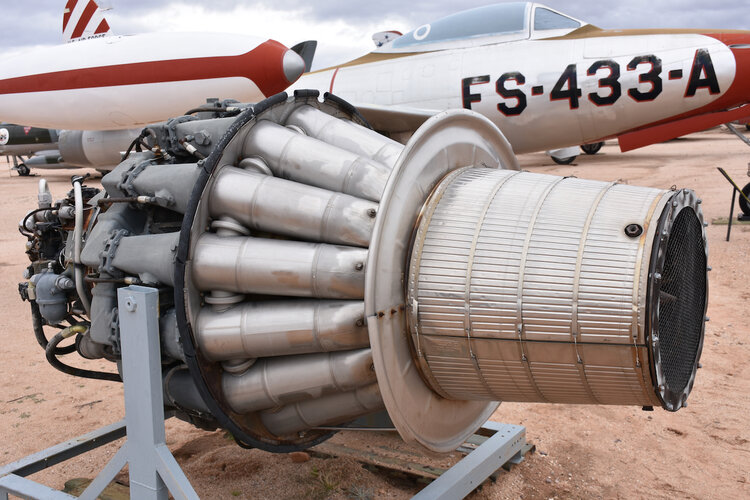
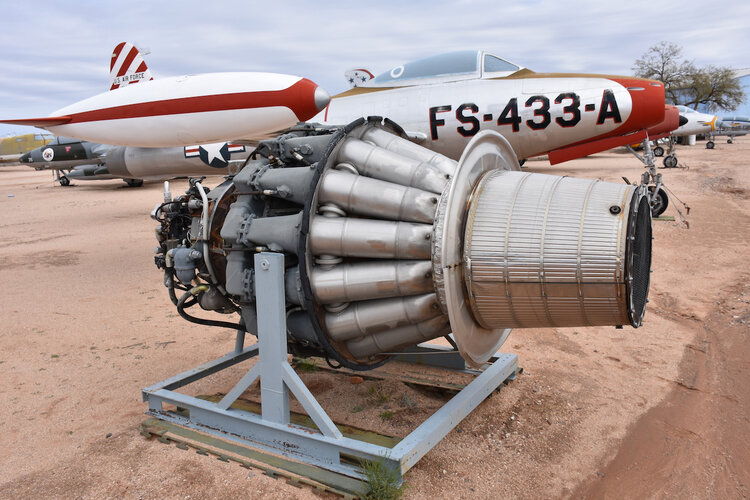
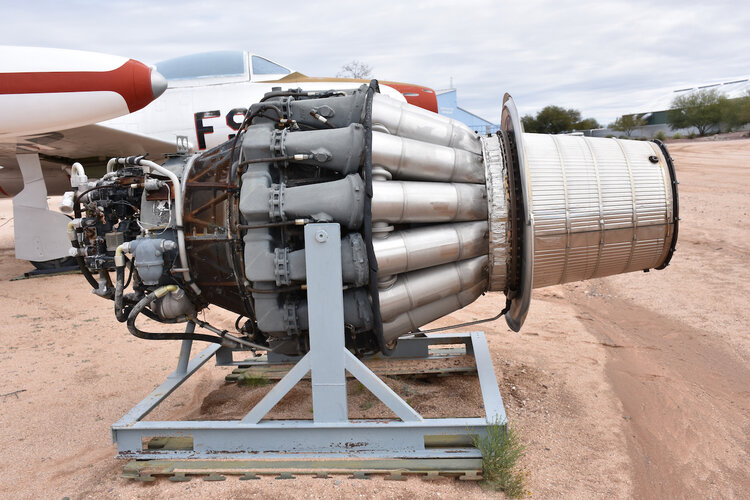
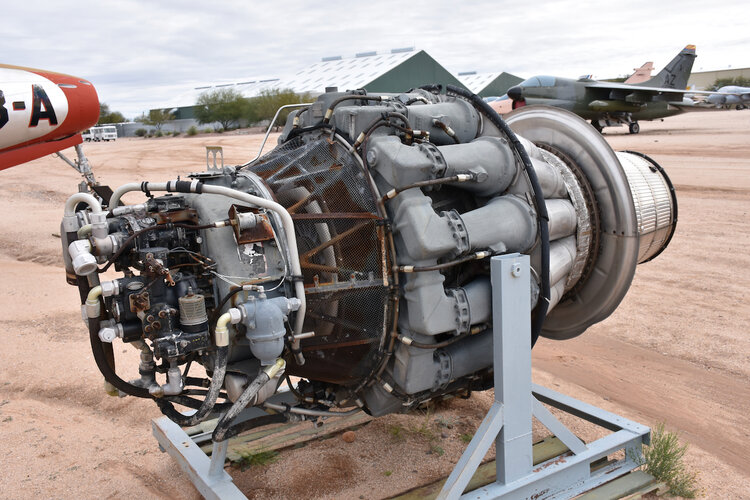
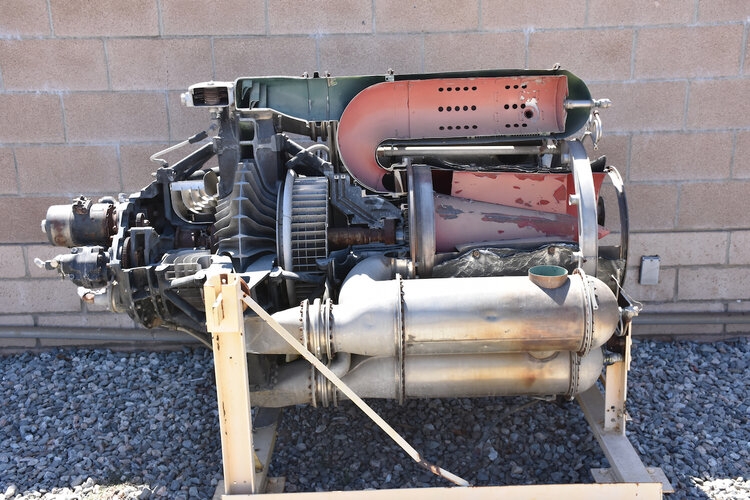
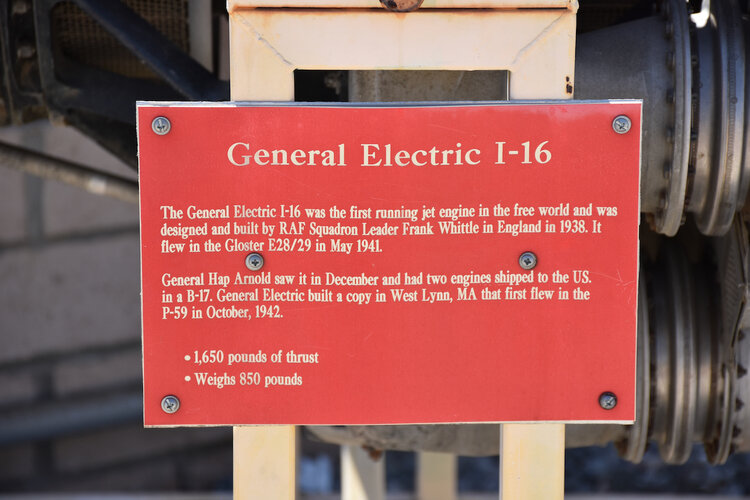
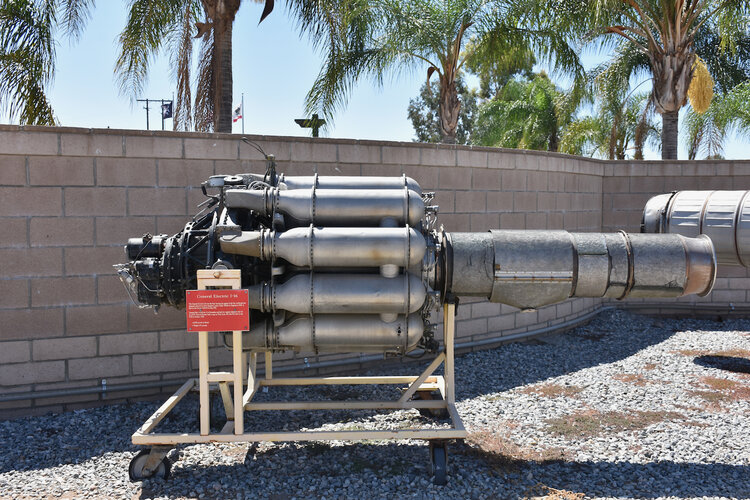
Early Allison J-33 with centrifugal compressor and burner cans.
 

Attachments

  • DSC_1377.jpeg
    DSC_1377.jpeg
    1.5 MB · Views: 16
  • DSC_1378.jpeg
    DSC_1378.jpeg
    1.2 MB · Views: 5
  • DSC_1379.jpeg
    DSC_1379.jpeg
    1.1 MB · Views: 7
  • DSC_1380.jpeg
    DSC_1380.jpeg
    1.1 MB · Views: 11
  • DSC_2249.jpeg
    DSC_2249.jpeg
    1.2 MB · Views: 6
  • DSC_2250.jpeg
    DSC_2250.jpeg
    1.2 MB · Views: 9
  • DSC_2251.jpeg
    DSC_2251.jpeg
    1.2 MB · Views: 18
  • Centrifugal Engin Cutaway.jpeg
    Centrifugal Engin Cutaway.jpeg
    1.3 MB · Views: 16
  • DSC_6076.jpeg
    DSC_6076.jpeg
    1 MB · Views: 14
  • DSC_6077.jpeg
    DSC_6077.jpeg
    1.6 MB · Views: 15
If I remember from my days as a gas turbine test engineer (my signature is one of a dozen or so on the ALF-502 certification documents), the FARs require acceleration from flight idle to max thrust take less than 8 seconds.

It's not easy, because adding heat to quickly to a flowing compressible fluid will cause choking, which can then cause the compressible to stall. This tends to have less than positive effects on thrust production. The job of the fuel control is to adjust the fuel flow to accelerate the engine as fast as possible without causing the flow to choke.
 
"it is also taking a little time for the exhaust gasses to reach the turbo-charger, for the turbo-charger to spool up and for the air to go through the intercooler and reach combustion". During WWII most fighters did not have turbo-chargers, the main exceptions being the P-38 and P-47. So turbo spool-up was not a factor except in some USAAF fighters. I am pretty certain no Merlins saw combat with turbos.

Best Regards,

Artie Bob
Merlins had two stage turbo chargers AFAIK.
 
Merlins had two stage turbo chargers AFAIK.
Superchargers are mechanically attached to the engine by means of shafts or flexible coupling, turbochargers are high-speed and high-temperature turbines driven by engine exhaust gases, they need a complex system of pipes, coolers and intercoolers that cannot be installed in small fighters such as Spitfire, something larger such as a Thunderbolt or Lightning is necessary.
 
Could not be installed in small WW2 fighters, but turbochargers quickly shrank to such an extent that BMW presented the first 2002 Turbo car in 1973, and Honda presented the CX500 Turbo motorcycle in 1982.
By 1954, MAN and Volvo introduced turbocharged diesels for commercially available trucks. The very first turbocharged truck was built in 1938 by Saurer of Switzerland.
These days, turbocharged car engines are as common as muck. Because of tiny turbochargers and tiny intercoolers.
 
Last edited:
Could not be installed in small WW2 fighters, but turbochargers quickly shrank to such an extent that BMW presented the first 2002 Turbo car in 1973, and Honda presented the CX500 Turbo motorcycle in 1982.
By 1954, MAN and Volvo introduced turbocharged diesels for commercially available trucks. The very first turbocharged truck was built in 1938 by Saurer of Switzerland.
These days, turbocharged car engines are as common as muck. Because of tiny turbochargers and tiny intercoolers.
Remember, too, modern car engines are much smaller than WWII aircraft engines, so the turbochargers will be similarly smaller.
 
Apples and Mango's, perhaps even Apples and Carrots. Different size AND era. Even a modern aircraft turbosharging system would be considerably larger in that in a car.

The only instalation I am aware of comparable in size would be the 1.7l turbo diesel twin I cannot remeber the name of but, we have two flying out of the local small field.
 
From The Secret Horsepower Race by Calum E Douglas, Tempest Books 2020 page 283:
On June 16, 1942, BMW had completed early development of a superb turbocharger for use in the Fw 190 and the Junkers Ju 188 twin-engine medium bomber.
Two aircraft types with BMW 801 engines. Page 284 has a photo of a TK15 turbocharger for a DB 603 U. Page 285 shows a section view drawing of a BMW 801 TJ turbocharger.

Page 387-388:
On July 28, 1944, Focke-Wulf published a report on a high-altitude fighter based on the Fw 190 form with a comparison between a mechanical supercharger and an exhaust gas driven turbocharger as the boosting mechanism. The engine chosen was the DB 603, with the TK15 turbocharger as developed by the DVL.
Page 388 also shows a drawing of a ¨Fw 190 turbocharged fighter with a Jumo 213 engine".

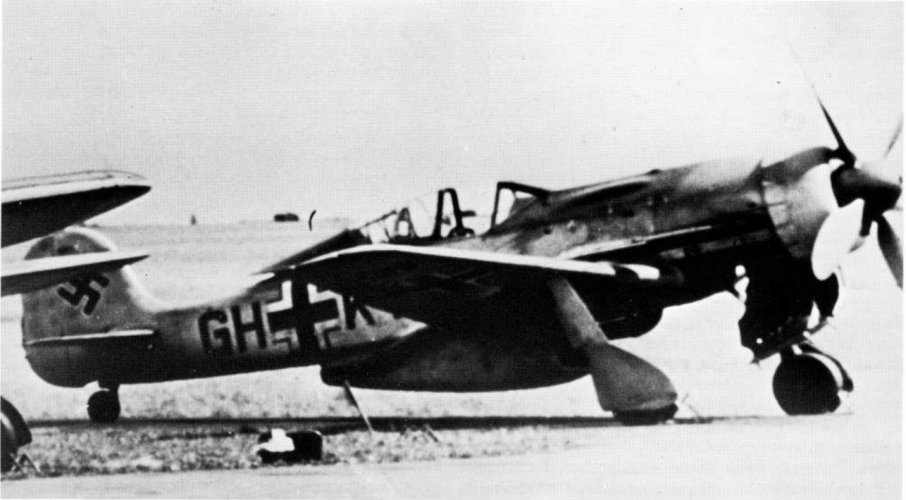
From Kurt Tank - Konstrukteur und Testpilot bei Focke-Wulf - Die deutsche Luftfahrt 1 by Wolfgang Wagner, Bernard & Graefe 1991:
Fw 190 V30 GH+KT.png
Fw 190 V30 GH+KT powered by DB 603 S with DVL-developed TK11 turbocharger, flown in 1943.

<some heavy editing>
 
Last edited:
Turbochargers were considered as superchargers as well, the common terminology has changed since WWII (As V-engines are usually no longer called inline engines, as it was back in than and still are in some scientific papers).

Piston engines can increase torque instantaneously by opening the throttle, so there is a direct increase in power without spooling up. Of course, for reaching the max. power, the speed need to increase, which might take longer with prop attached than with a gearbox in a vehicle.

The Chevrolet Corvair was the first turbocharged production car, not the BMW 2002
 
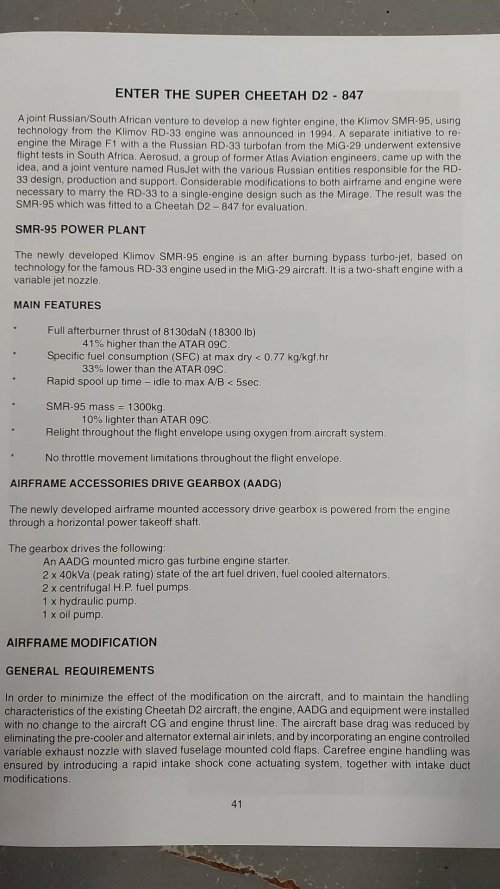
Not an early jet engine, but just fir comparison and info.
The SMR-95 spool up time from idle to full afterburner is under 5 seconds.
 

Attachments

  • FB_IMG_1751974200825.jpg
    FB_IMG_1751974200825.jpg
    188 KB · Views: 10

Similar threads

Back
Top Bottom