bobbymike

ACCESS: USAP
Senior Member
Joined
21 April 2009
Messages
14,202
Reaction score
9,055

I agree, stand off munitions and being mechanically sound go a long way. Make it the B-52 of the 21st century and have a non-stealth complement for the B-21. Utilizing the design for obvious tanker and cargo missions grows fleet numbers reduces cost, make it a workhorse. Make it big and able to carry heavy weight munitions and missiles that are not viable for the B-21, perhaps even ALBMs.
 
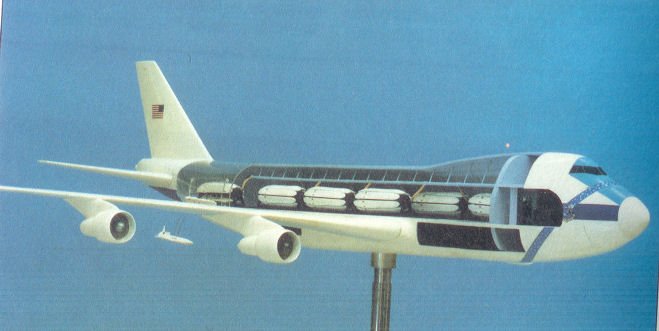
A good initial application for BWB would be as a cargo aircraft. BWB and flying wings in general are efficient span-loaded type structural configurations. A tanker would also be a good application as well (e.g. Jet Zero). A number of years ago they looked at 747s as arsenal planes as cruise missile standoff platforms but that was a far as it got.
 

I do not see how building something even more vulnerable solves the problem. It seems more likely to me that if the B-21 is not survivable, the days of strategic bombers are done. Long range engagement by hypersonics is likely a thing by 2050(ETA: that is a DoD prediction, I think we will be there by the mid 2030s). No amount of distance and speed likely saves the new heavy bomber from that, particularly under an orbital AMTI constellation.

Moot point anyway; there will never be money for a third bomber type.
 
Last edited:
Slammers may be inside Longshots

Perhaps, but in that case it is pretty much a dedicated A2A mission. Long shot will almost certainly require a rotary launcher which is going to be a lot more limiting in terms of volume of munitions compared to a SBRA.
 
A good initial application for BWB would be as a cargo aircraft. BWB and flying wings in general are efficient span-loaded type structural configurations. A tanker would also be a good application as well (e.g. Jet Zero). A number of years ago they looked at 747s as arsenal planes as cruise missile standoff platforms but that was a far as it got.

At this point employing cargo aircraft as arsenal planes seems like a far more cost effective plan than dedicated missile carriers. That might be a low signature design, or a plentiful tactical type, or a WiG/hydrofoil, or even vertical lift (USMC seems set to put Red Wolf on its entire inventory of lifters).
 
At this point employing cargo aircraft as arsenal planes seems like a far more cost effective plan than dedicated missile carriers. That might be a low signature design, or a plentiful tactical type, or a WiG/hydrofoil, or even vertical lift (USMC seems set to put Red Wolf on its entire inventory of lifters).
I think manned purposed-built bombers will be around for a while especially B-21. Will be interesting when Jet Zero begins flight testing their full-scale BWB demonstrator though, need to fly a full-scale platform and verify the predictions.
 
I think manned purposed-built bombers will be around for a while especially B-21. Will be interesting when Jet Zero begins flight testing their full-scale BWB demonstrator though, need to fly a full-scale platform and verify the predictions.

I think the B-21 and B-52 are around for quite awhile, but it would not surprise me if they were the the last of their kind.
 
When I hear serious people wanting to discard 21st century stealth bombers for BWB arsenal planes, it reminds me this college story of a band of young studs chasing a** in a dark alley downtown Tijuana, not noticing they were men´s...

Good luck for the wake up!

Nobody here was talking about discarding. But instead being a lower cost, lower maintenance, higher payload capacity supplement to the inherently compromised B-21. Not every mission requires a state of the art stealth bomber, and some missions may require more ordnance than what the B-21 can offer.

Currently the B-52 takes up that role, but eventually there will be a day when the B-52 will be retired. And then being left with the big, highly expensive and in some cases overqualified B-21 and arguably smaller, far less capable, less payload carrying drones certainly "ain't it chief".

Having a low cost, high payload capacity, (optionally) subsonic bomber and a high cost, low payload capacity stealth bomber is a complementary pairing. Something China also moves towards with the H-6 and H-20. While Russia will retain their Tu-160M/M2 on top of the PAK DA upon retiring the Tu-95s and Tu-22Ms.

The B-21 just doesn't pack enough oomph, it can deliver it's oomph closer to the target thanks to it's stealth, but a conventional bomber that can sling very long range cruise and ballistic missiles has certain advantages to it. We shouldn't forget that the B-21 is downsized compared to the B-2, which already had a significantly lower payload capacity than the B-52.
 
At this point employing cargo aircraft as arsenal planes seems like a far more cost effective plan than dedicated missile carriers. That might be a low signature design, or a plentiful tactical type, or a WiG/hydrofoil, or even vertical lift (USMC seems set to put Red Wolf on its entire inventory of lifters).

It's a waste of an incredibly vulnerable and otherwise useful strategic/tactical airlift asset. Every flight where these aircraft don't move people or material is a wasted flight. Rapid Dragon doesn't make much sense. On top of that the existing C-17s don't get much younger and IIRC there aren't any new ones being built, they're a limited asset that's heavily utilized for the most important aspect of war fighting: logistics.
 
I mean, you need 2.5x B-21s to carry a single B-52s worth of cruise missiles (20). It does not make sense to use B-21s for cruise missile strikes unless we're talking launching from inside the IADS.

When B-52s retire, the US will need something to replace that capacity. Rapid Dragon pallets out of a tanker/transport is not unreasonable. The USAF needs tankers, and needs tankers that can get relatively close to the A2AD zone, if not dance across the edge of the bubble safely.

BWB tanker/transports could be relatively LO if designed as such, and when you need several hundred tankers anyways, making them able to double as cruise missile carriers is useful. 3x C-17-size Rapid Dragon pallets exceeds a B-52 load of cruise missiles, 2x almost equals it. A single C-17 airlifter can carry 45 cruise missiles (edit: 5 pallets of 9 missiles), more than two B-52s.

What happens when your BWB tanker/transport has space for 9x Rapid Dragon pallets? That's four B-52 equivalents worth of cruise missiles in a single airframe.

Remember, the USAF has 376x KC135s to replace! (IIRC the KC-46 was to replace the KC-10s)
 
Last edited:
Remember, the USAF has 376x KC135s to replace! (IIRC the KC-46 was to replace the KC-10s)

376? While that is a lot IIRC the original KC-135A Stratotanker production run was ~800 aircraft.
 
376? While that is a lot IIRC the original KC-135A Stratotanker production run was ~800 aircraft.
Many were retired without replacement. 376 is how many happen to still be in service as of September 2024. All KC135R or -Ts (-Ts are -Qs with CFM56s)

I don't believe that the USAF needs 800x 707-sized tankers anymore.
 
It's a waste of an incredibly vulnerable and otherwise useful strategic/tactical airlift asset. Every flight where these aircraft don't move people or material is a wasted flight. Rapid Dragon doesn't make much sense. On top of that the existing C-17s don't get much younger and IIRC there aren't any new ones being built, they're a limited asset that's heavily utilized for the most important aspect of war fighting: logistics.
So are you essentially stating that a C-17 is more expensive to buy or maintain than a B-52…? Because that sure does not seem to be the case… (if I am getting it correctly C-17s cost less than half per flight hour compared with B-52) Since Boeing is already talking about restart C-17 production, I would argue just buy 75 more C-17s to act as flexible airlifter/standoff bomber is a viable option. A C-17 also carries much more punch than a B-52, with the potential to fire very long weapons from its cargo hold…
 
So are you essentially stating that a C-17 is more expensive to buy or maintain than a B-52…? Because that sure does not seem to be the case… (if I am getting it correctly C-17s cost less than half per flight hour compared with B-52) Since Boeing is already talking about restart C-17 production, I would argue just buy 75 more C-17s to act as flexible airlifter/standoff bomber is a viable option. A C-17 also carries much more punch than a B-52, with the potential to fire very long weapons from its cargo hold…
No, he's saying that C-17s have much higher priority missions than being held to be used as Bombers!

But making all the Strategic tankers LO** BWBs with Rapid Dragon in the cargo bays addresses two issues:
1) Tanker vulnerability
2) B-52 end of life.

** Note that I am calling them LO, not VLO or ELO like the B-21 is. I mean pure shaping with minimal RAM in use.
 
No, he's saying that C-17s have much higher priority missions than being held to be used as Bombers!

But making all the Strategic tankers LO** BWBs with Rapid Dragon in the cargo bays addresses two issues:
1) Tanker vulnerability
2) B-52 end of life.

** Note that I am calling them LO, not VLO or ELO like the B-21 is. I mean pure shaping with minimal RAM in use.
Since C-17s are both cheaper and have more important missions, it might kill two birds with one stone by just buying more C-17s, if I am getting it correctly…?
 
it might kill two birds with one stone by just buying more C-17s, if I am getting it correctly…?

The C-17 is no longer in production (The last one rolled off the production-line in November 2015), in principal new C-17s could be built if a new production line was set up but that would take years and billions of dollars to open a new C-17 production line.
 
Sad that the C-17 production line was disassembled, the C-17 was one of my favourite transport aircraft after getting the chance to walk through one at the Leuchars airshow many years ago though I forget what year now. The RAF could have bought more when the line was still open it was a big mistake that we only ended up getting eight.
 
Since C-17s are both cheaper and have more important missions, it might kill two birds with one stone by just buying more C-17s, if I am getting it correctly…?
Still doesn't address the need to replace some 376 KC-135 tankers. But if a BWB can be fitted with both the refueling boom AND a rear cargo ramp...
 
Actually reconstituting the C-17 line - with the big IF that the right tooling and jigs are still around - would be a very intriguing and informative test case for US aerospace manufacturing, especially if Allies pony up the capital to run this experiment and the US can pick up a couple dozen airframes on the back end.
 
So are you essentially stating that a C-17 is more expensive to buy or maintain than a B-52…? Because that sure does not seem to be the case… (if I am getting it correctly C-17s cost less than half per flight hour compared with B-52) Since Boeing is already talking about restart C-17 production, I would argue just buy 75 more C-17s to act as flexible airlifter/standoff bomber is a viable option. A C-17 also carries much more punch than a B-52, with the potential to fire very long weapons from its cargo hold…

Can you cite where I said that the C-17 is costlier to operate or maintain?

I said that strategic and tactical airlifters are hugely important for logistics and that from a war fighting perspective one cannot afford to divert the limited strategic airlift capacity, which should move massive amounts of material and troops from Point A to Point B for such useless undertakings like yeeting a palette with AGM-158s out the back. For one the US doesn't have a critical shortage of launch platforms but a rather underwhelming missile production and stockpile. So why even bother to throw the missiles you do have into the most unsuited and most vulnerable aircraft in your entire fleet.

When survivability of the likes of B-1, B-2 and B-52 over the western pacific is called into question, how do you want to rationalize using a C-17 as a wannabe bomber? It is simply put a waste of a limited pool of incredibly useful and incredibly important aircraft that already have a mission.
 
Actually reconstituting the C-17 line - with the big IF that the right tooling and jigs are still around - would be a very intriguing and informative test case for US aerospace manufacturing, especially if Allies pony up the capital to run this experiment and the US can pick up a couple dozen airframes on the back end.

Most allies don't have the need for such an aircraft though, and even less so in the numbers required to make opening the production line again worthwhile.
 
I would have agreed with you except numerous counties have apparently reached out about the matter recently. And don’t make me dig up the references, I’m in Puglia.

I don't think anyone who didn't buy it when it was in production would buy it now. The vast majority of NATO is in Europe and Europe doesn't require such an aircraft, I think SAC has like three C-17s? So that's three C-17s operated multinationally by Europe. Otherwise users include the Anglosphere as the main customers, so the US, UK, Canada and Australia. And aside from the US all of them operate them in single digit numbers.

These days something like an A400M or C-390 is far more attractive to most customers in Europe, the near East, Latin America and South East Asia. With exotics like the C-2 or An-70 lingering somewhere in the background, albeit without sales. Il-76 and Y-20 are something I keep out of this as they'd be sold to countries who wouldn't buy US airlifters either, perhaps competing with the A400M and C-390 though.
 
Can you cite where I said that the C-17 is costlier to operate or maintain?

I said that strategic and tactical airlifters are hugely important for logistics and that from a war fighting perspective one cannot afford to divert the limited strategic airlift capacity, which should move massive amounts of material and troops from Point A to Point B for such useless undertakings like yeeting a palette with AGM-158s out the back. For one the US doesn't have a critical shortage of launch platforms but a rather underwhelming missile production and stockpile. So why even bother to throw the missiles you do have into the most unsuited and most vulnerable aircraft in your entire fleet.

When survivability of the likes of B-1, B-2 and B-52 over the western pacific is called into question, how do you want to rationalize using a C-17 as a wannabe bomber? It is simply put a waste of a limited pool of incredibly useful and incredibly important aircraft that already have a mission.
I agree wholeheartedly with the LO argument. In the future being able to get 100-150km closer (I’m speculating as I don’t know) to a target would be a huge benefit.

Plus a designed for purpose arsenal plane can contain a massive bomb bay built “specifically” to carry and accept as broad a range of weapons as possible.

My definition of arsenal plane includes the ability to do A2A. Imagine several hundred AIM-174s with space based radar cueing.

Maybe only in my imagination but still. ;)
 
If the choice is building a dedicated non VLO bomber or building more tankers/cargo aircraft to meet both roles, whether it is a C-17 restart or KC-X, the latter is going to be much cheaper. The people who are arguing against the usage of cargo aircraft to deliver large numbers of palletized munitions are assuming only existing aircraft could be used while proposing another non existent aircraft.

The question I pose is: what does a dedicated non VLO strategic bomber bring to the table that a new cargo aircraft could not also achieve, while being more versatile? What attributes are you looking for in your B-1B 2.0 that justify a new aircraft and why?
 
If the choice is building a dedicated non VLO bomber or building more tankers/cargo aircraft to meet both roles, whether it is a C-17 restart or KC-X, the latter is going to be much cheaper. The people who are arguing against the usage of cargo aircraft to deliver large numbers of palletized munitions are assuming only existing aircraft could be used while proposing another non existent aircraft.

The question I pose is: what does a dedicated non VLO strategic bomber bring to the table that a new cargo aircraft could not also achieve, while being more versatile? What attributes are you looking for in your B-1B 2.0 that justify a new aircraft and why?

A bomber and a tanker/airlifter a fundamentally different aircraft, which is why purpose built, optimized machines of either variety look fundamentally different from each other. And while the tanker and cargo types can generally be unified in a single airframe (although something like an A330 MRTT cannot even hope to haul as much as a C-17), that's far more difficult with regards to bombers. Tankers and cargo aircraft are expected to operate either far away from the contact line or operate in completely controlled air space. Now, one might say "isn't that the case for a bomber that's not stealth as well?" and I would say that to a degree yes but mostly no. Bombers have very powerful ECM suites, they operate very differenty from tankers and airlifters and do go to great lengths to increase their survivability through various countermeasures. They're optimized for endurance, range and launch performance. Now something like a large BWB aircraft could lend itself to all three of these classes, but it would need to be designed as a bomber first, as it's by far the most specialized of the bunch. And generally speaking attributes that make a good bomber don't always translate well into being a good tanker or cargo aircraft.

 
Still doesn't address the need to replace some 376 KC-135 tankers. But if a BWB can be fitted with both the refueling boom AND a rear cargo ramp...

I wonder if the JetZero BWB construction method is acceptable for a cargo plane. They don't build the fuselage as a single piece, they build it as 4 "tunnels", each of which has an aisle and rows of 4 seats. Is the width usable for the military, would they have to figure out how to turn it into a single space?
 
A good initial application for BWB would be as a cargo aircraft. BWB and flying wings in general are efficient span-loaded type structural configurations. A tanker would also be a good application as well (e.g. Jet Zero). A number of years ago they looked at 747s as arsenal planes as cruise missile standoff platforms but that was a far as it got.
That was a long time ago.

B-747cruise.jpg

 
I wonder if the JetZero BWB construction method is acceptable for a cargo plane. They don't build the fuselage as a single piece, they build it as 4 "tunnels", each of which has an aisle and rows of 4 seats. Is the width usable for the military, would they have to figure out how to turn it into a single space?
Might work for modular stuff but it can't just drive in and get chained. Would have to drive in and get shoved sideways. Maybe not a big deal but, unless it's huge, you won't be getting a tank on there, and it would make weight and balance a bit more challenging.
 
Can you cite where I said that the C-17 is costlier to operate or maintain?

I said that strategic and tactical airlifters are hugely important for logistics and that from a war fighting perspective one cannot afford to divert the limited strategic airlift capacity, which should move massive amounts of material and troops from Point A to Point B for such useless undertakings like yeeting a palette with AGM-158s out the back. For one the US doesn't have a critical shortage of launch platforms but a rather underwhelming missile production and stockpile. So why even bother to throw the missiles you do have into the most unsuited and most vulnerable aircraft in your entire fleet.

When survivability of the likes of B-1, B-2 and B-52 over the western pacific is called into question, how do you want to rationalize using a C-17 as a wannabe bomber? It is simply put a waste of a limited pool of incredibly useful and incredibly important aircraft that already have a mission.
Well I admit I did not directly cite the cost argument from you post, I inferred it from my presumption that the B-52s and B-1Bs are not more survivable than the C-17s in the pacific theater, and the C-17s are not a limited pool of aircraft since Boeing is talking about restarting productions. Albeit both presumptions might be false…

If both presumptions are correct, then the cheaper and more effective way is just to buy more C-17s to replace the B-52s, since they are much cheaper and not less survivable, so I presumed you mean C-17s are more expensive than the B-52s so that they cannot be used as bombers. I apologize if that line of logic is faulty…
 
A bomber and a tanker/airlifter a fundamentally different aircraft, which is why purpose built, optimized machines of either variety look fundamentally different from each other. And while the tanker and cargo types can generally be unified in a single airframe (although something like an A330 MRTT cannot even hope to haul as much as a C-17), that's far more difficult with regards to bombers. Tankers and cargo aircraft are expected to operate either far away from the contact line or operate in completely controlled air space. Now, one might say "isn't that the case for a bomber that's not stealth as well?" and I would say that to a degree yes but mostly no. Bombers have very powerful ECM suites, they operate very differenty from tankers and airlifters and do go to great lengths to increase their survivability through various countermeasures. They're optimized for endurance, range and launch performance. Now something like a large BWB aircraft could lend itself to all three of these classes, but it would need to be designed as a bomber first, as it's by far the most specialized of the bunch. And generally speaking attributes that make a good bomber don't always translate well into being a good tanker or cargo aircraft.
Actually I think that is where our opinions differ the most… I would argue the powerful ECM suite of the bombers can be carried in pods or be carried by loyal wingman drones outside of the airframe itself, thus a dedicated bomber is not more survivable than an airlifter on that regard.
 
Can you cite where I said that the C-17 is costlier to operate or maintain?

I said that strategic and tactical airlifters are hugely important for logistics and that from a war fighting perspective one cannot afford to divert the limited strategic airlift capacity, which should move massive amounts of material and troops from Point A to Point B for such useless undertakings like yeeting a palette with AGM-158s out the back. For one the US doesn't have a critical shortage of launch platforms but a rather underwhelming missile production and stockpile. So why even bother to throw the missiles you do have into the most unsuited and most vulnerable aircraft in your entire fleet.

When survivability of the likes of B-1, B-2 and B-52 over the western pacific is called into question, how do you want to rationalize using a C-17 as a wannabe bomber? It is simply put a waste of a limited pool of incredibly useful and incredibly important aircraft that already have a mission.
And BTW I think the ETV effort of producing a large number of smaller and cheaper cruise missiles is meant to solve the JASSM shortage problem, so there is that…
 

Similar threads

Back
Top Bottom