A Submarine War In The Pacific ?

Kat Tsun

eeeeeeeeeeeeeee
Joined
16 June 2013
Messages
1,833
Reaction score
2,550
So the US can't win

The risk of Taiwan is that the war may not stop simply because Taiwan wishes it to.

The US has a powerful submarine force which can likely press the PLAN quite hard, since they suffer with poor ASW and submarine warfare training (and equipment) in particular, and there's always the option of nuking the Mainland embarkation ports and A2AD sites with B-2s and cruise missiles. Those are the two things that the US will look at to win, barring some sort of major economic-industrial decline for the PRC, tbh.

That will likely happen within the first few weeks if ROC lasts long enough for the US to commit to combat operations but actually hitting the respective mainlands would probably stay off the table for a while.

Submarines are incredibly potent weapons as the last Pacific War proved, and they've only gotten more important with nuclear propulsion and weapons so if the PLAN can't neutralize SUBPAC in port in Japan, it will be in for a slog if the war escalates to a general SCS blockade and Central Asian interdiction across BRI railroads. Since it's likely going to be the next world war, there's no reason to think it might not last at least as long as the Ukraine War has, and involve at least as many theaters of operations.

All of this is moot if the US simply retreats to the second island chain, or abandons Taiwan entirely, but there isn't any difference in those options. The PRC simply doesn't have any real interest in moving outside the first island chain except for establishing free trade deals.
 
Last edited:
The risk of Taiwan is that the war may not stop simply because Taiwan wishes it to.

The US has a powerful submarine force which can likely press the PLAN quite hard, since they suffer with poor ASW and submarine warfare training (and equipment) in particular, and there's always the option of nuking the Mainland embarkation ports and A2AD sites with B-2s and cruise missiles. Those are the two things that the US will look at to win, barring some sort of major economic-industrial decline for the PRC, tbh.

That will likely happen within the first few weeks if ROC lasts long enough for the US to commit to combat operations but actually hitting the respective mainlands would probably stay off the table for a while.

Submarines are incredibly potent weapons as the last Pacific War proved, and they've only gotten more important with nuclear propulsion and weapons so if the PLAN can't neutralize SUBPAC in port in Japan, it will be in for a slog if the war escalates to a general SCS blockade and Central Asian interdiction across BRI railroads. Since it's likely going to be the next world war, there's no reason to think it might not last at least as long as the Ukraine War has, and involve at least as many theaters of operations.

All of this is moot if the US simply retreats to the second island chain, or abandons Taiwan entirely, but there isn't any difference in those options. The PRC simply doesn't have any real interest in moving outside the first island chain except for establishing free trade deals.
How do you know PLAN has poor ASW and submarine warfare training. The PLAN after 2015 is a completely different army from the one before.

The PLAN is developing new SSNs. From the available information, the next generation of SSNs that will be put into production soon will use X-tail rudders, pump jet and electric propulsion systems. And the next generation of anti-submarine aircraft has also begun test flights.

China is now the world's largest industrial country (no longer a low-end industry) and the second largest economy. However, China's R&D funding utilization rate is much higher than that of the United States. The PLAN currently has no shortage of R&D funds or engineers, just like the PLAAF, and the PLAN is developing rapidly.
 
How do you know PLAN has poor ASW and submarine warfare training. The PLAN after 2015 is a completely different army from the one before.

Because their submarine officers are the lowest scoring of PLAN officers, because their submarines are loud as fuck, and because the SCS is big, deep, and not too terribly hard to operate in. I would be fearful of PLANAF land based aviation if only because it's aviation I guess. Navies that have historically good anti-submarine capabilities, like the United States, Russia, and Great Britain, have good submarine officers.

I doubt the Chinese are any great exception here, and if the war manages to isolate the PRC on both land and at sea, then it's likely it will lose.

The PLAN is developing new SSNs.

Type 093s and their crews are loud.

From the available information, the next generation of SSNs that will be put into production soon will use X-tail rudders, pump jet and electric propulsion systems.

How many are they gonna have built and in service in 72 months? The short estimate is 18-24.

China is now the world's largest industrial country (no longer a low-end industry) and the second largest economy.

It likely won't help it fight against SUBPAC in 2027 or whenever the war kicks off. Type 093B is significant for Chinese subs. Unfortunately, the 688is they equate are ancient and the 774s are getting better with each Block. There's also only four of them. And they still have the worst scoring officers in the PLAN.

This may change but it would require overcoming institutional barriers like the Communist Party's internalized fear of criticism. This is a hard barrier to climb over and accidents like 2003 and 2011 didn't really change much. Being a submariner is simply not a serious vocation in the PLAN for the moment. Even if it were, it would be numerically disadvantaged against an opponent with the ability to operate from and strike with impunity from home bases.

A2AD isn't some magic bullet or secret sauce. It's a desperate bid to preclude a mortal blow of a war of attrition, and hope they can lure the United States into a fait accompli, and that it will just...stop once the shooting starts.

It might work.
 
Last edited:
Because their submarine officers are the lowest scoring of PLAN officers, because their submarines are loud as fuck, and because the SCS is big, deep, and not too terribly hard to operate in. I would be fearful of PLANAF land based aviation if only because it's aviation I guess. Navies that have historically good anti-submarine capabilities, like the United States, Russia, and Great Britain, have good submarine officers.

I doubt the Chinese are any great exception here, and if the war manages to isolate the PRC on both land and at sea, then it's likely it will lose.


Type 093s and their crews are loud.


How many are they gonna have built and in service in 72 months? The short estimate is 18-24.


It likely won't help it fight against SUBPAC in 2027 or whenever the war kicks off. Type 093B is significant for Chinese subs. Unfortunately, the 688is they equate are ancient and the 774s are getting better with each Block. There's also only four of them. And they still have the worst scoring officers in the PLAN.

This may change but it would require overcoming institutional barriers like the Communist Party's internalized fear of criticism. This is a hard barrier to climb over and accidents like 2003 and 2011 didn't really change much. Being a submariner is simply not a serious vocation in the PLAN for the moment. Even if it were, it would be numerically disadvantaged against an opponent with the ability to operate from and strike with impunity from home bases.

A2AD isn't some magic bullet or secret sauce. It's a desperate bid to preclude a mortal blow of a war of attrition, and hope they can lure the United States into a fait accompli, and that it will just...stop once the shooting starts.

It might work.
2 type 093 SSNs were commissioned before 2006. They are old. 4 type 093A SSNs were commissioned before 2015, they are transitional. Now, the latest model type 093B are under production. All subsystems are developed after 2010. The new SSN I am talking about is the next generation of the type 093B.

The huge economic success and the state-led industrial technology upgrade after 2010 have enabled China to rapidly upgrade its military equipment. Don't underestimate it.
 
2 type 093 SSNs were commissioned before 2006. They are old. 4 type 093A SSNs were commissioned before 2015, they are transitional. Now, the latest model type 093B are under production. All subsystems are developed after 2010. The new SSN I am talking about is the next generation of the type 093B.

Type 093Bs are old. They're the noise equivalent of a 688i from the late 1980's. Only 40 years out of date!

The huge economic success and the state-led industrial technology upgrade after 2010 have enabled China to rapidly upgrade its military equipment. Don't underestimate it.

It's not being underestimated at all. It's not even underestimating itself.

The incredible disparity in the ability to fight is why it's on the strategic defensive.
 
Last edited:
It would very much depend on degrading the ability of the PRC to surge assets, probably at a time of low tension to mitigate any attack.

How many USN assests could successfully engage embarkation hubs and COULD they shut down those hubs for a few weeks to a month?
SUBPAC owns 20x SSNs and 2x SSGNs (plus the SSN21s). SUBLANT owns 33x SSNs and 2x SSGNs. IIRC, SUBLANT is usually responsible for sending subs to the Indian Ocean.

There are 3x SSGNs at sea somewhere normally, and the 4th can be at sea in less than 6 weeks. That last SSGN can be on station maybe 4 weeks later if they're coming from Bremerton/King's Bay, 2 weeks or less if they're coming Diego Garcia or Guam.

In general, SUBPAC's 20x SSNs would have 6-7 subs deployed at sea and 6-7 more working up to go on deployment able to be surged out, with the last 6-7 not available for about 6 months. Yes, things are staggered out so that it's not a formal changing of the guard, but out of any 3 ships that's the setup.

SUBLANT has more ground to cover, so of those 33x SSNs, ~10 are deployed at sea, ~10 more working up that could be surged, ~10 in refit., and the last ~3 are commissioning. There may be 3-4x SSNs in the Indian ocean that could quickly run at the Chinese hubs via Malacca.

The real question is how do you want to destroy that hub? Sink a couple of container ships and block the lanes? Mine the hell out of it with SLMMs/replacement?

Any sub could torpedo a couple of container ships as they came out of port. Or you could have the SEALs and Force Recon go blow things up.

It'd be annoying to load up, but one of the Seawolfs could mine the crap out of a hub with about 38x SLMMs. Otherwise you'd need to send a trio or more of SSNs due to weapons load limits (and keeping ~12 torpedoes available for self defense)

Each SSGN is carrying ~125 Tomahawks. That will ruin a place's day from a distance.

Each SSN carries 12x Tomahawks that could be used to destroy a fueling terminal.
 
Last edited by a moderator:
Type 093Bs are old. They're the noise equivalent of a 688i from the late 1980's. Only 40 years out of date!


It's not being underestimated at all. It's not even underestimating itself.

The incredible disparity in the ability to fight is why it's on the strategic defensive.
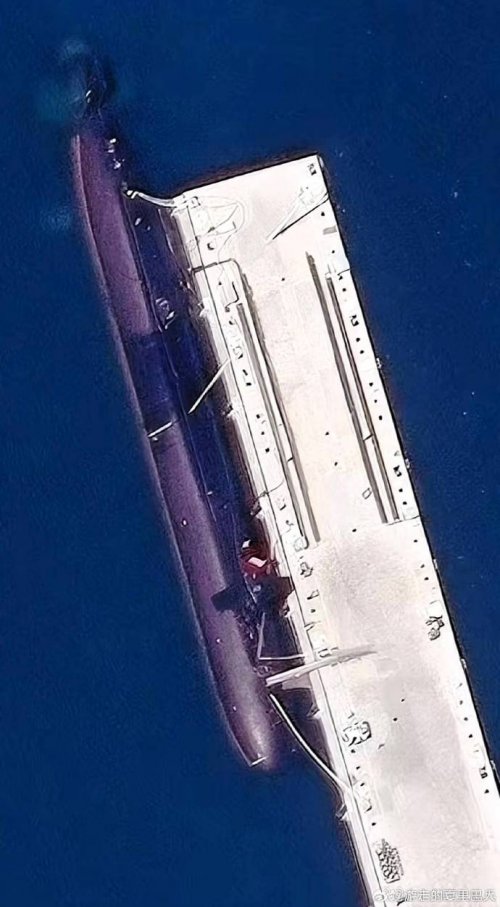
I think this forecast underestimates China's speed. The J-10 first flew in 1998, while the F-15 first flew in 1972, a gap of 26 years. The J-20 first flew in 2011, while the F-22 first flew in 1997, a gap of 14 years. The two next-generation full-size tailless layout fighters will first fly in 2024, the EMD contract for the F-47 was just released in April 2025, and the prospects of the F/A-XX are unclear. Back to the nuclear submarine, this is a satellite photo of the 093B. Even if its noise is predicted to be at the level of 668i, it is very likely to be a later model equipped with a ducted propeller. China is not short of budget or precision processing capabilities. The only thing it lacks is how to design effective silencing equipment. But this defect can be solved through rapid iteration.

At present, the United States' leadership relies more on the technological advantages accumulated during the Cold War. If the United States does not address its industrial capacity and budget cap, these advantages will be rapidly depleted.
 

Attachments

  • 006k3Z54gy1i135kvvnesj30wr1ne436.jpg
    006k3Z54gy1i135kvvnesj30wr1ne436.jpg
    81.1 KB · Views: 18
I think this forecast underestimates China's speed. The J-10 first flew in 1998, while the F-15 first flew in 1972, a gap of 26 years. The J-20 first flew in 2011, while the F-22 first flew in 1997, a gap of 14 years. The two next-generation full-size tailless layout fighters will first fly in 2024, the EMD contract for the F-47 was just released in April 2025, and the prospects of the F/A-XX are unclear. Back to the nuclear submarine, this is a satellite photo of the 093B. Even if its noise is predicted to be at the level of 668i, it is very likely to be a later model equipped with a ducted propeller. China is not short of budget or precision processing capabilities. The only thing it lacks is how to design effective silencing equipment. But this defect can be solved through rapid iteration.
Submarine silencing is heavily crew-training dependent once you get to 688-or-better levels. Drop a toilet seat and everyone in the ocean knows where you are.

Until the PLAN starts treating their submarine crews like the elites of the fleet, they will have noisy boats.
 
I think this forecast underestimates China's speed. The J-10 first flew in 1998, while the F-15 first flew in 1972, a gap of 26 years. The J-20 first flew in 2011, while the F-22 first flew in 1997, a gap of 14 years. The two next-generation full-size tailless layout fighters will first fly in 2024, the EMD contract for the F-47 was just released in April 2025, and the prospects of the F/A-XX are unclear. Back to the nuclear submarine, this is a satellite photo of the 093B. Even if its noise is predicted to be at the level of 668i, it is very likely to be a later model equipped with a ducted propeller. China is not short of budget or precision processing capabilities. The only thing it lacks is how to design effective silencing equipment. But this defect can be solved through rapid iteration.

The fact that you're focusing on technological elements is astounding because it's kind of irrelevant at this juncture, and will become more irrelevant as the 093Bs proliferate.

As Scott Kenny said, once you hit the acoustic levels of the 688s, you're going to need good crews to keep it down, or else you die. The Chinese might be the worst crews to sail the seas. They're obnoxiously loud on a human level because they don't take their jobs seriously. The subs will be tracked less by their squeaky loud ass reactor pumps and more by the spanners and swear words dropped by their sailors.

It might change if the Chinese commanders can actually hear their crews over the ship noise though I guess.

At present, the United States' leadership relies more on the technological advantages accumulated during the Cold War.

Not at all. The human factor is most important in submarine warfare more than anything.

The best crews in the world are the Americans, British, and the Russians in no particular order. Two of them have the technology to match their men. On the other hand, the Chinese lack the men to match their technology. They seem in no great hurry to address this, either, since they're focused on carrier ops right now.

If the United States does not address its industrial capacity and budget cap, these advantages will be rapidly depleted.

The obvious answer is that all those industrial capacities will be useful nuclear targets for SSNs carrying SLCM-N after 2035. The submarine cliff won't bite until after the nuclear cruise missile enters service and the nuclear missiles will likely increase the viability of SUBPAC to destroy Chinese economic targets to the point that the submarine cliff may not matter in terms of force projection.

It's unlikely the PLAN will address the issues of crew training that cripple its submarine fleet, no matter how advanced their boats are, without losing a war first. A victory would teach them that their ASW methods were adequate (and rightfully so) while a war never happening will teach them that nothing beats the status quo.

The Chinese have solved the easy problem of simply building things. Now the hard part begins which is finding quality personnel to become sailors and generating experienced officers and petty officers who are more than competent. Hard to do when your volunteers are the failsons who couldn't get into a good university and the submariners the worst of them all.

It is a problem that will take decades to solve or a very serious, very hard fought (and lost) war.
 
Last edited:
Until the PLAN starts treating their submarine crews like the elites of the fleet, they will have noisy boats.
Or until they get rid of crew at all, deploying fully robotic submarines. PLAN apparently worked hard in that direction. What the point of rigorously training crews to reduce noise, if you could just have no crew at all, and not only zero crew-related noise, but also a fully-capable sub several times smaller than manned one?
 
I don't know if what you said earlier is right or wrong, but it's clearly wrong.

You can literally hear Chinese submarine sailors with sonar. Not the boats. The crews themselves are undisciplined and loud.

The PLA's carriers and the naval aviation are the golden sons, so they receive the lion's share of the funding and high quality personnel, while the submarines are ignored. This makes a lot of sense, given the PLA's war plan is likely to try to take Taiwan before the U.S. can react in force, to avoid being dragged into a war of attrition.

I think that a solution to Chinese industrial superiority that involves nuclear war is probably not a very good solution.

Escalation to nuclear weapon use is sort of a given. It'll happen when both sides run out of conventional weapons. The most likely culmination is a tit-for-tat exchange on regional airbases, ports, and naval task units. I don't think anyone actually expects the respective mainlands to be hit but that will always be a risk with this sort of thing.

Diego Garcia, Guam, Okinawa, the various sandbar bases, and anything captured in Taiwan would probably all be fair game. There'd be no real risk of escalating to exchange of cities.

The Chinese can always retaliate, and have recently made significant investments in their nuclear weapons complex, precisely to deter vertical escalation.

The U.S. has demonstrated very effective anti-ballistic missile capability with the recent Middle Eastern kerfluffle. It will have something similar to GPALs in place in the coming years which should neutralize most ballistic missile threats and some intercontinental hypergliders. The optimal strategic attack system of the 2030's will be a stealth low altitude cruise missile like JASSM or Kh-101 of whatever range is required.

DF-17 will still be a serious threat to task forces in theater, but it's unlikely the PLA will pose a significant threat to the U.S. mainland, at least if it continues to rely on ballistic missiles. If it suddenly gains a squadron or two of H-20 stealth bombers in the next 5-7 years then that would be a far more dangerous deterrent for sure.

The only country with enough ICBMs to still seriously frighten America, even with its Starshield ballistic missile dome, will be Russia. Maybe.

The submarines on the other hand...

...well, there's no good answer to that, but OTOH they just need to hold a few relatively small bastions and littorals, and investments in fixed fortifications (mines, subsea sensors etc) probably help on that front.

They would actually need to hunt down and destroy American submarines, which they will not be able to hear, and they will be detected first. SUBPAC will kind of run roughshod over the PLAN in its own backyard and the only thing that might be able to help will be the naval aviation's maritime patrol aircraft. Sorta. Maritime aircraft are dependent on sonar performance and 774's newest hulls are incredibly quiet.

It will be much harder for carriers or any other surface units to enter the SCS, but then again, they may not need to.

Or until they get rid of crew at all, deploying fully robotic submarines. PLAN apparently worked hard in that direction. What the point of rigorously training crews to reduce noise, if you could just have no crew at all, and not only zero crew-related noise, but also a fully-capable sub several times smaller than manned one?

It would be smarter to just make an Alfa and staff it with a couple dozen high scoring and motivated warrant officers honestly. They still haven't done this, likely because they can't, though. The automation methods aren't there in the sense that the PLAN can't make them. Type 095 is basically an early 774 informed by some of Malachite's practices.

The continued use of Jins is also really wild considering how bad it is. They can make a Burke every 18 months but they can't afford another half dozen 096s and scrap the 094s? Imagine reading the minutes of that boardroom fight.

 
Last edited:
The submarines on the other hand...

...well, there's no good answer to that, but OTOH they just need to hold a few relatively small bastions and littorals, and investments in fixed fortifications (mines, subsea sensors etc) probably help on that front.
Question is, what if Chinese submarines star to strike back, using the wastness of Pacific to launch attacks against US coasts and US-bound shipping? USN did not exacty have many escort or sub-hunting ships. Each destroyer or submarine diverted to protect convoys or to hunt Chinese submarines would means one less unit for offensive operations. While PLAN have huge number or frigates and corvettes they could counter USN submarines with, the USN have about 90 destroyers and 26 LCS, and that's all, folks.
 
The opportunity for the USN subs fleet isn't battling it out with the PLAN in the waters around Taiwan, it's cutting China off from the rest of the world's trade. This will be done quite easily by blockading the Malacca, Sunda and Lombok straits.

In and around Taiwan the PLAN subs can be supported by surface ships and land-based aircraft, but in the deep water off the Sunda shelf in the Indian Ocean PLAN subs are on their own. Not only that but they'll have to contend with USN subs supported by USN, RAN, RAAF and other allies air, surface and sub surface fleets.

As long as Tiawan doesn't fall to a Chinese invasion, which would be extremely difficult to pull off, China will be under the pump within months of war starting. Even a 'Phoney War' would be damaging for China.
 
The opportunity for the USN subs fleet isn't battling it out with the PLAN in the waters around Taiwan, it's cutting China off from the rest of the world's trade. This will be done quite easily by blockading the Malacca, Sunda and Lombok straits.

For one, that would hurt the US just as much if not more, I also can't imagine that any of the other countries that heavily rely on Chinese goods and materials would be happy with the US disrupting their trade through such measures.
 
For one, that would hurt the US just as much if not more, I also can't imagine that any of the other countries that heavily rely on Chinese goods and materials would be happy with the US disrupting their trade through such measures.

Disrupted trade, which is already being re-shaped due to events in the last 5 years, isn't as bad as China conquering Tiawan and likely destroying it in the process. Governments will have to choose between the lesser of two weevils. This will be undoubtably difficult for the class of managers we have in positions of power throughout the world, but even low-capability middle managers have to make unpalatable decisions every now and then when faced with no other options.
 
Disrupted trade, which is already being re-shaped due to events in the last 5 years, isn't as bad as China conquering Tiawan and likely destroying it in the process. Governments will have to choose between the lesser of two weevils. This will be undoubtably difficult for the class of managers we have in positions of power throughout the world, but even low-capability middle managers have to make unpalatable decisions every now and then when faced with no other options.

I don't see how you can sell the disappearance and/or price increase of goods to the American public, or any public for that matter because of some obscure island (to most) with no strategic value.

When push comes to shove Taiwan is toast, there's no way around this. This doesn't even take into account the vast amount of spies, turncoats and sleeper cells active in the ROC that are on a PRC payroll. Taiwan has already been lost, which is why it's also slowly disappearing from the narrative. These days the view of China as a genuine threat to US influence in Asia and the need for containment of the PRC from a US POV has superceded the Taiwan scenario as a goal. With Taiwan being viewed as a potential catalyst at best for a direct conflict. But generally speaking ideas of contesting the PRC have begun to revolve around the likes of the Philippines and Japan, the second Island, getting the Aussies involved long term.

In a serious conflict where the US shows any kind of hostility or intention to threaten Chinese assets directly any assets in Japan are toast, Taiwan has always been lost. But the US presence in Japan would get pummeled and Japan would basically lose their Navy and and aircraft within 24h due to the PLAAF and PLARF being comfortably able to reach Japan with relatively little opposition. Which leaves not even half of the shrunken US Navy all alone against the PLAN, PLARF, and PLAAF, the latter being able to effectively hold any attempt at USAF involvement in check, which would be constrained by the sheer ranges anyway, while the PLAAF can operate from land.

Conventionally the US cannot beat China in their own backyard. And the President who'd try to start a nuclear war over Taiwan, which would get tens of millions of Americans killed immediately and lead to the collapse of the USA as a state (alongside the PRC) would be dragged out of the white house, hung and lynched. This isn't the first cold war, China isn't the USSR and the US of today is a very different entity compared to the US of the 1940s to 1980s. It's just not going to happen. Especially not with the ever faltering USN who cannot keep up with the sheer industrial capacity of its adversary which just pumps out so many ships it's not even funny anymore. Speaking of ships, the majority of the world's ships are made on China, with Korea and Japan being also large suppliers. In the event of a US war and blockade in the region, there would essentially be a stop for international shipbuilding, among so many other things affected by such a theoretical blockade. This scenario alone is pretty big deal in the modern, interconnected, globalized world. It wouldn't raise much sympathy for the American cause around the globe.
 
I don't see how you can sell the disappearance and/or price increase of goods to the American public, or any public for that matter because of some obscure island (to most) with no strategic value.

Trump already sold it successfully; re-shoring manufacturing and self-sufficiency will give jobs to Americans. He won the election quite comfortably by talking about it, and Tiawan is a piece of that puzzle. In Australia we got burnt by China in 2020 when we mentioned an enquiry on the source of Covid and they instantly shut off import of a lot of Australian exports, we already know we can sell our stuff elsewhere and import from elsewhere because we did it.
When push comes to shove Taiwan is toast, there's no way around this. This doesn't even take into account the vast amount of spies, turncoats and sleeper cells active in the ROC that are on a PRC payroll. Taiwan has already been lost, which is why it's also slowly disappearing from the narrative. These days the view of China as a genuine threat to US influence in Asia and the need for containment of the PRC from a US POV has superceded the Taiwan scenario as a goal. With Taiwan being viewed as a potential catalyst at best for a direct conflict. But generally speaking ideas of contesting the PRC have begun to revolve around the likes of the Philippines and Japan, the second Island, getting the Aussies involved long term.

In a serious conflict where the US shows any kind of hostility or intention to threaten Chinese assets directly any assets in Japan are toast, Taiwan has always been lost. But the US presence in Japan would get pummeled and Japan would basically lose their Navy and and aircraft within 24h due to the PLAAF and PLARF being comfortably able to reach Japan with relatively little opposition. Which leaves not even half of the shrunken US Navy all alone against the PLAN, PLARF, and PLAAF, the latter being able to effectively hold any attempt at USAF involvement in check, which would be constrained by the sheer ranges anyway, while the PLAAF can operate from land.

If Tiawan is toast, then so too is China when their access to global trade is cut off. They import 80% of their oil, most of that comes by sea from the Mid East and transits the S.E.A. maritime trade routes, which is so vulnerable to USN subs in the Indian Ocean. China today is in a similar position to Japan in 1940, hideously vulnerable to disruption of the oil trade alone, let alone all the other raw materials and food it imports.

Conventionally the US cannot beat China in their own backyard. And the President who'd try to start a nuclear war over Taiwan, which would get tens of millions of Americans killed immediately and lead to the collapse of the USA as a state (alongside the PRC) would be dragged out of the white house, hung and lynched. This isn't the first cold war, China isn't the USSR and the US of today is a very different entity compared to the US of the 1940s to 1980s. It's just not going to happen. Especially not with the ever faltering USN who cannot keep up with the sheer industrial capacity of its adversary which just pumps out so many ships it's not even funny anymore. Speaking of ships, the majority of the world's ships are made on China, with Korea and Japan being also large suppliers. In the event of a US war and blockade in the region, there would essentially be a stop for international shipbuilding, among so many other things affected by such a theoretical blockade. This scenario alone is pretty big deal in the modern, interconnected, globalized world. It wouldn't raise much sympathy for the American cause around the globe.

Globalisation peaked in 2008 and in recent years has been unwinding as its bugs become more prevalent than its features.

Demographic collapse is coming for China at great speed; it is far more fragile that it is given credit for. While I don't doubt its ability to put up a great fight, in societal and grand strategic terms against the US and even just the Pacific Allies China is a middleweight at best. If you add in the Europeans, who are sending carriers to the Indo-Pacific constantly, China goes from middleweight to lightweight and the only hold they have over us is the accumulated results of our own societal laziness which would end in an instant in the face of a true emergency.
 
Or until they get rid of crew at all, deploying fully robotic submarines. PLAN apparently worked hard in that direction. What the point of rigorously training crews to reduce noise, if you could just have no crew at all, and not only zero crew-related noise, but also a fully-capable sub several times smaller than manned one?
I don't believe that the decision-making AIs are capable enough for that yet.

Navigation? sure.
Reactor operations? No way in hell that could be done safely. (Note this could be addressed with AIP, with the major costs to capability that ensues)
Fighting? I don't believe that AI is anywhere near as good as a human set of ears at IDing sounds.
 
Until the PLAN starts treating their submarine crews like the elites of the fleet, they will have noisy boats.
At least in terms of diet, the PLA places great importance on the meals of submarine crews.

The PLA classifies its food standards into four levels, with submarine crews receiving the highest level (Level IV), the same as pilots.

This could perhaps be viewed as one piece of evidence suggesting that "the PLAN starts treating their submarine crews like the elites of the fleet" .
 
Last edited:
I see you deliberately avoided learning about Nixon's Southern Strategy, seeing as how mentioning it gets you autobanned from r/Conservative. Apparently the traitors' efforts to prevent you knowing history paid off wildly.

Enjoy some reading. https://en.wikipedia.org/wiki/Southern_strategy
1) I don't go to reddit for anything but stories. r/rockknocker and r/hfy only.
2) You're seriously citing wiki for a political thing?
 
Now the hard part begins which is finding quality personnel to become sailors and generating experienced officers and petty officers who are more than competent. Hard to do when your volunteers are the failsons who couldn't get into a good university and the submariners the worst of them all.
A completely obsolete viewpoint.

University students have long made up over 80% of recruits. So why should the submarine forces be packed with recruits who couldn't get into university?

For college entrance examinees, the admission score for the Dalian Naval Academy is indeed higher than for the Naval Submarine Academy. However, the Naval Submarine Academy's score is still exceptionally high compared to many other institutions.

For example, the student admitted with the lowest score to the Naval Submarine Academy from Hunan province in 2024 was in the top 11% of all Hunan examinees (while the Dalian Naval Academy typically admits from the top 6%). Top 11% – in any society, not the absolute best, but certainly far from mediocre.

I'm quite confident they can learn how to use the toilet quietly.
 
A completely obsolete viewpoint.

University students have long made up over 80% of recruits. So why should the submarine forces be packed with recruits who couldn't get into university?

For college entrance examinees, the admission score for the Dalian Naval Academy is indeed higher than for the Naval Submarine Academy. However, the Naval Submarine Academy's score is still exceptionally high compared to many other institutions.

For example, the student admitted with the lowest score to the Naval Submarine Academy from Hunan province in 2024 was in the top 11% of all Hunan examinees (while the Dalian Naval Academy typically admits from the top 6%). Top 11% – in any society, not the absolute best, but certainly far from mediocre.

I'm quite confident they can learn how to use the toilet quietly.
Okay, that's your officers.

What about the enlisted who actually do the work on the ship? Where are they coming from?
 
OCS candidates are referred to as recruits a lot of the time. Even if they're formally called Candidates.
Ok. I say "recruits" mean 新兵 , mean a new member of an organization, especially the army, that's what i talk.
So what does" Recruit " mean in the US Navy Recruit Training Command? OCS candidates too?
 
Ok. I say "recruits" mean 新兵 , mean a new member of an organization, especially the army, that's what i talk.
So what does" Recruit " mean in the US Navy Recruit Training Command? OCS candidates too?
"Recruit" in the US military is specifically referring to enlisted.

"Candidate" or "Cadet" is specifically referring to Officers. (with the USN keeping the term "Midshipman" to refer to their officers-to-be).

That said, Navy OCS, the 90-day course for college graduates, gets taught by the same drill instructors as the Marines. I'm not sure what their DIs call them formally.
 
Yes, 新兵, what I mean is.
Okay, so 80%+ of them are college students.

Based on the Chinese students I met when I was in college (okay, 15 years ago), I was not that impressed with their attention to detail.
 
There are synergies between improving technology and human capital, as noted in the previous thread.
Part of the reason PLAN submarine force is filled with crap crews because the boats are crap, and nobody wants to die in a crap boat. If the boats get better, the incentives to join improve; now of course, there will be other institutional factors at play, but people like to join winners. Once word gets out that 095 is competitive with early mod Virginia and not as much of a death trap, given the odds stacked against the USN in the likely theater, the test scores will improve and they can work from there.

This is also presumably why they did not build a zillion 093As or 093Bs when they were crap boats - you don't just end up with crap boats, you end up with crap crews. The Chinese are not necessarily rushing to meet a deadline, they want to grow a force and increase their options at every stage of the process. There are tradeoffs, yes, but otherwise you end up like Stalin cranking out a hundred noisy diesel-electrics in the 1950s like a moron.

Attention to detail is the sort of thing you can train; in the interim, the PLAN is not going to send out medicore or okayish boats to interdict SLOC in the third island chain, they're going to be using them in patrol boxes closer to home with friendly air, missile, and surface action group cover. The submarines don't have to be spectacular, they just need to hold the line as part of a defense-in-depth/offense-in-depth. As has been noted upthread, PLAN isn't going to be contesting the USN off Hawaii or deep in the Indian Ocean anytime soon, and heck, if they want to do sea denial and harass SLOC in the central pacific they can just fly H-20s or long-range reconaissance drones or buddy tanked J-36 (coming soon! (TM) ) and use them to cue anti-ship IRBM fire. Chinese SLOC beyond the first-to-second island chain are indefensible for now.

Maybe in ten or twenty years, when the submarines get much better, then they'll consider such a strategy. Or maybe during a really protracted war, they'll have to learn fast. Until then, you go to war with the navy you have, not the navy you wish you had.

It's a long process, you can only trust the process.
 
Fighting? I don't believe that AI is anywhere near as good as a human set of ears at IDing sounds.
As far as I know, no one rely on human ears in submarine warfare anymore. The "direct" hydrophones that simply amplified and translated sound into operator ears are long gone. All acoustic data is processed by computers, and presented in visual form.
 
As far as I know, no one rely on human ears in submarine warfare anymore. The "direct" hydrophones that simply amplified and translated sound into operator ears are long gone. All acoustic data is processed by computers, and presented in visual form.
This is largely true against submerged contacts. Modern submarines simply don't emit a bunch of broadband noise and narrowband is the primary means of detecting and tracking them.

We do still listen, and it's primarily useful against surface contacts to quickly differentiate between biologics and ships, to differentiate between warships and trawlers/merchants, to get a quick aural count of blade rate, etc.

I'm not sure where everyone gets this idea that we're listening for dropped wrenches and toilet seats--that's some Clancyesque nonsense. The overwhelming majority of acoustic vulnerabilities aren't careless sailors or design flaws, it's failing/failed equipment. A robust monitoring and maintenance program is the difference between top-tier and second-tier submarine forces.
 
Last edited:
Disrupted trade, which is already being re-shaped due to events in the last 5 years, isn't as bad as China conquering Tiawan and likely destroying it in the process

There is no logic for China to destroy Taiwan, China is Taiwan's largest trading partner. While the political relationship between China and Taiwan is complex and often tense, their economic ties are significant, with China accounting for a large portion of Taiwan's exports.

Specifically, China constitutes 40% of Taiwan's exports, with Taiwan's high-tech industry, particularly semiconductors, being vital to China's economy.

Also, Taiwan companies have many operations in China. I have friends in Taiwan that have just that. The problem in not that China wants Taiwan the problem is the US doesn't want it too. That is all this is.

The US wouldn't be trying to set up bases halfway across the world in SCS if they were not the one worried. China's growing influence puts the light on the US dividing interest.

As stated previously on other threads China will make Taiwan a SAR and let it go on doing what it does. Little point destroying a powerhouse. Hong Kong SAR, is now the 3 largest financial center in the world, so much for China screwing that up.

Demographic collapse is coming for China at great speed; it is far more fragile that it is given credit for.

Have you looked at the USA lately?

Regards,
 
There is no logic for China to destroy Taiwan, China is Taiwan's largest trading partner. While the political relationship between China and Taiwan is complex and often tense, their economic ties are significant, with China accounting for a large portion of Taiwan's exports.

Specifically, China constitutes 40% of Taiwan's exports, with Taiwan's high-tech industry, particularly semiconductors, being vital to China's economy.

Also, Taiwan companies have many operations in China. I have friends in Taiwan that have just that. The problem in not that China wants Taiwan the problem is the US doesn't want it too. That is all this is.

The US wouldn't be trying to set up bases halfway across the world in SCS if they were not the one worried. China's growing influence puts the light on the US dividing interest.

As stated previously on other threads China will make Taiwan a SAR and let it go on doing what it does. Little point destroying a powerhouse. Hong Kong SAR, is now the 3 largest financial center in the world, so much for China screwing that up.

I've recently read that we're entering an era where politics trumps economics, especially outside the 'West'. The political and strategic value of Taiwan outweighs the economic losses that fighting to acquire it will doubtless entail.

Russia's adventure in the Ukraine is an example of this. There is no economic advantage to Russia for the strip of land they've fought over for 3 years. Yet the perceived (or real) political and strategic value to Russia is so great they are willing to suffer huge economic hardship and perhaps a million killed and wounded.

Have you looked at the USA lately?

The US can and does use immigration to cover shortcomings in demographics, it isn't nearly in as bad a position as China demographically.
 
As stated previously on other threads China will make Taiwan a SAR and let it go on doing what it does. Little point destroying a powerhouse. Hong Kong SAR, is now the 3 largest financial center in the world, so much for China screwing that up.
Right, that's what we all thought ~10-15 years ago and then Xi declared himself President-for-Life and started making rumblings about a forced reunification for the 75th anniversary of the PRC.


There is no logic for China to destroy Taiwan, China is Taiwan's largest trading partner. While the political relationship between China and Taiwan is complex and often tense, their economic ties are significant, with China accounting for a large portion of Taiwan's exports.

Specifically, China constitutes 40% of Taiwan's exports, with Taiwan's high-tech industry, particularly semiconductors, being vital to China's economy.
And an invasion of Taiwan will result in the destruction of the high end chip fabs.


The US wouldn't be trying to set up bases halfway across the world in SCS if they were not the one worried. China's growing influence puts the light on the US dividing interest.
The USN has been about freedom of navigation and trade since 1792. Barbary Corsairs? Were literally responsible for the creation of the Original 6 Frigates. Japan, 1850s: "Hey, Japan, we'd like to trade with you, and for you to just stop killing shipwrecked sailors who wash up on your coast. You'd really prefer to do it our way. Ask your friends the Dutch about what the British did to China."
 
As said previously the Chinese will take Taiwan and the US will do nothing.

When a "Superpower" needs little old Australia to make financial contributions to boost the US submarine industrial base, particularly in areas of production and maintenance the writing is on the wall.

Regards,
 
It is not necessary to refer to any country to draw the future rules of confrontation that new technologies allow.

I'm referring to the Cold War myth known as the dead man's hand: a secret, fully automated, intercontinental missile launch base that only an encrypted order regularly issued by the politburo kept idle. After a reasonable time without receiving the order, to give a rescue team time to reach the base, in the event of a natural disaster, the rockets would automatically start firing at Western countries.

Now that kind of delayed revenge is within the reach of small countries that have had plenty of time to immunize the population and prepare for germ warfare with drones.

Pick up a wasp in your hand, you stupid giant, and you'll see what happens.
 
A losing Taiwan may decide to attack the Three Gorges Dam.
Perhaps not directly, but via the up-stream feeder dams and their canyon walls...

There's another 'Gotcha': Down on the plains, those Great Rivers are leveed high above the surrounding land. They are big, soft targets. Breaches would be catastrophic. Worse, those rivers may take the opportunity for long overdue mega-avulsions, carve fresh routes to the coast...
 
A losing Taiwan may decide to attack the Three Gorges Dam.
Perhaps not directly, but via the up-stream feeder dams and their canyon walls...

There's another 'Gotcha': Down on the plains, those Great Rivers are leveed high above the surrounding land. They are big, soft targets. Breaches would be catastrophic. Worse, those rivers may take the opportunity for long overdue mega-avulsions, carve fresh routes to the coast...
Hitting the electrical substation at Three Gorges would be a reasonable, non-warcrime response. Blasting dams or levees was added to the Conventions after WW2.

Very few countries have the spare transformers etc to replace a major substation in any timeline not measured in months to years. Especially not one of that power scale. And if China does have enough spare parts to replace that substation once, do they have the parts to do it twice?

-----------------
Does anyone remember the books that came out after the US declassified the Special Atomic Demolition Munitions, and how the Green Berets had been tagged to jump into enemy territory with them?

I'd read one probably 1998-2000 timeframe, and it had a write-up of an exercise mission they did. Mission was to destroy a dam/generator station. Troops came up with a plan to plant the nuke off-site and let the ground shock wipe out the bearings of the generators and/or turbines. No bearings, no spinny bits. No spinny bits, no power generation. Command nixed that idea, as it would not let the troops assigned to the dam as guards really participate in the exercise.

But that means it's possible to set up a big enough boom to take out the generators, at least on one side of the dam. And without risking damaging the dam.
 
Back
Top Bottom