
You are using an out of date browser. It may not display this or other websites correctly.
You should upgrade or use an alternative browser.
You should upgrade or use an alternative browser.
Unidentified Chinese flying wing HALE UAV
- Thread starter TheQ
- Start date


- Joined
- 1 April 2006
- Messages
- 12,285
- Reaction score
- 15,111
There are decade old rumours of Chinese Sensorcraft or RQ-180 analog based on dozens of publications of configuration in profile scientific press
https://photo.sina.cn/album_8_39920_33486.htm?from=wap&vt=4&hd=1
https://photo.sina.cn/album_8_39920_33486.htm?from=wap&vt=4&hd=1
JQ-180?
By PLA designation it would be more like "WZ-180".
Still, this thing has a 52m wingspan which is quite monstrous, and may even exceed the wingspan that's been rumoured for RQ-180 in the past.
Scott Kenny
ACCESS: USAP
- Joined
- 15 May 2023
- Messages
- 19,676
- Reaction score
- 28,160
That's huge!Still, this thing has a 52m wingspan which is quite monstrous, and may even exceed the wingspan that's been rumoured for RQ-180 in the past.
I'm assuming that it's a sensorcraft, Persistent ISR.
That's huge!
I'm assuming that it's a sensorcraft, Persistent ISR.
Yeah, I'm going off the description stated in the TWZ article that states it is 52m wingspan. Without the original raw file ourselves it's tough to measure (unless we cross verify with GE, but I'm too lazy for that and also see no reason why TWZ would get the measurement wrong).
It's certainly a large aircraft, in fact in terms of sheer dimensions, assuming this thing is indeed unmanned, would a 52m wingspan aircraft be the largest UAV in the world at this point?

In_A_Dream
ACCESS: Top Secret
- Joined
- 3 June 2019
- Messages
- 788
- Reaction score
- 932
I wonder if it's ever overflown the continental US.
I wonder if it's ever overflown the continental US.
So unlikely that the answer should be a fairly confident "no" imo

- Joined
- 3 June 2011
- Messages
- 20,996
- Reaction score
- 19,264
I wonder if a DeLorean can actually travel through time.I wonder if it's ever overflown the continental US.
In_A_Dream
ACCESS: Top Secret
- Joined
- 3 June 2019
- Messages
- 788
- Reaction score
- 932
So unlikely that the answer should be a fairly confident "no" imo
Tell that to the balloons that did it.
Tell that to the balloons that did it.
Not sure how that's remotely comparable.
This aircraft is clearly still in testing given the only imagery we have of it is a satellite picture of it at Malan, meaning it probably isn't even operational yet.
This aircraft is big, but not big enough to fly a mission across to CONTUS and then return to the PRC.
Furthermore, even if this aircraft is big enough to conduct such a mission, why would the PLA risk what is obviously intended to be a valuable, high end strategic reconnaissance aircraft to conduct such a high risk mission without any meaningful gain or benefit?
Not to mention how even to this day, the degree to which those balloons were under active control when they flew over the continental US is still debated, to put it lightly.
I've seen sharper UFO photos
https://inews.co.uk/news/world/why-russia-painting-replica-bomber-jets-air-base-floor-2657461
https://inews.co.uk/news/world/why-russia-painting-replica-bomber-jets-air-base-floor-2657461
Attachments
Last edited:

EmoBirb
ACCESS: Top Secret
- Joined
- 18 January 2025
- Messages
- 2,718
- Reaction score
- 6,968
That's huge!
I'm assuming that it's a sensorcraft, Persistent ISR.
Perhaps linked to the next gen fighters? As distributed sensor platforms that can be forward deployed and relay information back to the manned aircraft?
I'm just throwing this at the wall due to the abundance of Chinese UAV developments, some of them being similar to the one shown here. Which makes we wonder why there would be multiple models dedicated to the same or almost the same mission? Which is why I could imagine this newer and larger UAV being linked to the overarching and ongoing modernization efforts and future developments.
Perhaps linked to the next gen fighters? As distributed sensor platforms that can be forward deployed and relay information back to the manned aircraft?
I'm just throwing this at the wall due to the abundance of Chinese UAV developments, some of them being similar to the one shown here. Which makes we wonder why there would be multiple models dedicated to the same or almost the same mission? Which is why I could imagine this newer and larger UAV being linked to the overarching and ongoing modernization efforts and future developments.
This thing is probably more air to surface oriented than air to air oriented.
If you want 12-24 hour surveillance missions at second island chain distances that is survivable during wartime (after you've been able to achieve air and sea control within 500km of your own coast), while operating from PLA air bases multiple hundreds of km within the PRC mainland, this is the size of the aircraft that you probably want.
And at those distances, in wartime your UAV would be doing a combination of:
- maritime surveillance/hunting for CSGs/SAGs/surface ships overall
- ground surveillance of island/islets
- general strategic ELINT
- general long range/real time BDA
- networking node for multidomain friendly forces in the area
- maybe EW configured depending on the phase of conflict.
While the next gen fighters will of course be multirole in nature and I'm sure could still make use of the functions of this UAV (especially being an additional, long endurance networking node), I see this UAV's biggest role as being a persistent, long range, and survivable ISR platform that adds to the PLA's existing air and space based ISR system of systems, adding more redundancy and robustness.

Tomboy
ACCESS: Top Secret
- Joined
- 4 January 2025
- Messages
- 543
- Reaction score
- 1,972
Really? RQ-180 is mentioned to have global range(>12,000nm) and is quite a bit smaller than this thing. IMO it is quite possible that this aircraft could have enough range to do a overfly of the coasts and return to the mainland but probably not circumnavigate the planet.This aircraft is big, but not big enough to fly a mission across to CONTUS and then return to the PRC.
Really? RQ-180 is mentioned to have global range(>12,000nm) and is quite a bit smaller than this thing. IMO it is quite possible that this aircraft could have enough range to do a overfly of the coasts and return to the mainland but probably not circumnavigate the planet.
If you really stretch your definition of the continental US to mean say, the west coast, and if it's on a trajectory where the aircraft is not bothering to evade likely surveillance on the ingress... Then possibly.
As such a mission naturally would mean virtually no real time on station.
That is what I think of when I say "fly a mission" over to CONTUS.
Considering we are talking CONTUS, for a strategic recce aircraft like this I would imagine a proper mission to be something like flying from an inland PRC base, flying racetracks over the heartland of central CONTUS for 12-24 hours, then return to the PRC.

Tomboy
ACCESS: Top Secret
- Joined
- 4 January 2025
- Messages
- 543
- Reaction score
- 1,972
It's still operating from a test facility so likely it's new and still in testing. Those sightings are from years before so are probably genuine RQ-180s especially most were spotted seemingly en-route to GuamMaybe this accounts for some of the alleged RQ-180 sightings over WESTPAC?

Scott Kenny
ACCESS: USAP
- Joined
- 15 May 2023
- Messages
- 19,676
- Reaction score
- 28,160
B-2 wingspan is 52.4m and has a 6000nmi range. The RQ-180 is said to have a smaller wingspan and has global range, 12,000nmi. (I assume the primary difference is that the B-2 is carrying a lot more load). The B-21 is said to have a longer range than the B-2, as well.This aircraft is big, but not big enough to fly a mission across to CONTUS and then return to the PRC.
Beijing to LAX is only 10,000km/5500nmi. Beijing to St Louis (or Whiteman AFB) is 11,000km/6000nmi. Beijing to Tampa, Florida is 12,300km/6800nmi. Beijing to DC is 11,200km/6100nmi.
Assume that the drone can refuel inflight, and do your refuelings over the Arctic (great circle routes are weird like that!), and now a merely 6000nmi range drone can fly to the US and loiter for 6 hours.
Tomboy
ACCESS: Top Secret
- Joined
- 4 January 2025
- Messages
- 543
- Reaction score
- 1,972
imo this drone would probably be capable of acting as a forward node for other platforms like J-36, H-20 etc similar to the B-21 but still likely more focused on ISR to feed naval vessels/strike aircraft/PLARF targeting info.It seems to be the support type CCA part of the 6th combat system.
Last edited:


Totally different situation - stop posting garbage!Tell that to the balloons that did it.
siegecrossbow
I really should change my personal text
- Joined
- 12 March 2012
- Messages
- 850
- Reaction score
- 2,921
Frustrating thing about low quality satellite photo is that you can hardly tell which parts are the actual airframe and which are shadows…
B-2 wingspan is 52.4m and has a 6000nmi range. The RQ-180 is said to have a smaller wingspan and has global range, 12,000nmi. (I assume the primary difference is that the B-2 is carrying a lot more load). The B-21 is said to have a longer range than the B-2, as well.
Beijing to LAX is only 10,000km/5500nmi. Beijing to St Louis (or Whiteman AFB) is 11,000km/6000nmi. Beijing to Tampa, Florida is 12,300km/6800nmi. Beijing to DC is 11,200km/6100nmi.
Assume that the drone can refuel inflight, and do your refuelings over the Arctic (great circle routes are weird like that!), and now a merely 6000nmi range drone can fly to the US and loiter for 6 hours.
That mission profile does not sound plausible or attainable by present PLA tanking capabilities and basing options.
Perhaps linked to the next gen fighters? As distributed sensor platforms that can be forward deployed and relay information back to the manned aircraft?
I'm just throwing this at the wall due to the abundance of Chinese UAV developments, some of them being similar to the one shown here. Which makes we wonder why there would be multiple models dedicated to the same or almost the same mission? Which is why I could imagine this newer and larger UAV being linked to the overarching and ongoing modernization efforts and future developments.
This would be I think the first VLO HALE model that I am aware of. There are other large models and medium sized stealth drones, but I think this is the only thing that is a rough “RQ-180” equivalent.
Really? RQ-180 is mentioned to have global range(>12,000nm) and is quite a bit smaller than this thing. IMO it is quite possible that this aircraft could have enough range to do a overfly of the coasts and return to the mainland but probably not circumnavigate the planet.
I suspect it has the range, yes. It does not appear operational yet, but a round trip to CONUS seems quite possible, though probably not with much on station time.
That mission profile does not sound plausible or attainable by present PLA tanking capabilities and basing options.
Not without flying through Russian airspace anyway.
Scott Kenny
ACCESS: USAP
- Joined
- 15 May 2023
- Messages
- 19,676
- Reaction score
- 28,160
1) if the airplane is going to bother the Americans, do the Russians care?Not without flying through Russian airspace anyway.
2) if the UAV is sufficiently VLO, will the Russians even see it?
1) if the airplane is going to bother the Americans, do the Russians care?
2) if the UAV is sufficiently VLO, will the Russians even see it?
Well the Russians can certainly see a Y-20 tanker, if nothing else. And I would argue fly through Russian airspace is not something anyone does without explicit permission.
We are also assuming this clearly experimental object can autonomously receive in flight refueling, something I think has not been demonstrated by anyone (X-47B maybe?).
ETA: I suspect this vehicle can make the round trip on its own, once operational. On station time is debatable however.

- Joined
- 11 February 2007
- Messages
- 4,146
- Reaction score
- 8,894
That's 12m bigger than the RQ-4 and (estimated) RQ-180. I thought the ultra-HALE types might have it beaten for wingspan if not mass, but it's 20m bigger than the Airbus/Qinetiq Zephyr-T (biggest of the Zephyr family), and 17m bigger than the BAE Systems Phasa-35.would a 52m wingspan aircraft be the largest UAV in the world at this point?
But the Boeing Condor has them all beaten at 62m.

mokahete
ACCESS: Confidential
- Joined
- 18 April 2025
- Messages
- 196
- Reaction score
- 298
Indeed it's a big boy.That's 12m bigger than the RQ-4 and (estimated) RQ-180. I thought the ultra-HALE types might have it beaten for wingspan if not mass, but it's 20m bigger than the Airbus/Qinetiq Zephyr-T (biggest of the Zephyr family), and 17m bigger than the BAE Systems Phasa-35.
But the Boeing Condor has them all beaten at 62m.
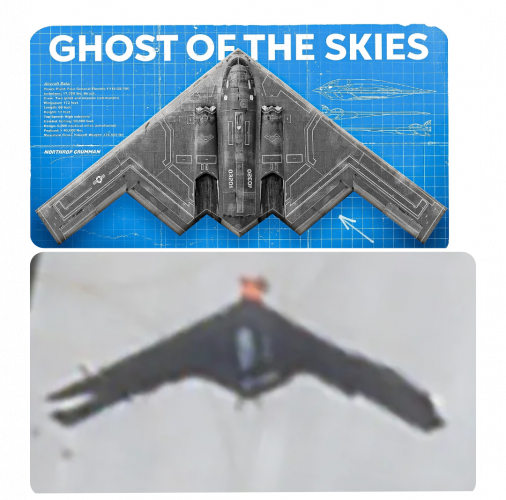
Tho a question, can we put a big or long enough radar in it to use it as an unmanned awacs?
What is with that left wing? the lower prong is the shadow? and the upper prong is the wing itself? If so, would that suggest wings end in quite narrow wingtips? And if that is so - how usual is that? Seems quite unusual when compared against rq180 or even b2/b21. I guess U2 had sort of narrow wingtips, but even those weren't THIS narrow?
Tomboy
ACCESS: Top Secret
- Joined
- 4 January 2025
- Messages
- 543
- Reaction score
- 1,972
Probably some sort of tarp, narrowing of the wingtip is detrimental to stealth as it ruins edge alignmentWhat is with that left wing? the lower prong is the shadow? and the upper prong is the wing itself? If so, would that suggest wings end in quite narrow wingtips? And if that is so - how usual is that? Seems quite unusual when compared against rq180 or even b2/b21. I guess U2 had sort of narrow wingtips, but even those weren't THIS narrow?
ah, you mean tarp over only the left wing tip. But not the right one. Because the shape of the left wing's shadow also doesn't align with the narrow wingtip theory. makes sense, I guess.Probably some sort of tarp, narrowing of the wingtip is detrimental to stealth as it ruins edge alignment
There is no need to make a VLO platform an awac that is built to provide persistent radar coverage in the sky.Indeed it's a big boy.
View attachment 774439
Tho a question, can we put a big or long enough radar in it to use it as an unmanned awacs?
And I think China has already an AWAC UAV with the WZ-9
Similar threads
-

-

-

-

-
 Unmanned Long-endurance Tactical Reconnaissance Aircraft (ULTRA): USAF's semi-secret spy drone
- Started by Stargazer
- Replies: 0