Although it achieved much more in tests with an experienced pilot. In operational units, 28 degrees was still less than in the F-15. But on the Soviet side, it was the same progress as in the West with their 4th generation.

You are using an out of date browser. It may not display this or other websites correctly.
You should upgrade or use an alternative browser.
You should upgrade or use an alternative browser.
MiG-29 "Supermanoeuvrability"
- Thread starter wasp850
- Start date

ZIGGY-2014
ACCESS: Confidential
- Joined
- 4 September 2024
- Messages
- 60
- Reaction score
- 22
But to say achieved "more in test" is not correct & not a fair statement.Although it achieved much more in tests with an experienced pilot. In operational units, 28 degrees was still less than in the F-15. But on the Soviet side, it was the same progress as in the West with their 4th generation.
The Soviets were far ahead in combat application of extreme alpha capability & vortex dynamics than the United States. The helmet mounted sight, even the R-73 is optimized for high angle of attack launches with front fin & rear control (thrust vectoring). All of it was designed to complement the overall tactical effectiveness of supermaneuverable fighters.
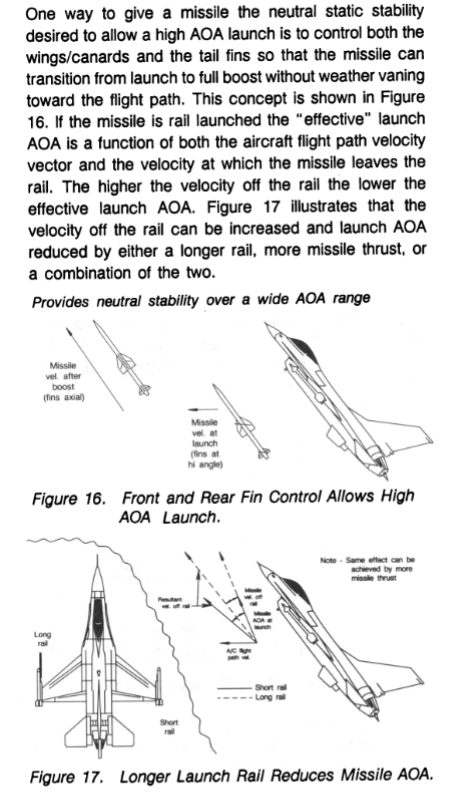
To say "achieved more in test" paints a picture that the Mig-29 did not have superior lift and angle of attack capabilities over the F-15, when the MiG-29 absolutely did & did so tactically & establishing it doctrinally. The MiG-29 can fly double the angle of attack the F-15 can fly at all.
The MiG-29 high lift to drag ratio & angle of attack ability served as the primary reason the ATF program exist & had such an emphasis on the F-22's ability in close quarters & almost focused exclusively into pitch, the strong suit of the Mig-29. All primary mission Air Superiority fighters of the 5th generation, the F-22, J-20B & Su-57 are supermaneuverable capable as requirement because of the Fulcrum and Flanker's revolutionary angle of attack capability.
Even though the operational limit was lower than the F-15, the Mig-29 can still fly far beyond 28° in combat and the limiter is designed to be overridden by simply pulling harder on the stick (37lbs of stick force with a couple grams I forgot exact). The F-15's edge of envelope angle of attack is 40° before it departs regardless of higher operational limit. What is the operational limit for the F-15 anyway? The MiG-29 SOS-3 is designed to be entirely overridden and operational limit was increased after they fixed the asymmetric roll & that killed a few pilots & a test pilot in the initial production 9-12 (equipped ventral fins).
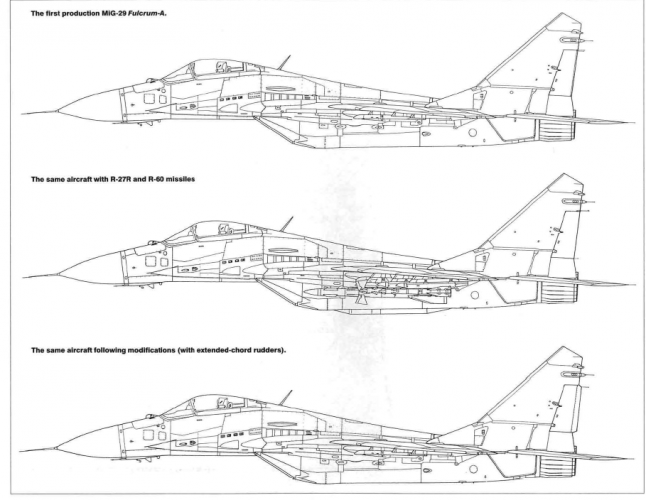
Initial production 9-12 w/ventral fins before rudder chord extension & after
Primarily out of a pilot safety concern the VVS placed operational limit in the SOS-3 to 22° with no override feature. Once the issue was resolved & rudder chords extended, the S0S-3M was incrementally increased to 24° in 9-12 & AoA override feature added for combat.
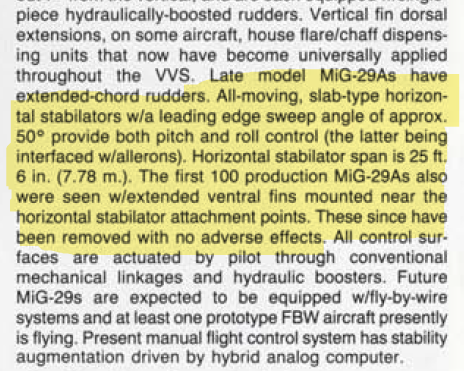
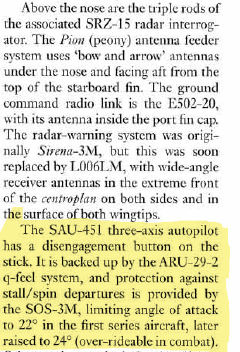
As the early production line of 9-12 came to an end the angle of attack was increased to 26° in SOS-3M of the 9-12A & 9-13 and then to 28° in 9-13S & continued following the serial modernized variants. Digital flight-controlled Fulcrums can simply turn off the operational limitation altogether but still have an operational limit. This highlights there is a clear distinction between operational limit set by the customer & tactical application of the fighter in combat.
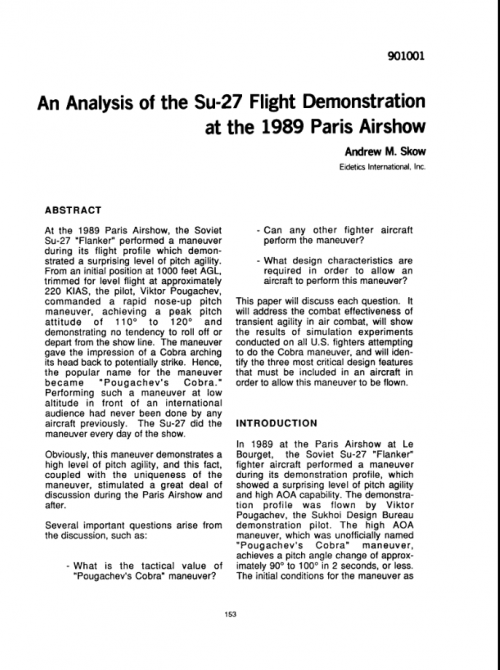
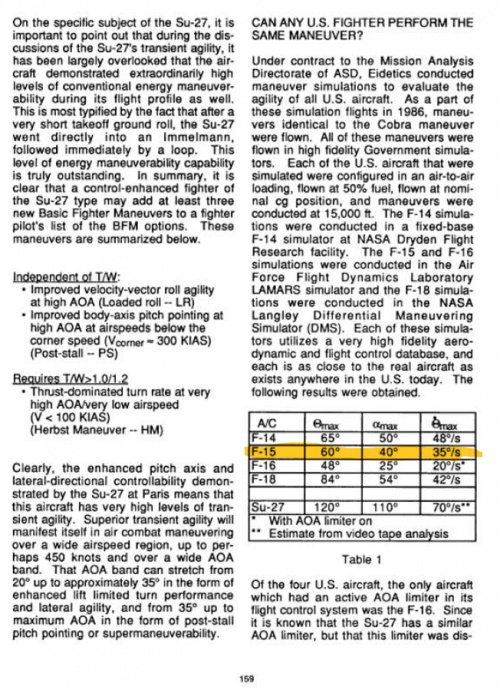
The above paper was written by Adrew M. Skow. A Cold War designer originally for Northrop, a pioneer & the authority of alpha flight & vortex dynamics in 3rd & 4th generation US applications. He was Chief of Aerodynamics Research at Northrop & led the development of the revolutionary Forebody Vortex Control technology that was successfully flight tested on the F-5, X-29 and F/A-18. In 1979, he was awarded the prestigious Wright Brothers Medal for his work in high angle-of-attack aerodynamics and flight mechanics. He conducted a formal review of the Paris Airshow where Pugachev first performed for the West the Cobra maneuver (Dynamic Deceleration) & this paper is evaluation of it.
As we know an operational limit is just what is determined to be "safe" by the customer, in the case of the MiG-29, the customer was the VVS & TsAGI as advisor. The F-15 does not have a limiter from what I remember (or was it F-14... I forgot). They are very stable well-rounded aircraft, so I am not surprised. However, that does not mean they are better optimized than the MiG-29 in the very regime the aircraft was designed almost exclusively for & is one of a kind as result. The MiG-29 is only aircraft in the world classified supermaneuverable without the use of thrust vectoring & without digital flight control.
The Mig-29 is highly resistant to departure and can perform in excess of 100-degree angle of attack & there is obtainable footage of Mikoyan test pilots performing that here in the US before the dissolution of the Soviet Union.
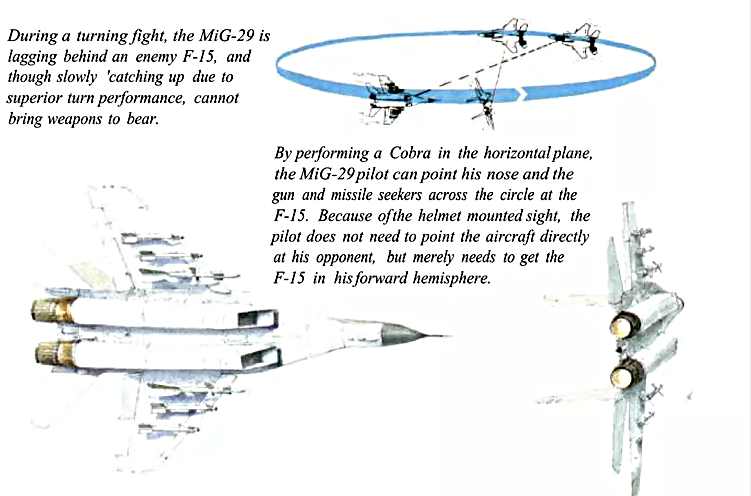
Offensively this makes the aircraft unpredictable in a dogfight, large AoA nose pointing occurs without warning & allows a target to become immediately captured via helmet sight & R-73 boresight or
vertical scan in close combat mode for first shot opportunity which is very important especially from a Western perspective. The US aways placed a high critical value on the "airshow tricks" of the Fulcrum & Flanker. Regardless of what any US pilot says its purely maskirovka. The AoA capability is also extremely valuable in radar defeating techniques, rapidly reducing closure rate, notching etc. & also in BVR engagements.
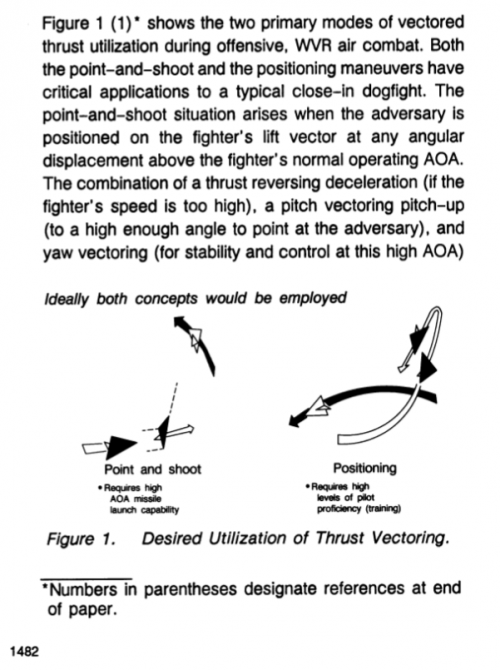
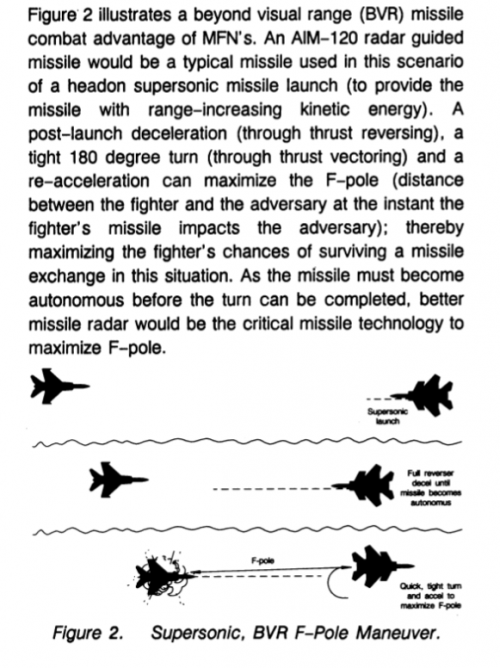
The Mig-29 goes further & is "supermaneuverable" at gross weight with air-to-air missiles (not having to wait until combat weight except for SMT) whereas the massive Su-27 is not even a 9G fighter unless under 21,000kg & its angle of attack is limited to 24° at Mach .5 without missiles or pylons & only gets worse at speed.

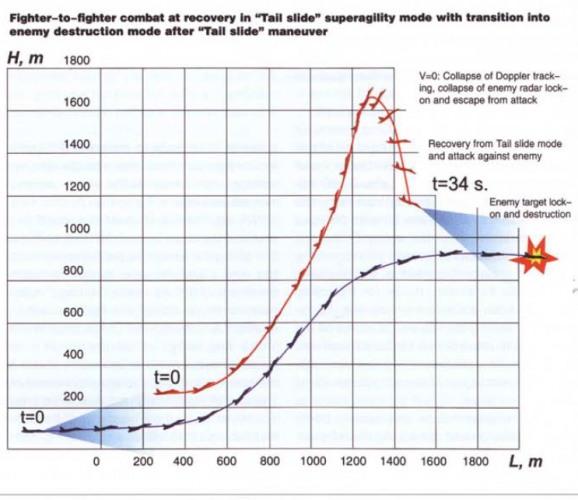
Exceeding operational 28° of the SOS-3M-3 is tactical doctrine of the MiG-29 & not achieved only in test. This is evident with combat maneuvers such as the Inverted Cobra & Hook (horizontal cobra) these maneuvers far exceed operational limitations of the SOS-3 & achieve first shot capability in the circle fight if for whatever reason the Fulcrums excellent turn & helmet sight is not enough. The ability makes it very unpredictable in a dogfight; you are never truly out of its seekers gimbal limit. It gives a pilot the ability to capture a target at will almost instantaneously via helmet sight & R-73 boresight or using the + 37º/ -13º fixed vertical scan in close combat mode.
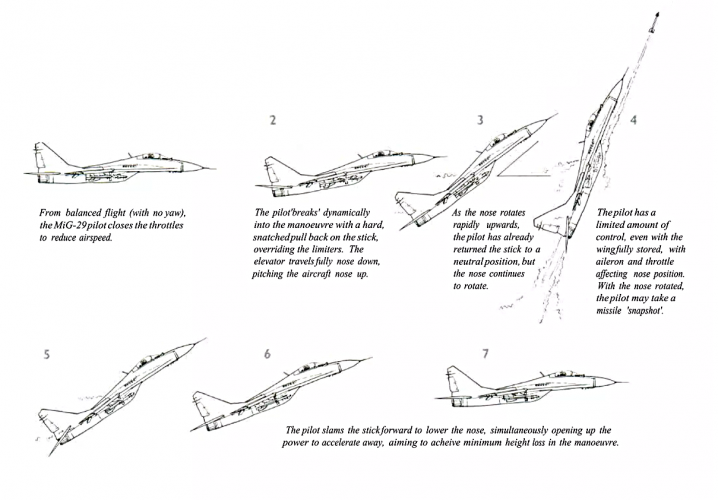
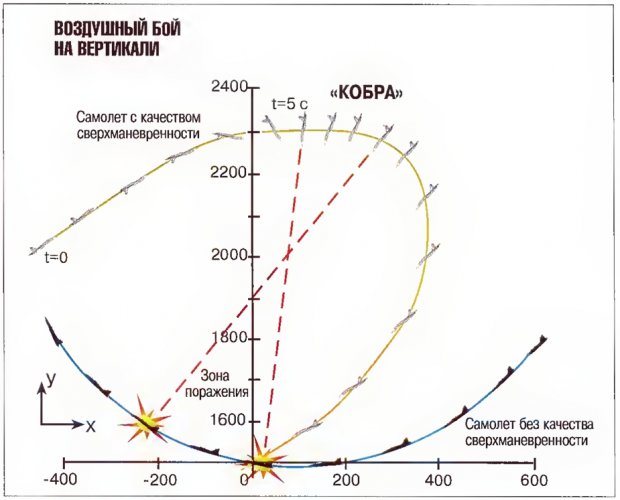
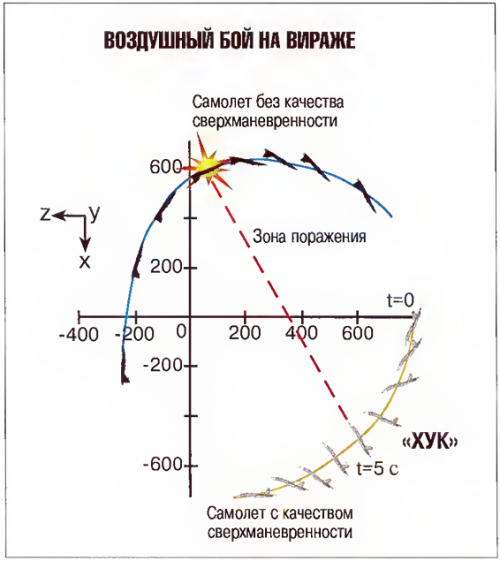
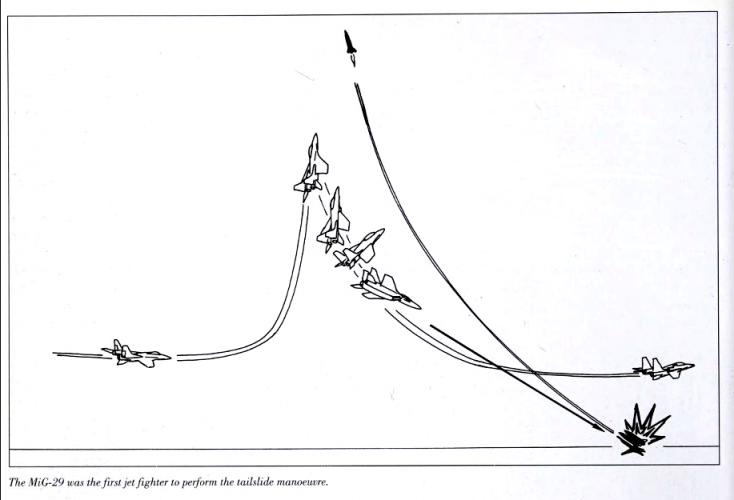
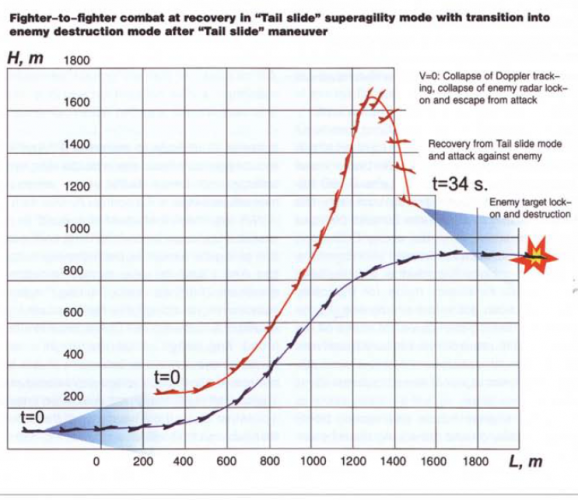
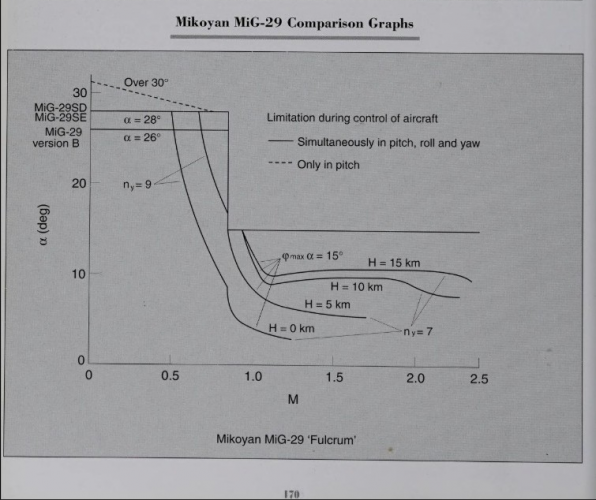
Here are two graphs regarding operational limits & beyond for Mig-29 equipped with SOS-3M & SOS-3M-3.
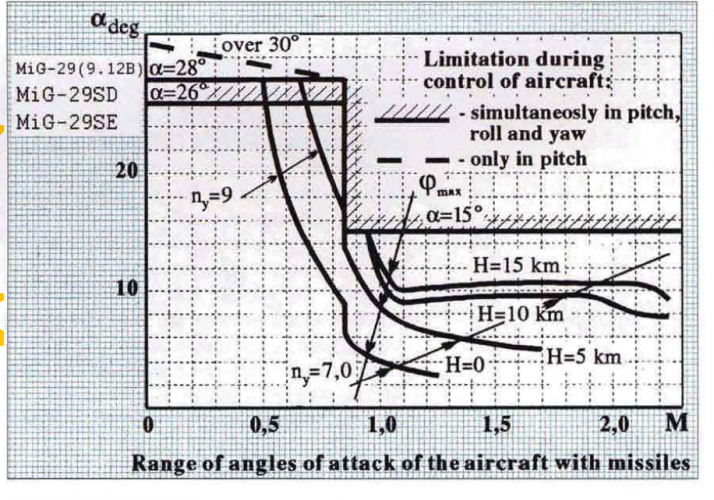
Attachments
Last edited:

- Joined
- 27 December 2005
- Messages
- 19,226
- Reaction score
- 35,638
Own topic.
Have you watched this video from a former German MiG-29 pilot? His assessment of the MiG-29 is pretty fair.
View: https://www.youtube.com/watch?v=YFw1iVmY2L8
Have you watched this video from a former German MiG-29 pilot? His assessment of the MiG-29 is pretty fair.
Last edited:
ZIGGY-2014
ACCESS: Confidential
- Joined
- 4 September 2024
- Messages
- 60
- Reaction score
- 22
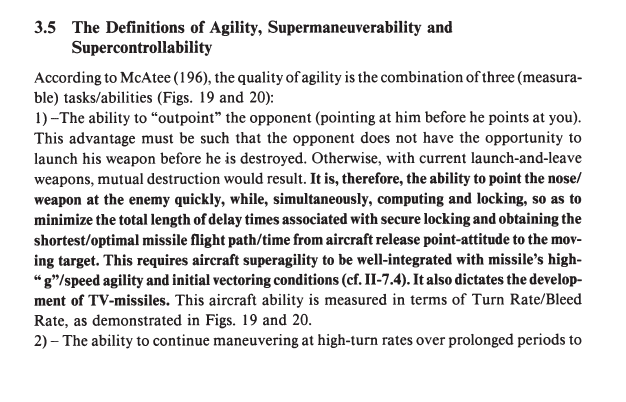
Glad I found something I can reference Lieutenant Colonel Thomas P. “Tuck” McAtee to start off regarding how Agility, Supermaneuverability and Supercontrollability is defined.
Another pioneer, his background for those who are not familiar. https://www.bucktroutfuneralhome.net/obituaries/Thomas-Pearson-Mcatee?obId=34822835


Another pioneer, his background for those who are not familiar. https://www.bucktroutfuneralhome.net/obituaries/Thomas-Pearson-Mcatee?obId=34822835
even the R-73 is optimized for high angle of attack launches with front fin & rear control (thrust vectoring). All of it was designed to complement together the overall tactical effectiveness of supermaneuverable fighters.

Last edited:

Aeria Gloria
ACCESS: Secret
- Joined
- 8 February 2024
- Messages
- 414
- Reaction score
- 480
One thing, I find it very odd that vertical scan of MiG-29 in TP/IRST mode is -14/+16 degrees, Compared to the value you give which is for radar vertical scan. The IRST can look 30 degrees up, so why designers did not have it do so in vertical scan I do not know.But to say achieved "more in test" is not correct & not a fair statement.
The Soviets were far ahead in combat application of extreme alpha capability & vortex dynamics than the United States. The helmet mounted sight, even the R-73 is optimized for high angle of attack launches with front fin & rear control (thrust vectoring). All of it was designed to complement together the overall tactical effectiveness of supermaneuverable fighters.
View attachment 773492
To say "achieved more in test" paints a picture that the Mig-29 did not have superior lift and angle of attack capabilities over the F-15, when the MiG-29 absolutely did & did so tactically & establishing it doctrinally. The MiG-29 can fly double the angle of attack the F-15 can fly at all.
The MiG-29 high lift to drag ratio & angle of attack ability served as the primary reason the ATF program exist & had such an emphasis on the F-22's ability in close quarters & almost focused exclusively into pitch, the strong suit of the Mig-29. All primary mission Air Superiority fighters of the 5th generation, the F-22, J-20B & Su-57 are supermaneuverable capable as requirement because of the Fulcrum and Flanker's revolutionary angle of attack capability.
Even though the operational limit was lower than the F-15, the Mig-29 can still fly far beyond 28° in combat and the limiter is designed to be overridden by simply pulling harder on the stick (37lbs of stick force with a couple grams I forgot exact). The F-15's edge of envelope angle of attack is 40° before it departs regardless of higher operational limit. What is the operational limit for the F-15 anyway? The MiG-29 SOS-3 is designed to be entirely overridden and operational limit was increased after they fixed the asymmetric roll & that killed a few pilots & a test pilot in the initial production 9-12 (equipped ventral fins).
View attachment 773489
Initial production 9-12 w/ventral fins before rudder chord extension & after.
For pilot safety until the asymmetric roll fixed entirely the VVS placed operational limit in the SOS-3 to 22°, then incrementally to 24° in 9-12 (when rudder chords extended). Then increased to angle of attack was increased to 26° in SOS-3M of the 9-12A & 9-13 and then to 28° in 9-13S & continued following the serial modernized variants. Digital flight-controlled Fulcrums can simply turn off the operational limitation altogether but still have an operational limit. This highlights there is a clear distinction between operational limit set by the customer & tactical application of the fighter in combat.
View attachment 773463View attachment 773464
The above paper was written by Adrew M. Skow. A Cold War designer originally for Northrop, a pioneer & the authority of alpha flight & vortex dynamics in 3rd & 4th generation US applications. He was Chief of Aerodynamics Research at Northrop & led the development of the revolutionary Forebody Vortex Control technology that was successfully flight tested on the F-5, X-29 and F/A-18. In 1979, he was awarded the prestigious Wright Brothers Medal for his work in high angle-of-attack aerodynamics and flight mechanics. He was at the Paris Airshow when Pugachev performed for the West the Cobra maneuver (Dynamic Deceleration) & this paper is evaluation of it.
As we know an operational limit is just what is determined to be "safe" by the customer, in the case of the MiG-29, the customer was the VVS & TsAGI as advisor. The F-15 does not have a limiter from what I remember (or was it F-14... I forgot). They are very stable well-rounded aircraft, so I am not surprised. However, that does not mean they are better optimized than the MiG-29 in the very regime the aircraft was designed almost exclusively for & is one of a kind as result. The MiG-29 is only aircraft in the world classified supermaneuverable without the use of thrust vectoring & without digital flight control.
The Mig-29 is highly resistant to departure and can perform in excess of 100-degree angle of attack & there is obtainable footage of Mikoyan test pilots performing that here in the US before the dissolution of the Soviet Union.
Offensively this makes the aircraft unpredictable in a dogfight, large AoA nose pointing occurs without warning & allows a target to become immediately captured via helmet sight & R-73 boresight or
vertical scan in close combat mode for first shot opportunity which is very important especially from a Western perspective. The US aways placed a high critical value on the "airshow tricks" of the Fulcrum & Flanker. Regardless of what any US pilot says its purely maskirovka. The AoA capability is also extremely valuable in radar defeating techniques, rapidly reducing closure rate, notching etc. & also in BVR engagements.
View attachment 773479View attachment 773480View attachment 773486
The Mig-29 goes further & is "supermaneuverable" at gross weight with air-to-air missiles (not having to wait until combat weight except for SMT) whereas the massive Su-27 is not even a 9G fighter unless under 21,000kg & its angle of attack is limited to 24° at Mach .5 without missiles or pylons & only gets worse at speed.
View attachment 773481
Exceeding operational 28° of the SOS-3M-3 is tactical doctrine of the MiG-29 & not achieved only in test. This is evident with combat maneuvers such as the Inverted Cobra & Hook (horizontal cobra) these maneuvers far exceed operational limitations of the SOS-3 & achieve first shot capability in the circle fight if for whatever reason the Fulcrums excellent turn & helmet sight is not enough. The ability makes it very unpredictable in a dogfight; you are never truly out of its seekers gimbal limit. It gives a pilot the ability to capture a target at will almost instantaneously via helmet sight & R-73 boresight or using the + 37º/ -13º fixed vertical scan in close combat mode.
View attachment 773483View attachment 773485
View attachment 773468View attachment 773470
View attachment 773484View attachment 773487
Here are two graphs regarding operational limits & beyond for Mig-29 equipped with SOS-3M & SOS-3M-3.
View attachment 773465View attachment 773482
ZIGGY-2014
ACCESS: Confidential
- Joined
- 4 September 2024
- Messages
- 60
- Reaction score
- 22
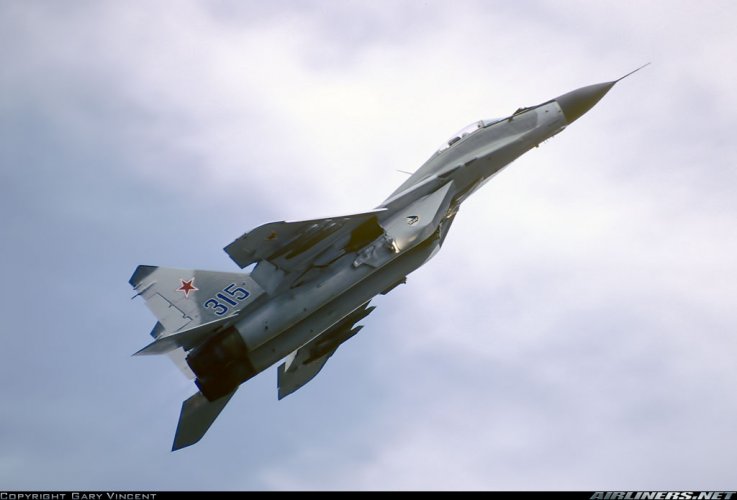
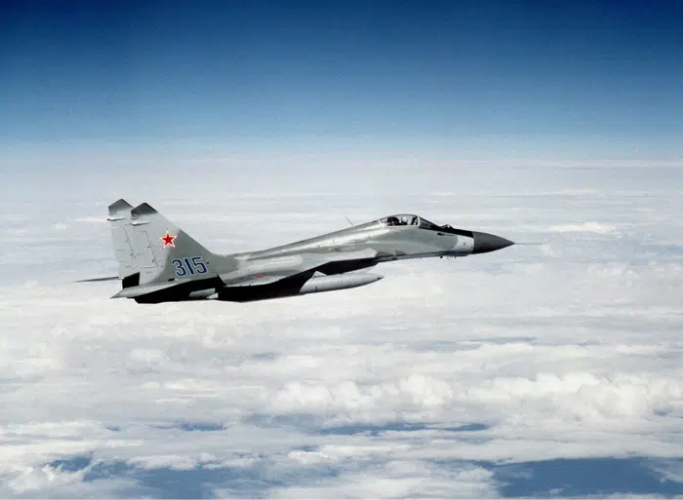
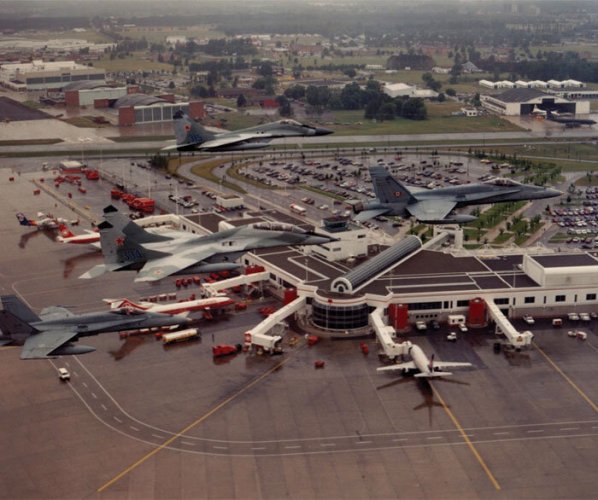
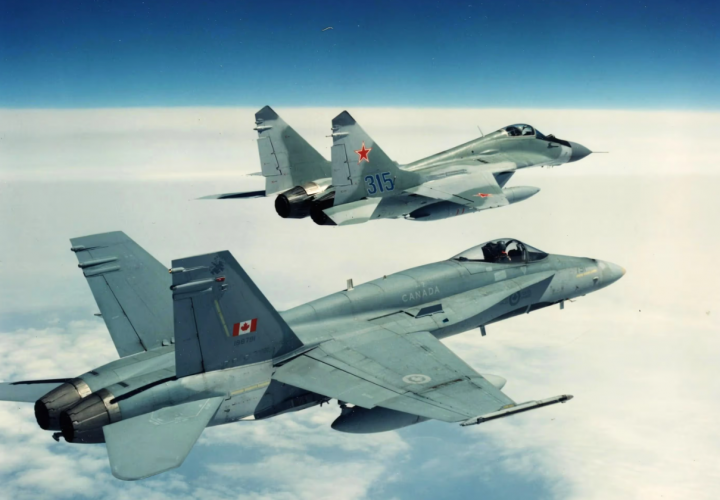
Mikoyan Test Pilot Roman Petrovich & his MiG-29 Product Index 9-12A MSN:296052507 Reg: 315 Blue performs the "Cobra" maneuver (Dynamics Deceleration) 1990 USA. Maneuver is time stamped @ 4:00 but I suggest watching the demo in full its pretty good and adds better perspective of the aircraft aerodynamic ability as a whole.

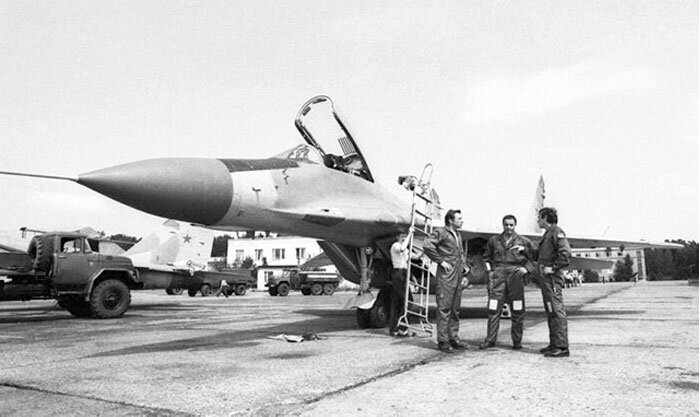
Valery Menitsky, Anatoly Kvochur and Roman Taskaev.
Attachments
Last edited:
Aeria Gloria
ACCESS: Secret
- Joined
- 8 February 2024
- Messages
- 414
- Reaction score
- 480
Okay, what is max achievable AOA of F-15 you have found?Although it achieved much more in tests with an experienced pilot. In operational units, 28 degrees was still less than in the F-15. But on the Soviet side, it was the same progress as in the West with their 4th generation.

F-2
ACCESS: Top Secret
- Joined
- 22 May 2020
- Messages
- 1,189
- Reaction score
- 2,572
F-15 is around 40 where it achieves CL max of 1.6, I thing slightly lower most of the envelope to hold it
https://ntrs.nasa.gov/api/citations/19860014116/downloads/19860014116.pdf
https://ntrs.nasa.gov/api/citations/19860014116/downloads/19860014116.pdf

Shusui
Antikythera
- Joined
- 17 August 2015
- Messages
- 91
- Reaction score
- 252
It was my understanding that the US was ahead of the Soviets in regard to vortex control with the LERX on the F-5 series, and continued to remain ahead with the designs of the F-16 and F-18 in the 70s, only seeing competition from the Soviets in the form of the MiG-29 in the 80s. The first Soviet modifications to use such vortex devices would have been the MiG-23MLD?
Anyhow, on the topic of supermaneuvrability (how is that spelt?) the F-14 showed high AoA capability early on, and so did the F-16 when the limiter was not a factor. The focus instead on high instant pitch rate and conservation of energy led to a restrictive FCS.
Unlike either of those-the F-18, which was also flying in the 70s already, outclassed the F-15 and MiG-29 in sustained angle of attack capability. The F-18 while not necessarily capable of a similar Cobra maneuver to the Su-27 offers performance that can be described as better than a MiG-29 and rivaling early non TVC Sukhois.
Anyhow, on the topic of supermaneuvrability (how is that spelt?) the F-14 showed high AoA capability early on, and so did the F-16 when the limiter was not a factor. The focus instead on high instant pitch rate and conservation of energy led to a restrictive FCS.
Unlike either of those-the F-18, which was also flying in the 70s already, outclassed the F-15 and MiG-29 in sustained angle of attack capability. The F-18 while not necessarily capable of a similar Cobra maneuver to the Su-27 offers performance that can be described as better than a MiG-29 and rivaling early non TVC Sukhois.

Bruno Anthony
The Morons are winning
- Joined
- 5 August 2012
- Messages
- 976
- Reaction score
- 990
Link to the Skow article if possible.But to say achieved "more in test" is not correct & not a fair statement.
The Soviets were far ahead in combat application of extreme alpha capability & vortex dynamics than the United States. The helmet mounted sight, even the R-73 is optimized for high angle of attack launches with front fin & rear control (thrust vectoring). All of it was designed to complement the overall tactical effectiveness of supermaneuverable fighters.
View attachment 773492
To say "achieved more in test" paints a picture that the Mig-29 did not have superior lift and angle of attack capabilities over the F-15, when the MiG-29 absolutely did & did so tactically & establishing it doctrinally. The MiG-29 can fly double the angle of attack the F-15 can fly at all.
The MiG-29 high lift to drag ratio & angle of attack ability served as the primary reason the ATF program exist & had such an emphasis on the F-22's ability in close quarters & almost focused exclusively into pitch, the strong suit of the Mig-29. All primary mission Air Superiority fighters of the 5th generation, the F-22, J-20B & Su-57 are supermaneuverable capable as requirement because of the Fulcrum and Flanker's revolutionary angle of attack capability.
Even though the operational limit was lower than the F-15, the Mig-29 can still fly far beyond 28° in combat and the limiter is designed to be overridden by simply pulling harder on the stick (37lbs of stick force with a couple grams I forgot exact). The F-15's edge of envelope angle of attack is 40° before it departs regardless of higher operational limit. What is the operational limit for the F-15 anyway? The MiG-29 SOS-3 is designed to be entirely overridden and operational limit was increased after they fixed the asymmetric roll & that killed a few pilots & a test pilot in the initial production 9-12 (equipped ventral fins).
View attachment 773489
Initial production 9-12 w/ventral fins before rudder chord extension & after
Primarily out of a pilot safety concern the VVS placed operational limit in the SOS-3 to 22° with no override feature. Once the issue was resolved & rudder chords extended, the S0S-3M was incrementally increased to 24° in 9-12 & AoA override feature added for combat.
View attachment 773577View attachment 773591
As the early production line of 9-12 came to an end the angle of attack was increased to 26° in SOS-3M of the 9-12A & 9-13 and then to 28° in 9-13S & continued following the serial modernized variants. Digital flight-controlled Fulcrums can simply turn off the operational limitation altogether but still have an operational limit. This highlights there is a clear distinction between operational limit set by the customer & tactical application of the fighter in combat.
View attachment 773463View attachment 773464
The above paper was written by Adrew M. Skow. A Cold War designer originally for Northrop, a pioneer & the authority of alpha flight & vortex dynamics in 3rd & 4th generation US applications. He was Chief of Aerodynamics Research at Northrop & led the development of the revolutionary Forebody Vortex Control technology that was successfully flight tested on the F-5, X-29 and F/A-18. In 1979, he was awarded the prestigious Wright Brothers Medal for his work in high angle-of-attack aerodynamics and flight mechanics. He conducted a formal review of the Paris Airshow where Pugachev first performed for the West the Cobra maneuver (Dynamic Deceleration) & this paper is evaluation of it.
As we know an operational limit is just what is determined to be "safe" by the customer, in the case of the MiG-29, the customer was the VVS & TsAGI as advisor. The F-15 does not have a limiter from what I remember (or was it F-14... I forgot). They are very stable well-rounded aircraft, so I am not surprised. However, that does not mean they are better optimized than the MiG-29 in the very regime the aircraft was designed almost exclusively for & is one of a kind as result. The MiG-29 is only aircraft in the world classified supermaneuverable without the use of thrust vectoring & without digital flight control.
The Mig-29 is highly resistant to departure and can perform in excess of 100-degree angle of attack & there is obtainable footage of Mikoyan test pilots performing that here in the US before the dissolution of the Soviet Union.
Offensively this makes the aircraft unpredictable in a dogfight, large AoA nose pointing occurs without warning & allows a target to become immediately captured via helmet sight & R-73 boresight or
vertical scan in close combat mode for first shot opportunity which is very important especially from a Western perspective. The US aways placed a high critical value on the "airshow tricks" of the Fulcrum & Flanker. Regardless of what any US pilot says its purely maskirovka. The AoA capability is also extremely valuable in radar defeating techniques, rapidly reducing closure rate, notching etc. & also in BVR engagements.
View attachment 773479View attachment 773480View attachment 773486
The Mig-29 goes further & is "supermaneuverable" at gross weight with air-to-air missiles (not having to wait until combat weight except for SMT) whereas the massive Su-27 is not even a 9G fighter unless under 21,000kg & its angle of attack is limited to 24° at Mach .5 without missiles or pylons & only gets worse at speed.
View attachment 773481
Exceeding operational 28° of the SOS-3M-3 is tactical doctrine of the MiG-29 & not achieved only in test. This is evident with combat maneuvers such as the Inverted Cobra & Hook (horizontal cobra) these maneuvers far exceed operational limitations of the SOS-3 & achieve first shot capability in the circle fight if for whatever reason the Fulcrums excellent turn & helmet sight is not enough. The ability makes it very unpredictable in a dogfight; you are never truly out of its seekers gimbal limit. It gives a pilot the ability to capture a target at will almost instantaneously via helmet sight & R-73 boresight or using the + 37º/ -13º fixed vertical scan in close combat mode.
View attachment 773483View attachment 773485
View attachment 773468View attachment 773470
View attachment 773484View attachment 773487
Here are two graphs regarding operational limits & beyond for Mig-29 equipped with SOS-3M & SOS-3M-3.
View attachment 773465View attachment 773482
- Joined
- 27 December 2005
- Messages
- 19,226
- Reaction score
- 35,638
Skow article:
https://saemobilus.sae.org/papers/analysis-su-27-flight-demonstration-1989-paris-airshow-901001
Its a bit unrelated to the topic of MiG-29 supermanoeuvrability though. Its a 1989 study of the Su-27 'Cobra' manoeuvre and whether any US aircraft could make such a manoeuvre. The conclusion is an F-16 with AOA limiter off could make the pitch up, but has insufficient pitch down authority and lateral / directional stability to safely return to level flight without some aerodynamic modifications.
https://saemobilus.sae.org/papers/analysis-su-27-flight-demonstration-1989-paris-airshow-901001
Its a bit unrelated to the topic of MiG-29 supermanoeuvrability though. Its a 1989 study of the Su-27 'Cobra' manoeuvre and whether any US aircraft could make such a manoeuvre. The conclusion is an F-16 with AOA limiter off could make the pitch up, but has insufficient pitch down authority and lateral / directional stability to safely return to level flight without some aerodynamic modifications.
Last edited:
Usually, flights were performed at an angle of approximately 30 degrees.Okay, what is max achievable AOA of F-15 you have found?
During testing, the highest AoA achieved was +120 degrees. Operationally, the A/C versions could achieve around 70 AoA at very low speeds and approximately 40 AoA at higher speeds – provided that the pilot knew what he was doing. The aircraft configuration and centre of gravity position influenced the angle of attack.
The overall characteristics of the F-15 at higher angles of attack were good. It is quite similar to the MiG 29, except for its ability to achieve a Cobra, which most MiG 29 operational pilots were unable to do.
Aeria Gloria
ACCESS: Secret
- Joined
- 8 February 2024
- Messages
- 414
- Reaction score
- 480
Is there a good source for this?? 120 degrees sounds like a tail slide, this thing wasn’t doing cobras. Would be very interested in anything that actually mentions 70 degrees though.Usually, flights were performed at an angle of approximately 30 degrees.
During testing, the highest AoA achieved was +120 degrees. Operationally, the A/C versions could achieve around 70 AoA at very low speeds and approximately 40 AoA at higher speeds – provided that the pilot knew what he was doing. The aircraft configuration and centre of gravity position influenced the angle of attack.
The overall characteristics of the F-15 at higher angles of attack were good. It is quite similar to the MiG 29, except for its ability to achieve a Cobra, which most MiG 29 operational pilots were unable to do.
Interestingly, Soviet pilots in regular units did not actually perform any manoeuvres using ‘super-manoeuvrability’. Their aircraft, such as the Su 27 and MiG 29, were capable of doing so, but their pilots did not practise or use it. All those impressive manoeuvres were performed at air shows by specially trained pilots, often test pilots from the company in question. In practice, however, they stuck to ground guidance and fired missiles on command from the ground, then returned home.
If a Soviet pilot happened to encounter a Western pilot in aerial combat, the difference would be in the ‘schmel’ (helmet-mounted sight) and R-73, not the Cobra. That is, if the Soviet pilot was trained in the use of a helmet-mounted sight.
If a Soviet pilot happened to encounter a Western pilot in aerial combat, the difference would be in the ‘schmel’ (helmet-mounted sight) and R-73, not the Cobra. That is, if the Soviet pilot was trained in the use of a helmet-mounted sight.
- Joined
- 27 December 2005
- Messages
- 19,226
- Reaction score
- 35,638
Yes, this. Robert Hierl makes it pretty clear while the MiG-29 was competitive with F-15 / F-16 / F-18 in manoeuvrability, its advantage in dogfights was the R-73 off-boresight and HMS combo, not post-stall manoeuvring.If a Soviet pilot happened to encounter a Western pilot in aerial combat, the difference would be in the ‘schmel’ (helmet-mounted sight) and R-73, not the Cobra. That is, if the Soviet pilot was trained in the use of a helmet-mounted sight.
It was not a ‘Cobra.’ 120 degrees was probably achieved during spin tests. Source: Herman W. Hamm. McAir Corp. The F-15 Multi-mission Aircraft Program Status, 1976Is there a good source for this?? 120 degrees sounds like a tail slide, this thing wasn’t doing cobras. Would be very interested in anything that actually mentions 70 degrees though.
Tail slides were commonly performed on the F-15 during training in the 1970s, i.e. before the MiG-29.
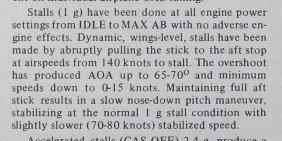
I agree.Yes, this. Robert Hierl makes it pretty clear while the MiG-29 was competitive with F-15 / F-16 / F-18 in manoeuvrability, its advantage in dogfights was the R-73 off-boresight and HMS combo, not post-stall manoeuvring.
ZIGGY-2014
ACCESS: Confidential
- Joined
- 4 September 2024
- Messages
- 60
- Reaction score
- 22
The issue is people mistakenly think that the R73 and helmet sight must be used separately from high angle of attack nose pointing. Its quite comical. The Mig-29 uses these tactical tools as a whole, they are not used one without the other.Yes, this. Robert Hierl makes it pretty clear while the MiG-29 was competitive with F-15 / F-16 / F-18 in manoeuvrability, its advantage in dogfights was the R-73 off-boresight and HMS combo, not post-stall manoeuvring.
Its combat doctrine whether any of you like it or not.
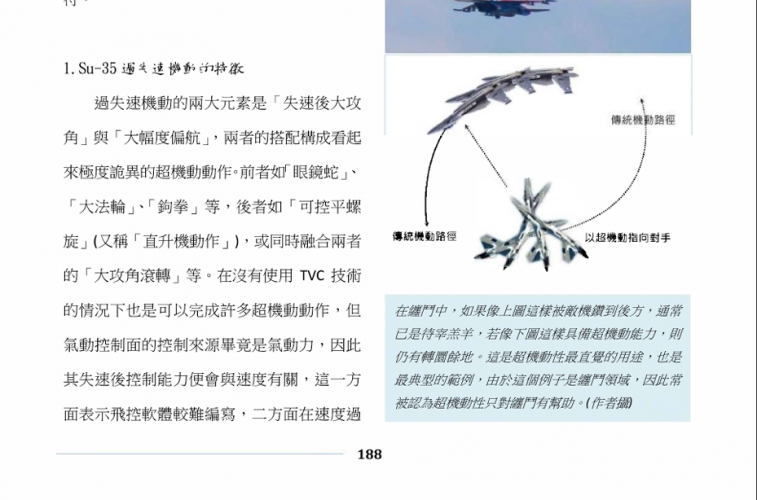
Last edited:
The Hornet generally had better handling and safety in high alpha than the MiG 29, and thanks to its digital FbW control, its pilot also achieved higher alpha than the MiG 29 pilot. In comparable versions, the Hornet was always ahead of the MiG-29 in this area. The F-16 was better at sustained turn rate and usually had the same or similar alpha as the MiG-29 (unless the MiG-29 pilot learned to exceed the soft limit that allowed it to go above 25 AoA).
Similar to the MiG-29, the F-15 has a good alpha and, like the MiG-29, its roll speed decreases significantly with higher alpha. Both also have hydromechanical controls with stability augmentationt systems (I think the F-15's control system was more advanced due to autotrim). These aircraft can practically destroy each other, the difference is the pilot and possibly significantly better specialization in close maneuver combat, perhaps thanks to the R-73 and helmet-mounted sights
Similar to the MiG-29, the F-15 has a good alpha and, like the MiG-29, its roll speed decreases significantly with higher alpha. Both also have hydromechanical controls with stability augmentationt systems (I think the F-15's control system was more advanced due to autotrim). These aircraft can practically destroy each other, the difference is the pilot and possibly significantly better specialization in close maneuver combat, perhaps thanks to the R-73 and helmet-mounted sights
Last edited:
- Joined
- 27 December 2005
- Messages
- 19,226
- Reaction score
- 35,638
The issue is people think that the R73 and helmet sight must be used separately from high angle of attack nose pointing capability. which It's quite comical. The Mig-29 uses these tactical tools as a whole, they are not used one without the other.
Try acquiring a lock on a target with the HMS and firing an R-73 while pulling a transient 'Kulbit' manouver in real life, its not reality. Add to that the 60-70 hours a year Eastern Bloc fighter pilots typically flew and the general lack of DACT training, its just wishful thinking. The VVS was and is not staffed with 2,000 Viktor Pugachev clones with 20 years of test pilot experience.
The YF-16 with AOA limiter was more popular with pilots in flight testing compared to the more carefree YF-17 (this being by far the closest US analogue to the MiG-29 design, much more so than the F-18).
The AOA limiter, combined with the low drag YF-16 airframe configuration, resulted in the YF-16 losing less energy in the fight, regaining lost energy faster. It also enabled 'carefree' handling where the pilot doesn't need to worry about accidentally exceeding safe parameters. Boyd himself had expected the YF-17 to do better based on a paper comparison of their respective aerodynamic capabilities and was surprised how dramatically pilots were slanted in favour of the YF-16.
The MiG-29 and Su-27 in service both have AOA limiters set to the same levels as comparable US aircraft. Operationally, pilots generally fly with them on the entire time. Yes, in a desperate situation, you could disable the limiters for a "Hail Mary" attempt to evade a missile or get out of a losing position, but even if successful you'll end up slow and vulnerable to the target's wingman.
ZIGGY-2014
ACCESS: Confidential
- Joined
- 4 September 2024
- Messages
- 60
- Reaction score
- 22
Thinking the Mig-29 can Kulbit is not reality.Try acquiring a lock on a target with the HMS and firing an R-73 while pulling a transient 'Kulbit' manouver in real life, its not reality
ZIGGY-2014
ACCESS: Confidential
- Joined
- 4 September 2024
- Messages
- 60
- Reaction score
- 22
Both are overridden with stick pressure of 37lbs you really do not know much about these aircraft huh?The MiG-29 and Su-27 in service both have AOA limiters
Who told you this? Hail Mary?Yes, in a desperate situation, you could disable the limiters for a "Hail Mary" attempt to evade a missile or get out of a losing position, but even if successful you'll end up slow and vulnerable to the target's wingman.
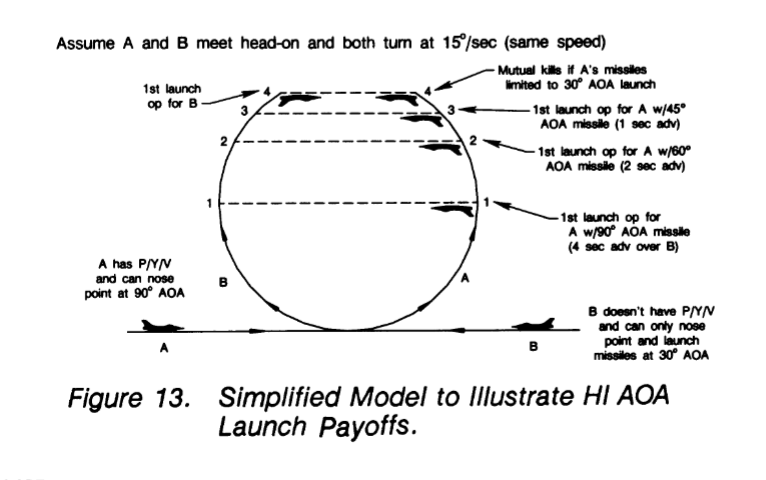
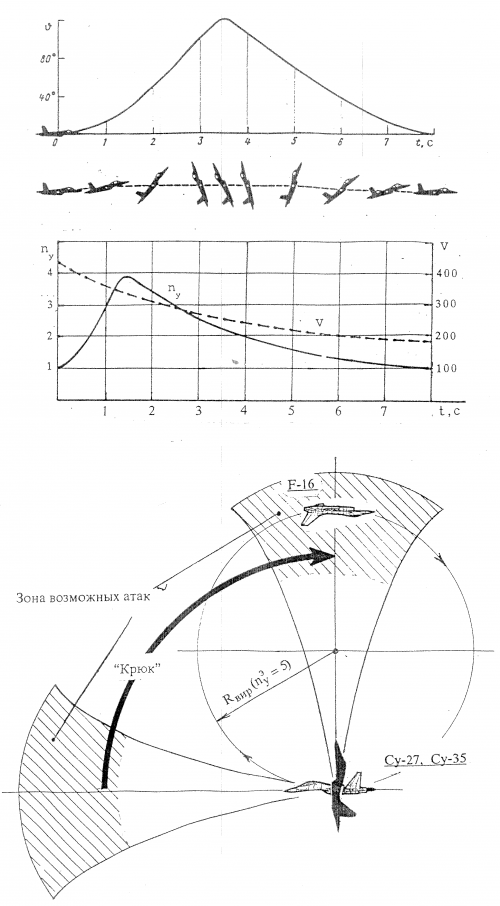
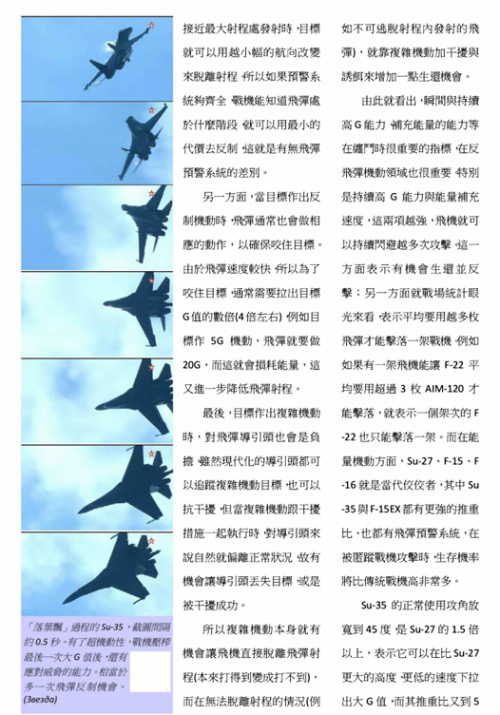
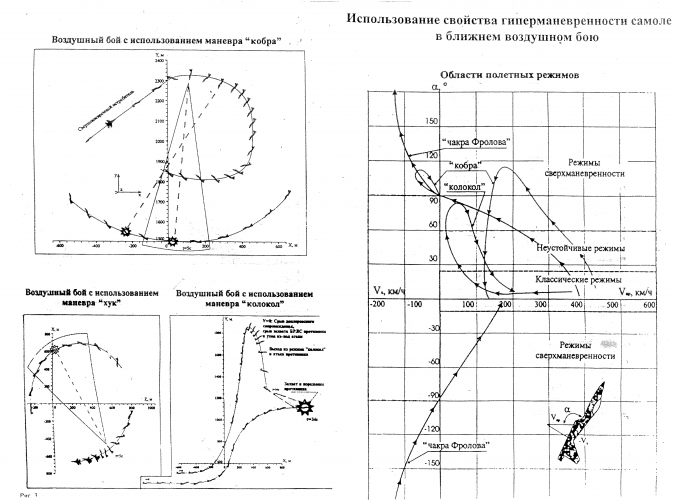
What is so difficult to understand in the graph below? Genuinely asking. There is a clear advantage in aircraft with 90° AoA nose pointing ability. Not just tactical nose pointing ability, it reflects the enhanced & expanded control envelope, capable of controlled flight to such a regime. That is why any aircraft that can actually cobra is a big deal especially a fighter that can do it without Digitial flight control and thrust vectoring.
A. represents and aircraft that has 90° AoA nose pointing ability. For example, the MiG-29.
B. represents a conventional fighter with a nose point and AAM launch at 30 degree AoA.
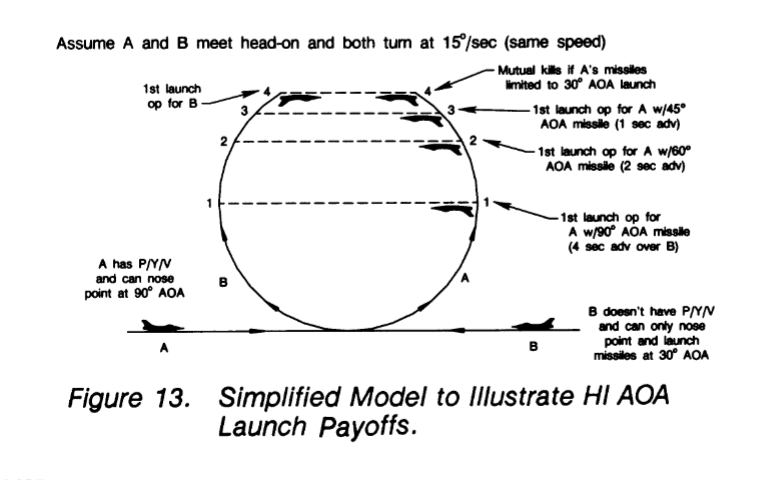
First shot capability is the name of the game. It has been for the longest.
The energy saved, as well as your chances of survival against multiple enemies are actually greatest is if you kill your targets as quickly as possible.
The longer you engage, the more energy you end up dumping anyway and situational awareness diminishes.
know he didn't say this because you keep calling it post stall maneuvers. When just about EVERY contemporary fighter is capable of flying post stall....Yes, this. Robert Hierl makes it pretty clear while the MiG-29 was competitive with F-15 / F-16 / F-18 in manoeuvrability, its advantage in dogfights was the R-73 off-boresight and HMS combo, not post-stall manoeuvring.
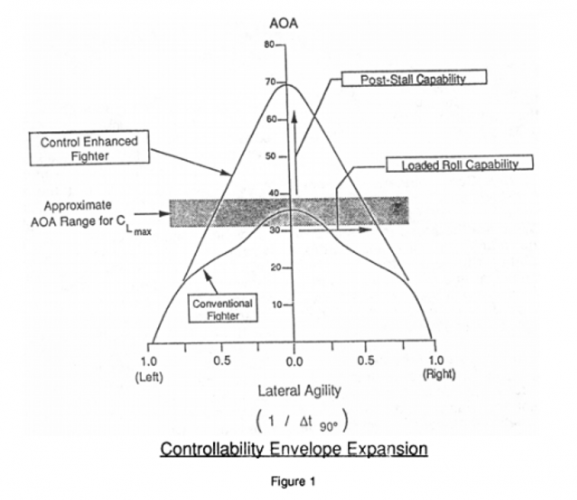
All control enhanced fighters can fly in the post stall regime and perform varying degrees of post stall maneuvers.
The Supermaneuverable Regime & Dynamic attainment goes beyond the post stall regime beginning at 90°
Additionally, why Robert Hierl is entirely irrelevant is because the high angle of attack capability was always a very part of the MiG-29's design. The R-73s and helmet mounted sight were always intended for the aircraft from the gate to supplement it. TsAGI was fundamental in the PFI & during the entire pre-production models especially in the SOS-3
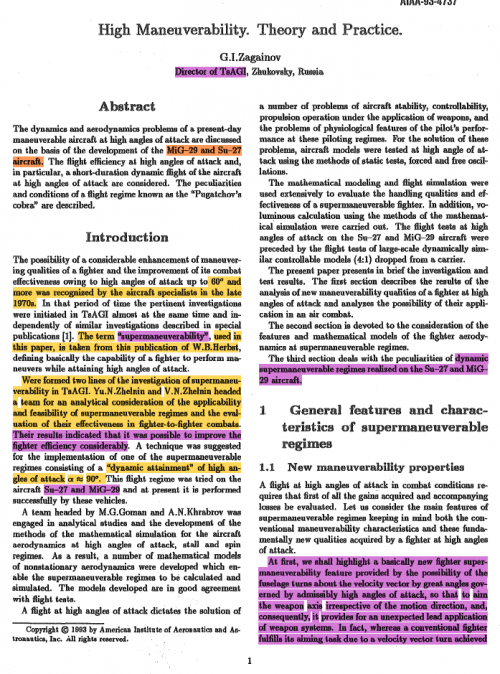

Last edited:
- Joined
- 27 December 2005
- Messages
- 19,226
- Reaction score
- 35,638
MiG-29 (basic) AOA limiter is overridden with sufficient stick pressure (its not FBW controlled) but Su-27 needs a switch toggled to disable its AOA limiter.Both are overridden with stick pressure of 37lbs you really do not know much about these aircraft huh?
https://apps.dtic.mil/sti/tr/pdf/ADB165245.pdf
However, the so-called "cobra maneuver" first displayed in public by the Su-27 at the 1989 Paris Air Show can also be performed by the MiG-29. This maneuver consistsof a snap pitchup to more than 90 degrees AOA from a level 250-kt pass, immediately followed by an abrupt pitch down of the nose back to level flight with no change in the aircraft's flight path. Entry into the maneuver is generated by pilot action. Recovery is effected by aerodynamic forces upon release of stick back pressure. Menitskii has downplayed this maneuver as a "circus event" that has little tactical utility. If properly timed, however, it could offer an effective last-ditch means of forcing an overshoot against a close-in gun attacker. Menitskii has stated that the pilot must override the aircraft's mechanical AOA limiter to accomplish the maneuver. He has also admitted that it remains prohibited for operational MiG-29 pilots in routine training, although this ban may be lifted in the future.
I'm done with these posts @ZIGGY-2014 your attitude is belligerent and you refuse any attempts to persuade you you might be mistaken or missing nuance or context.
Last edited:
Bruno Anthony
The Morons are winning
- Joined
- 5 August 2012
- Messages
- 976
- Reaction score
- 990
Thank you but seems to require a subscriptionSkow article:
https://saemobilus.sae.org/papers/analysis-su-27-flight-demonstration-1989-paris-airshow-901001
Its a bit unrelated to the topic of MiG-29 supermanoeuvrability though. Its a 1989 study of the Su-27 'Cobra' manoeuvre and whether any US aircraft could make such a manoeuvre. The conclusion is an F-16 with AOA limiter off could make the pitch up, but has insufficient pitch down authority and lateral / directional stability to safely return to level flight without some aerodynamic modifications.
The point is that these manoeuvres are not so easy to perform (there is a risk of entering an uncontrollable area), and if the pilot succeeds, he will probably lose situational awareness and definitely lose speed. In addition, they must operate weapon systems and follow instructions from the ground... this requires a highly trained pilot, which the Soviet Union did not have (which is why they used a restriction on the MiG 29 to 22 degrees alpha - because they did not have the necessary training). Overcoming the soft alpha limit on the -29 and -27 was practically never done – it was not practised.Thinking the Mig-29 can Kulbit is not reality.
Aeria Gloria
ACCESS: Secret
- Joined
- 8 February 2024
- Messages
- 414
- Reaction score
- 480
Okay. But AOA attained during a spin or a temporary overshoot is a bit different then a steady state. For example, Su-27 can achieve a steady state constant AOA of 75 degrees.It was not a ‘Cobra.’ 120 degrees was probably achieved during spin tests. Source: Herman W. Hamm. McAir Corp. The F-15 Multi-mission Aircraft Program Status, 1976
Tail slides were commonly performed on the F-15 during training in the 1970s, i.e. before the MiG-29.
View attachment 773943
Depending on the configuration, centre of gravity position, speed and the pilot's skill, the maximum steady state AoA of the F-15A/C is approximately 40 AoA.Okay. But AOA attained during a spin or a temporary overshoot is a bit different then a steady state. For example, Su-27 can achieve a steady state constant AOA of 75 degrees.
It is not true that the Su 27 has a trimmed AoA of 75 degrees. It is approximately 60 degrees, but in order for the pilot to achieve this, they must overcome the AoA limiter, which is somewhere around 24 degrees AoA. (According to flight mode, above 24 AoA causes a deterioration in flight characteristics and the danger of the aircraft entering a spin or crash.) In practice, the AoA limit was not exceeded, except perhaps in 1G stall conditions.
In order for the pilot to use higher AoA values in combat, he had to be well trained.
Therefore, it can be written that, as the manual states, the steady state AoA for the Su 27 is 24 AoA ( AoA limit)
The sustainable AoA value does not necessarily mean that the aircraft can maintain this angle of attack for a long time; it may only be a few seconds.
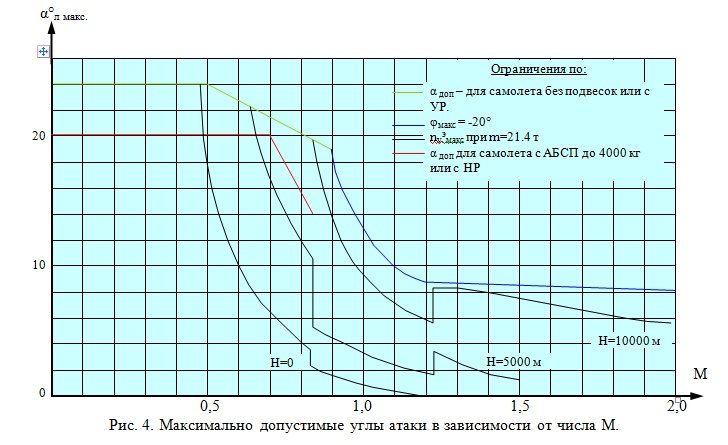
Last edited:
Scott Kenny
ACCESS: USAP
- Joined
- 15 May 2023
- Messages
- 19,524
- Reaction score
- 27,970
Exactly.Interestingly, Soviet pilots in regular units did not actually perform any manoeuvres using ‘super-manoeuvrability’. Their aircraft, such as the Su 27 and MiG 29, were capable of doing so, but their pilots did not practise or use it. All those impressive manoeuvres were performed at air shows by specially trained pilots, often test pilots from the company in question. In practice, however, they stuck to ground guidance and fired missiles on command from the ground, then returned home.
If a Soviet pilot happened to encounter a Western pilot in aerial combat, the difference would be in the ‘schmel’ (helmet-mounted sight) and R-73, not the Cobra. That is, if the Soviet pilot was trained in the use of a helmet-mounted sight.
IF the pilot was trained in a Cobra, the plane could do it. Most pilots didn't have the training to do it.
IF the pilot was trained in the use of the HMS. (Though I'd expect that to be a lot more likely to have happened and only the newest pilots wouldn't have HMS training).
The major issue with the Cobra is how much energy you lose while doing it. It might get you out of the first pilot on your tail. Will it get you out of his wingman?
Energy-maneuver theory seems to be backed up by real-world missile combat success, while how far off-axis you can point your nose (not sure what to call that theory, off-axis control theory?) seems to be a leftover of guns-only fighters.
The big surprise with German Reunification was not how maneuverable the MiG-29s were, but how capable the AA-11/R73 was.
- Joined
- 27 December 2005
- Messages
- 19,226
- Reaction score
- 35,638
The big surprise with German Reunification was not how maneuverable the MiG-29s were, but how capable the AA-11/R73 was.
Yes, but even that wasn't a surprise as such. The US Air Force had tested high off-boresight IR weapons in AIMEVAL and concluded that it levelled the playing field too much. Your expensive F-15 with AIM-95 could easily get killed by a cheap MiG-21 with a roughly equivalent missile. That's why the US doubled down on BVR and AMRAAM - the only winning move in the high-off-boresight dogfight is not to play.

- Joined
- 3 June 2011
- Messages
- 20,908
- Reaction score
- 19,101
I've seen the 120 before as well. But again, it was in early testing. A tailslide would be flying at 180 AOA.Is there a good source for this?? 120 degrees sounds like a tail slide, this thing wasn’t doing cobras. Would be very interested in anything that actually mentions 70 degrees though.

F-2
ACCESS: Top Secret
- Joined
- 22 May 2020
- Messages
- 1,189
- Reaction score
- 2,572
Tomcat
From what I’ve read the Fulcrum has very good nose pointing but it’s only in play below 200kts. 9.15 made major changes in the LERX and stabilizers to improve AoA performance which I think is consistent with some pilot statements I’ve seen that the Fulcrum has good high alpha performance but it’s very difficult to exploit.
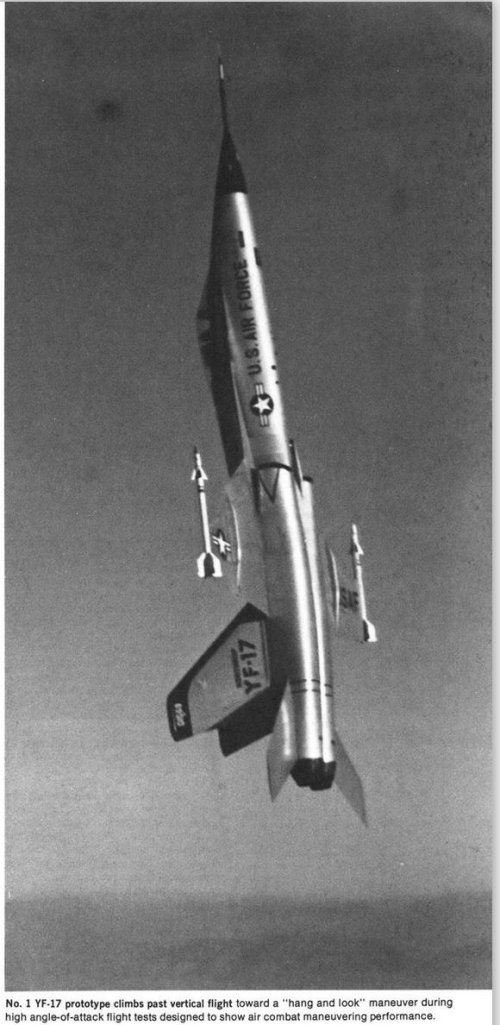
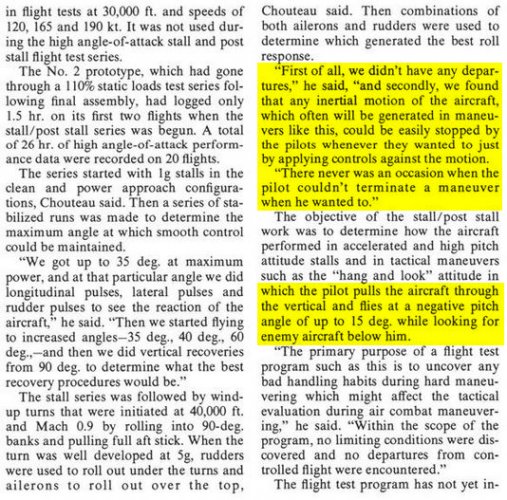
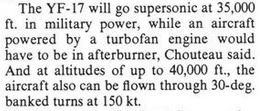
- Joined
- 3 June 2011
- Messages
- 20,908
- Reaction score
- 19,101
A shame the US never adopted the AIM-95.Yes, this. Robert Hierl makes it pretty clear while the MiG-29 was competitive with F-15 / F-16 / F-18 in manoeuvrability, its advantage in dogfights was the R-73 off-boresight and HMS combo, not post-stall manoeuvring.
Scott Kenny
ACCESS: USAP
- Joined
- 15 May 2023
- Messages
- 19,524
- Reaction score
- 27,970
Seriously.A shame the US never adopted the AIM-95.
It would have allowed all sorts of things.
lastdingo
Blogger http://defense-and-freedom.blogspot.de/
Yes, this. Robert Hierl makes it pretty clear while the MiG-29 was competitive with F-15 / F-16 / F-18 in manoeuvrability, its advantage in dogfights was the R-73 off-boresight and HMS combo, not post-stall manoeuvring.
Keep in mind missile dodging is a thing, but there's nothing to dodge in simulated air combat.
- Joined
- 27 December 2005
- Messages
- 19,226
- Reaction score
- 35,638
Good simulations should account for missile reliability and chance of evasion.Keep in mind missile dodging is a thing, but there's nothing to dodge in simulated air combat.
lastdingo
Blogger http://defense-and-freedom.blogspot.de/
Good simulations should account for missile reliability and chance of evasion.
I have never seen any indication that air combat simulations are that advanced AND there's no way (except in F-35 and very few other aircraft with HMD) how the Mk.1 eyeball visibility of missiles (if the rocket still or again burns) can be simulated. To integrate an incoming missile contact with a RWR or even IR/UV missile approach warning system would already be challenging (=expensive).
I remember a report from Eritrean-Ethiopian air war with mercenary pilots using Russian (incl. Su-27 IIRC) fighters. Apparently, almost all missiles were dodged (or run away from if launched from outside of no escape zone) in that conflict. (Maybe the mercenary pilots were overly cautious if not colluding, but there's also a very low rate of attrition in the RUS-UKR war.)
edit:
Wikipedia differs from what I remember from memory, but not too much, both versions could be reconciled:
https://en.wikipedia.org/wiki/February_1999_Eritrean–Ethiopian_aerial_clashes
- Joined
- 27 December 2005
- Messages
- 19,226
- Reaction score
- 35,638
I was just thinking of a "75% hit, 25% miss" or something, not actual modelling.I have never seen any indication that air combat simulations are that advanced AND there's no way (except in F-35 and very few other aircraft with HMD) how the Mk.1 eyeball visibility of missiles (if the rocket still or again burns) can be simulated. To integrate an incoming missile contact with a RWR or even IR/UV missile approach warning system would already be challenging (=expensive).
I remember a report from Eritrean-Ethiopian air war with mercenary pilots using Russian (incl. Su-27 IIRC) fighters. Apparently, almost all missiles were dodged (or run away from if launched from outside of no escape zone) in that conflict. (Maybe the mercenary pilots were overly cautious if not colluding, but there's also a very low rate of attrition in the RUS-UKR war.)
edit:
Wikipedia differs from what I remember from memory, but not too much, both versions could be reconciled:
https://en.wikipedia.org/wiki/February_1999_Eritrean–Ethiopian_aerial_clashes
Similar threads
-

-
MiG 17 Projects, Prototypes and Experimental Variants
- Started by Justo Miranda
- Replies: 3
-
Some observations and questions about maximum thrust to *empty* weight in fighter generations.
- Started by apparition13
- Replies: 7
-
-