Naval nuclear propulsion

TomTom

ACCESS: Confidential
Joined
16 August 2022
Messages
151
Reaction score
571
Website
linktr.ee
To my modest knowledge, there are two types of naval nuclear propulsion.

Combined Nuclear and Steam (CONAS) is a propulsion system for ships in which steam turbines can be powered by both nuclear reactors and fuel oil boilers.

Direct Nuclear Steam generation (I don’t know the acronym).

Is plausible to have in the future new type nuclear propulsion?

I was thinking about a kind of ‘CONAG’ Combined Nuclear and Gas (turbo electric?) in which a gas turbine can be used if the nuclear reactor is off and can’t produce steam. A kind of ‘Combined IEP’?

Are there any potential combination and option that are being developed or theorized?
 
No need for any other types if nuclear steam is done right.
 
I don't see why not.
It might be easier with electric propulsion, because it removes complex gearbox, which is heavy and expensive (for example, one of the main problems with Russian 22350 frigates was a gearbox for CODAG - they spent quite a lot of time and money to localize it's production and build a special testbed for it).
CONAS is easier in this regard, as you can have common turbine with two separate steam feeds.

But I don't see a use for it apart being an auxiliary/reserve power source.
 
CONAG has been studied, with gas turbines for boost power. The problem is that once you've committed to having a reactor, it doesn't cost an awful lot more to have a slightly bigger reactor. Adding a combustion plant of any kind means you have to pay for it, and add whole lot of complexity, to get a ship that's less capable than if you had slightly bigger reactors.

I'm not entirely sure why the Soviet Navy felt it needed a backup steam plant on Project 1144, but there's a reason it's not been done by anyone else.
 
CONAG has been studied, with gas turbines for boost power. The problem is that once you've committed to having a reactor, it doesn't cost an awful lot more to have a slightly bigger reactor. Adding a combustion plant of any kind means you have to pay for it, and add whole lot of complexity, to get a ship that's less capable than if you had slightly bigger reactors.

I'm not entirely sure why the Soviet Navy felt it needed a backup steam plant on Project 1144, but there's a reason it's not been done by anyone else.
Backup in case they have to scram both reactors. They are powerful enough to move ship up to 20kts and provide full electric power, thus not leaving the ship vulnerable. Or for operations in port when reactors are cold.
BTW, I'm not sure why 1144's propulsion is considered CONAS. It's more like CONOS, because I didn't found any info that it's possible to use both simultaneously. Only that you can engage steam boiler to already working turbine.
 
Last edited:
Backup in case they have to scram both reactors. They are powerful enough to move ship up to 20kts and provide full electric power, thus not leaving the ship vulnerable. Or for operations in port when reactors are cold.
That is what the diesels engines are for and it doesn't mess up the steam propulsion system
 
That is what the diesels engines are for and it doesn't mess up the steam propulsion system
But you have to use complex gearbox for it, which takes place and weight. Sufficiently powerful diesels are also not small or light. Here you can have common turbine, reduction drives.
 
No need for any other types if nuclear steam is done right.
Blatantly false, as all nuclear ships need some sort of fossil fuel generator in case the reactor SCRAMs.

Are there any potential combination and option that are being developed or theorized?
I’ve been playing around with the IEP CONAG idea.

The MAMJDF AoA examined 2 nuclear powerplants for CG(X), an A1B from the Ford, or 2 S6Gs from the Seawolf. Let’s look at how those compare to our speculative power requirements.

Let’s use a Burke Flight III as our base. That means we need to be able to sustain 30+ knots, generate 9MW of ship service power (probably more), and let’s do a 7.5% growth margin.

To fit 14-foot SPY-6s, FXR, SEWIP Block III, 96 Mk41 cells, and flag facilities, we’re going to need a big hull. Zumwalt can fit all that comfortably, but nuclear reactors are big and heavy, so we need something even larger. Let’s call it a ~19000 ton hull, at 700 feet long. That’s nearly identical to the Strike Cruiser (CSGN).

The CSGN was powered by two D2G reactors, producing 45MW of power. Relative to other ships of that size (Hyuga at 75MW, Zumwalt as 68MW, and CGBL at 88MW), ~40% less propulsion power. Why? Nuclear-powered ships optimize their hullform for maximum speed, which reduces their Block Coefficient compared to conventionally-powered ships, giving them less total resistance.

But let’s be conservative and say we a slightly thicccer hull for extra volume and weight margin, so 55MW of power for propulsion.

Our total power requirement can be modeled via the following equation:
7.5% * (Total Propulsion Power + Total Service Power)
1.075 * (55MW + 12MW)
1.075 * (77MW)
83MW

So 77MW of total power requirements and an extra 6MW of SLA.

Now let’s look at our two reactor options, an A1B or two S6Gs.
An A1B produces well over 200MW, maybe even 300MW of power. That is 3-4 times our power requirement. Additionally, only having one massive reactor reduces redundancy and survivability.
Meanwhile an S6G only produces 34MW of power, so 2 of them give 68MW. We get the added redundancy, but are still 15MW short. We can make that up with AG9160s, but that’s a very suboptimal solution, as we still need to burn fossil fuels to meet our total power needs.

Neither of these options are good. One isn’t survivable, the other has all the negatives of a nuclear ship with none of the benefits.

The optimal solution would be something that produces ~40-45MW of electrical power, and is already in series production. S1B fits that bill.

If we use the use two S1Bs with a 40MW electrical output, that’s 80MW. That’s almost enough to meet our power demands, and the rest can be fulfilled with AG9160s. Which we would need anyways, in case the reactors go down.

IEP is just the icing on the cake. It’s even quieter, more survivable, and there’s no cpa on how much reactor electrical output can be used for ship service power.
 
Blatantly false, as all nuclear ships need some sort of fossil fuel generator in case the reactor SCRAMs.
Wrong, I was posting about combined power and not backup. Even steam ships had backup diesels. On subs, the diesel does not tie into the main propulsion system, it has its own separate.
 
Backup in case they have to scram both reactors. They are powerful enough to move ship up to 20kts and provide full electric power, thus not leaving the ship vulnerable. Or for operations in port when reactors are cold.
Yes, I know that's the purpose. But not why they felt it was necessary. Are you shutting down reactors at sea that often? Or needing to cold move without tugs, but with sufficient notice to fire up a steam plant? Very strange.
 
Thanks for all your answers.

To my knowledge/understanding, the CONAS of the Kirov class was "in case of a reactor failure", so that the ship is still able to navigate and defend.
Were they fearing a failure because they lacked confidence into their design, or were they fearing that a hit could put the reactor offline? I have no idea. But it probably the question/answer that would motivate an eventual "IEP CONAG" or "GONAG".
 
You certainly could combine a nuclear plant with pretty much any fossil fuel plant, but the question would be why. Nuclear plants in general have significant economies of scale in ship impact, cost, manning, etc. - i.e. a plant making 50% more power is not much harder or more costly than the base size, hence it in general makes sense to design for maximum power needed. It is also of some importance to make the plant highly reliable from a safety point of view, which also carries over to reliability of propulsion. Consequently, there's little need in most cases for any significant non nuclear capability.

A caveat to this though is that plant design is very complex, and in general the power output is fixed. In other words, a plant is designed for a specific power, and it's generally not possible to increase that much without a very expensive redesign. As a result, there may be a case where fossil fuel boosting makes sense - for instance a hypothetical CGN-38 class that needed an extra few knots of speed.
 
To my modest knowledge, there are two types of naval nuclear propulsion.

Combined Nuclear and Steam (CONAS) is a propulsion system for ships in which steam turbines can be powered by both nuclear reactors and fuel oil boilers.

Direct Nuclear Steam generation (I don’t know the acronym).

Previous threads of interest


For a while, nuclear gas turbines were investigated for propulsion purposes. Such systems typically use a very high temperature graphite moderated reactor to superheat helium gas to drive a turbine, and then use some other coolant loop to cool the helium before sending it back to the reactor.

The reactors chosen for these applications were often derivatives of reactors designed for nuclear thermal rocket applications or nuclear ramjet or nuclear aircraft applications.

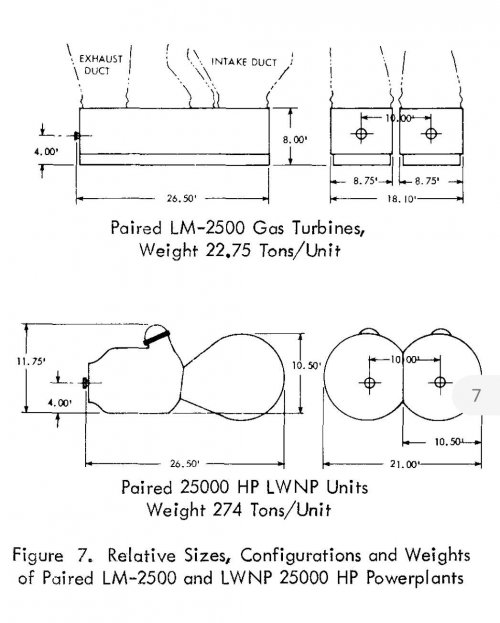
The benefits include the possibility of a relatively compact system (Westinghouse wanted a drop in replacement for an LM2500 footprint wise), and the logistical impacts of such - you replace the whole reactor in gas turbine as a unit in a shipyard.

The downsides include technical difficulties - significant development will be necessary and also potentially a requirement for more frequent refueling EG every one or two years, depending on the system design (although this may or may not be adjustable). There are also some concerns regarding the more aggressive technical design of a very high temperature reactor.

The Westinghouse proposal was for a nuclearized spruance DDGN, with the lightweight nuclear power reactors in place of the LM2500.

There are earlier proposals from the 1960s for podded nuclear gas turbines to attach to the bottoms of ships, those "nuclear outboard motors" were a worse idea but not dissimilar reactor concept.


Attachments

  • WestinghousMaritime (5).pdf
    948.3 KB · Views: 18
  • tempFileForShare_20240104-080030.jpg
    tempFileForShare_20240104-080030.jpg
    74.7 KB · Views: 38
  • Screenshot_20240104_075821_Adobe_Acrobat.jpg
    Screenshot_20240104_075821_Adobe_Acrobat.jpg
    92.3 KB · Views: 31
Last edited:
Previous threads of interest


For a while, nuclear gas turbines were investigated for propulsion purposes. Such systems typically use a very high temperature graphite moderated reactor to superheat helium gas to drive a turbine, and then use some other coolant loop to cool the helium before sending it back to the reactor.

The reactors chosen for these applications were often derivatives of reactors designed for nuclear thermal rocket applications or nuclear ramjet or nuclear aircraft applications.

The benefits include the possibility of a relatively compact system (Westinghouse wanted a drop in replacement for an LM2500 footprint wise), and the logistical impacts of such - you replace the whole reactor in gas turbine as a unit in a shipyard.

The downsides include technical difficulties - significant development will be necessary and also potentially a requirement for more frequent refueling EG every one or two years, depending on the system design (although this may or may not be adjustable). There are also some concerns regarding the more aggressive technical design of a very high temperature reactor.

The Westinghouse proposal was for a nuclearized spruance DDGN, with the lightweight nuclear power reactors in place of the LM2500.

There are earlier proposals from the 1960s for podded nuclear gas turbines to attach to the bottoms of ships, those "nuclear outboard motors" were a worse idea but not dissimilar reactor concept.

Thanks for this input and study PDF. It’s very interesting.

The Westinghouse idea you shared makes me think that we could “basically” put a compact Gas turbine modular helium reactor (GT-MHR) into a ship. Which looks interesting as it’s a quite safe and efficient design, to my knowledge.

On the long term it can even lead to a fast neutrons gas-cooled reactor.

Regarding the study, I see one main issue: the weight. Figure 7 in page 6 indicate that a paired “LWNP” power plants would be 274 tons, while paired LM-2500 are 22.75 tons. But table III and IV (page 7) indicate removing all LM-2500 installation would remove 1114 tons, and that the proposed “LWNP” installation would be 1284 tones. So it ‘only’ adds 170 tons to the ship.
 
Thanks for this input and study PDF. It’s very interesting.

The Westinghouse idea you shared makes me think that we could “basically” put a compact Gas turbine modular helium reactor (GT-MHR) into a ship. Which looks interesting as it’s a quite safe and efficient design, to my knowledge.

On the long term it can even lead to a fast neutrons gas-cooled reactor.

Regarding the study, I see one main issue: the weight. Figure 7 in page 6 indicate that a paired “LWNP” power plants would be 274 tons, while paired LM-2500 are 22.75 tons. But table III and IV (page 7) indicate removing all LM-2500 installation would remove 1114 tons, and that the proposed “LWNP” installation would be 1284 tones. So it ‘only’ adds 170 tons to the ship.
The weight is significantly greater, yes, but the footprint, as you can see from the pictures, could in theory be the same. Nuclear reactors are large and heavy (because they need a certain amount of neutron shielding), but not that large and heavy - proposals have been made to use them to power large hovercraft, ekranoplans, turbofan and turbojet aircraft, supersonic ramjet missiles, rockets - and even trains and very large road vehicles.

Obviously the ship would have to be totally redesigned, but it would not necessarily need to be significantly bigger.

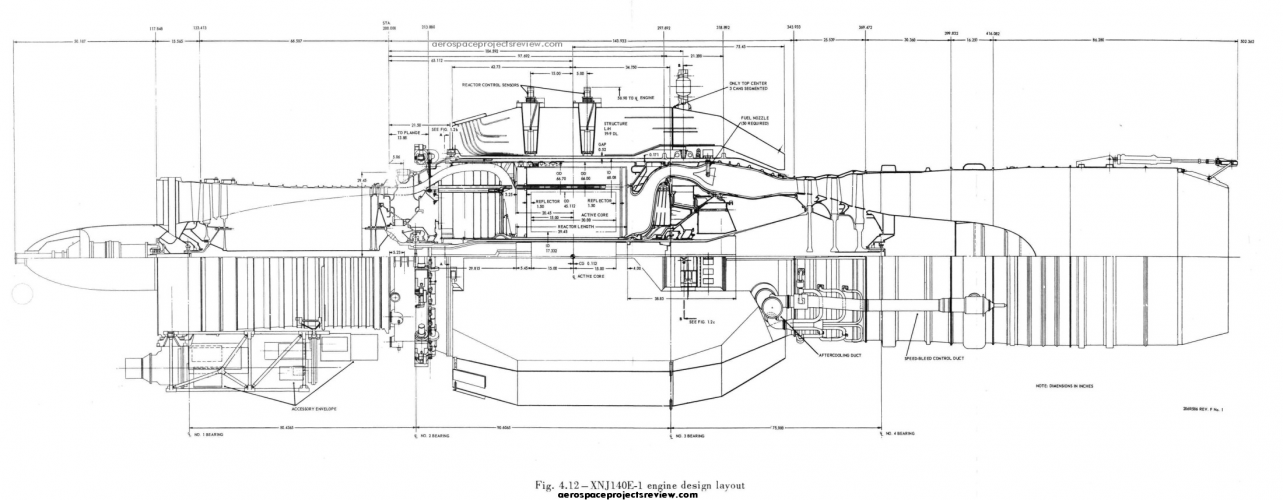
This is the classic 60s-era XNJ140E (and above, the E-1; it's a shorter, 12.5-meter long developmental engine apparently and lacks an afterburner, which was supposed to go on the full-length version). Peak output of 120 megawatts at roughly 30 metric tonnes. Of course, this thing was probably under-shielded and may not have "worked" per se (lord knows the development would have been tortuous and involved huge redesigns), but there's a lot you can do with Our Friend the Atom.


1749572549571.png

1749572581777.png

Note the similarities to the propulsion pod (also a general electric product derived from the descendants of the above).

1749573246937.png

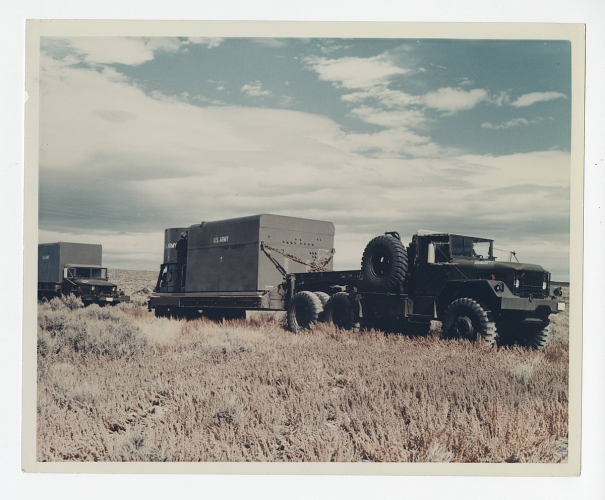
ML-1 reactor trailer.
1749573106288.png
Atomic Skies has more

Fuel rods and gas - You can put them on a plane, you can put them on a train, you can fit them in a ship, you can fit them in a pod. You can take them on a trip, you can leave them in a plant. You can put them here and there, you can put them anywhere.

In the deep, in the dark, while you sleep, for your park.
In a drill, in a hill, will it work, yes it will.
Up in space, on the moon, my living-place? Coming soon!
 
Last edited:
Problem with naval nuclear propulsion is labor and machinery maintenance. Virtually all naval reactors are pressurized water type. Few experimented with liquid metal but came own problems. USA tried sodium however it had issues retaining superheating. Soviets tried molten lead, while it worked and provided subs with prodigious speeds excess 40 knots. But they're very expensive, prone malfunction, one rupture accident destroyed sub compartment and subs needed port heating to keep coolant flowing when idle and suffered significant corrosion.

Despite improved neutronics and denser power cores in PWR they're largely dead end in terms of improvement. They're are Two potential reactors in future that may offer change for vast economic improvements and simplicity of operations and labor man reduction.

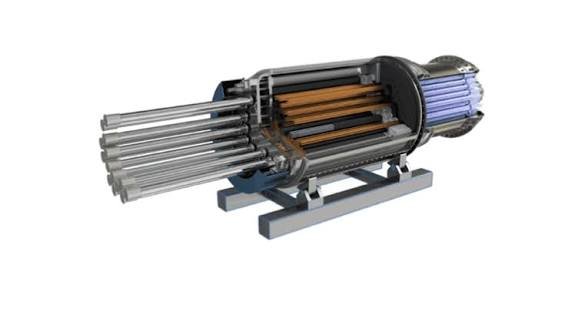
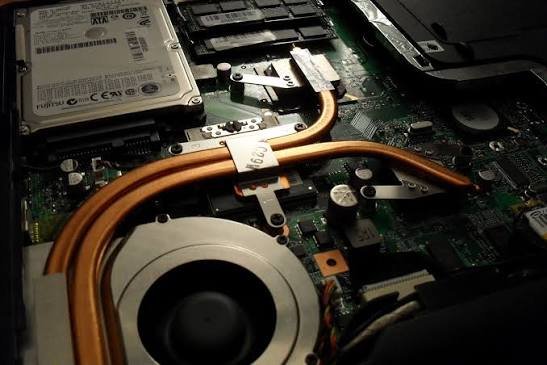
One is High temperature gas reactor. However unlikely used compact ships as core power density is lower than PWR. The 2nd is the heat pipe reactor currently investigated for use in space travel to power probes. Other than the control rod/drums they have no moving parts and convey thermal energy away using basic principle metal thermal conductivity, its same technology in your PC. Heat pipes can be geometrically shaped in anyway so bending them to accommodate odd floor plan or having turn up or down.

1000034568.jpg 1000034569.jpg

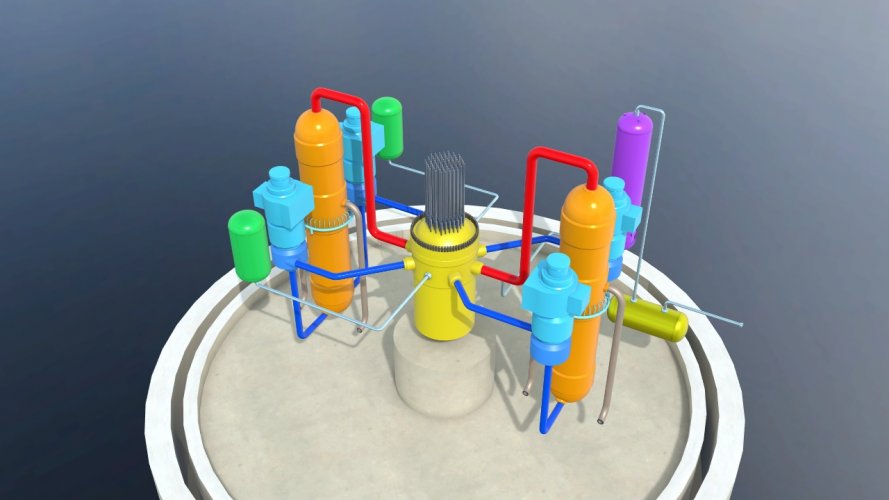
Unlike PWR there is no fluid in core to be pumped hence no pumps are needed nor design for natural circulation. Heat transfer begins from pipes which integrate thru gas heat exchanger which can use a brayton cycle gas turbine. With coolant temp of 650° C and upper echelons of 700+, Heat exchanger is backwards compatible to super-critical
Steam boilers of previous ships. Thus pressurizer, steam generators, leggings pipes all which eliminated. (See below everything besides yellow would be gone)
In gas turbine brayton cycle gas would be cooled in seawater heat exchange.

1000034570.jpg
 
I don't see why not.
It might be easier with electric propulsion, because it removes complex gearbox, which is heavy and expensive (for example, one of the main problems with Russian 22350 frigates was a gearbox for CODAG - they spent quite a lot of time and money to localize it's production and build a special testbed for it).
CONAS is easier in this regard, as you can have common turbine with two separate steam feeds.

But I don't see a use for it apart being an auxiliary/reserve power source.
Problems still n present integrated electric propulsion. Type 45 spent several years in drydock undergoing refits, plagued reliability issues, quality issues Thats more likely contractor issue.

Other issue is high power and High voltage run risks electrical fire and short out failures. The problems with Ford class. These all impound issues of concerns of All electric warship.

Sometimes analog is better-log. Burkes have a very decent reliability record despite being on gas guzzler side.
Better resolve is reduction in voltage with network smaller more abundant podded drives.
1000034576.jpg
 

Similar threads

Back
Top Bottom