This is my shocked face: :rolleyes:
"In Tokyo, concerns are also growing over the rising cost of [~16,000t] ASEV. Currently, the Ministry of Defense estimates that the acquisition cost for two ASEVs will be 783.9 billion yen ($5.23 billion) about 392 billion yen ($2.62 billion) per vessel. This is about 1.6 times higher than about 240 billion yen ($1.6 billion) per vessel that the Ministry of Defense envisaged when it decided to introduce them in 2020. The Ministry of Defense cites the effects of a weak yen and rising prices as reasons for this price hike. Of this, the contract price for the acquisition of AN/SPY-7(V)1 radar antennas about 35 billion yen ($2.34 billion), and for the Aegis System is about 138.2 billion yen ($923 million)."
Published on 06/03/2025
By Dimitris Mitsopoulos

"The U.S. Navy’s Flight III [~10,000t] Arleigh Burke (DDG-51) class destroyers are facing cost increases and delays, jumping from an average of $2.1 billion per ship to $2.5 billion per hull, with even steeper cost increases coming in the future, according to a new Congressional Budget Office (CBO) report."
Jan 8, 2025 TWZ

It would appear ASEV still relatively cheap compared to a Burke if the ASEV can be held to $2.62 billion per vessel.
 
The Japanese said the ASEV is 1.7x the displacement of Flt III Burke and assume Japanese will take the opportunity to fit a physically larger radar as it can take the additional top weight as its a larger ship, if conservatively assume radar 1.5x size of the Burke's SPY-6 radar (the US Navy stated that radar sensitivity scales as a cube of the size of the radar aperture) that means the ASEV SPY-7 radar will have over 3x the sensitivity of the SPY-6(V)1 fitted to the Burke Flt III's.

At the time of the Flt III Burke decision there were arguments whether the Burke should have had a mid-hull insert so as to carry a more powerful/heavier radar to meet the BMD specification, Raytheon mentioned a four face 69 2 sq ft RMA antennas but Navy chose a 37 sq ft RMA antennas as the maximum top weight that could be fitted to the modified Burke Flt III, but fortunately the new GaN SPY-6(V)1 radar in testing was 3x more sensitive than envisaged.

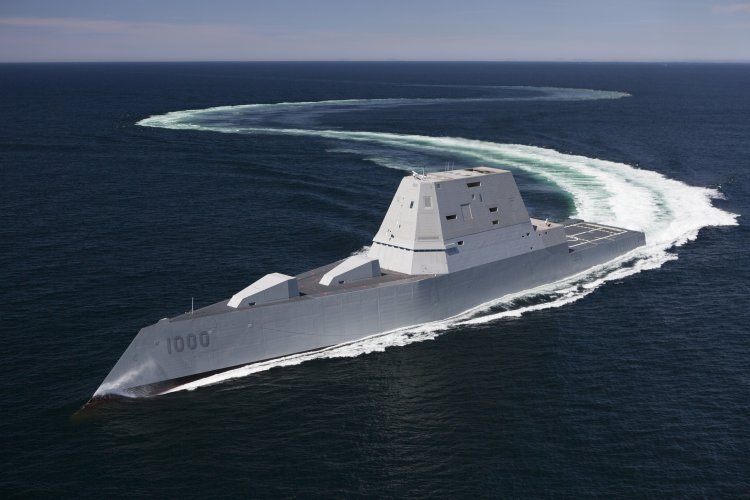
The envisaged DDG(X) will be larger in displacement than the Flt III Burke to be ordered in FY2032? maybe an additional 2,000 tons or so at 12,000 tons so possibly with a larger radar, but not as large as the ASEV so it would appear the ASEV will still have the more powerful radar with presume advantages in sensitivity - range, search volume and discrimination, whether these advantages at higher cost is required is an open question to meet the specification required?
 
The envisaged DDG(X) will be larger in displacement than the Flt III Burke to be ordered in FY2032? maybe an additional 2,000 tons or so at 12,000 tons so possibly with a larger radar, but not as large as the ASEV so it would appear the ASEV will still have the more powerful radar with presume advantages in sensitivity - range, search volume and discrimination, whether these advantages at higher cost is required is an open question to meet the specification required?
Considering that the ASEVs are intended to replace Aegis Ashore installations and I believe will spend their lives patrolling west of Japan, the bigger arrays and massively improved sensitivity are necessary for the job.

I don't believe that the USN DDGX will have arrays the same size as the ASEVs. The only way that makes sense is if the various hypersonic and ballistic AShMs prove a bigger threat than anyone thought.
 
The USN really needs to adopt that model...
Im not from USA.
So is jut my opinion
As a Ticonderoga replacement
or this
KDXII-topshot.jpg

I think she has more VLS tham the Burke´s
 
The envisaged DDG(X) will be larger in displacement than the Flt III Burke to be ordered in FY2032? maybe an additional 2,000 tons or so at 12,000 tons so possibly with a larger radar, but not as large as the ASEV so it would appear the ASEV will still have the more powerful radar with presume advantages in sensitivity - range, search volume and discrimination, whether these advantages at higher cost is required is an open question to meet the specification required?
The latest CRS reports suggest DDG(X) has hit 15000 tons, which is unsurprising. Earlier concepts seem to be have in the 12000-13000 ton range. According to NAVSEA, the first DDG(X) will be built 1:1 with the Flight III combat system (meaning electronics and armament), meaning a 14-foot SPY-6 and legacy SPG-62s and SPQ-9B. Later hulls are supposed to increase the antenna size to 18-feet, and replace all X-Band sets with FXR.

Im not from USA.
So is jut my opinion
As a Ticonderoga replacement
or this
This fixes none of the issues associated with the Burke Flight III.

Sejong the Great doesn't have a large SWAPC margin, so it lacks the power generation needed to support increasingly-power hungry electronics. Consider they needed to add an entire extra 3MW to the Flight III, just to fit a 14-foot SPY-6. Now consider they're purposefully delaying SEWIP Block III and DEWs to avoid eating design margin this early in their lifespan. This does not mesh well with a ship expected to take 18-foot antennas, FXR, and SEWIP Block III at a minimum. And this does not account for the 5-10% mandatory SWAPC margin.

Sejong the Great is further hampered by being a mechanical drive rather than IEP, so power generation is capped at the diesel generators. Do note that NAVSEA doesn't think that even IEP will be enough to meet DDG(X)'s power requirements, so they're planning to used stored energy systems to hold energy for DEWs. Ford already has flywheels for EMALS, DDG-1001 will be testing another system. https://news.usni.org/2025/01/29/na...storage-to-supply-power-hungry-warships-bases

Also you can't fit LRHW on a Sejong the Great, it does not have the volume or weight.

I don't know why people think the East Asian destroyers would make better Flight IIIs or DDG(X)s. They offer very few advantages for the cost of spinning up entirely new production lines, and still suffer from the major drawbacks. Zumwalt Mod Repeats with Aegis were the correct answer.
 
Last edited by a moderator:
Im not from USA.
So is jut my opinion
As a Ticonderoga replacement
Oh, oops. Sorry, English language issue with using the same word with too many meanings.

I meant that the US needs to adopt Japan's production policy. Build a few ships, see what needs to be changed for them, make those changes in a new class, see what needs to be changed for them, repeat. Do not do mid-life updates, instead build whole new ships to keep the naval architects and shipyards working.
 
I meant that the US needs to adopt Japan's production policy. Build a few ships, see what needs to be changed for them, make those changes in a new class, see what needs to be changed for them, repeat. Do not do mid-life updates, instead build whole new ships to keep the naval architects and shipyards working.
That is awful industrial policy. The Japanese and American shipbuildings are fundamentally different, specifically the latter is profitable and well developed. That allows them to get away with frequently switching between designs.

That won’t work for the USN. It would complicate development, complicate logistics, complicate crew training, complicate maintenance. If you’re sending ships around the world, you want as much commonality in the fleet as possible. Don’t want to be carrying 4 different kinds of turbine fans, running a gazillion different CMS variants (Aegis Common Source Library exists for a reason).

And quite frankly the shipyards can’t handle it. Look at how BIW is handling the Flight IIA restarts after Zumwalt production ended. Our yards can’t switch that fast.

Also we already tried something similar, LCS was supposed to downselect to one design sometime in the early 2010s. The Navy didn’t have the performance information they needed to downselect, neither design was seen as mature enough, and Congress threatened to pull funding for the entire program. In the end, the Navy bit the bullet and started series production for both variants.

Do not do mid-life updates
I can’t think of a more retarded idea. Ships are specifically built with SWAPC margin for this exact purpose. Consider that DDG Mod 2.0 fulfills the initial Flight III requirements. Why should we keep running 40 year old radar suites, instead of brining the fleet to current standards? This also discounts the fact that ships need long, multi-year, mid-life overhauls regardless, just to bring them inline with new standards and prepare the hull for another 20 years of service.
 
That is awful industrial policy. The Japanese and American shipbuildings are fundamentally different, specifically the latter is profitable and well developed. That allows them to get away with frequently switching between designs.

That won’t work for the USN. It would complicate development, complicate logistics, complicate crew training, complicate maintenance. If you’re sending ships around the world, you want as much commonality in the fleet as possible. Don’t want to be carrying 4 different kinds of turbine fans, running a gazillion different CMS variants (Aegis Common Source Library exists for a reason).
Now that Aegis is a software update instead of hardware replacement, it's a lot easier to keep the fleet on a common baseline.

GTs are replaced as entire units, and IIRC the USN is no longer doing the rebuilds on them anyways.


And quite frankly the shipyards can’t handle it. Look at how BIW is handling the Flight IIA restarts after Zumwalt production ended. Our yards can’t switch that fast.
False equivalence, BIW had completely retooled for Zumwalt and IIRC scrapped all the Burke tooling. Having to restart Burke production meant retooling the yards again and rebuilding all the tooling that was scrapped in the process. Not to mention losing all the tribal knowledge about how to make the process flow better (see how Virginia-class module count has dropped)


I can’t think of a more retarded idea. Ships are specifically built with SWAPC margin for this exact purpose. Consider that DDG Mod 2.0 fulfills the initial Flight III requirements. Why should we keep running 40 year old radar suites, instead of brining the fleet to current standards? This also discounts the fact that ships need long, multi-year, mid-life overhauls regardless, just to bring them inline with new standards and prepare the hull for another 20 years of service.
Because you're not running 40 year old radar suites. You're replacing the ship at ~25.
 
Now that Aegis is a software update instead of hardware replacement, it's a lot easier to keep the fleet on a common baseline.
In theory. Virtualisation hasn't really worked out in practice, not least because of performance, security, and reliability concerns.

GTs are replaced as entire units, and IIRC the USN is no longer doing the rebuilds on them anyways.
That is already coming back to haunt the US Navy. JIT logistics and the like were a losing proposition from the get go.
 
The latest CRS reports suggest DDG(X) has hit 15000 tons, which is unsurprising. Earlier concepts seem to be have in the 12000-13000 ton range. According to NAVSEA, the first DDG(X) will be built 1:1 with the Flight III combat system (meaning electronics and armament), meaning a 14-foot SPY-6 and legacy SPG-62s and SPQ-9B. Later hulls are supposed to increase the antenna size to 18-feet, and replace all X-Band sets with FXR.
Thanks for the update on the DDG(X), reading the Jan. '25 report CBO mentions possible 14,500t ship with first order slipped to 2034
This fixes none of the issues associated with the Burke Flight III.

Sejong the Great doesn't have a large SWAPC margin, so it lacks the power generation needed to support increasingly-power hungry electronics. Consider they needed to add an entire extra 3MW to the Flight III, just to fit a 14-foot SPY-6. Now consider they're purposefully delaying SEWIP Block III and DEWs to avoid eating design margin this earlier in their lifespan. This does not mesh well with a ship expected to take 18-foot antennas, FXR, and SEWIP Block III at a minimum. And this does not account for the 5-10% mandatory SWAPC margin.

Sejong the Great is further hampered by being a mechanical drive rather than IEP, so power generation is capped at the diesel generators. Do note that NAVSEA doesn't think that even IEP will be enough to meet DDG(X)'s power requirements, so they're planning to used stored energy systems to hold energy for DEWs. Ford already has flywheels for EMALS, DDG-1001 will be testing another system. https://news.usni.org/2025/01/29/na...storage-to-supply-power-hungry-warships-bases

Also you can't fit LRHW on a Sejong the Great, it does not have the volume or weight.

I don't know why people think the East Asian destroyers would make better Flight IIIs or DDG(X)s. They offer very few advantages for the cost of spinning up entirely new production lines, and still suffer from the major drawbacks. Zumwalt Mod Repeats with Aegis were the correct answer.
Would disagree, the three Zumwalt's procurement cost averaged at $5.6 billion to build and more than 10 years in build per ship, not helped by the complicated and costly IEP, Rear Adm. Fred Pyle Director of Surface Warfare (OPNAV N96) said in January '24 at SNA the DDG(X) the propulsion system for the new destroyer is not set as IEP, current thinking not known, would also note NAVSEA's reputation is in tatters after their mismanagement of the Connie.

Reading the CBO report estimates their cost at $4.4 billion for the ~14,500t DDG(X) whereas ~16,000t ASEV is $2.62 billion so it appears the East Asian shipyards do offer major cost advantages.

https://www.cbo.gov/publication/61155
 
Last edited:
In theory. Virtualisation hasn't really worked out in practice, not least because of performance, security, and reliability concerns.
Performance and reliability issues just says that your emulator design sucks ass.

I'd need more details about the security issues to speak to those.


That is already coming back to haunt the US Navy. JIT logistics and the like were a losing proposition from the get go.
But they look so good on accounting spreadsheets...
 
Would disagree, the three Zumwalt's procurement cost averaged at $5.6 billion to build and more than 10 years in build per ship
Yes, because we built three of them and economies of scale didn’t kick in. Had we built additional hulls, and stripped out some of the land attack-specific technologies, unit prices would’ve dropped dramatically. Further, having additional hulls would mean Zumwalts make up a larger percentage of the LSC fleet, providing more incentive for fixes and expanding testing opportunities.

This also ignores all the added benefits that come with Zumwalt hulls, longer range, less manpower requirements, more LRHW platforms, and additional growth potential across the fleet. You’re trading higher upfront costs for more efficient operating costs.

Reading the CBO report estimates their cost at $4.4 billion for the ~14,500t DDG(X) whereas ~16,000t ASEV is $2.62 billion so it appears the East Asian shipyards do offer major cost advantages.
The sky is blue, news at 11.
The ASEV to DDG(X) cost comparison isn’t a good one either. ASEV is a very tame design that simply reuses existing technology. DDG(X) will be introducing new systems and have much greater capabilities. The two fill different mission sets.

Also I can’t stress this enough, the CBO numbers are entirely made up. The “methodology” they use is completely made up.

not helped by the complicated and costly IEP, Rear Adm. Fred Pyle Director of Surface Warfare (OPNAV N96) said in January '24 at SNA the DDG(X) the propulsion system for the new destroyer is not set as IEP, current thinking not known,
That’s odd, because the entire world seems to be moving towards electric ships. Ana the Navy is doubling down on electric ships with stored energy systems. So I’ll turn the question back towards you, what do you propose to meet DDG(X)s absurd power requirements?

Because you're not running 40 year old radar suites. You're replacing the ship at ~25.
So you’re paying the same price for ships that only last half the time? When yards already can’t keep up with orders? Real smart.
 
When you're constantly building ships you can afford a larger shipbuilding base, instead of being stupid and hiring-firing as contracts start and stop.
We are constantly building ships though. When was the last time HII or BIW ran out of contracts? I genuinely can’t think of one.

The other thing you’re overlooking is that American shipbuilding is fundamentally uncompetitive. American shipbuilding will never come down to Japanese-level prices. American workers cost more, get more benefits, shipyards must meet EPA guidelines, use domestically-sourced material, etc. Like I’ve said previously, shipbuilding costs will not decrease by any meaningful margin, nor will we ever be able to pump out numbers like China.
 
That is already coming back to haunt the US Navy. JIT logistics and the like were a losing proposition from the get go.
It really isn't, repair-by-replacement gas turbines derived from those of aircraft has been the norm for pretty much every navy across the globe for the last 50 years. Perhaps the few exception to this were the County class destroyers and Type 81 frigates, which were amongst the first large surface combatants with gas turbines (I can't speak for Soviet ships like the Kashin, Kara or Udaloy classes and apparently the German Köln class used a Brown Boveri gas turbine plant I don't know anything about.). The Royal Navy then went down the replaceable aircraft gas turbine route with Exmouth, Bristol, and every subsequent surface combatant. The USN has never tried anything other than this approach, Spruance class had LM2500s derived from TF-39s.
 
Yes, because we built three of them and economies of scale didn’t kick in. Had we built additional hulls, and stripped out some of the land attack-specific technologies, unit prices would’ve dropped dramatically. Further, having additional hulls would mean Zumwalts make up a larger percentage of the LSC fleet, providing more incentive for fixes and expanding testing opportunities.

Your point about economies of scale applies equally if not more to the Japanese ASEVs as only two being built compared to three Zumwalt's for approximately $3 billion less per ship, though as you say land attack capabilities would not have been cheap but ASEV has the cost of the $1 billion plus for the SPY-7.

This also ignores all the added benefits that come with Zumwalt hulls, longer range, less manpower requirements, more LRHW platforms, and additional growth potential across the fleet. You’re trading higher upfront costs for more efficient operating costs.

I would hope that the flawed Zumwalt hull came with some improvements over the Burke hull whose design dates back to the '80s with its all gas guzzling GTs. As pointed out previously CBO revealed Zumwalt even though its a 6,000t larger ship than the Burke but has exactly the same payload, deadweight tonnage the difference between light and full load displacement, which assuming is partly due to the Zumwalt tumblehome hull requirement for extra large internal stabilization tanks to stop it sinking, Navy never disclosed the numbers. The result being though Zumwalt at 15,700 LT is approximately the same size as the ASEV and it would be unlikely be able to take the top weight of a larger and heavier more capable SPY-6 or SPY-7 radar for BMD as with the ASEV as it would compromise the Zumwalt's stability.


The sky is blue, news at 11.
The ASEV to DDG(X) cost comparison isn’t a good one either. ASEV is a very tame design that simply reuses existing technology. DDG(X) will be introducing new systems and have much greater capabilities. The two fill different mission sets.

'ASEV a very tame design' what matters is the CONOPS and if successful in meeting it at an affordable cost in a timely manner and the ASEV with its 128 VLS cells ticks both boxes with ships to be commissioned in 2027 and 2028, whereas you could classify DDG(X) a failure on CBO expected $4.4 billion cost and Adm Ron Boxall said in 2018 that it would be ordered in 2023, now the Navy saying eleven years later in 2034!
Also I can’t stress this enough, the CBO numbers are entirely made up. The “methodology” they use is completely made up.

The opposite viewpoint backed up by numbers, CBO higher than those of the Navy, CBO is much more realistic, Navy is having to ask Congress for an additional funding to cover cost overruns of ships previously authorized in build, varying from 22% to 34% increase per type of ship/sub, in the last two years, FY24 it was $3.4 billion and in FY25 it jumped to a massive $10.4 billion to cover the cost overruns.


That’s odd, because the entire world seems to be moving towards electric ships. Ana the Navy is doubling down on electric ships with stored energy systems. So I’ll turn the question back towards you, what do you propose to meet DDG(X)s absurd power requirements?

The Zumwalt system of gas turbines drives is a complex electrical grid that powers electric motors that drive the ship which inevitably costly. World Navies only moving towards electric ships for necessary quietness at low speeds for dedicated ASW frigates such as the Connie, e.g. some others such as the new Brit Type 31, French FDI and German F126 frigates all diesel as come with the advantages of being less expensive and with better fuel consumption for longer range than electrical or GTs propulsion systems.
 
Your point about economies of scale applies equally if not more to the Japanese ASEVs as only two being built compared to three Zumwalt's for approximately $3 billion less per ship, though as you say land attack capabilities would not have been cheap but ASEV has the cost of the $1 billion plus for the SPY-7.

ASEV is also built in Japan. It would not be anywhere as cheap if built in the US.

The result being though Zumwalt at 15,700 LT is approximately the same size as the ASEV and it would be unlikely be able to take the top weight of a larger and heavier more capable SPY-6 or SPY-7 radar for BMD as with the ASEV as it would compromise the Zumwalt's stability.

As discussed GAO report on the 2007 Radar/Hull Study, Zumwalt can accommodate SPY+25dB arrays (i.e. 18-foot), and BIW proposed a variant with of the DDG-1000 hull with 21-foot arrays.

The Zumwalt system of gas turbines drives is a complex electrical grid that powers electric motors that drive the ship which inevitably costly. World Navies only moving towards electric ships for necessary quietness at low speeds for dedicated ASW frigates such as the Connie, e.g. some others such as the new Brit Type 31, French FDI and German F126 frigates all diesel as come with the advantages of being less expensive and with better fuel consumption for longer range than electrical or GTs propulsion systems.
CODLOG,and CODLAG offer much less power generation than IEP. Japan has adopted COGLAG in both it's ASW-oriented Asahi class and it's AAW-oriented Maya class. Britain of course, adopted IEP for the entirely AAW-oriented Type 45 destroyers.

Diesels also have a greater acoustic signature, due to their worse noise characteristics, and the need for separate compressors for Agouti/Prairie propeller silencing and Masker belts. I should also add that FDI and Type 31 are not strictly speaking ASW frigates, but are both designed around foreign service and flag presence roles. Better to think of them as over-armed OPVs capable of surviving in a Middle Eastern environment. None of the ships you've mentioned have anything like the power margins for multi-megawatt lasers that will be required for air defence against cruise missiles, and all are being built alongside larger dedicated AAW combatants.
 
Your point about economies of scale applies equally if not more to the Japanese ASEVs as only two being built compared to three Zumwalt's for approximately $3 billion less per ship
The Japanese and American shipbuilding industries are not remotely comparable. Japanese labor, materials, and lack of worker and environmental laws make it cheaper to build there. ASEV would likely cost more than a Flight III if produced domestically.

As pointed out previously CBO revealed Zumwalt even though its a 6,000t larger ship than the Burke but has exactly the same payload, deadweight tonnage the difference between light and full load displacement, which assuming is partly due to the Zumwalt tumblehome hull requirement for extra large internal stabilization tanks to stop it sinking, Navy never disclosed the numbers.
This is not a coherent sentence.

The result being though Zumwalt at 15,700 LT is approximately the same size as the ASEV and it would be unlikely be able to take the top weight of a larger and heavier more capable SPY-6 or SPY-7 radar for BMD as with the ASEV as it would compromise the Zumwalt's stability.
I can’t comment on the hydrostatics, but Zumwalt’s size was derived from the tumblehome hull being more volume restrictive than a traditional monohull.

I also highly doubt Zumwalt has the same payload and DWT as a Burke.

The part about Zumwalt not being able to take SPY-6 is blatantly false. It was designed to use 14-foot SPY-4 antennas, and supposedly has a 10% SWAPC margin. That’s before you remove AGS and associated ammunition handling equipment. And as Tentative Fleet Plan pointed out, multiple studies have shown it can take even larger antenna sizes. There’s more than enough space, weight, and power for SPY-6.

'ASEV a very tame design' what matters is the CONOPS and if successful in meeting it at an affordable cost in a timely manner and the ASEV with its 128 VLS cells ticks both boxes with ships to be commissioned in 2027 and 2028
I mean that’s great and all, but it only solve 2 of the issues associated with Flight III (that being the weight and volume issues). ASEV still lacks the power generation needed to handle DEWs and larger antennas, which is arguably more important than the weight and volume concerns. Flight III already struggles to meet the power demands of SPY-6(V)1 and is intentionally foregoing installation of SEWIP Block III and DEWs. Again, why switch to ASEV if it fails to resolve the most basic issues associated with a non-electric powerplant?

whereas you could classify DDG(X) a failure on CBO expected $4.4 billion cost and Adm Ron Boxall said in 2018 that it would be ordered in 2023, now the Navy saying eleven years later in 2034!
I don’t think the DDG(X) program existed at the time, it was still under the LSC moniker. Regardless, I’ve never seen the FY23 date, perhaps you’re confusing it with the FY28 date stated in 2021? And if so, I’m going to point you to the Fiscal Responsibility Act (FRA).

The opposite viewpoint backed up by numbers, CBO higher than those of the Navy, CBO is much more realistic, Navy is having to ask Congress for an additional funding to cover cost overruns of ships previously authorized in build, varying from 22% to 34% increase per type of ship/sub, in the last two years, FY24 it was $3.4 billion and in FY25 it jumped to a massive $10.4 billion to cover the cost overruns.
The CBO rolled a dice and unsurprisingly got the correct answer, but that does not dignify their methodology. I’m going to link another post below that outlined just how ridiculous their estimates are: https://www.secretprojects.co.uk/threads/ddg-x-arleigh-burke-replacement.39147/post-698570

The Zumwalt system of gas turbines drives is a complex electrical grid that powers electric motors that drive the ship which inevitably costly.
I know how IEP powerplants work, and yes, they are marginally more expensive.

World Navies only moving towards electric ships for necessary quietness at low speeds for dedicated ASW frigates such as the Connie, e.g. some others such as the new Brit Type 31, French FDI and German F126 frigates all diesel as come with the advantages of being less expensive and with better fuel consumption for longer range than electrical or GTs propulsion systems.
As others have stated, the other big benefit of IEP is power generation and survivability, which are absolutely critical in the context of any future surface combatant. ASEV and Flight III are the farthest you can take a mechanical drive, they can’t handle larger radars. And you never answered my question. How do you propose we meet future power demands without IEP and stored energy solutions?
 
It is extremely difficult to change the interest relationships among the manufacturers with regard to the reemployment of retired SDF officers, etc., and work must be ordered so that each manufacturer involved is on an equal footing.
The reemployment of retired SDF officers is an important and difficult issue.
 
It is extremely difficult to change the interest relationships among the manufacturers with regard to the reemployment of retired SDF officers, etc., and work must be ordered so that each manufacturer involved is on an equal footing.
The reemployment of retired SDF officers is an important and difficult issue.
IIRC, the SDF does not force officers out after 20-30 years like the US does, but rather at 35+ (Officer at ~60-65 years old). So it's not like people getting a second career from retiring from the US Military at 38-42 on the low end and then working another 25 years before they retire the second time at ~65.
 
1 Capt. 58
2 Capt. 57
3 Capt. 57
1 Lieutenant 56
2 Lieutenant 56
3 Lieutenant 56
Warrant Officer 56
Chief Petty Officer 56
1 Sergeant 56
2 Sergeant 55
3 Sergeant 55

Japan is still a society with a lifetime employment system, therefore relationships with companies in the defense industry are extremely important.
Changing to electric propulsion would put gear manufacturers out of business, so we are trying to keep our interests as close as possible until we are ready.
 
1 Capt. 58
2 Capt. 57
3 Capt. 57
1 Lieutenant 56
2 Lieutenant 56
3 Lieutenant 56
Warrant Officer 56
Chief Petty Officer 56
1 Sergeant 56
2 Sergeant 55
3 Sergeant 55
Right.

A Sergeant/Petty Officer 1st Class (E6) retires from the USN at 20 years service, 38 years old.** IIRC Chief Petty Officers (E7) retire at 24 years service, ~42 years old. Senior Chief and Master Chief retire at 30 years service, ~48 years old. So the JSDF enlisted folks are retiring 8-18 years older than USN enlisted.

** Assuming that they enlisted at 18 years old. I didn't enlist till I was 22, and I believe I was one of the oldest in my boot camp cycle. There's stories of various "pappy" (old man/grandpa) enlisting in their late 20s, I think 28 was the usual number, and you could in theory enlist at up to 39 if you hated yourself. I can't imagine trying to do boot camp things at 39!​

USN officers have an "up or out" policy, where if they are not promoted after 3 chances, they are retired. This only applies to Lieutenant Commanders and above, O4s and up, because promotion up to O3 is automatic. Commissioned as an Ensign (O1) at ~22yo,*** promote to Lieutenant Junior Grade (O2) at ~24yo, full Lieutenant (O3) at ~26yo. First look/"above the zone" at Lieutenant Commander (O4) is 4 years after that (~30yo), the "normal"/"zone" time to be promoted is 5 years after LT (31), and the last chance/"below the zone" is 6 years after LT (32yo). First look at Commander (O5) is 4 years after you make LCDR (~35yo), "zone" is 5 years after LCDR (~36yo), and last chance is 6 years after LCDR (~37). Making Captain (O6) is when it gets really political, and Congress actually names you personally to be promoted. Again, first look for Captain is 4 years after you make CDR (~40yo), "zone" is 5 years after CDR (~41yo), and last chance is 6 years after CDR (~42yo), and you'd have around 20 years in at this point. After this it's all political and your promotion depends on what job you're assigned to, but IIRC it's still nominally about 5 years between promotion cycles, subject to the whims of DC. But this leaves O6s retiring about 12 years before their JMSDF counterparts.

*** Assuming that the Officer went straight to college at 18 and completed school in 4 years then directly commissioned at 22. There's also the option of being enlisted first and then getting a commission through various programs, in which case you usually see E5s with 5-10 years in service getting their commissions.​


Japan is still a society with a lifetime employment system, therefore relationships with companies in the defense industry are extremely important.
Changing to electric propulsion would put gear manufacturers out of business, so we are trying to keep our interests as close as possible until we are ready.
I guess warships are some of the last users of large reduction gear sets, aren't they... generators and their turbines are set up to provide a 3600rpm input (or is it 3000rpm for 50hz electrical systems?), and ideally no gearing at all.
 
Now that Aegis is a software update instead of hardware replacement, it's a lot easier to keep the fleet on a common baseline.

GTs are replaced as entire units, and IIRC the USN is no longer doing the rebuilds on them anyways.


False equivalence, BIW had completely retooled for Zumwalt and IIRC scrapped all the Burke tooling. Having to restart Burke production meant retooling the yards again and rebuilding all the tooling that was scrapped in the process. Not to mention losing all the tribal knowledge about how to make the process flow better (see how Virginia-class module count has dropped)


Because you're not running 40 year old radar suites. You're replacing the ship at ~25.
35. JMSDF surface warships have 35 year lifespans. Although they haven't announced a Kongo replacement yet, and the first of those is due in 2028.

 
I guess warships are some of the last users of large reduction gear sets, aren't they... generators and their turbines are set up to provide a 3600rpm input (or is it 3000rpm for 50hz electrical systems?), and ideally no gearing at all.
All NATO ones are 60Hz (3600rpm), not sure about Japan.
 
The Japanese and American shipbuilding industries are not remotely comparable. Japanese labor, materials, and lack of worker and environmental laws make it cheaper to build there. ASEV would likely cost more than a Flight III if produced domestically.
Would think the Japanese would be insulted with your comments on their standards, they have the technical expertise and know how to operate a successful commercial shipbuilding industry and if the Navy wants to come near able to match the Chinese Navy ship numbers its designs and shipbuilding it must come up to world standards e.g. Navy Secretary John Phelan said
in the shipyard, a welder reported spending approximately 30% of their time on paperwork. The issue of excessive paperwork was also raised in comparison to welders in Japan, who spend no time on paperwork.
This is not a coherent sentence.
I see you are a fully paid up a member of the grammar police
I can’t comment on the hydrostatics, but Zumwalt’s size was derived from the tumblehome hull being more volume restrictive than a traditional monohull.

I also highly doubt Zumwalt has the same payload and DWT as a Burke.
You need to look at the CBO report Cost of the Navy's New Frigate - Table 1 . Characteristics of the Navy’s Surface Combatants, 1970 to 2020 where it lists Displacement in Long Tons for both Full Load and Lightship, the difference is the DWT and amazingly both the Zumwalt and the Flt III Burke have exactly the same at 2,117 tons even though Zumwalt 5,942 tons larger ship, I don't know the weight of the two 155mm AGS systems but doubt its 5,942 tons and assume it’s the extra weight for the stabilization tank system required for the tumblehome hull. Navy never did explain
The part about Zumwalt not being able to take SPY-6 is blatantly false. It was designed to use 14-foot SPY-4 antennas, and supposedly has a 10% SWAPC margin. That’s before you remove AGS and associated ammunition handling equipment. And as Tentative Fleet Plan pointed out, multiple studies have shown it can take even larger antenna sizes. There’s more than enough space, weight, and power for SPY-6.
Appreciate source
I mean that’s great and all, but it only solve 2 of the issues associated with Flight III (that being the weight and volume issues). ASEV still lacks the power generation needed to handle DEWs and larger antennas, which is arguably more important than the weight and volume concerns. Flight III already struggles to meet the power demands of SPY-6(V)1 and is intentionally foregoing installation of SEWIP Block III and DEWs. Again, why switch to ASEV if it fails to resolve the most basic issues associated with a non-electric powerplant?
It would be easy on a new design to accommodate additional or more powerful DGs, if found required the next batch design would be upgraded, but why would the Japanese install power for lasers as they are only effective in good weather and line of sight, the old R&D adage still applies " lasers are the weapons of the future ... and always will be", useless in cloud, rain, high wind etc, Would note Flt III Burkes are fitted with SEWIP Block III and are even being back fitted to some of the Flt IIAs e.g. USS Pinckney (DDG 91)

I don’t think the DDG(X) program existed at the time, it was still under the LSC moniker. Regardless, I’ve never seen the FY23 date, perhaps you’re confusing it with the FY28 date stated in 2021? And if so, I’m going to point you to the Fiscal Responsibility Act (FRA).

Check out the August 2018 USNI article, as you say then it was called the LSC
Navy's Next Large Surface Combatant Will Draw From DDG-51, DDG-1000 - But Don't Call it a Destroyer Yet - USNI News
The CBO rolled a dice and unsurprisingly got the correct answer, but that does not dignify their methodology. I’m going to link another post below that outlined just how ridiculous their estimates are: https://www.secretprojects.co.uk/threads/ddg-x-arleigh-burke-replacement.39147/post-698570

Just point out that the how ridiculous the Navy build figures are for ships authorized by Congress and contracts signed and as said they had to come back to Congress for additional funding of $3.4 billion FY24 and $10.4 billion in FY25 to cover the cost overruns.
https://www.secretprojects.co.uk/threads/ddg-x-arleigh-burke-replacement.39147/post-698570
I know how IEP powerplants work, and yes, they are marginally more expensive.

Haven't seen the figures but the impression IEP much more expensive and time consuming and with very limited skilled manpower base which should be a big no no if you want to build ships at a fast rate compared with mechanical propulsion systems, what was your experience on IEP time to install?
As others have stated, the other big benefit of IEP is power generation and survivability, which are absolutely critical in the context of any future surface combatant. ASEV and Flight III are the farthest you can take a mechanical drive, they can’t handle larger radars. And you never answered my question. How do you propose we meet future power demands without IEP and stored energy solutions?
If the ships are designed for mechanical propulsion it can power the largest radars as the ASEV with its mechanical propulsion proves. until IEP and stored energy systems can meet the same cost and time criteria to me they should be ruled out, to me the priority is the number ships that Navy can fund on the high seas to counter Chinese Navy, Reagan did it his with near 600 ship Navy.
 
It would be easy on a new design to accommodate additional or more powerful DGs, if found required the next batch design would be upgraded, but why would the Japanese install power for lasers as they are only effective in good weather and line of sight, the old R&D adage still applies " lasers are the weapons of the future ... and always will be", useless in cloud, rain, high wind etc, Would note Flt III Burkes are fitted with SEWIP Block III and are even being back fitted to some of the Flt IIAs e.g. USS Pinckney (DDG 91)
Proper laser frequency selection minimizes the problems.

The UK tested several laser systems in desert sandstorms so violent the problem was keeping the target drones aloft, not hitting the drones with the lasers.
 
Proper laser frequency selection minimizes the problems.

The UK tested several laser systems in desert sandstorms so violent the problem was keeping the target drones aloft, not hitting the drones with the lasers.
An August 2022 paper by Lockheed Martin described their Layered Laser Defense (LLD) system.
"The LLD actually contains three lasers that work symbiotically – a target illuminator laser (TILL), a beacon illuminator laser (BILL), and a high energy laser (HEL). The TILL is used with a fine tracking telescope for engagement quality tracking of targets, while the BILL measures atmospheric distortion and uses adaptive optics to focus the HEL, which is used to destroy the targets."

If understanding correctly having to use a fine tracking telescope for engagement for quality tracking of targets, so laser will only work on a clear fine day. As far as know only the one Burke USS Preble was fitted with Lockheed's HELIOS 60-150 kW test laser, the option of a $942 million contract for additional lasers was never taken up. Other limitations lasers take several seconds to kill a drone, so numerous drones would soon overwhelm a ship laser defense system unless ship fitted with many systems, they have a poor slant range of less than 10 km and the thick lower atmosphere causes scattering and attenuation plus further degraded by cloud, rain, fog etc.

The Raytheon Coyote drone with its Ku-band Radio Frequency Sensor, KuRFS, avoids the above limitations in countering drones and avoids the requirement of fitting out a ship with additional electrical power systems.
 
An August 2022 paper by Lockheed Martin described their Layered Laser Defense (LLD) system.
"The LLD actually contains three lasers that work symbiotically – a target illuminator laser (TILL), a beacon illuminator laser (BILL), and a high energy laser (HEL). The TILL is used with a fine tracking telescope for engagement quality tracking of targets, while the BILL measures atmospheric distortion and uses adaptive optics to focus the HEL, which is used to destroy the targets."

If understanding correctly having to use a fine tracking telescope for engagement for quality tracking of targets, so laser will only work on a clear fine day. As far as know only the one Burke USS Preble was fitted with Lockheed's HELIOS 60-150 kW test laser, the option of a $942 million contract for additional lasers was never taken up. Other limitations lasers take several seconds to kill a drone, so numerous drones would soon overwhelm a ship laser defense system unless ship fitted with many systems, they have a poor slant range of less than 10 km and the thick lower atmosphere causes scattering and attenuation plus further degraded by cloud, rain, fog etc.
I do not believe that is correct. Fine tracking means "highly detailed", and as I said laser systems have been tested in a sandstorm.


The Raytheon Coyote drone with its Ku-band Radio Frequency Sensor, KuRFS, avoids the above limitations in countering drones and avoids the requirement of fitting out a ship with additional electrical power systems.
At the cost of having limited ready ammunition, assuming that there are any reloads available.
 
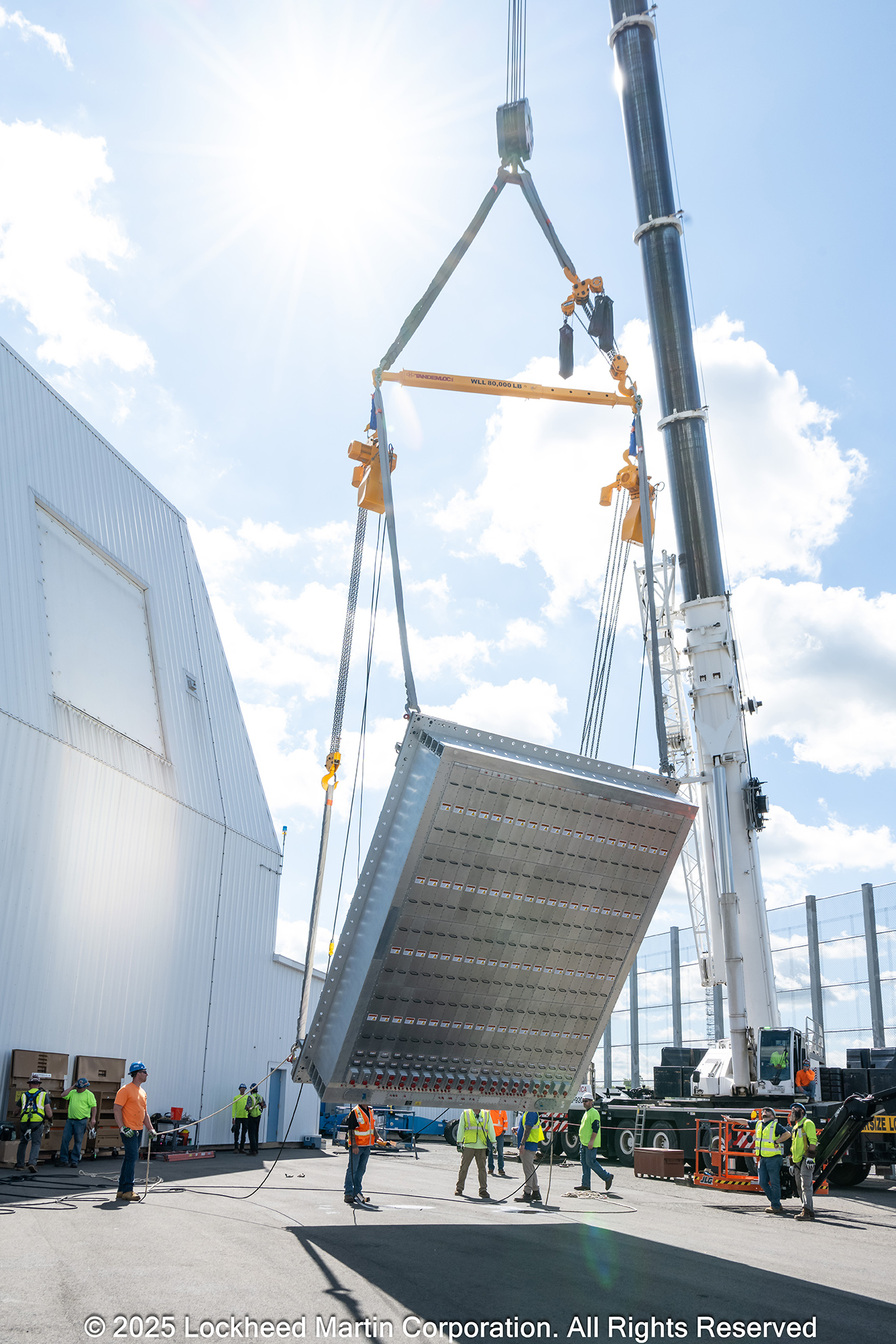
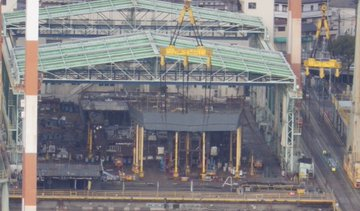
US Navy stated that radar sensitivity scales as a cube of the size of the radar aperture, can anyone calculate the size of the array from the pic and then see how it compares to the SPY-6(V)1 arrays fitted to the Burke Flt IIIs with its 37 x 2 sq ft RMA panels = 148 sq ft. The ASEV destroyer displacement is approx. 6 to 7,000 tons larger than the Burke and was wondering how that translated to sq ft for its array. Naval News reported cost of the two SPY-7(V)1 as $2.34 billion, $1.17 billion each.
 
ASEVs will be designated as CG.(1st ship: CG-191 | 2nd ship: CG-192)
Maybe the first ever cruiser since the Cold War?
First cruiser since 1945!

CVM means multi-purpose aircraft carrier, and it's for the Izumo Class helicopter destroyers after they finished the modification to STOVL aircraft carrier. Their hull code will be converted from DDH-183/184 to CVM-183/184.
Interesting that they're actually calling them "aircraft carriers" at all.
 
Shouldn't the thread name be changed to Something like "ASEV CG" or "Japanese ASEV missile cruisers"

Especially as we know they'll have a CG hull code.
 

Similar threads

Back
Top Bottom