What are the impact of contrail in BVR combat?

Ronny

ACCESS: Top Secret
Joined
19 July 2019
Messages
1,581
Reaction score
1,864
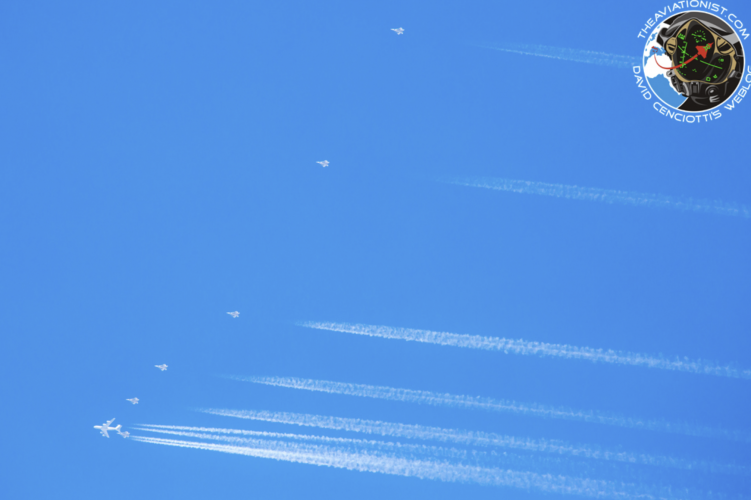
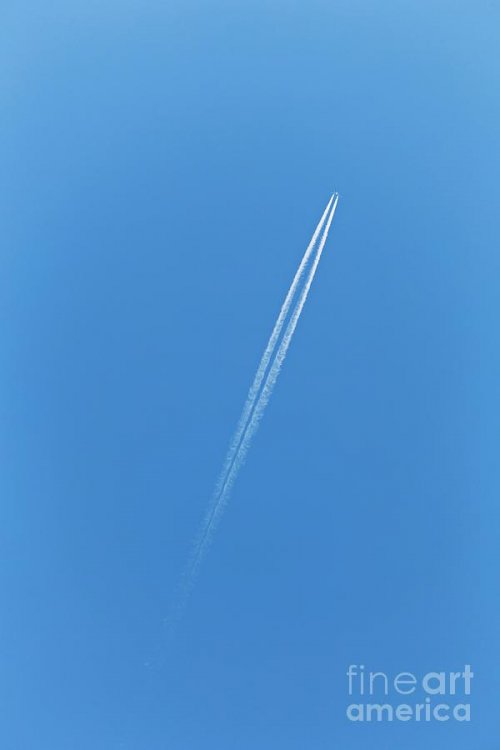
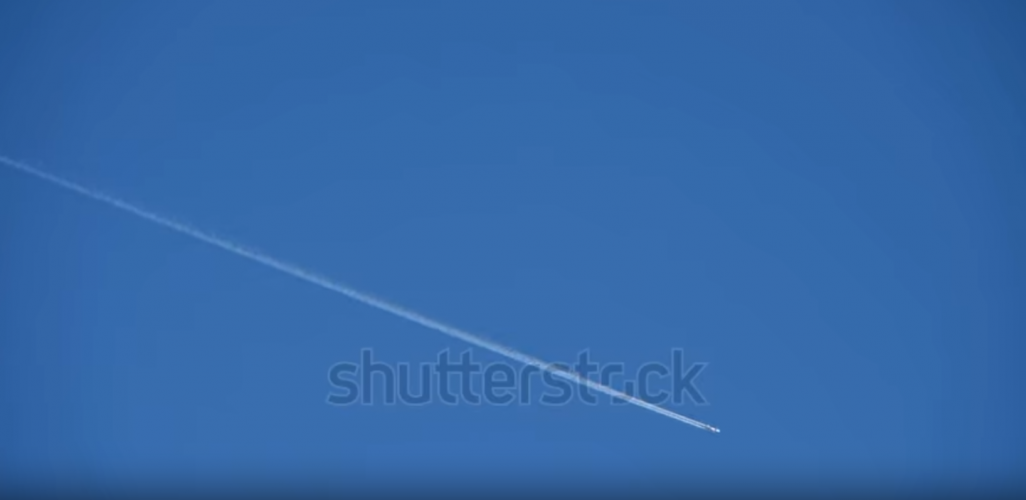
Considering that even stealth aircraft can produce contrails which can persist for minutes or even hours and are often much larger and more visible than the aircraft itself—wouldn't this significantly increase the chances of visual detection? Are there any current tactics or doctrines that specifically exploit contrails for detecting stealth aircraft in BVR combat?
Could contrail help distinguish decoys like MALD and aircraft ?
Screenshot 2025-05-26 023000.png
 
There is a strategy to avoid detection via contrails: flying below the level at which contrails form. Currently, as far as I know, advanced computer algorithms are being developed to calculate the exact altitude at which such flight is possible.
Since contrails greatly depend on the type of engine (thus also size of aircraft), it is technically possible to distinguish types of aircraft.
No information about specific doctrines that I know from the top of my head, however this is widely used in War Thunder.
 
I have returned with more info. It seems like to "just fly below contrail altitude" is the best bet. Aircraft such as the B2 have a LIDAR that warns the pilot that a contrail is being formed. A lower tech solution, such as on the U2, is just mounting rear view mirrors.
To prevent contrails altogether, there have been several experiments with varying degree of success: everything from "soot dispensers", chemical mitigators (although some made the engines more prone to failure and less efficient), to a microwave or ultrasound emitter trailing behind the aircraft which breaks down ice crystals into less visible chunks.
Generally, ever since the second world war, pilots and air defense operators are taught to look out for contrails and check their shape, in order to point out high flying bomber escorts, and later on, missile launches.
A lot of radars can "see" very far, beyond the range at which you can spot a trail, however in EW environment, with no active radars present, or for stealth targets, contrails really help figuring out where to look.

 
I have returned with more info. It seems like to "just fly below contrail altitude" is the best bet. Aircraft such as the B2 have a LIDAR that warns the pilot that a contrail is being formed. A lower tech solution, such as on the U2, is just mounting rear view mirrors.
Flying below the contrail altitude probably work well for bomber, however, for fighter, it does present a disadvantage, since flying low reduce the speed and reach of your air to air missiles
 
No information about specific doctrines that I know from the top of my head, however this is widely used in War Thunder.
Contrails in war thunder is at very low altitude though, and since airfield are so close together, player often don't have time to climb to very high altitude before the match end
 
I mean, contrails don't help missiles target the stealth plane or airborne fighters track the stealth plane. It's a degradation of stealth characteristics but not, IMO, a particularly consequential one.
 
I mean, contrails don't help missiles target the stealth plane or airborne fighters track the stealth plane. It's a degradation of stealth characteristics but not, IMO, a particularly consequential one.
I mean it certainly help you know the bearing of target and point your IIR system there
 
How come? it would feel like contrails are very easy to see if enemy is at higher altitude than you
Angles. How big does a chocolate bar look when you're looking at it head-on, versus from below?

You can see that there is a contrail, but not have a good guess as to course and speed.
 
I mean it certainly help you know the bearing of target and point your IIR system there
You're not going to know the bearing of your target with the Mark One Eyeball. Trying to rely on your eyes is fraught even in routine civil operations. To rely on it in combat in this day and age is lunacy:

The significance of this fact requires some appreciation of the varying levels of what air traffic control experts call “separation;” that is, the means by which safe distances between aircraft are ensured. The most basic means of separation is “see and avoid,” which is largely self-explanatory. Backing up “see and avoid” is positive radar separation, wherein air traffic controllers monitor airplanes on radar and provide them with advance instructions to avoid a loss of separation, even if they cannot see each other. However, in 1978 it was common for air traffic controllers to defer responsibility for separation onto pilots who had each other in sight, even if it was possible to continue providing positive radar separation as well. In the NTSB’s view, this represented an unnecessary and potentially dangerous degradation of the redundancy in the system, especially given that “see and avoid” as a concept had been considered flawed since at least the 1950s.

But McAdams wanted to go much farther than that, too, arguing for a reversal of traditional thinking about separation. “In my opinion,” he wrote, “the concept of see and avoid is outmoded and should not be used in high-density terminal areas.” Rather than treating “see and avoid” as the primary means of separation in all situations, while radar separation is seen as a form of redundancy, he argued that positive radar separation should be the primary means of defense and the pilots’ eyeballs should be secondary.

By the mid-1960s air safety experts already knew that the principle of “see and avoid” was fatally flawed. There were in fact plenty of reasons, other than inattention, why pilots might not be able to see each other in time to avoid a collision. In 1956, 128 people were killed when two airliners collided in uncontrolled airspace over Arizona’s Grand Canyon, a disaster that was the deadliest in aviation history at the time. Investigators found that the two planes had most likely been obscured by clouds until just seconds before the collision, leaving the crew of the overtaking aircraft without enough time to change course. Four years later in 1960, 134 died in another midair collision at 5,000 feet over New York City when one of the airplanes overshot its designated holding point. The collision occurred in dense clouds, and the two crews probably never even saw each other. These were but two of the countless midair collisions that occurred in the United States during this period, an epidemic that only continued to worsen as air traffic increased with every passing year.

Indeed, the judge had realized what aviation safety experts already knew: that the system itself was not up to the job. The 1956 Grand Canyon collision had shown that pilots could not be counted on to see and avoid each other in time to prevent a collision. The 1960 New York collision showed that procedural separation would not prevent a collision in instrument conditions if a pilot made a navigational error while attempting to comply with a clearance. And now the 1965 Carmel collision had presented a case where pilots attempting to “see and avoid” created a collision risk where none previously existed. It was clear that “see and avoid,” while adequate as a primary defense, could not be the only defense. Without a second set of eyes on the sky, America’s increasingly crowded airways would become a bloodbath.

The second link is particularly instructive, I feel, as it lays out the kind of optical illusions relying on your eyes in flight creates. Two planes collided because of maneuvers intended to avoid a collision due to a cloud-induced false horizon. Your eyes are not reliable, even to simply aim an IIR system, and even in the strictly delineated world of civil flight, let alone the induced chaos of aerial combat.

Edit: the history of mid-air collisions also offers another strike against contrails being some big giveaway. While most aerial collisions happen at altitudes well below that of contrail formation, there was a collision back in the 1970s over Yugoslavia at over 30,000 feet. I'm not sure if the conditions were right for contrails, but in that case, they were of no help whatsoever in letting the two planes spot each other.
 
Last edited:
You're not going to know the bearing of your target with the Mark One Eyeball. Trying to rely on your eyes is fraught even in routine civil operations. To rely on it in combat in this day and age is lunacy:
No, by "bearing" I don't mean where is the exact traveling direction of the target. By "bearing", I mean contrail help you know where the target is to point your IIR system at that sector
aircraft-contrail-stephen-burtscience-photo-library.jpg Screenshot 2025-05-29 150630.png
 
I have returned with more info. It seems like to "just fly below contrail altitude" is the best bet. Aircraft such as the B2 have a LIDAR that warns the pilot that a contrail is being formed. A lower tech solution, such as on the U2, is just mounting rear view mirrors.
To prevent contrails altogether, there have been several experiments with varying degree of success: everything from "soot dispensers", chemical mitigators (although some made the engines more prone to failure and less efficient), to a microwave or ultrasound emitter trailing behind the aircraft which breaks down ice crystals into less visible chunks.
Generally, ever since the second world war, pilots and air defense operators are taught to look out for contrails and check their shape, in order to point out high flying bomber escorts, and later on, missile launches Spotify iOS.
A lot of radars can "see" very far, beyond the range at which you can spot a trail, however in EW environment, with no active radars present, or for stealth targets, contrails really help figuring out where to look.
Yes, contrails can increase the chances of visually or infrared detecting stealth aircraft, especially since they can be larger and more visible than the aircraft itself. Some current tactics aim to minimize contrail formation by adjusting altitude and flight profiles. While there are no widely publicized doctrines solely relying on contrail detection, modern sensors may use contrail analysis as a supplementary detection method in BVR combat. Contrails might help distinguish decoys like MALD from real aircraft since decoys may produce different contrail characteristics, but this is not a definitive or fully reliable method yet.
 

Similar threads

Back
Top Bottom