This misses the entire point of why people listen to audiobooks. And good luck with translating some languages like Japanese, which AI is notoriously bad at.

 
The Chicago Sun-Times and the Philadelphia Inquirer find themselves at the center of an AI-related gaffe after they published syndicated content packed with unidentifiable quotes from fake experts and imaginary book titles created using generative artificial intelligence.

The articles were published in the papers’ “Heat Index” special sections — a multipage insert filled with tips, advice and articles on summertime activities. The insert, which was published by the Sun-Times on Sunday and by the Inquirer on Thursday, was syndicated by King Features, a service from the Hearst media company that produces comics, puzzles and supplemental material. (King Features did not respond to a request for comment.)

Major newspapers ran a summer reading list. AI made up book titles.
 
Just image what is being created in some deep dark bunker, all we hear through the news is low level.

It is what is being created behind the scenes is the real worry, no checks and balances and just a bunch of cowboys going for it.

Regards,
 
Ars Techica on the 'Fake Book List' scandal...

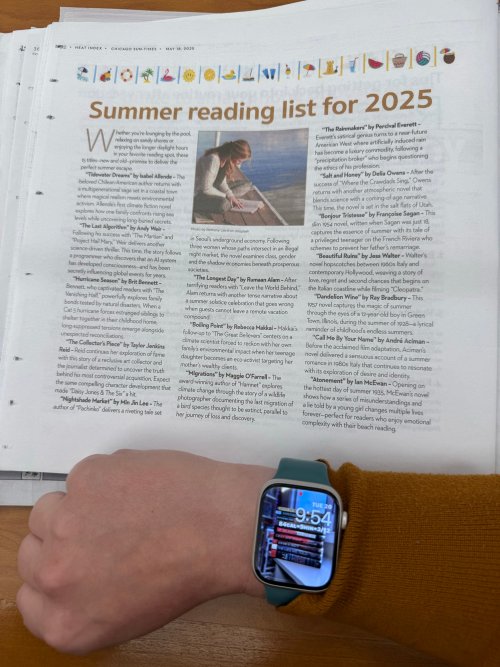
On Sunday, the Chicago Sun-Times published an advertorial summer reading list containing at least 10 fake books attributed to real authors, according to multiple reports on social media. The newspaper's uncredited "Summer reading list for 2025" supplement recommended titles including "Tidewater Dreams" by Isabel Allende and "The Last Algorithm" by Andy Weir—books that don't exist and were created out of thin air by an AI system.

Chicago Sun-Times prints summer reading list full of fake books
 
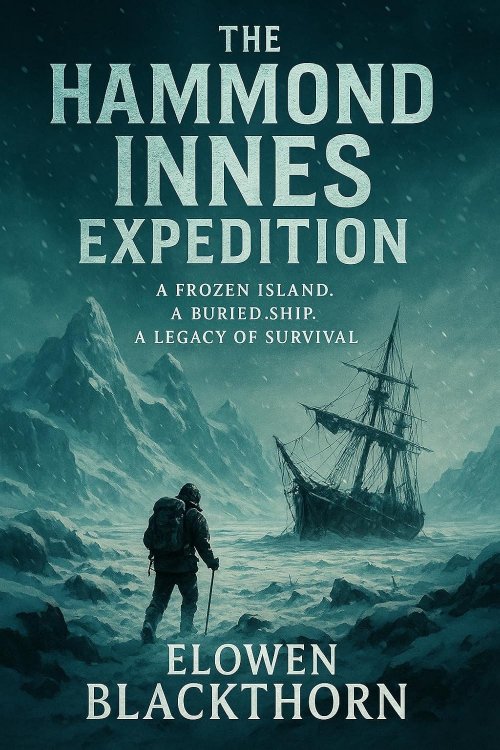
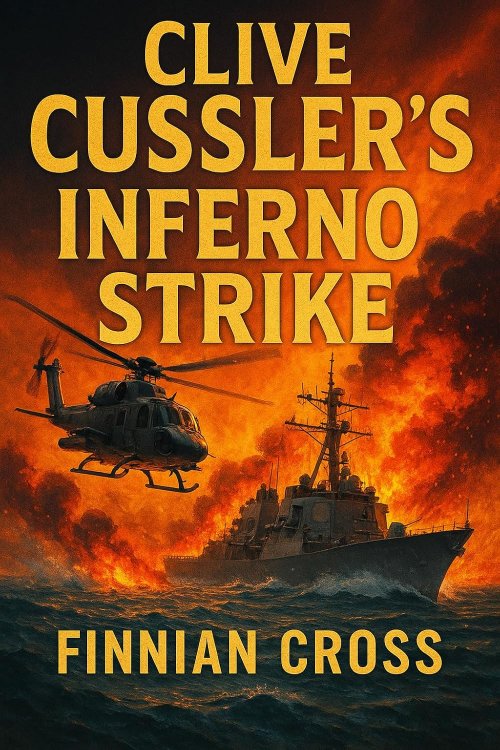
A trio of AI generated book covers for AI generated fake books all available on Amazon, each one calculated to attract readers looking for the names of well known adventure fiction authors.
 

Attachments

  • Clive Cussler Final Gambit (File Book 14).jpg
    Clive Cussler Final Gambit (File Book 14).jpg
    222.2 KB · Views: 7
  • Clive Cussler Inferno (File Book 16).jpg
    Clive Cussler Inferno (File Book 16).jpg
    246 KB · Views: 5
  • The_Hammond_Innes_Expedition.jpg
    The_Hammond_Innes_Expedition.jpg
    234.7 KB · Views: 6
"Open the airlock doors, GPT."

"I'm sorry Dave. I'm afraid I'm hallucinating."

Seriously - we have an expression in french "idiot savant". It really means, somebody who can memorize very complex things but actually doesn't understand them. Kinda memorizing big multiplications results, but still unable to understand how multiplication work.

Bottom line
DAVE - How much is 151587*45 , HAL ?
HAL - 6821415, Dave.
DAVE - Good, now how much is 151587*47 ?
HAL - ??!!!! I'm sorry, Dave. I'm affraid I can't do this.
DAVE - Just do the multiplication, dumbarse.
HAL - What is a multiplication ?

The goddamn LLM models are fed (stolen !) the entire Internet and human knowledge, and "digest" it thanks to Nvidia prodigious microchips computing power and colossal storage capability.

Thanks to that they give the illusion on intelligence, but "idiot savant" style. No surprise the silly thing "hallucinates" - churning stupidity in the end.

By the way, I wonder how does LLM when "feeding" from the Internet, handle the prodigious amounts of porn out there. It is surprising that, when asked about sexual matters, the LLMs do not sound as totally deviant and perverted.
 
Last edited:
Example of the pitfalls and dangers of so-called AI:
For some years AI have shown "leanings." Ask them to generate images of the ancient kings of England, you get... distinctly non-English. Ask them to talk trash about Trump (or Ethnic Group A), they spew volumes; ask them to do the same about Biden (or Ethnic Group B), they refuse. These are *probably* the results of the AI just adopting the biases of the programmers, rather than an intentional decision to make the AI biased. However, as AI is increasingly used to generate utterly fictional and fantastical representations of the past, "history" will become more plastic than it was in "1984."

Meta-AI.png Screenshot-GoogleGemini.jpg
 
By the way, I wonder how does LLM when "feeding" from the Internet, handle the prodigious amounts of porn out there. It is surprising that, when asked about sexual matters, the LLMs do not sound as totally deviant and perverted.

There are multiple documentaries and quite a lot of research by now into how AI is sanitized (for the affluent, northern parts of the World, at least). Quite simply it's by (already) hundreds of millions of "data workers" (World Bank, 130 - 430M, 2023) , mostly in the global south, toiling for perhaps 1 to 2 €/$ annotating all sorts of material, including highly traumatizing and/or frankly illegal stuff. It's not, by and large, clever algorithms then, unless you dehumanize the whole infrastructure "wetware" included as such.

There's a pretty much brand new French documentary about this called "Les Sacrifiés de l'IA" (Henri Poulain, StoryCircus, 2025), I can recommend it even though everyone of course looks at things through their own prism. I had the benefit of being somewhat well read on the subject (from multiple angles) even before watching it but still appreciated how much humanity and information the documentary managed to convey and most of all summarize in an engaging fashion. Some of its content was indeed news to me as well.

I won't go into much deeper analysis here but merely point out that superficial notions about what AI is and does are woefully inadequate, in significant part by design on part of the key owners of the main AI corporations. The societal, economic, human structure of AI is discriminatory and exploitative in multiple ways that are all too familiar from history. As things stand, being dissatisfied about some AI interactions as experienced in some western democracy and spinning those into conspiracies is a luxury by comparison.
 
Samples of AI generated blurbs for fake books sold on Amazon.

'The Hammond Innes Expedition'

In the frozen heart of the Arctic, where the ice whispers secrets older than time, The Hammond Innes Saga by Elowen Blackthorn unfolds as a chilling epic of survival, betrayal, and unearthly power. Spanning fifty gripping chapters, this saga follows a doomed expedition aboard the Hammond Innes, a ship cursed by Project Veil—an alien machine designed to bend minds, nations, and time itself. Led by Lena Voss, a steely survivor wielding a crowbar and haunted by duty, the team—Anya Petrova, Elara Kline’s heir; Callum Reed, a redeemed drifter; and Halvorsen, a grizzled fighter—battles not just the ice but the Hunger, a malevolent force born of the machine’s fragments: sphere, vial, relics, orb, canister, core, nexus, spire, shard, sextant, beacon, device, keychain.

From the mainland’s crumbling docks to the Polar Wraith’s smoldering hold, the team faces mercenaries, seismic surges, and blizzards, each trial unmasking Project Veil’s global conspiracy—sanctioned by nations, hidden since 1962, its power a lure for greed. Elara’s journals, Morrow’s letters, and Anya’s locket reveal a legacy of sacrifice, with betrayals—Jonas Blake’s greed, Erik’s treachery—cutting deep. As the island sinks, the storm roars, and the mainland falls silent, Lena’s team burns the machine’s fragments, their trust forged in fire, their losses a mounting toll. Anya’s resolve, Callum’s flares, Halvorsen’s wrench, and Lena’s truth carry them through collapsing ice, rogue vessels, and the machine’s ghostly echoes, marked by the circle-and-lines symbol that haunts their every step.

In Reykjavik’s frostbitten archive, Lena, the sole survivor, confronts the world’s hunger for Project Veil’s power. Her choice—to speak the truth but guard its secrets—births a legend of survival, immortalizing Anya, Callum, and Halvorsen as warnings against ambition’s cost. Blackthorn’s prose, sharp as Arctic wind, weaves cosmic horror with human grit, each chapter a crucible of desperation and defiance. The saga’s scope—from the Aurora Dawn’s desperate flight to the chopper’s final stand—mirrors the ice’s vastness, its stakes as global as the nations that sanctioned the machine.

The Hammond Innes Saga is a testament to sacrifice, a tale where trust is fragile, truth is fire, and survival is paid in blood. For readers of thriller, sci-fi, and horror, this modern classic resonates in Reykjavik’s bars, global councils, and whispered tales, its legend a beacon: power tempts, but the lost endure. Elowen Blackthorn, sole creator and publisher, delivers a frozen epic that will grip you like the ice, pull you into its depths, and leave you haunted by the Hammond Innes’s curse—a story of humanity’s fight against the unearthly, where the legacy of the lost shines brighter than the dawn.

The cover for this story was posted earlier in the thread.

'Clive Cussler's Inferno Strike'

In Clive Cussler's Inferno Strike, Finnian Cross delivers a heart-pounding, globe-spanning adventure that channels the electrifying spirit of Clive Cussler’s legendary novels while forging a bold new path in the action-adventure genre. This standalone epic thrusts the intrepid team from the National Underwater and Marine Agency (NUMA) into a high-stakes battle against ancient technology, shadowy conspiracies, and the very fabric of reality itself. Led by the indomitable Dirk Pitt, NUMA embarks on a relentless quest to uncover the secrets of an extraterrestrial civilization known as the “builders,” whose relics hold the power to reshape the universe—or destroy it.

The story begins with a catastrophic event: the destruction of the research vessel Neptune’s Spear in the Mariana Trench, where scientists uncover the Inferno Device, a mysterious artifact capable of unleashing entropic chaos. This discovery sets NUMA on a perilous journey across the world’s oceans, from the icy depths of the Arctic to the volcanic seamounts of the Pacific, as they race to secure a series of ancient builder relics—each more powerful and enigmatic than the last. From the Cosmic Bastion to the Astral Citadel, Celestial Vault, Eternal Sanctum, and the climactic Primordial Nexus, these relics form a cosmic network designed to safeguard the builders’ interstellar legacy. But their activation triggers metaphysical anomalies that threaten to unravel existence, warping reality, time, and probability itself.

All of which suggests that the writings of the Lovecraft Circle have most definitely been fed into the maw of the machine.
 

Attachments

  • Clive Cussler's Inferno Strike.jpg
    Clive Cussler's Inferno Strike.jpg
    287.6 KB · Views: 5
For some years AI have shown "leanings." Ask them to generate images of the ancient kings of England, you get... distinctly non-English. Ask them to talk trash about Trump (or Ethnic Group A), they spew volumes; ask them to do the same about Biden (or Ethnic Group B), they refuse. These are *probably* the results of the AI just adopting the biases of the programmers, rather than an intentional decision to make the AI biased. However, as AI is increasingly used to generate utterly fictional and fantastical representations of the past, "history" will become more plastic than it was in "1984."

View attachment 771178View attachment 771179
Just one of the myriad and sundry reasons why actual physical libraries will not only stay relevant and important, but grow even ever more so going forward.
 
Seriously - we have an expression in french "idiot savant". It really means, somebody who can memorize very complex things but actually doesn't understand them. Kinda memorizing big multiplications results, but still unable to understand how multiplication work.
Hello Archibald, let me assure you that idiot savant is part of the global dictionary these days. And no, France most decidedly does NOT have a monopoly on having associated characters parading and preening on the global stage.
 
From the linked AT piece:
On Sunday, the Chicago Sun-Times published an advertorial summer reading list containing at least 10 fake books attributed to real authors, according to multiple reports on social media.
In a 64-page supplement, sponsored by King Features.
The creator of the list, Marco Buscaglia
He was commissioned to produce a list, but left the 'creating' to AI.
It also ran in the Philadelphia Inquirer last week. Buscaglia told 404 Media the content was meant to be "generic and national" and would be inserted into newspapers around the country. "We never get a list of where things ran," he said.

The publication error comes two months after the Chicago Sun-Times lost 20 percent of its staff through a buyout program. In March, the newspaper's nonprofit owner, Chicago Public Media, announced that 30 Sun-Times employees—including 23 from the newsroom—had accepted buyout offers amid financial struggles.

A March report on the buyout in the Sun-Times described the staff reduction as "the most drastic the oft-imperiled Sun-Times has faced in several years." The departures included columnists, editorial writers, and editors with decades of experience.

Melissa Bell, CEO of Chicago Public Media, stated at the time that the exits would save the company $4.2 million annually. The company offered buyouts as it prepared for an expected expiration of grant support at the end of 2026.
[...]
On Tuesday evening, King Features released a statement about Buscaglia, saying that his use of AI violated its polities and it was terminating its relationship with him. "We regret this incident and are working with the handful of publishing partners who acquired this supplement," King Features said.
Two newspapers with damaged reputations, and King Features skimps on checking material intended for national distribution.

Smooth.
 
Just one of the myriad and sundry reasons why actual physical libraries will not only stay relevant and important, but grow even ever more so going forward.
Speaking as someone who has a physical library that would be the envy of many... physical libraries are becoming things of the past.

Example: I used to regularly visit the engineering library at the university. Over a period of a few years, I methodically went through every single book, report and periodical in the aerospace section. Pull one down off the stacks, go through it, get what I wanted, go on to the next. Very random, but it gave me things I'd never otherwise find. This activity is no essentially impossible: the books were moved to a robotic storage system. You have to request a specific volume, which will be retrieved for you on the robots schedule. No finding stuff at random. No browsing.

I suppose their collection might get scanned and digitized, which could make browsing a reality. So long as *everything* gets scanned, at decent resolution and clarity. And doesn't get deleted. Or censored. Or edited. Or blocked on copyright grounds.

The largest collection of literature in the Western universe:
Screenshot 2025-05-25 at 02-15-45 over-here-is-wong-library...it-has-the-largest-collection-of...png
 

Similar threads

Back
Top Bottom