
You are using an out of date browser. It may not display this or other websites correctly.
You should upgrade or use an alternative browser.
You should upgrade or use an alternative browser.
UK-Japan-Italy Global Combat Air Programme (GCAP) News & Technical Analysis
- Thread starter Deltafan
- Start date

Ainen
I really should change my personal text
- Joined
- 25 August 2011
- Messages
- 2,116
- Reaction score
- 3,603
Well, jump from the current level of british fighter aircraft (more or less a 1990s dream) is significant. Should be exciting.The Royal Aeronautical Society proudly displays a CGI of GCAP with kill markings of 7x WZ-7, 2x J-XDS, 2x GJ-11, 1x J-36, 3x J-35, and 4x J-20. So very 'professional' of them.

Ares
Man from Far East
- Joined
- 15 October 2018
- Messages
- 113
- Reaction score
- 545
View: https://x.com/Mossie633/status/1925081433825280450
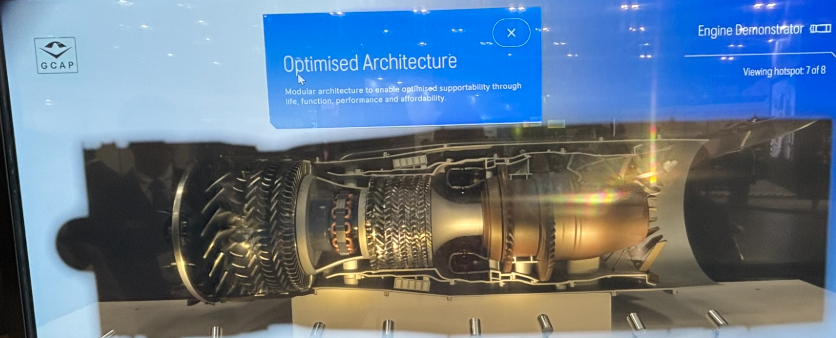
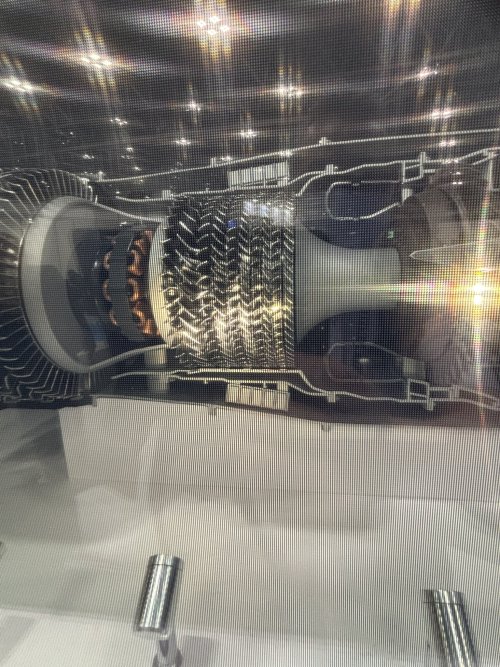
1/10 scale model of GCAP in DSEI Japan 2025.
There's a hint that the aircraft's overall length is about 21m.
1/10 scale model of GCAP in DSEI Japan 2025.
There's a hint that the aircraft's overall length is about 21m.
Attachments

Kiltonge
Greetings Earthling
- Joined
- 24 January 2013
- Messages
- 838
- Reaction score
- 1,918
View: https://x.com/Mossie633/status/1925081433825280450
1/10 scale model of GCAP in DSEI Japan 2025.
There's a hint that the aircraft's overall length is about 21m.
The same length as the YF-23. Does look like it's a size above the F-22 overall.
djpowell1984
ACCESS: Confidential
- Joined
- 11 May 2020
- Messages
- 74
- Reaction score
- 118
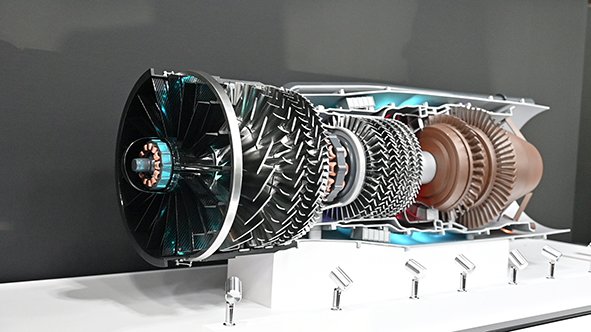
I'm not sure whether Cooper Core is a Pre-Cooler (i don't think it is normal outside of engine yet possible) or a Generator (or hybrid Pre-cooler & Generator)?
I think i see, they have Turbofan and Turbojet options in 1 Engine as Turbofan bypass seem have an angle into turbojet "secondary" Adjustable Cycles.
is it possible mech (Remove on display) as top secret to open and closed values when Turbofan mode into Turbojet.
also lots of fans bypass that normal (as i normal see 6 fans but i count 8 fan front possible 8hp 4lp and 8 middle and 2 end of turbine as i am not engine expert
or rough it same number as EJ200 yet a bit bigger but more powerfully and better metallurgy from Japanese and use IHI XF5-1 / XF9 (Sorry Edit mistake name engine) engine
Last edited:
djpowell1984
ACCESS: Confidential
- Joined
- 11 May 2020
- Messages
- 74
- Reaction score
- 118
so you say it would be 20.55m (YF23 Size) or 21.65m (F23 Production plan size) but wingspan seem bigger than YF23 around 1/3 big (each wings)The same length as the YF-23. Does look like it's a size above the F-22 overall.
I hope so as it is will more range and better payload.. big upgrade over Typhoon.
Last edited:
I'm almost certain that the copper spooling is the built in electric starter generator that RR have been crowing about as a way to reduce the profile of the plane as well as meeting the energy requirements for GCAPs electronics.I'm not sure whether Cooper Core is a Pre-Cooler (i don't think it is normal outside of engine yet possible) or a Generator (or hybrid Pre-cooler & Generator)?
I'm not sure if there's been a confirmation on the engine including a pre-cooler, but that would be interesting given how both RR and BAE invested in Reaction Engines with the pre-cooler part of the SABRE engine being one of the only successes before they went bankrupt last year.
djpowell1984
ACCESS: Confidential
- Joined
- 11 May 2020
- Messages
- 74
- Reaction score
- 118
I'm almost certain that the copper spooling is the built in electric starter generator that RR have been crowing about as a way to reduce the profile of the plane as well as meeting the energy requirements for GCAPs electronics.
I'm not sure if there's been a confirmation on the engine including a pre-cooler, but that would be interesting given how both RR and BAE invested in Reaction Engines with the pre-cooler part of the SABRE engine being one of the only successes before they went bankrupt last year.
Seems like you're right as I look at X again, and someone comments, in Japanese text (I use Google Translate), says it is a Generator.
That's why i curious about pre-cooler too,
be frankly, I'm not sure if it (pre-cooler) is useful as most multi-role aircraft are limited to 2.2-2.3 machs (due to skin rub fracture temperature affecting metal melt and weakening metal by heat even sonic speed pressure
(maybe they find secret to avoid sensor of fracture by heat and melt point of airframe yet maintained stealth, and hide "Silencer sonic" to reduce detection) if they have this technology so aircraft will increase more speed. (even F-47 limited to 2.2 mach for the same reason)
also stealth increase sensor detection of heat; it is will affect stealth range to hide from thermal and radar sensor even emergency engine push speed over 2.5 machs plus similar to Typhoon has Wartime Speed set which rumour says around 2.2-2.4 mach yet limited to 2.0 Mach in peacetime speed)
If the Engine is powerful and not affected by overheating because it is still well maintained, and the engine does not meltor get damaged by overheating, by metallurgy / combined Alloy / Carbon etc similar to Metal Addicted technology and 3d Metal print yet plenty of power is left in the engine to push more speed due metallurgy of the engine, so there may be no need pre-cooler.
Or increase weight by pre-cooler to help the engine run better (even pre-cooler would help increase fuel effective and produce more power, as it can reduce heat and require less maintenance to the engine), yet the penalty is a weight increase and cost to build a pre-cooler.
yet i'm not engineering expert, maybe i wrong in explaining, I would be happy you (any of you) corrected me if I'm wrong.
Last edited:

- Joined
- 11 February 2007
- Messages
- 3,823
- Reaction score
- 8,088
Seems entirely appropriate when read in conjunction with the leading article title of "Marking Their Territory: Future Fighters Square Up To New Geopolitical Realities." and given GCAP is intended for Japanese service, which sees China as the likely opponent for GCAP.The Royal Aeronautical Society proudly displays a CGI of GCAP with kill markings of 7x WZ-7, 2x J-XDS, 2x GJ-11, 1x J-36, 3x J-35, and 4x J-20. So very 'professional' of them.
View attachment 770207
No one on Eurofighter had any illusions about who the likely opposition was, Su-27 was explicitly referenced as the threat around which it was designed. Why would you expect that to have changed? Surely not entertaining illusions about GCAP's raison d'etre is the professional (and ethical) approach.

Waterballoon
ACCESS: Secret
- Joined
- 27 October 2023
- Messages
- 206
- Reaction score
- 591
Carbon fiber IGV? Nice.
Kiltonge
Greetings Earthling
- Joined
- 24 January 2013
- Messages
- 838
- Reaction score
- 1,918
so you say it would be 20.55m (YF23 Size) or 21.65m (F23 Production plan size) but wingspan seem bigger than YF23 around 1/3 big (each wings)
It's funny how all those old rumours that the Japanese were secretly developing the 'YF-23J' might have had some kernel of truth!
Operational range of a production F-23A was conjectured to be about 3,000nm which would be a good starting point for GCAP.
Seems entirely appropriate when read in conjunction with the leading article title of "Marking Their Territory: Future Fighters Square Up To New Geopolitical Realities." and given GCAP is intended for Japanese service, which sees China as the likely opponent for GCAP.
No one on Eurofighter had any illusions about who the likely opposition was, Su-27 was explicitly referenced as the threat around which it was designed. Why would you expect that to have changed? Surely not entertaining illusions about GCAP's raison d'etre is the professional (and ethical) approach.
I think contending with the reality of likely opfors is less the issue so much as the idea of a single airframe of a yet-to-fly-prototype being able to attain so many kills in the modern era... considering all of the aircraft depicted are somewhat ahead of GCAP in development, and if it's representing a JASDF GCAP then their hundred odd projected procurement won't be facing a very optimistic theater, either at the system of systems level or in context of the bigger threat of PLARF.
Impressive bravado is not abnormal for promoting military wares, and I imagine the article itself might be a bit more tempered.
It's funny how all those old rumours that the Japanese were secretly developing the 'YF-23J' might have had some kernel of truth!
Operational range of a production F-23A was conjectured to be about 3,000nm which would be a good starting point for GCAP.
I presume that would be ferry range?
- Joined
- 11 February 2007
- Messages
- 3,823
- Reaction score
- 8,088
My working assumption is the only one who had any major input into the kill markings is the artist. OTOH, considering air-combat in the age of CCAs, if your CCA gets a kill, who gets the credit? You? Or the CCA? Or is it shared? The kill markings could represent the achievement of a system of systems. On top of which engaging the PLAAF is likely to be a target-rich environment, particularly if the Chinese are trying to push into the Japanese air defence region.I think contending with the reality of likely opfors is less the issue so much as the idea of a single airframe of a yet-to-fly-prototype being able to attain so many kills in the modern era... considering all of the aircraft depicted are somewhat ahead of GCAP in development, and if it's representing a JASDF GCAP then their hundred odd projected procurement won't be facing a very optimistic theater, either at the system of systems level or in context of the bigger threat of PLARF.
Assuming a marked superiority for Western tech over Chinese is a quick way to get handed your own ass. OTOH GCAP should be arriving with the advantage of a rather later development cycle, and at a minimum some anticipatory optimisations towards threats that are flying now.
My working assumption is the only one who had any major input into the kill markings is the artist. OTOH, considering air-combat in the age of CCAs, if your CCA gets a kill, who gets the credit? You? Or the CCA? Or is it shared? The kill markings could represent the achievement of a system of systems. On top of which engaging the PLAAF is likely to be a target-rich environment, particularly if the Chinese are trying to push into the Japanese air defence region.
I think there are lots of ways to try and rationalize the art, and that is certainly fine.
But I think the fact this art had this kind of depiction needs rationalisation is proof that it's a bit eyebrow raising.
Assuming a marked superiority for Western tech over Chinese is a quick way to get handed your own ass. OTOH GCAP should be arriving with the advantage of a rather later development cycle, and at a minimum some anticipatory optimisations towards threats that are flying now.
I'm going to wait and see how GCAP emerges (first flight of a demonstrator, and then eventually first flight of its first EMD equivalent prototype would be a start), and I'm sure it will be a capable air combat system in its own right.
Whether it will be up to the strategic demands and system of systems requirements for specific nations involved (particularly Japan), is another matter. Which isn't necessarily a fault of the aircraft but rather the scale of the prospective opfor.

EmoBirb
E.S.T
- Joined
- 18 January 2025
- Messages
- 2,211
- Reaction score
- 5,628
But I think the fact this art had this kind of depiction needs rationalisation is proof that it's a bit eyebrow raising.
We all shouldn't beat around the bush with several paragraphs and just say it out loud. The reason why this was met with overwhelming laughter is that it portrays a projected fighter developed by second and third rate aviation manufacturers, all of which haven't developed a single aircraft of the past ("5th") generation/stealth era somehow racking up kills against the arguably sole runner up to the USAF and US military aviation giants.
My money is always on the guys with more missiles and more experience with developing and constructing advanced aircraft at scale. In this case that's China. That's why I, and I suspect many others, laughed at this cover.
Does the PLARF get kill marks for obliterating airfields?
Scott Kenny
ACCESS: USAP
- Joined
- 15 May 2023
- Messages
- 16,977
- Reaction score
- 24,097
A strike missile may be as heavy as 3500lbs each, so 4 of those would be 15klbs.Entire thread worth a read...podcast link as well.
Looking for double F-35A payload (so c36,000lbs) and in terms of range crossing the Atlantic on internal fuel only (doesn't make it clear if thats with a payload, but it seems to be implied). Thats a minimum of 2,300 miles (Cornwall to Newfoundland), but likely longer in comparison to F-35A's max range on internal fuel which is around 1,500nm (I'm assuming thats without payload, or just some Amraam).
EDIT: There is the possibility (although it doesn't appear to be phrased that way) that double the payload of F-35A is referring to internal payload. F-35A internal payload is 5,700lbs max (each bay is 2,500lbs, with 350lbs on each bay door). So double the F-35A internal payload could mean c10,000lbs. Either way its big...
Not sure I entirely agree with the cargo aircraft point....Rapid Dragon has a lot to be said about it, and RAF studied missile laden pallets from Cargo Aircraft back in the FOAS studies days...there's a lot to recommend it, particularly on Day One style operations to deliver mass of strikes or decoys far from home.
View: https://x.com/shashj/status/1915701982792208823
But let's assume 2500lbs per strike missile, plus AAMs. 4x strike missiles would be 10klbs, plus 425lbs per Meteor. 4x Meteor plus 2x ASRAAM is 2100lbs. So on the order of 12klbs internal seems reasonable to me.
Ghibli!The veracity of this report is unknown, but it seems that the nickname for the fighter jet in Japan will be "Reppu" (烈風).
【独自】次期戦闘機に「烈風」検討 防衛省、旧海軍の名称使用 | 共同通信
日本、英国、イタリアの3カ国が2035年までの配備開始を目指して共同開発を進める航空自衛隊の次期戦闘...nordot.app
Reppu means very strong wind.
It was the name of a fighter plane developed by Mitsubishi for use as a carrier-based aircraft for the navy during WWII.
What will Italy name it? Tempesta?Bora?Scirocco?
I thought it was funny because it reminded me of the many times I've seen Indians boast about AMCA being the best 5th gen, often being quoted as 5.5gen or 5.75 gen. Better than F-35, J-20 etc etc. To be absolutely fair since it's coming out so late you could expect better tech. But it comes off as super arrogant. Claiming a CGI aircraft will absolutely dominate the battlefield tickles me in a funny way.My working assumption is the only one who had any major input into the kill markings is the artist. OTOH, considering air-combat in the age of CCAs, if your CCA gets a kill, who gets the credit? You? Or the CCA? Or is it shared? The kill markings could represent the achievement of a system of systems. On top of which engaging the PLAAF is likely to be a target-rich environment, particularly if the Chinese are trying to push into the Japanese air defence region.
Assuming a marked superiority for Western tech over Chinese is a quick way to get handed your own ass. OTOH GCAP should be arriving with the advantage of a rather later development cycle, and at a minimum some anticipatory optimisations towards threats that are flying now.
We all shouldn't beat around the bush with several paragraphs and just say it out loud. The reason why this was met with overwhelming laughter is that it portrays a projected fighter developed by second and third rate aviation manufacturers, all of which haven't developed a single aircraft of the past ("5th") generation/stealth era somehow racking up kills against the arguably sole runner up to the USAF and US military aviation giants.
My money is always on the guys with more missiles and more experience with developing and constructing advanced aircraft at scale. In this case that's China. That's why I, and I suspect many others, laughed at this cover.
Does the PLARF get kill marks for obliterating airfields?
Lol I was trying to be polite and not start any arguments.
I'll defer to your description.
- Joined
- 11 February 2007
- Messages
- 3,823
- Reaction score
- 8,088
Artists everywhere raising eyebrows as they think 'Surely that's the point of art!'But I think the fact this art had this kind of depiction needs rationalisation is proof that it's a bit eyebrow raising.
ETA: Everyone seems to be missing the thematic synergy between the kill markings on the aircraft, and "Marking Their Territory: Future Fighters Square Up To New Geopolitical Realities."
Last edited:
- Joined
- 11 February 2007
- Messages
- 3,823
- Reaction score
- 8,088
Odd how the USAF and USN keep coming to these 'second and third rate' aviation manufacturers for their systems. I don't recall booking any time personally to F-22, but I certainly worked with people who did, and on the same technology.a projected fighter developed by second and third rate aviation manufacturers, all of which haven't developed a single aircraft of the past ("5th") generation/stealth era
We've seen China's J-20, which is impressive. But we don't have any idea how its systems rate, nor whether their stealth work is truly competitive.
Beyond their systems work, BAE Systems was a full partner in the McDonnell Douglas/BAE Systems competitor for JSF, having independently brought stealth capabilities to the party based on their Replica work. (There's also Taranis to consider, before that got mired in French politics). And of course BAE Systems also did the majority of UK work on F-35, based on that unique Level 1 partner position and the Blair/Bush agreement on technology access.
(And meanwhile Japan/Mitsubishi were doing their Shinshin thing).
I don't particularly credit the rumours of US interest in GCAP, but it's interesting that someone considers that line worthy of pushing.
The irony, of course, is that you're claiming GCAP can't possibly complete against Chinese development, where fifteen years ago no one thought it was possible for China to compete against US development. UK/Japan/Italy have a significantly more capable aerospace industry than China was assessed with then. (Would China even have been considered 3rd rate in the Oughties?)
The irony, of course, is that you're claiming GCAP can't possibly complete against Chinese development, where fifteen years ago no one thought it was possible for China to compete against US development. UK/Japan/Italy have a significantly more capable aerospace industry than China was assessed with then. (Would China even have been considered 3rd rate in the Oughties?)
I don't think that's what he's claiming, but rather the depiction on that art seems over ambitious -- "racking up kills" in a future multi-domain theater that's likely going to be far more lethal to the intended operators of GCAP than things already are today, when GCAP itself is at an earlier stage of development that PRC contemporaries -- even though before December 2024 most people would have thought GCAP was ahead.
As for what "no one thought" fifteen years ago -- I think "speak for yourself" is the best phrase to utter in response to that. For those paying attention, the writing was already on the wall, and fifteen years is a long time for relative advancement and relative stagnation to occur simultaneously, in context of industrial funding and prioritization.
I don't think anyone doubts GCAP will be a fine aircraft when it emerges.
But that magazine cover is braggadocious (or laughable, as emobirb says) in context of contemporary industrial and geostrategic realities, and it would be easier for everyone to just acknowledge it. If it displayed GCAP facing the sheer array of challenges that would await it, I don't think anyone would disrespect that, but being shown in a position of strength or advantage to that scale (even if one wants to make excuses of CCAs or what not) is bold.
- Joined
- 11 February 2007
- Messages
- 3,823
- Reaction score
- 8,088
As I've just pointed out (being a little slow to realise myself), the art is riffing on the article title: "Marking Their Territory", and shouldn't be taken to be anyone's opinion but an artist making a multi-media pun.that magazine cover is braggadocious (or laughable, as emobirb says) in context of contemporary industrial and geostrategic realities, and it would be easier for everyone to just acknowledge it.
(It could be editorial direction, in which case I'm impressed with the editor's multi-media punning, but I think it's probably the artist).
EmoBirb
E.S.T
- Joined
- 18 January 2025
- Messages
- 2,211
- Reaction score
- 5,628
The irony, of course, is that you're claiming GCAP can't possibly complete against Chinese development, where fifteen years ago no one thought it was possible for China to compete against US development. UK/Japan/Italy have a significantly more capable aerospace industry than China was assessed with then. (Would China even have been considered 3rd rate in the Oughties?)
I have no interest I derailing this thread further, so I'll just say this:
Why do Japan, Italy and the UK operate an aircraft entirely R&D'd by Lockheed Martin and not their own manufacturers? Why have Leonardo, BAE or Mitsubishi never brought any LO airframe to production, barely even to the testbed stage (the X-2 being the only example and that's not really indicative of anything ground breaking either, being essentially a manned subscale demonstrator for how a LO jet in Japanese could look like)?
What airframes does the US operate that were completely developed by Leonardo, BAE or Mitsubishi? Yeah thought so.
Meanwhile China operates like +200 LO twin engine fighter, is about to introduce a second indigenous design into service in their Air Force and Navy and is already flying two prototypes for their next generation efforts.
Being an off the shelf solution for individual subsystems is one thing, not having developed a fighter aircraft from the ground up since 3 decades is another thing entirely and shouldn't be overlooked. It speaks volumes that GCAP and FCAS are the most conventional and conservative of the known next generation efforts. While CAC and SAC are flying space ships by comparison and F-47 could also implement very exotic solutions.
Just my two cents.
Coming back to the topic, I'm very curious what the projected timeline for the GCAP engine is.

red admiral
ACCESS: Top Secret
- Joined
- 16 September 2006
- Messages
- 2,093
- Reaction score
- 3,249
Harrier and HawkWhat airframes does the US operate that were completely developed by Leonardo, BAE or Mitsubishi? Yeah thought so.
djpowell1984
ACCESS: Confidential
- Joined
- 11 May 2020
- Messages
- 74
- Reaction score
- 118
only thing i gut that JSF - i was preferred McDonnell-DouglasXBAe System design and VTOL system is pretty cool and Basic, Futurism looking and effective design.
it is fail due VTOL Required they put rules- one System x Wingtip which MD-DxBAe I think they use RALS system which "2 System" Hot Vent to front x Wingtip i might wrong with it. (other reason American alway prefer Boeing and Lockheed as primary for some reason.. Northrop Grumman was often struggle against them.
anyway about this as it is suitable to other thread.
If we go for GCAP VTOL for Carrier i hope brings RALS System return to this so can use it as Shipbourne Rolling Landing and USE RALS to lift airbourne to short runway for GCAP fly as i think RALS might suit more better in 2 Engines design ?
I would mind future update or mods use MANGA Engine nozzle style and remove twin fins more stealth less radar return due remove it.
it is fail due VTOL Required they put rules- one System x Wingtip which MD-DxBAe I think they use RALS system which "2 System" Hot Vent to front x Wingtip i might wrong with it. (other reason American alway prefer Boeing and Lockheed as primary for some reason.. Northrop Grumman was often struggle against them.
anyway about this as it is suitable to other thread.
If we go for GCAP VTOL for Carrier i hope brings RALS System return to this so can use it as Shipbourne Rolling Landing and USE RALS to lift airbourne to short runway for GCAP fly as i think RALS might suit more better in 2 Engines design ?
I would mind future update or mods use MANGA Engine nozzle style and remove twin fins more stealth less radar return due remove it.
djpowell1984
ACCESS: Confidential
- Joined
- 11 May 2020
- Messages
- 74
- Reaction score
- 118
Canberra (Martin company use BAe design via English Electronic take over by BAe)Harrier and Hawk
EmoBirb
E.S.T
- Joined
- 18 January 2025
- Messages
- 2,211
- Reaction score
- 5,628
Harrier and Hawk
You mean the AV-8B which was in large part developed by MDD and had in the end only few things in common with it's UK developed ancestor? Which is currently getting replaced by Lockheeds F-35B?
EmoBirb
E.S.T
- Joined
- 18 January 2025
- Messages
- 2,211
- Reaction score
- 5,628
If we go for GCAP VTOL for Carrier i hope brings RALS System return to this so can use it as Shipbourne Rolling Landing and USE RALS to lift airbourne to short runway for GCAP fly as i think RALS might suit more better in 2 Engines design ?
Could GCAP even be adapted for VTOL? Is there actually any talk about it being carrier capable? With FCAS we know that the French anticipate to use it on their CdG/PANG. But has there been any indication of the UK having a desire for GCAP to operate from their carriers? Would that even be possible given the absence of any catapults (and GCAP probably being rather heavy)?
djpowell1984
ACCESS: Confidential
- Joined
- 11 May 2020
- Messages
- 74
- Reaction score
- 118
I don't think so but future carrier or modified to Catapults possible yes, yet it is too big for QoE I reckons but future Carrier <-- PossibleCould GCAP even be adapted for VTOL? Is there actually any talk about it being carrier capable? With FCAS we know that the French anticipate to use it on their CdG/PANG. But has there been any indication of the UK having a desire for GCAP to operate from their carriers? Would that even be possible given the absence of any catapults (and GCAP probably being rather heavy)?
or re-design as RALS system so possible to have EXSTOL extreme short take off and landing. which will never happened and not talk about it so it is possible if mods.
be fair and realism this will never happened.
or replace F-35 B future yet plenty of time as they will out of service possible 2045-2050 ish

FighterJock
ACCESS: Above Top Secret
- Joined
- 29 October 2007
- Messages
- 6,694
- Reaction score
- 7,917
It all depends on what the Royal Navy wants for strike carriers in the 2030 plus time frame djpowell1984, I think that the next carriers will come with CTOL capability as standard though it all depends on who is in charge of the RN in that time.
djpowell1984
ACCESS: Confidential
- Joined
- 11 May 2020
- Messages
- 74
- Reaction score
- 118
2050 ish i think they will move to CATOBAR Carrier and biggest for big Aircraft, or we could move Air to Space (Air-Space warfare Spaceplane/SpaceDrone and laser weapon)It all depends on what the Royal Navy wants for strike carriers in the 2030 plus time frame djpowell1984, I think that the next carriers will come with CTOL capability as standard though it all depends on who is in charge of the RN in that time.
i think 6th Gen will be last and the end Gen and move new era of 1st Gen of thing..
the Carrier might not worth as Unlimited Range Spaceplane possible developed.
red admiral
ACCESS: Top Secret
- Joined
- 16 September 2006
- Messages
- 2,093
- Reaction score
- 3,249
Hawker / BAE still did 50% of AV-8B and all the original it was based onYou mean the AV-8B which was in large part developed by MDD and had in the end only few things in common with it's UK developed ancestor? Which is currently getting replaced by Lockheeds F-35B?
It's hardly as if Lockheed developed F-35 all by itself. Very significant UK technology input into design, development and production.
But USA! USA! USA!
GCAP、エンジンは試作設計段階に – 旅行業界・航空業界 最新情報 − 航空新聞社
 www.jwing.net
Ainen
I really should change my personal text
- Joined
- 25 August 2011
- Messages
- 2,116
- Reaction score
- 3,603
Difference:The irony, of course, is that you're claiming GCAP can't possibly complete against Chinese development, where fifteen years ago no one thought it was possible for China to compete against US development. UK/Japan/Italy have a significantly more capable aerospace industry than China was assessed with then. (Would China even have been considered 3rd rate in the Oughties?)
Rising China was a black horse. Black horses can achieve surprises.
Japan was expected some time ago to be next thing. Surprise they've got us was the scale of missed expectations.
China...we knew that incredible economic, educational and manufacturing rise can do things. It did, on a scale of US themselves 100-150 years ago.
European mil aerospace is anything but a dark horse. It's arguably a sum of best-understood aerospace entities around, with long record of cooperation.
It's telling that, as a rule of thumb, France, being objectively less capable in most specific areas, delivers consistently better mil air products than the rest of Europe. Decade after decade.
And all of them together, if you look at things from historical perspective, don't get much luck at competing with Soviet Union/Russia, which firmly sits behind them in science/engineering league, and can't even outsource.
Can Europe deliver premier capabilities? Technically, yes. It's just unlikely. Plus Japan(see above).
P.s. it's really a shame that IAI lavi died. Could've been a perfect example to this post.
Last edited:

scautomoton
ACCESS: Secret
- Joined
- 19 January 2024
- Messages
- 249
- Reaction score
- 549
In fairness, this is not unexpected. One hand on the tiller does a better job than 5. Or at the very least, the direction is more consistent. Its one of the things (as a Brit) I admire most about the French; that they will go their own way and deliver out of sheer bloodymindedness in order to get their own way. I wish our government had the same sense of pride.It's telling that, as a rule of thumb, France, being objectively less capable in most specific areas, delivers consistently better mil air products than the rest of Europe. Decade after decade.
Also, lets not forget the Swedes. Their aircraft industry, while not making many products, has consistently delivered capable products that are generally the equal of their peers. They just struggle with unit cost due to volumes, probably mostly a result of their specific requirements being too narrow to translate into international sales orders.

- Joined
- 6 June 2006
- Messages
- 14,667
- Reaction score
- 20,606
Europe still has to successfully take the turn of full stealth, 5th and 6th generation fighter. With stealth characteristics superior to Rafale / Typhoon / Gripen, equal to F-35 and eventually matching the US and Chinese recent prototypes.
I'm confident they can pull it out, they have the technical knowledge.
The major risk is the sheer expense of those 5th and 6th generation, full stealth fighters.
Once again, Europe certainly has the financial resources: the major roadblock is the need for cooperation; as Europe is made of medium powers like France, Germany, Sweden, Italy and Spain, plus the nearby UK (damn Brexit).
Bottom line: can Europe major countries pool their financial resources together to pay for the expensive full stealth 6th gen fighters ?
So far the UK - Italy axis seems to be on a better track than the French - Spanish - German one... and Sweden, still alone (AFAIK)
An interesting read.

 en.wikipedia.org
Confirm my feeling that Sweden has presently chosen to stay out of the GCAP bandwagon.
Back to Typhoon / Rafale / Gripen, if their successors were to be ranked from good to bad, I'd say
-Typhoon successor, GCAP : good progress
-Rafale successor, SCAF : mostly stalled, in continuing trouble
-Gripen successor : what successor ?
Sweden situation seems to be complicated. What are their plans beyond Gripen E ?
I'm confident they can pull it out, they have the technical knowledge.
The major risk is the sheer expense of those 5th and 6th generation, full stealth fighters.
Once again, Europe certainly has the financial resources: the major roadblock is the need for cooperation; as Europe is made of medium powers like France, Germany, Sweden, Italy and Spain, plus the nearby UK (damn Brexit).
Bottom line: can Europe major countries pool their financial resources together to pay for the expensive full stealth 6th gen fighters ?
So far the UK - Italy axis seems to be on a better track than the French - Spanish - German one... and Sweden, still alone (AFAIK)
An interesting read.
Global Combat Air Programme - Wikipedia
Confirm my feeling that Sweden has presently chosen to stay out of the GCAP bandwagon.
Back to Typhoon / Rafale / Gripen, if their successors were to be ranked from good to bad, I'd say
-Typhoon successor, GCAP : good progress
-Rafale successor, SCAF : mostly stalled, in continuing trouble
-Gripen successor : what successor ?
Sweden situation seems to be complicated. What are their plans beyond Gripen E ?
Last edited:
- Joined
- 23 August 2011
- Messages
- 2,272
- Reaction score
- 7,460
It's telling that, as a rule of thumb, France, being objectively less capable in most specific areas, delivers consistently better mil air products than the rest of Europe. Decade after decade.
Mirage 2000D/N better than Tornado? Errr...no...
Rafale better than Typhoon as an air supremacy platform? Err...no...
Alpha Jet better than Hawk? Errr....no...
What's their Harrier equivalent again?
Tell us about French air to air missiles in comparison to other European designs? Air to surface?
What was your point again?
Scott Kenny
ACCESS: USAP
- Joined
- 15 May 2023
- Messages
- 16,977
- Reaction score
- 24,097
Japan had a horrific economic bubble burst on them, the resulting recession/depression lasted more than a decade. And then when the 2008 global financial crisis hit them, it'd been less than 5 years since they recovered from the previous bubble!Difference:
Rising China was a black horse. Black horses can achieve surprises.
Japan was expected some time ago to be next thing. Surprise they've got us was the scale of missed expectations.
China's problem is QA (and IP protection), both of which are cultural issues to address.China...we knew that incredible economic, educational and manufacturing rise can do things. It did, on a scale of US themselves 100-150 years ago.
Russia sitting behind anyone in physics and math? Or engineering?And all of them together, if you look at things from historical perspective, don't get much luck at competing with Soviet Union/Russia, which firmly sits behind them in science/engineering league, and can't even outsource.
Pull the other one, it's got bells on.
Russia has very different engineering priorities than NATO does. Hence why say, the MiG-25/31 is made the way they are. But to say that they cannot do the job the Russians ask of them? Just because it's a different job than NATO would ask?
I've always liked French military aircraft, especially their Aesthetics. But I would always rank their aircraft as competent rather than outstanding, like most Soviet designs and maybe the Grippen.Mirage 2000D/N better than Tornado? Errr...no...
Rafale better than Typhoon as an air supremacy platform? Err...no...
Alpha Jet better than Hawk? Errr....no...
What's their Harrier equivalent again?
Tell us about French air to air missiles in comparison to other European designs? Air to surface?
What was your point again?
Mirage 2000 is the most attractive fighter-bomber around (my opinion) but has not risen beyond F-16 in capability.
Grippen only managed to achieve status of Euro F-20. Sorry.
The truly impressive European projects have been team builds: Tornado, Typhoon and A400M and also some of the British aircraft, like Canberra, Belfast, Vulcan (and maybe Victor), Lightning and Harrier.
British aero industry outperformed for decades while the rest of Europe sufficed or teamed up to accomplish.
(Dangerously close to going off topic here...)
Similar threads
-
-

-
-
 MBDA Future Cruise / Anti-Ship Weapon (FC / ASW)
- Started by Triton
- Replies: 338
-
Leonardo Britecloud and associated developments
- Started by timmymagic
- Replies: 9