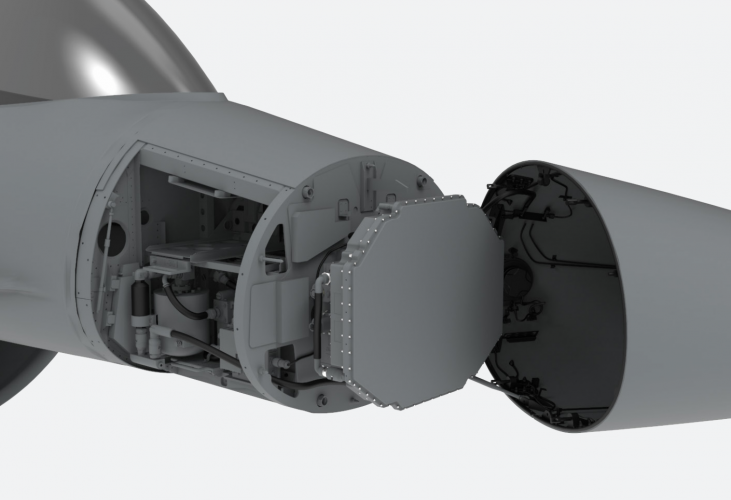
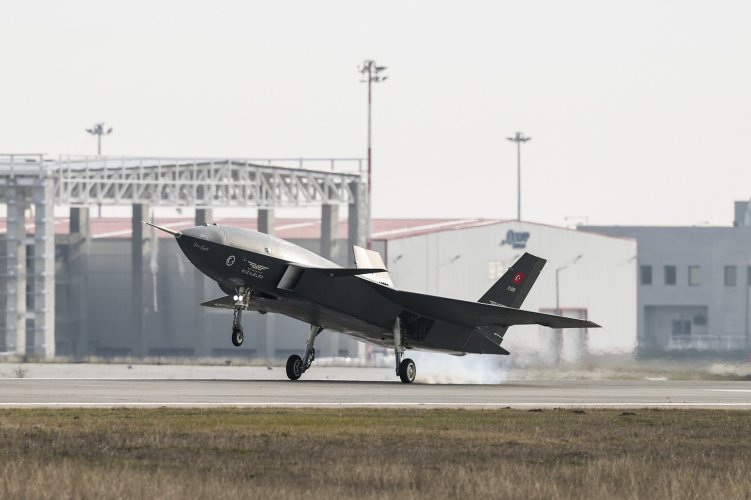
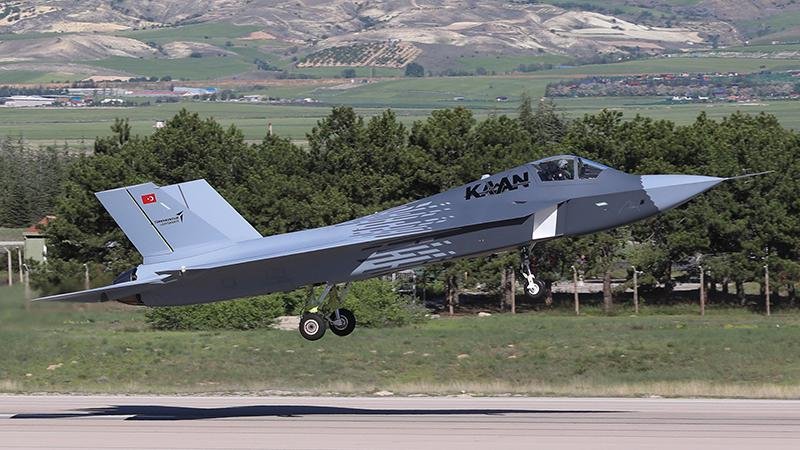
Aselsan MURAD GaN Airborne FCR series

snne

ACCESS: Top Secret
Joined
3 July 2022
Messages
2,047
Reaction score
7,557
@aselsan
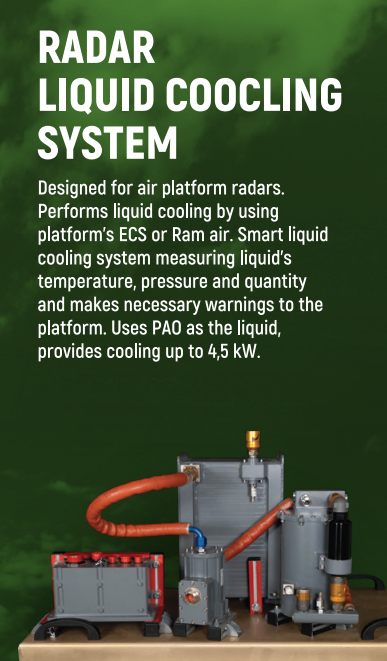
The ECS of the MURAD AESA radar, which was previously subject to embargo, was localized by
@anova_arge
.The system operates with 28VDC power and has a maximum power consumption of 350W.
View: https://x.com/KAYALP777/status/1827620956027720106


GV0DHR4XYAAFwhm
 
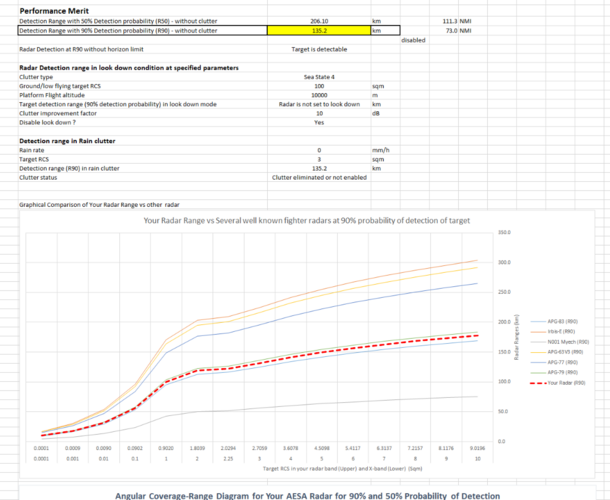
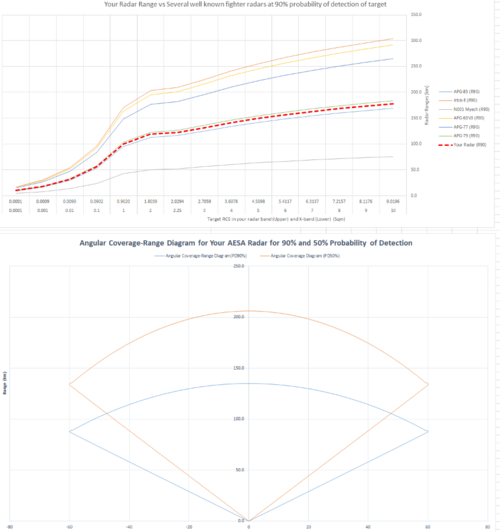
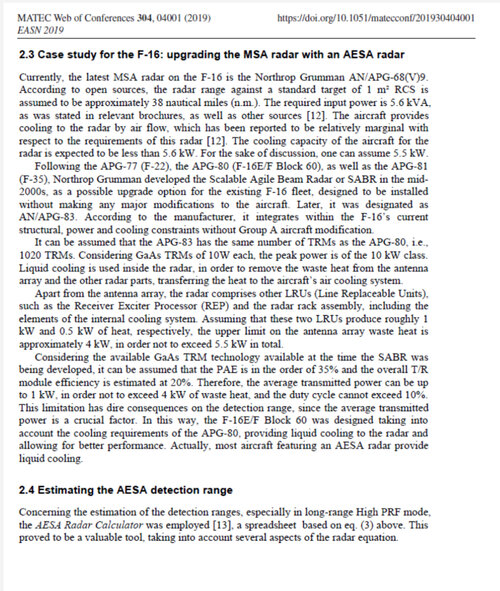
That 4.5 KW Cooling capacity is important as it shows the limit of possible radar's Average emitted power. From the available images of the antenna and TRM count. That cooling capacity will limit Murad's average emitted power to 1022 Watt or 1 KW.
 
That 4.5 KW Cooling capacity is important as it shows the limit of possible radar's Average emitted power. From the available images of the antenna and TRM count. That cooling capacity will limit Murad's average emitted power to 1022 Watt or 1 KW.
Thanks for the estimates

EDIT: By the way, the radar itself is called MURAD-100A.

View: https://x.com/Flankerchan/status/1828052802016510273

View: https://x.com/Flankerchan/status/1828052811105620044


GV6I56La8AAARTJ
GV6JYdvbsAAWRmX
GV6L7PvbAAE-6f_
GV6MCClXEAETMEG
 
It may not be an official document but it still does a decent job at giving you an idea.

View attachment 738717View attachment 738718
Very close to the figures I got in IDEF, they told me around 50 to 60nm for engaging (I guess this corresponds to PD90) 1m² target.

Also said targeting data for 8 aerial and/or? 6 naval/land targets. Radar is also capable of performing EW, I guess this was written in ASELSAN advertisement so no need to go there

@stealthflanker I guess your calculations are very good and helpful


There is also the possibility of 4.5kW being the average cooling capacity, but F-16 can supply 5kW at max so I don't think that 4.5kW is average
 
Very close to the figures I got in IDEF, they told me around 50 to 60nm for engaging (I guess this corresponds to PD90) 1m² target.

Also said targeting data for 8 aerial and/or? 6 naval/land targets. Radar is also capable of performing EW, I guess this was written in ASELSAN advertisement so no need to go there

@stealthflanker I guess your calculations are very good and helpful


There is also the possibility of 4.5kW being the average cooling capacity, but F-16 can supply 5kW at max so I don't think that 4.5kW is average
Up to 4.5 KW so that is max figure

1724741319196.png
 
Aselsan MURAD AESA
1725272578266.png

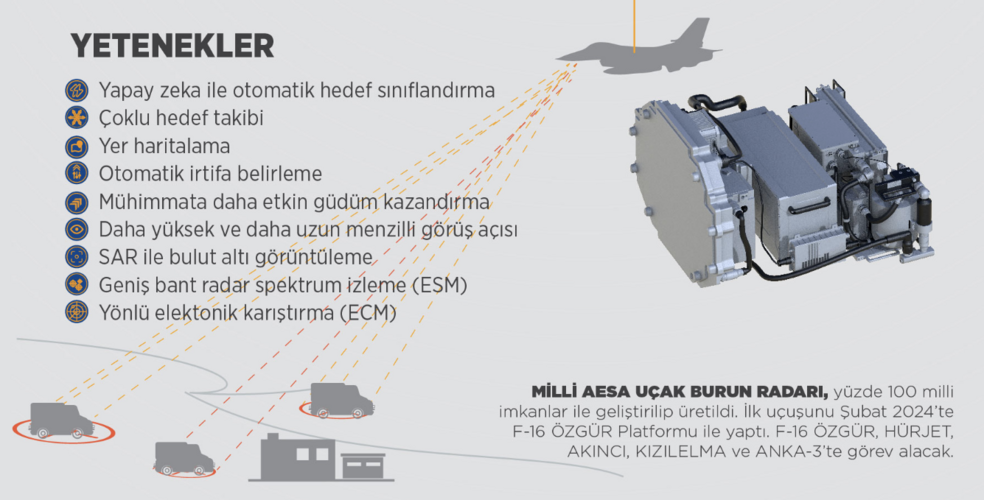
Translated -
Capabilities
  • Automatic target classification using artificial intelligence
  • Multi-target tracking
  • Ground mapping
  • Automatic altitude determination
  • Effective guidance to munitions
  • Higher and longer-range field of view
  • Imaging below the clouds with SAR (Synthetic Aperture Radar)
  • Wideband radar spectrum monitoring (ESM - Electronic Support Measures)
  • Directed electronic jamming (ECM - Electronic Countermeasures)
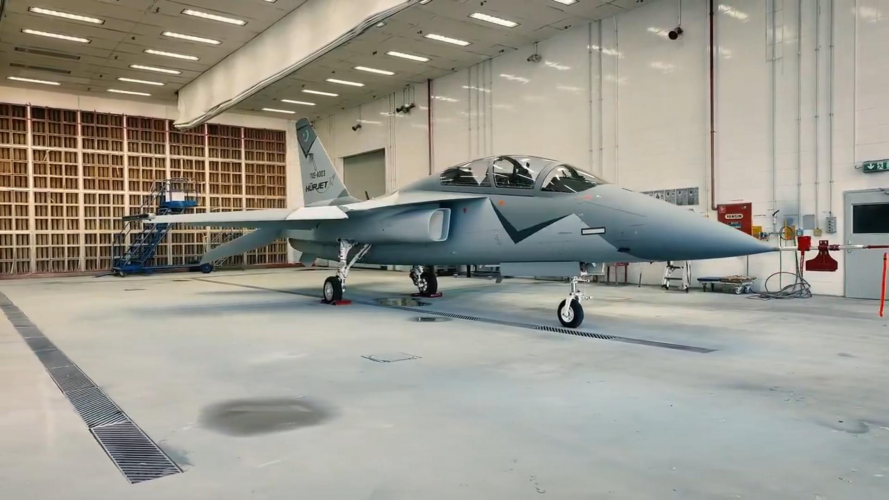
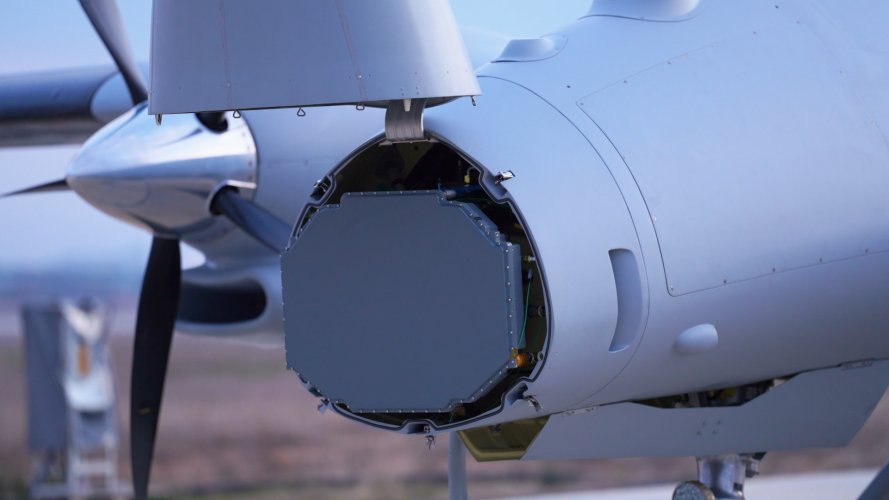
The NATIONAL AESA AIRCRAFT NOSE RADAR was developed with 100% domestic capabilities. Its first flight is scheduled for February 2024 on the F-16 Özgür platform. It will be deployed on F-16 Özgür, HÜRJET, AKINCI, KIZILELMA, and ANKA-3.
 
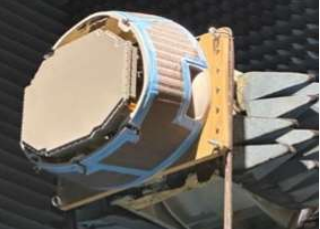
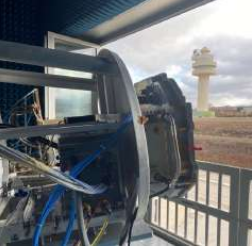
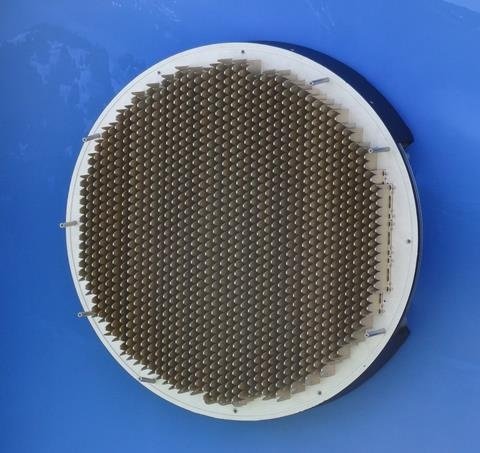
Images from the tests of the MURAD-100A AESA radar at ASELSAN facilities.
View attachment 741014View attachment 741015

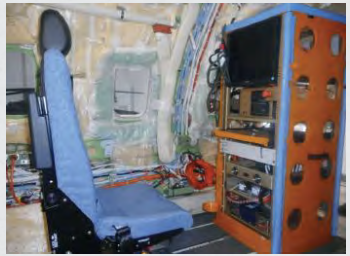
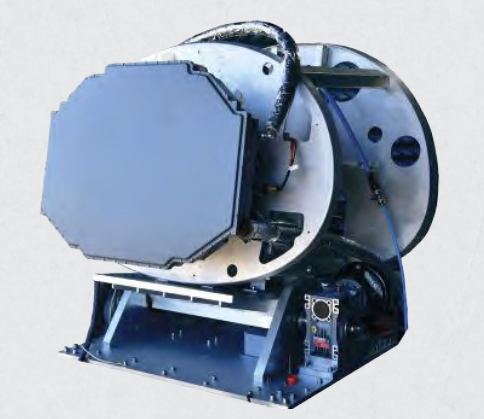
Also been tested inflight onboard a transport aircraft, i believe in a similar fashion as to S.Koreans with the radar facing out the rear cargo bay doors
View attachment 741016View attachment 741017
"With the development of MURAD 100-A, our country has been included in the top five countries in this field, and the production of our radar, which has been carried out nationally at every stage from the development of the GaN (Gallium Nitrate) chip to the final product, and whose flight tests have been initiated, has begun in our facilities with high-tech infrastructures in high volumes."
Via: @Radonislav
 
Last edited:
While i don't think development will fail, it's prudent to finish development and install it on fighters first(overcoming American resistance at that).

It's literally their first fighter aesa, and quite an ambitious one. Things can go wrong.
 
While i don't think development will fail, it's prudent to finish development and install it on fighters first(overcoming American resistance at that).

It's literally their first fighter aesa, and quite an ambitious one. Things can go wrong.
According to the CEO Ahmet Akyol, development and qualifications of hardware is complete, they are working on software optimisations and expect it to be fully ready in 2026
 
Aselsan is investing in automated production lines for radars and radarcomponents. There was previously talks about a dark factory where there would be little if any humans working.

"Digital transformation and the adoption of robotic production methods will not only increase productivity but also improve the quality of products. In this context, ASELSAN aims to optimize production processes by using advanced technologies, reduce human errors and ultimately offer high quality radar systems to its customers.

The first phase of construction is expected to commence in the second quarter, and this production facility will be used for the robot-assisted mass production of a large number of radar components, radar seeker heads and AESA nose radars. In the 7,000 square meter integration area, it is aimed to carry out superstructure (platform level) production."
 
Last edited:
I think it wouldn't be an overstatement if we said there will be an internal demand for hundreds of these within this decade so I find it hard to believe for them to churn out enough radars for export.
Akıncı, Hürjet and F-16Ö's all use MURAD-100(110)A

Kızılelma is going to have MURAD-200A with better stealth (probably better LPI) properties
 
According to the CEO Ahmet Akyol, development and qualifications of hardware is complete, they are working on software optimisations and expect it to be fully ready in 2026
As we know, software isn't a small thing in modern development...
If they can get to where they are, their TRMs are indeed ready(not on a fighter though, which is important) - but that's just the beginning.
Once this modification programme is in production I wonder if Turkey will offer it to Ukraine?
Turkiye typically can do everything - but only for hard cash, and it will be available only several years into the future. Pure business.
Plus the problem with US agreeing to any modifications to US aircraft still stands.

Realistically, the only option here is F-16V, which will be done for US taxpayer money and at the expense of all the other orders.
 
As we know, software isn't a small thing in modern development...
If they can get to where they are, their TRMs are indeed ready(not on a fighter though, which is important) - but that's just the beginning.

Turkiye typically can do everything - but only for hard cash, and it will be available only relatively far into the future.
Plus the problem with US agreeing to any modifications to US aircraft still stand.

Realistically, the only option here is F-16V, which will be done for US taxpayer money and at the expense of all the other orders.
I am not saying it is easy work, but it is clearly not a roadblock for serial production of the hardware.

Also CEO also said essential functions were tested and ready. I don't know what are those essential functions are
 
From 2025 to 2035 Aselsan needs to deliver 160 radars for F-16 B30,B40 and B50. 100 radars for Hürjet. 100+ radars for Kizilelma B and C. 60+ radars for Kaan and 100+ radars for Akinci and Anka. We are talking about more than 600.000 TRM in total.

Those are just the air-to-air radars not to mention all the other AESA radars.
 
From 2025 to 2035 Aselsan needs to deliver 160 radars for F-16 B30,B40 and B50. 100 radars for Hürjet. 100+ radars for Kizilelma B and C. 60+ radars for Kaan and 100+ radars for Akinci and Anka. We are talking about more than 600.000 TRM in total.

Those are just the air-to-air radars not to mention all the other AESA radars.
That's why they are building that lights out factory. Can't keep with the demand with the current production line
 
I am not saying it is easy work, but it is clearly not a roadblock for serial production of the hardware.

Also CEO also said essential functions were tested and ready. I don't know what are those essential functions are
Correction, what he said was "all important functions" not essential

“Bir yandan MURAD AESA Burun Radarı ile uçuşlar devam ederken, diğer yandan üretimler de devam ediyor. Üretimlerine başlamış durumdayız. Dolayısıyla bundan sonra optimizasyon konuları var sadece. Ve önemli fonksiyonların hepsi implemente edildi. Son kullanıcının yorumlarına ve deneyimlerine bağlı olmakla birlikte biz MURAD’ın savaş uçaklarında 2 yıl sonra operasyonel olabileceğini düşünüyoruz.”

“While flights with the MURAD AESA Radar continue, production also continues. We have already started production. Therefore, from now on, there is only optimization. And all important functions have been implemented. Depending on the end user’s comments and experiences, we think that MURAD can be operational in fighter aircraft in 2 years.”
 
1734526012271.png

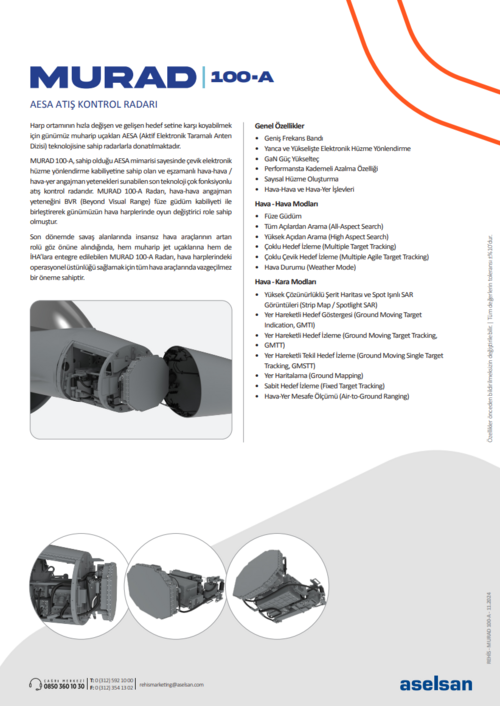
To counter the rapidly changing and evolving target set in the battlefield, modern combat aircraft are equipped with radar systems based on AESA (Active Electronically Scanned Array) technology.

The MURAD 100-A is a state-of-the-art, multifunctional fire control radar featuring AESA architecture, which enables agile electronic beam steering capabilities and offers simultaneous air-to-air and air-to-ground engagement capabilities. By integrating its air-to-air engagement capability with BVR (Beyond Visual Range) missile guidance, the MURAD 100-A has become a game-changer in contemporary air warfare.

Considering the increasing role of unmanned aerial vehicles (UAVs) in recent battlefields, the MURAD 100-A Radar, which can be integrated into both combat jets and UAVs, holds indispensable significance in achieving operational superiority in air warfare.

General Features:
  • Wide Frequency Band
  • Electronic Beam Steering in Azimuth and Elevation
  • GaN Power Amplifier
  • Graceful Performance Degradation Feature
  • Digital Beamforming
  • Air-to-Air and Air-to-Ground Functions
Air-to-Air Modes:
  • Missile Guidance
  • All-Aspect Search
  • High-Aspect Search
  • Multiple Target Tracking
  • Multiple Agile Target Tracking
  • Weather Mode
Air-to-Ground Modes:
  • High-Resolution Strip Map and Spotlight SAR Imaging
  • Ground Moving Target Indication (GMTI)
  • Ground Moving Target Tracking (GMTT)
  • Ground Moving Single Target Tracking (GMSTT)
  • Ground Mapping
  • Fixed Target Tracking
  • Air-to-Ground Ranging
 

Attachments

  • 1734525960662.png
    1734525960662.png
    463.1 KB · Views: 34
  • 1734525975397.png
    1734525975397.png
    312.5 KB · Views: 30
That 4.5 KW Cooling capacity is important as it shows the limit of possible radar's Average emitted power. From the available images of the antenna and TRM count. That cooling capacity will limit Murad's average emitted power to 1022 Watt or 1 KW.
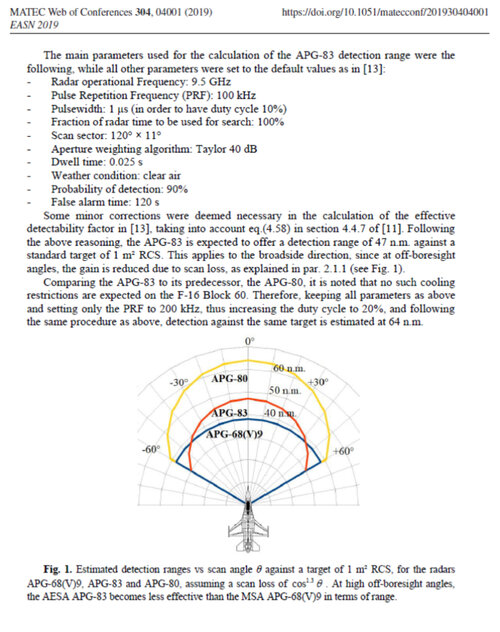
How good is it compare to APG-83?
 
View attachment 752820

To counter the rapidly changing and evolving target set in the battlefield, modern combat aircraft are equipped with radar systems based on AESA (Active Electronically Scanned Array) technology.

The MURAD 100-A is a state-of-the-art, multifunctional fire control radar featuring AESA architecture, which enables agile electronic beam steering capabilities and offers simultaneous air-to-air and air-to-ground engagement capabilities. By integrating its air-to-air engagement capability with BVR (Beyond Visual Range) missile guidance, the MURAD 100-A has become a game-changer in contemporary air warfare.

Considering the increasing role of unmanned aerial vehicles (UAVs) in recent battlefields, the MURAD 100-A Radar, which can be integrated into both combat jets and UAVs, holds indispensable significance in achieving operational superiority in air warfare.

General Features:
  • Wide Frequency Band
  • Electronic Beam Steering in Azimuth and Elevation
  • GaN Power Amplifier
  • Graceful Performance Degradation Feature
  • Digital Beamforming
  • Air-to-Air and Air-to-Ground Functions
Air-to-Air Modes:
  • Missile Guidance
  • All-Aspect Search
  • High-Aspect Search
  • Multiple Target Tracking
  • Multiple Agile Target Tracking
  • Weather Mode
Air-to-Ground Modes:
  • High-Resolution Strip Map and Spotlight SAR Imaging
  • Ground Moving Target Indication (GMTI)
  • Ground Moving Target Tracking (GMTT)
  • Ground Moving Single Target Tracking (GMSTT)
  • Ground Mapping
  • Fixed Target Tracking
  • Air-to-Ground Ranging
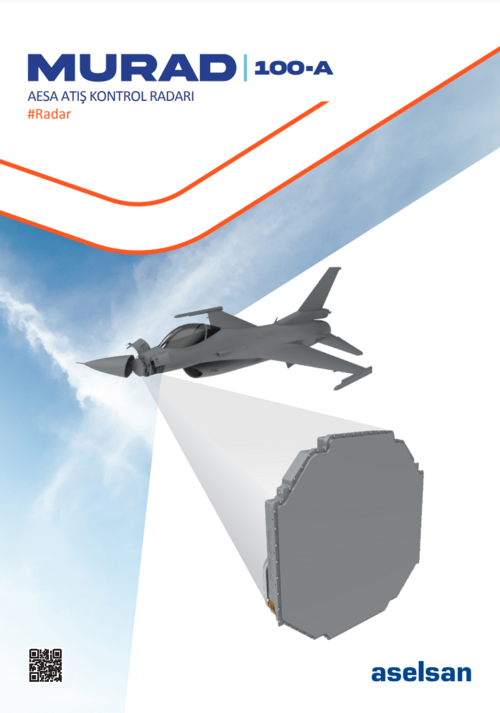
Update designation has changed for F-16 it is now MURAD-110A, no information on what differs from MURAD-100A.


MURAD-100A will equip AKINCI UCAV.
1741436258926.png
 
That 4.5 KW Cooling capacity is important as it shows the limit of possible radar's Average emitted power. From the available images of the antenna and TRM count. That cooling capacity will limit Murad's average emitted power to 1022 Watt or 1 KW.
So despite having 1100 GaN modules, this radar is still inferior to APG-80 on F-16 block 60?
IMG_8101.jpeg
IMG_8102.jpeg
 
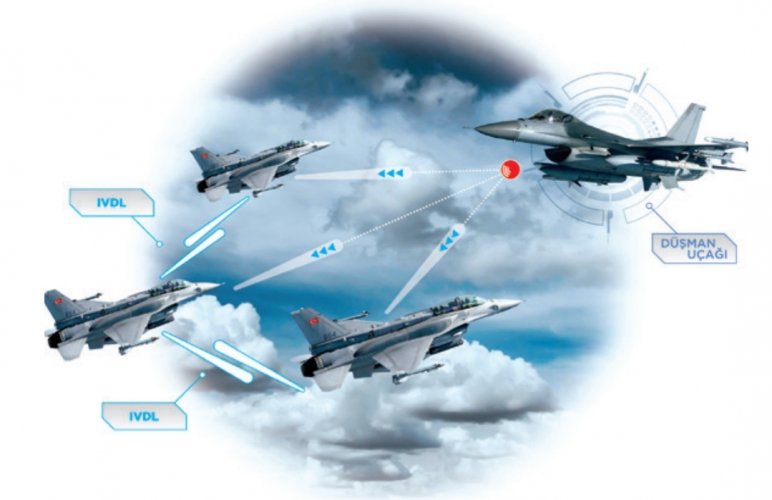
The GM of Turkish Aerospace has recently talked about the MURAD-600A radar and the IDVL (MADL-equivalent datalink) of the Kaan:

MURAD-600A:

First of all, it will have a game-changing radar with its tracking ability, distance and electronic warfare capability at the same time. We have now developed its radar; MURAD-600. This will provide the aircraft with long-range engagement and the ability to send missiles to the desired location at long range. An integrated electronic warfare system has been developed for this. Systems that will bring this aircraft, which is effective against modern threats and works integrated with all these radars, to the fore with its electronic warfare capabilities in all operations. It was developed as an Electronic Warfare Suite.


IVDL:

Apart from these systems, as you know, we have also developed an in-arm data link, which we define as IVDL, which is the name of the product, through which manned aircraft and unmanned aircraft will communicate together, which is the new concept of the new battlefield. In particular, we have developed a system that is not easily detected, very broadband, very fast and with high detection and electronic warfare protection, and with this system, we will see KAAN flying with Kızılelma and KAAN flying with Anka. This data link will enable us to operate our systems in accordance with the new modern warfare doctrine.
https://www.savunmasanayist.com/kaanin-radari-aselsan-murad-600de-son-durum/
View: https://x.com/SavunmaSanayiST/status/1933224218751021211?ref_src=twsrc%5Etfw%7Ctwcamp%5Etweetembed%7Ctwterm%5E1933224218751021211%7Ctwgr%5E1685f097ddd4058f1862a6bcc7016ddae2ba8846%7Ctwcon%5Es1_c10&ref_url=https%3A%2F%2Fdefencehub.live%2Fthreads%2Ftf-x-kaan-fighter-jet.18801%2Fpage-475
 
To date, the Murad has successfully flown on five different platforms, both manned and unmanned,” Akyol says. “With each new production cycle, the radar continues to be deployed on additional platforms, while new capabilities are simultaneously being added.”
The company notes that the Murad employs “full national resources and engineering autonomy, down to the design and production of the radar’s critical microchips… representing true technological sovereignty”.
1000043495.jpg
Source: Craig Hoyle/FlightGlobal

Aselsan’s Murad AESA has been integrated with multiple types
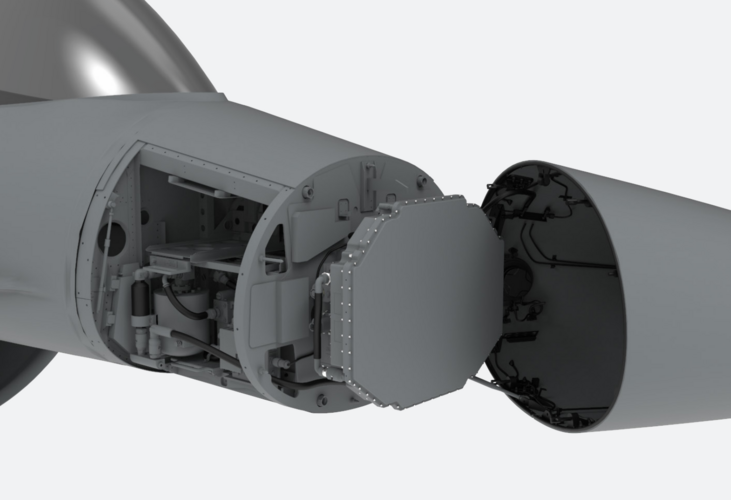
I reckon the array shown above is the Hürjet-version of the MURAD FCR family since it doesn't match the shape of any other indigenous aircraft's radome.


Via:
https://www.flightglobal.com/defenc...company-marks-50th-anniversary/163460.article
 
Kizilelma with Murad 100-A radar and Toygun EOTS should be able to detect F-35 (RCS 0.0015m2) from 100km at the least, thanks to the 1280x1024 MWIR FPA, and have a weapons grade track with the radar using a 1x1 degree beam from 71km.
 
Last edited:
Kizilelma with Murad 100-A radar and Toygun EOTS should be able to detect F-35 (RCS 0.0015m2) from 100km at the least, thanks to the 1280x1024 MWIR FPA, and have a weapons grade track with the radar using a 1x1 degree beam from 71km.
The key always lies in the difference between detection and tracking. No one’s saying a GaN radar with ~1200 T/R modules can lock onto an F-35 from that distance, though it might be able to achieve it at a slightly shorter range.

The same applies to the performance of the EOTS, although it’s also influenced by weather conditions. We also don't have access to classified performance documents of the RAM and RAS of the F-35, but I'm sure TurAF and several Turkish companies know a great deal about them since they were a key member of the program, even though they (TurAF) did not operate any and only had personnel in training when they got kicked out.

On the other hand, Kaan's MURAD-600A is sure to be a beast -practically a mini airborne AEW- and only a select few fighters will have radars that match its performance.
 
Last edited:
@Waterballoon I came up with this based on the purely speculative RCS you gave and @stealthflanker 's estimates:

ModePD 90% (F-35, km)PD 50% (F-35, km)
High PRF135 × 0.149 ≈ 20 km206 × 0.149 ≈ 31 km
Medium PRF116 × 0.149 ≈ 17 km182 × 0.149 ≈ 27 km

This still doesn’t mean anything, since we don’t know who came up with that RCS result, how they did it, or in which band.

Still, as you can see, detecting and engaging a stealth target (even for a modern AESA) is harder than we might think.

 
Kizilelma with Murad 100-A radar and Toygun EOTS should be able to detect F-35 (RCS 0.0015m2) from 100km at the least, thanks to the 1280x1024 MWIR FPA, and have a weapons grade track with the radar using a 1x1 degree beam from 71km.
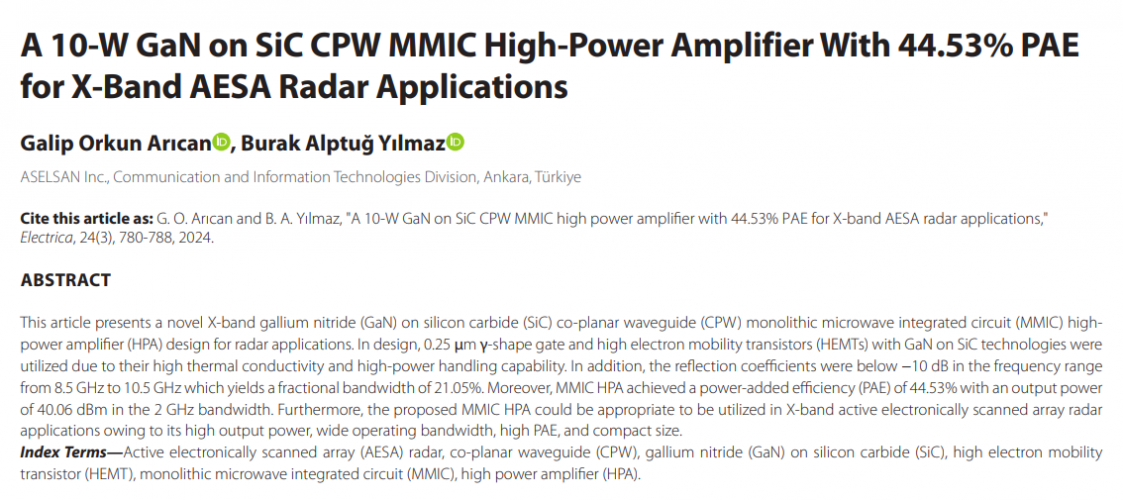
At a (max lowest angular accuracy?) beamwidth of 0.19 degrees, detection/tracking range would be 200km and 125km respectively which would probably outrange the EOTS HD MWIR fighter detection range of 100km or so. How would a 640x512 LWIR FPA "Karat" IRST fare?
 
Last edited:
Last edited:
During the exhibition, TurDef learned that MURAD 110-A and ALP 110-G are the export variants of the MURAD 100-A and ALP 100-G radars. This separation was not observed for tactical-level radars like FULMAR 200-A AESA SAR pod and FULMAR 500-A multi-role AESA radar for aircraft.
edex_2025_steel_dome_and_radar_offer_from_aselsan_11.webp


Similar threads

Back
Top Bottom