Grey Havoc
ACCESS: USAP
- Joined
- 9 October 2009
- Messages
- 24,511
- Reaction score
- 18,192
Last edited by a moderator:




One of the failings of both the Russian Alfa and Papa class high speed submarines, was that although streamlined, moving through water that fast creates noise- a LOT of noise. The article mentions they would be quiet-No, the propulsion system would be quiet, the submarine moving through water would not. And a "detonation wave" would hardly be silent. And the drag on the hull increases with speed; which is why the Papa required 80,000 SHP to hit 44 knots. Supercavitation helps, but if the last propulsion is at the aft end, how does this envelope the entire submarine. Also, as mentioned above when they say "supersonic", is that in air or water, because sound moves through water much faster than through air.Anything large that would rely on cavitation bubbles to move through the water at any kind of speed would be loud enough that enemy subs would hear it on the other side of the ocean.

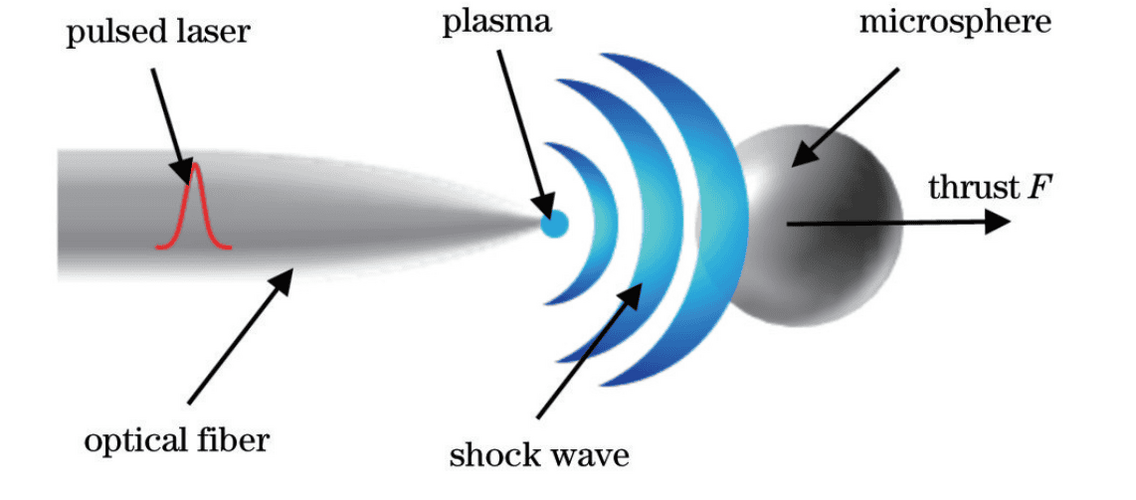
I've found what appears to be a basic diagram of the concept. Looking at the article you posted, they think they can get 70,000 newtons from a 2MW laser. I have no idea how well that compares to a standard propeller in terms of efficiency. I also have no idea how loud such a system would be, but given that it relies on "a detonation wave by plasma expansion" to drive the submarine forward, I can't imagine it would be silent. The article claims that because it has no moving parts it would be silent, but I seriously doubt that. Especially since a nuclear reactor would still be required to power this thing (granted, they can be very quiet these days).
The claims for the submarine being supersonic seem to come from the possibility of using the laser to generate cavitation bubbles around the submarine. I think I've seen that concept for supercavitation before, but the amount of energy they'd need to generate such a cavitation bubble seems very high (not to mention extremely loud).
This is before we consider whether this "supersonic" claim is in air or water. I'm assuming the former, since going supersonic in water seems ridiculous.
View attachment 727309

That is 6 or 7 orders of magnitude improvement over a deep space photon drive. The classic 'photon drive' takes 300MW per 1 Newton of thrust...I've found what appears to be a basic diagram of the concept. Looking at the article you posted, they think they can get 70,000 newtons from a 2MW laser. I have no idea how well that compares to a standard propeller in terms of efficiency. I also have no idea how loud such a system would be, but given that it relies on "a detonation wave by plasma expansion" to drive the submarine forward, I can't imagine it would be silent. The article claims that because it has no moving parts it would be silent, but I seriously doubt that. Especially since a nuclear reactor would still be required to power this thing (granted, they can be very quiet these days).
In fairness, the method of operation is completely different. In a photon drive you're relying on the momentum of light as a stand in for the momentum of a working mass or fuel. In this instance, the laser is being used to heat the water into plasma, the shockwave from which will then push against and propel the submarine.That is 6 or 7 orders of magnitude improvement over a deep space photon drive. The classic 'photon drive' takes 300MW per 1 Newton of thrust...
And the continuous generation of shock waves would be readily detectable by acoustics. If it's a sufficient shockwave to propel a multi -1000 ton object at high speed, it would make one huge shockwave footprint.In fairness, the method of operation is completely different. In a photon drive you're relying on the momentum of light as a stand in for the momentum of a working mass or fuel. In this instance, the laser is being used to heat the water into plasma, the shockwave from which will then push against and propel the submarine.
No doubt sending every whale on or under the Seven Seas onto their nearest beaches to escape the noise...
I think the implication of any high speed submarine is that acoustics take a back seat to mobility, at least as long as this drive is operational.And the continuous generation of shock waves would be readily detectable by acoustics. If it's a sufficient shockwave to propel a multi -1000 ton object at high speed, it would make one huge shockwave footprint.
Submarines are engineered to a very high degree to operate with minimal acoustic footprints. Decks are suspended on shock absorbers to remove any direct sound transmission path to the hull. The hull is coated with sound absorbing anechoic materials.