uk 75

ACCESS: Above Top Secret
Senior Member
Joined
27 September 2006
Messages
6,622
Reaction score
7,444
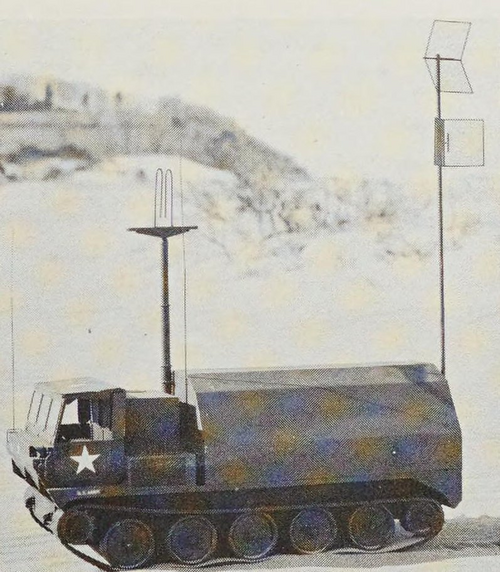
One of the most interesting periods in the development of the US Army missile systems is that between 1960 and 1975 or so when the US envisaged self propelled tracked missile systems very similar to those deployed by the USSR.

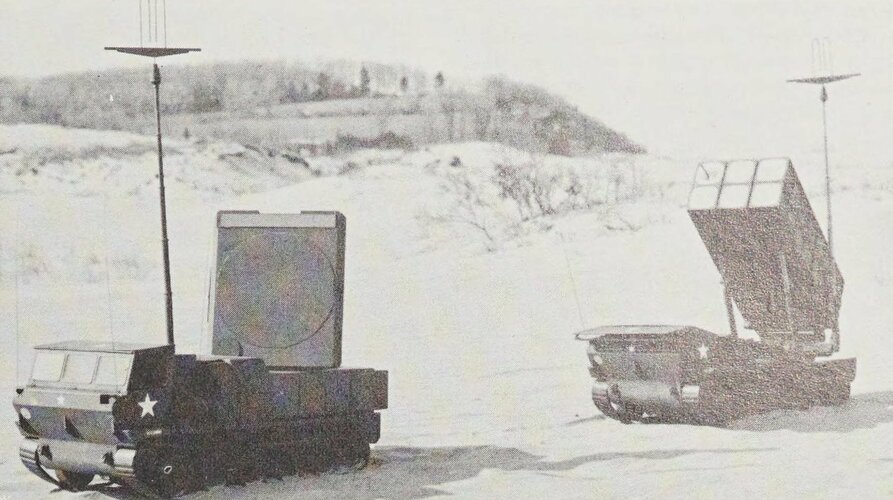
Eventually the SAM D (later Patriot) emerged as a tracked launcher system, though this was dropped in favour of a more cost effective truck mounted version.

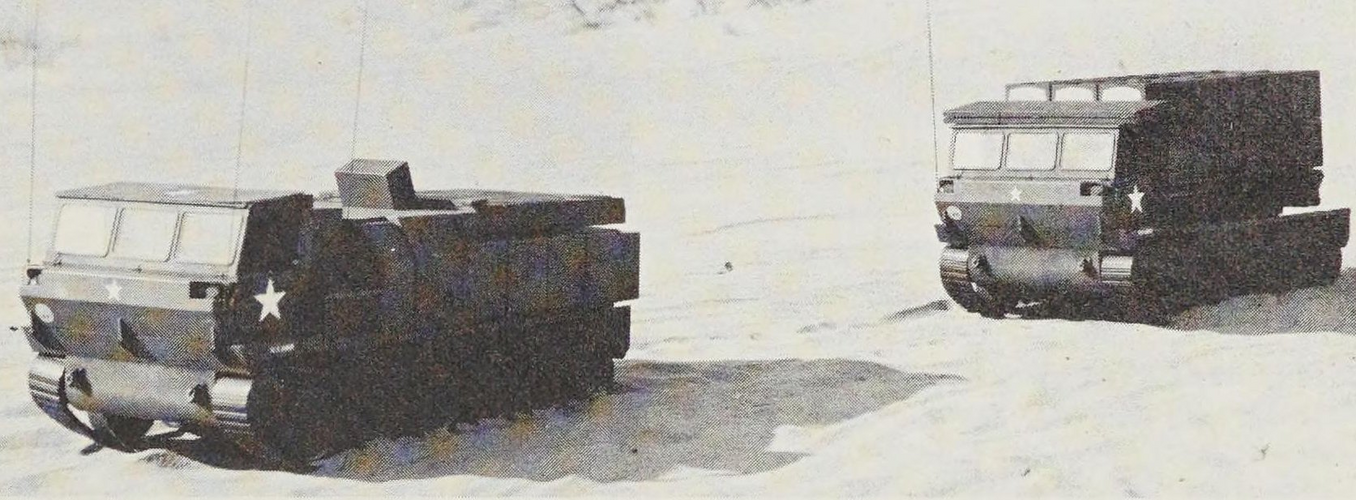
FABMDS was going to be a larger version of the Hawk type missile based on the contemporary GOER vehicle family.

The Redstone Military archive used to have some useful online material but this is now only available on a charged basis.

It would be interesting to know if anyone has access to models or photos of these systems that have not appeared elsewhere.

Tracked SAM D is well covered in early editions of jane's Weapons and elsewhere but FABMDS is not as far as I know.

UK 75
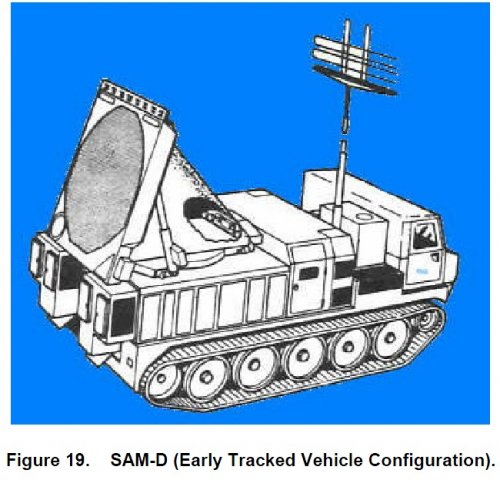
 
I've only ever seen one picture of the radar, and nothing on the launcher. SAM-D came in right around the time the US Army began shifting many types of equipment from tracked/armored platforms onto wheeled soft skins so its no surprise such a lavish concept of moving around a bunch of electronics thirty miles behind the front lines died out quickly. I think even without the Nam induced money crunch it still would have ended up wheeled anyway. Its not like Europe was lacking in paved roads.

Original source of picture is here, the file mostly talks about digital electronics
http://srmsc.org/pdf/004451p0.pdf
 

Attachments

  • SAM-D.jpg
    SAM-D.jpg
    137.6 KB · Views: 407
Talking about early Patriot versions why were the early Patriot prototype missiles back in the 1970s launched from tubular launch-canisters while the production variants were launched from box-type canisters?
 
Talking about early Patriot versions why were the early Patriot prototype missiles back in the 1970s launched from tubular launch-canisters while the production variants were launched from box-type canisters?
Just a hypothetical, but a square box gives more space for strakes and fins, while allowing the rocket to be larger. Draw a square, then draw a circle that touches all 4 sides of that square.
 
Talking about early Patriot versions why were the early Patriot prototype missiles back in the 1970s launched from tubular launch-canisters while the production variants were launched from box-type canisters?
I don't know. But boxes have logistical advantages compared to tubes. They are stackable and do not roll around..
 
PDFs dont open..
Forum would likely want to see the SAM-D & FABMDS TELs if you can assist in that.
 
Good point however if that's the case then why do the SA-10/12/20/21 use cylindrical launch-tubes?

Doesn't cold launch require the canister to pressurize during missile ejection? That would strongly favour a cylindrical cross section.
 
Doesn't cold launch require the canister to pressurize during missile ejection? That would strongly favour a cylindrical cross section.

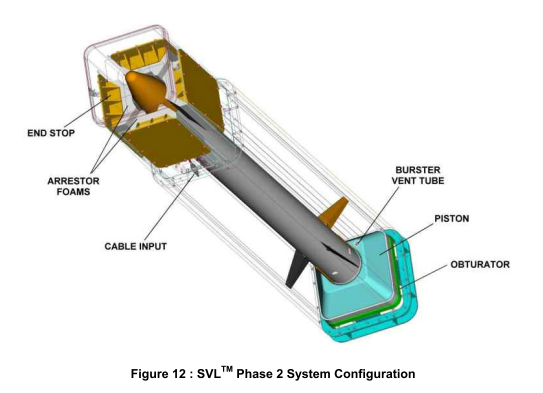
The canister itself doesn't pressurise, inside at the bottom of the canister there's a hemispherical piston beneath the missile's exhaust nozzle with a cold-gas generator between the piston and the hemispherical aft end-cap of the launch-canister. When the firing command is issued that gas-generator is fired and the gas it makes forces the piston upwards ejecting the missile from the canister.

Edit: The piston is a captive design so it doesn't pop out of the launch-tube.
 
Last edited:
What I'd like to know is why the prototype Patriot missiles back in the early 70s used tubular launch-canisters like the SA-10/12/20/21 used instead of box-type canisters?
 
It is interesting to note that Soviet SA10 and later S300 and S400 missiles are not mounted on tracked vehicles either.
Was the US decision related to the performance of Hawk units with M548 in Germany?
The closest UK equivalent Bloodhound was never mounted on a tracked vehicle as it needed to be airportable.
 
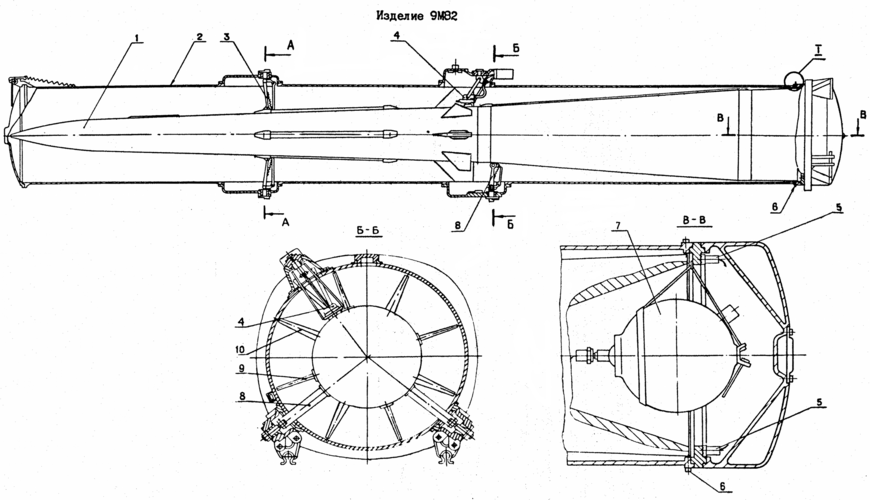
Here's a cutaway diagram of an SA-12 in its' launch canister showing details of missile's ejector (The drawing is from an Air Power Australia article about the SA-10/12/20/23 system).
 

Attachments

  • 9M82-Missile-Tube-Launcher-A.png
    9M82-Missile-Tube-Launcher-A.png
    933 KB · Views: 117
It is interesting to note that Soviet SA10 and later S300 and S400 missiles are not mounted on tracked vehicles either.
Was the US decision related to the performance of Hawk units with M548 in Germany?
The closest UK equivalent Bloodhound was never mounted on a tracked vehicle as it needed to be airportable.
S-300P, derivatives and S-400 belong to an entirely different family of systems, designed and built by a different design bureaus, with different missiles and radars to the S-300V series.

This divide is due to how the Soviet armed forces were organised, S-300P being intended as a SAM for the PVO (Soviet Air Defence Forces) with S-300V being used by the Army.

UK doesn't have an equivalent to this, Bloodhound greatly predates it, and is an Airforce system (hence is probably closest to the PVO systems) not an Army system.
 
Good point however if that's the case then why do the SA-10/12/20/21 use cylindrical launch-tubes?
I don't know. But engineering decisions always involve tradeoffs and conflicting requirements. A tube will be stronger than a box for a given amount of material.
 
thank you TFP
A new concept trckd TEL launching a hybrid long range msle & ucrav. Something as large as some above mentioned concepts, able to shut down an entire airfield for a short time.
 
REPORT OF THE DEFENSE SCIENCE BOARD
February 1967
Report of the Task Group on Independent Research and Development

RAYTHEON SUBMISSION OF PAYOFFS IN IR&D

[...]SAM-D

An important segment of our Company business is the air defense business.

In the spring of 1963, the Army instituted competitive feasibility studies for an air defense system for the 1970's (AADS-70's). That feasibility study was submitted to the Army in September 1963, and in January 1964 we learned that we had Lost the competition and the Army was proceeding with two other contractors.

Determined to continue in this area, the 1964 IDP program provided design and hardware construction for key elements of an advanced ground-to-air missile system. The program undertaken was to actually build and flight test a TVM sample data homing guidance system.

The hardware portion included a TVM down link and the high-voltage power supply for the TWT, an inverse receiver design missile seeker that could operate on sample data, a phased array radar that could track four targets simultaneously while providing target illumination and search functions, lightweight electrical missile head and actuator, control grid amplitrons, solid state local oscillators, and radomes to withstand the high temperature and rain erosion for the higher velocity missile.

As things developed, the Army concepts for the new air defense weapon matured into its surface-to-air missile development (SAM-D), and in April 1966 industry was solicited for a competitive CDP. The responses were due June 1966. The IR&D efforts which were maintained from 1964 through 1966 were recognized by the Army when they awarded Raytheon one of the competitive CDF's in August 1966.
 
Doesn't cold launch require the canister to pressurize during missile ejection? That would strongly favour a cylindrical cross section.
It doesn't take a lot of pressure to cold-launch a weapon. Especially a light one like CAMM or what became Patriot.

maybe 50psi total.
 
The successful Patroit raids against Suks which are slowing down the glided bomb saturations might argue that the best Patroit development would be a tracked system. Tracks not depending on roads are better able to deep raid. .. and the justification for tanks to provide security.
 
The successful Patroit raids against Suks which are slowing down the glided bomb saturations might argue that the best Patroit development would be a tracked system. Tracks not depending on roads are better able to deep raid. .. and the justification for tanks to provide security.
The counter-argument is that a wheeled system can self-deploy on roads much faster than a tracked system, and that an area SAM doesn't need the mobility to keep up to manoeuvre forces across country.
 
S-300P, derivatives and S-400 belong to an entirely different family of systems, designed and built by a different design bureaus, with different missiles and radars to the S-300V series.

This divide is due to how the Soviet armed forces were organised, S-300P being intended as a SAM for the PVO (Soviet Air Defence Forces) with S-300V being used by the Army.

UK doesn't have an equivalent to this, Bloodhound greatly predates it, and is an Airforce system (hence is probably closest to the PVO systems) not an Army system.
I'd actually argue that's a failure of the UK. The RAF had Fighter Command (equivalent to Soviet PVO and USAF ADC) and didn't have a Command-level organization for offensive use of fighters or flying army support (equivalent to Soviet VKS or USAF TAC).

Given the Sandys 1957 paper, shouldn't Fighter Command have started pushing for more SAMs?
 
Given the Sandys 1957 paper, shouldn't Fighter Command have started pushing for more SAMs?

Sandys was a shortsighted fuckwit who helped permanently damage the British aerospace industry with his idiotic 1957 defence white paper.
 
Sandys was a shortsighted fuckwit who helped permanently damage the British aerospace industry with his idiotic 1957 defence white paper.
Disagree, but he greatly misjudged how quickly missiles would be the primary threat. By about 20 years.

But I still would have strongly recommended that Fighter Command grab themselves some SAM designs to field, because now they're working in accordance with the Minister's plans and that will get them money.
 
The counter-argument is that a wheeled system can self-deploy on roads much faster than a tracked system, and that an area SAM doesn't need the mobility to keep up to manoeuvre forces across country.
The wheeled system doesn't need replacing just new augmentation. Carrying more missiles per tel eases logistics for off road tels also.

Offensive counter-air should still be a thing for all services.
 

Similar threads

Back
Top Bottom