Where could we launch Orion? Hypothetical launch sites for Nuclear Pulse Propulsion Spacecraft.

Depends on the role of the nuke. Davy Crockett was designed in part to leave a place filthy, and it did so by incomplete fission.
Point conceded there.


And Davy Crockett formed the basis of the 10-M Orion pulse unit.
Then that's a particularly poor choice of design, as it is sacrificing significant amounts of thrust potential by not completely burning fuel.
 
Then that's a particularly poor choice of design, as it is sacrificing significant amounts of thrust potential by not completely burning fuel.
The Orion pulse unit would have been on the order of a kiloton, which is the upper end of the W54's potential. The lower "Davy Crockett" end of the potential was about 25 *tons.* It achieved that shitacularly low yeild by being intentionally ineffective... the blast was almost incidental, with "here's some fallout for your infantry, Commies" being the point of the device. But when set for the upper yield, it was much more efficient, though still kinda crappy. But getting *any* sort of decent efficiency at a mere 1 kiloton remains a challenge. And for a 10-meter Orion, 1 kiloton is roughly where you want to be. Going more powerful doesn't increase thrust... it breaks your ship.

The first gen of 10-meter Orion pulse units would almost certainly have been W54 derived. Ted Taylor claimed to have figured out how to make vastly more efficient low-yield devices, which would have fed into later-gen pulse units. The explanation as to why the US never developed more efficient bitty-bombs is several-fold:
1:The nuclear arsenal never had that many bombs, so there wasn't a lot of incentive to spend the billions needed to make substantially more efficient ones. A single Orion mission would require more identical pulse units than there were of any other kind of nuke in the US arsenal, so making them more efficient would have been vital.
2: If the US *did* develop a nearly fission-free nuke in the kiloton range, then that would be proof that it was possible. The Soviets would eventually figure it out as well, quite possibly aided by espionage. That would allow them to build a bajillion nukes. That's bad.
3: If the Soviets figured out how to build a bajillion cheap low-fissionables nukes, then eventually China, India, Pakistan, North Korea, Syria, Iran, SPECTRE, the IRA, the PLO, the WEF, Soros, the SAG and all the other well-funded scumbags and villains in the world would *eventually* either figure it out and start making their own, or just buy them from drunk Wagnerites with a couple kegs of bathtub vodka.
 
Last edited:
The Orion pulse unit would have been on the order of a kiloton, which is the upper end of the W54's potential. The lower "Davy Crockett" end of the potential was abotu 25 *tons.* It achieved that shitacularly low yeild by being intentionally ineffective... the blast was almost incidental, with "here's some fallout for your infantry, Commies" being the point of the device. But when set for the upper yield, it was much more efficient. though still kinda crappy. But getting *any* sort of decent efficiency at a mere 1 kiloton remains a challenge. And for a 10-meter Orion, 1 kiloton is roughly where you want to be. Going more powerful doesn't increase thrust... it breaks your ship.
The point is that incomplete nuclear burn reduces your thrust, and fuel burn that spits out more neutrons than necessary really cramps your potential thrust. In a pure fusion charge (using pure fusion because I don't have data for a pure fission one), 40% or more of the energy in the reaction comes out as neutrons, which then don't contribute to thrust.

Got any recommendations for a non-Graduate-level breakdown of how much energy goes out in what form of energy for fission?


The first gen of 10-meter Orion pulse units would almost certainly have been W54 derived. Ted Taylor claimed to have figured out how to make vastly more efficient low-yield devices, which would have fed into later-gen pulse units. The explanation as to why the US never developed more efficient bitty-bombs is several-fold:
1:The nuclear arsenal never had that many bombs, so there wasn't a lot of incentive to spend the billions needed to make substantially more efficient ones. A single Orion mission would require more identical pulse units than there were of any other kind of nuke in the US arsenal, so making them more efficient would have been vital.
2: If the US *did* develop a nearly fission-free nuke in the kiloton range, then that would be proof that it was possible. The Soviets would eventually figure it out as well, quite possibly aided by espionage. That would allow them to build a bajillion nukes. That's bad.
3: If the Soviets figured out how to build a bajillion cheap low-fissionables nukes, then eventually China, India, Pakistan, North Korea, Syria, Iran, SPECTRE, the IRA, the PLO, the WEF, Soros, the SAG and all the other well-funded scumbags and villains in the world would *eventually* either figure it out and start making their own, or just buy them from drunk Wagnerites with a couple kegs of bathtub vodka.
I think we're having a bit of a cross-talk about the word "efficient".

What I am talking about is simply making sure that all available fissionables fission. This doesn't really let you use significantly less fissionables per boom, there's a flat minimum size involved there. All it does is get the most boom out of what you have.

Yes, compared to Fat Man and Little Boy they're using far less fissionables for a 20kt boom. Those two bombs were 16% and 1.7% efficient, respectively. (Gun types are particularly poor)

But the Fat Man pit, all 6.19kg of it, is pretty close to the minimum possible fissionable mass, you're not making 6x 20kt booms out of it with a more efficient implosion lens.
 
But the Fat Man pit, all 6.19kg of it, is pretty close to the minimum possible fissionable mass, you're not making 6x 20kt booms out of it with a more efficient implosion lens.
"It has been alleged that the British "Wee Gwen" warhead was a copy of the W54.[7] Though never put into production, Wee Gwen was to contain 1.6 kilograms (3.5 lb) of plutonium and 2.42 kilograms (5.3 lb) uranium.[8]"
 
The logical launch site to me has always been land-based from one of the tiny islands that were already used for extensive nuclear testing. French Polynesia or the Marshall Islands, maybe Johnson Atoll. Hell, see if the Norwegians will sell Bouvet Island, it's literally over a thousand miles from anywhere inhabited.

And regarding the warheads (specifically the questions about thrust efficiency), don't forget about the research done into shaping blasts directionally.
 
The logical launch site to me has always been land-based from one of the tiny islands that were already used for extensive nuclear testing. French Polynesia or the Marshall Islands, maybe Johnson Atoll. Hell, see if the Norwegians will sell Bouvet Island, it's literally over a thousand miles from anywhere inhabited.
Yes, those are the usual suspects for direct Orion liftoffs.


And regarding the warheads (specifically the questions about thrust efficiency), don't forget about the research done into shaping blasts directionally.
Already part of the Orion thrust bombs, they're shoving about 80% of the bomb's energy against the pusher plate.
 
see if the Norwegians will sell Bouvet Island, it's literally over a thousand miles from anywhere inhabited.
It might be a Not Practical place to build a launch facility,
It's not just the island's location that counts against it. Much of the island is permanently covered in ice with no opportunity for agriculture. Also, there are very few easy landing points around the coastline of the 49 square kilometre island.
The island “enjoys” a marine Antarctic climates which is dominated by heavy clouds and fog. The warmest month of the year (February) has a daily mean average temperature of just 2°C.
Today, there is virtually no sign of human activity at Bouvet, with the exception of a single weather station located at Nyrøysa. This is the most common landing point on the island created by a rockslide in the 1950s.
https://www.lifeinnorway.net/bouvet-island/
Weather station text link goes to, https://www.yr.no/en/forecast/daily-table/2-3371122/Norway/Bouvet Island/Bouvet Island

Bouvetøya has a maritime Antarctic climate. Westerly winds dominate the area, but the wind strength is not particularly great. The average temperature at sea level is around -1 °C, and the monthly average is about 1 °C in January and -3 °C in September. The island is usually shrouded by cloud or dense fog. By a fluke, a Norwegian expedition in 1985 experienced completely clear skies long enough to photograph the entire island with a view to making a map.
https://www.npolar.no/en/themes/bouvetoya/
 
Last edited:
That disagrees with the data on the Atomic Rockets site, which appears to be taken directly from the NASA reports on Orion.
Can't exceed 50% for an external Orion drive. Consider: the theoretically best pulse unit would be one that converts its impulse into a tightly collimated "beam." This is what was *attempted* with the channel filler, propellant, etc. But to obey the laws of physics, there'd be a precisely equivalent beam going *the* *other* *way.* Equal and opposite. Obviously you might have a tight beam on one side and a diffuse hemispherical blast on the other, but every bit of energy going to the side is energy not going along the beam axis. So at best you'd get 50% of your energy converted into the beam that hits the ship. The rest goes elsewhere.

And with the real-world pulse unit designs, the atom bombs went off more or less spherically. The radiation case around the bomb redirected some of the prompt X-rays into the channel filler... but only some, and the bulk of the blast continued more or less unopposed. There's no such thing as a material that weighs only a few dozen pounds you can wrap around a kiloton nuke that's going to do doodly-squat to impede the blast.

If you have an internal "Helios" type system, you can contain all the energy of the bomb and utilize it for thrust, But here you're heating up a large mass of water or some such and redirecting it out a nozzle. Far heavier, lower Isp, lots of structural issues.
 
Perhaps lunar caves could help with containment?

Fill one with air and a nuke and that could get a heavy craft going at least.
 
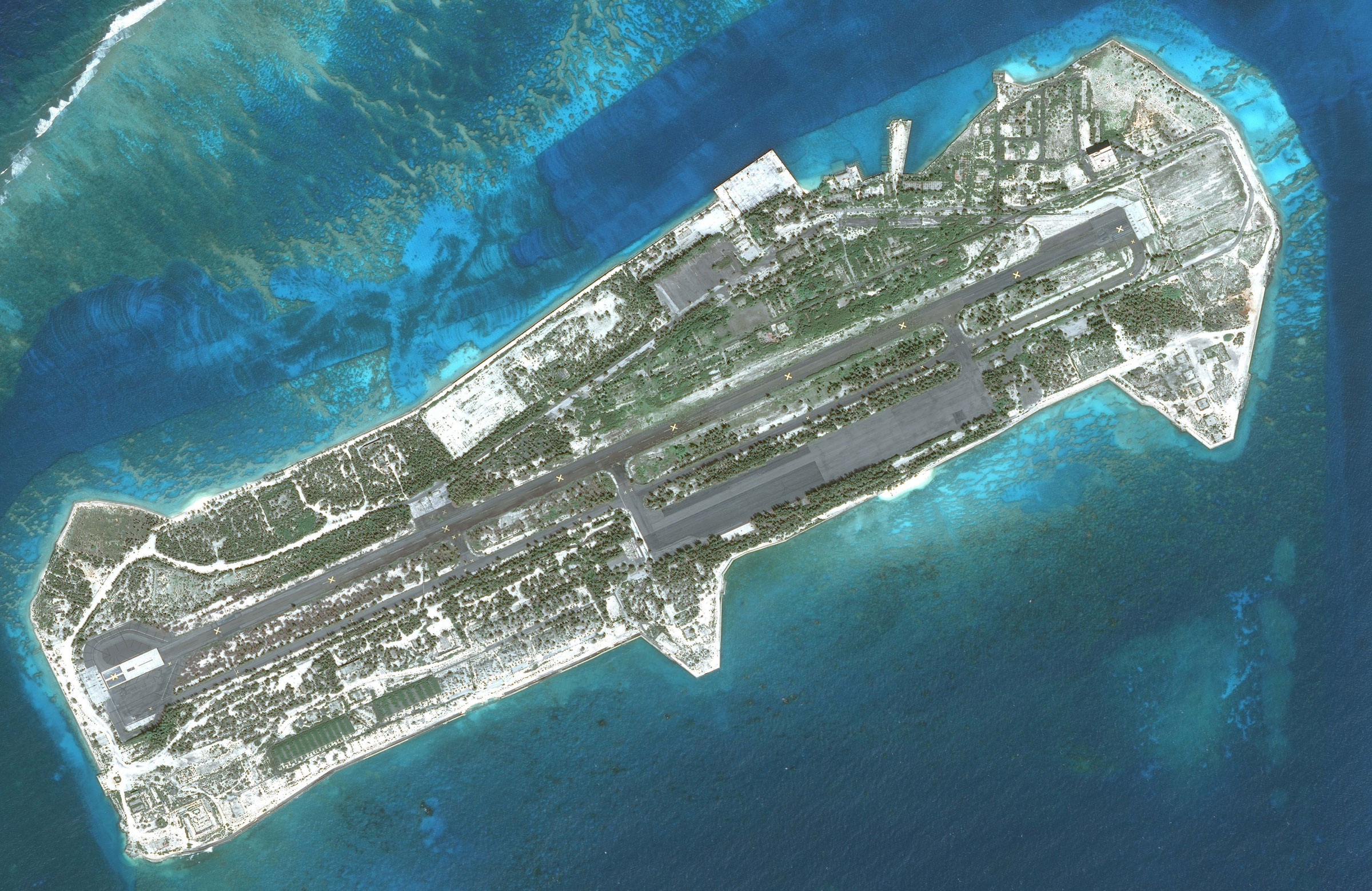
Might I suggest Johnston Atoll? That island is so f'd up environmentally, you can't do anything to it that hasn't been done. It has an airfield, wharfs and piers, and is in a great location far enough from anything else if something went wrong nobody would care particularly.

johnston-atoll-aerial.jpg
 
The whale warriors would blockade it.

Starship might allow a piece-by-piece assembly.

A lunar thunderwell with just a single nuke or three might be the best we can hope for....blast a heavy craft off the Moon them retrofit...
use other engines.

Here a nuke is just serving in place as SRBs.
 
The logical launch site to me has always been land-based from one of the tiny islands that were already used for extensive nuclear testing. French Polynesia or the Marshall Islands, maybe Johnson Atoll. Hell, see if the Norwegians will sell Bouvet Island, it's literally over a thousand miles from anywhere inhabited.

And regarding the warheads (specifically the questions about thrust efficiency), don't forget about the research done into shaping blasts directionally.
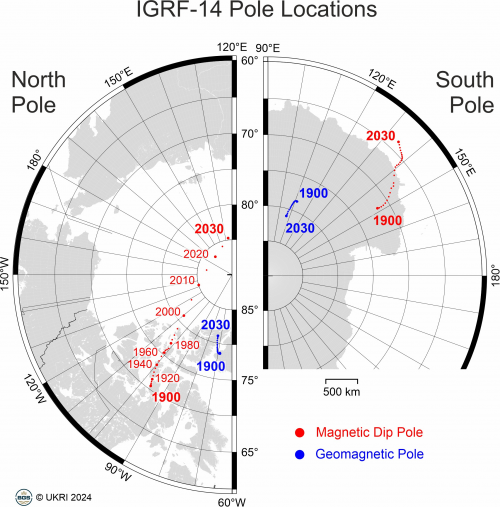
The trade-off here is that in theory, you want to launch from near a geomagnetic pole to minimize contamination of the Van Allens.
The two geomagnetic poles are respectively located at
1) northern Canada, somewhere near Baffin Island, inconveniently situated amidst the twisty, inaccessible, windswept, very hostile Northwest Passage.
2) the eastern coast of Antarctica (the bit of Antarctica adjacent to Australia and New Zealand)

This suggests launch sites including
1) Newfoundland
2) Alaska
3) New Zealand
4) Tasmania
5) the Auckland Islands
6) coastal Antarctica

Unfortunately, other than Tasmania, all of these launch sites have rather poor weather. Alaska and Newfoundland have geopolitical problems (which may be minor), given their proximity to the Russia and Europe and the potential need to respectively overfly the Yukon and Europe respectively. Alaska also has moderately bad weather. Tasmania will involve overflying New Zealand. The Auckland Islands are surrounded by fairly rough seas, hampering transport of a 50,000 tonne 100m+ tall steel skyscraper on a giant heavy-lift ship. New Zealand perhaps is a good compromise, but also suffers from relatively rough seas.
 
It isn’t a nuke for a nuke’s sake—-what you want is a big payload.

Imagine an Orion assembled in space…firing well away from Earth.

That done, the plate is shed and it deploys a rotorvator skyhook to lift a single shot base off the ocean…depositing the Orion shell in its place.

You don’t need to fire a nuke on Earth itself to make use of its power. Just use it to shove heavy things to a flyby and do a bola—-one mass up, the other mass backspun down at near zero velocity.
 
The trade-off here is that in theory, you want to launch from near a geomagnetic pole to minimize contamination of the Van Allens.
The two geomagnetic poles are respectively located at
1) northern Canada, somewhere near Baffin Island, inconveniently situated amidst the twisty, inaccessible, windswept, very hostile Northwest Passage.
2) the eastern coast of Antarctica (the bit of Antarctica adjacent to Australia and New Zealand)

This suggests launch sites including
1) Newfoundland
2) Alaska
3) New Zealand
4) Tasmania
5) the Auckland Islands
6) coastal Antarctica

Unfortunately, other than Tasmania, all of these launch sites have rather poor weather. Alaska and Newfoundland have geopolitical problems (which may be minor), given their proximity to the Russia and Europe and the potential need to respectively overfly the Yukon and Europe respectively. Alaska also has moderately bad weather. Tasmania will involve overflying New Zealand. The Auckland Islands are surrounded by fairly rough seas, hampering transport of a 50,000 tonne 100m+ tall steel skyscraper on a giant heavy-lift ship. New Zealand perhaps is a good compromise, but also suffers from relatively rough seas.
Hahaha, I'm actually in Newfoundland, and lemme tell you, the geopolitical problems would not have been minor even when Orion was being considered. And if that's not enough, the weather would absolutely not be cooperative.

...what about Greenland? I mean hypothetically, not considering the current uh. Situation. Just from a historical perspective. Thule AFB is there already to provide support, and there's large areas with no human habitation. Or maybe the Prince Edward Islands? Not the Canadian province, the rocks halfway between South Africa and Antarctica where the Vela Event was recorded.
 
...what about Greenland? I mean hypothetically, not considering the current uh. Situation. Just from a historical perspective. Thule AFB is there already to provide support, and there's large areas with no human habitation.
Possibly.


Or maybe the Prince Edward Islands? Not the Canadian province, the rocks halfway between South Africa and Antarctica where the Vela Event was recorded.
That honestly has more potential to me. Even if it is the middle of nowhere.
 
That honestly has more potential to me. Even if it is the middle of nowhere.
1769064897763.png

The southern geomagnetic pole is in the eastern hemisphere, closer to Australia, somewhat further from Africa. Greenland is certainly a possibility but weather and sea state seem unlikely to be significantly superior than than Newfoundland.

Overall I think the Auckland Islands are the most attractive candidate.
 
Put a seabase at Point Nemo and launch it into the upper strato or lower meso with recoverable boosters.
 
There were several Proposals on launch
either from Platform on Sea
or lift the Orion with rocket to Suborbital trajectory and start the Puls at 80 km hight.
even use NEXUS like SSTO to launch Orion in low earth orbit.
 
In my opinion, before starting to look for locations, it is essential to eliminate the official in a black suit who tries to prevent the take-off of the aircraft with a piece of paper in his hand.

The best way to do this is to tell him to stand under the engines to deliver the summons to the commander of the ship that will go down to negotiate with him.

View: https://www.youtube.com/watch?v=yJkS-uQnAgE
 

Attachments

  • DestinationMoonFawcett2.png
    DestinationMoonFawcett2.png
    2 MB · Views: 8
Overall I think the Auckland Islands are the most attractive candidate.
As an Aucklander, even if not that one*, I feel the need to object.

* No, not that one either.

If you must launch in the atmosphere, I'd prefer the King David's Spaceship** approach and use conventional explosives to get out of the atmosphere. Though you could go for the Footfall*** approach and launch from Bellingham.

** Pournelle,
*** Niven and Pournelle
 
In the current year the most likely scenario I see a ground-launched Orion being used is for deflecting an Earth impacting asteroid at very short notice. (i.e. damocloid comes out of the sun with extremely high relative velocity and is spotted extremely late)

At that point the only concern is ease and quickness of constructing the vehicle; giving 10% of Florida cancer is a small price to pay for preventing Chicxulub II.
 
At that point the only concern is ease and quickness of constructing the vehicle; giving 10% of Florida cancer is a small price to pay for preventing Chicxulub II.
Looking at how hard "Artemis" is going, I suspect that our modern civilization is IN PRINCIPLE incapable of reacting so quickly to a potential threat. And money isn't the main thing here. Since the 1960s, we've undergone some nasty changes, as a result of which we've become a very dull, sluggish, and corrupt form of life. We are dinosaurs. That's for sure.

динозавр - это судьба.jpg
 
In the current year the most likely scenario I see a ground-launched Orion being used is for deflecting an Earth impacting asteroid at very short notice. (i.e. damocloid comes out of the sun with extremely high relative velocity and is spotted extremely late)

At that point the only concern is ease and quickness of constructing the vehicle; giving 10% of Florida cancer is a small price to pay for preventing Chicxulub II.
Considering the response of many government officials regarding climate change, the response will be to call it a Chinese hoax.
 
While most proposals for Orion ground launches have included chemical first stages of some from, the most efficient way to launch an Orion appears to be from the ground. This is obviously impracticable under current political climates and cost-effectiveness calculi, but a man can dream...

A brief overview of the internet gives the suggestion that ground launches of Orion were envisaged to occur at the Nevada Test Site, possibly with a graphite-lined pad of some sort. Other options might have been the mid-Pacific: Johnston Island, where a permanent high-yield test site was planned (and where the Starfish Prime shots were launched) or Bikini Atoll/Eniwetok (high-yield nuclear test sites) Had the Soviets built Project Orion, one could envisage them launching from a new pad at the Cosmodrome, somewhere in Kazakhstan, or from Novaya Zemlya (the weather will screw with launch schedules).

The most obvious selection criteria for a launch site include low population, proximity to the ocean (maybe), high latitude (maybe), and good, predictable weather.

Little needs to be said about low population density along the launch track, except that Castle Bravo’s 15-megaton fallout plume was 500km long, and that Las Vegas is 100km from the Nevada Test Site (where low yield weapons similar to those used by Orion were tested). The exclusion zone should be similar in scale to Nevada, and the dispersion of fallout in the upper atmosphere and use of pad coatings should minimize fallout. Launch over unpopulated territory is still desirable to minimize eye injuries and minimize the hazards resulting from a launch failure (ditching a thousand pulse units into deep ocean for recovery is relatively simple, ditching into Arizona or detonating in-flight over Texas is more complex).

Given that Orion construction was envisaged as similar to shipbuilding (I'll believe it when I see it) and given the modern tendency to site large factories in populated areas, an oceanic or coastal launch site appears to have some advantages. At any rate, shipping a 5,000-to-50,000-tonne spacecraft (100-meter pusher plate) from Norfolk (or Korea, or Japan) to the launch site by some sort of ship lifter might be easier than moving the blasted thing cross-country by rail (or assembling it at the launch site). Johnston Atoll may be easier to get to from Norfolk than central Nevada.

Atomic Rockets claims that high-latitude high-inclination launches to avoid injecting material into the Earth's radiation belts are a good idea; while individual 0.5-30kt pulse units will certainly be smaller than the megaton-yield Starfish Prime shots, Orion envisaged using hundreds of pulse units to reach orbit. The total kilotonnage is comparable. HiVOLT and other electromagnetic tether systems have been suggested to clear the Van Allen belts, but I know not whether they would readily solve the problem.

Good weather and predictable winds are desirable for space launches, nuclear tests, and easy ground operations. The Aleutian Islands and Antarctic coasts may be a high-latitude launch site, but both have terrible weather (and the Aleutians are not outside the “will charge the Van Allens” zone, for some reason).

Some other suggestions on my part include:
  • The Auckland Islands off the southern coast of New Zealand (weather and ease of access)
  • The Falklands/South Georgia (weather)
  • Hudson Bay (weather)
  • the coast of Alaska (weather)
we could set up a cpnstruction site at L1 or L3 and than use out moom as a sheild for earth.

once you build and fuel this ship in one of the La Grange points you would have the first pulses aimed at the sun or anywhere really just not earth


why not take all that nuclear materl and makes a ton of reactors that you could use to heat hydrogen that would could scoop out of the interstller medium as it would be very easy to collect helium, and hydrogen and methane from dipping into gas giants via probe or some other idea.

having banks of nuclear thermal engins for constant acceloration and deceloration sounds better than leaving a trail of death behind you , its not a very subttle way of travle

maybe once out of the solar system you could use the nuclear ablation tek but it seems the nuclear material would be put to better use in a system where it doesnt get blown up

a nuclear rocket other than the plumbing of hydrogen or whatever gas is the most complex part, in space you wouldnt need shelding from it as you could just have it on the very far end of a very long and slender space craft.


it seems an almost passive system would invariantly have less potentiality for some mode of failure


but to answer the question i would use the shadow of moons and large planets as they would also suck in any bomb material still left via their gravity well/ its like a game of shadows
 

Similar threads

Back
Top Bottom