On the face of it the 155mm TMF was a brilliant idea, combining the existing 4.5 inch mounting with existing artillery barrels. It did run into a problem, though: the RN requires the propellant charge to be contained within a metal cartridge case for fire prevention reasons, but the 155mm uses caseless ammo. Modifying either the ammo or the gun would have been costly, and lost many of the economies of the proposal.

You are using an out of date browser. It may not display this or other websites correctly.
You should upgrade or use an alternative browser.
You should upgrade or use an alternative browser.
Type 31 GPFF Design Studies and Development
- Thread starter Grey Havoc
- Start date

- Joined
- 19 July 2016
- Messages
- 4,814
- Reaction score
- 4,274
If the caseless ammo is contained in a two layered 'bin' with an inert gas it will be just as safe. Chieftain used a water jacket but the idea is the same. A powder form works too as any breach reduces the available oxygen and therefor increases safety.
I think there could be a problem with the mechanical handling of the propellant charge, which I presume is somewhat fragile compared with a metal cartridge case.

- Joined
- 16 April 2008
- Messages
- 10,595
- Reaction score
- 18,148
This weapon can be converted to fire 40 mm rounds with a change of barrels and minor changes to the feeder assembly.
In theory, yes, the 30mm Bushmaster gun can be modified to fire 40mm Supershot, which is basically just the 30x173 round necked out to 40mm. But this isn't comparable to a full-sized 40mm like the Bofors L70. And it would depend on someone actually committing to develop 40mm Supershot ammunition, which hasn't happened yet. The US Army did adopt 30mm in the Stryker upgun but seems content to go straight to 50mm for future vehicles. And the USN and USMC seem to be happy with 30mm with airburst munition rounds.
- Joined
- 5 May 2007
- Messages
- 2,016
- Reaction score
- 4,277
There were proposals toward the end of the project to have fixed charges in a metal cartridge case.I think there could be a problem with the mechanical handling of the propellant charge, which I presume is somewhat fragile compared with a metal cartridge case.
- Joined
- 16 April 2008
- Messages
- 10,595
- Reaction score
- 18,148
There were proposals toward the end of the project to have fixed charges in a metal cartridge case.I think there could be a problem with the mechanical handling of the propellant charge, which I presume is somewhat fragile compared with a metal cartridge case.
Basically firing everything as Super and accepting some really inefficient trajectories for short-range firing?

THO88
ACCESS: Restricted
- Joined
- 30 November 2020
- Messages
- 35
- Reaction score
- 95
Maybe here:
That wasn't it but navweps.com is an excellent website. If you open up the pages for both the 76mm and 57mm on separate monitors, you can get a pretty good gist of the difference in parameters.
The 4.5" Mark 8 has been getting increasingly long in the tooth and difficult to support, as well as falling behind with ammunition developments because the UK is the only country using that calibre. I believe there are also supply chain issues with 4.5" ammunition.
The RN has wanted to go to a USN 5" gun since the 1950s purely on the supply chain issue, but hasn't been able to for various reasons. With the other factors taken into consideration, a new gun was going to be required anyway, and a 5" was the only logical choice. Leonardo bid against BAE Systems with their own 127mm gun; the 4.5" wasn't even considered.
This makes a lot of sense. Reminds me of how the British Army is continuing to use the rifled 120mm for their MBTs while the rest of NATO switched to the smoothbore 120mm decades ago. They finally caved in with the Challenger 3.
On the face of it the 155mm TMF was a brilliant idea, combining the existing 4.5 inch mounting with existing artillery barrels. It did run into a problem, though: the RN requires the propellant charge to be contained within a metal cartridge case for fire prevention reasons, but the 155mm uses caseless ammo. Modifying either the ammo or the gun would have been costly, and lost many of the economies of the proposal
Something to consider is that the 5 inch 62 cal is a dual purpose naval gun designed to engage air, sea and land targets. As a modified artillery cannon, the 155mm TMF would have had degraded ability versus naval targets and as far as I know, zero capability to engage air targets. Again, I wish I could remember where I read this but to highlight a similar case, the 155mm AGS for the USN Zumwalt class were unable to engage surface targets within a certain number of miles from the ship due to the minimal gun depression.

A Tentative Fleet Plan
I really should change my personal text
- Joined
- 9 April 2018
- Messages
- 1,386
- Reaction score
- 3,475
Maybe here:
That wasn't it but navweps.com is an excellent website. If you open up the pages for both the 76mm and 57mm on separate monitors, you can get a pretty good gist of the difference in parameters.
The 4.5" Mark 8 has been getting increasingly long in the tooth and difficult to support, as well as falling behind with ammunition developments because the UK is the only country using that calibre. I believe there are also supply chain issues with 4.5" ammunition.
The RN has wanted to go to a USN 5" gun since the 1950s purely on the supply chain issue, but hasn't been able to for various reasons. With the other factors taken into consideration, a new gun was going to be required anyway, and a 5" was the only logical choice. Leonardo bid against BAE Systems with their own 127mm gun; the 4.5" wasn't even considered.
This makes a lot of sense. Reminds me of how the British Army is continuing to use the rifled 120mm for their MBTs while the rest of NATO switched to the smoothbore 120mm decades ago. They finally caved in with the Challenger 3.
On the face of it the 155mm TMF was a brilliant idea, combining the existing 4.5 inch mounting with existing artillery barrels. It did run into a problem, though: the RN requires the propellant charge to be contained within a metal cartridge case for fire prevention reasons, but the 155mm uses caseless ammo. Modifying either the ammo or the gun would have been costly, and lost many of the economies of the proposal
Something to consider is that the 5 inch 62 cal is a dual purpose naval gun designed to engage air, sea and land targets. As a modified artillery cannon, the 155mm TMF would have had degraded ability versus naval targets and as far as I know, zero capability to engage air targets. Again, I wish I could remember where I read this but to highlight a similar case, the 155mm AGS for the USN Zumwalt class were unable to engage surface targets within a certain number of miles from the ship due to the minimal gun depression.
Depending on Fire Control, I see no reason why a 155mm Gun could not engage aerial targets. It's slower rate of fire of 12 rpm would mean it wouldn't be as effective as 20rpm gun like the 4.5" Mk 8 or 5"/54 Mk 45, but both the 4.5" Mk 8 and 5"/54 Mk 45 were already optimised for shore bombardment and reliability, as when they were designed in the 1960s, the use of medium-calibre naval guns in the anti-aircraft role had already fallen out of fashion, combined with a desire to improve reliability, as a result of the experience with with weapons like the 40rpm 5"/54 Mk 42, the 60rpm 5"/70 QF Mk N1, the 20rpm 6" QF Mk N5, and the 90rpm 3"/70 QF Mk N1 and Mk 37 mountings.
The AGS mounting had enough depression to ensure that the barrel could be contained within its low-observable shroud, so I seriously doubt that it would have insufficient depression to engage close-in targets, albeit where the arcs of fire would not be obscured by the superstructure, low-observable shrouds and hull.
Even the Vertical Gun System could engage targets at close range, albeit not in a time-critical manner, all that would be required was to fire that shells straight upwards into the stratosphere, before having them come directly down.
Honestly, if you retain a gun solely for shore bombardment, why not place it on a rail system to store in the structure? Seems like a poor use of deck space to feature at some prominent fixed point. Accept that the army-based gun will never be a quick reacting weapon with a high rate of fire by traditional naval standards. Accept that your army-based gun doesn't need the full-spherical articulation of the traditional deck gun. Accept that an army-based gun is more likely a daylight gun saved for targets of opportunity, when 4-5 crew members can be funneled from other duties to run the system.
When it is needed then have a door open, slide it out, lock it into place to fire off the port or starboard. Reloads could be shuttled back and forth from the gun hangar using a motorized robot or rail system. That would retain the minimal exposure of rounds to the sea conditions, and allow your reloads to be stored in protected magazines without the need of a complicated feed system. Relegating the gun to storage might reduce its utility as a fire support system, but it is already poor in that role due to the gun being designed for the army-based shoot and scoot role. And they added the handicap of shooting from a pitching deck, which is further degrading its practical accuracy.
Using a stored gun dramatically reduces your system's footprint on the deck except when its actually in use. And in some cases, the gun might never even need to be on the ship for the trip, so you can use that gun hangar for other purposes. Heck, maybe the rail system can be used interchangeably with an MLRS system. An auxiliary ship can always tote a fresh one over with a crane while the ship is deployed if it becomes necessary.
If the ship needs quick-firing weapons for point defense then its difficult to argue against missile and rapid-fire cannon that are much more compact than a deckgun.
When it is needed then have a door open, slide it out, lock it into place to fire off the port or starboard. Reloads could be shuttled back and forth from the gun hangar using a motorized robot or rail system. That would retain the minimal exposure of rounds to the sea conditions, and allow your reloads to be stored in protected magazines without the need of a complicated feed system. Relegating the gun to storage might reduce its utility as a fire support system, but it is already poor in that role due to the gun being designed for the army-based shoot and scoot role. And they added the handicap of shooting from a pitching deck, which is further degrading its practical accuracy.
Using a stored gun dramatically reduces your system's footprint on the deck except when its actually in use. And in some cases, the gun might never even need to be on the ship for the trip, so you can use that gun hangar for other purposes. Heck, maybe the rail system can be used interchangeably with an MLRS system. An auxiliary ship can always tote a fresh one over with a crane while the ship is deployed if it becomes necessary.
If the ship needs quick-firing weapons for point defense then its difficult to argue against missile and rapid-fire cannon that are much more compact than a deckgun.
- Joined
- 5 May 2007
- Messages
- 2,016
- Reaction score
- 4,277
It actually increases the footprint, weighs more, and adds complexity, because in addition to the deck footprint (which needs to be kept clear in any case) you also need:Using a stored gun dramatically reduces your system's footprint on the deck except when its actually in use.
- Superstructure volume for the 'gun hangar'
- Clear deck between the 'gun hangar' and the firing position
- The machinery needed to move the entire gun mount between its two positions
- Two sets of seats for the gun
- A more complex ammunition handling system
- Joined
- 23 August 2011
- Messages
- 2,566
- Reaction score
- 8,448
Given the US have already used the 155mm to shoot down cruise missiles in tests I'd say it already can. In fact the larger shell would make it more useful than smaller calibres (a whole lot easier than cramming guidance, wing kits, bursting charges etc. into a 57mm, 76mm or even a 5 inch shell). Add in range and the sheer energy it can impart to a sub-calibre round, plus the assumption that slinging prox fused ammo at aerial targets from large calibre weapons isn't seen as credible these days, you could make a fair case that 155mm has a much brighter future ahead of it than other smaller calibres in that role.Depending on Fire Control, I see no reason why a 155mm Gun could not engage aerial targets.
A MADFIRES or ORKA from a 155mm gun is going to have far greater range, speed at intercept, warhead size.....plus be a whole lot cheaper than one from a 57mm gun..
https://breakingdefense.com/2020/09/abms-demo-proves-ai-chops-for-c2/
You are being absurd. Placing a gun in the structure for safe housing already accepts the fact you have a spade not a steamshovel. An integrated gun requires a housing that goes around the gun. Better to keep open deckspace and retain the option to not carry a gun. The integrated gun is there 100% of the time. And more complex handling system? Disimilar and manual labor may be involved, perhaps, but not a more complex mechanism.It actually increases the footprint, weighs more, and adds complexity, because in addition to the deck footprint (which needs to be kept clear in any case) you also need:Using a stored gun dramatically reduces your system's footprint on the deck except when its actually in use.
In exchange for all this, you're proposing a system that is less responsive, has lower availability, and has less effect on target. There are excellent reasons why virtually every modern warship either has an uncrewed, power-operated gunhouse on the foredeck, or else no main gun at all.
- Superstructure volume for the 'gun hangar'
- Clear deck between the 'gun hangar' and the firing position
- The machinery needed to move the entire gun mount between its two positions
- Two sets of seats for the gun
- A more complex ammunition handling system

- Joined
- 6 September 2006
- Messages
- 5,316
- Reaction score
- 11,545
Folks can we please keep on topic. This thread is about the Type 31 frigate, not about hypothetical gun stowage concepts. That kind of discussion is best placed for the theoretical section of the forum.
THO88
ACCESS: Restricted
- Joined
- 30 November 2020
- Messages
- 35
- Reaction score
- 95
Depending on Fire Control, I see no reason why a 155mm Gun could not engage aerial targets. It's slower rate of fire of 12 rpm would mean it wouldn't be as effective as 20rpm gun like the 4.5" Mk 8 or 5"/54 Mk 45, but both the 4.5" Mk 8 and 5"/54 Mk 45 were already optimised for shore bombardment and reliability, as when they were designed in the 1960s, the use of medium-calibre naval guns in the anti-aircraft role had already fallen out of fashion, combined with a desire to improve reliability, as a result of the experience with with weapons like the 40rpm 5"/54 Mk 42, the 60rpm 5"/70 QF Mk N1, the 20rpm 6" QF Mk N5, and the 90rpm 3"/70 QF Mk N1 and Mk 37 mountings.
The AGS mounting had enough depression to ensure that the barrel could be contained within its low-observable shroud, so I seriously doubt that it would have insufficient depression to engage close-in targets, albeit where the arcs of fire would not be obscured by the superstructure, low-observable shrouds and hull.
Even the Vertical Gun System could engage targets at close range, albeit not in a time-critical manner, all that would be required was to fire that shells straight upwards into the stratosphere, before having them come directly down
I agree dual purpose, medium caliber naval guns have been increasingly relegated to a secondary role in AA and ASuW warfare (and optimized for shore bombardment) but their use in multiple naval engagements since the start of the modern jet and missile era still validates their utility. There's a reason nearly every warship bigger than a corvette still carries at least one gun above 57mm.
Coupled to the proper fire control and radar, I have no doubt the L31 155mm gun could engage air targets but at the end of the day it's still a 39 caliber howitzer with high firing arcs, optimized for sustained bombardment of land targets. It will never match a dedicated naval gun like the 5" 62 cal Mk 45 in engaging enemy ships and missiles/aircraft. You can fit a shotgun with a scope and load it with slugs but it still won't be a good assault rifle.
I googled the 155mm AGS minimum range and couldn't find anything, but I know I read it somewhere. I misspoke about the gun depression which for the AGS is -5 degrees, more than enough to engage relatively close targets. The only supporting evidence I could find is that the rocketed assisted Mk 171 ERGM for the 5" 62cal has a minimum range of 13 nm. The main round (LRLAP) developed for the 155 mm AGS was also rocket assisted, so maybe this is a characteristic of this type of shell
**Edit**
I just read more about the 155mm TMF at (http://navweaps.com/Weapons/WNBR_61-52_future.php) and there was a modification called the fourth generation maritime fire support weapon (FMF) which used a longer 52 cal barrel and would have produced muzzle velocities on par with the 5" / 62.
Last edited:
- Joined
- 29 September 2006
- Messages
- 1,881
- Reaction score
- 1,624
I’d guess the 40 mm Bofors would have had most naval integration matters ironed out.What has surprised me is the 'secondary' gun. Why adopt the Bofors 40mm rather than the 40mm CTA developed for the army?
aonestudio
I really should change my personal text
- Joined
- 11 March 2018
- Messages
- 3,378
- Reaction score
- 9,219

Grey Havoc
ACCESS: USAP
- Joined
- 9 October 2009
- Messages
- 24,500
- Reaction score
- 18,175
Grey Havoc
ACCESS: USAP
- Joined
- 9 October 2009
- Messages
- 24,500
- Reaction score
- 18,175
From October 18th:
https://www.navaltoday.com/2022/10/18/uks-type-31-frigate-program-hits-major-milestone/
https://www.navaltoday.com/2022/10/18/uks-type-31-frigate-program-hits-major-milestone/
Shipbuilding company Babcock International has revealed that the Royal Navy’s Type 31 frigate program reached a major milestone when the team recently moved a 177-tonne hull block into position on the first frigate.
According to the company, this activity marks the consolidation of the first grand block, one of eight that will make up the vessel currently being assembled at the Rosyth facility.
“The first grand block consolidation is a significant step towards the successful delivery of the first ship in this pathfinder programme for the UK’s National Shipbuilding Strategy,” Sean Donaldson, Managing Director of Babcock’s Energy and Marine business said.
To remind, in April this year, the construction started on the first Type 31 vessel, HMS Venturer.
[snip]
aonestudio
I really should change my personal text
- Joined
- 11 March 2018
- Messages
- 3,378
- Reaction score
- 9,219
- Joined
- 29 September 2006
- Messages
- 1,881
- Reaction score
- 1,624
Interesting that they just call it an Iver Huitfeldt, not even an Iver Huitfeldt-derived frigate.
- Joined
- 15 July 2007
- Messages
- 5,732
- Reaction score
- 6,313
Probably sounds less controversial.Interesting that they just call it an Iver Huitfeldt, not even an Iver Huitfeldt-derived frigate.
- Joined
- 29 September 2006
- Messages
- 1,881
- Reaction score
- 1,624
Indeed!Probably sounds less controversial.Interesting that they just call it an Iver Huitfeldt, not even an Iver Huitfeldt-derived frigate.

jeffb
ACCESS: Top Secret
- Joined
- 7 October 2012
- Messages
- 1,591
- Reaction score
- 3,151
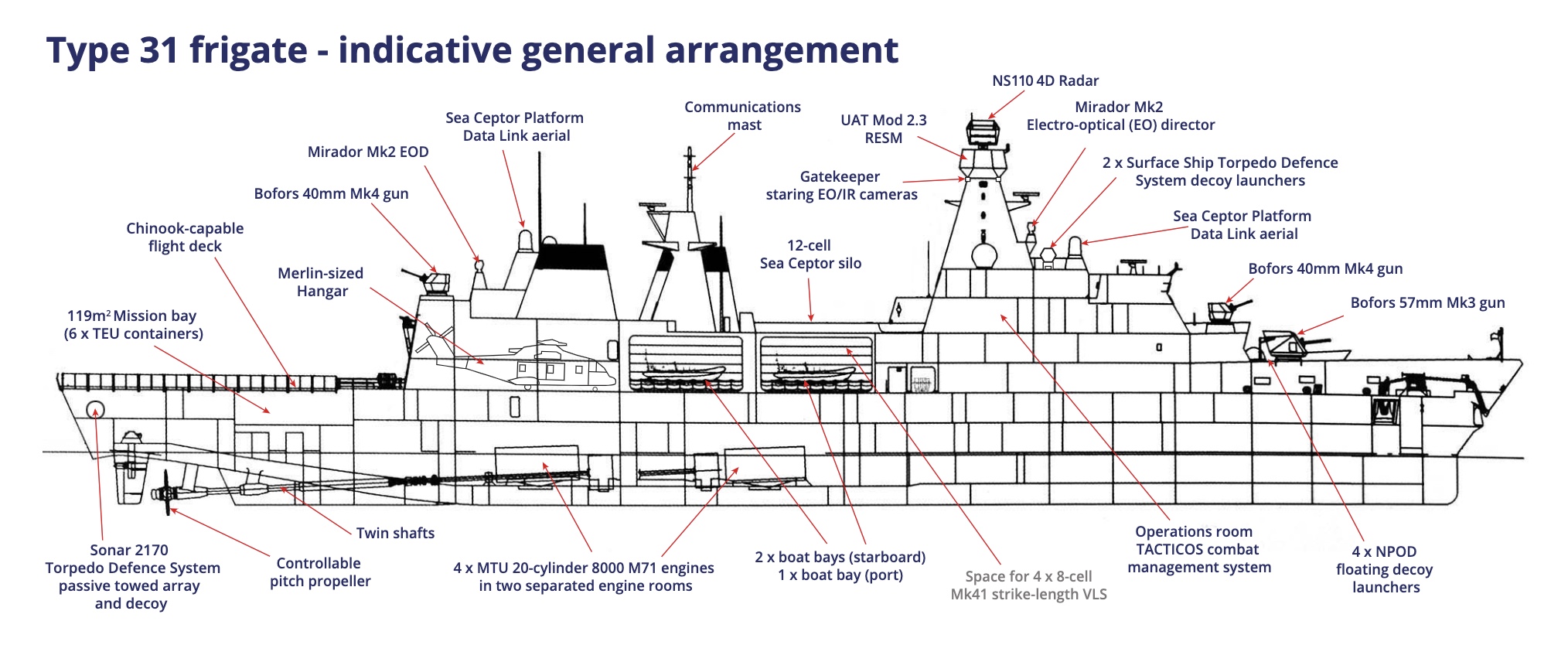
aonestudio
I really should change my personal text
- Joined
- 11 March 2018
- Messages
- 3,378
- Reaction score
- 9,219
aonestudio
I really should change my personal text
- Joined
- 11 March 2018
- Messages
- 3,378
- Reaction score
- 9,219
aonestudio
I really should change my personal text
- Joined
- 11 March 2018
- Messages
- 3,378
- Reaction score
- 9,219
aonestudio
I really should change my personal text
- Joined
- 11 March 2018
- Messages
- 3,378
- Reaction score
- 9,219
- Joined
- 16 April 2008
- Messages
- 10,595
- Reaction score
- 18,148
There seems to be possible confirmation that the Type 31s will now be fitted with (not just for) 32 Mk41 VLS cells.
(Edited: added possible, this doesn't seem 100% confirmed)
https://www.navylookout.com/royal-n...o-be-fitted-with-mk41-vertical-launch-system/
(Edited: added possible, this doesn't seem 100% confirmed)
https://www.navylookout.com/royal-n...o-be-fitted-with-mk41-vertical-launch-system/
Last edited:
- Joined
- 16 April 2008
- Messages
- 10,595
- Reaction score
- 18,148
Let's hope so - although he didn't make it explicitly clear whether that was the case.
Fair. But it seems much more positive than it has been previously. I'll edit.
Last edited:

FighterJock
ACCESS: Above Top Secret
- Joined
- 29 October 2007
- Messages
- 7,243
- Reaction score
- 8,557
Any idea as to what the main armament will be? I once heard that the Storm Shadow was once considered for the VLS.
- Joined
- 16 April 2008
- Messages
- 10,595
- Reaction score
- 18,148
Any idea as to what the main armament will be? I once heard that the Storm Shadow was once considered for the VLS.
The article notes that the in-service date (ISD) for the T31s aligns more or less with the projected ISD for the new Future Cruise/Anti-Ship Weapon (FCASW). But there has been very little public progress reported on FCASW, so the 2028 ISD seems really optimistic.
It also seems possible that the Mk 41 will actually replace the CAMM launch tubes on the Mk 31 (I don't know the exact internal space claims there). If so, then CAMM would need to be carried via Host ExLS modules that fit inside the Mk 41 VLS. CAMM in Host ExLS has been demonstrated, but might still take money to qualify. (Edit: But Canada is already doing that, so maybe not much extra cost for the RN to adopt it as well.)
I don't think Storm Shadow would fit in a Mk 41. If it did, the French would not have gone to the trouble of turning SCALP into MdCN to fit the similar-sized Sylver launchers.
Last edited:
FighterJock
ACCESS: Above Top Secret
- Joined
- 29 October 2007
- Messages
- 7,243
- Reaction score
- 8,557
So it is the Future Cruise/Anti-ship Weapon that will be arming the Type-31s I only wish is that there were more information publicly available about the said missile. There was yet another missile called Perseus that had Hypersonic speeds that was in the works years ago I take it that the FCASW is a successor to that missile?

- Joined
- 25 January 2020
- Messages
- 1,332
- Reaction score
- 2,139
If it does indeed get Mk.41s, it should be able to fire Tomahawks. The Royal Navy ordered NSMs a few months ago, so those may go on there, but I will have to research further on them to confirm. Whatever comes afterwards is still in the air, and is subject to change .
- Joined
- 16 April 2008
- Messages
- 10,595
- Reaction score
- 18,148
So it is the Future Cruise/Anti-ship Weapon that will be arming the Type-31s I only wish is that there were more information publicly available about the said missile. There was yet another missile called Perseus that had Hypersonic speeds that was in the works years ago I take it that the FCASW is a successor to that missile?
Perseus was an MBDA internal study (and it was Mach 3, so not strictly hypersonic).
Persus is an input into FC/ASW, but it's not the case that FC/ASW is just Perseus developed. We know that FC/ASW was evaluating at least two complementary concepts: a supersonic one like Perseus and a stealthy subsonic one.
https://www.navalnews.com/naval-new...d-safran-team-up-for-fc-asw-next-gen-missile/
If it does indeed get Mk.41s, it should be able to fire Tomahawks. The Royal Navy ordered NSMs a few months ago, so those may go on there, but I will have to research further on them to confirm. Whatever comes afterwards is still in the air, and is subject to change .
Tomahawk needs a fairly elaborate mission planning system, not just a launcher. That's one reason Tomahawk isn't on the USN's FFG-62 armament list despite having suitable Mk 41 cells.
NSM does not fit in Mk 41 VLS. The Joint Strike Missile version, reconfigured to fit in the F-35's internal weapon bays, can fit in a VLS canister, but there really hasn't been much outward progress on the version since about 2015.
https://www.navyrecognition.com/ind...tical-launch-joint-strike-missile-vl-jsm.html
FighterJock
ACCESS: Above Top Secret
- Joined
- 29 October 2007
- Messages
- 7,243
- Reaction score
- 8,557
Thanks again TomS. So my internet source got it's data for the Perseus wrong. I won't be going back to them that is for sure.
- Joined
- 23 August 2011
- Messages
- 2,566
- Reaction score
- 8,448
It was qualified, but only in the standalone variant. Never whilst nested in a Mk.41. Obviously this was on land as well...CAMM in Host ExLS has been demonstrated, but might still take money to qualify. (Edit: But Canada is already doing that, so maybe not much extra cost for the RN to adopt it as well.)
Persus is an input into FC/ASW, but it's not the case that FC/ASW is just Perseus developed. We know that FC/ASW was evaluating at least two complementary concepts: a supersonic one like Perseus and a stealthy subsonic one.
Most recent update was that it was likely both missiles would be going ahead, rather than one. Large, long range, stealthy and subsonic being one..the other being the supersonic, medium ranged missile. The interesting bit was that the Supersonic missile would also have an air to air mode for extreme range attacks on large targets like AWACS or AAR....By all accounts the UK favoured the stealthy missile, the French the Supersonic.
- Joined
- 16 April 2008
- Messages
- 10,595
- Reaction score
- 18,148
Thanks again TomS. So my internet source got it's data for the Perseus wrong. I won't be going back to them that is for sure.
Back to the original source for Perseus:
https://www.mbda-systems.com/press-...land-and-naval-strike-concept-missile-system/
Last edited:
- Joined
- 16 April 2008
- Messages
- 10,595
- Reaction score
- 18,148
It was qualified, but only in the standalone variant. Never whilst nested in a Mk.41. Obviously this was on land as well...
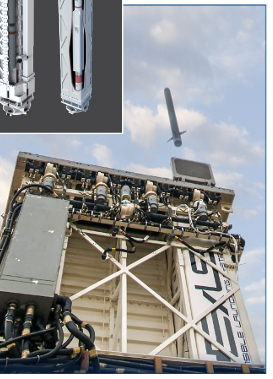
Maybe not fully qualified, but they have launched CAMM from the Host ExLS configuration as well as the 3-Cell version.
https://www.prnewswire.com/news-rel...testing-of-3-cell-exls-in-2016-300143177.html
And a pciture of it from the Host ExLS brochure:The announcement follows the successful September 2013 test by Lockheed Martin and MBDA of the first launch of a CAMM from the MK 41 VLS using the host variant of the ExLS.
Last edited:

