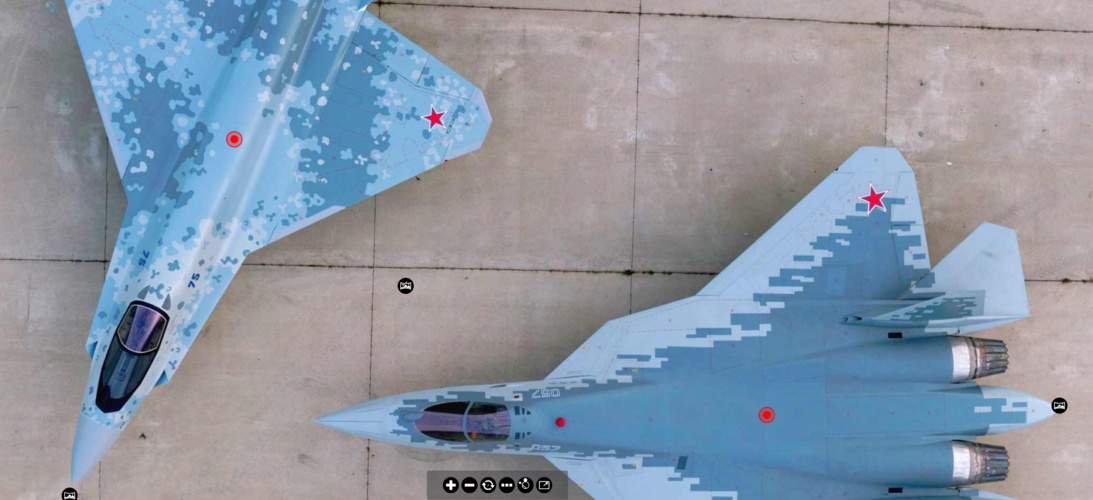
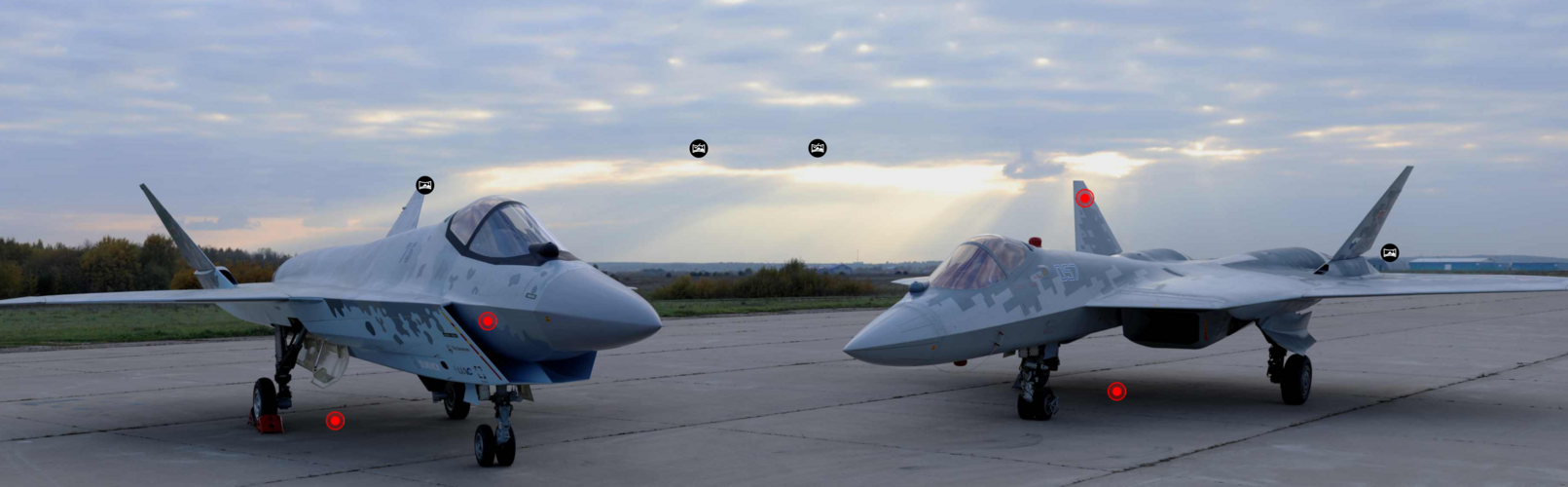
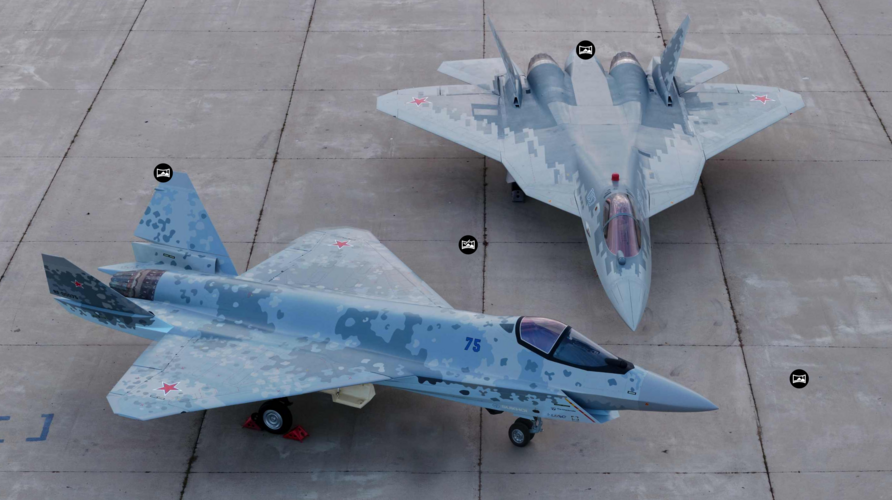
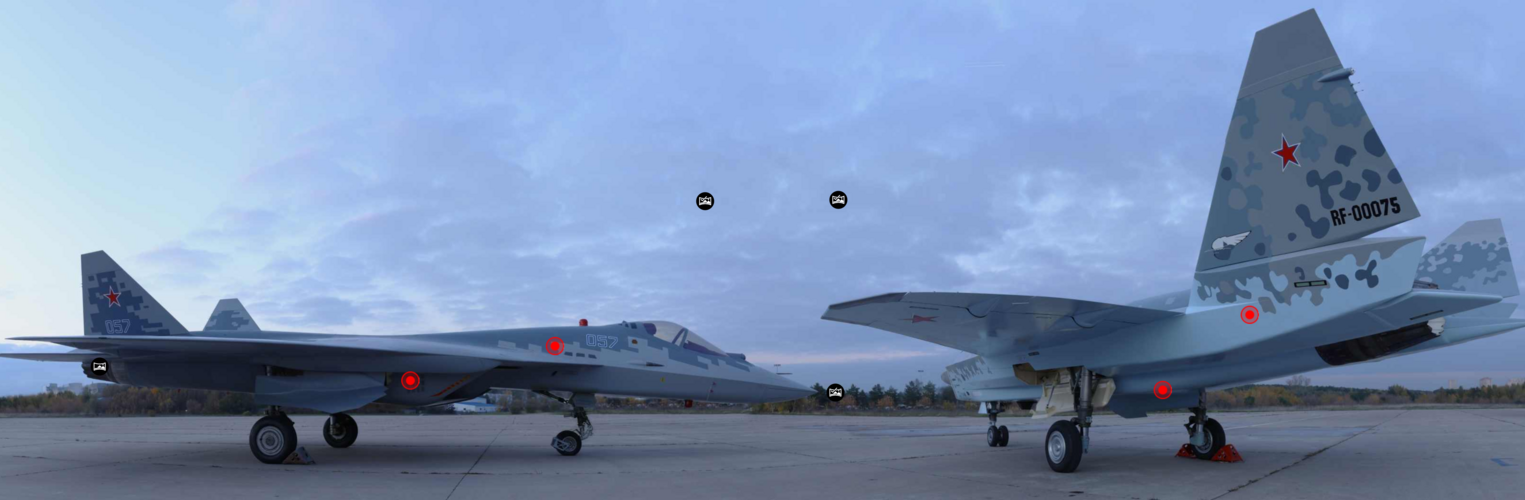
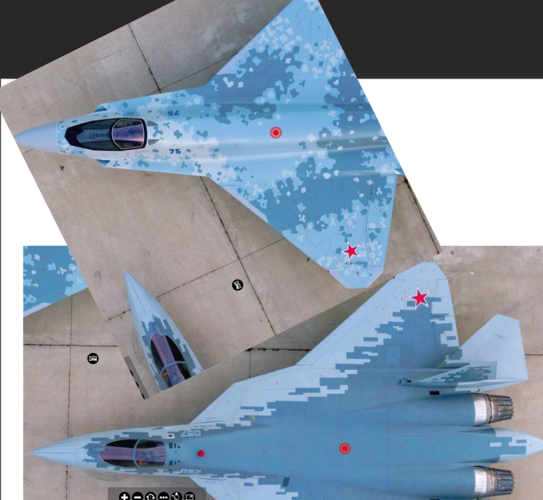
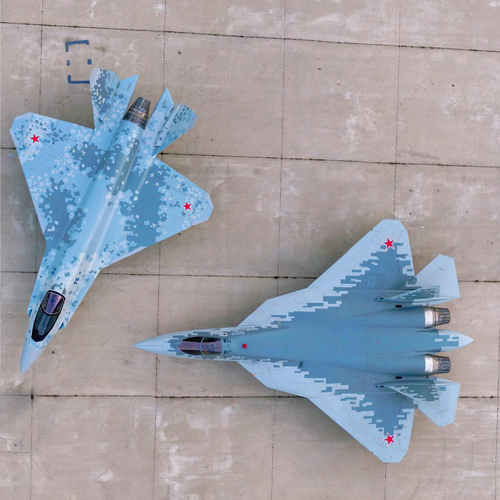
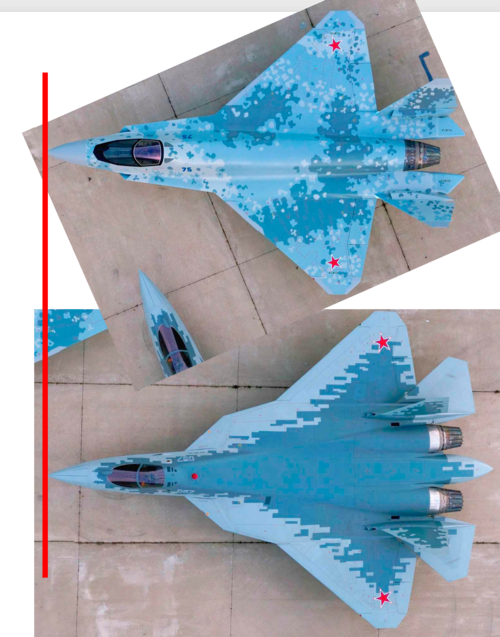
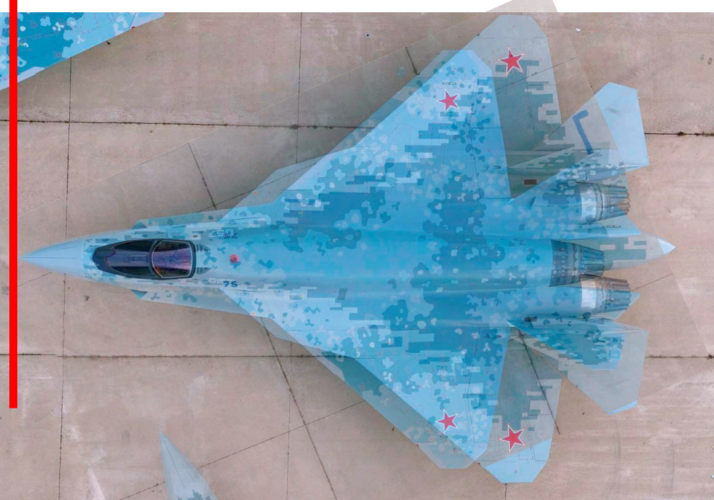
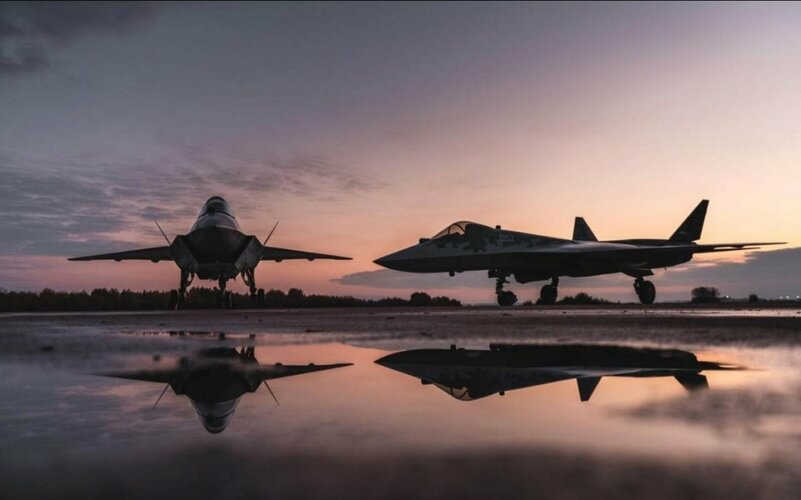
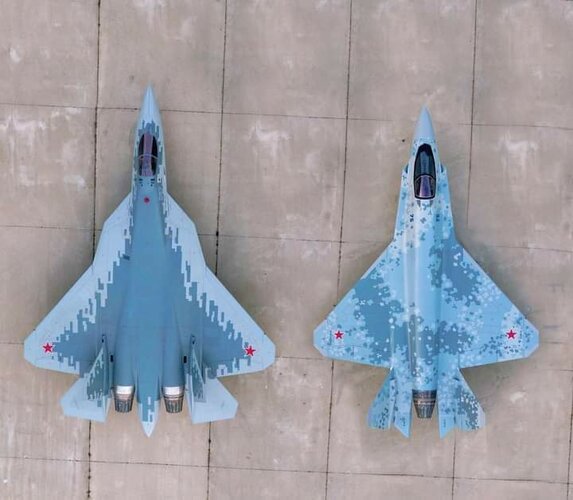
didnt think about weight. looks like one thicc boi next to the Su-57 but its less structural hardware than it looks like. and btw is the frame bonded aluminum? or some other material?
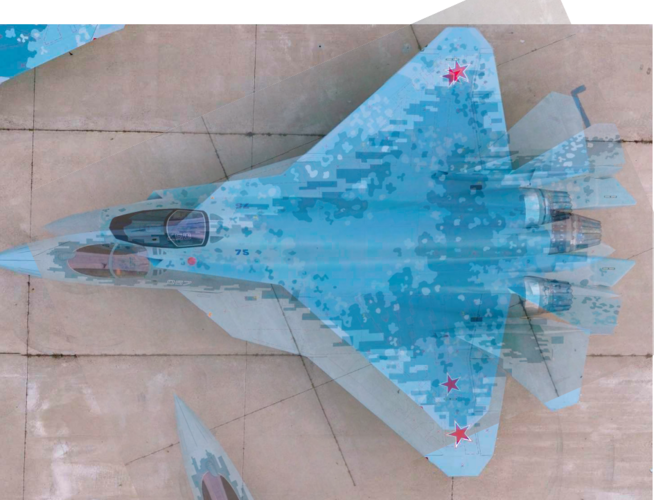
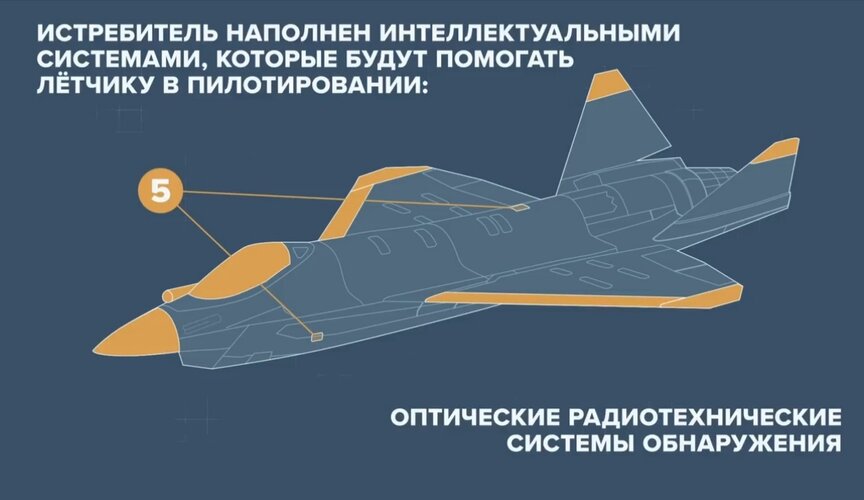
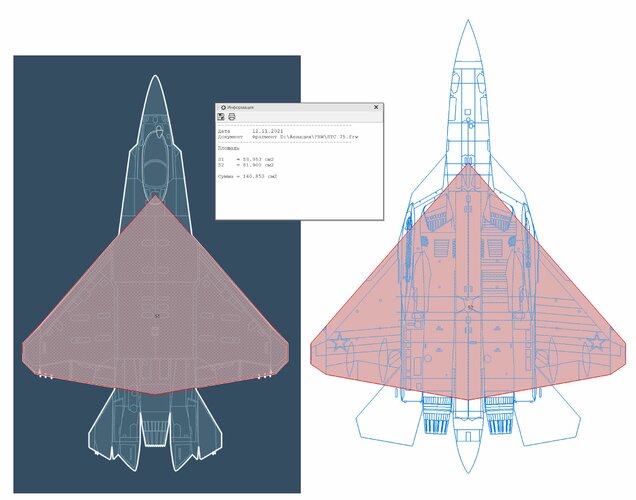
It has half the thrust, it cannot weight much more than half of what the Su-57 does. The cross sectional area should be around 6-6.5 sqm vs 10 sqm of the Su-57, so it is not a thick box, that is exactly where the Sukhoi team corrected the shortcomings of the F-35 layout, by placing the main weapon bay in line with the engine and not in parallel. It has a streamlined and relatively long fuselage with little drag and good fineness ratio, so both excess power and supersonic performance should be quite good, even with relatively "unremarkable" engines like the AL-41F1 or F1S. With izd. 30 and its 3 stream derivative, new possibilities will open up.
Re. performance vs Su-57, the later has huge lifting body and takes off without even deploying flaps, plus it is expected to have a higher service ceiling than LTS, so it is indeed not lacking lift. I guess it is not easy to know which one has lower wing loading, but the huge wing of the LTS for its size in any case indicates a plane that should have excellent STOL behaviour (confirmed by designer) and sustained turning rates on par with the best.
@paralay
Did you manage to refine your estimations of cross sectional area for Su-57 and Su-75?
What's interesting is that the PAK FA was originally meant to be a more affordable next-generation fighter program than the MFI, which was absolutely massive in size and required two 18-tonne AL-41Fs. Once it was clear that it would be extremely expensive, rather than continuing with the MFI and LFI combination, the Russian Defense Ministry established that the PAK FA should be an intermediate size multirole fighter that would replace both the MiG-29 (LPFI) and Su-27 (TPFI). In fact, in the 2000s, an oft-repeated statement was that the T-50 would be between the MiG-29 and Su-27 in size, with a normal takeoff weight (presumably internal payload and 50-60% fuel as with the Su-27) of 22-23 tonnes (which has now crept up to 25 tonnes for the production Su-57).
The Su-57 has the same engine class and I don't see a reason why it should not be classified in the same size class of the Flanker, but modern technology has allowed Russia to reduce systems size and make a much more compact airframe.
Given the history of the PAK FA, it's a bit ironic now because the Sukhoi LTS appears to be about the same size as the Mikoyan E-721 that was rejected in favor of the larger Sukhoi T-50. The E-721 was supposed to have been 16-17 tonnes normal takeoff weight with two 10-11-tonne class Klimov engines, though with what happened to the T-50, the E-721 would probably also have suffered from weight creep.
A twin engine fighter with those characteristics would be a medium fighter. LTS is named light by its creators even when it is bigger than a 4G light fighter. I don't think a multirole fighter (that is, with internal bays for A2G ordnance) can be designed with a smaller airframe than LTS. It has the same engine of the Su-57, so despite its apparent big size it represents today's best embodiment of the hi-lo paradigm
Of course, we still don't know if the Russian Aerospace Forces are actually interested in the LTS, or if it's simply a proposal by Sukhoi hoping to attract their attention. It was a similar approach with the Su-35S (i.e. the T-10BM was a Sukhoi-initiated effort, rather than the Russian Defense Ministry), but that aircraft was eventually adopted. They did reject the similarly-sized E-721, though to be fair, it does appear that politics has as much to do with Mikoyan's rejection as much as the proposal itself; after all, Sukhoi captured the lion's share of exports during the 1990s while Mikoyan largely withered and put resources into the ultimately futile MFI.
We do know that Putin endorsed it, and you can bet your money that this is not a crazy adventure by Sukhoi/UAC/Rostec, but a carefully planed initiative. MoD simply does not want to paint themselves into a corner by promising anything before the product is mature enough, but Industry Ministry money will flow in the meantime and Rostec is at the end of the day a state controlled company. Nothing this big happens in Russia without the blessing of the government and covert alignment with MoD.
MiG on the other hand have themselves to blame for their current situation, at every step of the game they were outsmarted and outperformed by Sukhoi. LTS (LMFS) should be their plane, but they went again for a twin engine solution, insisting in the same concept errors of the MiG-29, and they opened a gap for Sukhoi to exploit through a smart concept and layout.