
You are using an out of date browser. It may not display this or other websites correctly.
You should upgrade or use an alternative browser.
You should upgrade or use an alternative browser.
Lockheed Martin F-35 Lightning II Joint Strike Fighter (JSF)
- Thread starter Triton
- Start date

Grey Havoc
ACCESS: USAP
- Joined
- 9 October 2009
- Messages
- 24,500
- Reaction score
- 18,169
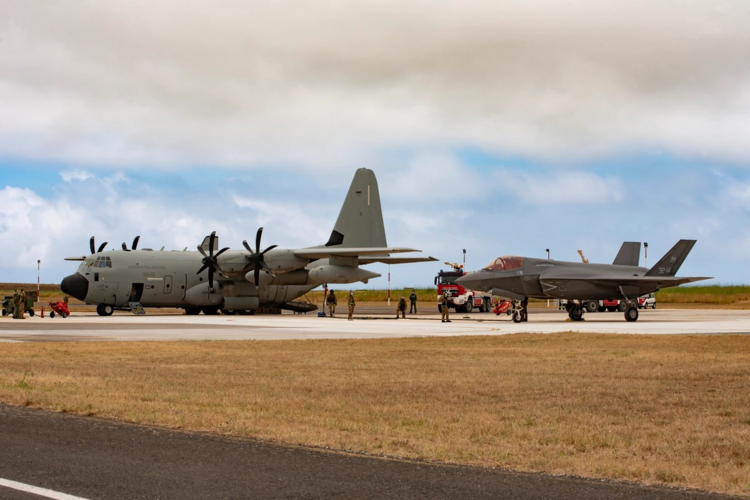
[The Italian Air Force F-35B] made a short landing Tuesday on the Italian island of Pantelleria to join a British Royal Air Force F-35B. The two Joint Strike Fighters practiced fast ground refueling from a parked C-130J, marking the first time F-35Bs from Italy and the U.K. have trained together.
https://www.defensenews.com/trainin...er-for-first-time-all-thanks-to-the-pandemic/
Grey Havoc
ACCESS: USAP
- Joined
- 9 October 2009
- Messages
- 24,500
- Reaction score
- 18,169
Grey Havoc
ACCESS: USAP
- Joined
- 9 October 2009
- Messages
- 24,500
- Reaction score
- 18,169

Please...SNAFU Blog + F-35 = extremely biased garbage
Aaaaaaand.... only days after its victory in Switzerland, political carnage has already begun.
https://www.lepoint.fr/monde/suisse...de-combat-americain-12-07-2021-2435164_24.php
There will be blood !
70 000 signatures when 100 000 are needed for the people to force a re-examination of the deal... gotta love Swiss democracy... (grabs popcorn).
https://www.lepoint.fr/monde/suisse...de-combat-americain-12-07-2021-2435164_24.php
There will be blood !
70 000 signatures when 100 000 are needed for the people to force a re-examination of the deal... gotta love Swiss democracy... (grabs popcorn).

Forest Green
ACCESS: USAP
- Joined
- 11 June 2019
- Messages
- 14,499
- Reaction score
- 31,529
I bet 90% of the signatories can't even explain how lift works.
Grey Havoc
ACCESS: USAP
- Joined
- 9 October 2009
- Messages
- 24,500
- Reaction score
- 18,169

- Joined
- 25 January 2020
- Messages
- 1,332
- Reaction score
- 2,138
The F-35 seems to be having some engine issues:
https://www.thedrive.com/the-war-zo...u-s-air-force-f-35s-dont-have-working-engines
https://www.janes.com/defence-news/news-detail/pentagon-seeks-f-35-engine-options
https://www.thedrive.com/the-war-zo...u-s-air-force-f-35s-dont-have-working-engines
https://www.janes.com/defence-news/news-detail/pentagon-seeks-f-35-engine-options
They have pressured P&W on the price for years. P&W made for it as it was possible, including removing some extra thermal coating on the blades and now the claim is that there is some problems with hot components design life...
Some time you have to wonder... How much savings was achieved insisting for the cost cut?
Some time you have to wonder... How much savings was achieved insisting for the cost cut?

- Joined
- 3 June 2011
- Messages
- 20,895
- Reaction score
- 19,083
Forest Green
ACCESS: USAP
- Joined
- 11 June 2019
- Messages
- 14,499
- Reaction score
- 31,529
Justice League?Who the heck is that?!! Anyhow I am in to back you if invited.
After the Swiss decision to order F-35s, some Swiss officials express their disappointment and exasperation to see their sovereign choice contested and ill represented in the French press:
https://www.ladepeche.fr/2021/07/16...-les-avions-militaires-americains-9674863.php
Il faut découpler les aspects économiques du dossier de leur ressenti politique affirme le diplomate. Le F-35 possède une plus longue carrière devant lui que le Rafale. Nos dirigeants ont estimé que la police du ciel devait se faire à moindre coût sans en négliger la qualité opérationnelle. A-t-on instruit le même procès pour des pays comme la Belgique ou la Pologne, membres de l’UE qui ont fait le même choix ? Ce sont de bonnes raisons techniques qui conduisent –et c’est regrettable- au déficit des relations avec l’Union européenne."
-----------////-----------------
It is necessary to decouple the economic aspects from their political resentments affirms the diplomat. The F-35 has a longer lasting career ahead than the Rafale. Our leaders felt that the sky-policing had to be done at a lower cost without neglecting any operational quality. Have we heard the same lawsuit for countries like Belgium or Poland, members of the EU which have made a similar choice? These are good technical reasons which lead - and this is regrettable - to the deficit in relations with the European Union. "
https://www.ladepeche.fr/2021/07/16...-les-avions-militaires-americains-9674863.php
Last edited:
Grey Havoc
ACCESS: USAP
- Joined
- 9 October 2009
- Messages
- 24,500
- Reaction score
- 18,169
Given that this could bring down an already unsteady central government (and quite likely take their careers down along with it if not worse) I can see why they are worried.
For engine power modules in particular, Fick said, the program office now anticipates supply meeting demand by 2024, with the backlog being cleared by 2029.
https://www.airforcemag.com/more-than-40-air-force-f-35-without-engines/
siegecrossbow
I really should change my personal text
- Joined
- 12 March 2012
- Messages
- 843
- Reaction score
- 2,903
For engine power modules in particular, Fick said, the program office now anticipates supply meeting demand by 2024, with the backlog being cleared by 2029.
https://www.airforcemag.com/more-than-40-air-force-f-35-without-engines/
I think the USAF just flies the F-35 a lot more than other countries fielding the type. Neither Japan more South Korea has this problem, nor did any European countries complain about this.
Grey Havoc
ACCESS: USAP
- Joined
- 9 October 2009
- Messages
- 24,500
- Reaction score
- 18,169
- Joined
- 25 January 2020
- Messages
- 1,332
- Reaction score
- 2,138
Could also be the older ones, since many of the USAF's F-35 fleet is older than contemporary fleets.For engine power modules in particular, Fick said, the program office now anticipates supply meeting demand by 2024, with the backlog being cleared by 2029.
https://www.airforcemag.com/more-than-40-air-force-f-35-without-engines/
I think the USAF just flies the F-35 a lot more than other countries fielding the type. Neither Japan more South Korea has this problem, nor did any European countries complain about this.
siegecrossbow
I really should change my personal text
- Joined
- 12 March 2012
- Messages
- 843
- Reaction score
- 2,903
Could also be the older ones, since many of the USAF's F-35 fleet is older than contemporary fleets.For engine power modules in particular, Fick said, the program office now anticipates supply meeting demand by 2024, with the backlog being cleared by 2029.
https://www.airforcemag.com/more-than-40-air-force-f-35-without-engines/
I think the USAF just flies the F-35 a lot more than other countries fielding the type. Neither Japan more South Korea has this problem, nor did any European countries complain about this.
I recall that there was an initial batch of F-35s that was introduced for training purposes and didn’t integrate weapons. I wonder if they decided to postpone re-engine those airframes.
- Joined
- 25 January 2020
- Messages
- 1,332
- Reaction score
- 2,138
At one point, they were going to become aggressors (link was probably posted here, but it's been quite a while). I would assume they have been delayed, so service level F-35s can get re-engined as soon as possible.I recall that there was an initial batch of F-35s that was introduced for training purposes and didn’t integrate weapons. I wonder if they decided to postpone re-engine those airframes.
Also, some more F-35 news:
https://news.clearancejobs.com/2021...to-washington-to-prepare-for-f-35-deployment/

- Joined
- 21 April 2009
- Messages
- 14,348
- Reaction score
- 9,429
I’m on team Scott as wellWho the heck is that?!! Anyhow I am in to back you if invited.
Forest Green
ACCESS: USAP
- Joined
- 11 June 2019
- Messages
- 14,499
- Reaction score
- 31,529
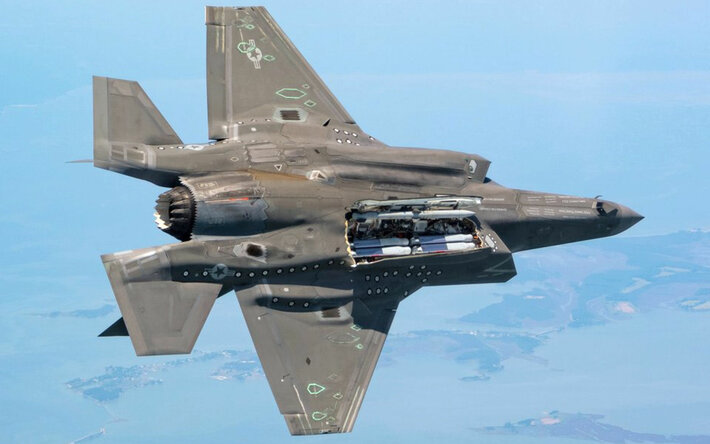
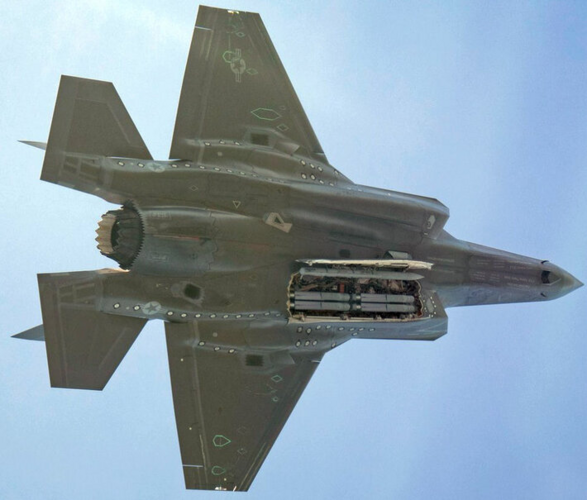
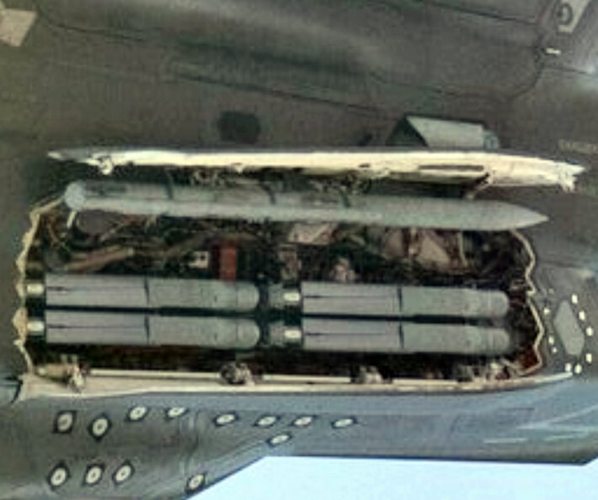
On July 13, two F-35B lightning II jets based out of Marine Corps Air Station Iwakuni, Japan, were severely damaged after being struck by lightning in flight.
Both planes were able to land safely and no Marines were injured in the incident, according to the Marine Corps.
[...]
“After conducting our standard reporting and assessment procedures, the weather-related incident was labeled as a class ‘A’ mishap due to the combined projected repair costs exceeding two and a half million U.S. dollars,” Capt. Marco A. Valenzuela, a spokesman for Marine Air Group 12. told Marine Corps Times in an email.
[...]
The F-35A traditional takeoff variant of the lightning II repeatedly has been prohibited from flying in or near thunderstorms due to issues with its onboard inert gas generation system, or OBIGGS.
The OBIGGS pumps nitrogen-enriched air into the plane’s fuel systems, rendering it inert and preventing it from blowing up if struck by lightning.
Damages to the tubes that deliver the nitrogen-enriched air led to lightning flight restrictions in June 2020.
The vertical takeoff variant F-35B has a slightly differently designed OBIGGS system, which fits around its lift fan and historically has made it immune to the lightning issues of its F-35A cousin.
https://www.airforcetimes.com/news/...ing-strike-grounds-2-f-35b-lightning-ii-jets/

Dragon029
ACCESS: Top Secret
- Joined
- 17 March 2009
- Messages
- 881
- Reaction score
- 449
Curious what the damage was; other F-35s have been struck and been fine, and unless a fuel tank outright exploded (doubt they would've been able to safely land in that kind of situation) the OBIGGS and its past issues would have had no impact on the incident.
Skin damage is the most probable effect in a lightning strike. Repairing burnt coating can understandably get quickly expensive. Notice that both airplane were struck, so the intensity might have surpassed normal protection and not be related to a maintenance issue.
Forest Green
ACCESS: USAP
- Joined
- 11 June 2019
- Messages
- 14,499
- Reaction score
- 31,529
I thought they test aircraft for lightning strikes on the ground before IOC.
I thought they test aircraft for lightning strikes on the ground before IOC.
Maybe it was a particularly violent bolt that completely busted the limits set in testing ?
But it would be one hell of a bad luck then. Goddam lightning, can't you strike F-16s or A-10s instead of hundred billion dollars stealth jets ? silly thing !
Forest Green
ACCESS: USAP
- Joined
- 11 June 2019
- Messages
- 14,499
- Reaction score
- 31,529
Seems to be going around lately.I thought they test aircraft for lightning strikes on the ground before IOC.
Maybe it was a particularly violent bolt that completely busted the limits set in testing ?
But it would be one hell of a bad luck then. Goddam lightning, can't you strike F-16s or A-10s instead of hundred billion dollars stealth jets ? silly thing !
https://www.independent.co.uk/news/uk/home-news/lightening-strike-hampshire-uk-weather-b1889789.html
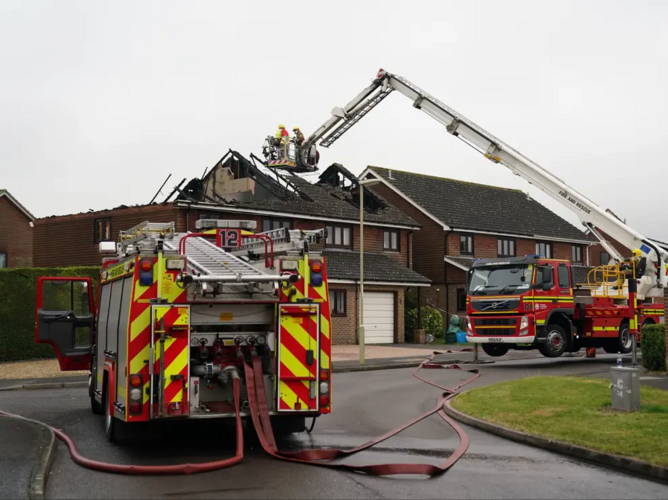
The particulate emissions have vastly altered the weather: particulate can act as a seed element for ice and rain, resulting in higher quantity of water suspended in a given mass of air (that's why you have heavy rain and droughts at the same time)... Static energy phenomena are aggravated by their presence.

- Joined
- 19 July 2016
- Messages
- 4,814
- Reaction score
- 4,273
A lot of homes would fail testing for the efficacy of the electrical system and earthing cables. Only a few years ago the earthing system did not have to be continuous, now it does. Standards and maintenance cause lightning strike problems with homes. Just before I moved from my previous address, the system was tested (It being a rented property) long past regulation and found to be unfit for purpose.
Forest Green
ACCESS: USAP
- Joined
- 11 June 2019
- Messages
- 14,499
- Reaction score
- 31,529
From coal, or biomass?The particulate emissions have vastly altered the weather: particulate can act as a seed element for ice and rain, resulting in higher quantity of water suspended in a given mass of air (that's why you have heavy rain and droughts at the same time)... Static energy phenomena are aggravated by their presence.
Yeah, you can actually protect structures from lightning strikes. Did a lot of design work on this in the past.A lot of homes would fail testing for the efficacy of the electrical system and earthing cables. Only a few years ago the earthing system did not have to be continuous, now it does. Standards and maintenance cause lightning strike problems with homes. Just before I moved from my previous address, the system was tested (It being a rented property) long past regulation and found to be unfit for purpose.
BS EN 62305-3 Protection against lightning. Physical damage to structures and life hazard.
@Forest Green : Particulates in suspension are mostly the result of improper combustion in diesel engines.
But you are correct that coal burning has the same effect. It generally tends to be rarer in most countries today outside China.
But you are correct that coal burning has the same effect. It generally tends to be rarer in most countries today outside China.
Last edited:
Forest Green
ACCESS: USAP
- Joined
- 11 June 2019
- Messages
- 14,499
- Reaction score
- 31,529
I read that biomass burning also causes it, especially the residential kind.@Forest Green : Particulates in suspension are mostly the result of improper combustion in diesel engines.
But you are correct that coal burning has the same effect. It generally tends to be rarer in most countries today outside China.
- Joined
- 25 January 2020
- Messages
- 1,332
- Reaction score
- 2,138
Let the Interservice rivalry/banter begin!
https://www.thedrive.com/the-war-zo...ning-rods-asks-which-lightning-strikes-harder
https://www.thedrive.com/the-war-zo...ning-rods-asks-which-lightning-strikes-harder
- Joined
- 25 January 2020
- Messages
- 1,332
- Reaction score
- 2,138
Regarding the costs of equipping the RAF F-35 fleet with ASRAAM, SPEAR 3 and Paveway IV:
https://ukdefencejournal.org.uk/how-much-does-it-cost-to-add-weapons-to-the-f-35/
https://ukdefencejournal.org.uk/how-much-does-it-cost-to-add-weapons-to-the-f-35/
Similar threads
-
Lockheed Martin F-16 Fighting Falcon News and Developments
- Started by seruriermarshal
- Replies: 882
-

-

-
 Lockheed JSF evolution: ASTOVL, SSF, CALF, JAST
- Started by Antonio
- Replies: 176
-
 USAF/USN 6th Gen Fighters - F/A-XX, F-X, NGAD, PCA, ASFS News & Analysis [2008- 2025]
- Started by Matej
- Replies: 10K