
You are using an out of date browser. It may not display this or other websites correctly.
You should upgrade or use an alternative browser.
You should upgrade or use an alternative browser.
Von Braun Rocket Planes
- Thread starter Justo Miranda
- Start date

- Joined
- 18 March 2013
- Messages
- 1,586
- Reaction score
- 5,791
I think I contacted Mr. Miranda a few decades ago when he was doing a series of 'specialized' comics (graphic novels?). At that time -- and I hope I have not mistaken him for someone else -- he was a mover and shaker of the Luft46 movement.
These apparent refinements of that work so tempt me to attempt to model some of these fictional, though plausible, vehicles. Beautiful work on display here.
David
These apparent refinements of that work so tempt me to attempt to model some of these fictional, though plausible, vehicles. Beautiful work on display here.
David
- Joined
- 18 March 2013
- Messages
- 1,586
- Reaction score
- 5,791
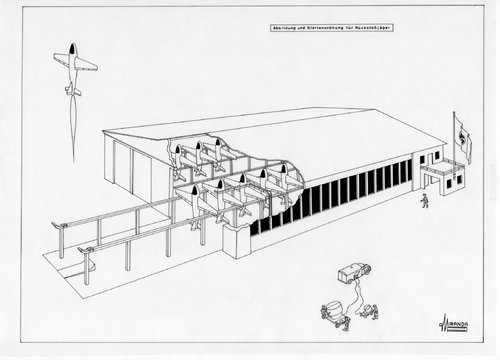
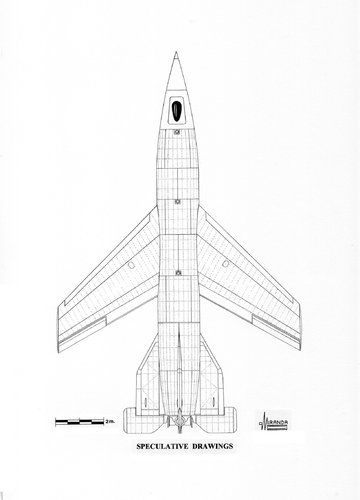
The rocket that is fifth from the right has the 'coke bottle' fuselage.
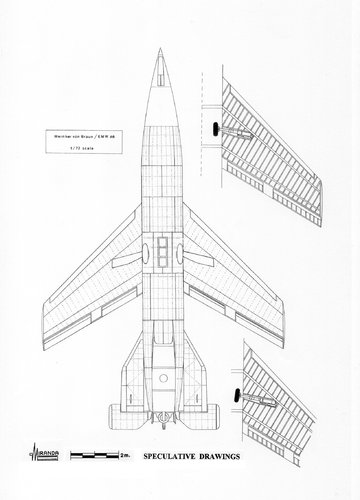
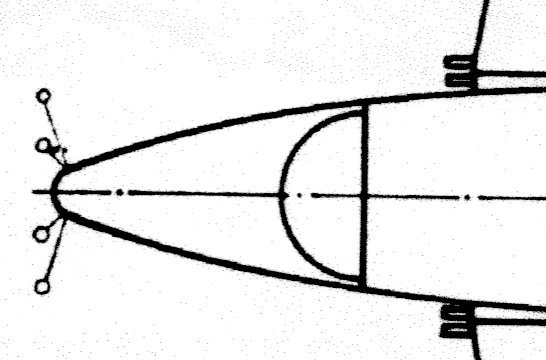
No. The fuselage is a simple cylinder. What you see in the top plan view is the projected outline of the wings root foil section intersecting the fuselage. Note that the wing intersects the fuselage above center line -- that's why you don't see this apparent 'pinching' on the bottom plan view.
The supersonic 'coke bottle' trick was not worked out till a few decades later (probably by former German engineers in the employ of the US I would bet a buck or two).
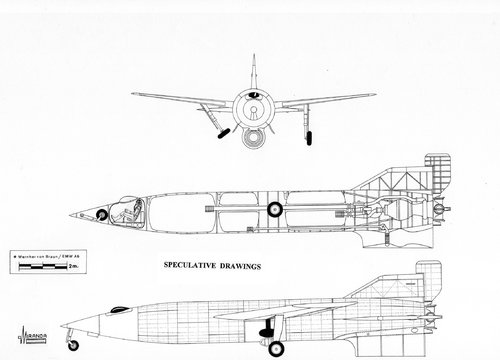
These are orthographic projections, suitable for direct measurement lofting. When properly interpreted, an accurate model can be made. Tempting!
What do you think, Scott?
David
I think I contacted Mr. Miranda a few decades ago when he was doing a series of 'specialized' comics (graphic novels?). At that time -- and I hope I have not mistaken him for someone else -- he was a mover and shaker of the Luft46 movement.
These apparent refinements of that work so tempt me to attempt to model some of these fictional, though plausible, vehicles. Beautiful work on display here.
David

Is the optical effect of the shoulder wing.The rocket that is fifth from the right has the 'coke bottle' fuselage.

The supersonic 'coke bottle' trick was not worked out till a few decades later (probably by former German engineers in the employ of the US I would bet a buck or two).
What do you think, Scott?
From that fount of all knowledge, wikipedia:
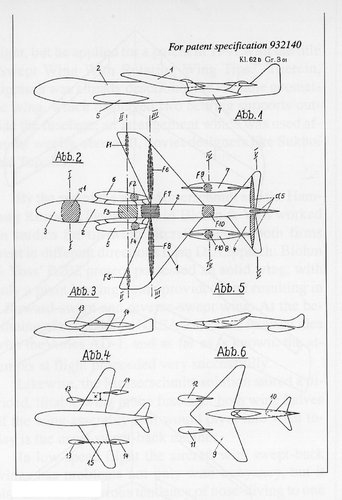
The area rule was discovered by Otto Frenzl when comparing a swept wing with a w-wing with extreme high wave drag[3] while working on a transonic wind tunnel at Junkers works in Germany between 1943 and 1945. He wrote a description on 17 December 1943, with the title Anordnung von Verdrängungskörpern beim Hochgeschwindigkeitsflug ("Arrangement of Displacement Bodies in High-Speed Flight"); this was used in a patent filed in 1944.
...
Wallace D. Hayes, a pioneer of supersonic flight, developed the transonic area rule in publications beginning in 1947 with his Ph.D. thesis at the California Institute of Technology.[6]
Richard T. Whitcomb, after whom the rule is named, independently discovered this rule in 1952, while working at the NACA.
Area ruling had many discovers. As anyone who isn't a Columbus-statue-toppling moron knows, multiple people can independently discover something that someone already discovered.
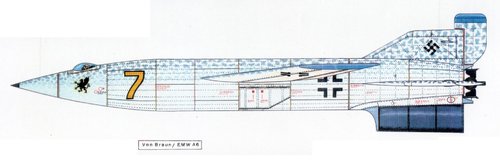
As for a model of the manned, winged ramjet-equipped A-4... I released a resin kit in 1/72 something along the lines of 20 years ago. Oddly, the internet seems to have forgotten that one as I couldn't immediately find any references to it. Shrug. It weren't that good.
Last edited:
- Joined
- 18 March 2013
- Messages
- 1,586
- Reaction score
- 5,791
If anyone could chronicle the genesis of the area-rule, it would be you. Success has many fathers. Failure will always be the red-headed bastard step-child.
Lets re-visit the A-4 'recon' manned rocket in a bigger scale with GRP wings and fuselage!
David
Lets re-visit the A-4 'recon' manned rocket in a bigger scale with GRP wings and fuselage!
David
Area-rule history is outlined in the wikipedia article.
The first mention is about a Nazi German engineer named Otto Frentzl in 1943. Theodor Zobel first mentioned area-rule in public
Various other Nazi-surplus engineers worked on area-rule when they moved to the USA after WW2 (Operation Paperclip): Dietrich Kuchemann, Adolf Busemann, etc.
Post WW2, American engineers Wallace D. Hayes and Richard T. Witcomb finally applied area-rule to the disappointing Convari F-102 Delta Dart. By re-contouring the fuselage into a "Kuchemann coke bottle"they able to reduce drag enough to achieve supersonic performance objectives. The improved Convair F-106 Delta Dagger first flew in 1956.
Early area-ruled airplanes often looked crude, with bulbous add-ons (e.g. Convair 880's Kuchemann carrots, bulbous rear fuselage in Buccaneer, lower aft fuel tank on EE Lightning).
Witcomb later went on to develop super-critical wings for trans-sonic airliners. While modern airliners may not immediately look like coke-bottle (from the side or top) they employ complex curvatures in wing root fillets, engine nacelles and aft fuselage profiles to smooth airflow at trans-sonic speeds. Please note that while airliners cruising at Mach 0.9 might not officially be trans-sonic, localized airflow might be. Witcomb's supercritical wings even out airflow to avoid localized super-sonic flow.
Modern fabrication methods are CAD design make area-ruling less obvious. For example, the Honda Jet uses a bulbous nose, quickly tapering under the fuselage before wings, then engines hang above the trailing edge .... all smoothing transitions in total airframe cross-section (area rule).
Trans-sonic airflow is a frightfully complex subject only vaguely related to sub-sonic, Newtonian physics. At one point, Witcomb realized that he was dealing with rigid, inflexible, "steel pipes" of super-sonic air that were difficult to bend around conventionally curved airframes. He jokingly described supersonic aerodynamicists as "pipe-fitters."
The first mention is about a Nazi German engineer named Otto Frentzl in 1943. Theodor Zobel first mentioned area-rule in public
Various other Nazi-surplus engineers worked on area-rule when they moved to the USA after WW2 (Operation Paperclip): Dietrich Kuchemann, Adolf Busemann, etc.
Post WW2, American engineers Wallace D. Hayes and Richard T. Witcomb finally applied area-rule to the disappointing Convari F-102 Delta Dart. By re-contouring the fuselage into a "Kuchemann coke bottle"they able to reduce drag enough to achieve supersonic performance objectives. The improved Convair F-106 Delta Dagger first flew in 1956.
Early area-ruled airplanes often looked crude, with bulbous add-ons (e.g. Convair 880's Kuchemann carrots, bulbous rear fuselage in Buccaneer, lower aft fuel tank on EE Lightning).
Witcomb later went on to develop super-critical wings for trans-sonic airliners. While modern airliners may not immediately look like coke-bottle (from the side or top) they employ complex curvatures in wing root fillets, engine nacelles and aft fuselage profiles to smooth airflow at trans-sonic speeds. Please note that while airliners cruising at Mach 0.9 might not officially be trans-sonic, localized airflow might be. Witcomb's supercritical wings even out airflow to avoid localized super-sonic flow.
Modern fabrication methods are CAD design make area-ruling less obvious. For example, the Honda Jet uses a bulbous nose, quickly tapering under the fuselage before wings, then engines hang above the trailing edge .... all smoothing transitions in total airframe cross-section (area rule).
Trans-sonic airflow is a frightfully complex subject only vaguely related to sub-sonic, Newtonian physics. At one point, Witcomb realized that he was dealing with rigid, inflexible, "steel pipes" of super-sonic air that were difficult to bend around conventionally curved airframes. He jokingly described supersonic aerodynamicists as "pipe-fitters."

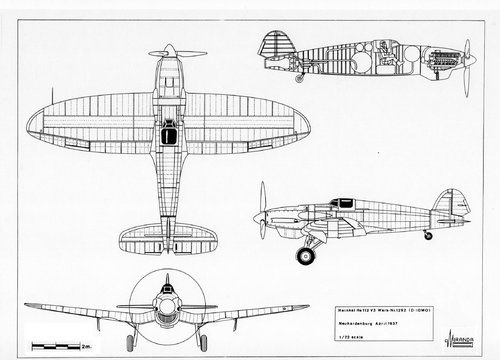
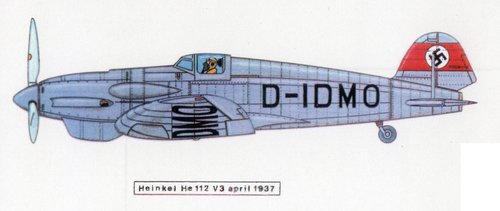
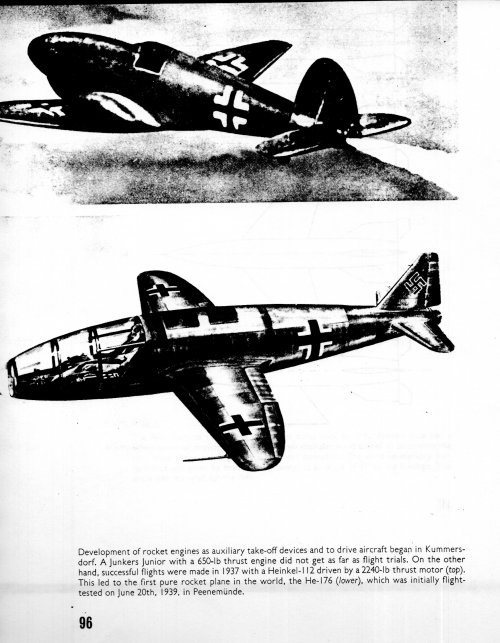
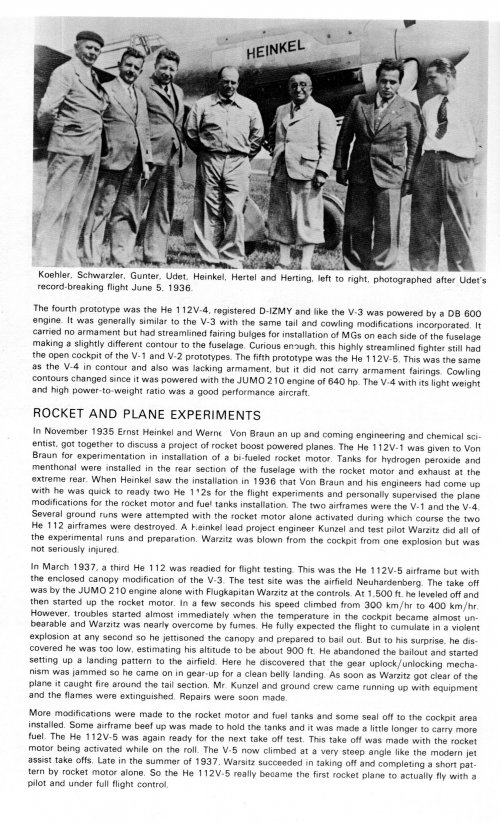
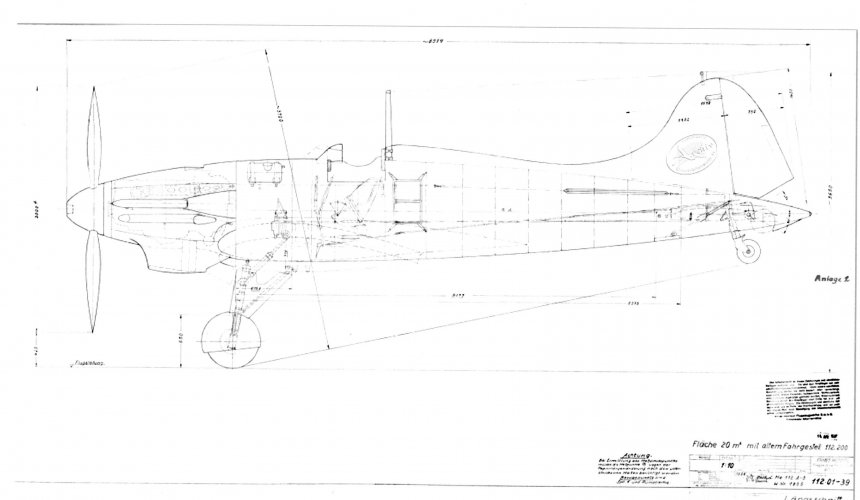
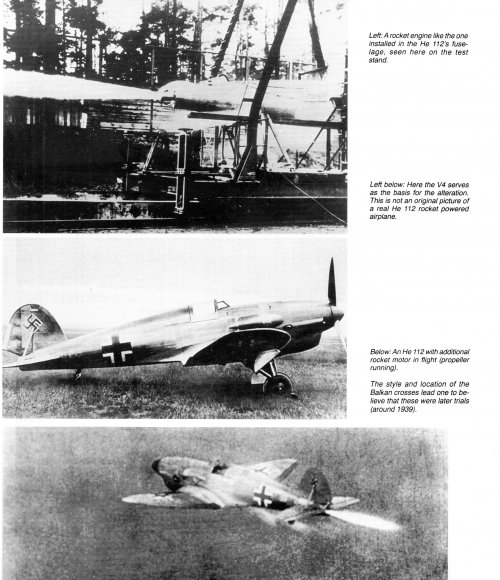
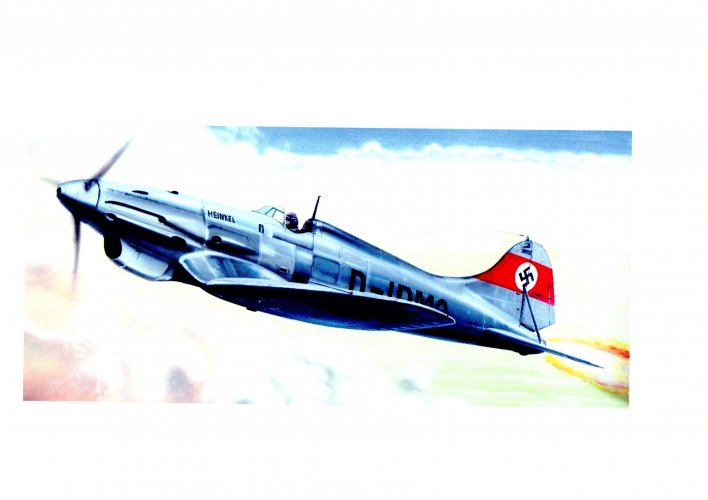
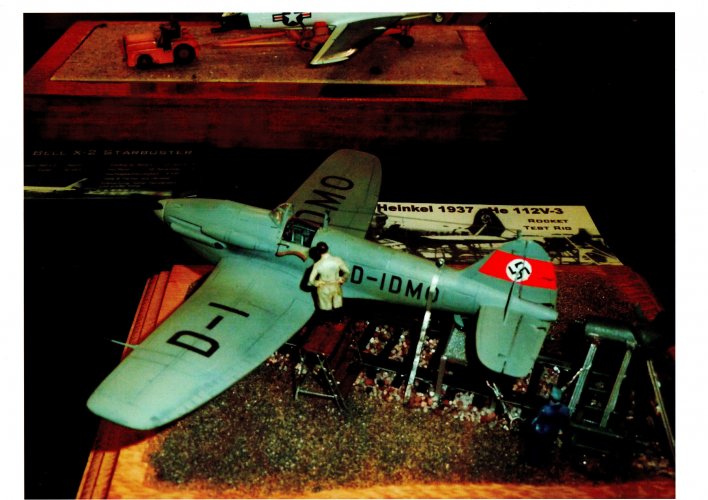
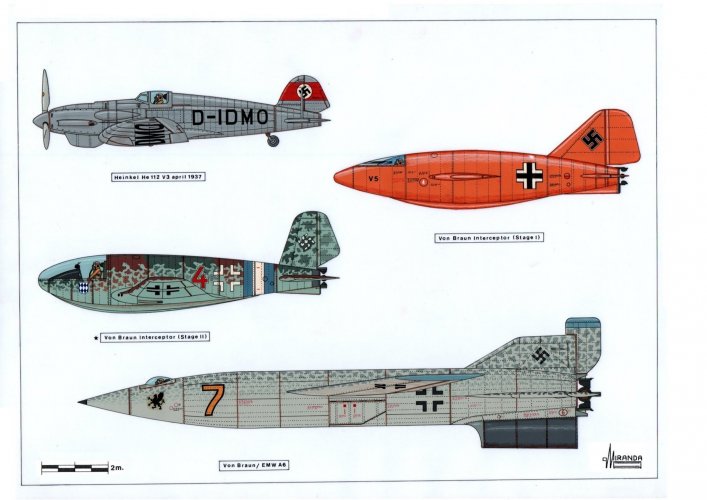
In 1937, three prototypes of the Heinkel He 112 piston fighter were fitted with one HVA bi-propellant rocket engine designed by Wernher von Braun.What kind of performance was von Braun expecting from the Stratosphärenjäger I and II?
Did he even suggest any figures or did he just sketch the design?
What about the He.112 version?
Between March and August these rocket planes were tested at E-Stelle Rechlin, Neuhardenberg, Peenemünde and Marienehe.
The He 112 V3 was destroyed by the explosion of the rocket engine, but the He 112 V7/U and He 112 V8/U managed to fly successfully demonstrating the viability of the power plant.
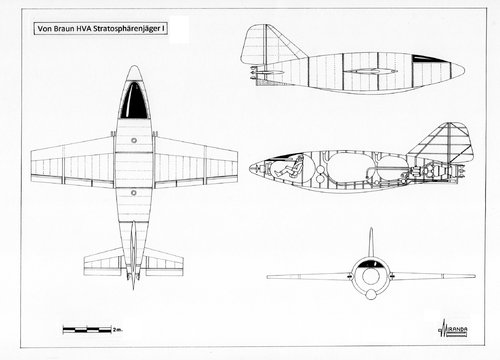
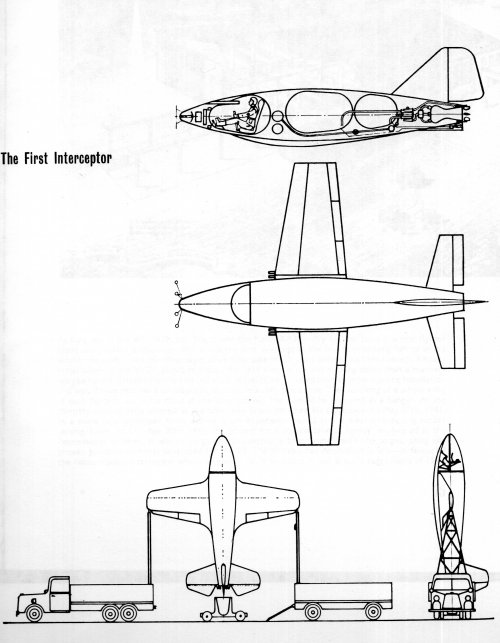
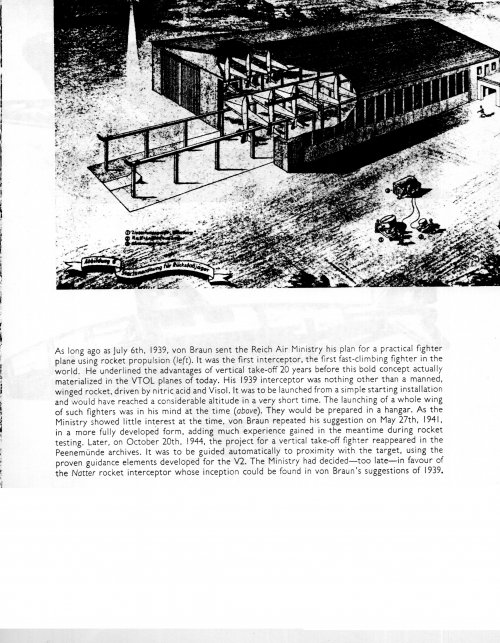
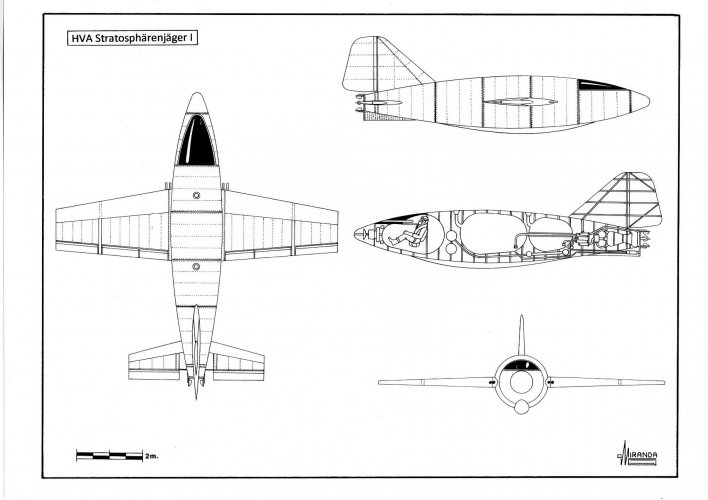
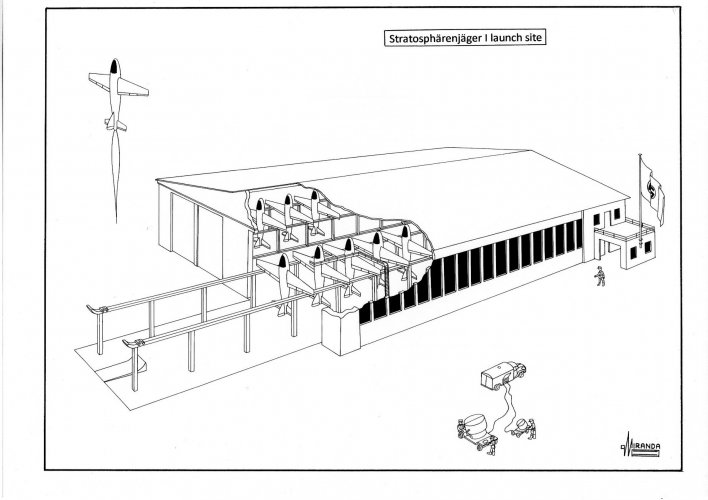
On July 6, 1939, von Braun proposed to the RLM the project Stratosphärenjäger I, a high-altitude VTO rocket interceptor powered by one HVA rocket engine that used liquid Oxygen and Methanol as propellants.
This plane would reach an 8,000 m altitude in 53 seconds under the control of an SG-52 Kreiselgerät autopilot, and four graphite vanes mounted in the rocket nozzle.
After reaching the maximum altitude the pilot could regain manual control for interception. After the attack the fighter would glide back to the base, landing on a retractable ventral skid.
The RLM showed little interest in the project because the complexity of the exotic propellants and the automatic guidance system.
Stratosphärenjäger I technical data
Wingspan: 8.5 m, length: 9.3 m, height: 3.2 m, max weight: 5,000 kg, max speed: 700 km/h, service ceiling: 8,000 m, endurance: 15 min, power plant: one HVA rocket engine with 10,600 peak thrust, propellants: liquid Oxygen and Methanol, armament: four wing mounted machine guns, electronics: R/T device and AI radar of unspecified type.
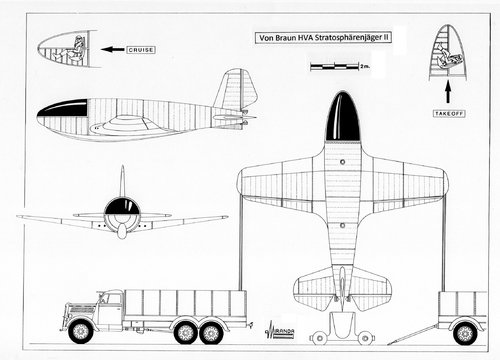
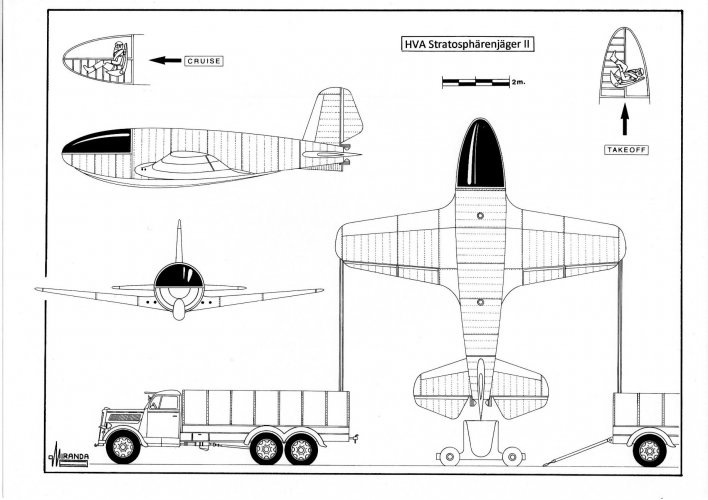
On May 27, 1941, von Braun proposed the Stratosphärenjäger II, a more fully developed VTO fighter powered by one HVA rocket engine that used Visol and SV-Stoff hypergolic propellants, instead of the very hard to store liquid Oxygen and Hydrogen peroxide.
Visol was a mixture of vinyl ethers (isobutyl-vinyl compounds) that could be replaced by Schweröl (Diesel Oil).
SV-Stoff was a mixture of 90-98% nitric acid and 2-10% sulfuric acid that could be replaced by S-Stoff /Salbei, a mixture of 96% nitric acid and 4% ferrous chloride.
Instead of using vulnerable stationary launch sites, the Type II could be launched from mobile ramps carried on trucks.
In the autumn of 1941, the project was rejected by the RLM. By this time von Braun was fully involved in the development of the V2 missile.
Stratosphärenjäger II technical data
Wingspan: 8.6 m, length: 9.3 m, height: 3.2 m, max weight: 5,080 kg, max speed: 690 km/h, service ceiling: 8,000 m, endurance: 15 min, power plant: one HVA rocket engine, propellants: Visol and SV-Stoff, armament: four wing mounted machine guns, electronics: R/T device and IR seeker of unspecified type.
The Stratosphärenjäger II was developed further by the Heeresversuchsanstalt Peenemünde (HVP) and the Advanced Projects Office of Gerhard Fieseler Werke GmbH, under the leadership of Dipl.-Ing. Erich Bachem.
At the end of 1941 Fieseler proposed to the RLM the VTO fighter Fi 166 in two versions:
-Höhenjäger I was a two-seat, point-defense, rocket interceptor.
-Höhenjäger II was a single-seat, long-range, turbojet fighter the size of a Messerschmitt Bf 110 that could take off vertically by means of a powerful rocket booster, attached to the underside of the fuselage, which was to be jettisoned at 8,000 m altitude.
Both types were fitted with retractable ventral skids.
Early in 1942 the Fi 166 was cancelled in favor of the anti-aircraft missile EMW C2 Wasserfall.
The Germans were not successful with the use of hypergolic propellants, the Wasserfall never reached the operational phase and the cost of developing the “Super V2” EMW A8, 700 million of Reichsmark, was seen unaffordable by the HVP.
Fieseler Fi 166 Höhenjäger I typ R-R-FI technical data
Wingspan: 16 m, length: 16.56 m, height: 4.7 m, max weight: 5,620 kg, max speed: 810 km/h, service ceiling: 12,000 m, climb rate: 151 m/sec, endurance: 5 min, power plant: one EMW rocket engine with 15,000 kp peak thrust, propellants: Visol and Salbei, electronics: R/T device and AI radar of unspecified type. Pressurized cockpit.
Fieseler Fi 166 Höhenjäger II typ TL-R-RuR tecnical data
Wingspan: 16 m, airplane length: 13 m, overall length: 15 m, height: 4.9 m, max weight: 5,930 kg, max speed: 830 km/h, service ceiling: 12,000 m, endurance: 45 min, power plant: two BMW P.3302 turbojets each rated at 550 kp thrust and one EMW rocket booster with 20,000 kp peak thrust, propellants: Visol and Salbei, electronics: R/T device and IR seeker of unspecified type. Pressurized cockpit.
Attachments
The wiki article on the interceptors suggests 1936 but the information in your your postings looks more realistic, interesting that there are only 4 machine guns when the RAF at this time was thinking a minimum of 8 for anything above 300mph, presumably couldn't get any more in.
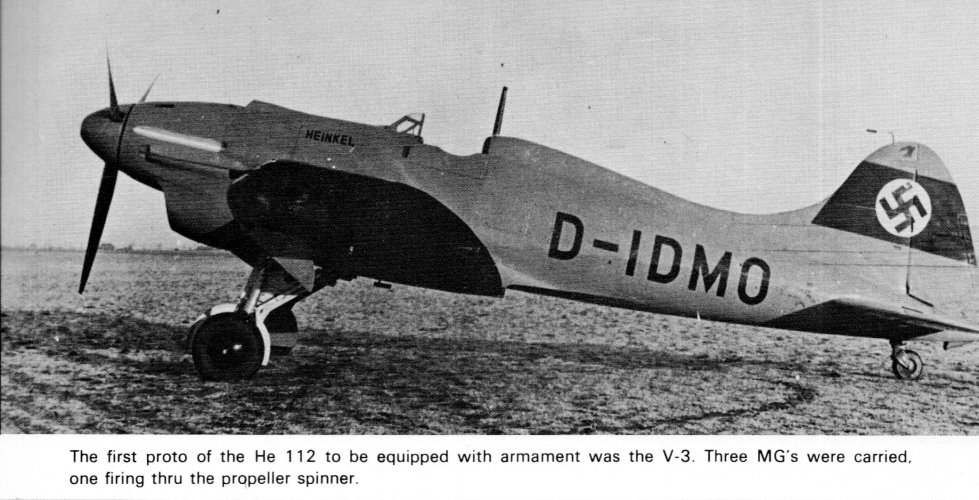
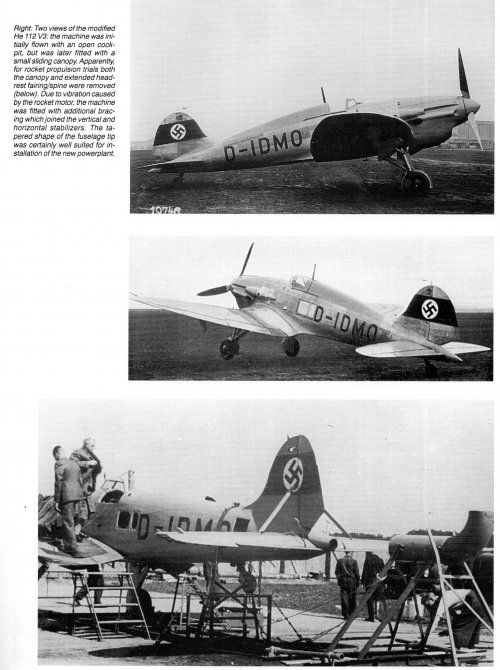
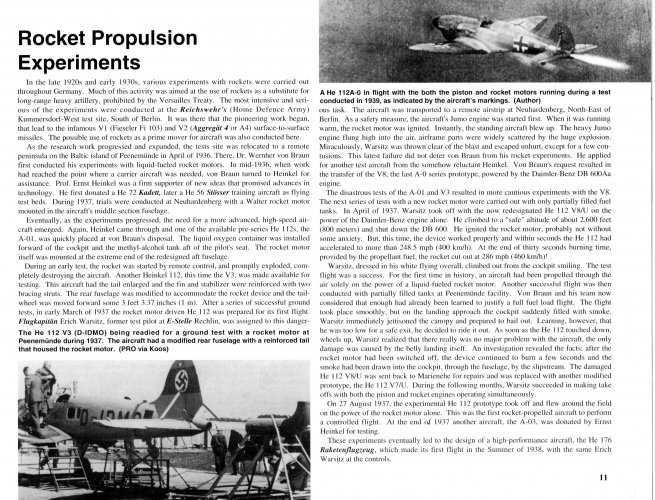
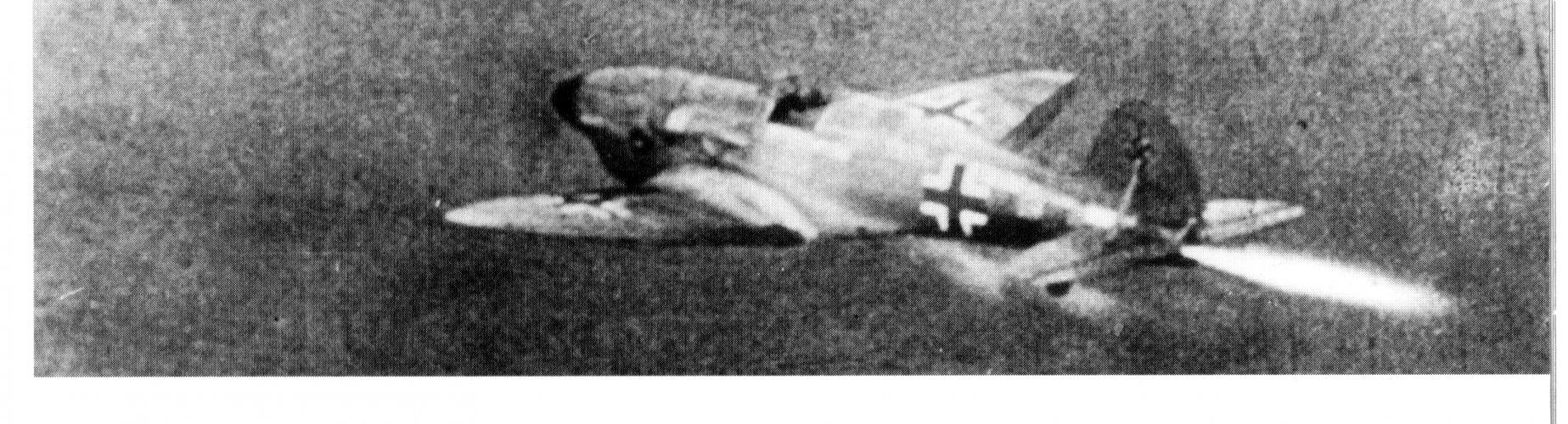
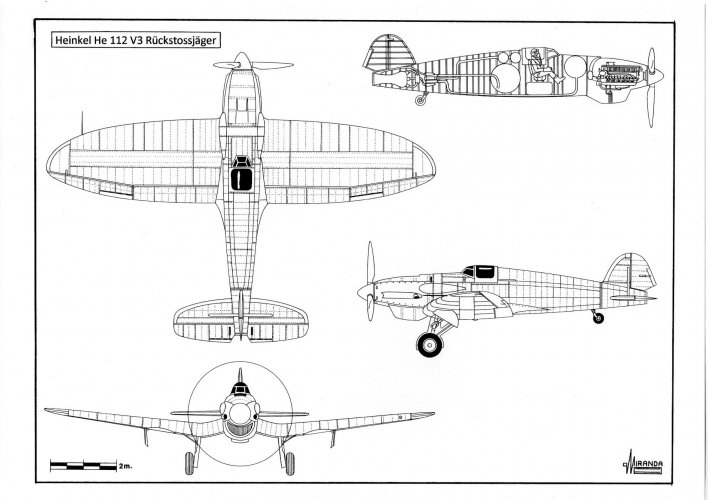
In 1937, three prototypes of the Heinkel He 112 piston fighter were fitted with one HVA bi-propellant rocket engine designed by Wernher von Braun.
Between March and August these rocket planes were tested at E-Stelle Rechlin, Neuhardenberg, Peenemünde and Marienehe.
The He 112 V3 was destroyed by the explosion of the rocket engine, but the He 112 V7/U and He 112 V8/U managed to fly successfully demonstrating the viability of the power plant.
On July 6, 1939, von Braun proposed to the RLM the project Stratosphärenjäger I, a high-altitude VTO rocket interceptor powered by one HVA rocket engine that used liquid Oxygen and Methanol as propellants.
This plane would reach an 8,000 m altitude in 53 seconds under the control of an SG-52 Kreiselgerät autopilot, and four graphite vanes mounted in the rocket nozzle.
After reaching the maximum altitude the pilot could regain manual control for interception. After the attack the fighter would glide back to the base, landing on a retractable ventral skid.
The RLM showed little interest in the project because the complexity of the exotic propellants and the automatic guidance system.
Stratosphärenjäger I technical data
Wingspan: 8.5 m, length: 9.3 m, height: 3.2 m, max weight: 5,000 kg, max speed: 700 km/h, service ceiling: 8,000 m, endurance: 15 min, power plant: one HVA rocket engine with 10,600 peak thrust, propellants: liquid Oxygen and Methanol, armament: four wing mounted machine guns, electronics: R/T device and AI radar of unspecified type.
On May 27, 1941, von Braun proposed the Stratosphärenjäger II, a more fully developed VTO fighter powered by one HVA rocket engine that used Visol and SV-Stoff hypergolic propellants, instead of the very hard to store liquid Oxygen and Hydrogen peroxide.
Visol was a mixture of vinyl ethers (isobutyl-vinyl compounds) that could be replaced by Schweröl (Diesel Oil).
SV-Stoff was a mixture of 90-98% nitric acid and 2-10% sulfuric acid that could be replaced by S-Stoff /Salbei, a mixture of 96% nitric acid and 4% ferrous chloride.
Instead of using vulnerable stationary launch sites, the Type II could be launched from mobile ramps carried on trucks.
In the autumn of 1941, the project was rejected by the RLM. By this time von Braun was fully involved in the development of the V2 missile.
Stratosphärenjäger II technical data
Wingspan: 8.6 m, length: 9.3 m, height: 3.2 m, max weight: 5,080 kg, max speed: 690 km/h, service ceiling: 8,000 m, endurance: 15 min, power plant: one HVA rocket engine, propellants: Visol and SV-Stoff, armament: four wing mounted machine guns, electronics: R/T device and IR seeker of unspecified type.
The Stratosphärenjäger II was developed further by the Heeresversuchsanstalt Peenemünde (HVP) and the Advanced Projects Office of Gerhard Fieseler Werke GmbH, under the leadership of Dipl.-Ing. Erich Bachem.
At the end of 1941 Fieseler proposed to the RLM the VTO fighter Fi 166 in two versions:
-Höhenjäger I was a two-seat, point-defense, rocket interceptor.
-Höhenjäger II was a single-seat, long-range, turbojet fighter the size of a Messerschmitt Bf 110 that could take off vertically by means of a powerful rocket booster, attached to the underside of the fuselage, which was to be jettisoned at 8,000 m altitude.
Both types were fitted with retractable ventral skids.
Early in 1942 the Fi 166 was cancelled in favor of the anti-aircraft missile EMW C2 Wasserfall.
The Germans were not successful with the use of hypergolic propellants, the Wasserfall never reached the operational phase and the cost of developing the “Super V2” EMW A8, 700 million of Reichsmark, was seen unaffordable by the HVP.
Fieseler Fi 166 Höhenjäger I typ R-R-FI technical data
Wingspan: 16 m, length: 16.56 m, height: 4.7 m, max weight: 5,620 kg, max speed: 810 km/h, service ceiling: 12,000 m, climb rate: 151 m/sec, endurance: 5 min, power plant: one EMW rocket engine with 15,000 kp peak thrust, propellants: Visol and Salbei, electronics: R/T device and AI radar of unspecified type. Pressurized cockpit.
Fieseler Fi 166 Höhenjäger II typ TL-R-RuR tecnical data
Wingspan: 16 m, airplane length: 13 m, overall length: 15 m, height: 4.9 m, max weight: 5,930 kg, max speed: 830 km/h, service ceiling: 12,000 m, endurance: 45 min, power plant: two BMW P.3302 turbojets each rated at 550 kp thrust and one EMW rocket booster with 20,000 kp peak thrust, propellants: Visol and Salbei, electronics: R/T device and IR seeker of unspecified type. Pressurized cockpit.
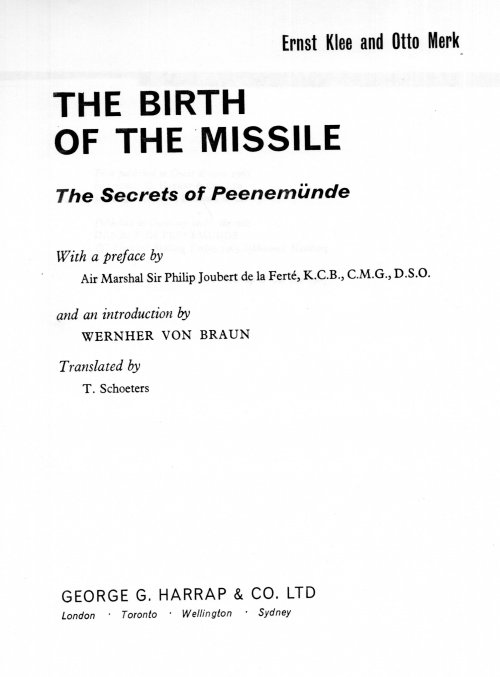
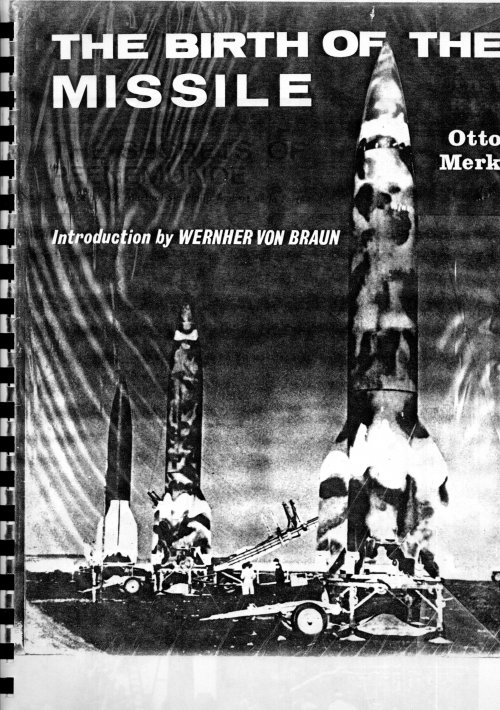
That book The Birth of the Missile gets 5 out f 5 on Amazon by the 5 reviewers....pity it looks to be out of print.
All the good books of the sixties are out of printThat book The Birth of the Missile gets 5 out f 5 on Amazon by the 5 reviewers....pity it looks to be out of print.
I only have photocopies.
Attachments
P-STICKNEY
ACCESS: Confidential
- Joined
- 28 September 2008
- Messages
- 83
- Reaction score
- 169
A bit of Necroposting, but - No. The Area Rule was developed by Richard Whitcomb at the N.A.C.A, while studying Shleiren Images from the Transonic and Supersonic tunnels. This work was done in the 1951-53 timeframe, and first applied deliberately on full-scale airplanes on the Convair YF-102A, and Grumman F11F-1 Tiger.No. The fuselage is a simple cylinder. What you see in the top plan view is the projected outline of the wings root foil section intersecting the fuselage. Note that the wing intersects the fuselage above center line -- that's why you don't see this apparent 'pinching' on the bottom plan view.
The supersonic 'coke bottle' trick was not worked out till a few decades later (probably by former German engineers in the employ of the US I would bet a buck or two).
These are orthographic projections, suitable for direct measurement lofting. When properly interpreted, an accurate model can be made. Tempting!
What do you think, Scott?
David
Despite some folks trying to credit Dietrich Kuchemann, Kuchemann has stated that it did not devolve from any of his work.
German Patent March 21, 1944A bit of Necroposting, but - No. The Area Rule was developed by Richard Whitcomb at the N.A.C.A, while studying Shleiren Images from the Transonic and Supersonic tunnels. This work was done in the 1951-53 timeframe, and first applied deliberately on full-scale airplanes on the Convair YF-102A, and Grumman F11F-1 Tiger.
Despite some folks trying to credit Dietrich Kuchemann, Kuchemann has stated that it did not devolve from any of his work.

BernardQuatermass21
Could I have analysis served with nuance please ?
- Joined
- 17 June 2025
- Messages
- 62
- Reaction score
- 78
In the summer I was lucky enough to spend a few days with the Peenemünde Archive that made its way to Redstone Arsenal in Alabama. I’m researching a book on Wasserfall that I will probably never write I’m hoping to chisel away some of the confusions that appear when talking early German rocketry. My approach is to go back to the original German language source documents and re-translate.
By coincidence I translated von Brauns second (1941) proposal for a rocket propelled night fighter from his German language original just last week.
My interpretation, based on 1941 proposal, as follows:
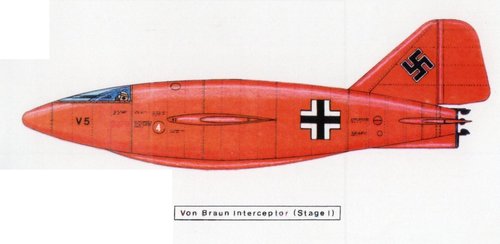
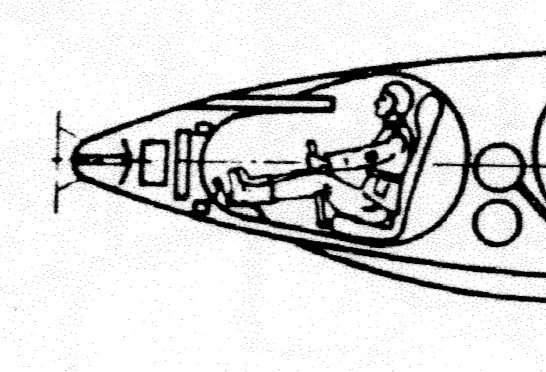
- The first three pictures in the original post in this thread are computer renderings of von Brauns 1939 proposal for an “efficient interceptor” and his 1941 proposal for a “night fighter”.
- The “II” version in the diagram is actually the earlier 1939 proposal whereas the “I” is from the 1941 proposal, which is curious. Similarly launching from the tailgates of two trucks is the earlier 1939 proposal and the hardened hanger is the 1941 proposal.
- In the 1941 proposal von Braun identifies Dieselöl (Diesel Oil) and Salpetersäure as oxidiser. Salpetersäure is the generic term for Nitric Acid, of unspecified concentration and without additives. Use of more specific terms like Salbei, mixed acid, m10 etc came later for von Brauns team, with studies for a hypergolic variant of A4 and then for Wasserfall. Same for fuels like Visol. They only appear in the time of Wasserfall development, from 1943 onwards.
- A double motor installation was proposed. A 10 tonne thrust motor for vertical climb to intercept altitude and a smaller 750kg cruise motor. Both with HTP powered turbo pumps. The aircraft remained subsonic.
- Vertical phase was under autopilot control riding up an HuV beam. Exciting for the pilot. Straight up is explained as the most fuel efficient and rolling takeoff the worst.
- Target tracking to direct the HuV beam was by Wurzberg-Riese
-Total flight time was limited….30 mins or less.
- Sensors were Liechtenstein AI radar and Spannergerate, which was a first generation IR night sight used in the real world on a few night fighters. So in the original diagrams there are some stylized Liechtenstein antennas on the nose.
- The proposal also included the first outline of a Flak Rocket based on von Brauns ballistic missile technology. This was what the ministry really wanted and evolved into Wasserfall.
I’m hoping to chisel away some of the confusions that appear when talking early German rocketry. My approach is to go back to the original German language source documents and re-translate.By coincidence I translated von Brauns second (1941) proposal for a rocket propelled night fighter from his German language original just last week.
My interpretation, based on 1941 proposal, as follows:
- The first three pictures in the original post in this thread are computer renderings of von Brauns 1939 proposal for an “efficient interceptor” and his 1941 proposal for a “night fighter”.
- The “II” version in the diagram is actually the earlier 1939 proposal whereas the “I” is from the 1941 proposal, which is curious. Similarly launching from the tailgates of two trucks is the earlier 1939 proposal and the hardened hanger is the 1941 proposal.
- In the 1941 proposal von Braun identifies Dieselöl (Diesel Oil) and Salpetersäure as oxidiser. Salpetersäure is the generic term for Nitric Acid, of unspecified concentration and without additives. Use of more specific terms like Salbei, mixed acid, m10 etc came later for von Brauns team, with studies for a hypergolic variant of A4 and then for Wasserfall. Same for fuels like Visol. They only appear in the time of Wasserfall development, from 1943 onwards.
- A double motor installation was proposed. A 10 tonne thrust motor for vertical climb to intercept altitude and a smaller 750kg cruise motor. Both with HTP powered turbo pumps. The aircraft remained subsonic.
- Vertical phase was under autopilot control riding up an HuV beam. Exciting for the pilot. Straight up is explained as the most fuel efficient and rolling takeoff the worst.
- Target tracking to direct the HuV beam was by Wurzberg-Riese
-Total flight time was limited….30 mins or less.
- Sensors were Liechtenstein AI radar and Spannergerate, which was a first generation IR night sight used in the real world on a few night fighters. So in the original diagrams there are some stylized Liechtenstein antennas on the nose.
- The proposal also included the first outline of a Flak Rocket based on von Brauns ballistic missile technology. This was what the ministry really wanted and evolved into Wasserfall.
Last edited:
https://www.ebay.com/itm/1965057094...9BzFlBCr0ZNR6HlOZhzoGFKmI=|tkp:Bk9SR-aPvM7XZgAll the good books of the sixties are out of print
I only have photocopies.
BernardQuatermass21
Could I have analysis served with nuance please ?
- Joined
- 17 June 2025
- Messages
- 62
- Reaction score
- 78
The Klee and Merk book is very good as it presents photos of original documents so can be trusted to be reasonably accurate. I've found other 1960s to 1980s ones to be very unreliable. Hard to discern fact from fiction.
In my view "The rocket and the reich" by Michael Neufeld is the best for an accurate account of the work of the Army Ordnance team at Peenemune, including a bit on the rocket plane testing and proposals. And his biography of von Braun is excellent too. Neufeld pretty much devoted his career to combing through the archives and interviewing the surviving old hands from the Peenemunde days.
In my view "The rocket and the reich" by Michael Neufeld is the best for an accurate account of the work of the Army Ordnance team at Peenemune, including a bit on the rocket plane testing and proposals. And his biography of von Braun is excellent too. Neufeld pretty much devoted his career to combing through the archives and interviewing the surviving old hands from the Peenemunde days.
Similar threads
-

-
von Braun retriever rocket
- Started by Justo Miranda
- Replies: 6
-

-

-
Von Braun Ferry Rocket kit now available
- Started by Orionblamblam
- Replies: 0